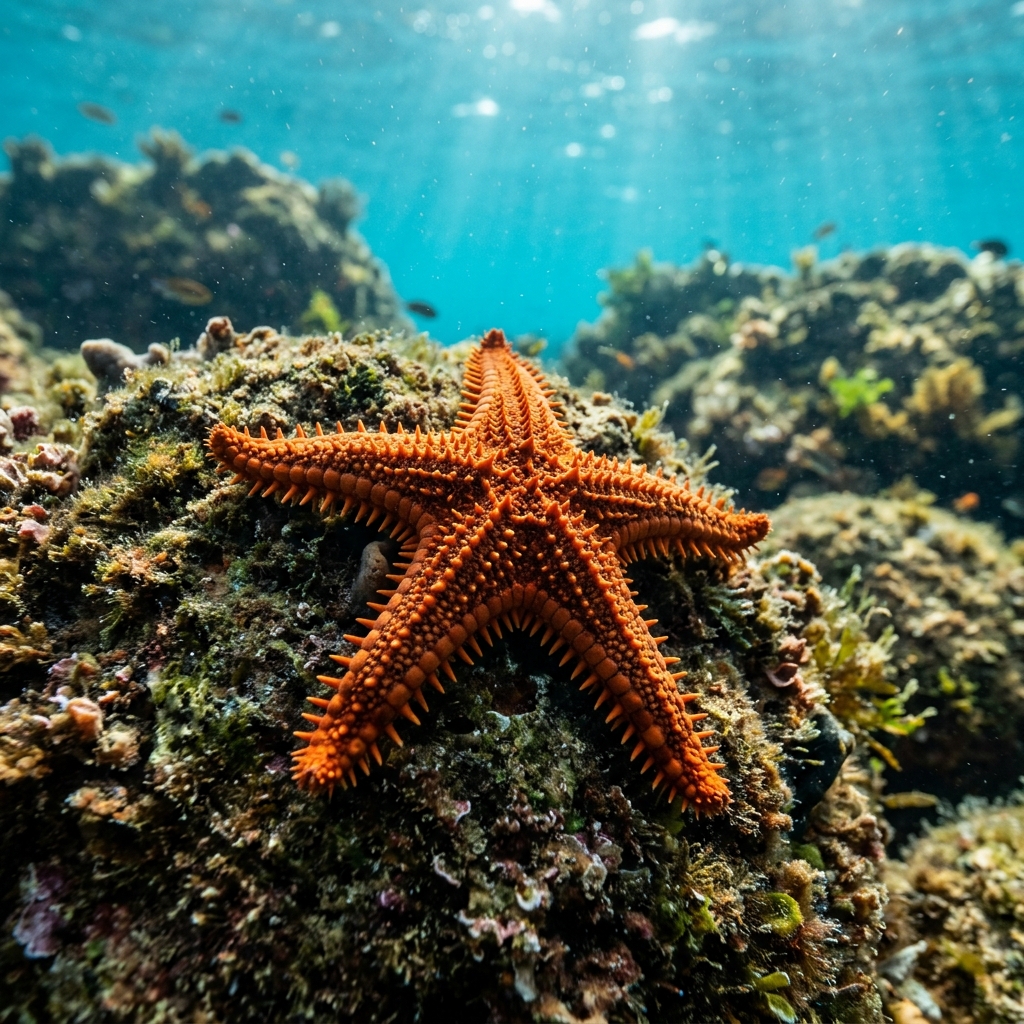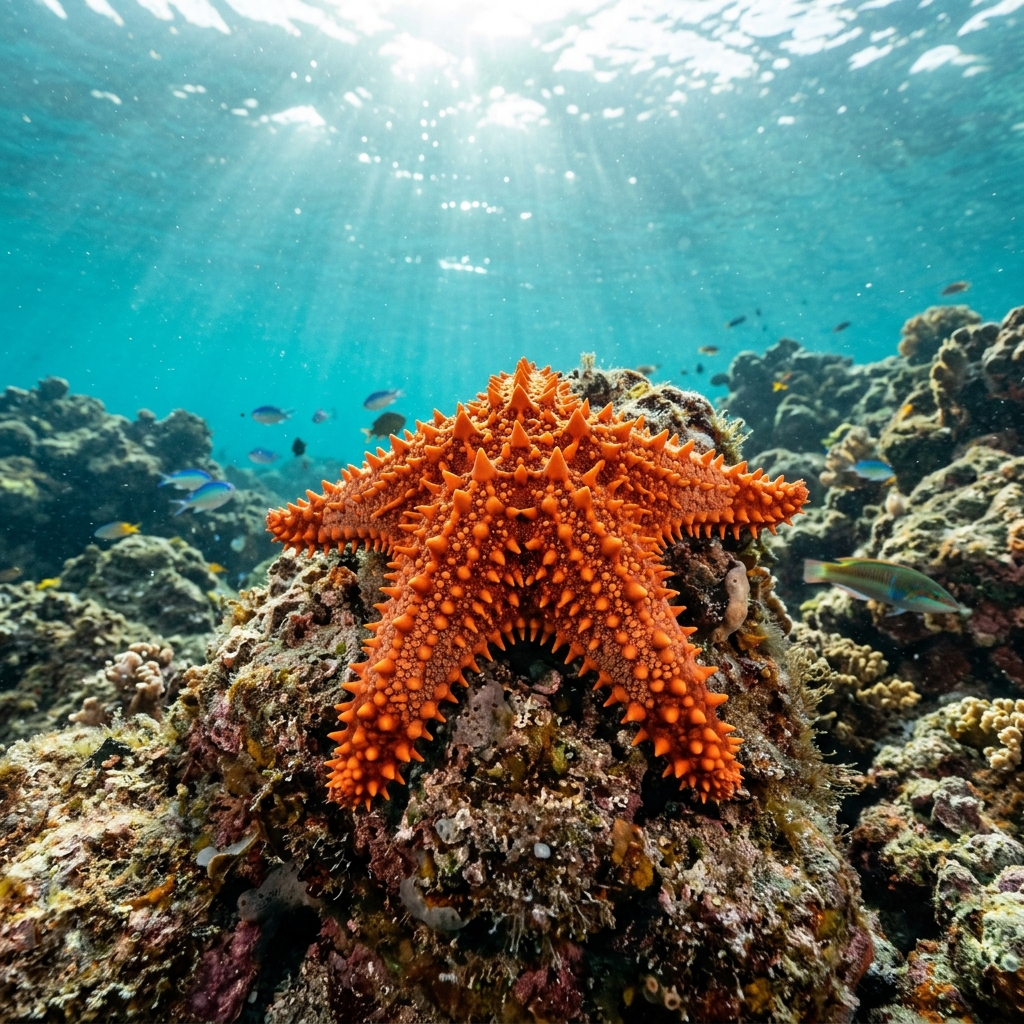
Pentaceraster cumingi
Find Panamic Cushion Stars across the Eastern Pacific, from Baja California to the Galápagos. Best sightings Dec, Apr in 22-29°C waters.
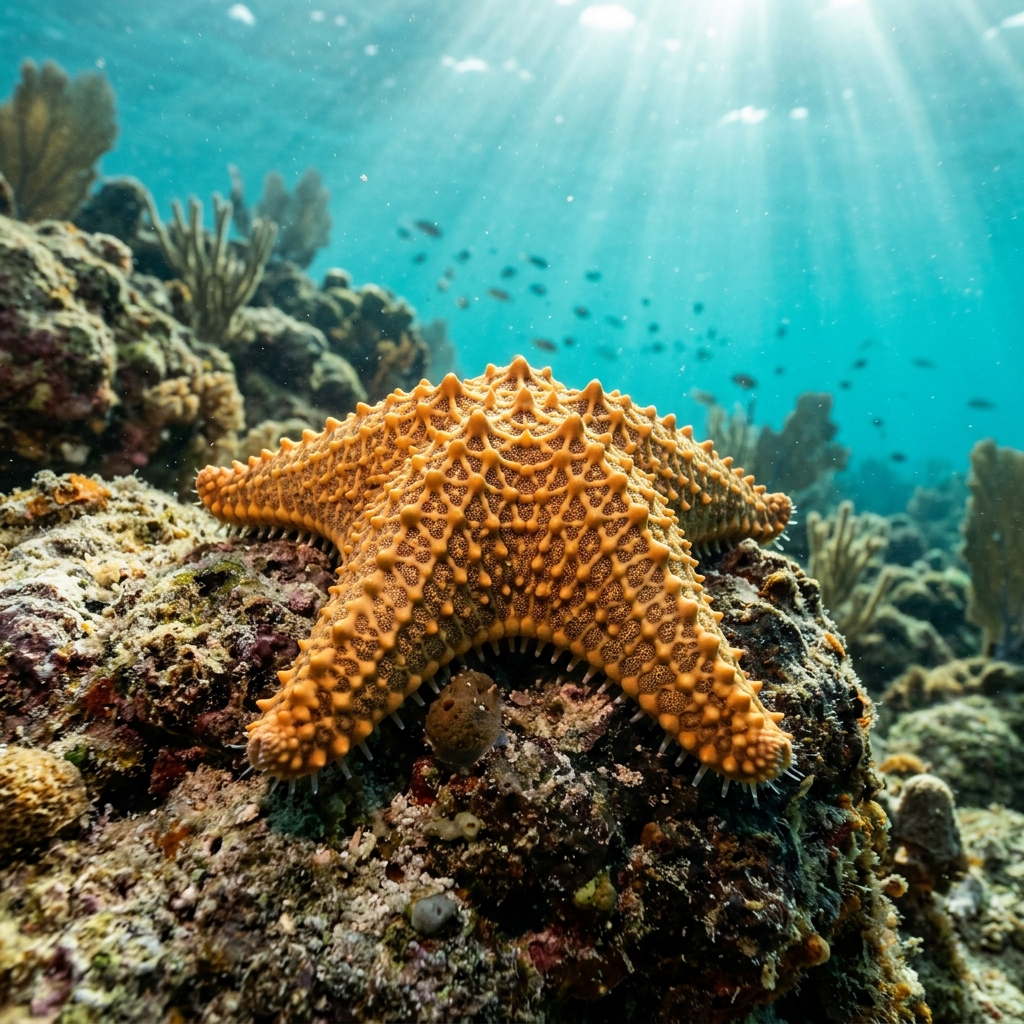
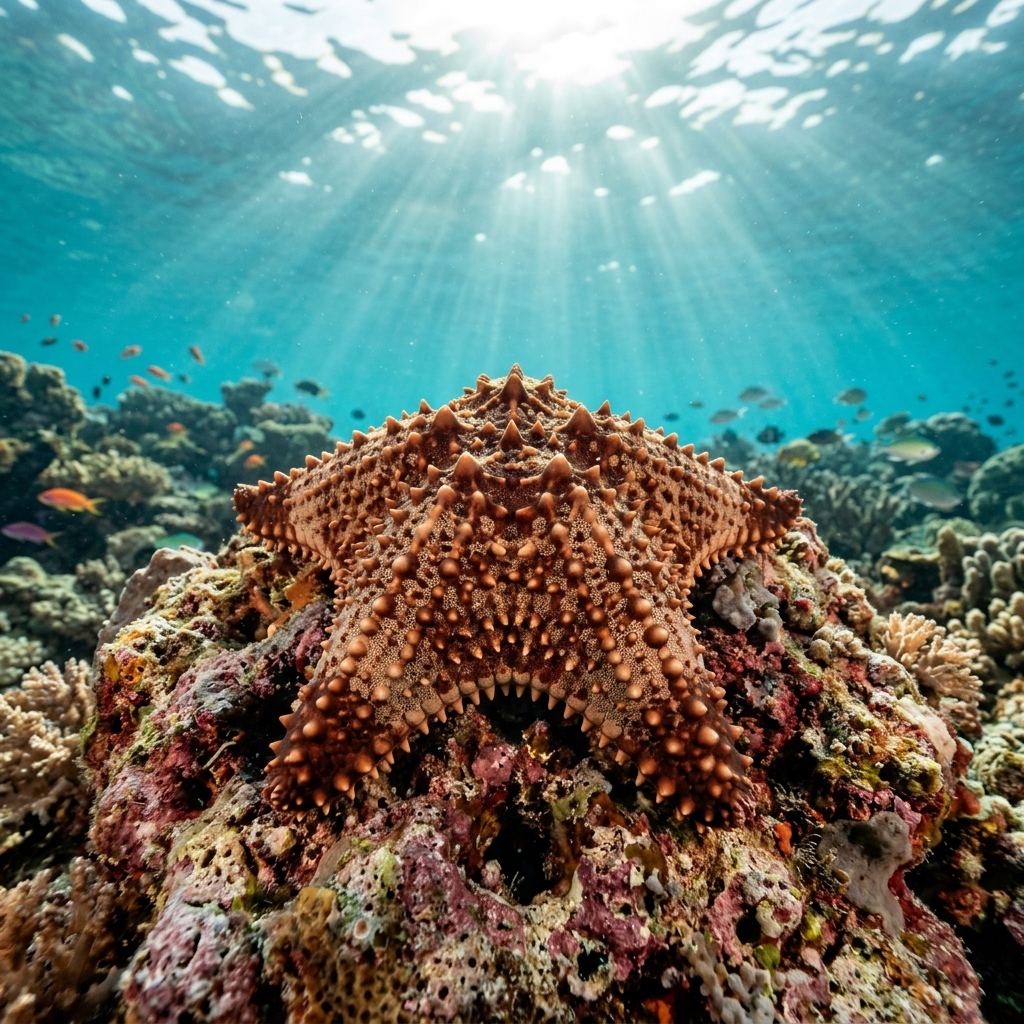
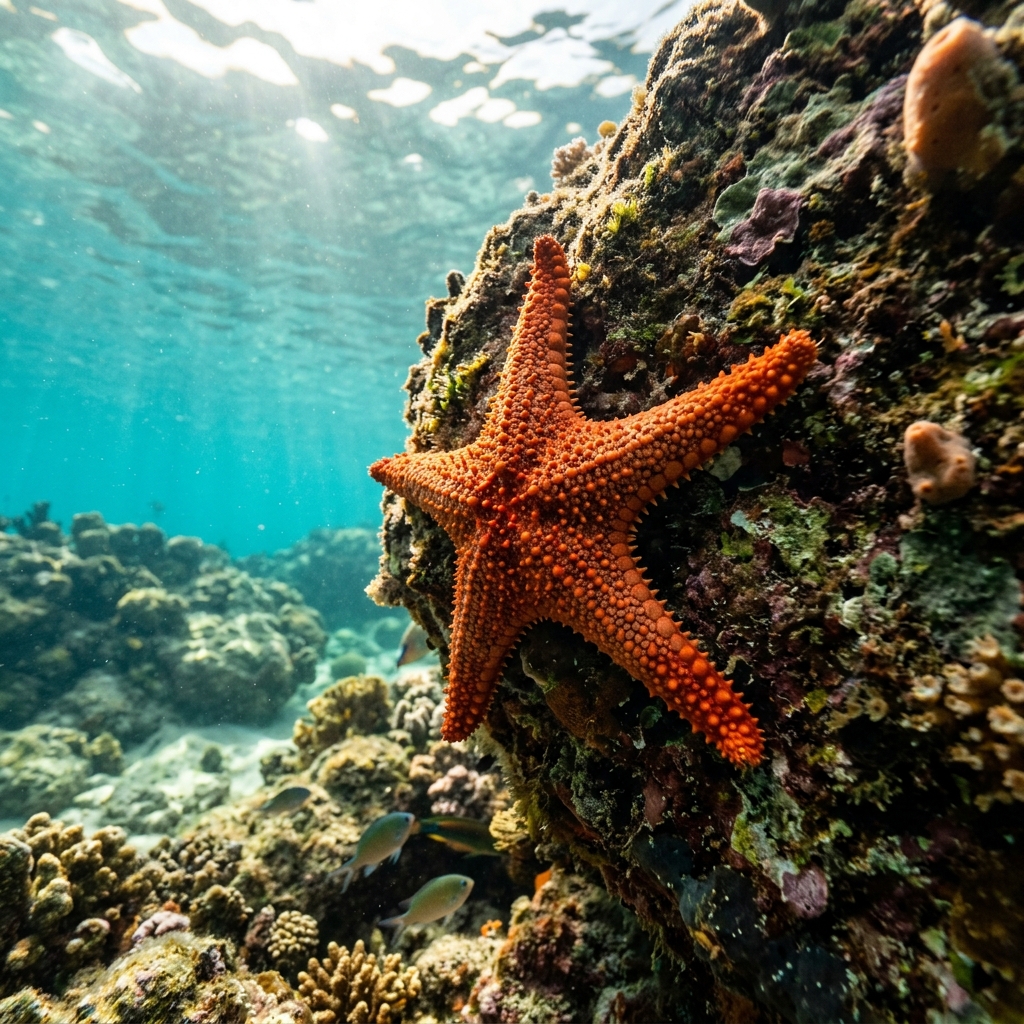
A thick, pillow-shaped sea star with five short, wide arms that blend into a rounded, cushioned body, the puffed-out silhouette is the key underwater cue. Colour ranges from orange to reddish-brown, often with a granular or bumpy upper surface covered in blunt tubercles (rounded knob-like projections). It sits low and flat on rocky or sandy substrate, and its chunky build immediately separates it from the spindly-armed sea stars sharing the same reef.
You'll typically find it sitting stationary on rocky reef, rubble, or open sand, moving so slowly that it can appear completely still during a dive. It doesn't react to divers and shows no defensive response, making close observation easy. Sightings tend to be solitary individuals spread across the reef rather than aggregations.
Like other members of Oreasteridae, it feeds by everting its stomach directly onto organic matter, essentially digesting its meal outside its body before reabsorbing it. This makes it an active recycler of reef detritus and microbial films on rocky surfaces.
Northern Hemisphere data shows sightings concentrate from December through April, coinciding with the cooler end of this species' observed temperature range of 22 to 29°C. Visitors to the Galápagos and Cocos Island during that window are well-placed for encounters.
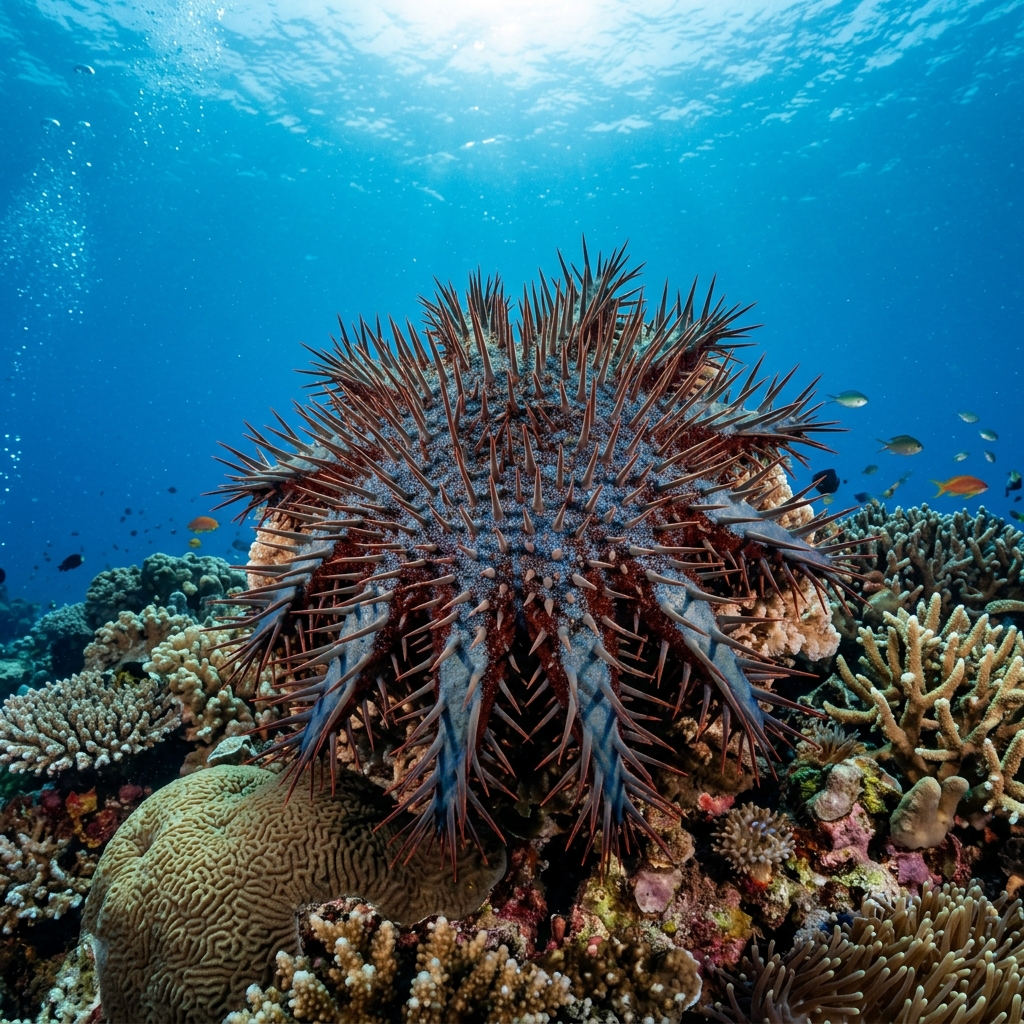
Reef neighbours a diver could mistake it for. Use the identification notes above to tell them apart.
Most consistently logged along Mexico's Baja California coast and in the Papagayo Gulf of Costa Rica, where sightings are reported across a large number of sites. Strong populations are also documented throughout the Galápagos Islands in Ecuador, around Malpelo in Colombia, and within Coiba National Park in Panama, making the broader Eastern Pacific the place to look for this species.
Mapping where Panamic Cushion Star is logged…
The species is most reliably encountered along Mexico's Baja California coast, in Costa Rica's Papagayo Gulf, and throughout the Galápagos Islands in Ecuador. Coiba National Park in Panama and Malpelo in Colombia are also well-documented sites. It is an Eastern Pacific species and is not found in the Atlantic or Indo-Pacific.
Available seasonality data points to December through April as the peak window for sightings in the Northern Hemisphere part of its range. The species tolerates water temperatures from around 22 to 29°C, so conditions during those cooler-season months appear to suit it well.
Look for the distinctive inflated, cushion-like body with five very short, wide arms that give it an almost circular outline. The upper surface is covered in blunt bumps and is typically orange to reddish-brown. The chunky, low-profile shape on the reef floor is the fastest ID cue.
Across the sites where it has been recorded, it is most often described as uncommon, meaning you may need to look for it rather than expect it to appear on every dive. It is rated common at a solid number of sites, particularly in the Galápagos and along the Mexican Pacific coast, so targeted dives in those areas improve your odds.
No. They are harmless to divers and show no defensive behaviour when approached. As with all sea stars, you should avoid touching or handling them, as even brief contact can transfer oils and damage their delicate tube feet.
Site and sighting data is aggregated from diver logs, iNaturalist and GBIF. For taxonomy and conservation status:
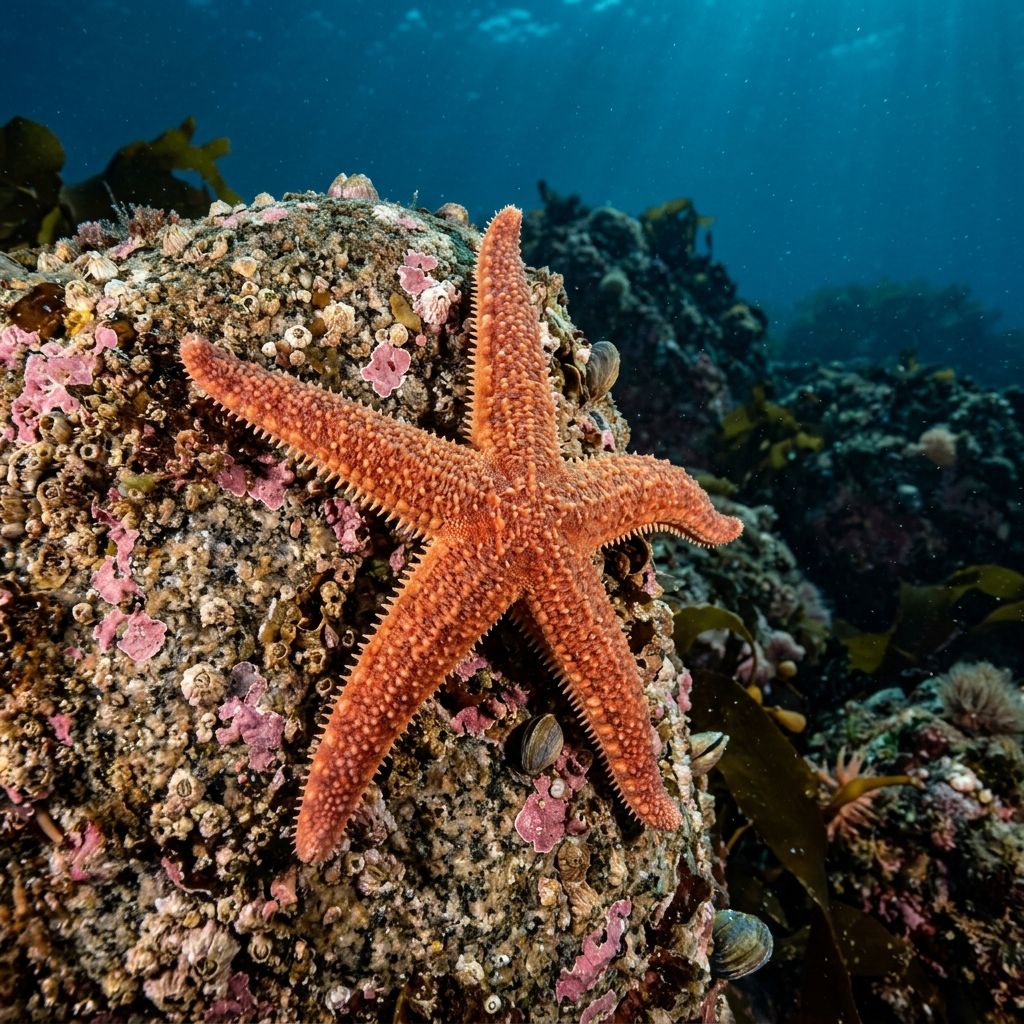
Common Sea Star
2,271 sites