Pomacentrus pavo
A small electric-blue reef fish common on shallow reefs from Thailand's Koh Lipe to French Polynesia's Society Islands, year-round in warm water.
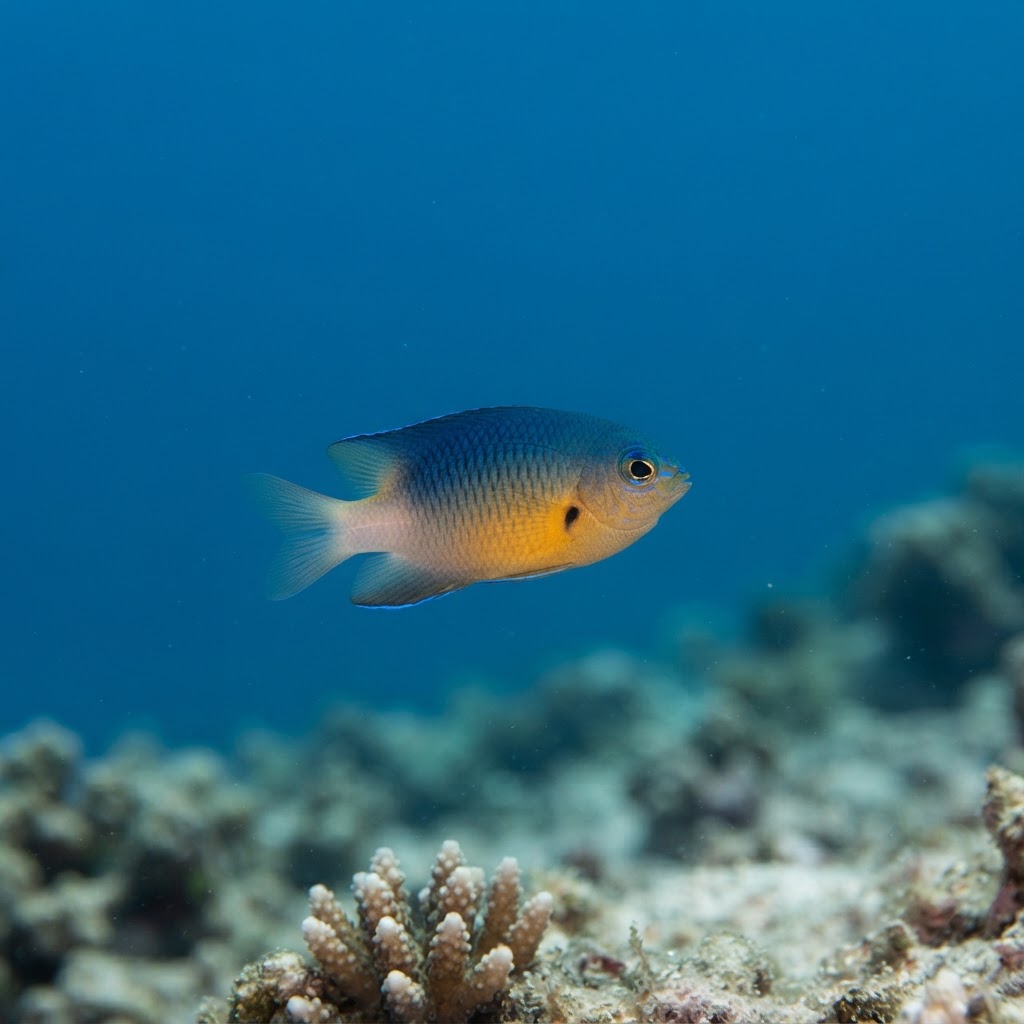
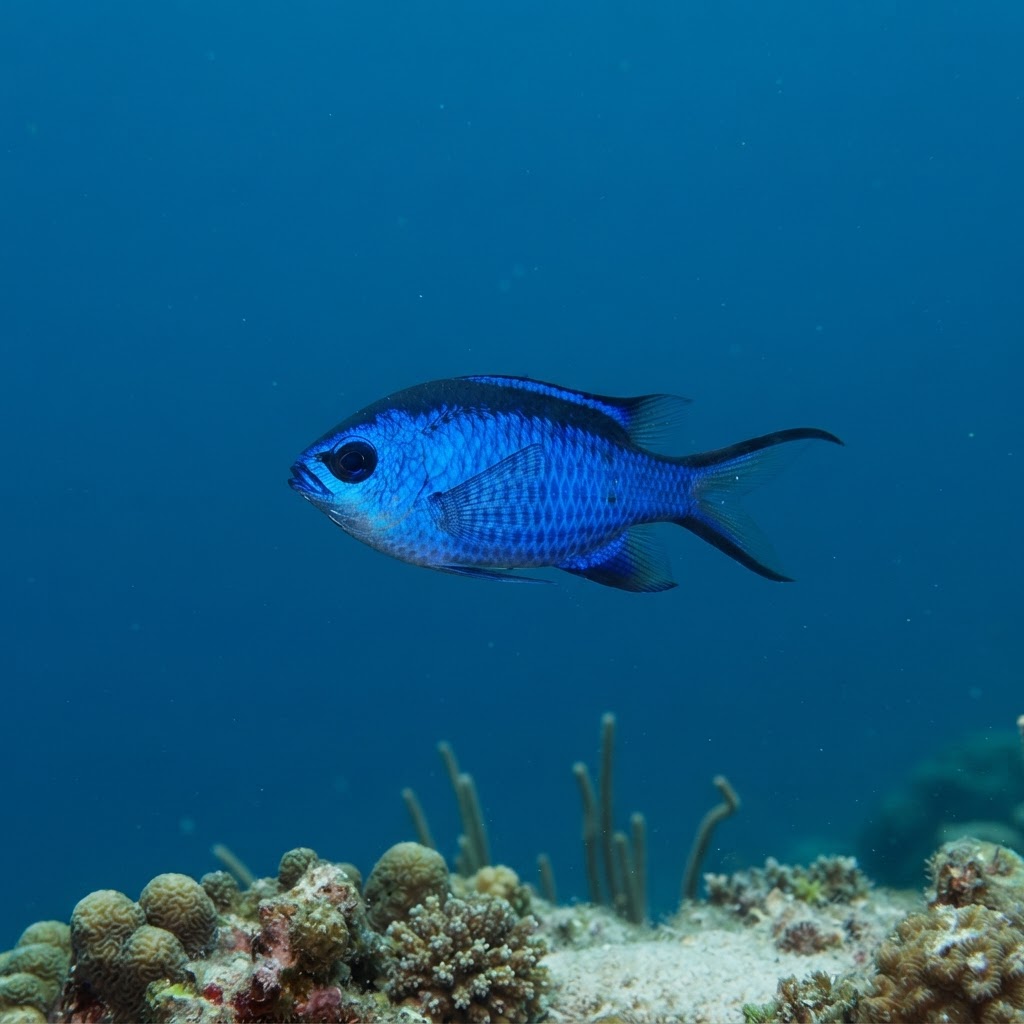
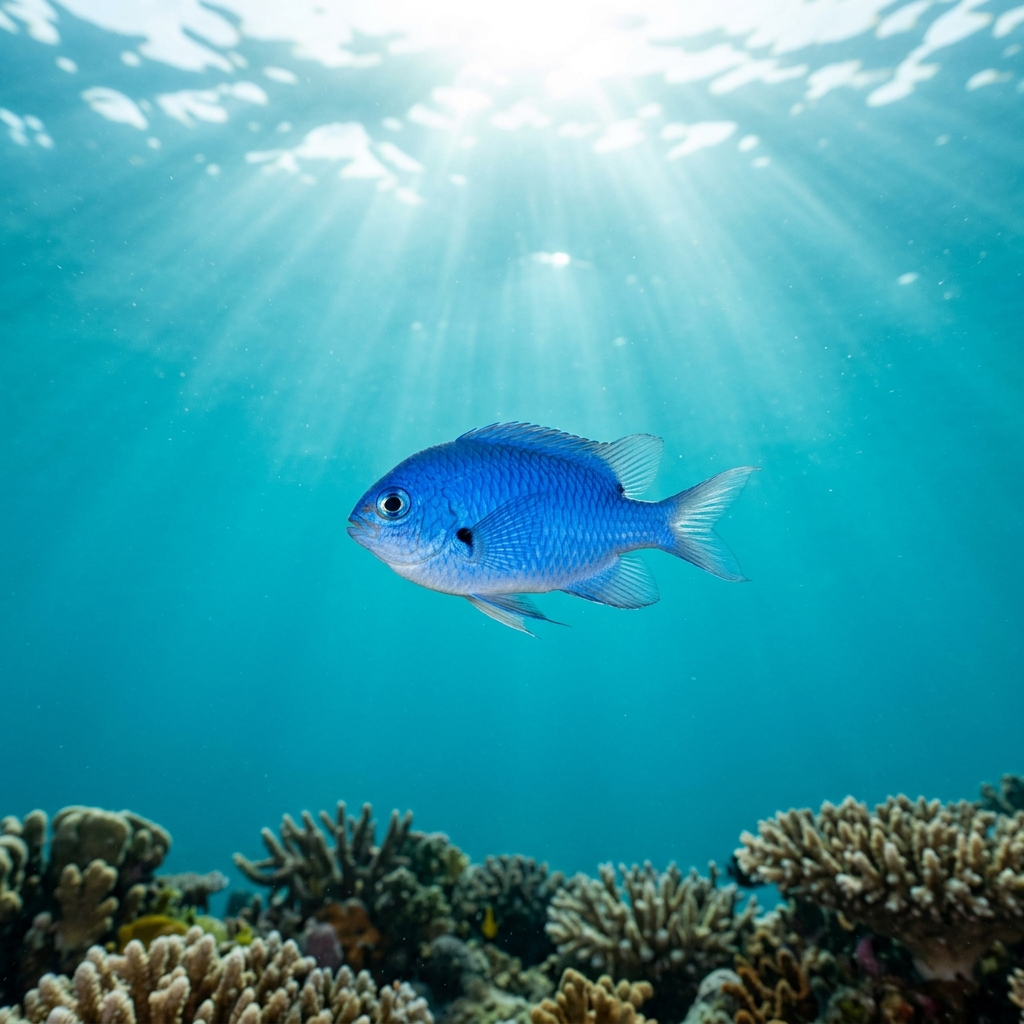
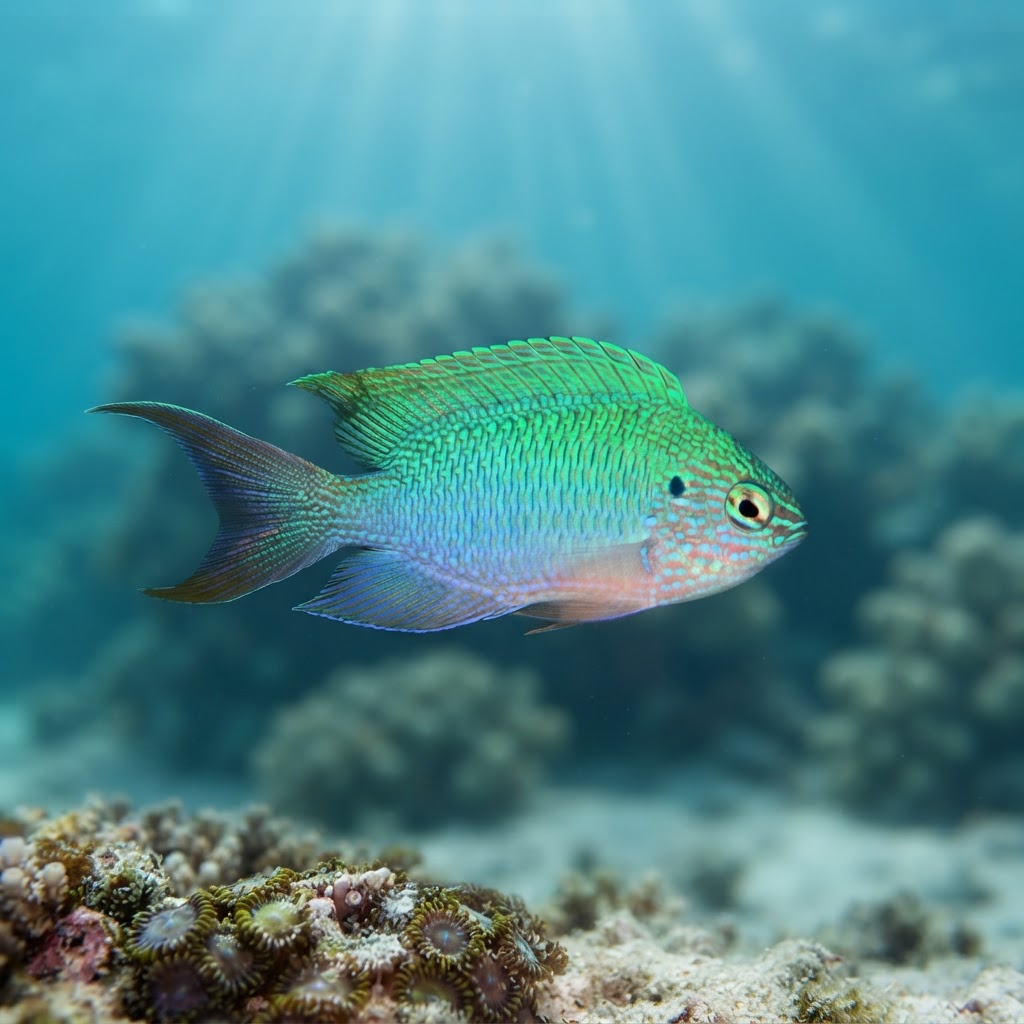
A palm-sized fish, rarely more than 5 cm, with an oval body that flashes iridescent blue to turquoise depending on the light. Look for a dusky to black spot at the base of the tail fin and on the upper gill area, the two marks divers use to separate it from plainer blue damsels. It often hangs at a slight angle over the reef rather than sitting flat, darting back to the same bit of coral when startled.
Expect to find it hovering just above coral heads or rubble patches in shallow water, picking at plankton drifting past rather than grazing the reef itself. It is a bold little fish for its size, holding its ground or making short retreats to a favourite crevice rather than fleeing outright when divers approach. Most sightings are on the shallower half of its depth range, often in the sunlit top 10 metres where the light shows off its blue colouring best.
Like other damselfish, males clean and guard a small patch of reef surface where females lay eggs, then fan and defend that patch until the eggs hatch, making territorial chasing a normal thing to see around a chosen rock or dead coral head.
No clear seasonal pattern shows up in the data, and with a comfortable range of 25 to 29 C on tropical reefs, it is a year-round sighting wherever it occurs. Plan around your destination's general dive season rather than around this fish specifically.
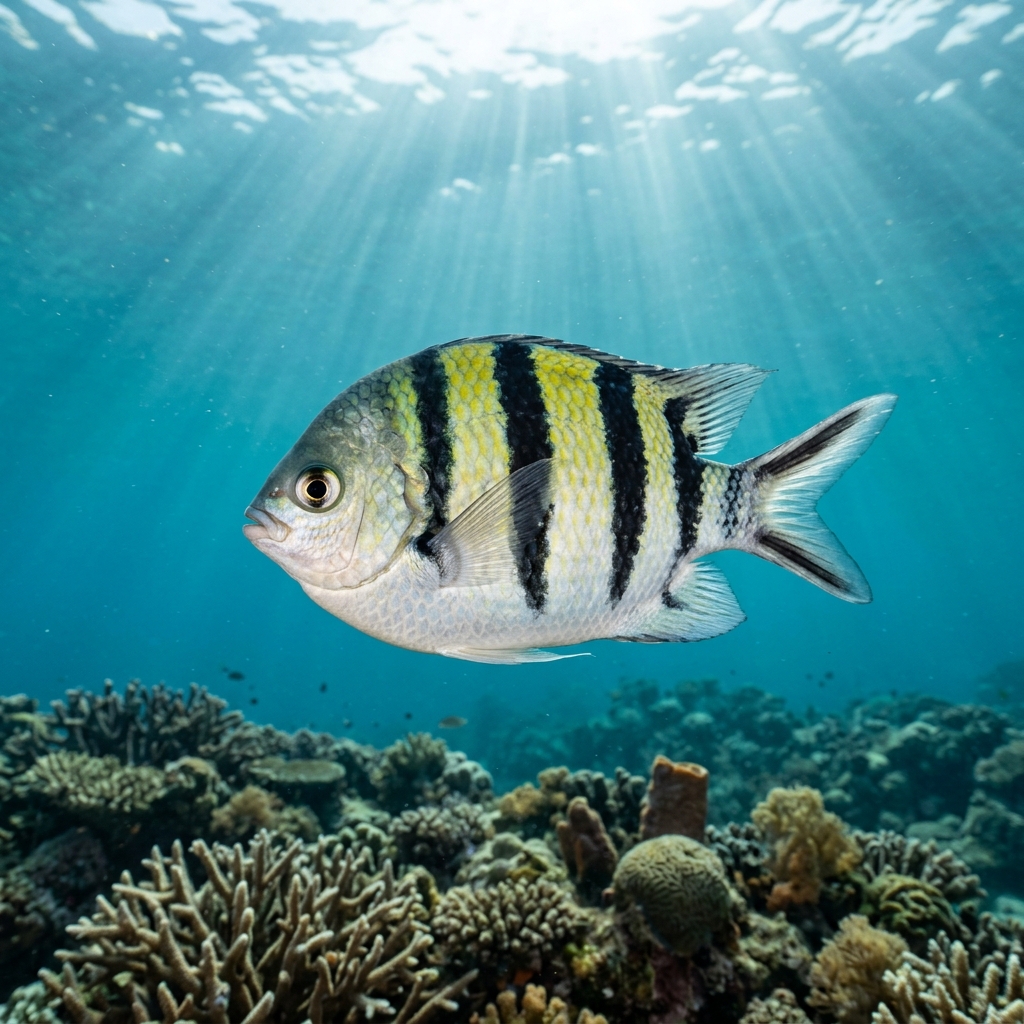
Reef neighbours a diver could mistake it for. Use the identification notes above to tell them apart.
Most reliably logged across French Polynesia, especially the Society Islands, where it turns up on shallow reef flats and lagoon slopes in big numbers. Thailand is the next strongest area, particularly Koh Lipe and Khao Lak, with further solid populations in the Philippines' Visayas, the Cook Islands around Rarotonga, and Guam's Apra Harbor. Smaller but consistent sightings come from Chuuk Lagoon in Micronesia, Nosy Be in Madagascar, and New Caledonia.
Mapping where Peacock Damselfish is logged…
French Polynesia's Society Islands hold the strongest numbers, with Thailand's Koh Lipe and Khao Lak, the Philippines' Visayas, and Rarotonga in the Cook Islands all reliable spots. It also shows up in Guam, Chuuk Lagoon, Madagascar's Nosy Be, and New Caledonia.
There is no strong seasonal signal in sighting data, and it tolerates a warm 25 to 29 C range, so it is present on tropical reefs throughout the year. Time your trip around your destination's usual dive season rather than this fish.
Look for a small, oval, iridescent blue fish around 5 cm long with a dark spot at the base of the tail and another near the gill cover. It hovers at an angle over the reef rather than lying flat and darts back to the same coral patch when disturbed.
They stay small, topping out at around 5 cm, which is typical for reef damselfish. Most individuals you see on a dive will be at or near that full adult size.
No, they pose no threat to divers. They may dart at your mask or hover close if you linger near their territory, but this is bluff behaviour rather than a real risk.
Site and sighting data is aggregated from diver logs, iNaturalist and GBIF. For taxonomy and conservation status:
Dascyllus
3,697 sites