Salaria pavo
Spot the Peacock Blenny across the Mediterranean, from Sardinia to Gozo, between March and August in waters as cool as 15°C.
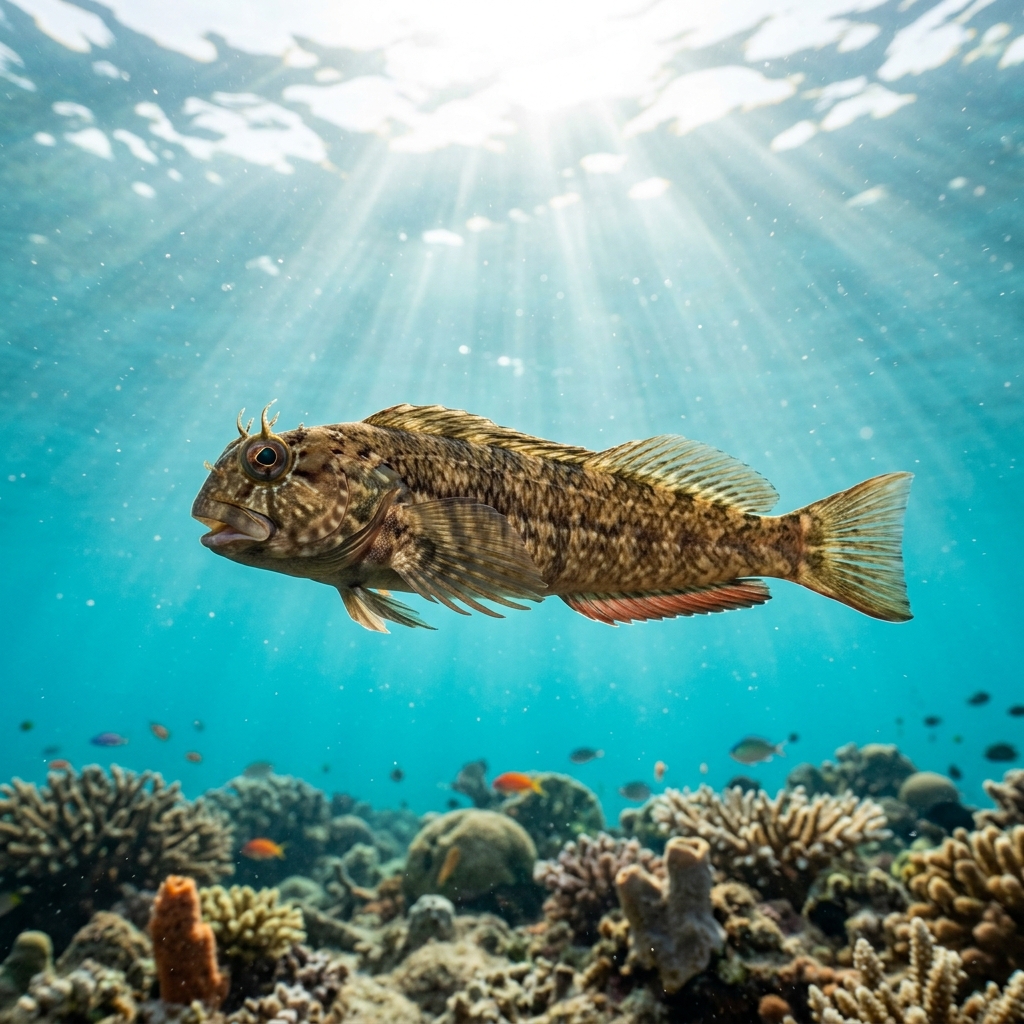
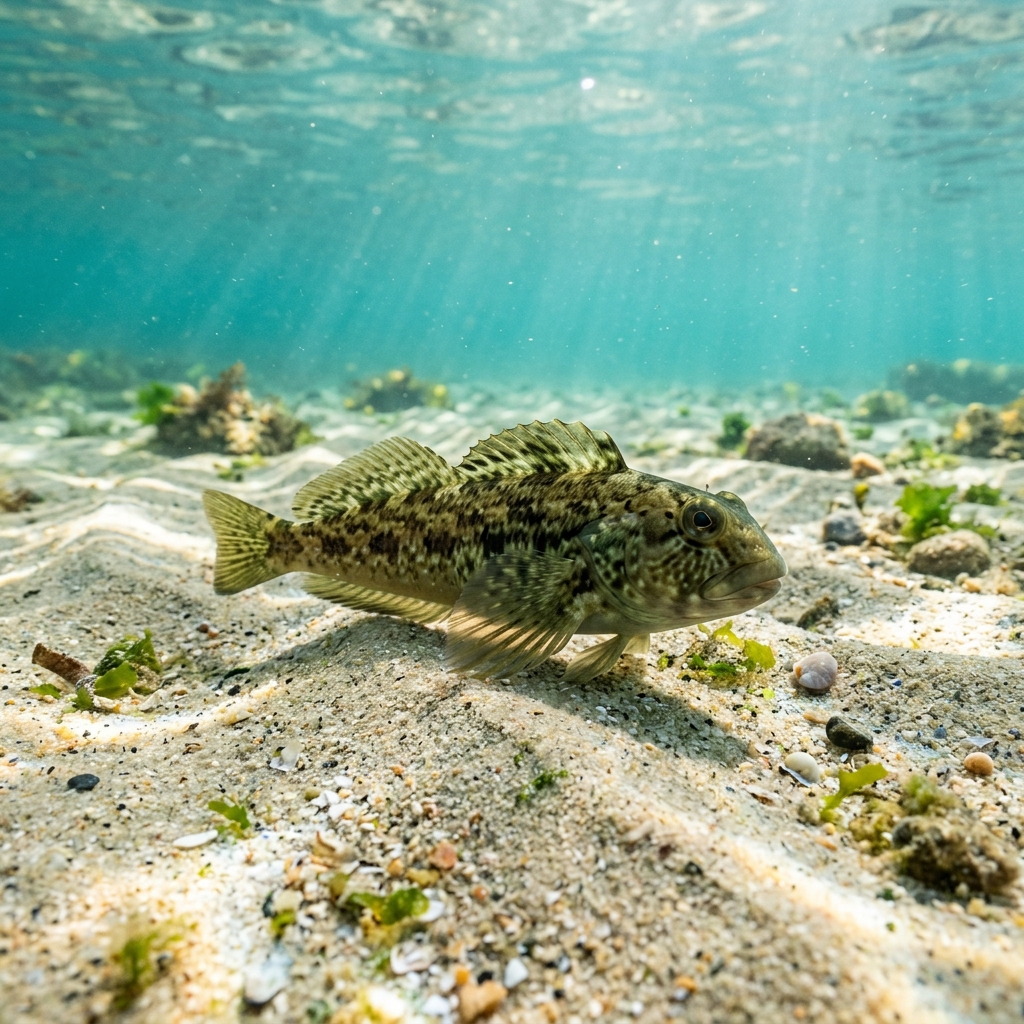
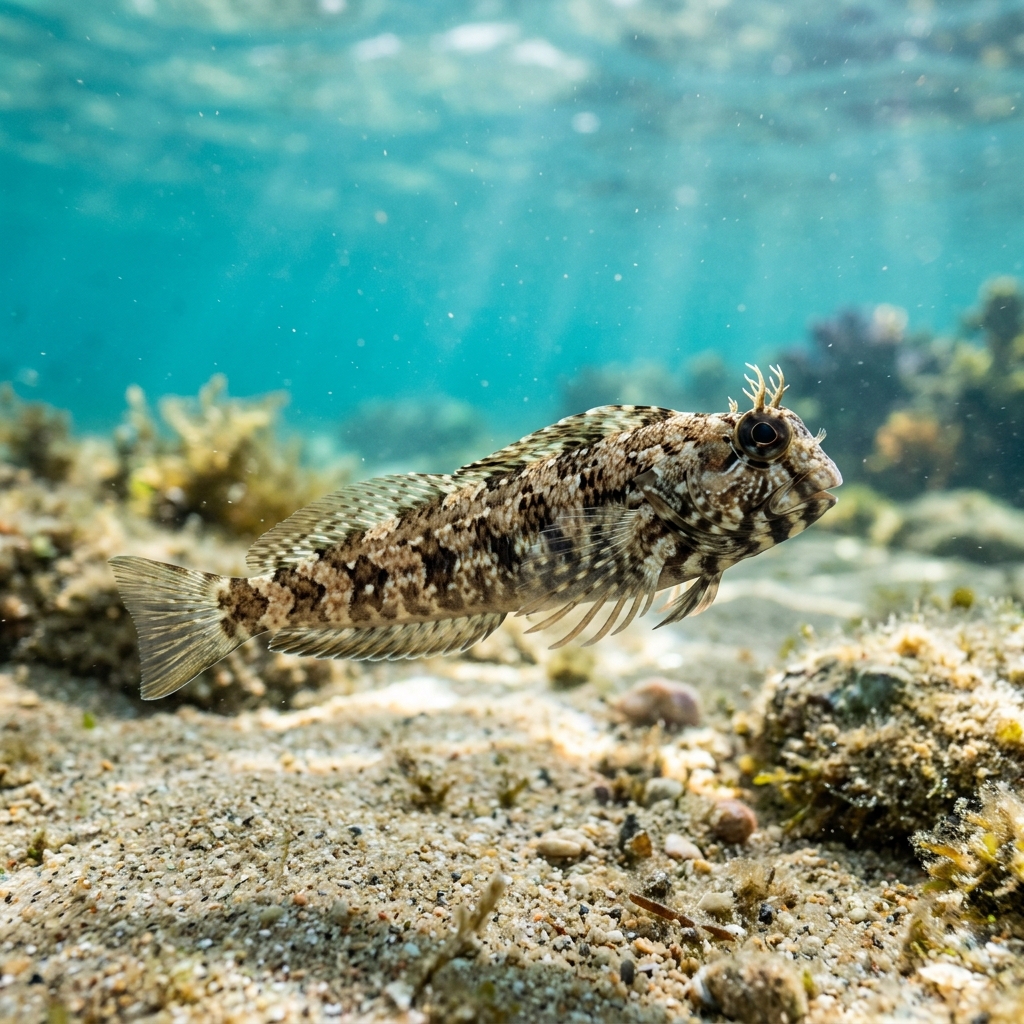
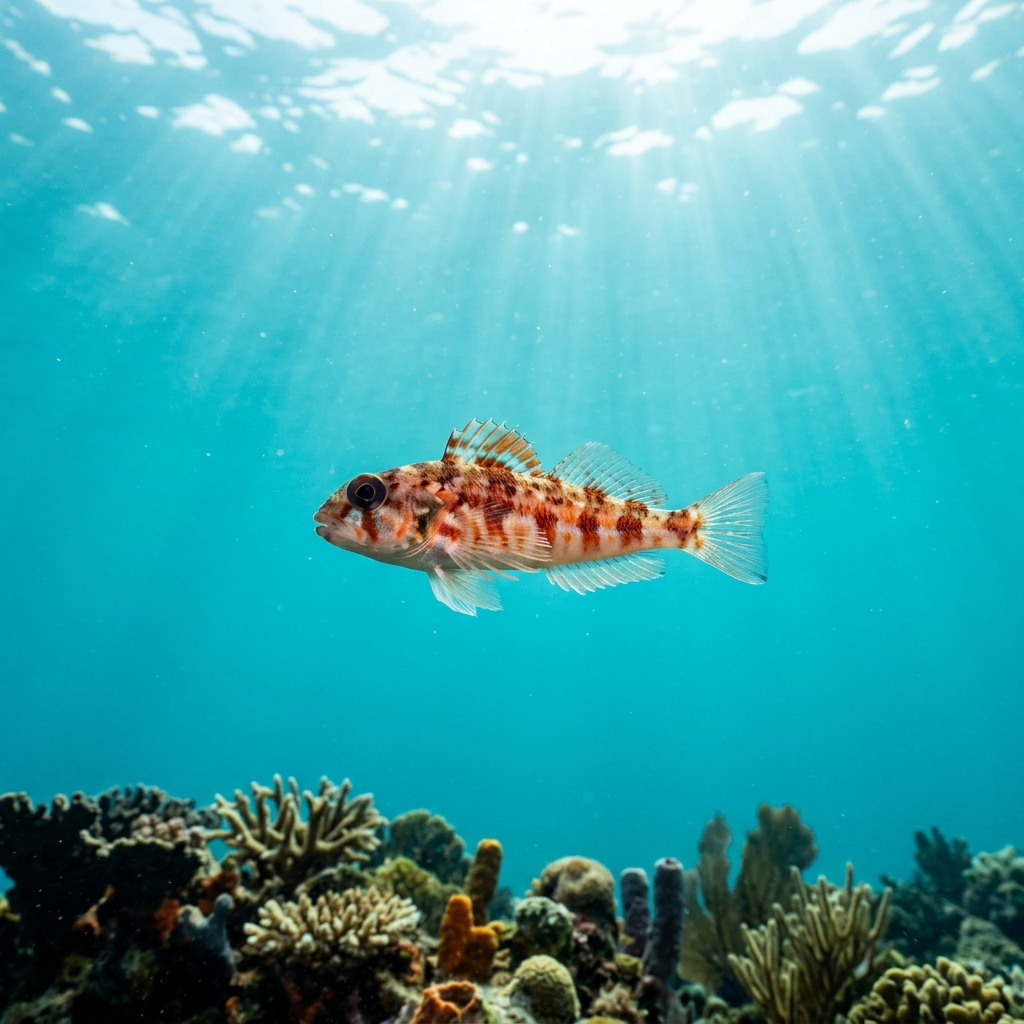
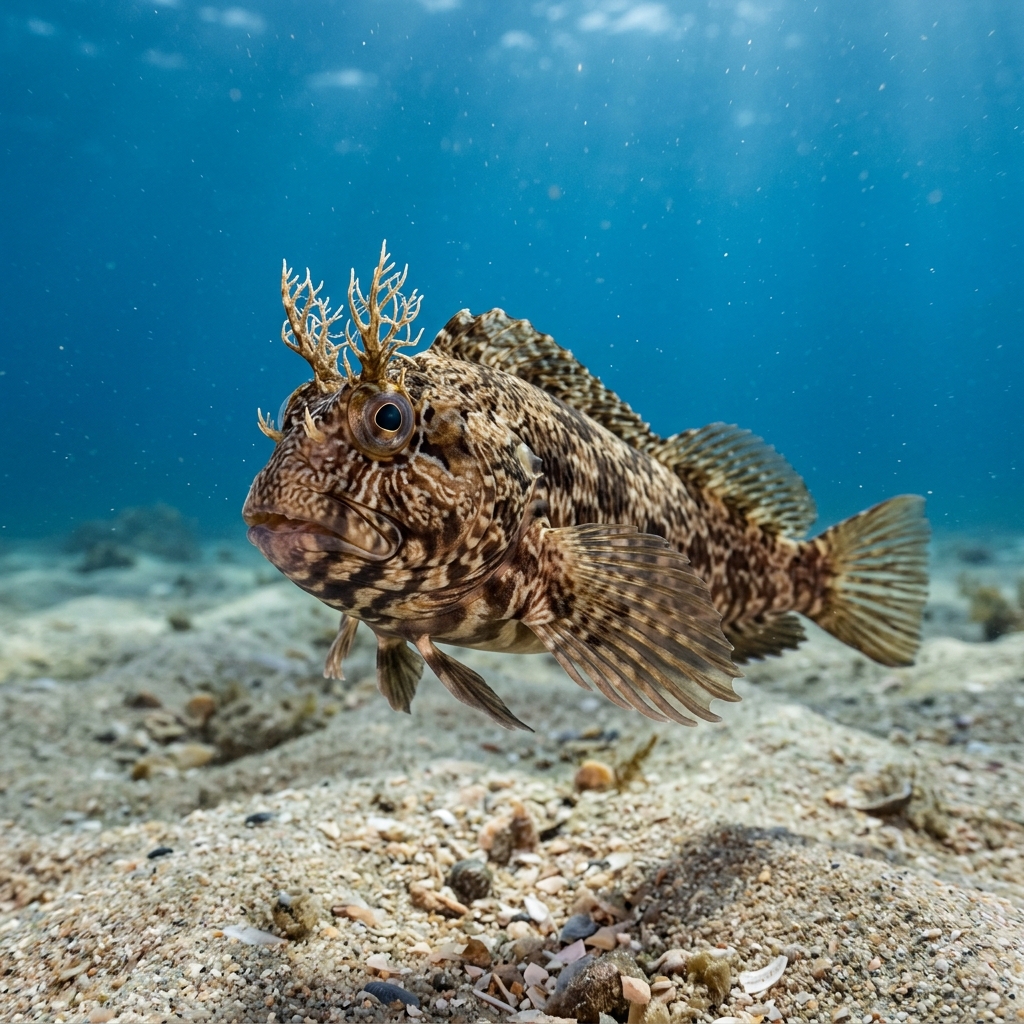
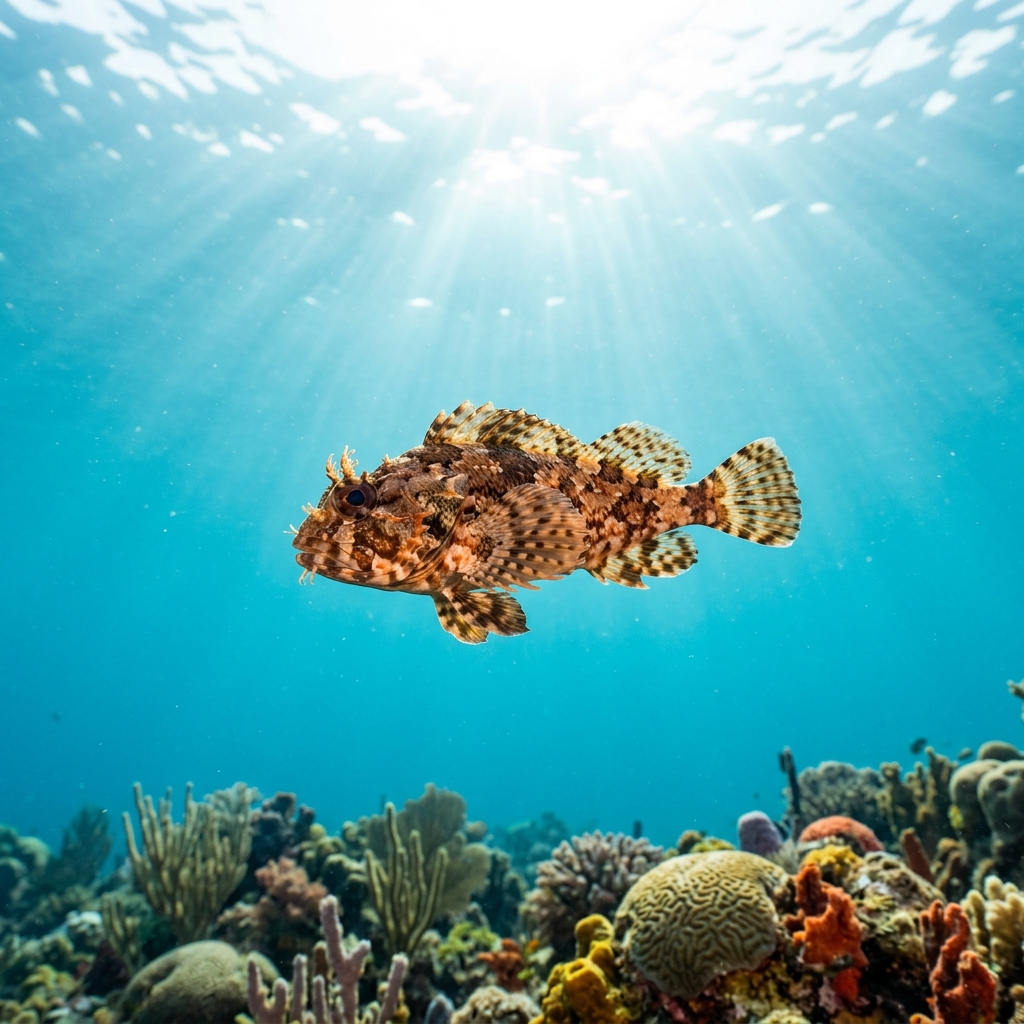
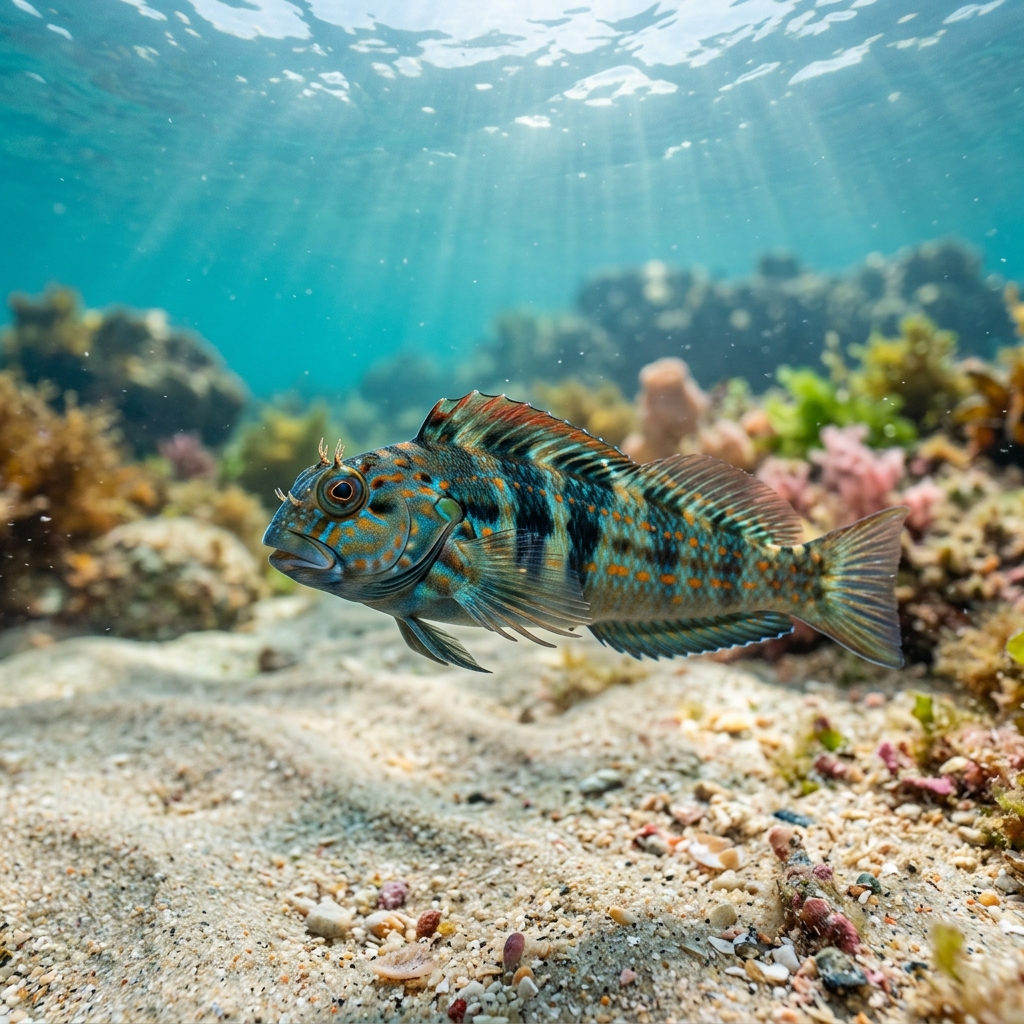
A small, finger-length blenny that sits bolt-upright on rocks rather than swimming freely, which makes it look almost comically alert. The body is olive-brown with faint banding, but the face gives it away: vivid orange and blue patterning around the eye and cheek, more intense on males. Males also carry a prominent fleshy crest on the top of the head that is impossible to miss once you know to look for it. Females lack the crest and are noticeably plainer, but the upright perching posture and facial spots still distinguish them from other small reef fish.
You will almost always find one perched on a flat rock or ledge in the shallows, watching you with an almost quizzical tilt of the head. They are unusually tolerant of slow, patient divers and will often hold position while you approach closely. During the breeding season, males become territorial and will square off against rivals with flared crests and posturing; stay still long enough and you may catch one of these brief stand-offs play out in front of you.
Males guard and fan eggs that are laid inside rocky crevices or empty shells, aerating them until they hatch. Hovering near a suitable cavity during the breeding season is a reliable way to spot a male in full breeding colours.
Sightings concentrate between March and August in the Northern Hemisphere, covering the Mediterranean spring and early summer when the species is most active. Outside that window encounters become much patchier.
Reef neighbours a diver could mistake it for. Use the identification notes above to tell them apart.
Most commonly logged across the Mediterranean, with Italy, Croatia, Spain, and Greece leading by sheer number of sites. The strongest concentrations are in Sardinia and Tuscany, the Costa Blanca, Croatia's Kvarner Gulf and Istria, and around Gozo in Malta. Portugal rounds out the Atlantic fringe of its range.
Mapping where Peacock Blenny is logged…
They are a Mediterranean species logged across Italy, Croatia, Spain, Greece, France, Turkey, Portugal, and Malta. The most reliable regions are Sardinia and Tuscany, Croatia's Istria and Kvarner Gulf, the Costa Blanca in Spain, and Gozo in Malta.
March through August is when sightings peak across the Mediterranean. They are most active and visible during daylight hours, and males are easiest to spot during the spring and early summer breeding season when their crests and colours are at their most developed.
Look for a small olive-brown fish perched upright on a rock rather than swimming. The distinctive orange and blue facial markings around the eye are the key feature, and males have an unmistakable fleshy crest on top of the head. The habit of sitting motionless on open rock and watching you back makes them much easier to spot than most small blennies.
Typically around 9 cm, roughly the length of a finger. They are small enough that many divers swim straight past them, so slow down and scan the rocky surfaces at the edge of the reef.
They are carnivores, foraging along rocky surfaces during daylight hours for small invertebrates. Their habit of actively patrolling and investigating crevices in the shallows makes them easier to observe than many reef fish of similar size.
Site and sighting data is aggregated from diver logs, iNaturalist and GBIF. For taxonomy and conservation status:
Rusty Blenny
2,605 sites