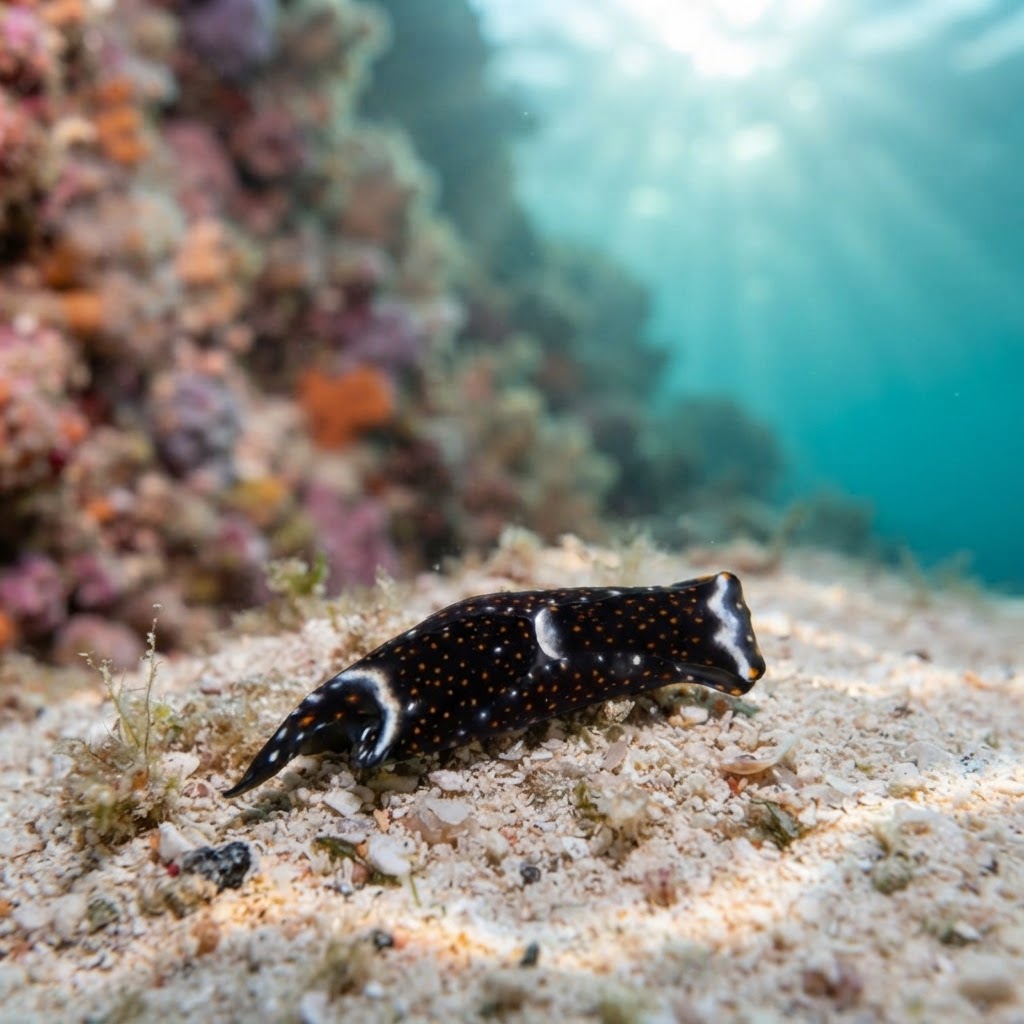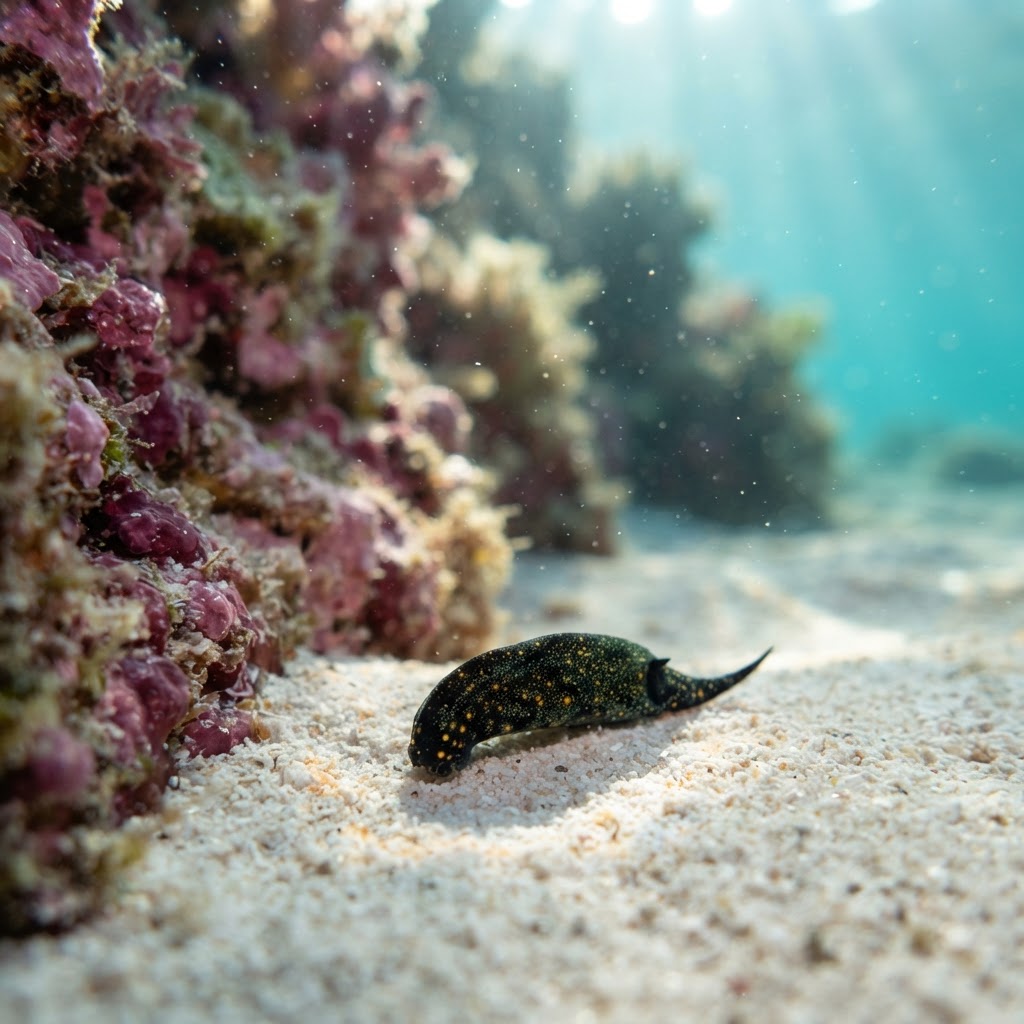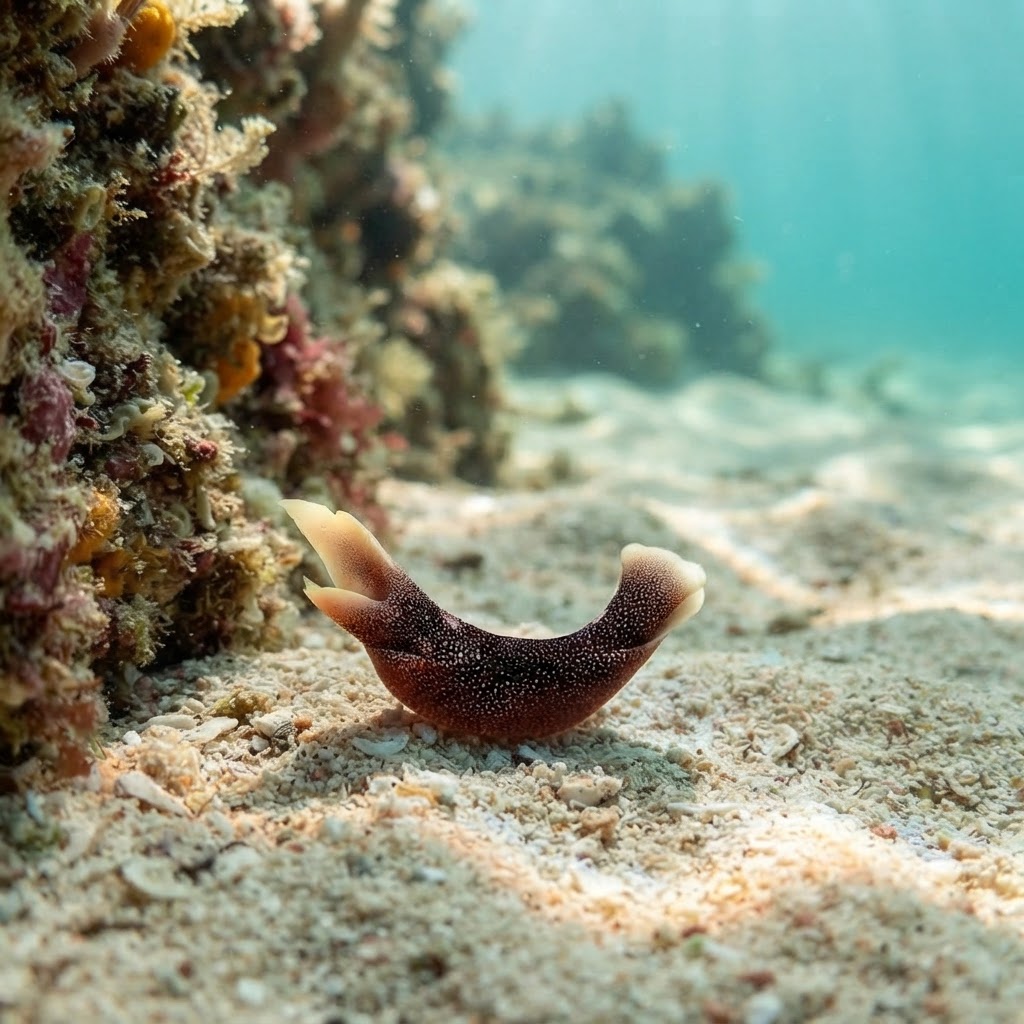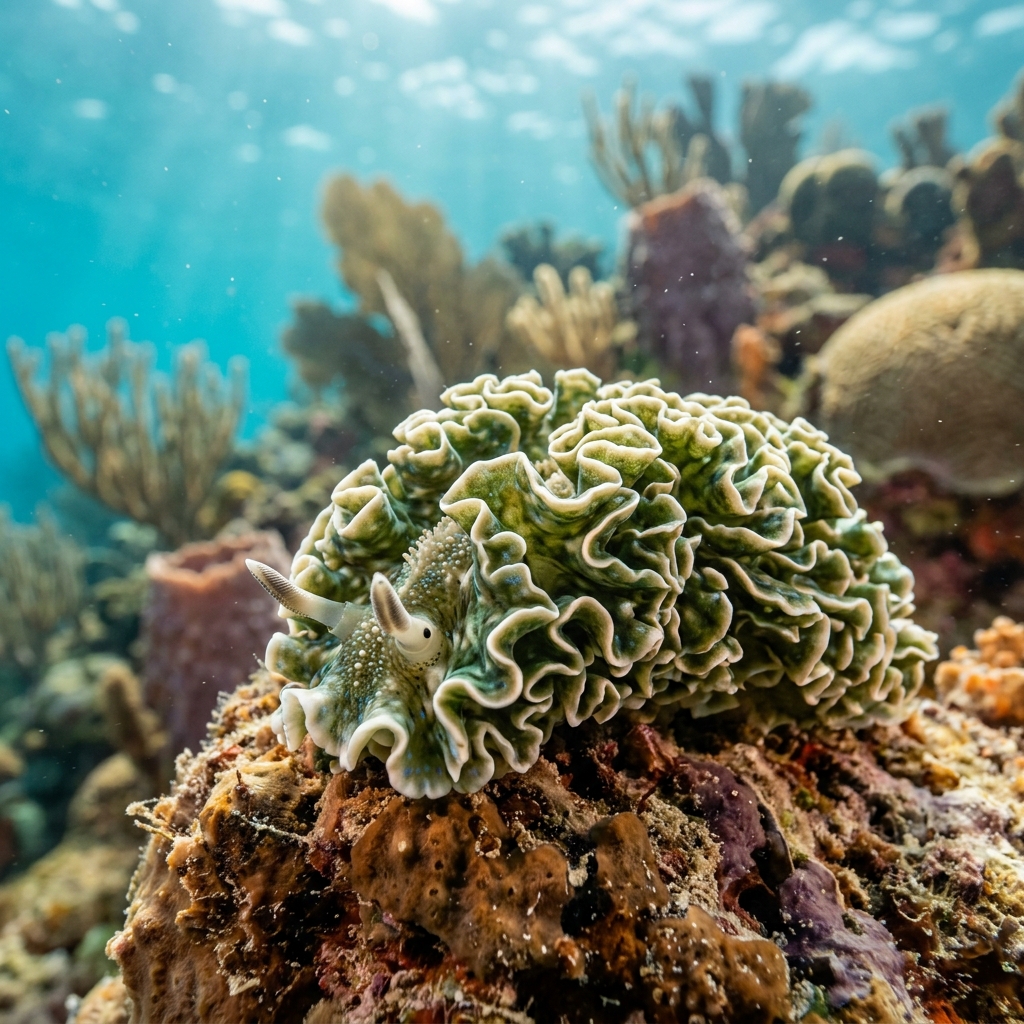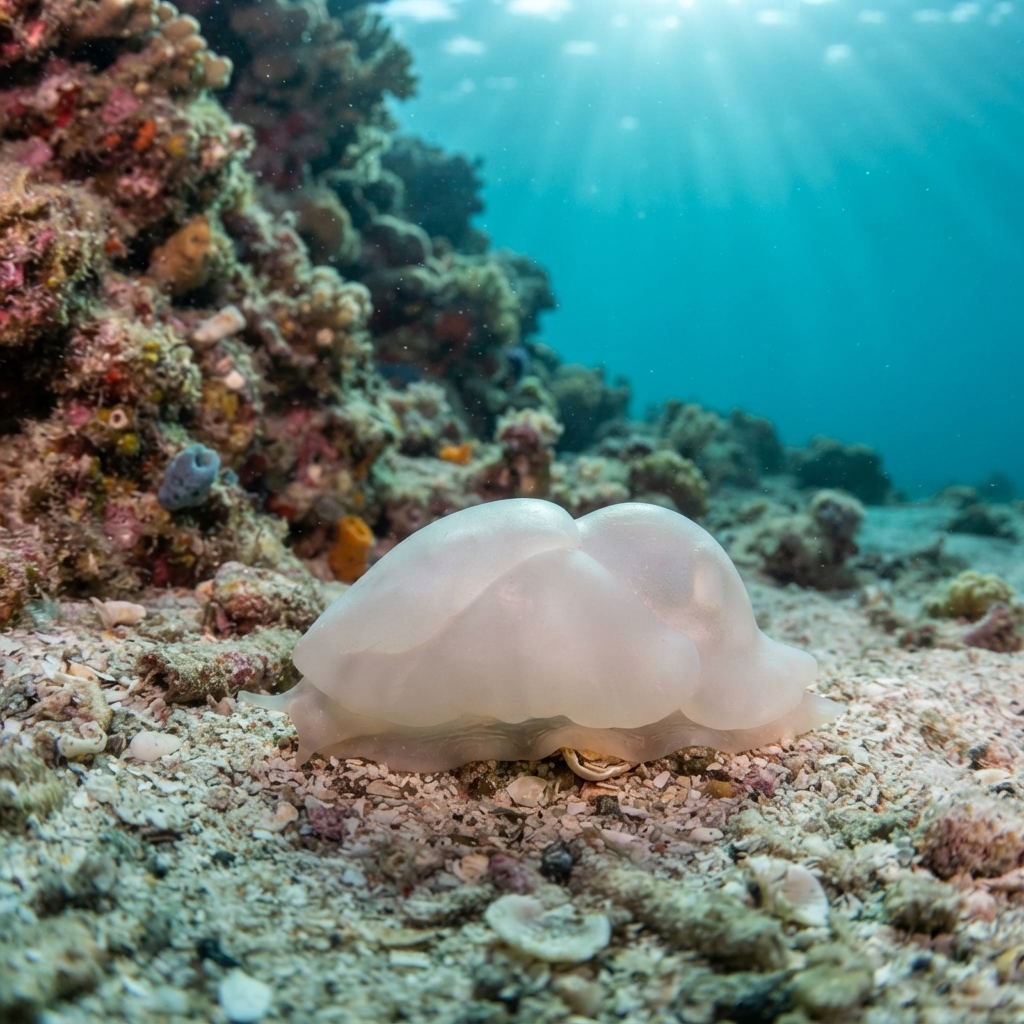
Philine aperta
Uncommon find off South Africa's Western Cape, in 13-19C water. Here's how to spot a paper-bubble snail on a cold-water dive.
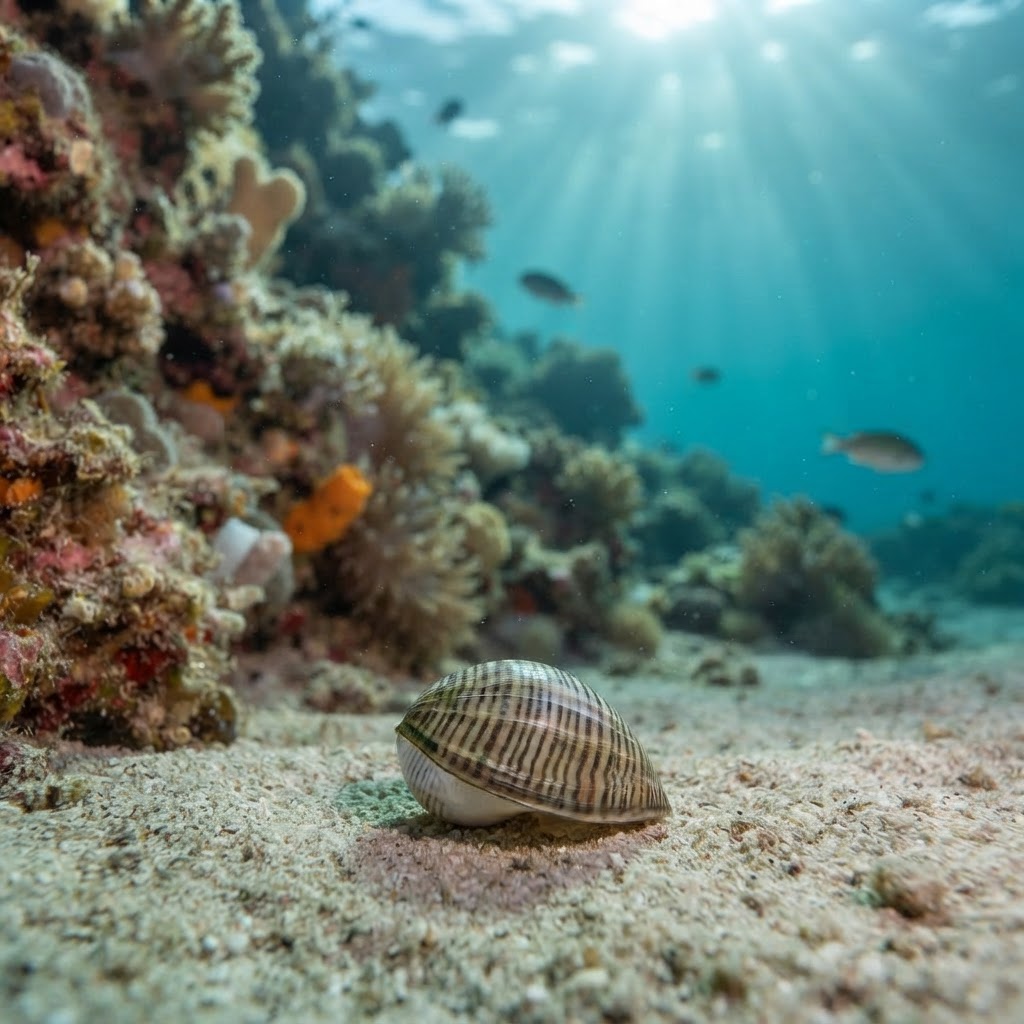
Look for a soft, inflated body with a thin, fragile, translucent shell that looks almost too small to cover it, giving it a bubble-like silhouette on the seabed. Colouration tends toward pale cream or greyish tones, blending into sand and fine sediment rather than standing out. There's no dramatic pattern to key on here; the giveaway is the shape, a rounded, glassy shell sitting atop a fleshy, headshield-style body typical of this slug group.
Divers log this one as an uncommon find, usually spotted moving slowly across sand or sediment patches rather than clinging to reef structure. It's not a species that reacts to divers in any noticeable way, it simply keeps to its slow, methodical crawl across the bottom. Look low, on open sand between rocky or reef features, rather than up on the reef itself.
Like other members of the headshield slug group, paper-bubbles carry a reduced, thin shell that offers little real protection, a trait shared across several of its confusable relatives.
Sightings don't show a clear seasonal pattern, and the observed temperature range of 13.4 to 19.4C spans much of the Western Cape's diving calendar, so treat this as a year-round possibility rather than a seasonal target.
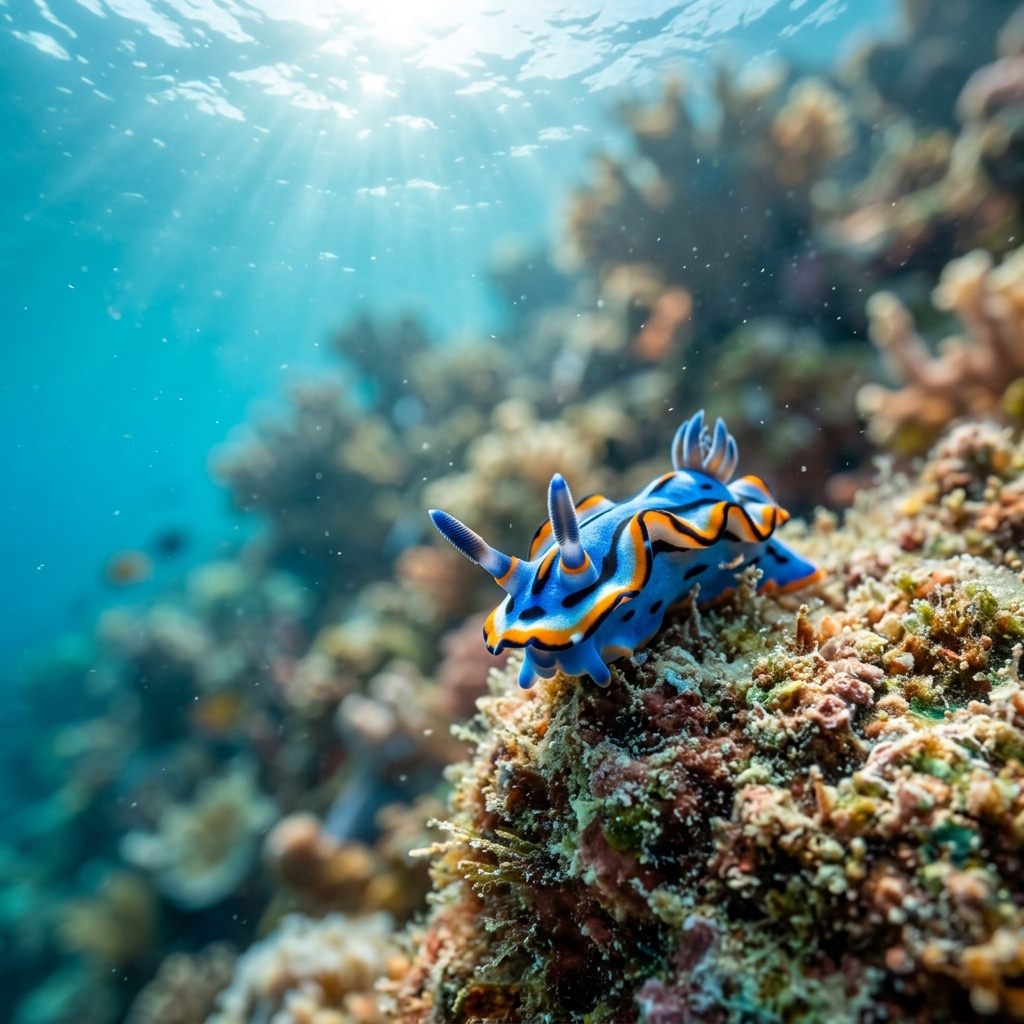
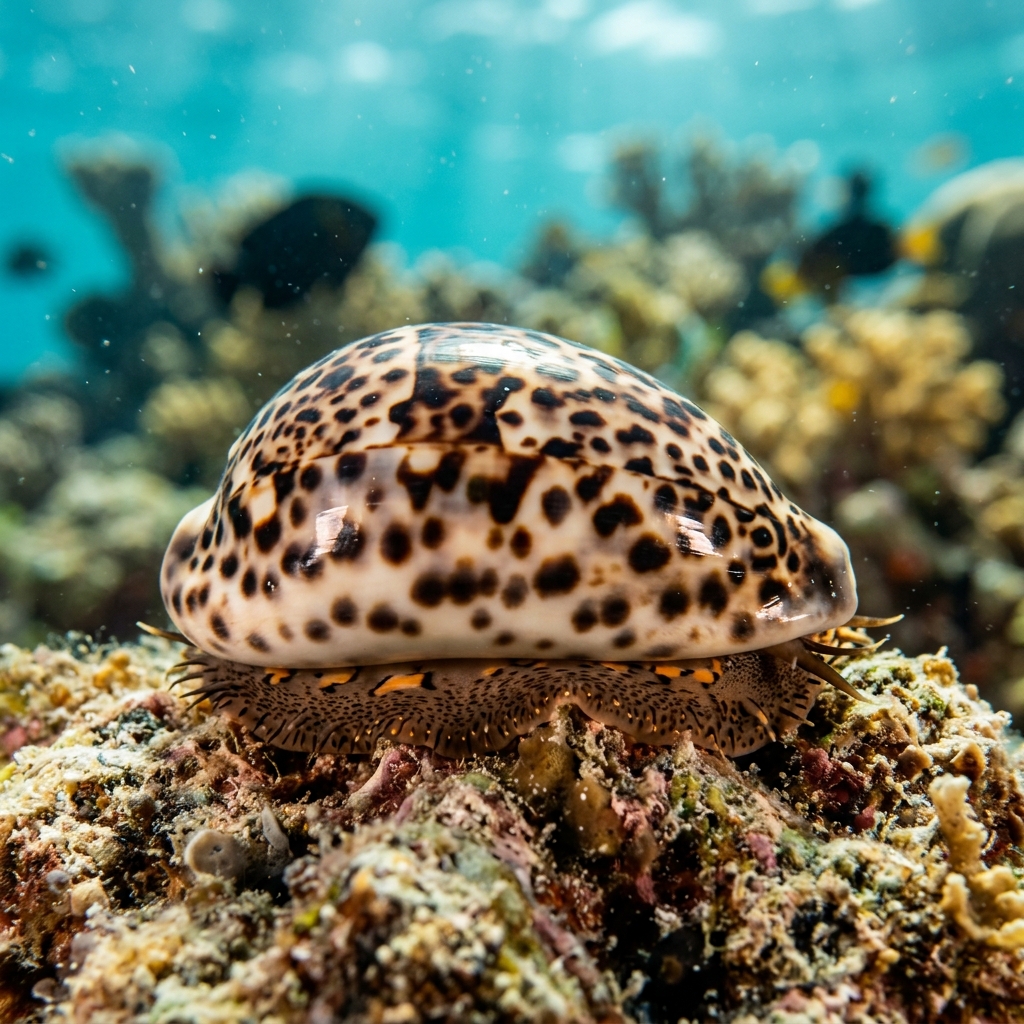
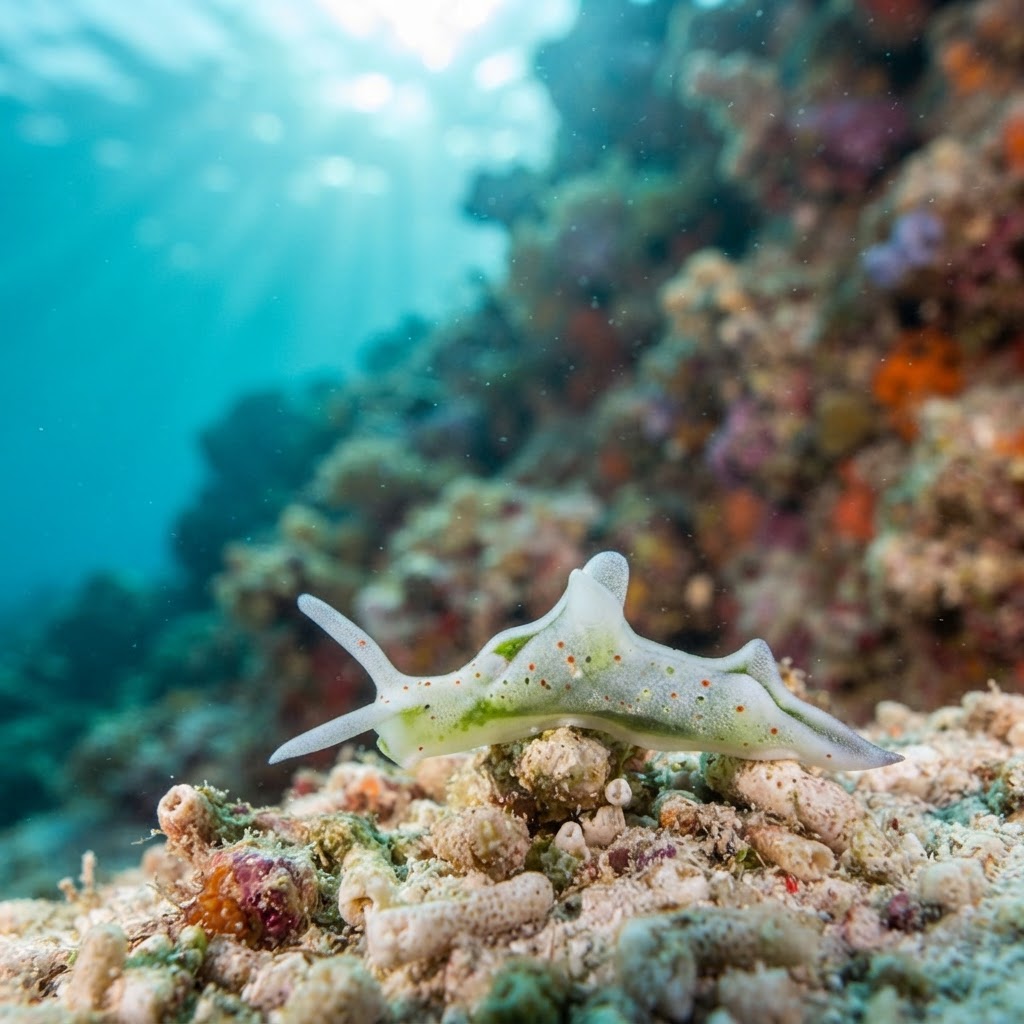
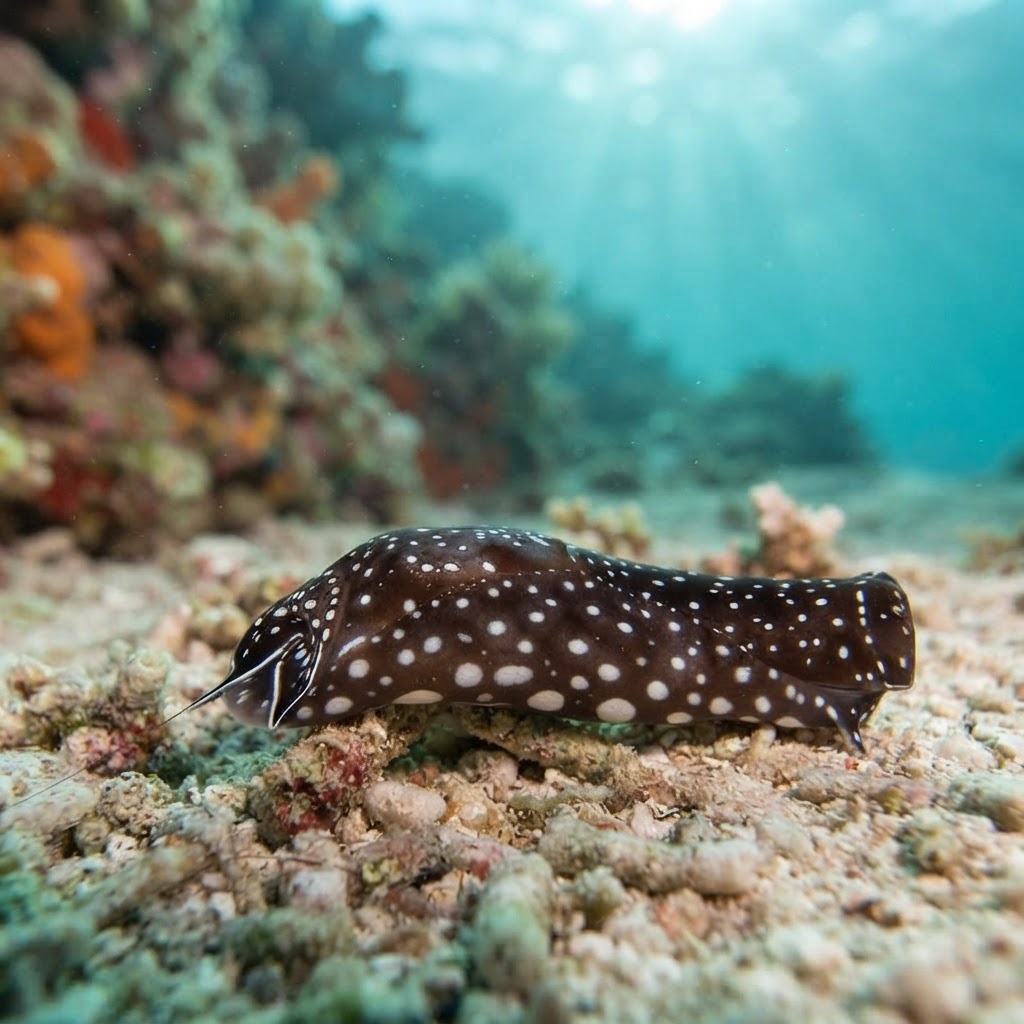
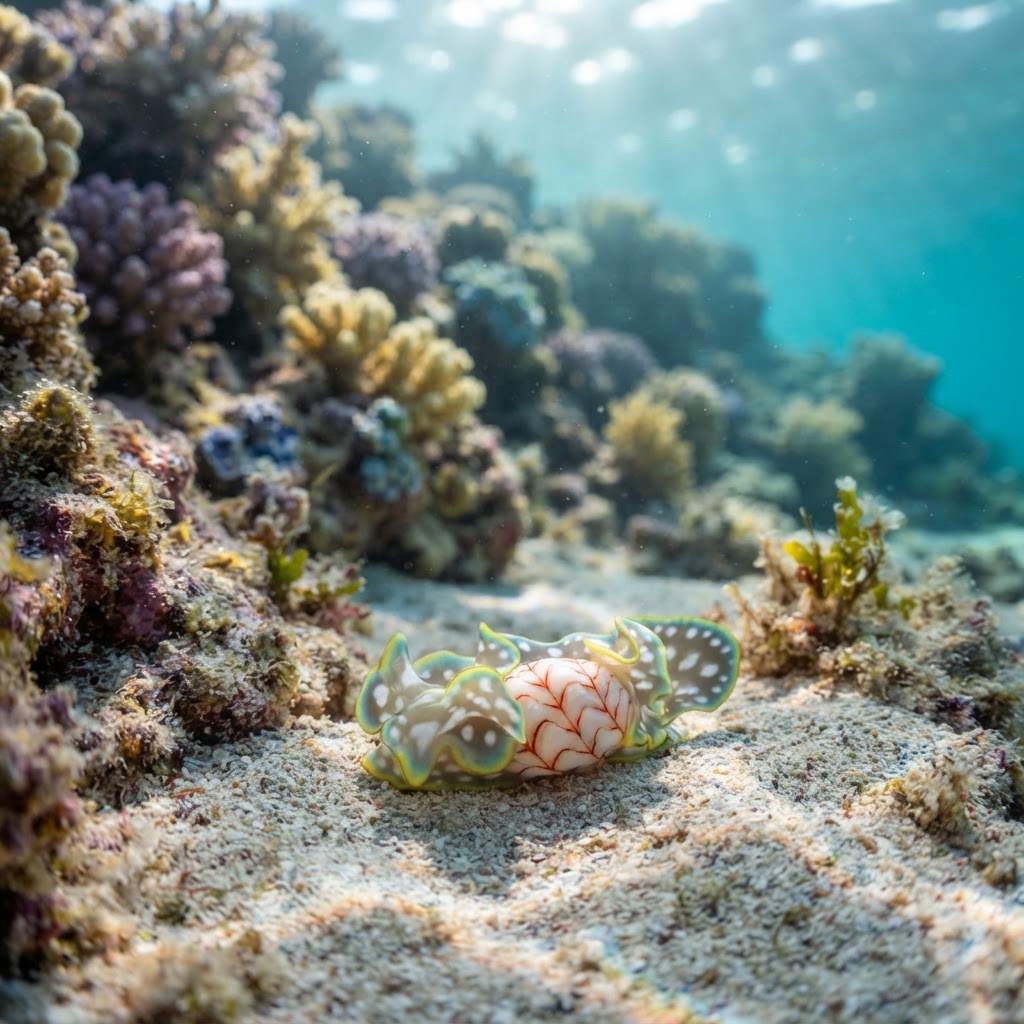
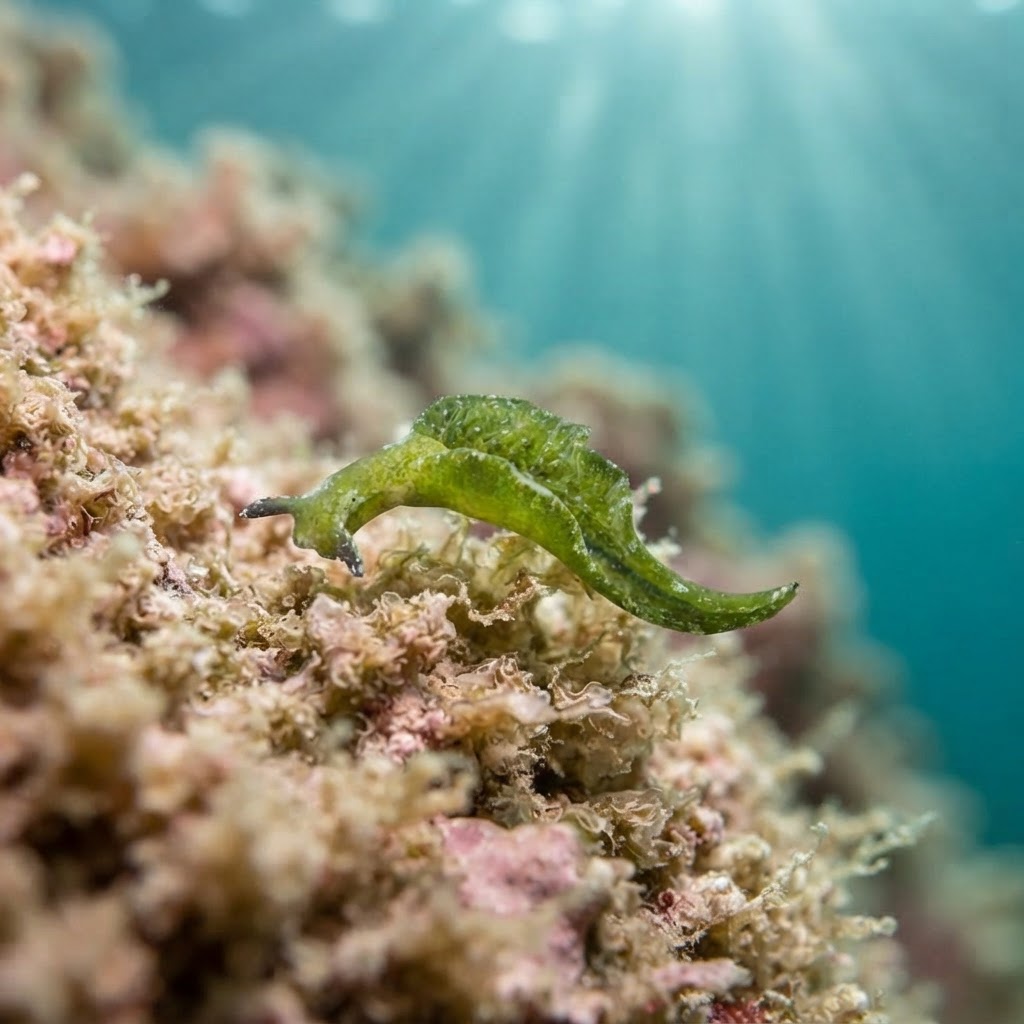
Reef neighbours a diver could mistake it for. Use the identification notes above to tell them apart.
Every logged sighting so far comes from South Africa, specifically the Western Cape, making it the place to look if you want a shot at this one. There's no other regional data to point to, so Western Cape cold-water sites are currently the only known window into this species underwater.
Mapping where Paper-bubble is logged…
All confirmed sightings so far are from South Africa's Western Cape, making it the only well-documented region for this species. No other regions currently have verified diver observations.
There's no strong seasonal pattern in the sightings data, and it's been observed across a range of cooler water temperatures, so it appears to be a year-round find in the Western Cape rather than a seasonal one.
Look for a soft-bodied slug with a thin, translucent, bubble-shaped shell that barely covers its fleshy body. It's pale and unpatterned, so the rounded shell shape against sand is the main clue.
No, they pose no threat to divers. They're slow-moving, soft-bodied animals with no stinging or biting apparatus of concern.
Exact size data isn't well documented for this species, but like other members of the philinidae family, they are small, typically only a few centimetres long, and easy to overlook on sand.
Site and sighting data is aggregated from diver logs, iNaturalist and GBIF. For taxonomy and conservation status:
Mariaglaja inornata
Elysia Timida
573 sites