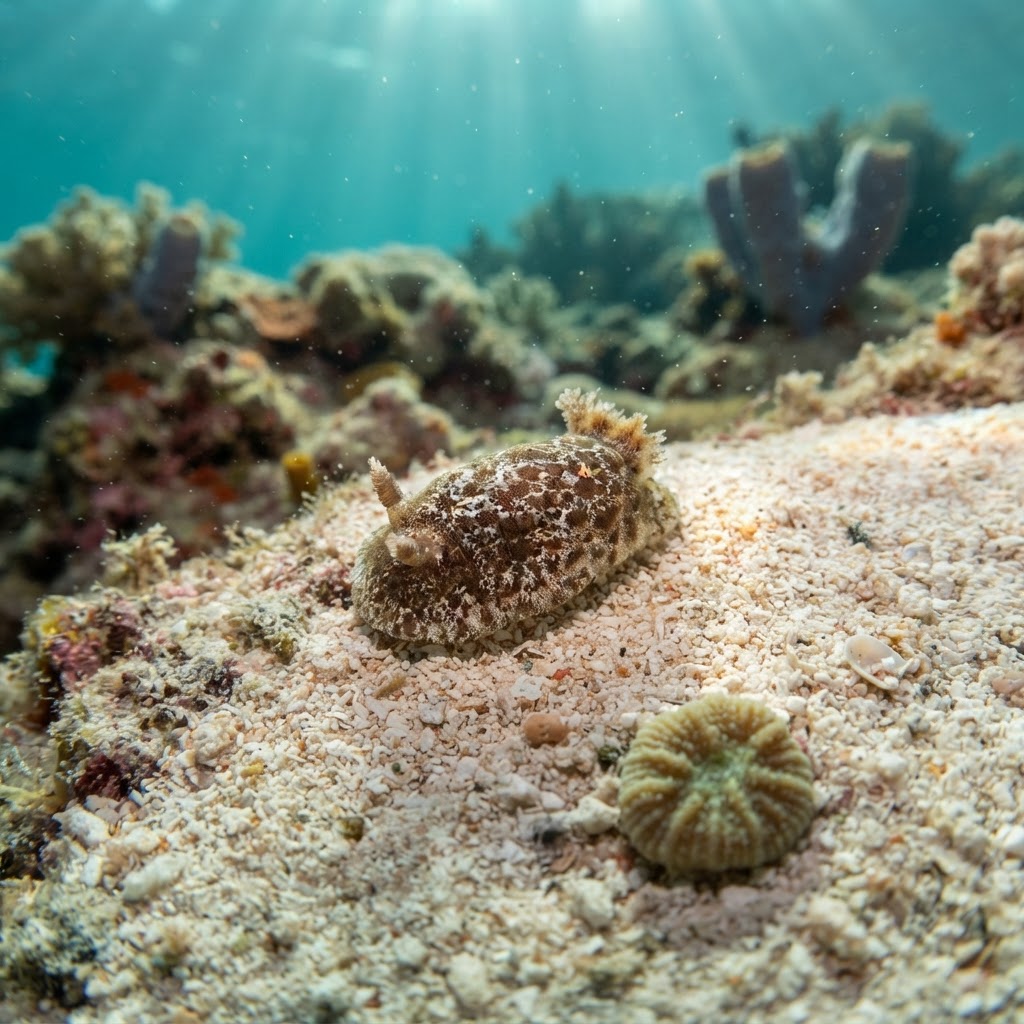
Jorunna pantherina
A speckled, cream-coloured nudibranch barely 1cm long, most reliably logged on reefs in New South Wales and Queensland, Australia.
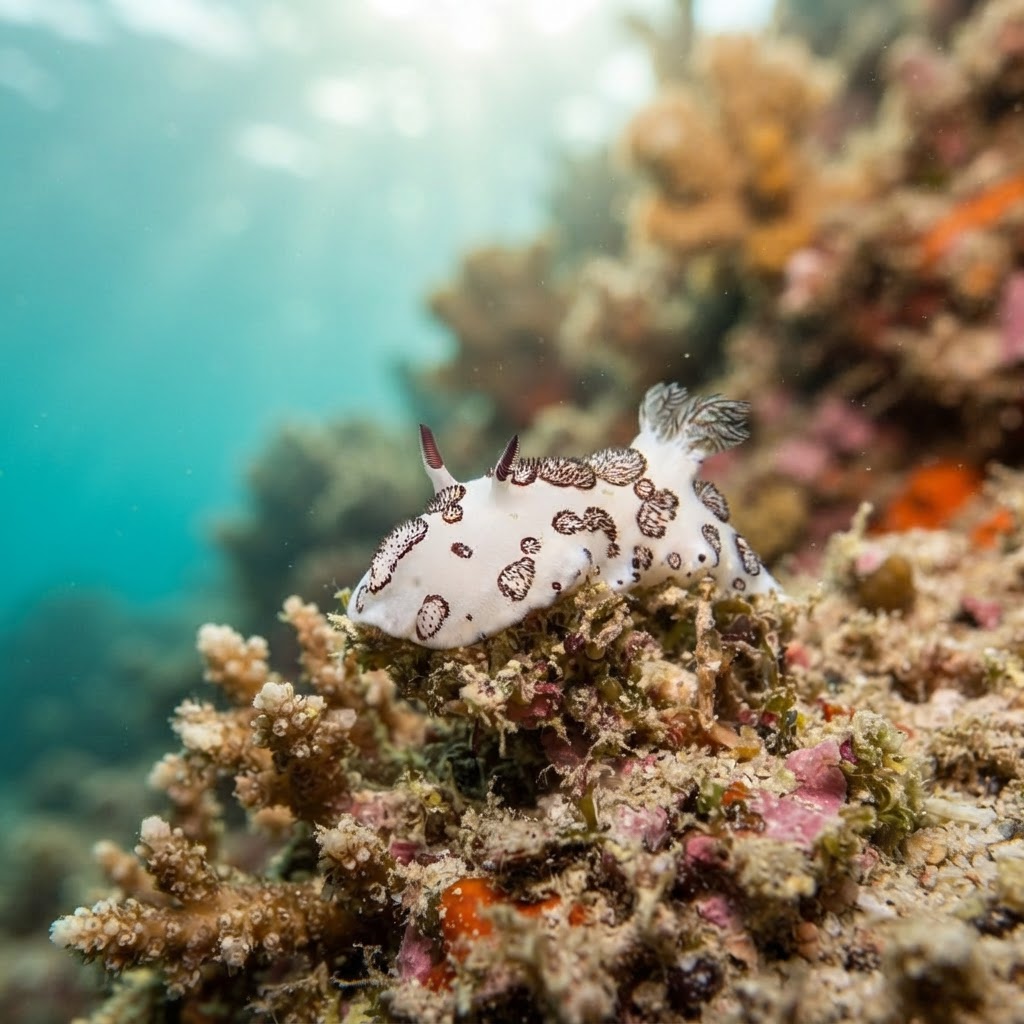
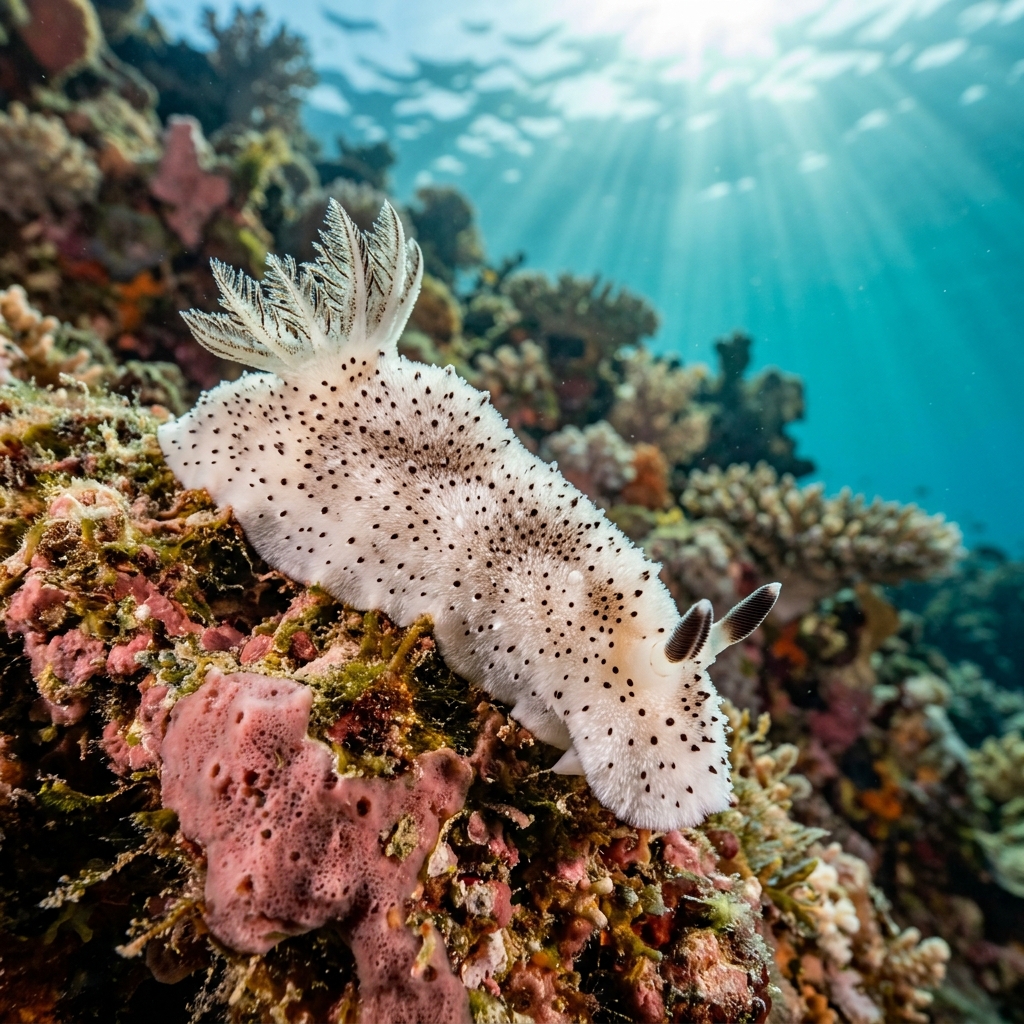
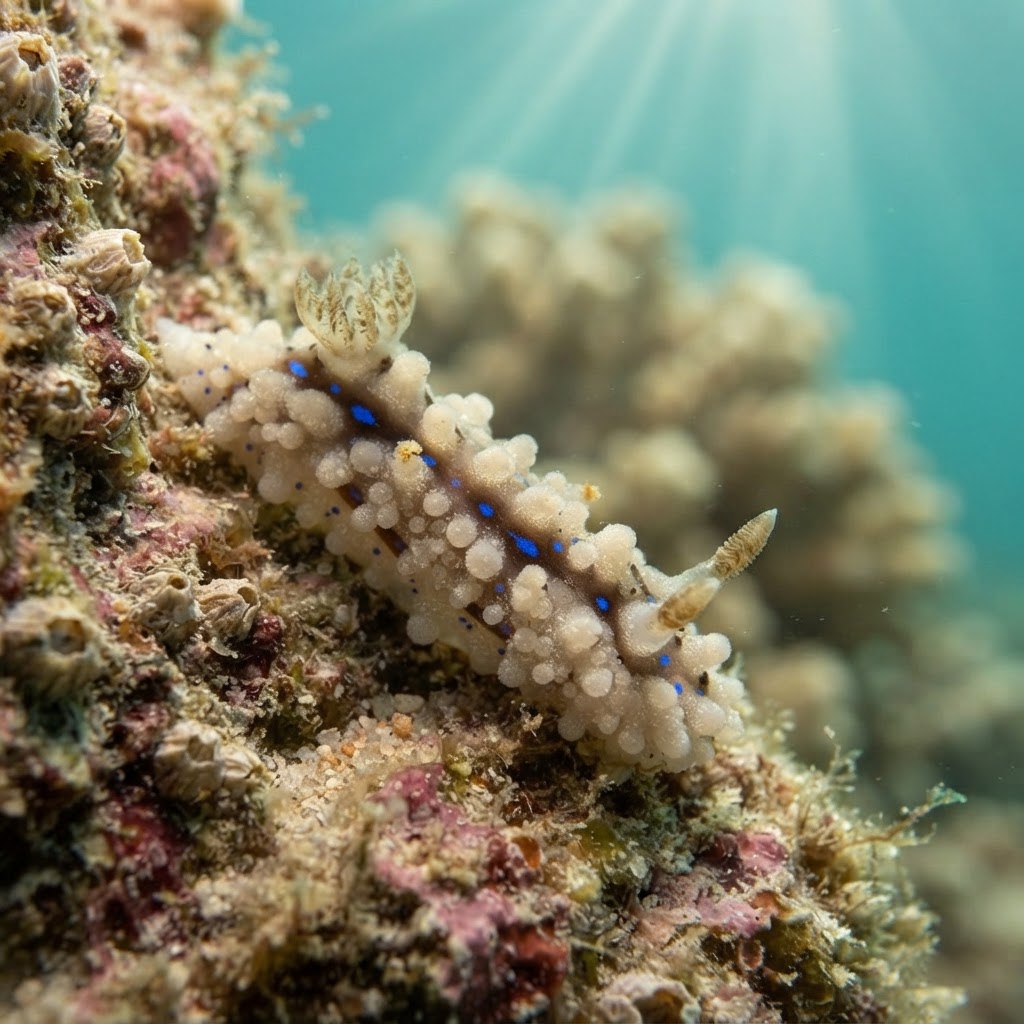
A pin-sized nudibranch, rarely more than 1cm long, with a cream to pale grey body scattered with dark brown to black speckled spots that give it a leopard-print look. The body is covered in fine velvety tubercles (small bumps), and two rhinophores (sensory tentacles) rise from the head, often ringed with dark pigment. It moves slowly across the substrate and is easy to miss unless you already know roughly where to look.
Divers find this nudibranch parked motionless or grazing slowly across rock and rubble, usually during a deliberate macro search rather than a passing glance. It shows no reaction to divers beyond continuing its slow crawl, and its small size and mottled pattern mean it blends into encrusting growth on the reef. Most logs describe it as rare to uncommon, so finding one usually means someone spent real time scanning the substrate rather than just swimming past.
Like other discodorid nudibranchs, this species almost certainly feeds on sponges, using that diet to help build the chemical defences nudibranchs are known for, though this hasn't been directly documented for this species.
There is no detected seasonal pattern in the sightings logged so far, so treat it as a year-round find where water sits in its observed 18.9 to 24.9C comfort range. That range covers both cooler temperate conditions in New South Wales and warmer subtropical water further north in Queensland.
Reef neighbours a diver could mistake it for. Use the identification notes above to tell them apart.
Every logged sighting of this species so far comes from Australia, with New South Wales the strongest region and Queensland a secondary hotspot. Within these regions it turns up on rocky and mixed reef sites rather than open sand, so divers doing macro-focused dives along the southern and eastern Australian coast have the best shot at it.
Mapping where Panther Jorunna is logged…
All confirmed sightings so far are from Australia, concentrated in New South Wales with additional records from Queensland. It favours rocky and mixed reef substrate over open sand.
There's no clear seasonal pattern in current sightings, so it's considered a year-round find within its observed temperature range of roughly 19 to 25C.
Look for a tiny, cream-coloured nudibranch under 1cm with dark brown to black speckled spots scattered across a velvety, bumpy body, plus two dark-ringed rhinophores on the head.
They're small even by nudibranch standards, typically around 1cm long, so spotting one usually takes a slow, deliberate scan of the reef surface rather than a casual look.
No. They pose no threat to divers and have no means of stinging or biting; the main challenge is simply finding one given their tiny size.
Site and sighting data is aggregated from diver logs, iNaturalist and GBIF. For taxonomy and conservation status:
Light-spotted Aegires
3,168 sites