Ophioblennius steindachneri
Common on rocky reefs from Baja California to the Galápagos, this feisty little blenny turns up on most Eastern Pacific dives, all year round.
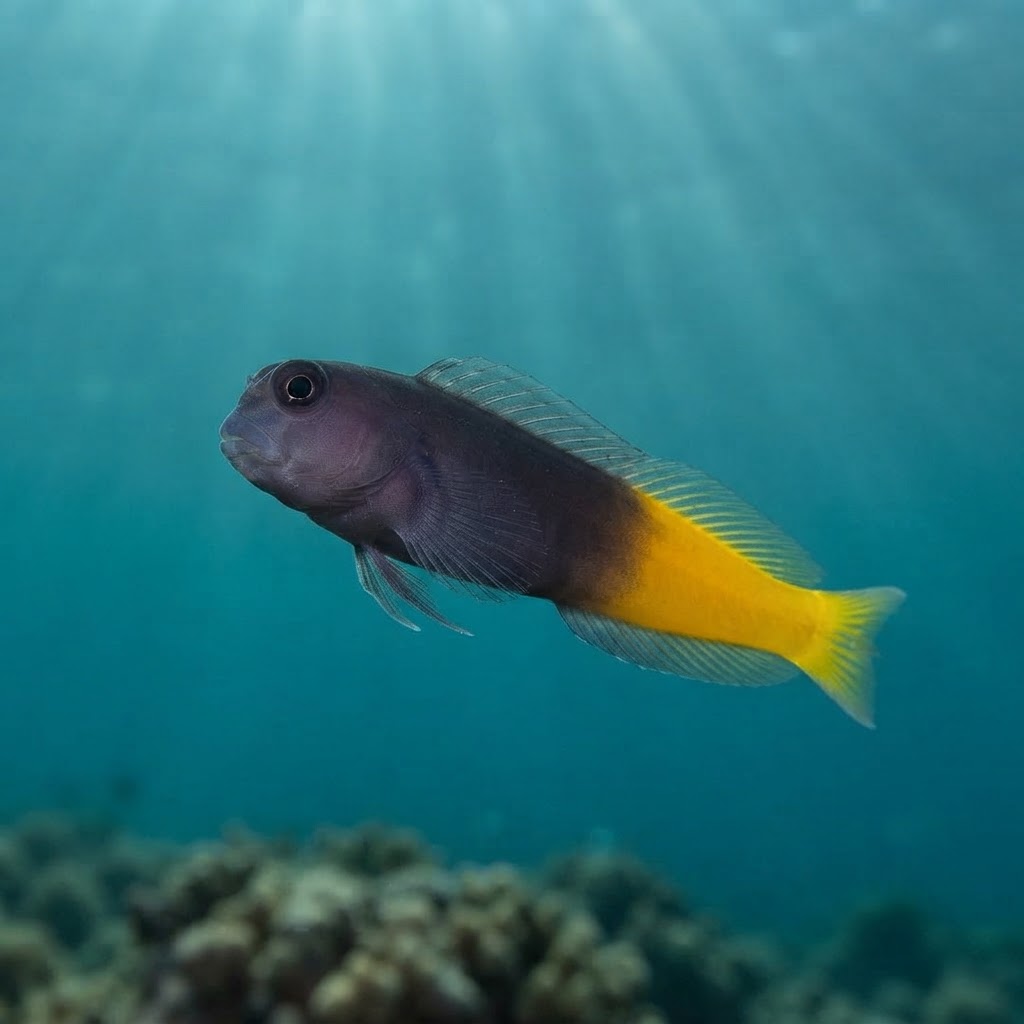
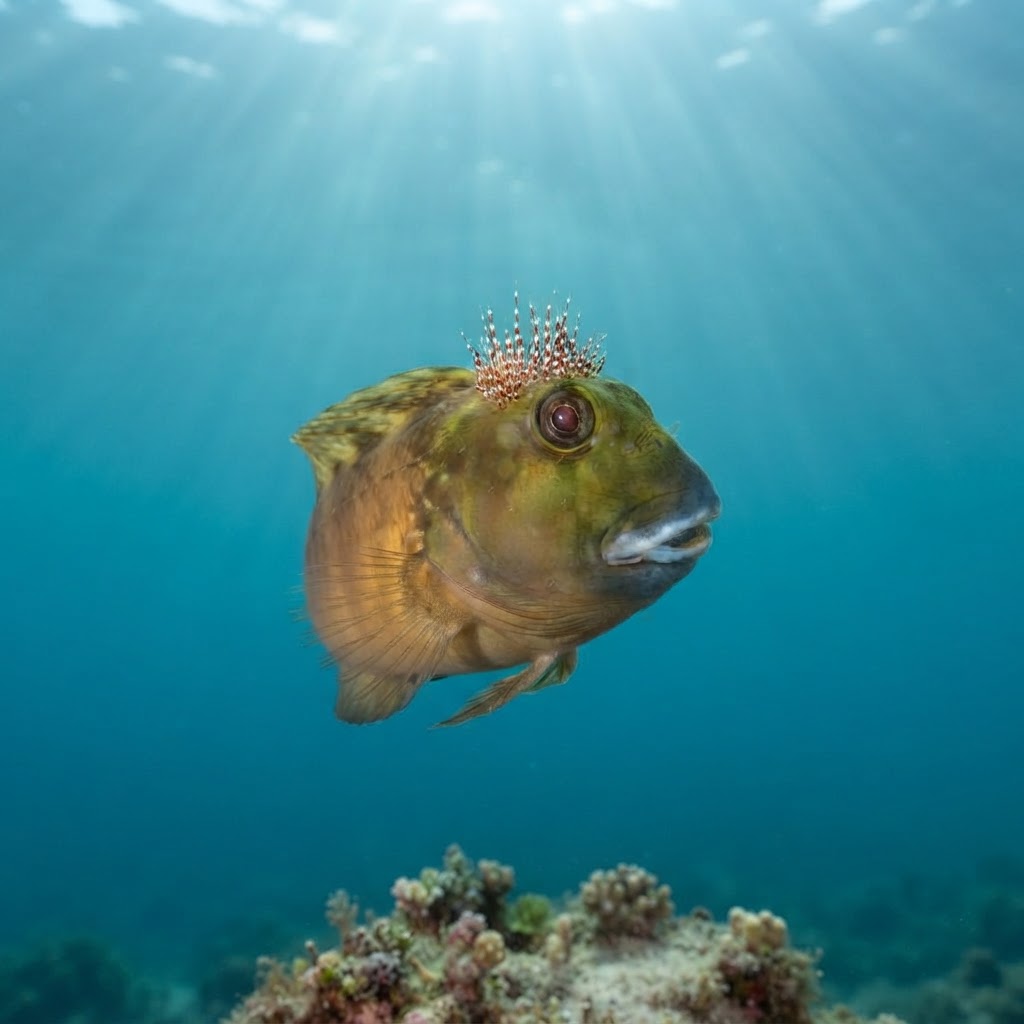
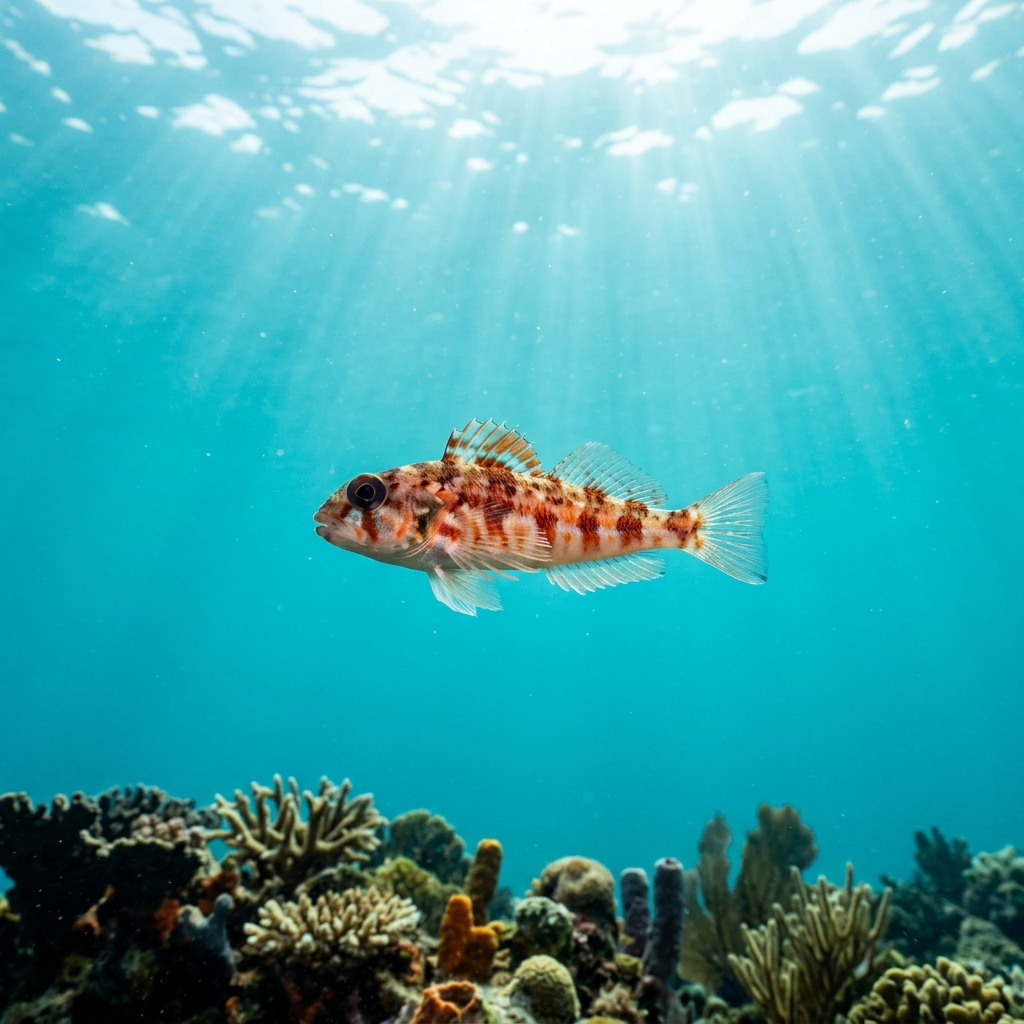
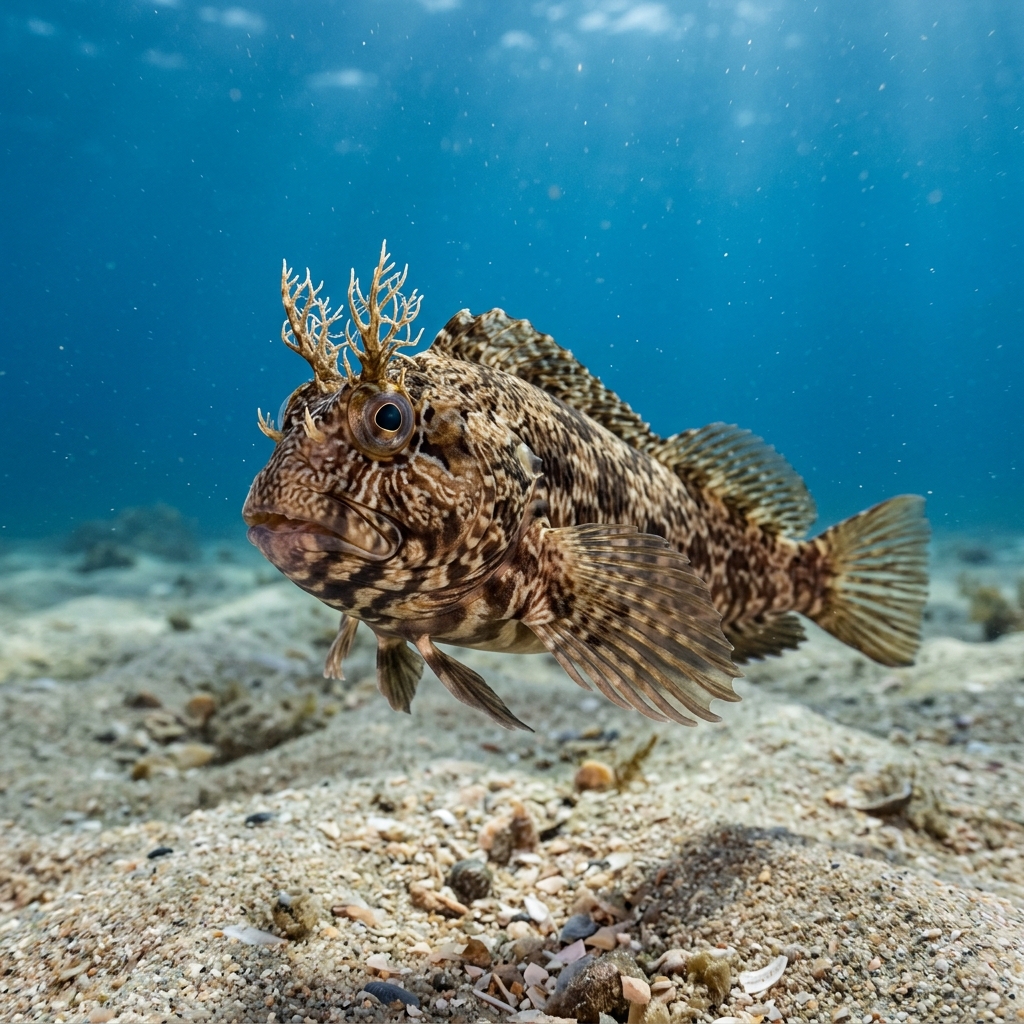
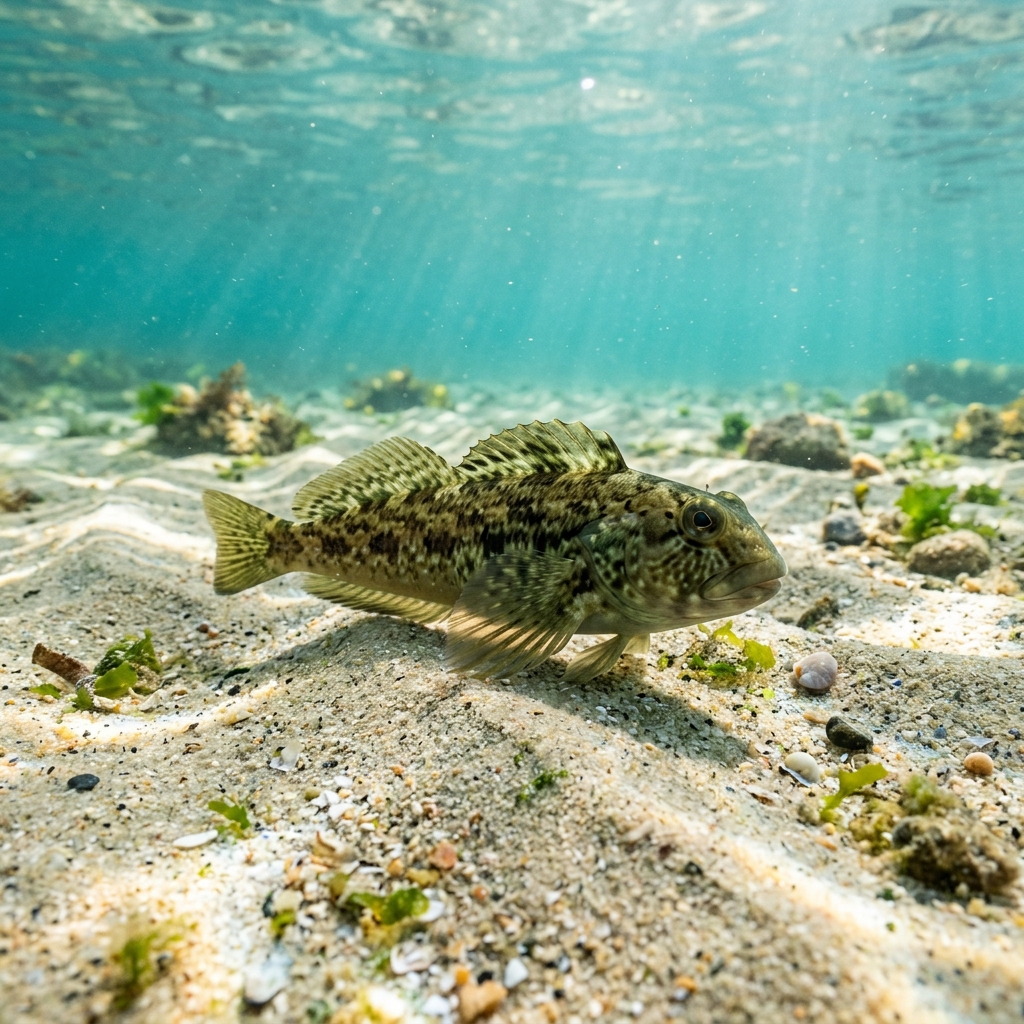
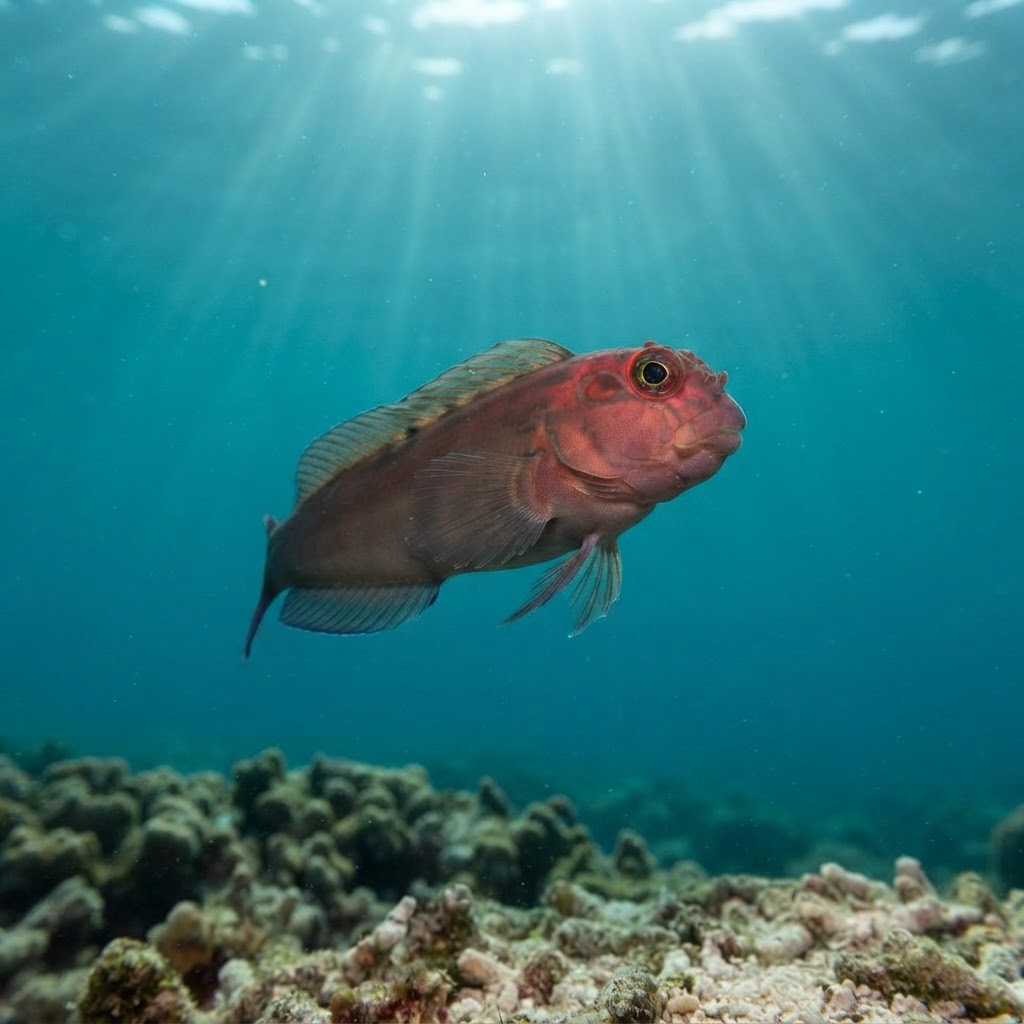
A small, blunt-headed fish rarely more than 12 cm, usually seen perched on rock or coral rubble rather than swimming in open water. Body colour runs dark olive to blackish brown with faint mottling, and the head has a steep, almost puppy-like profile with a single pair of tentacle-like appendages (cirri) above the eyes. Look for it propped on its pectoral fins, tail curled slightly, watching you rather than fleeing.
Watch the rock and rubble patches rather than the water column, this blenny holds a small territory and perches motionless until something worth investigating passes by. It is bold for its size, often staying put as divers approach and giving a good long look before darting into a crevice, and it spends much of its time grazing algae off rock surfaces in the shallows.
Males are territorial and will guard a patch of rock, chasing off rivals with an open-mouthed display that shows off the sharp fang-like teeth the species is named for.
No clear seasonal pattern shows up in sightings, and with a comfortable range of roughly 20 to 29 C it is present on these rocky reefs year-round. Plan around the destination's usual dive season rather than chasing a particular month for this fish.
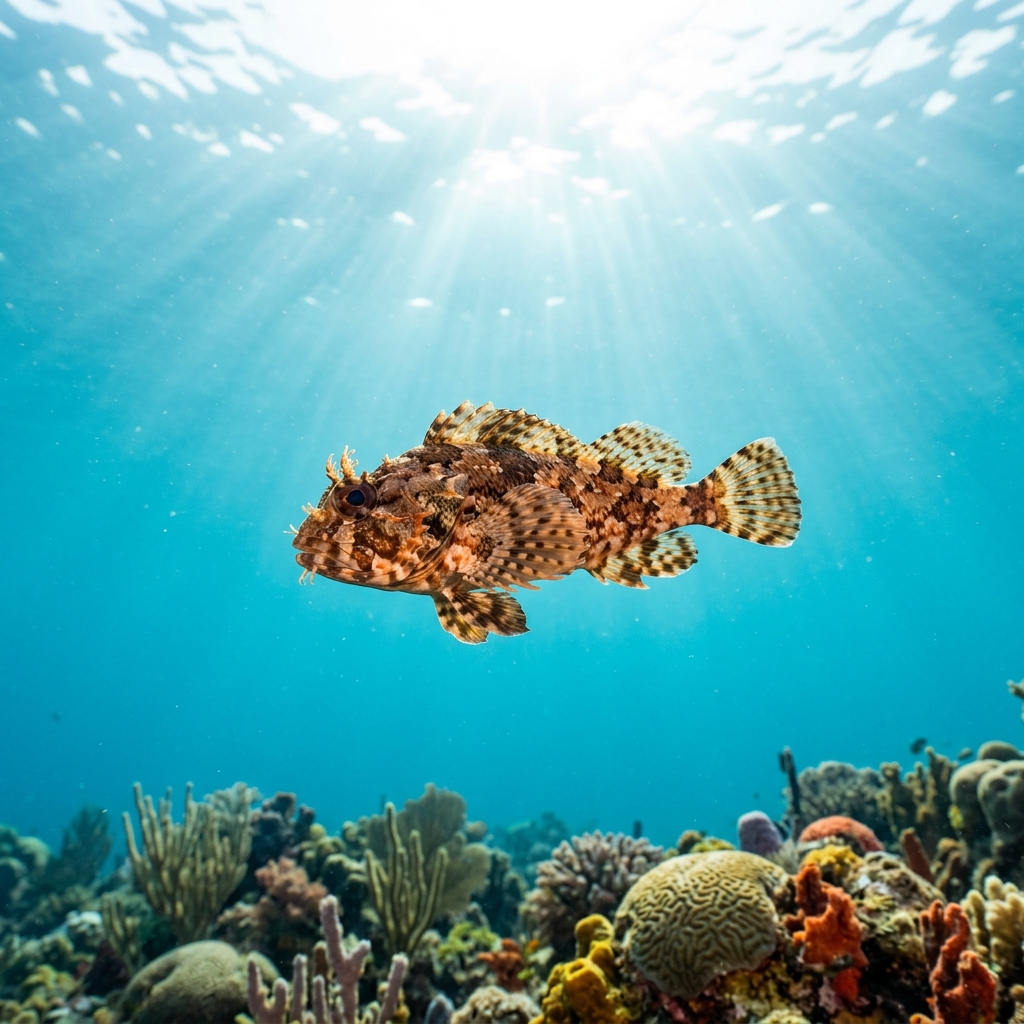
Reef neighbours a diver could mistake it for. Use the identification notes above to tell them apart.
This is an Eastern Pacific speciality, most consistently logged in Mexico, particularly along the Pacific Coast and Baja California, and a reliable find in Costa Rica's Guanacaste region. It also turns up well in Ecuador's Galápagos Islands, plus Malpelo in Colombia and Panama's Pacific coast.
Mapping where Panamic Fanged Blenny is logged…
It shows up widely across the Eastern Pacific, with strong numbers in Mexico's Pacific Coast and Baja California, Costa Rica's Guanacaste region, and Ecuador's Galápagos Islands. Malpelo in Colombia and Panama's Pacific coast are also solid spots.
There is no strong seasonal pattern in sightings, and it tolerates a wide temperature range, so it is seen on these reefs throughout the year.
Look for a small, dark, mottled fish perched on rock or rubble rather than swimming freely, with a steep-faced head and a pair of cirri above the eyes. It tends to hold still and watch divers rather than bolt.
They are small, topping out around 12 cm, which keeps them easy to miss unless you are checking rocky crevices and rubble patches closely.
No, they pose no threat to divers. Their fang-like teeth are used for territorial disputes with other blennies, not for defence against people.
Its name comes from the sharp, fang-like teeth males use in open-mouthed displays to defend a patch of reef from rival males, a surprisingly dramatic behaviour from such a small fish.
Site and sighting data is aggregated from diver logs, iNaturalist and GBIF. For taxonomy and conservation status:
Rusty Blenny
2,605 sites