Ecsenius bicolor
Small, two-toned and easy to miss: find bicolor blennies year-round in Khao Lak, Raja Ampat and the Maldives in 25-29C water.
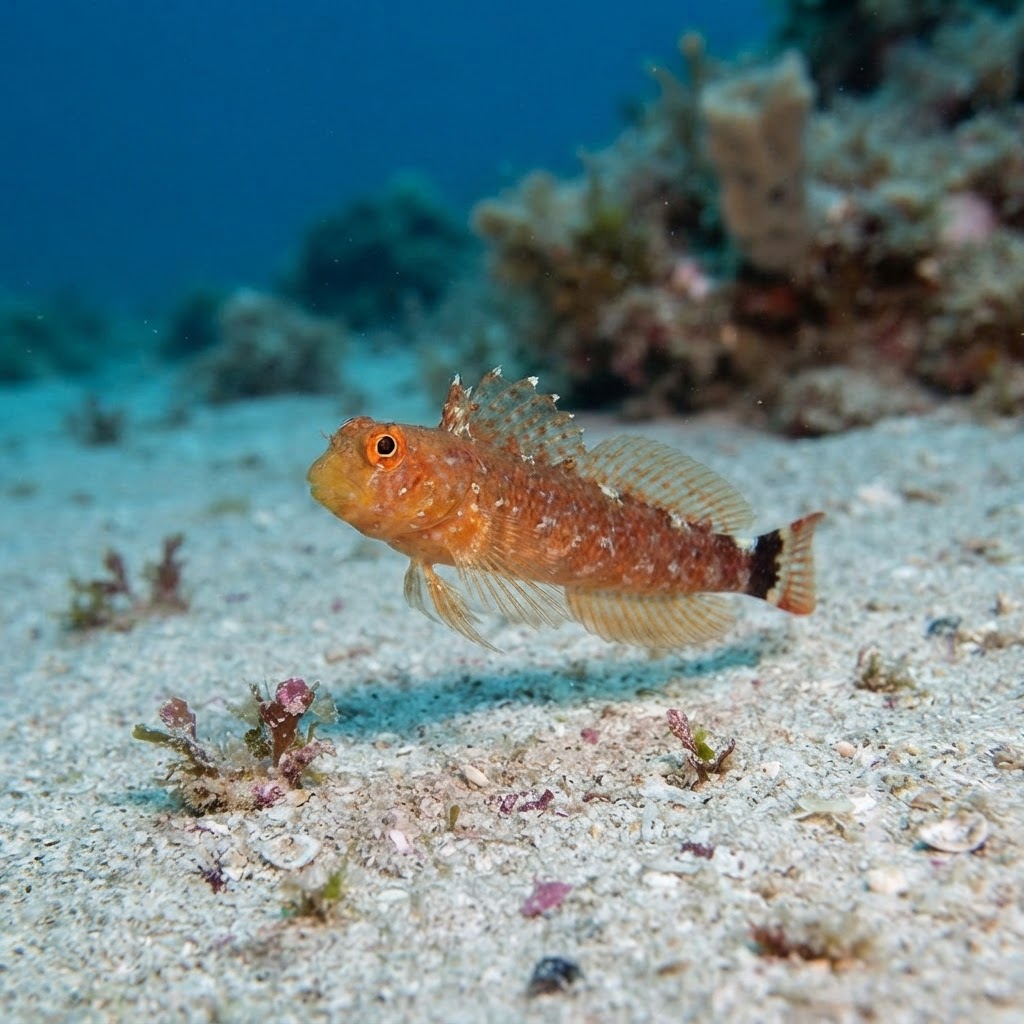
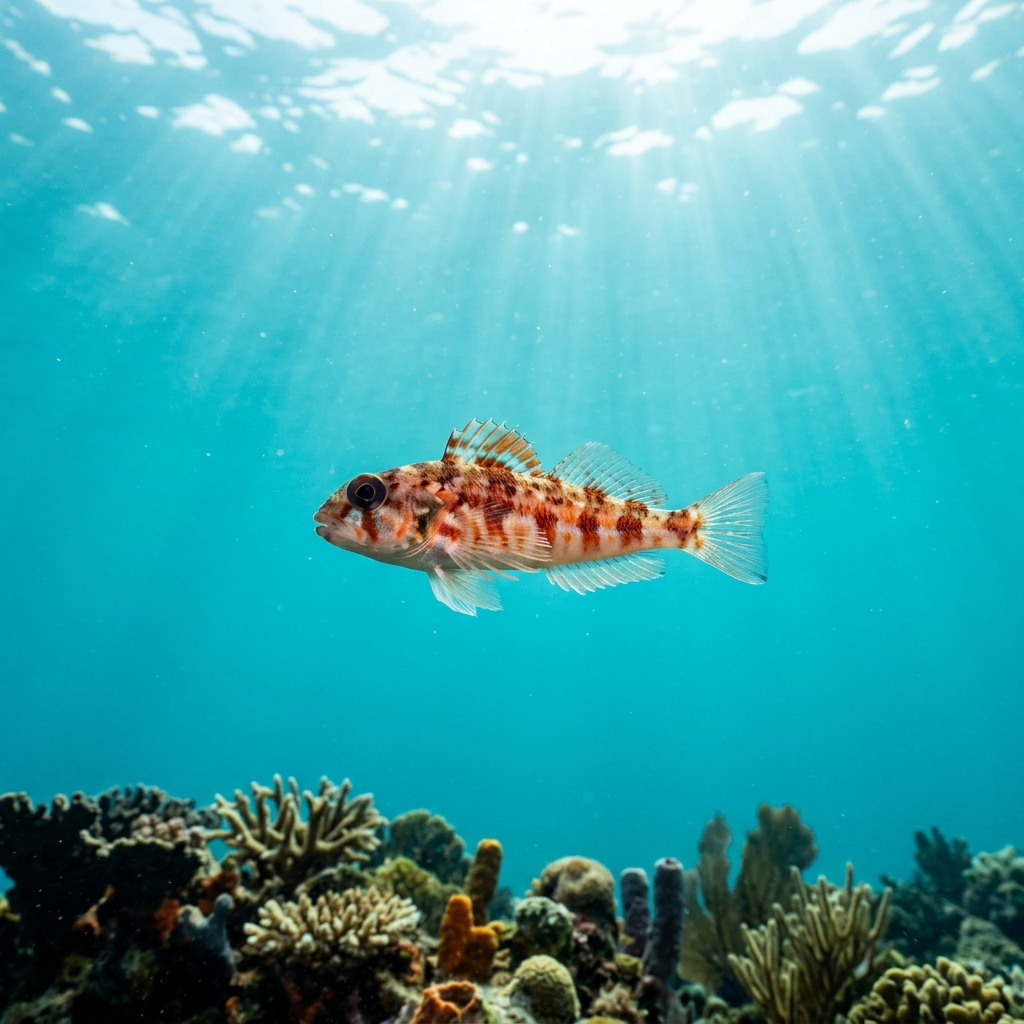
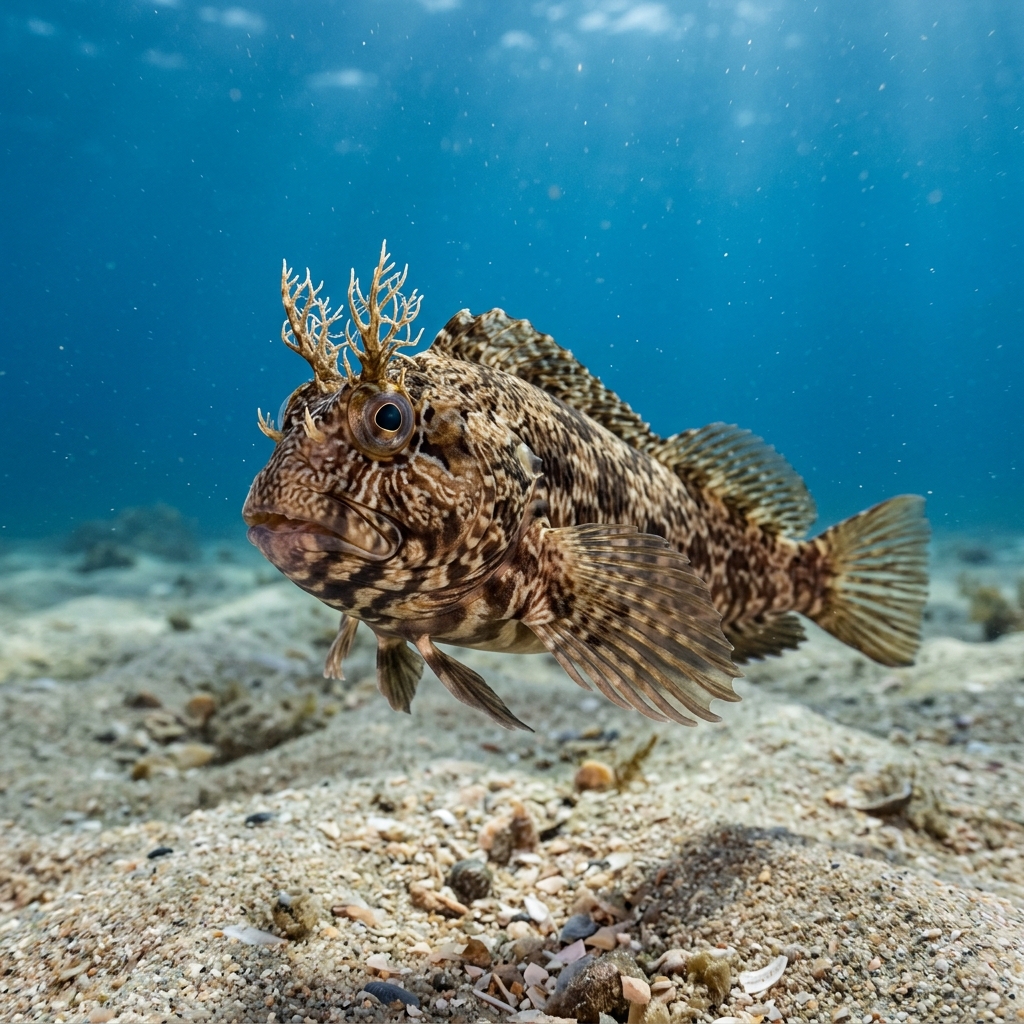
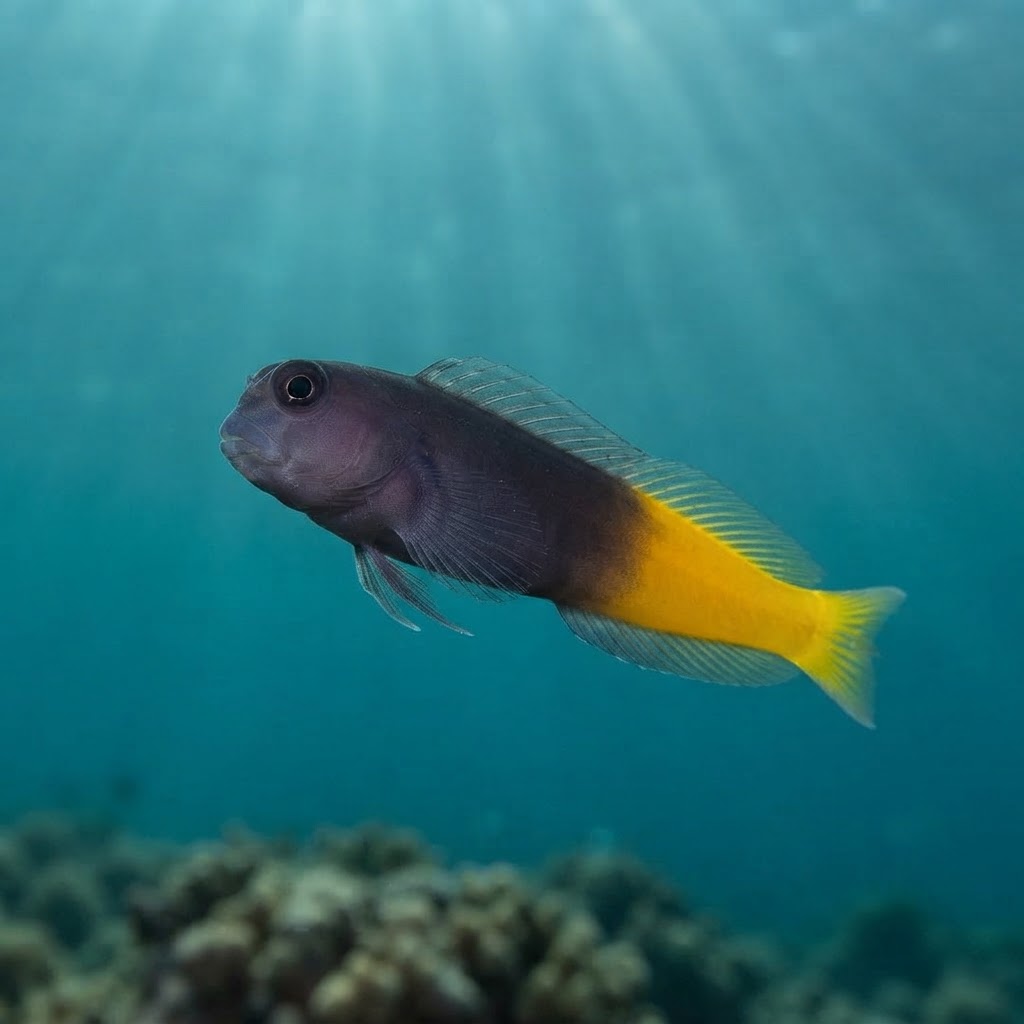
A small, elongate fish rarely more than 7 cm, split almost cleanly into two colours: the front half dark brown to near-black, the rear half orange to yellow. It perches on the reef rather than swimming freely, propped on its pelvic fins with its head raised, and darts into a hole in the rubble or coral rather than fleeing far. The blunt head lacks the branched cirri (small fleshy antennae) seen on some other blennies, which helps separate it from lookalikes.
Look for it perched motionless on coral rubble or a ledge, head up, watching the reef before darting back into its burrow the moment a diver gets too close. It spends most of its time within a body length or two of its bolt-hole and rarely strays into open water, so slow, close looking along rubble patches and reef bases pays off more than scanning mid-water. Most logs describe it as uncommon rather than common, so patience and a careful eye on the substrate matter more than the site itself.
Its two-tone pattern can shift with mood and surroundings, so the same fish may look more uniformly dark one dive and sharply split the next.
No clear seasonal pattern shows up in the sightings, and its comfort range of roughly 25 to 29C matches tropical reefs all year, so it is a fair bet on any dive in its range regardless of month.
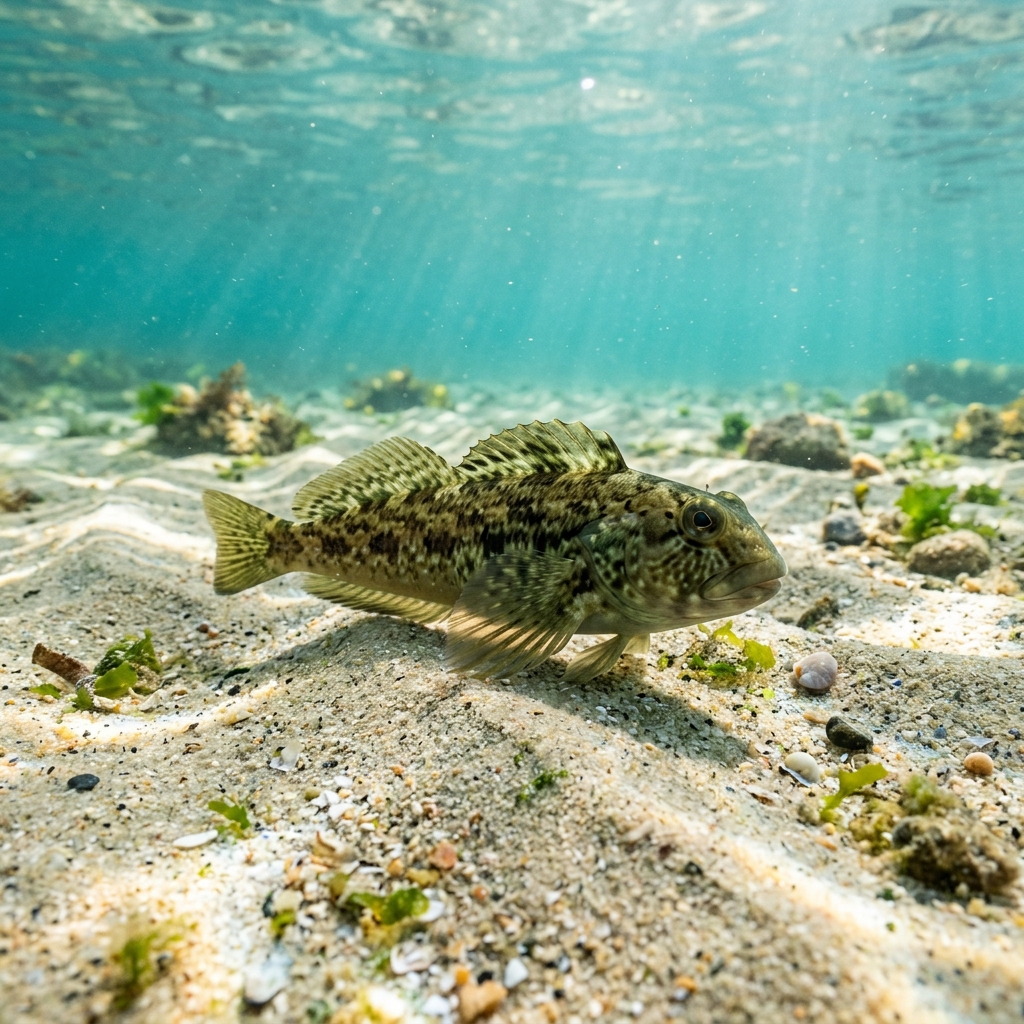
Reef neighbours a diver could mistake it for. Use the identification notes above to tell them apart.
Most reliably logged in Thailand, especially around Khao Lak, and in Indonesia's Raja Ampat, with strong showings too in Malaysia's east coast reefs and the Maldives' Central Atolls. Further sightings come from the Andaman Islands in India, Sabah in Malaysia, Palawan in the Philippines and Saipan, making it a widespread but low-key presence across Indo-Pacific reef systems.
Mapping where Bicolor Blenny is logged…
It shows up across the Indo-Pacific, most consistently around Khao Lak in Thailand and Raja Ampat in Indonesia, with good numbers also in the Maldives' Central Atolls and Malaysia's Peninsular East Coast and Sabah.
There is no strong season in the sightings, and it favours warm reef water year-round, so any month works as well as another in its range.
Check for a small, roughly 7 cm fish with a dark front half and orange to yellow rear half, perched on rubble or coral rather than swimming in open water. It lacks obvious head cirri and tends to retreat into a burrow when approached.
They stay small, typically around 7 cm, making them one of the more easily overlooked fish on a reef unless you are looking closely at rubble and coral bases.
No, they pose no threat to divers. They are shy, retreat into holes when approached, and have no venom or aggressive behaviour towards people.
Site and sighting data is aggregated from diver logs, iNaturalist and GBIF. For taxonomy and conservation status:
Rusty Blenny
2,605 sites