Dardanus deformis
Look for this uncommon hermit crab tucked into shells around Visayas and Bali reefs, active year-round in warm 23-30C water.
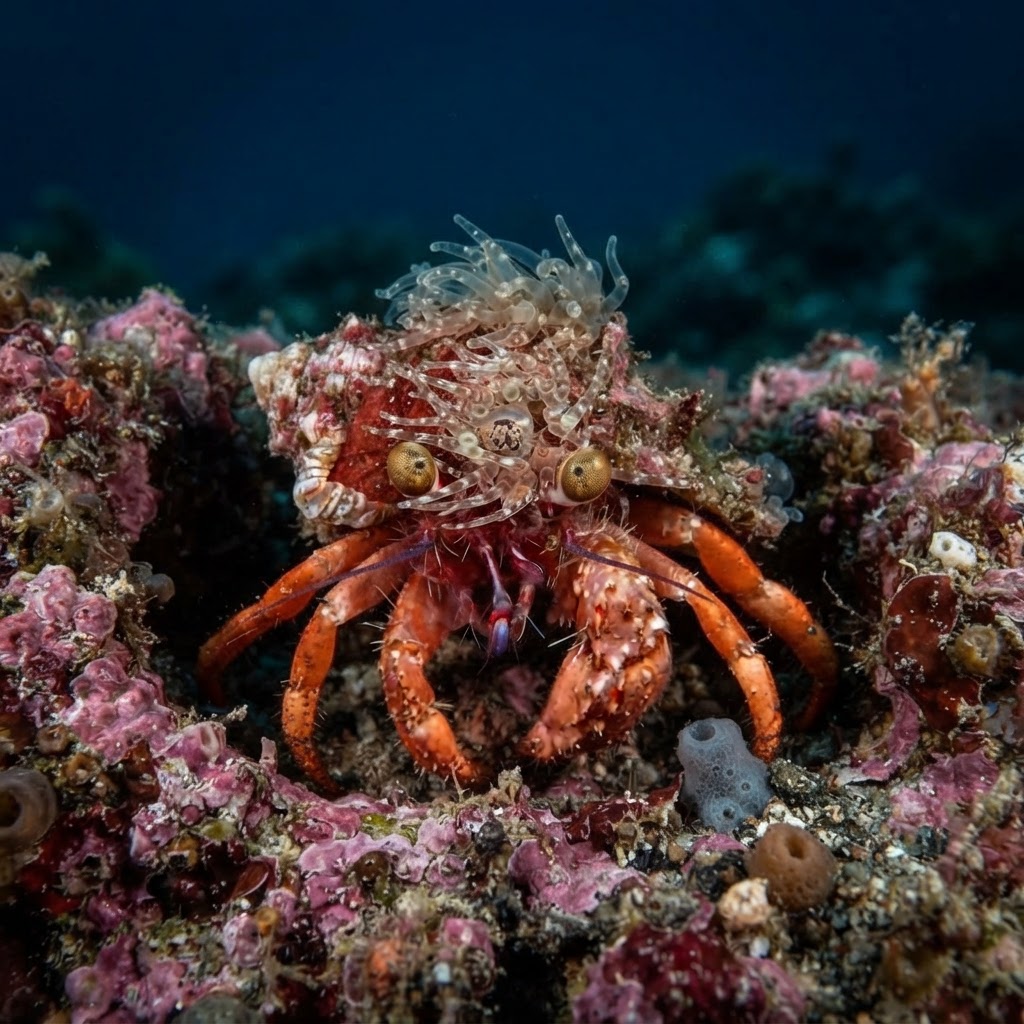
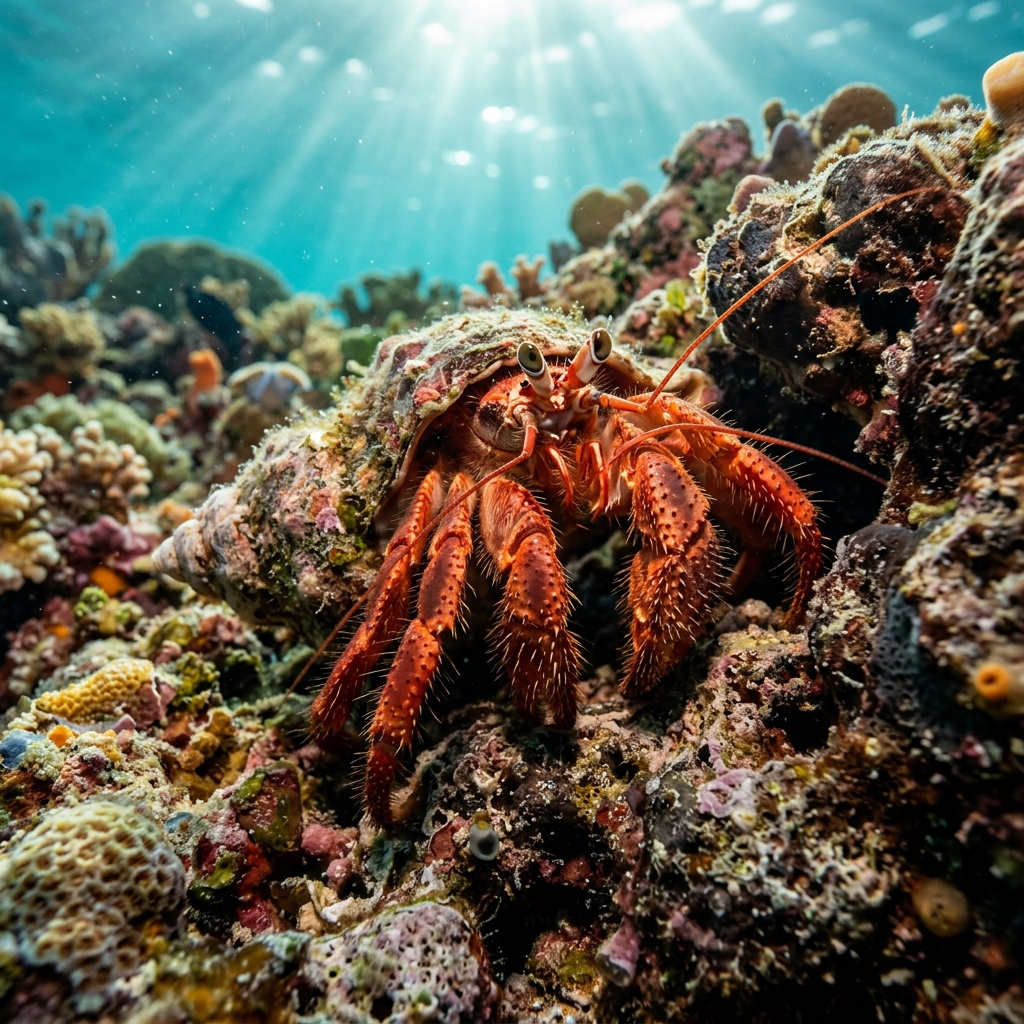
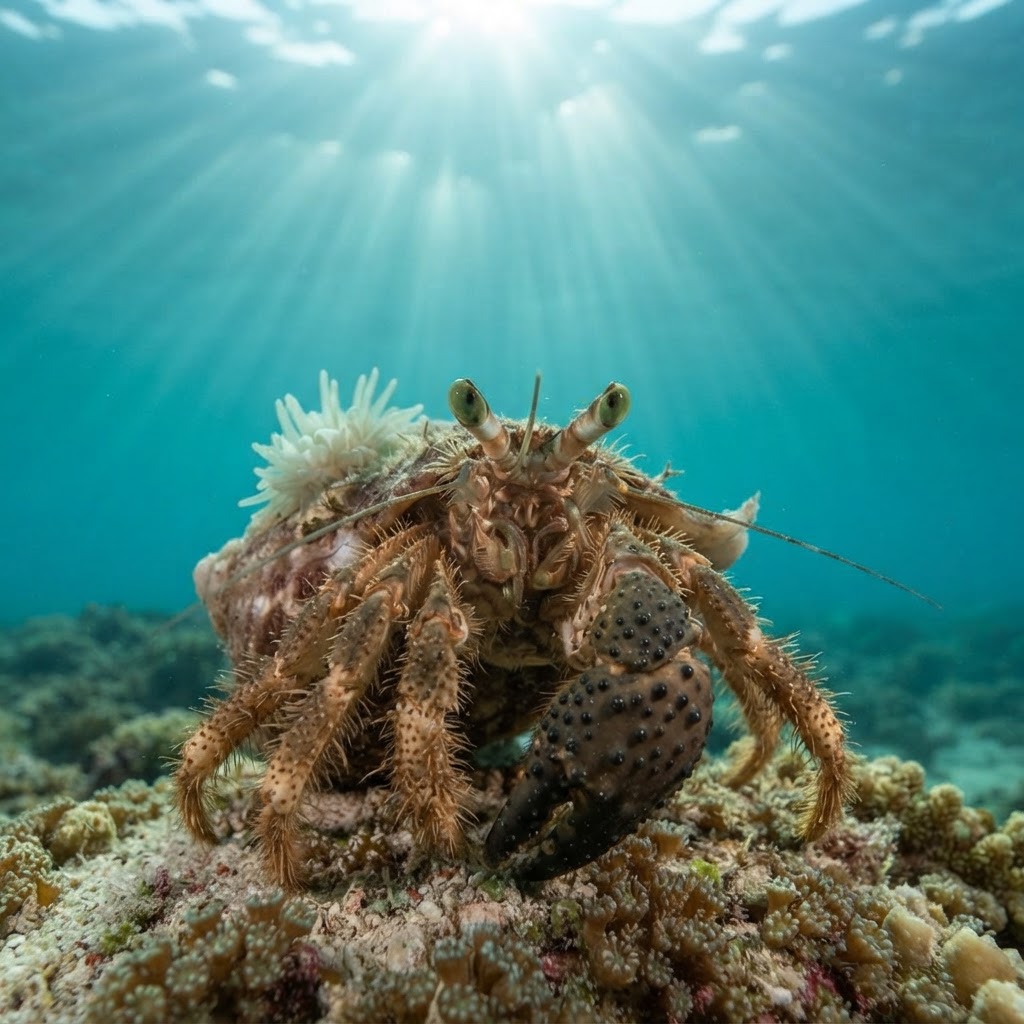
A hermit crab that carries a borrowed shell often dressed with small anemones on the outside, giving it a mottled, textured look rather than a smooth carapace. Its walking legs are pale with darker speckling or banding, and the claws are noticeably hairy or bristled compared to bare-shelled hermits. Look closely at the shell itself before the crab: if it is stippled with tiny anemones, you have likely found this one.
Divers usually spot it moving slowly across rubble, sand patches, or reef edges in shallow water, rarely deeper than about 12 metres, picking through debris for scraps as a carnivorous scavenger. It tends to withdraw into its shell or freeze rather than flee when a torch or camera gets close, which makes it an easy subject once you have found one. Most sightings come from daytime reef dives rather than night dives, though hermit crabs generally are more active after dark.
The anemones stuck to its shell are not decoration picked at random; hermit crabs in this group actively transplant them onto their shells, gaining a stinging defence while the anemones get an easy ride to fresh feeding grounds.
No clear seasonal pattern shows up in the sighting data, and it sits comfortably in water from about 23 to 30C, so it turns up on reef dives year-round rather than during a particular window.
Reef neighbours a diver could mistake it for. Use the identification notes above to tell them apart.
Most reliably logged across the Philippines, especially in the Visayas, and in Bali, Indonesia, with strong secondary numbers from Okinawa and the wider Ryukyu Islands in Japan and the Society Islands in French Polynesia. Divers also report it steadily in the Andaman Islands of India and around Hawaii, with smaller counts from Mauritius and New Caledonia.
Mapping where Pale Anemone Hermit Crab is logged…
The most consistent sightings come from the Visayas in the Philippines and Bali in Indonesia, with regular reports from Okinawa in Japan and the Society Islands in French Polynesia. Smaller but steady populations show up in India's Andaman Islands and around Hawaii.
There is no strong seasonal pattern in the sighting records, and it tolerates a wide warm-water range of roughly 23 to 30C, so it is a year-round find on tropical reef dives rather than a seasonal target.
Check the shell first: if it is covered in small anemones giving it a stippled texture, then look at the pale, speckled legs and bristled claws poking out. It moves slowly over rubble and sand rather than swimming or darting.
No, they pose no threat to divers. They are small, slow-moving scavengers that retreat into their shells when approached rather than showing any defensive behaviour toward people.
It plants living anemones onto the outside of its borrowed shell on purpose, turning a passive home into a stinging shield while giving the anemones a mobile perch and easier access to food scraps.
Site and sighting data is aggregated from diver logs, iNaturalist and GBIF. For taxonomy and conservation status:
European Green Crab
2,469 sites