Panulirus longipes
Spot painted crayfish tucked in reef crevices from NSW to Diani, Kenya, in waters around 20-26C, year-round.
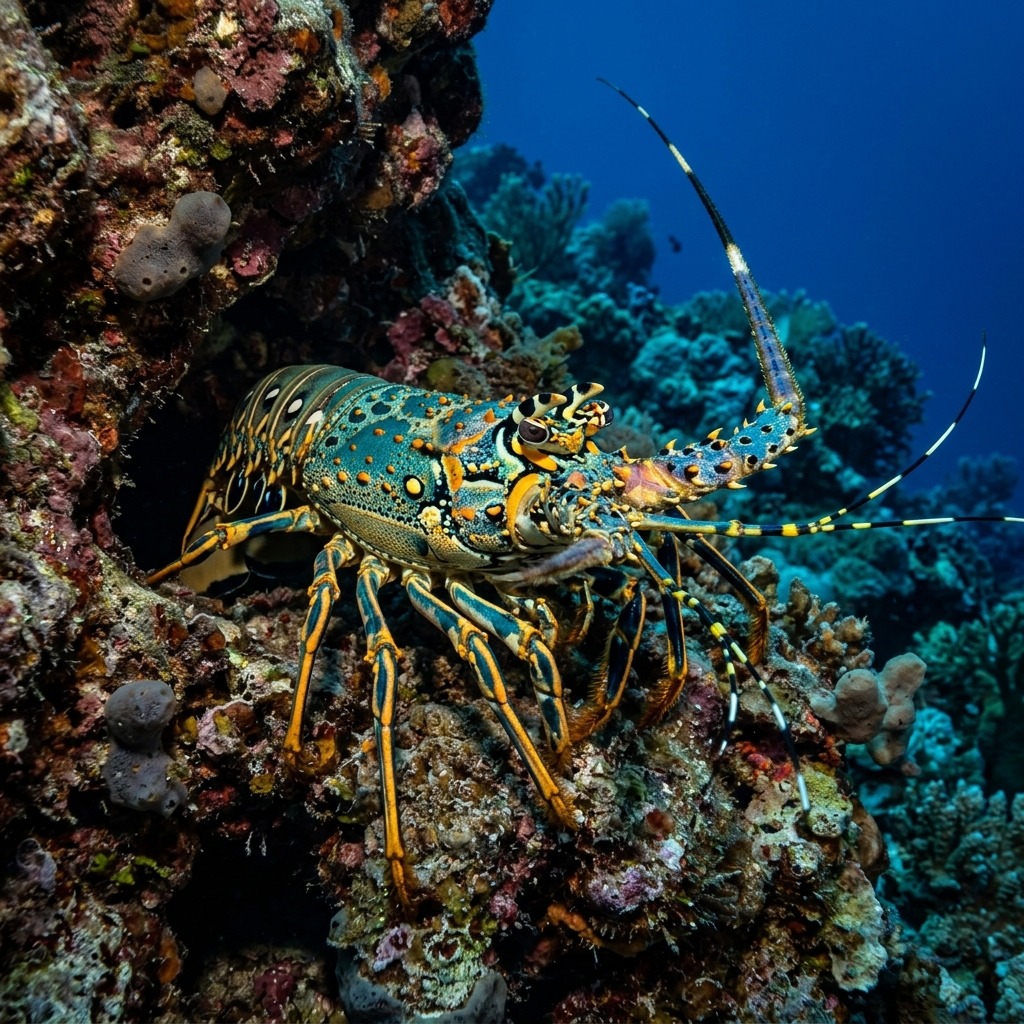
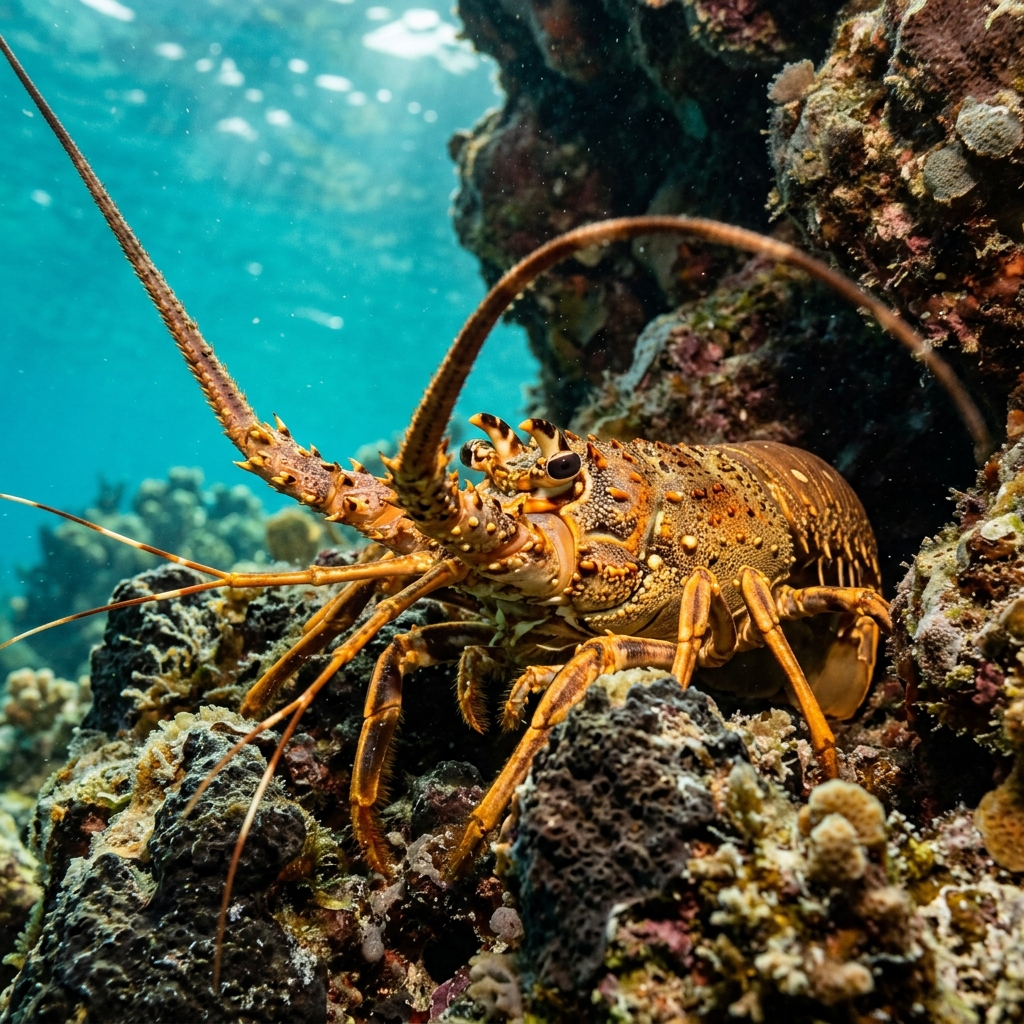
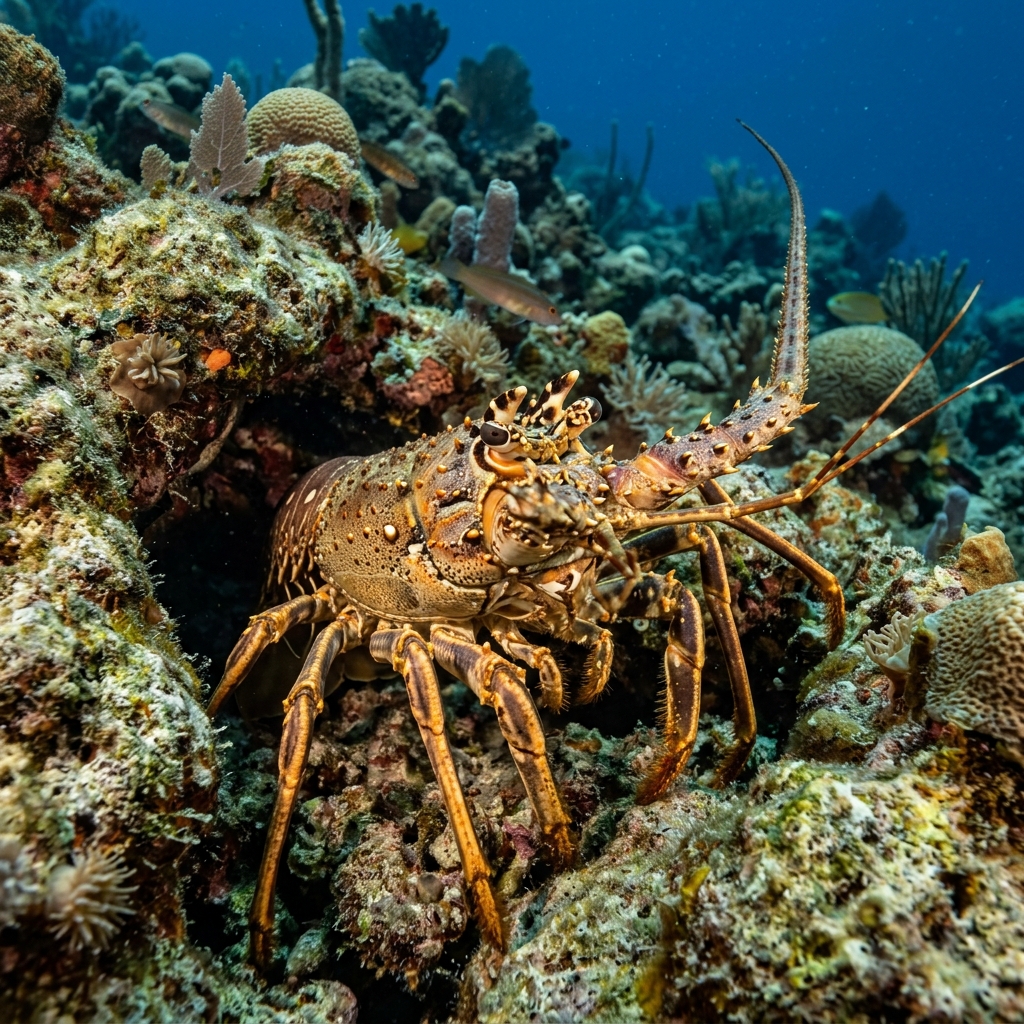
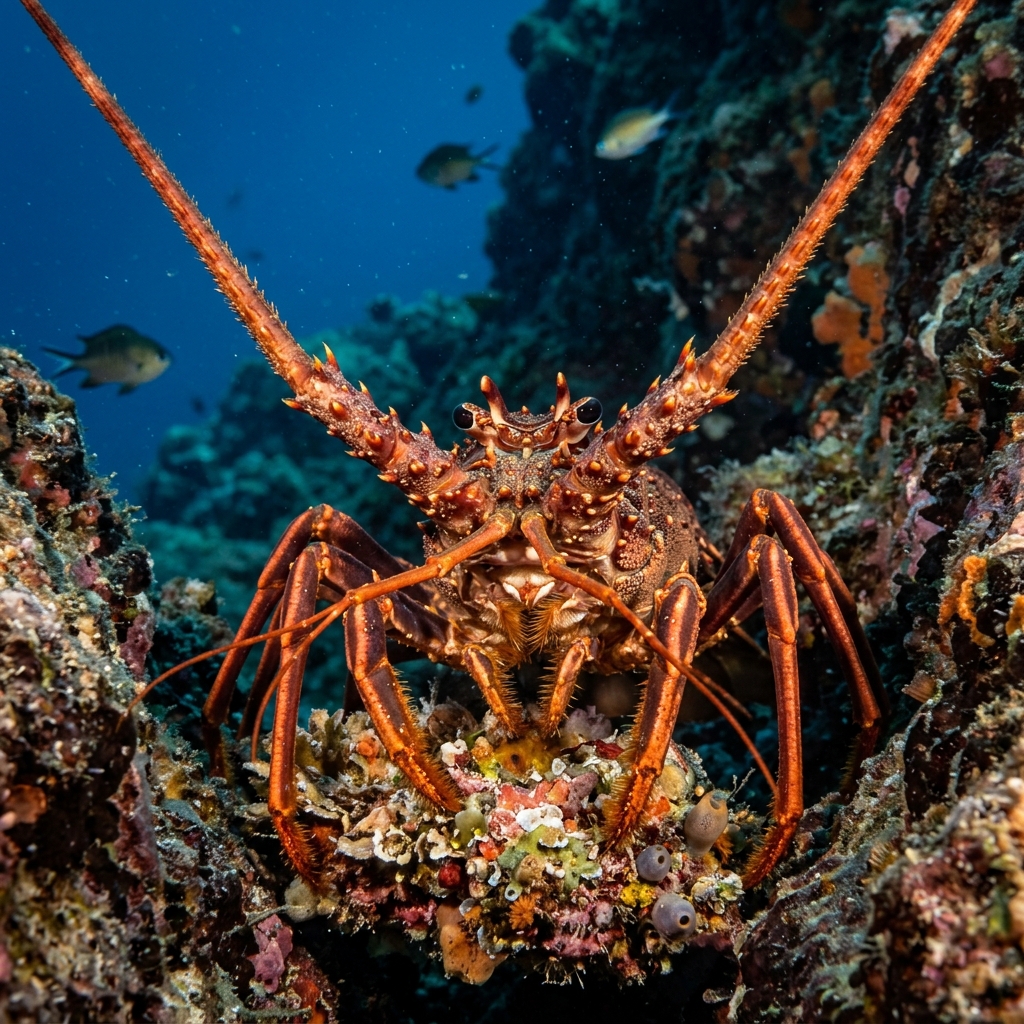
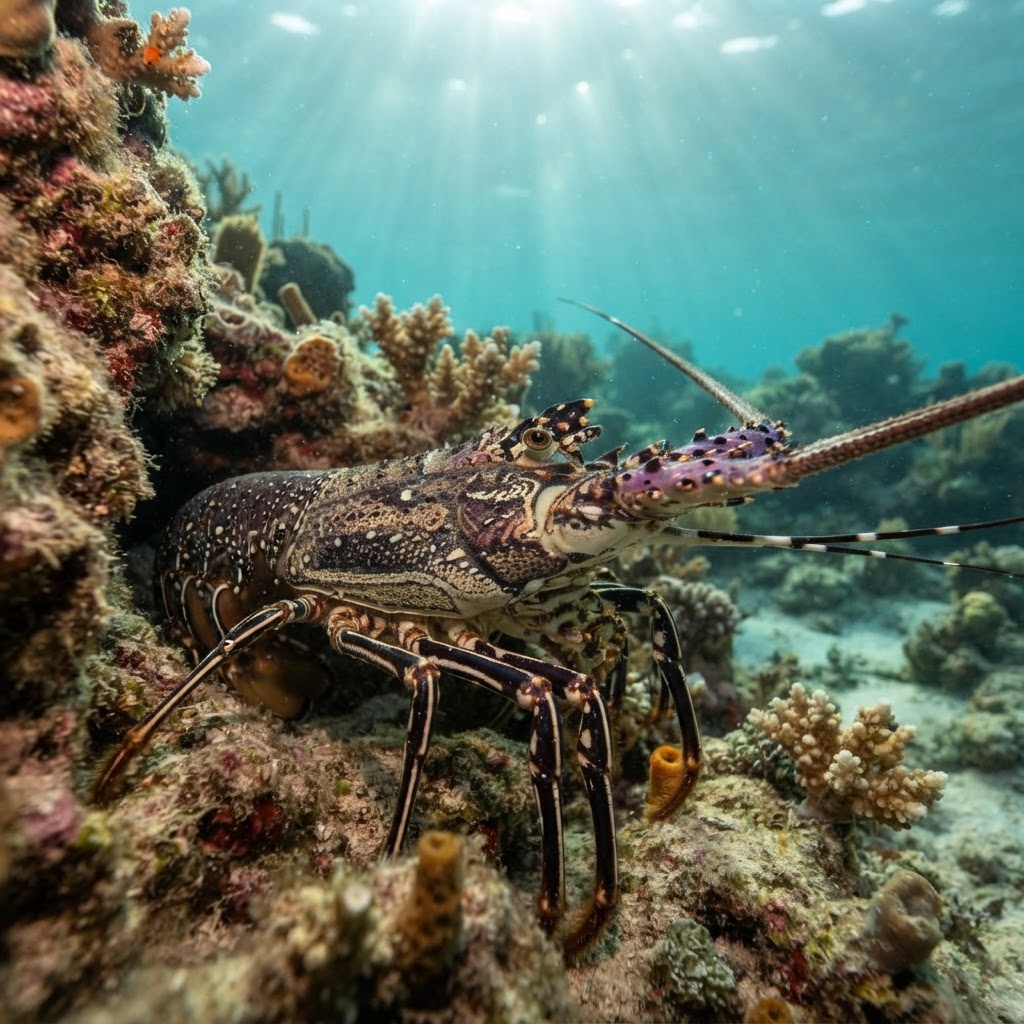
A chunky reef lobster reaching around 21cm, with a mottled reddish-brown to orange shell and bold pale bands running down its long, spiny walking legs. Look for the thick, heavily spined antennae sweeping out from under a coral ledge before the rest of the body comes into view. The body itself often stays wedged in a crevice, so the banded legs are usually the first clue.
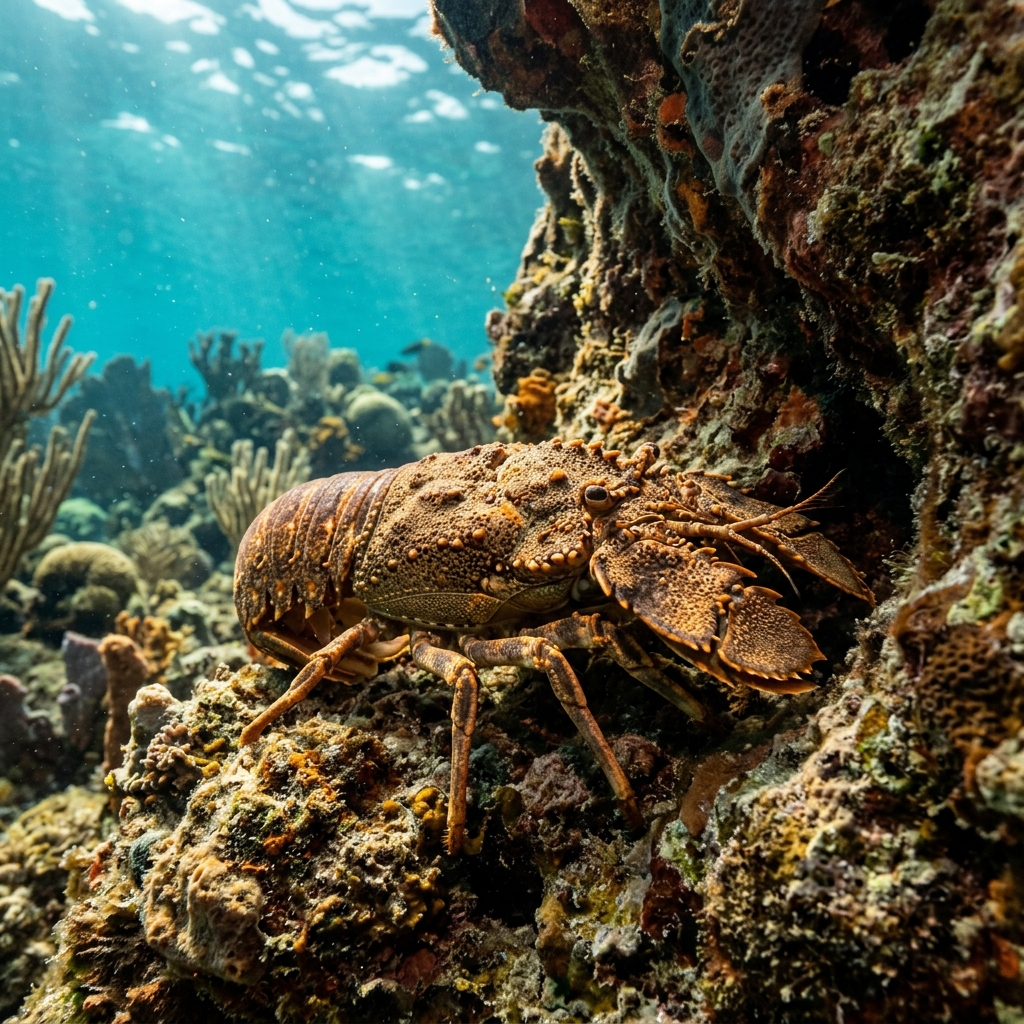
Expect to find it wedged deep in a crevice or under a ledge by day, antennae probing out into open water while the rest of the body stays hidden from view. It's a shy, slow-moving animal that will back further into cover rather than confront a diver, so patient, low-disturbance approaches give the best look. Night dives tend to show it more active and further out from shelter, foraging along the reef base.
Like other spiny lobsters, it has no large claws for defence, relying instead on that thicket of spiny antennae and a fast backward flick into cover when threatened.
Sightings show no clear seasonal pattern, and with a comfort range of roughly 19.8 to 25.8C it's a year-round find on the reefs and rocky ledges where it lives.
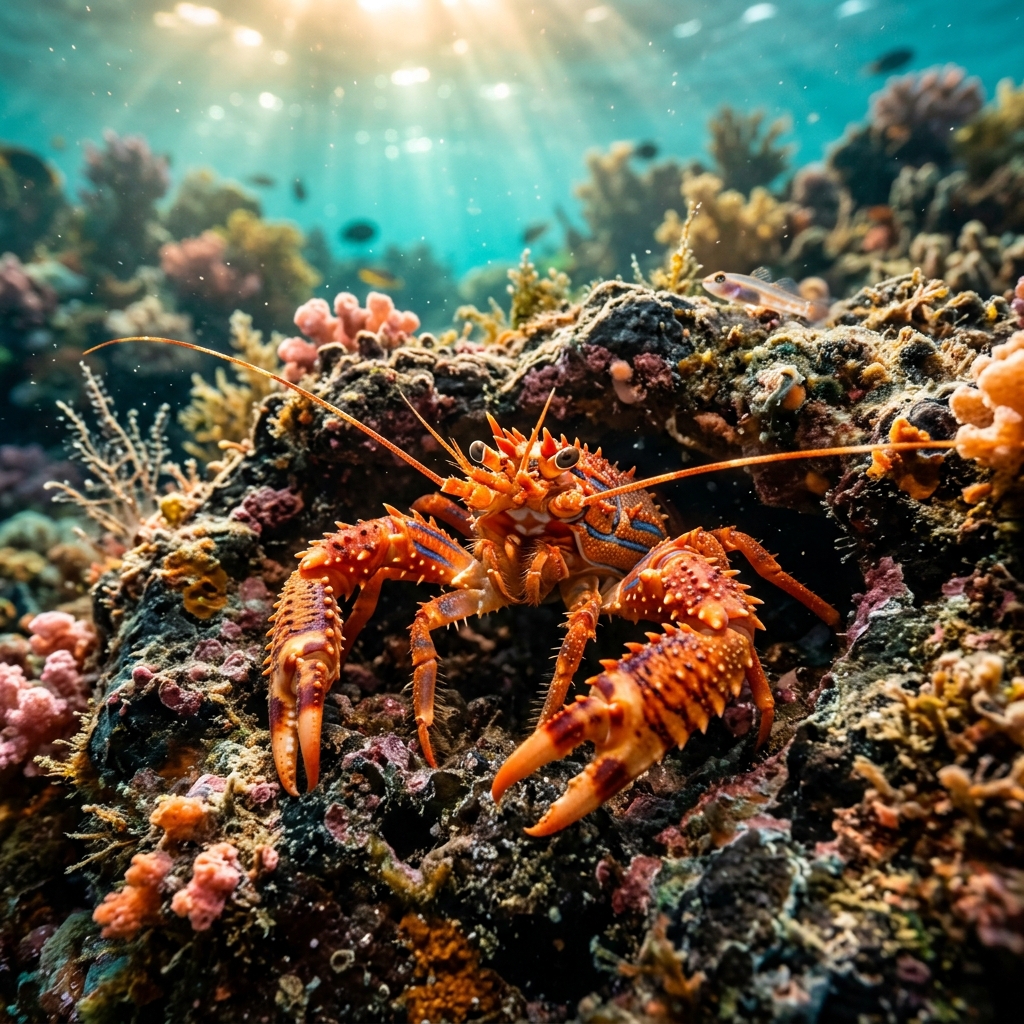
Reef neighbours a diver could mistake it for. Use the identification notes above to tell them apart.
Most reliably logged on Australia's east coast, with strong numbers across New South Wales and Queensland reef and rocky-shore sites. Outside Australia it turns up along Diani in Kenya and around Nha Trang in Vietnam, with a smaller scatter of sightings in KwaZulu-Natal, South Africa, and Nouméa, New Caledonia.
Mapping where Painted Crayfish is logged…
New South Wales and Queensland in Australia are the most consistent spots, with further sightings around Diani in Kenya, Nha Trang in Vietnam, KwaZulu-Natal in South Africa, and Nouméa in New Caledonia.
There's no strong season in the sighting data, and its comfort range of about 20 to 26C means it can be found on suitable reefs at any time of year.
Look for a mottled reddish-brown shell with pale-banded, spiny walking legs poking out from under a reef ledge, often before the body itself is visible. It grows to around 21cm and relies on long spined antennae rather than claws.
They typically reach around 21cm in length, making them a solid, easy-to-spot presence once you locate their crevice.
No, they pose no danger to divers. They're shy, retreat into crevices when approached, and have no claws or venom to worry about.
Site and sighting data is aggregated from diver logs, iNaturalist and GBIF. For taxonomy and conservation status:
Caribbean Spiny Lobster
2,209 sites