Plectroglyphidodon fasciolatus
A small dusky damselfish logged uncommonly off Dili, Timor-Leste and Fiji's Lomaiviti islands on warm reef flats year-round.
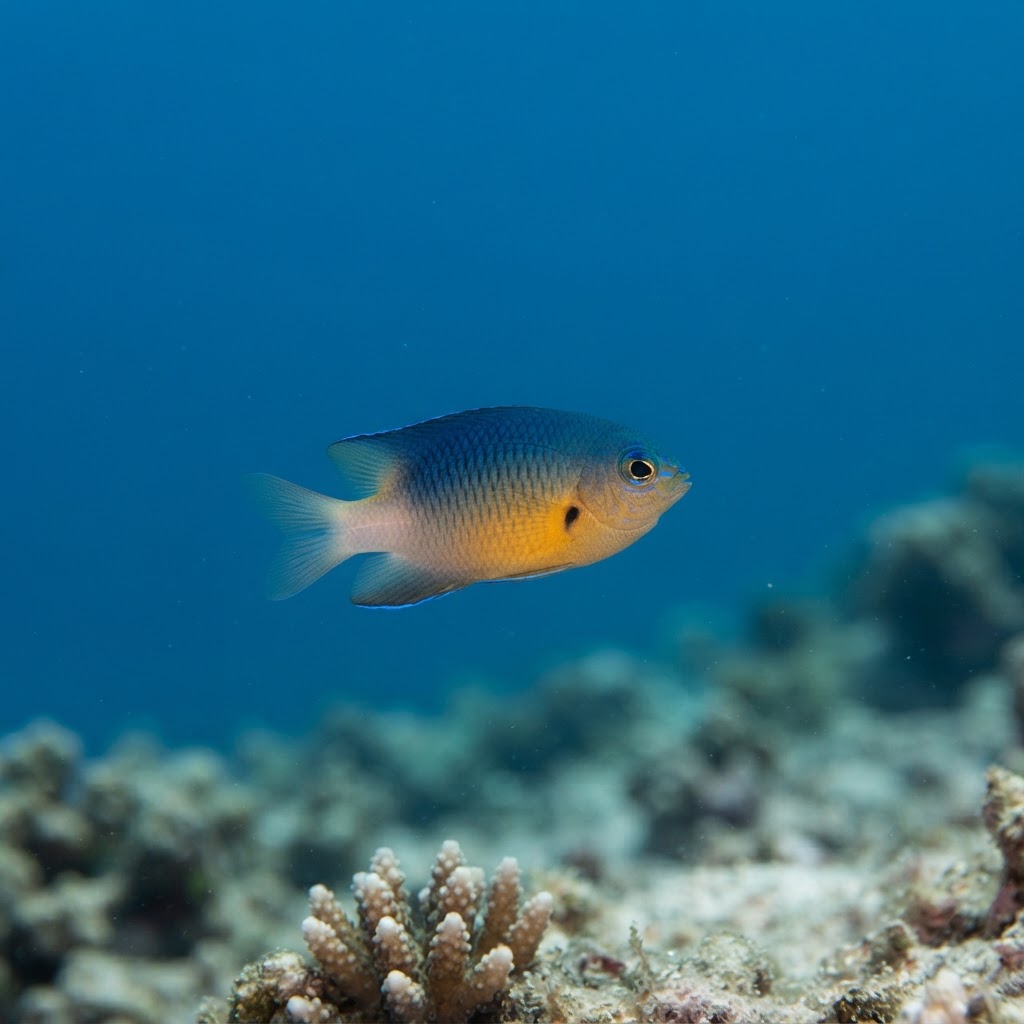
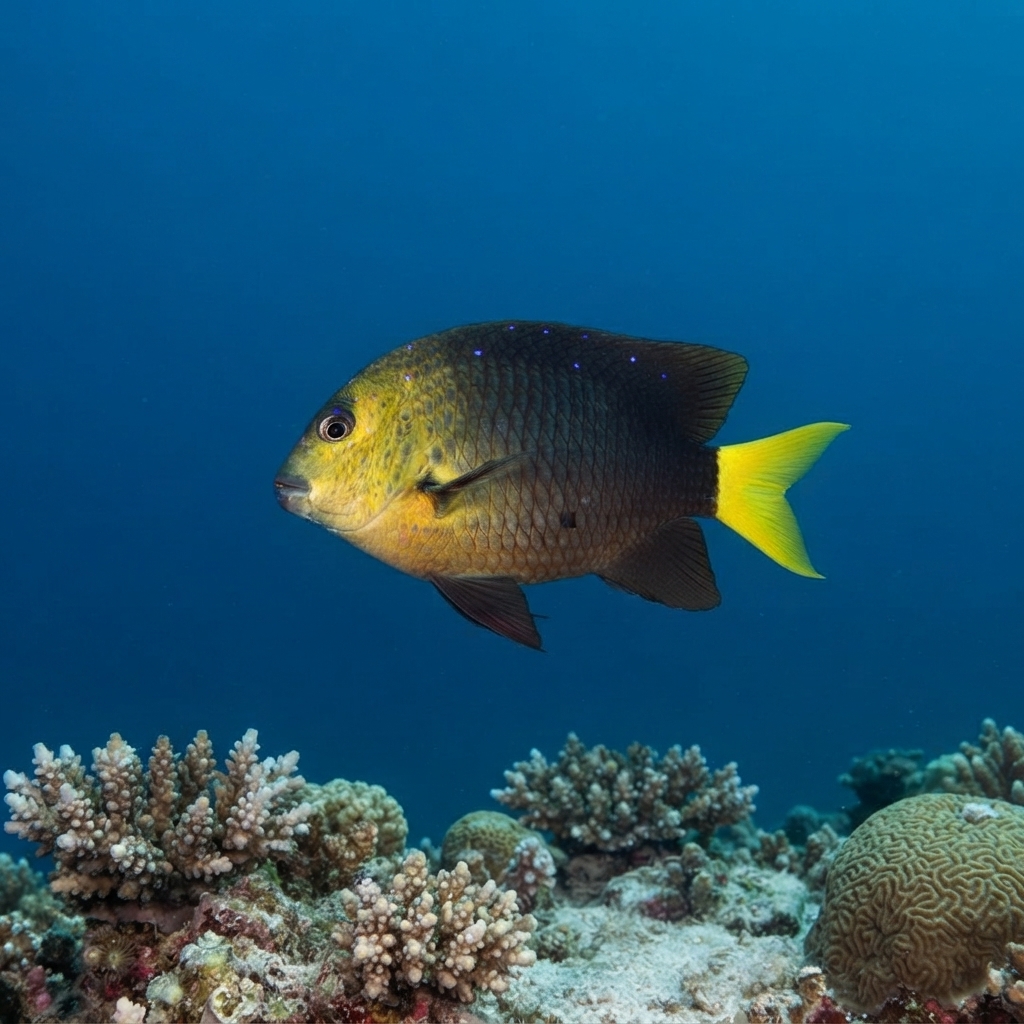
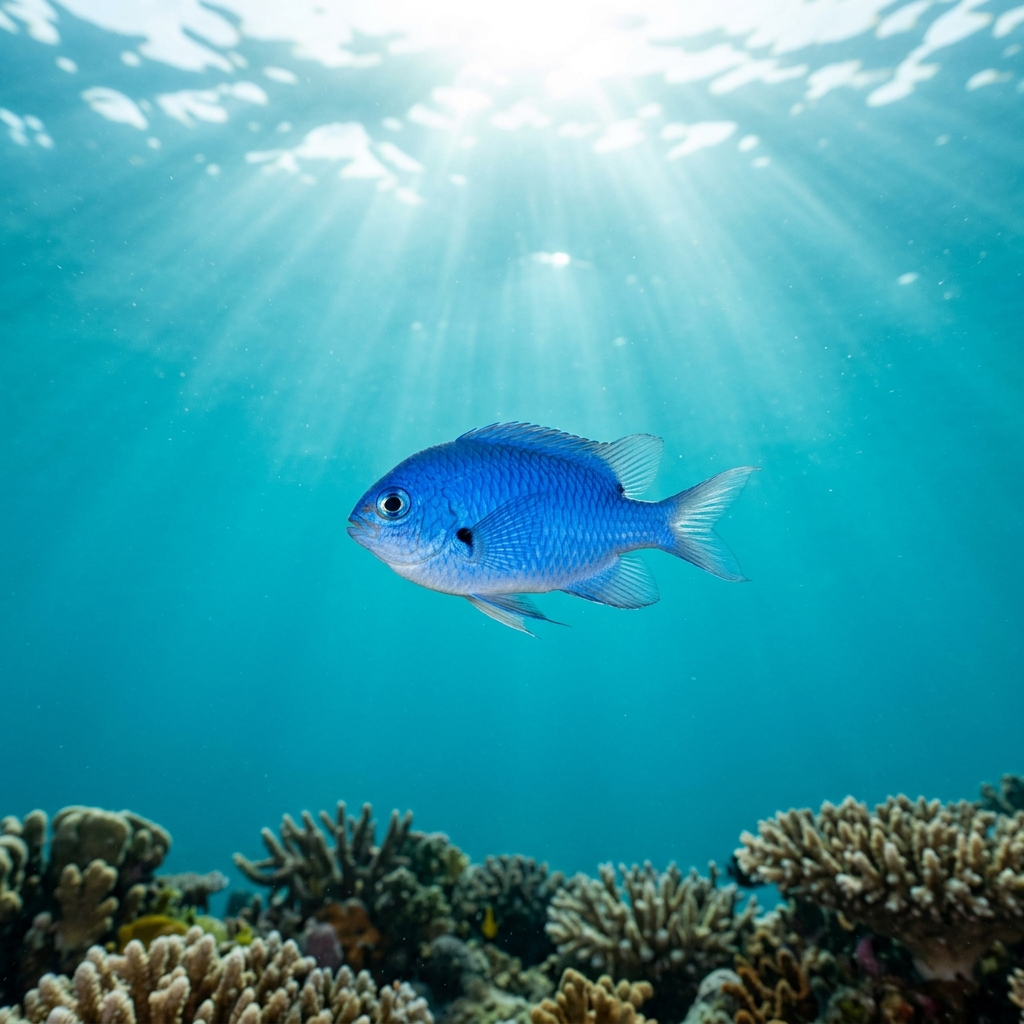
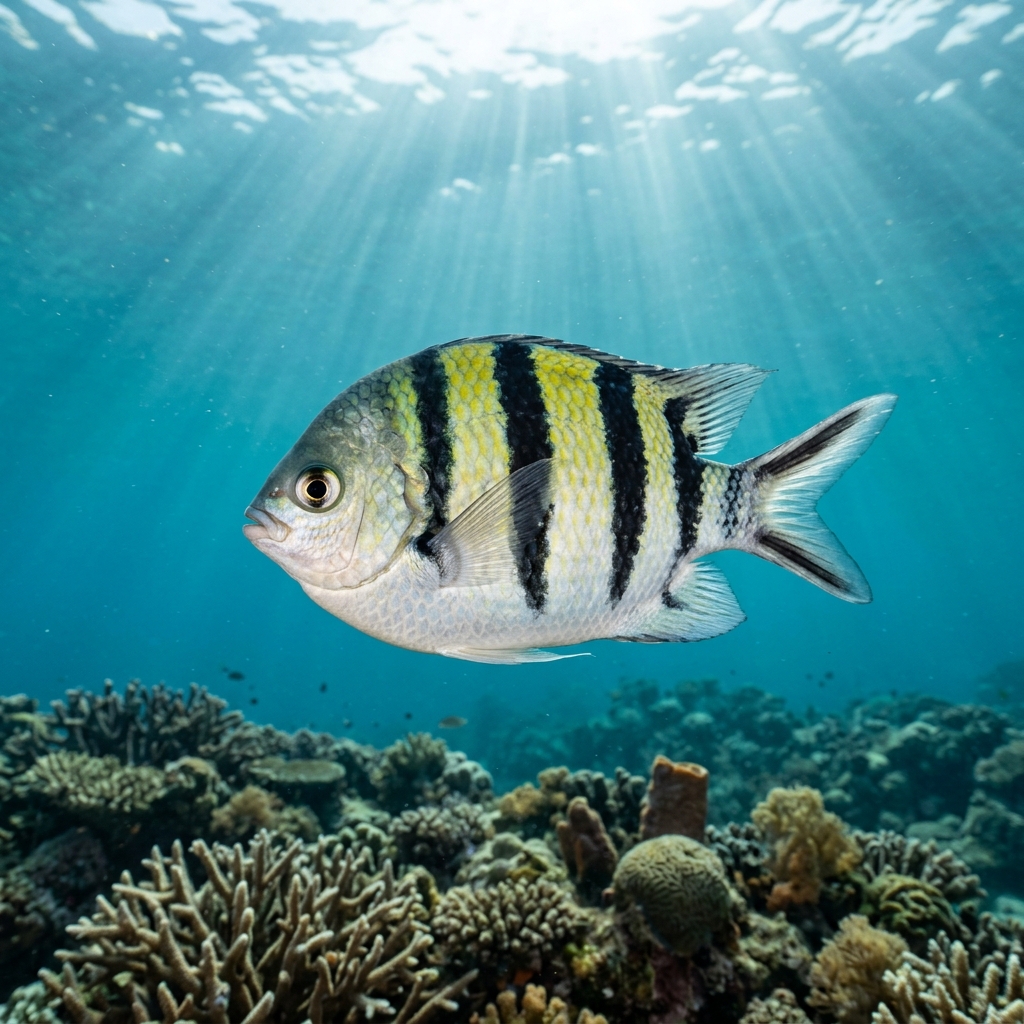
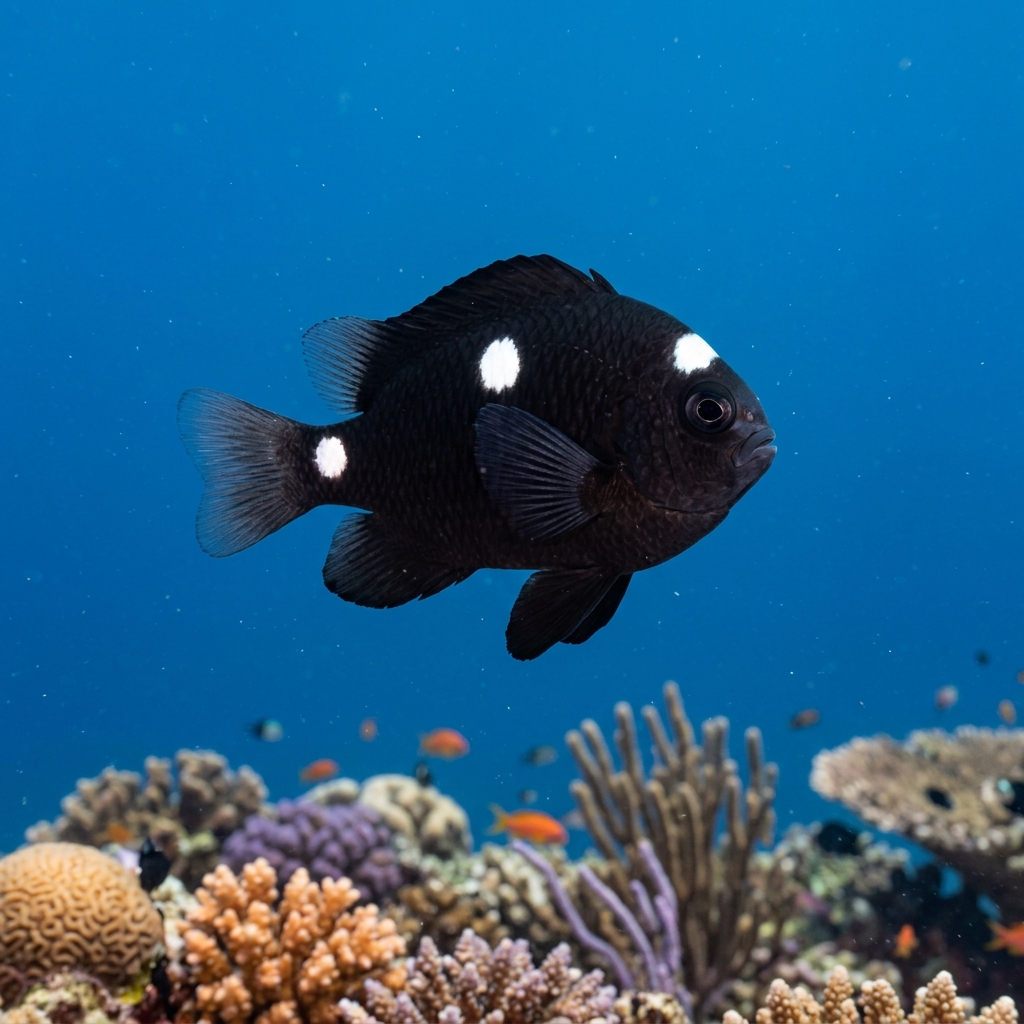
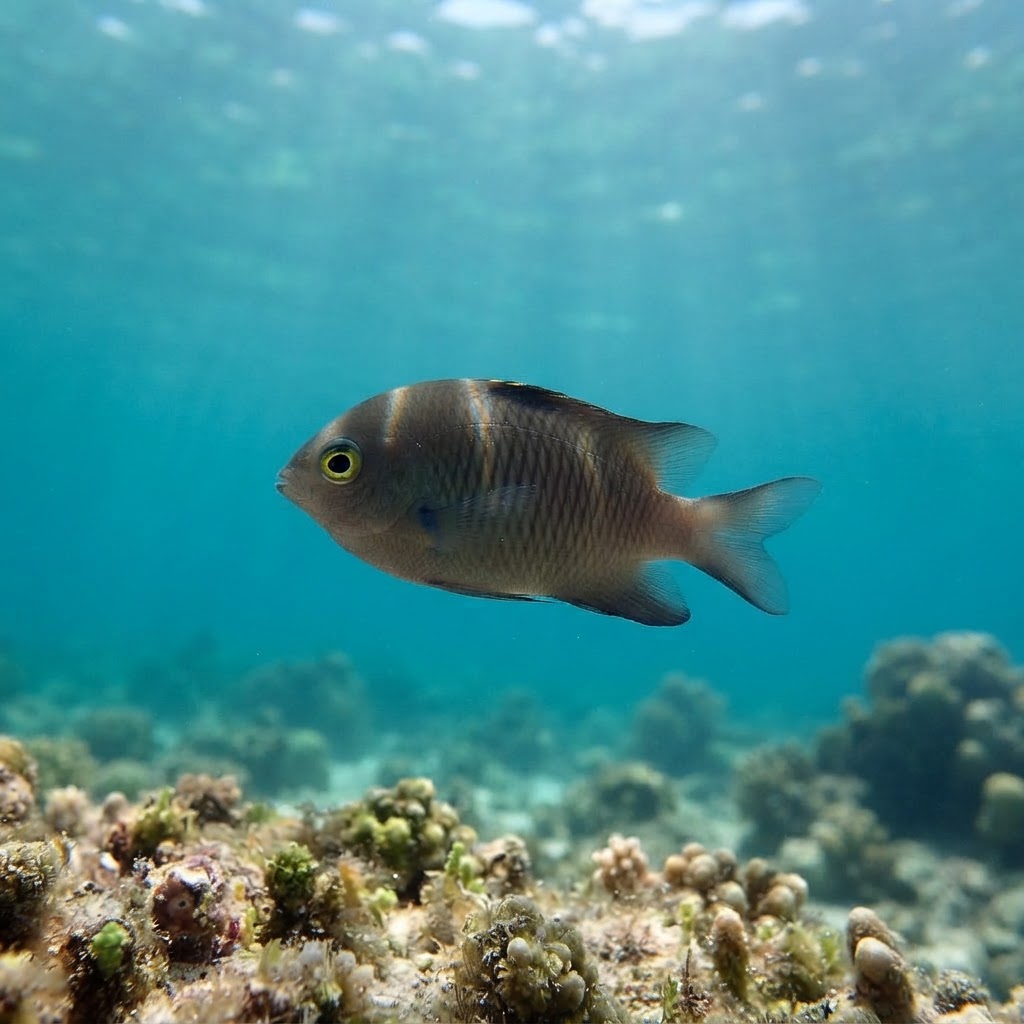
A small, deep-bodied damselfish reaching around 11 cm, with an oval profile typical of the damselfish family. Body colour runs dusky brown to blackish, often showing faint pale vertical bars along the flanks that fade with age. Look for the compact size and territorial hovering close to a patch of reef rather than any bold pattern, since this is a subtly marked species rather than a showy one.
Divers typically find it holding a small patch of reef or rubble, hovering close to cover and darting back to shelter rather than roaming open water. Like most damselfish it can show a bit of nerve when divers linger near its patch, but it is not bold enough to be a nuisance. Most sightings come from reef flats and rubble zones rather than open sand or deep drop-offs.
Damselfish in this genus are known to guard small algae patches on the reef, chasing off other fish that stray too close, so a hovering, snapping little fish defending a scrap of rubble is often exactly this species doing its job.
No clear season shows in the sighting data, and a comfortable range of 18.5 to 29.2 C means it can turn up on tropical and subtropical reefs at any time of year.
Reef neighbours a diver could mistake it for. Use the identification notes above to tell them apart.
Sightings cluster around Dili in Timor-Leste, with additional records from Lomaiviti in Fiji and a site in New South Wales, Australia. It is logged as uncommon everywhere it turns up, so treat any encounter as a bonus rather than a given on reef dives in these regions.
Mapping where Pacific Gregory is logged…
It has been logged around Dili in Timor-Leste, in Fiji's Lomaiviti region, and off New South Wales, Australia. At all of these it is an uncommon sighting rather than a certainty, so it rewards divers who check rubble patches and reef flats closely.
There is no detected seasonal pattern, and its observed temperature range of 18.5 to 29.2 C spans both tropical and cooler subtropical conditions, so sightings are possible year-round wherever it occurs.
Look for a small, oval-bodied damselfish around 11 cm long, coloured dusky brown to blackish with faint pale bars that can be hard to see. It typically hovers close to a rubble patch or reef ledge rather than swimming in open water.
They grow to about 11 cm, putting them firmly in the small end of the damselfish family, similar in scale to many other Plectroglyphidodon species.
No. It poses no danger to divers and will simply retreat to cover or dart about its home patch if approached too closely.
Site and sighting data is aggregated from diver logs, iNaturalist and GBIF. For taxonomy and conservation status:
Dascyllus
3,697 sites