Istigobius ornatus
A pale, speckled little goby found perching on sand and rubble from Sihanoukville to Bali and Muscat, year-round in warm 25-29C water.
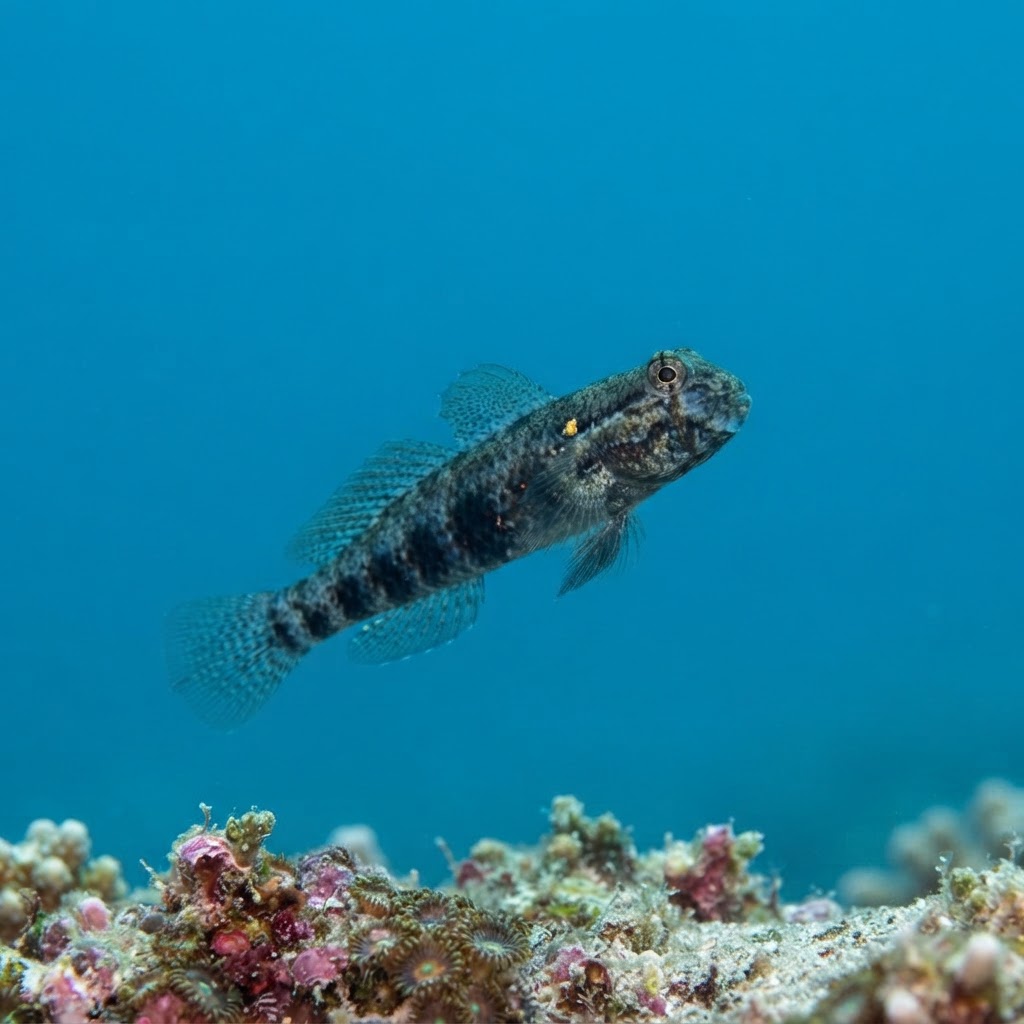
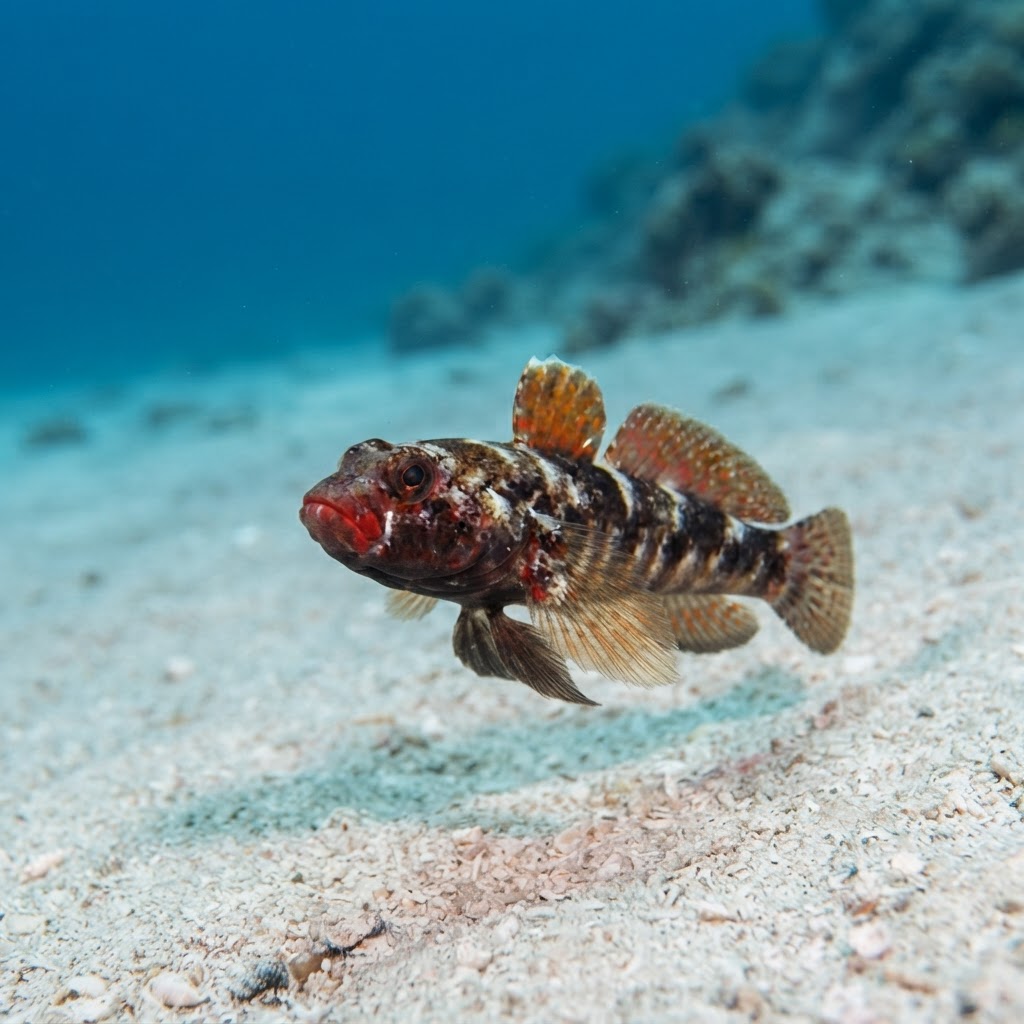
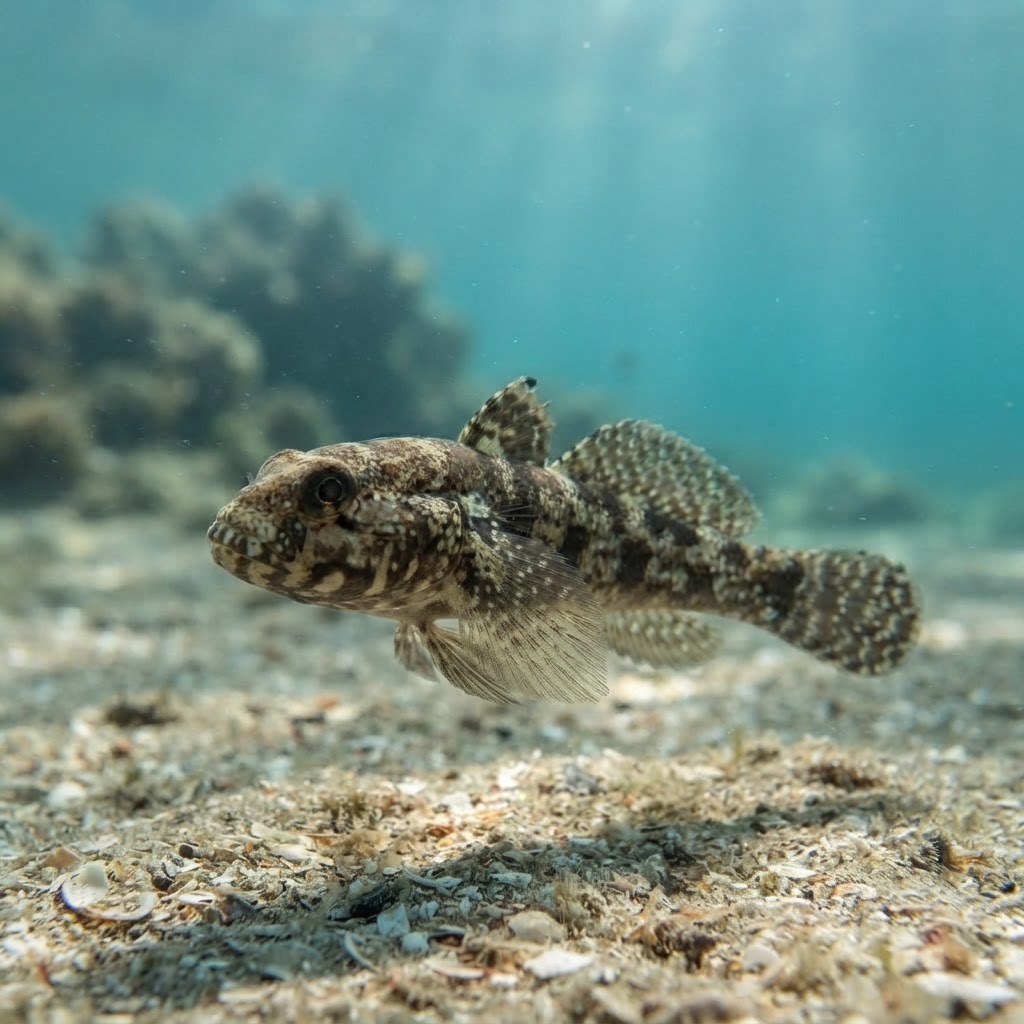
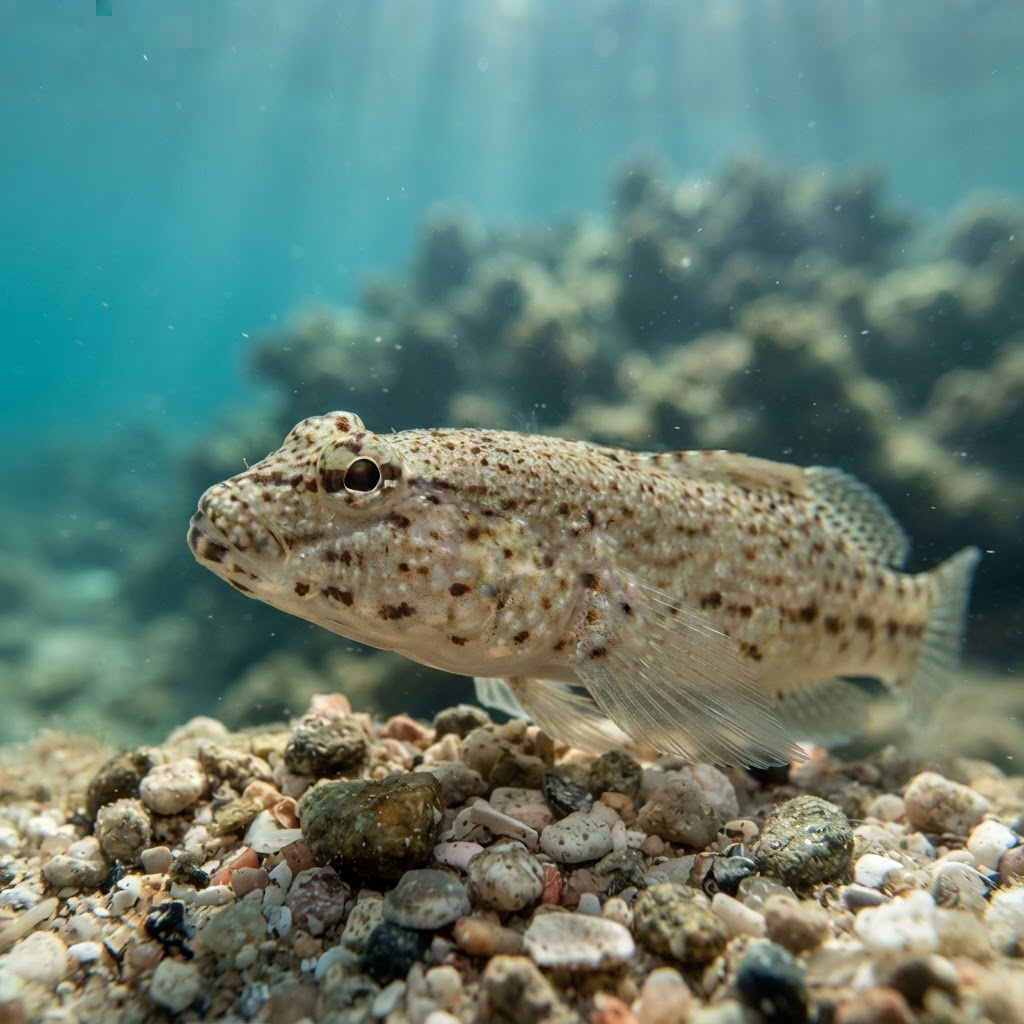
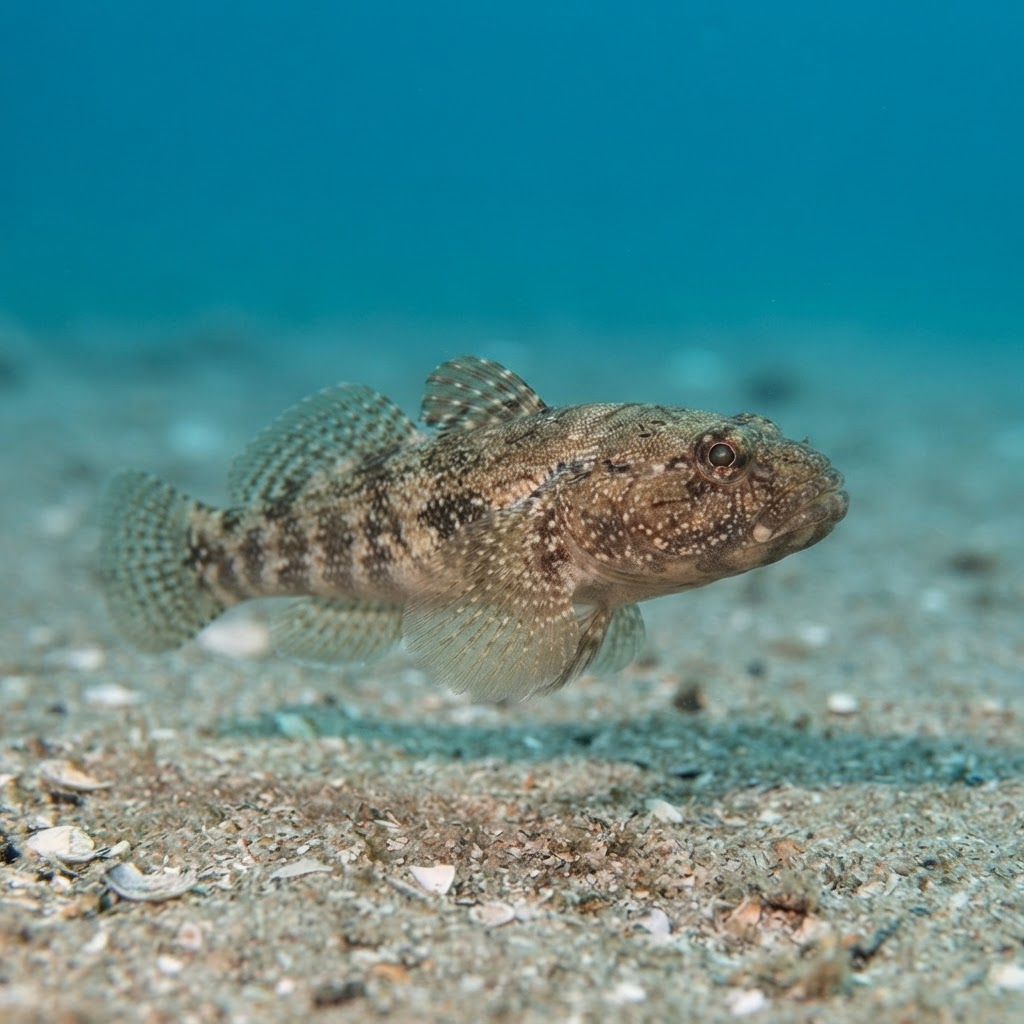
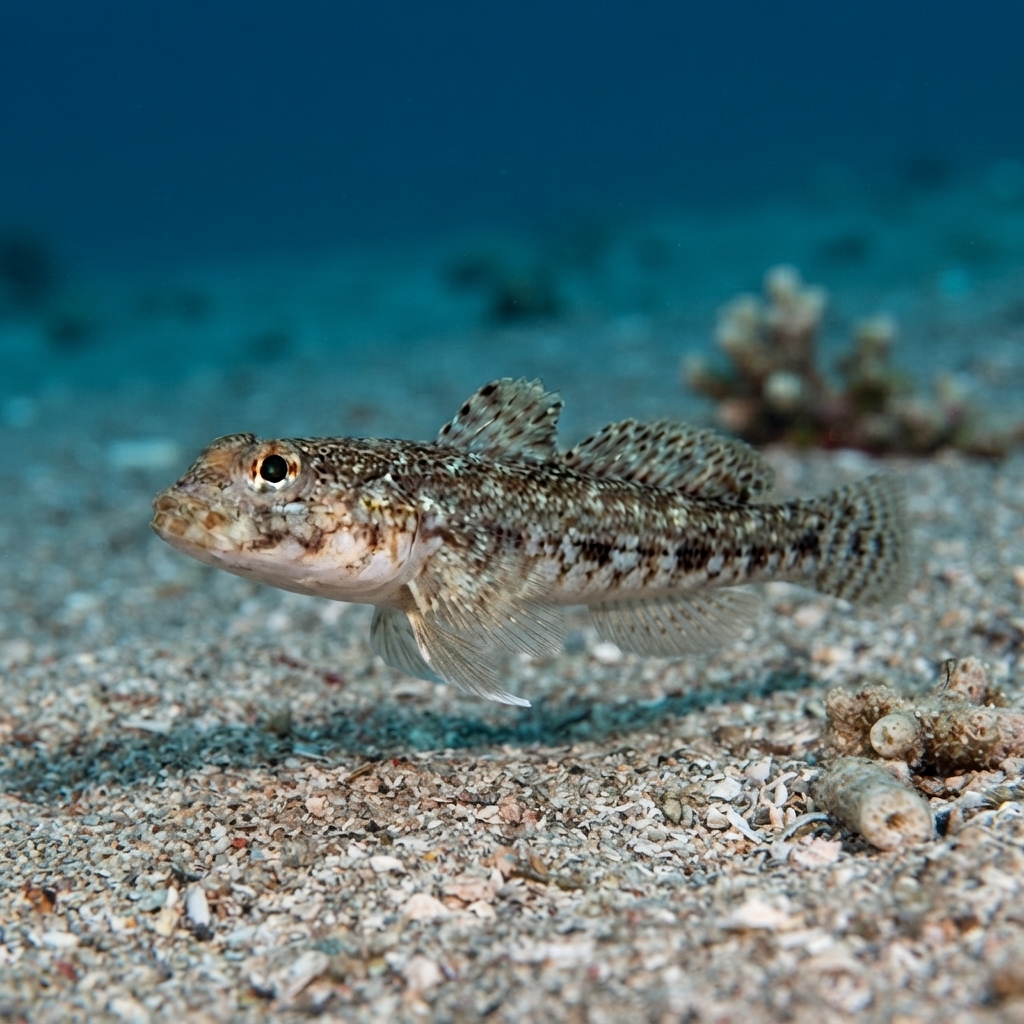
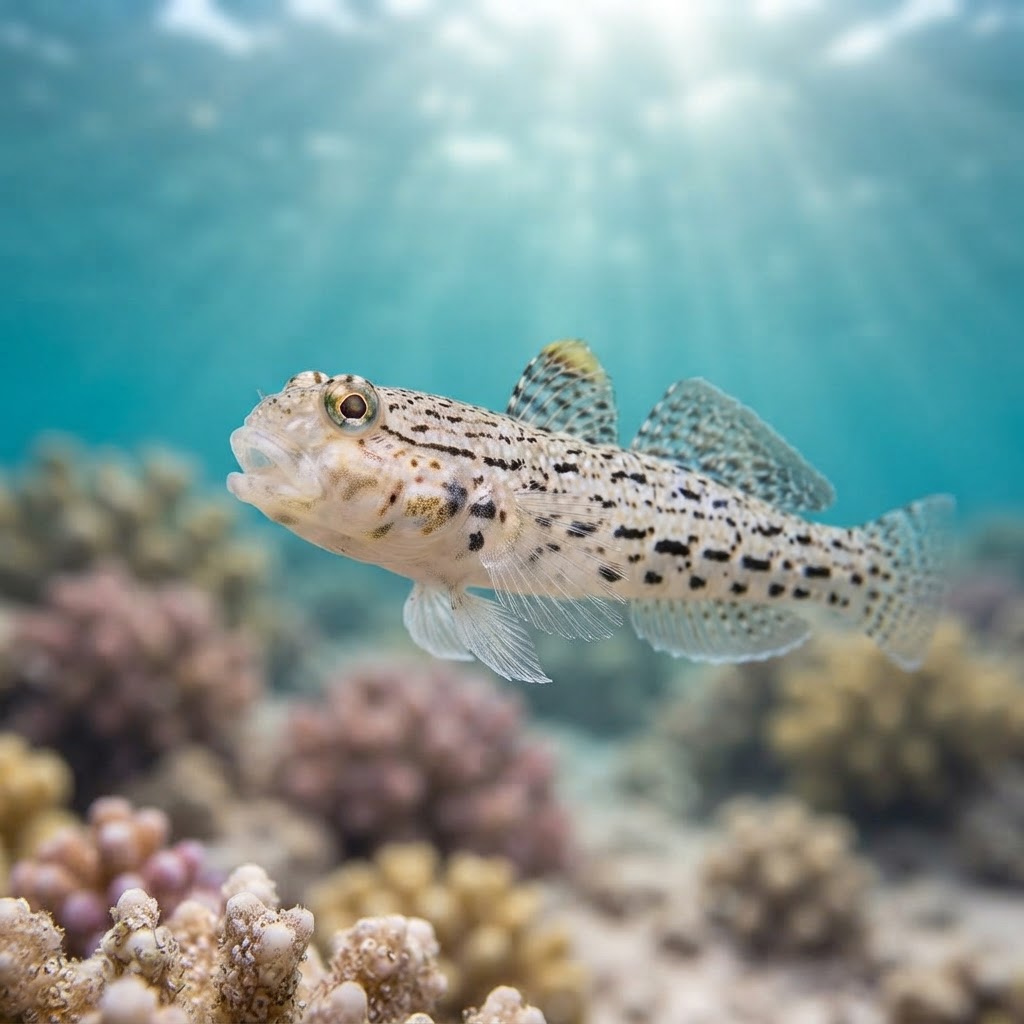
A small, slender goby around 8cm long, usually seen propped on its fins on sand, rubble or coral rock rather than swimming freely. Look for a pale, sandy-grey body covered in fine dark speckles and faint diagonal bars along the flanks, with a slightly upturned face typical of gobies. It sits still for long stretches, blending into the substrate, which makes the eyes and speckled pattern your best giveaway.
Divers typically find it resting motionless on sand patches, rubble or low reef structure, propped up on its pectoral fins rather than cruising in open water. It tends to hold its ground as divers pass, darting only a short distance if approached too closely before settling back down nearby. Most sightings come from close, slow looks at the substrate rather than mid-water scanning, so it rewards divers who go slow near sandy edges of the reef.
Like other sand-dwelling gobies, it relies on stillness and camouflage rather than flight, so a diver hovering quietly over a rubble patch often gets a longer look than one swimming past.
No clear seasonal pattern shows up in diver logs, and it sits comfortably in water from 25.5 to 29.3C, so it is a year-round find on the tropical reefs where it lives.
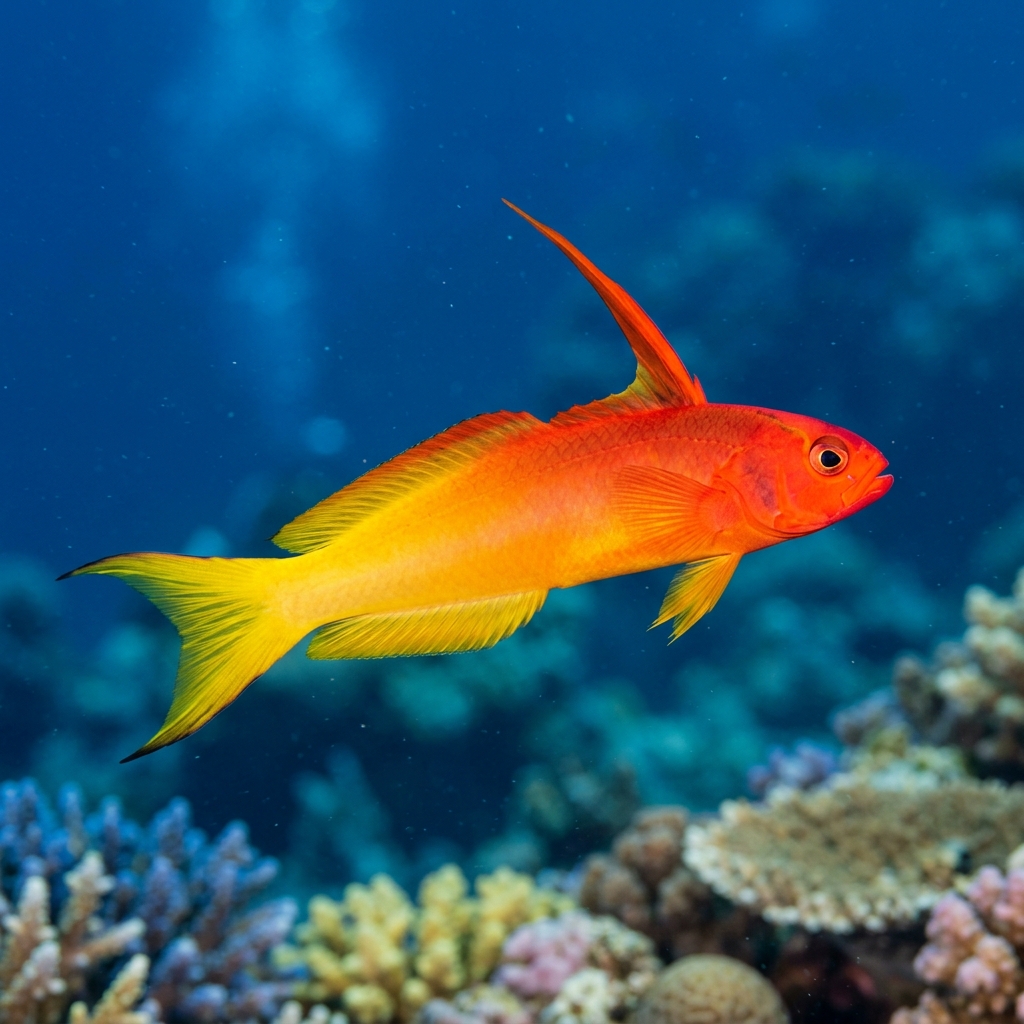
Reef neighbours a diver could mistake it for. Use the identification notes above to tell them apart.
Most reliably logged in Sihanoukville, Cambodia, and widely reported across Thailand's Phuket, Koh Tao and Koh Pha Ngan sites. Strong populations also turn up in Bali, Indonesia, Muscat, Oman, and the Andaman Islands in India, with smaller but steady numbers in Fiji's Mamanuca Islands, Australia and Egypt.
Mapping where Ornate Goby is logged…
It shows up most often around Sihanoukville in Cambodia, across Thailand's Phuket, Koh Tao and Koh Pha Ngan, and in Bali, Indonesia. Muscat in Oman and the Andaman Islands in India are also strong spots.
There is no strong seasonal pattern in sightings, and it favours warm water between roughly 25.5 and 29.3C year-round, so it can be found on tropical reefs at any time of year.
Look for a small, pale, speckled goby around 8cm long perched on sand or rubble rather than swimming in open water. Its sandy-grey body with fine dark speckling and faint bars is the main clue, along with its habit of staying still until closely approached.
They stay small, reaching around 8cm in length, which is typical for reef-dwelling gobies.
No, they pose no threat to divers. They are small, non-aggressive fish that simply move a short distance away if approached too closely.
Site and sighting data is aggregated from diver logs, iNaturalist and GBIF. For taxonomy and conservation status:
Slender Goby
806 sites