Istigobius rigilius
Spot this small sand-dwelling goby on reef flats in Mindanao, Philippines, one of its most reliably logged strongholds year-round.
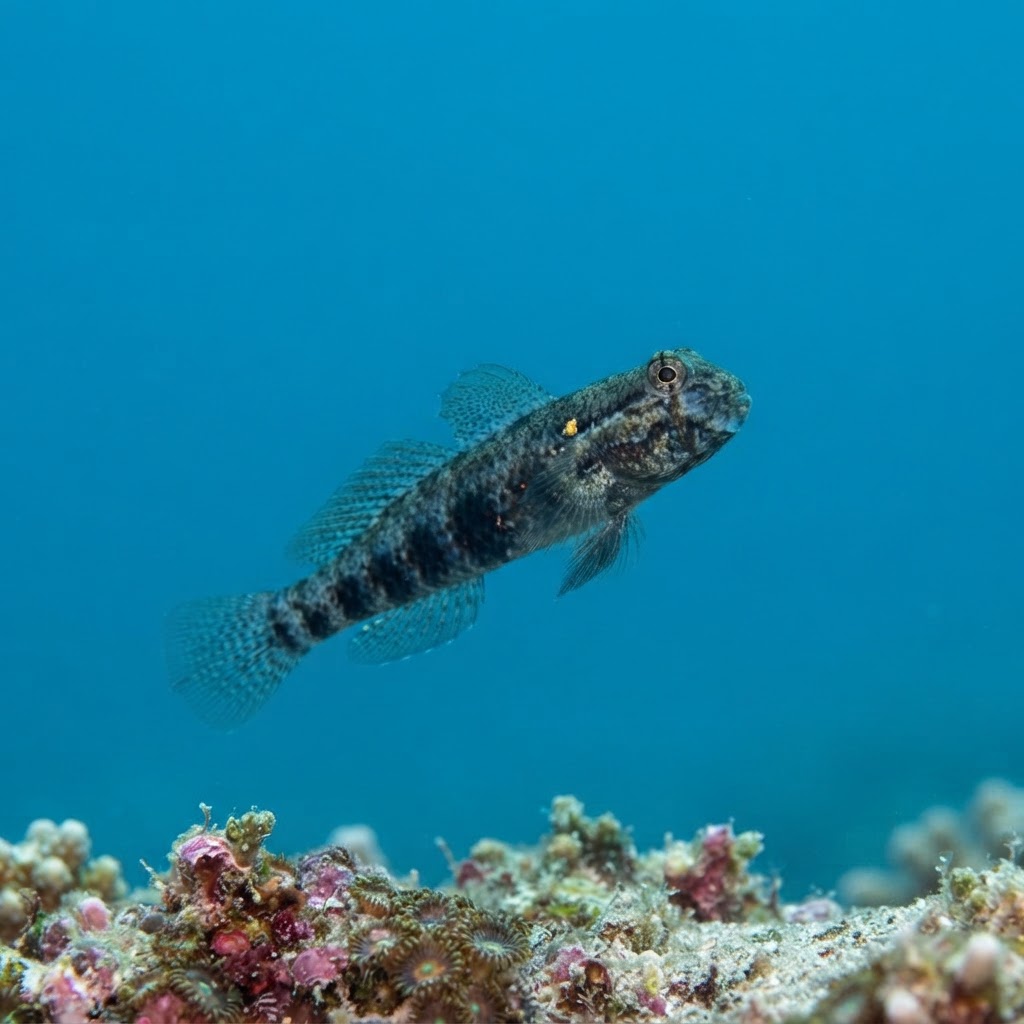
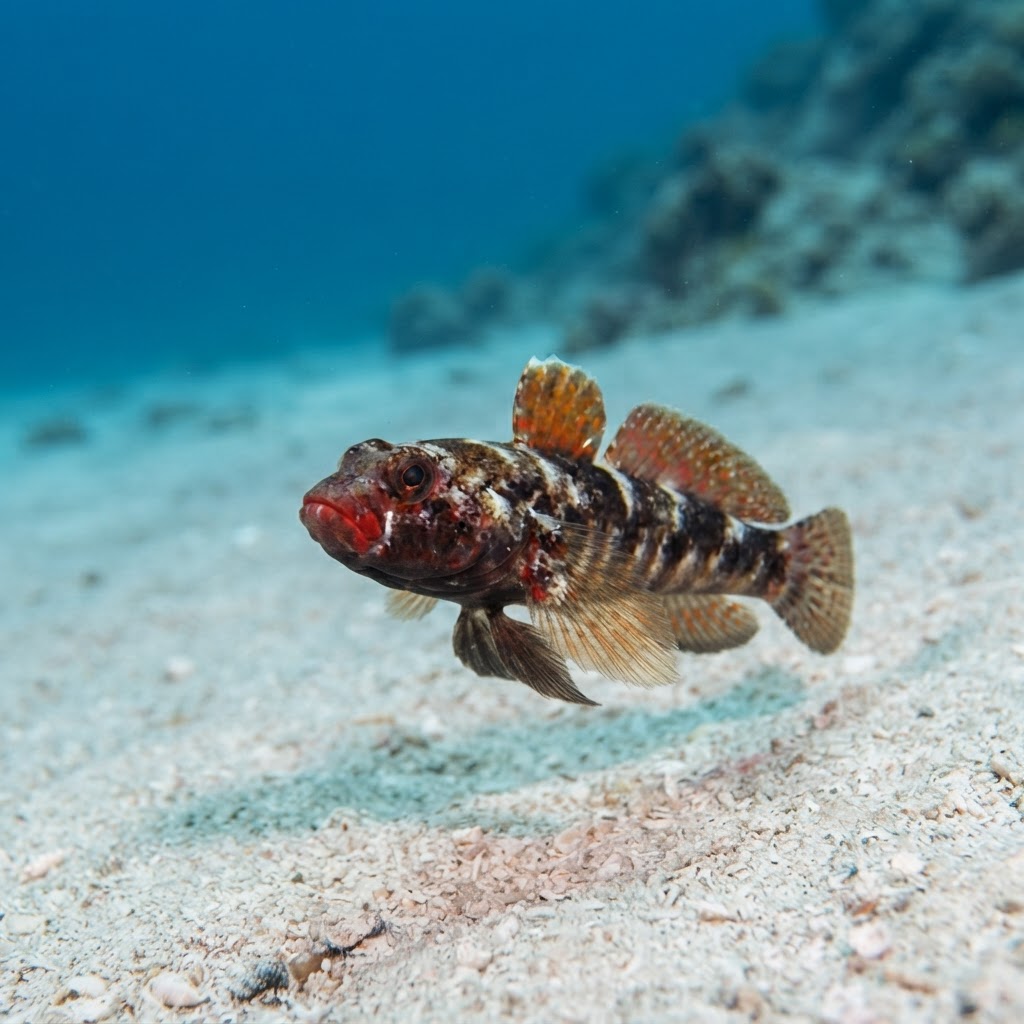
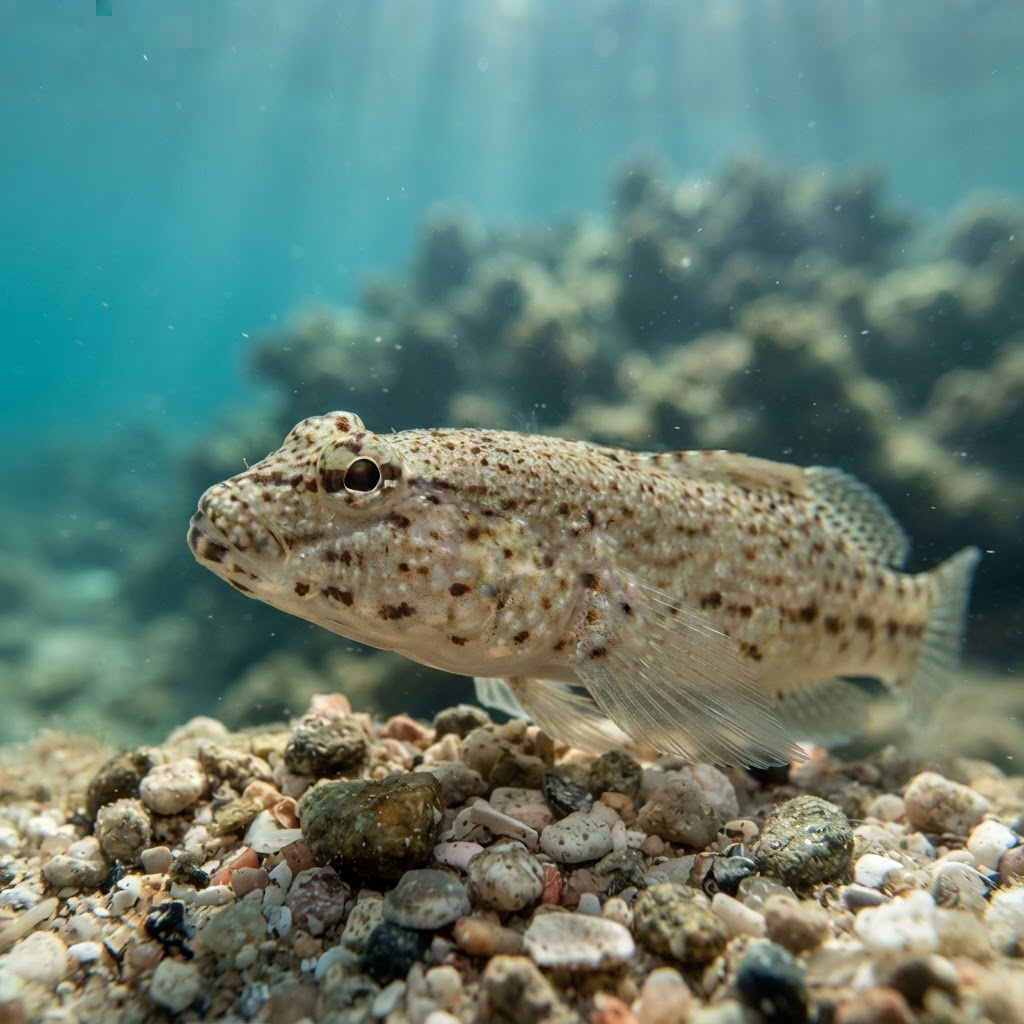
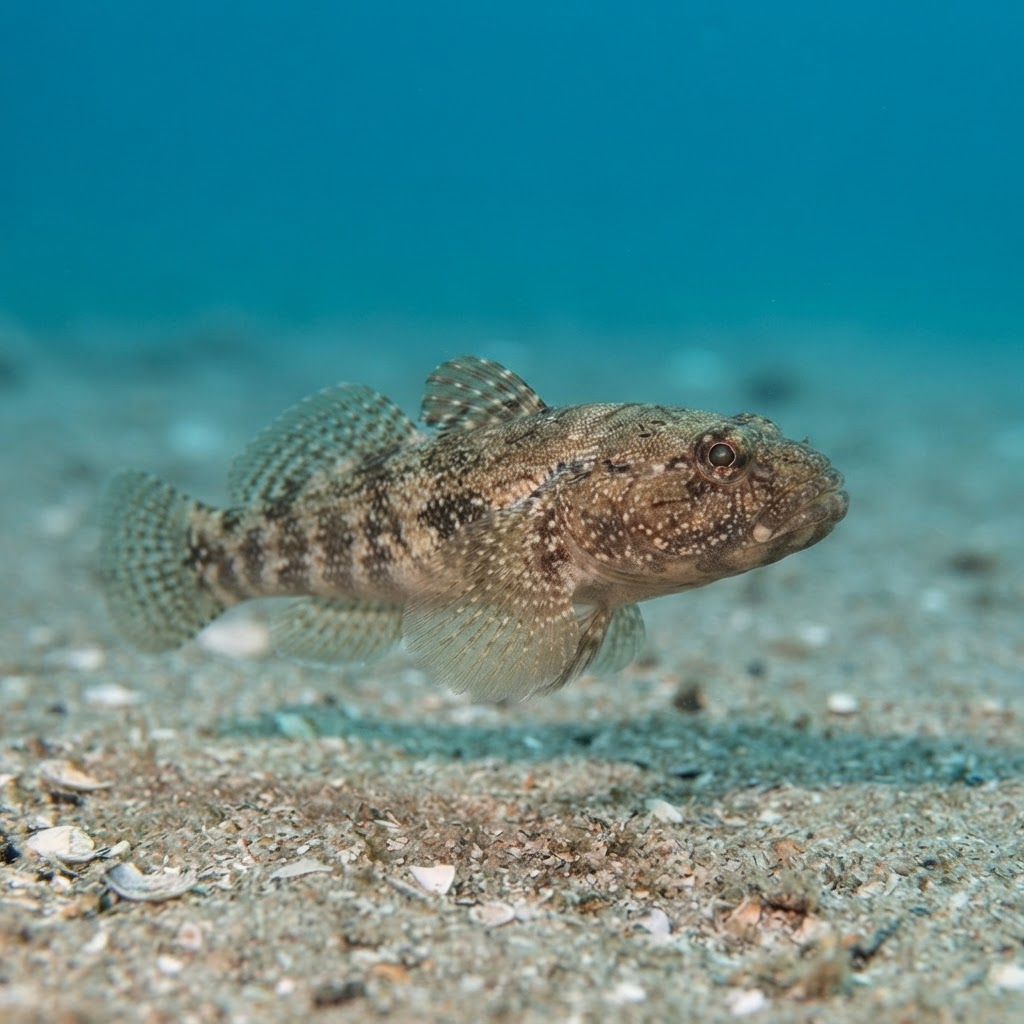
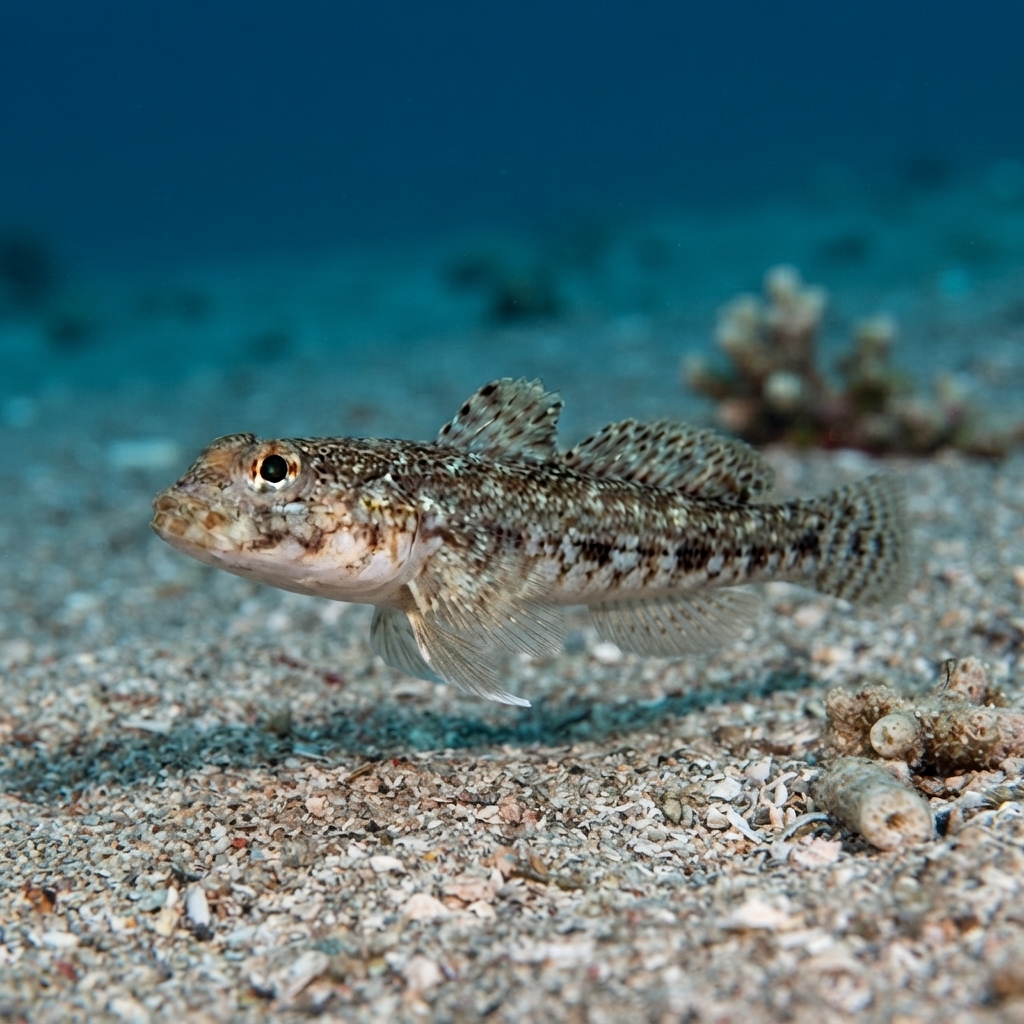
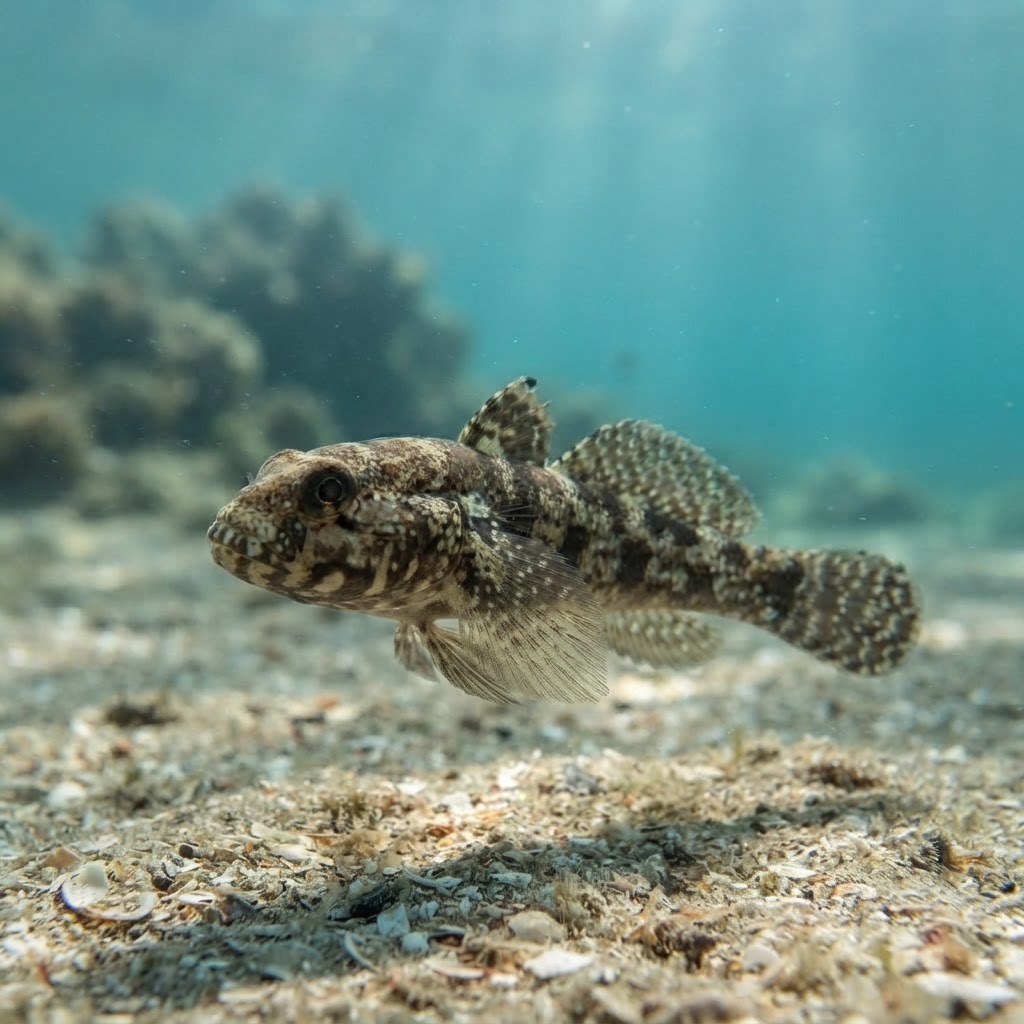
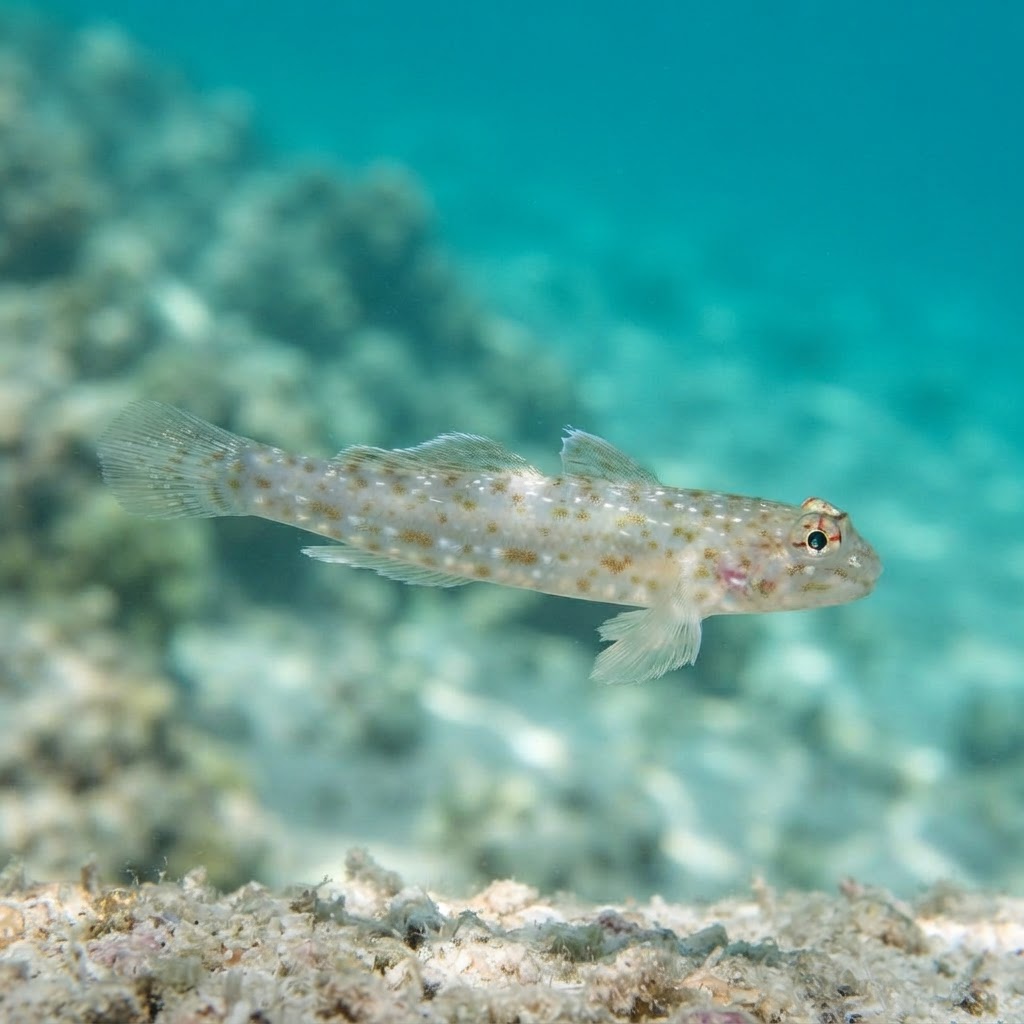
A small, slender goby around 8 cm long, pale sandy-grey to cream in colour with rows of orange-brown spots along its flanks and dashes across the head. It perches propped up on its pelvic fins rather than swimming freely, blending closely with the sand or rubble it sits on. Look for the two dorsal fins and the alert, slightly bulging eyes typical of gobies scanning for movement nearby.
Spends most of its time perched motionless on sand, rubble, or the edge of coral patches, propped on its fins and watching for prey or threats. It reacts to divers by freezing or making short darting hops rather than fleeing far, so slow, patient observers get the best look. Most sightings come from shallow, calm sand and rubble zones rather than open water or steep walls.
Like many sand gobies, it relies on camouflage and stillness rather than speed, only bolting a short distance when a diver gets too close before settling again nearby.
Sightings show no clear seasonal pattern, and with a comfortable range of 25.5 to 29.3 C it's a year-round find on the tropical reef flats where it lives.
Reef neighbours a diver could mistake it for. Use the identification notes above to tell them apart.
Most reliably logged around Mindanao in the Philippines, with additional sightings off Queensland in Australia and Saipan in the Northern Mariana Islands. Smaller numbers have also been recorded in Palau's Rock Islands and in Sulawesi, Indonesia, so it turns up wherever sandy reef flats and rubble patches are searched carefully.
Mapping where Orangespotted Sandgoby is logged…
It's most commonly logged around Mindanao in the Philippines, with further sightings in Queensland, Australia, and Saipan in the Northern Mariana Islands. Palau's Rock Islands and Sulawesi in Indonesia have also produced records.
There's no strong seasonal pattern in sightings, and its comfortable temperature range of 25.5 to 29.3 C means it's present on tropical sand flats throughout the year.
Look for a small, pale sandy-coloured goby around 8 cm long with rows of orange-brown spots along its body, usually perched still on sand or rubble rather than swimming in open water.
They're a small species, typically reaching around 8 cm in length, so divers need to look closely at sand and rubble patches to spot them.
No, they pose no danger to divers. They're a small, shy fish that relies on camouflage and short darting movements rather than any defensive behaviour towards people.
They aren't currently listed with a conservation status, and there's no evidence of population concern, so divers can enjoy sightings without conservation worries.
Site and sighting data is aggregated from diver logs, iNaturalist and GBIF. For taxonomy and conservation status:
Slender Goby
806 sites