Naso hexacanthus
Grey torpedo-shaped fish schooling in blue water off the reef edge, most reliably seen in the Maldives' Central Atolls year-round.
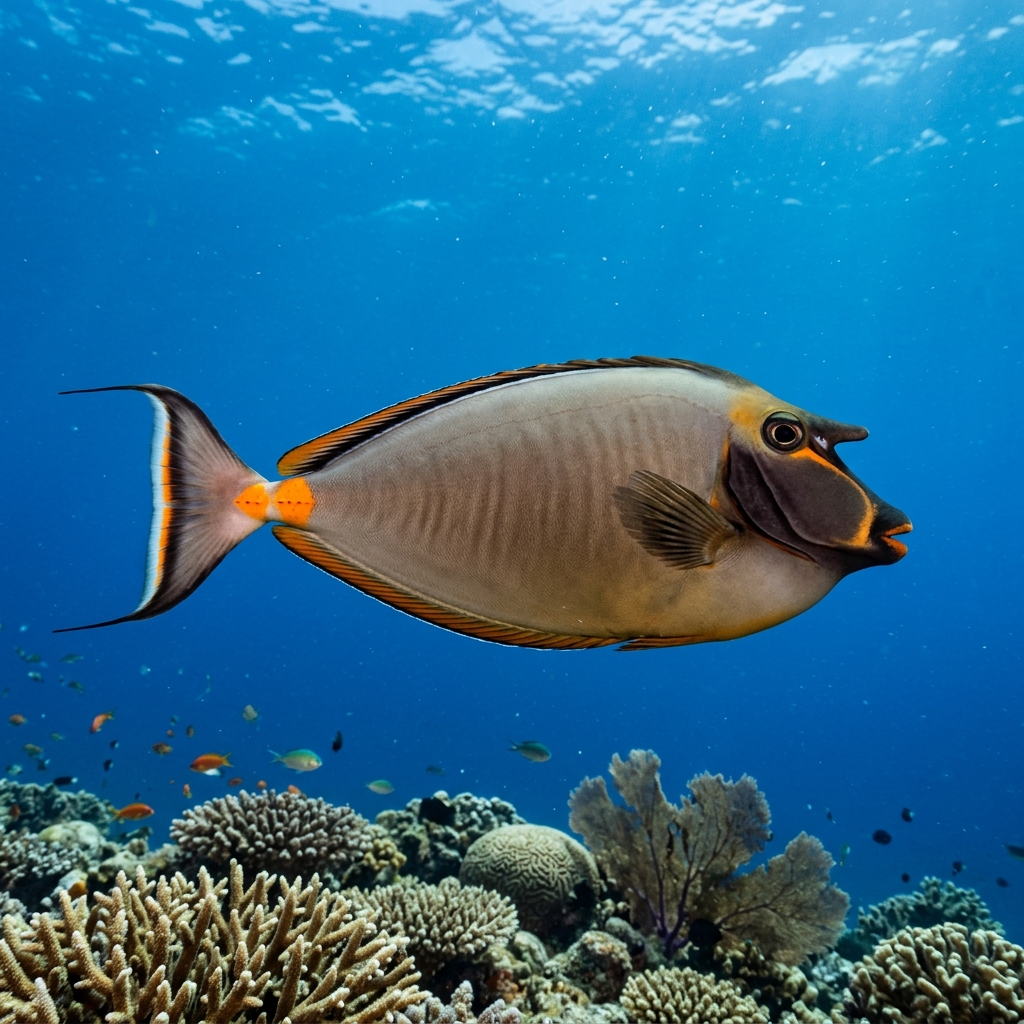
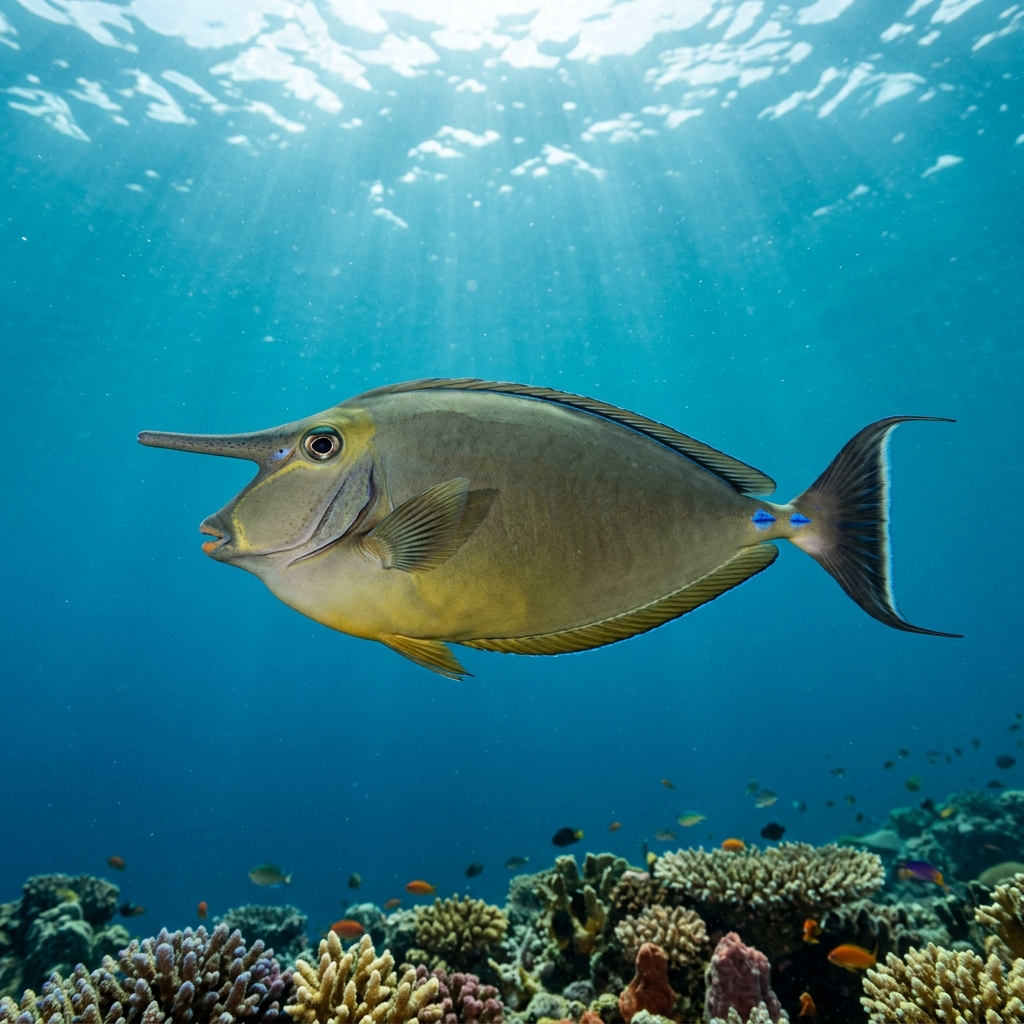
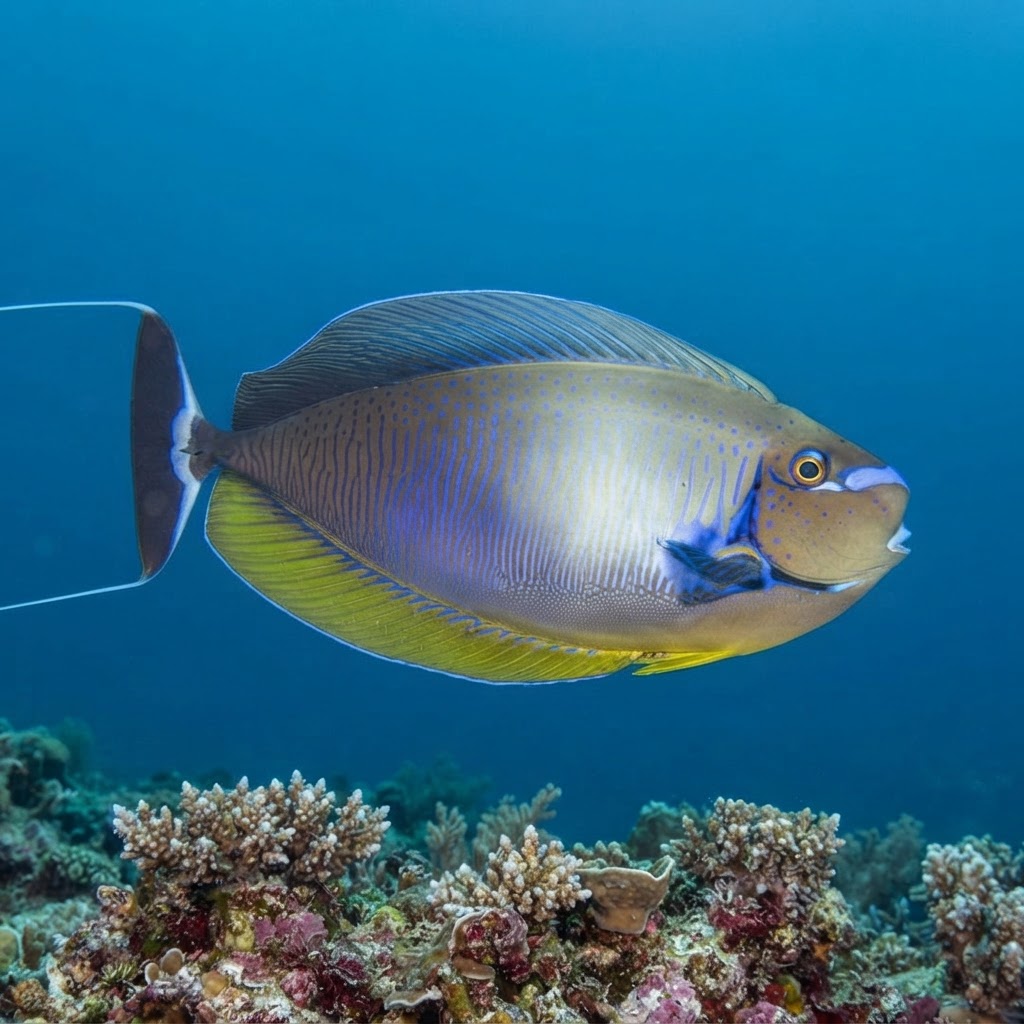
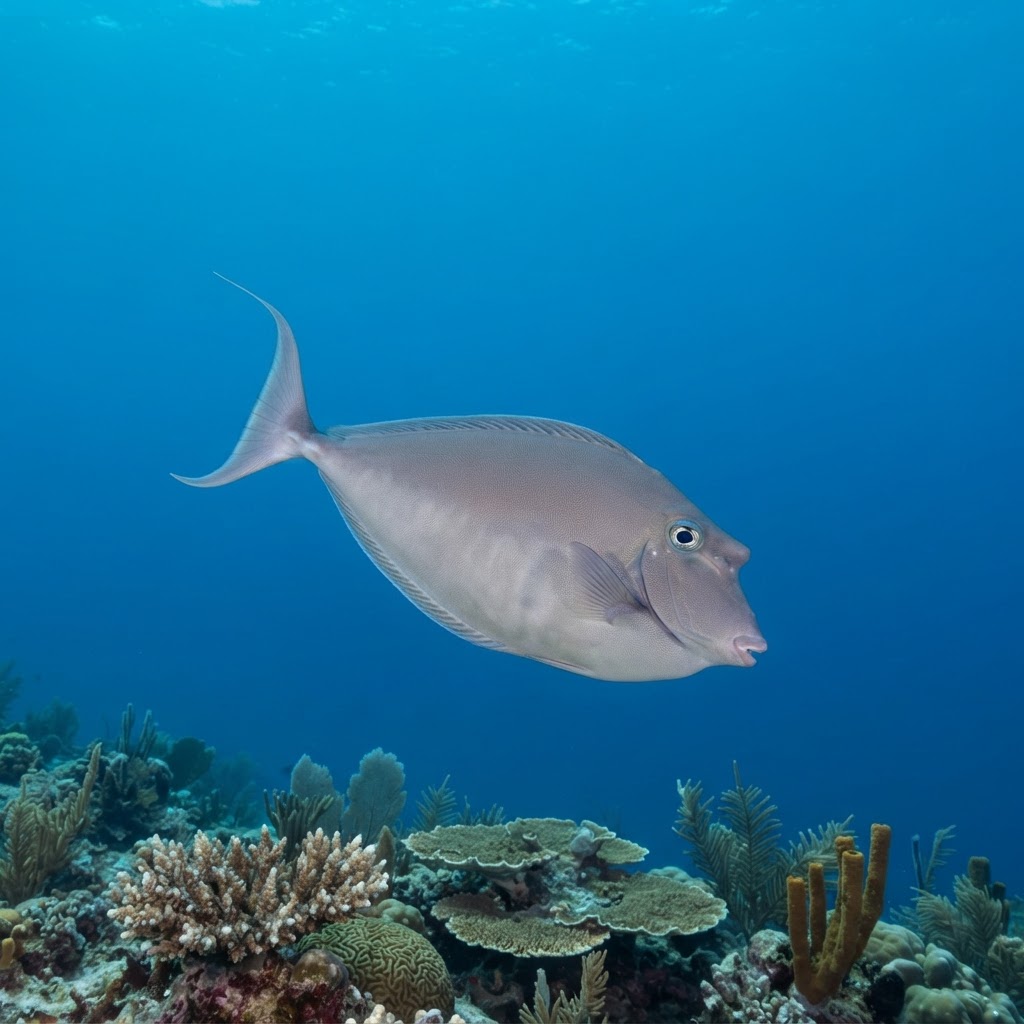
Torpedo-shaped and grey to blue-grey overall, often with a darker saddle behind the head and a pale, almost translucent tail base that flashes as it turns. Unlike its spiny-tailed relatives it lacks an obvious horn or forehead projection, giving it a smoother, more streamlined profile. Look for it holding mid-water off the reef edge rather than grazing on the bottom like typical surgeonfish, usually in loose schools of a dozen or more.
Divers typically find it hanging in loose to fairly large schools well off the reef wall, facing into the current rather than picking at algae on the substrate. It feeds on plankton in open water, drifting at mid-depth over drop-offs and channel mouths, and tends to keep its distance rather than approach divers. Sightings skew toward blue-water edges and steep walls rather than shallow lagoon flats.
Unlike most surgeonfish, which graze algae off the reef, this one feeds mainly on plankton picked out of open water, which is why you'll often spot it schooling well off the wall instead of nosing around the bottom.
No clear seasonal pattern shows up in the sightings, and with a comfortable range of roughly 22 to 29 C it's present on tropical reefs year-round, so any month works for a trip built around it.
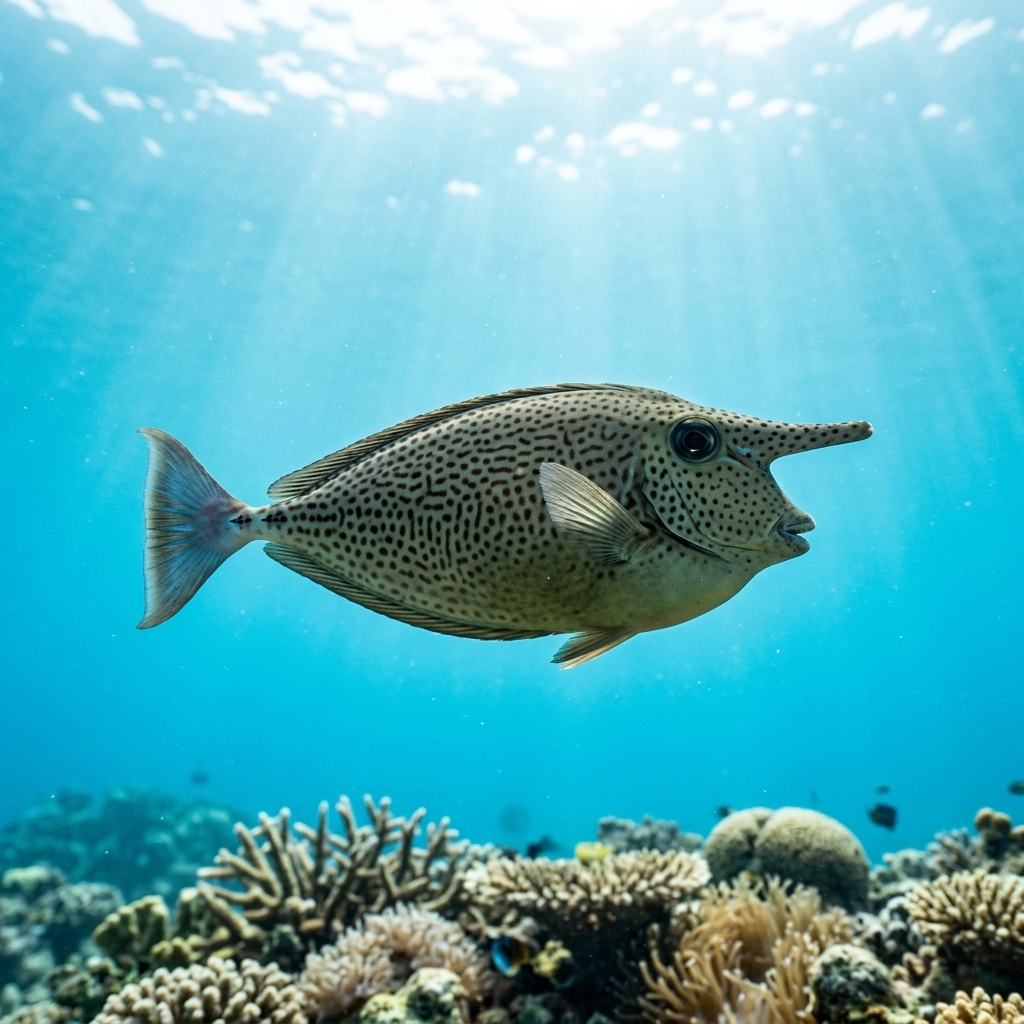
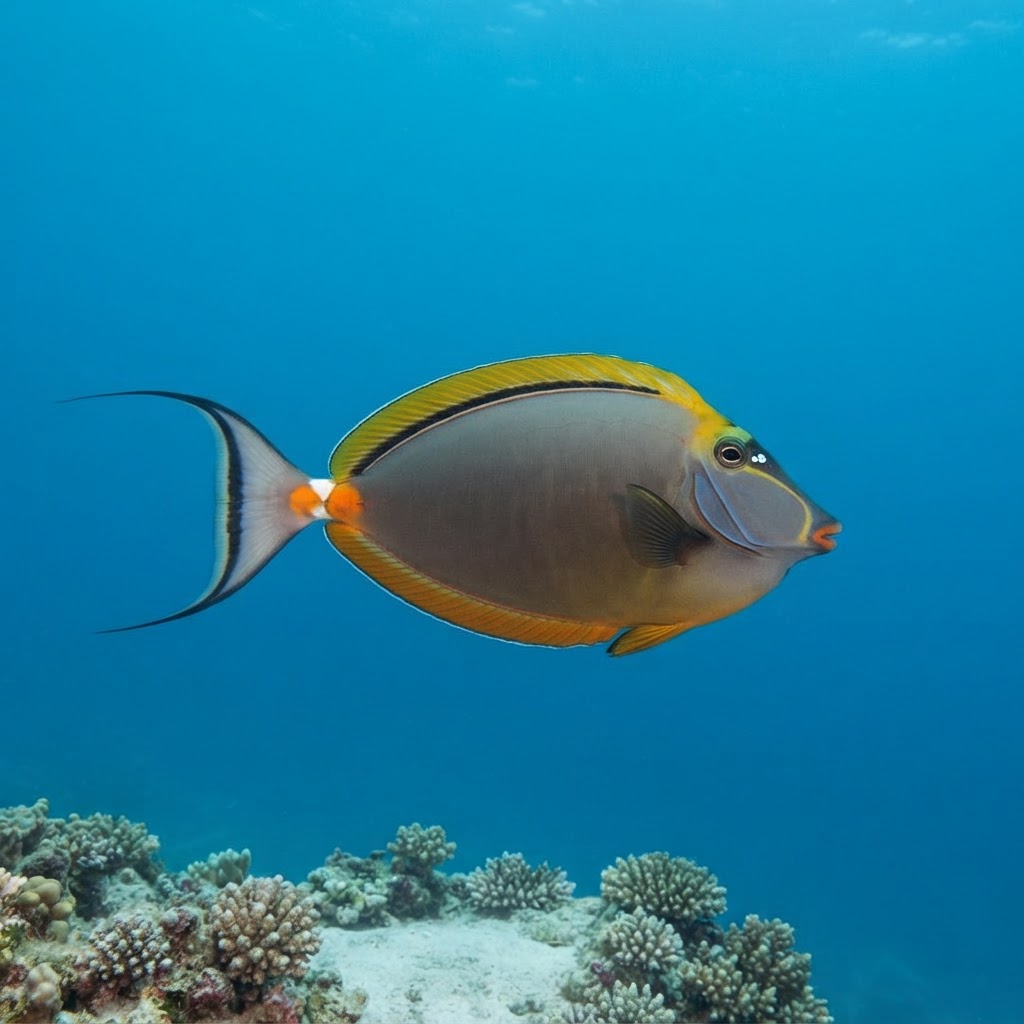
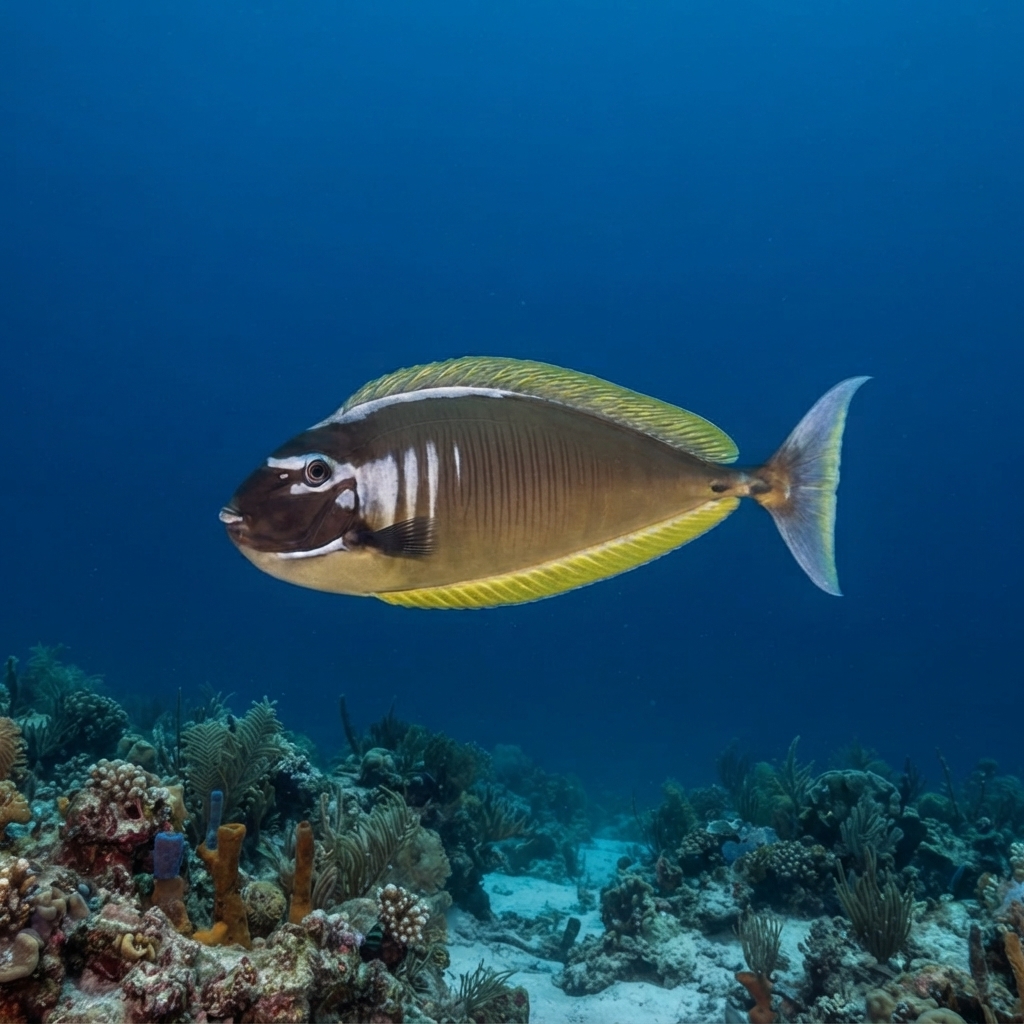
Reef neighbours a diver could mistake it for. Use the identification notes above to tell them apart.
Most reliably logged in the Maldives, particularly the Central Atolls, where it turns up at a large share of reef sites. Beyond the Maldives it's a steady find in Indonesia, the Philippines' Luzon region, Hawaii, Palau's Rock Islands and Peleliu, and Egypt's South Sinai coast.
Mapping where Sleek Unicornfish is logged…
The Maldives, especially the Central Atolls, is the most consistent place to see it, with further sightings across Indonesia, the Philippines' Luzon region, Hawaii, Palau, and Egypt's South Sinai.
There's no strong seasonal pattern in the sightings, and its comfortable temperature range keeps it on tropical reefs all year, so it can be seen in any month.
Look for a grey-blue, torpedo-shaped fish without a horn on its forehead, often in a loose school holding mid-water off the reef edge rather than grazing the bottom. A pale tail base flashes as it swims.
They typically reach around 52cm in length, making them a mid-sized member of the surgeonfish family.
Most surgeonfish graze algae off the reef, but this species feeds on plankton in open water, which is why it's usually seen schooling off the wall rather than picking at the substrate.
Site and sighting data is aggregated from diver logs, iNaturalist and GBIF. For taxonomy and conservation status:
Orangespine Unicornfish
961 sites