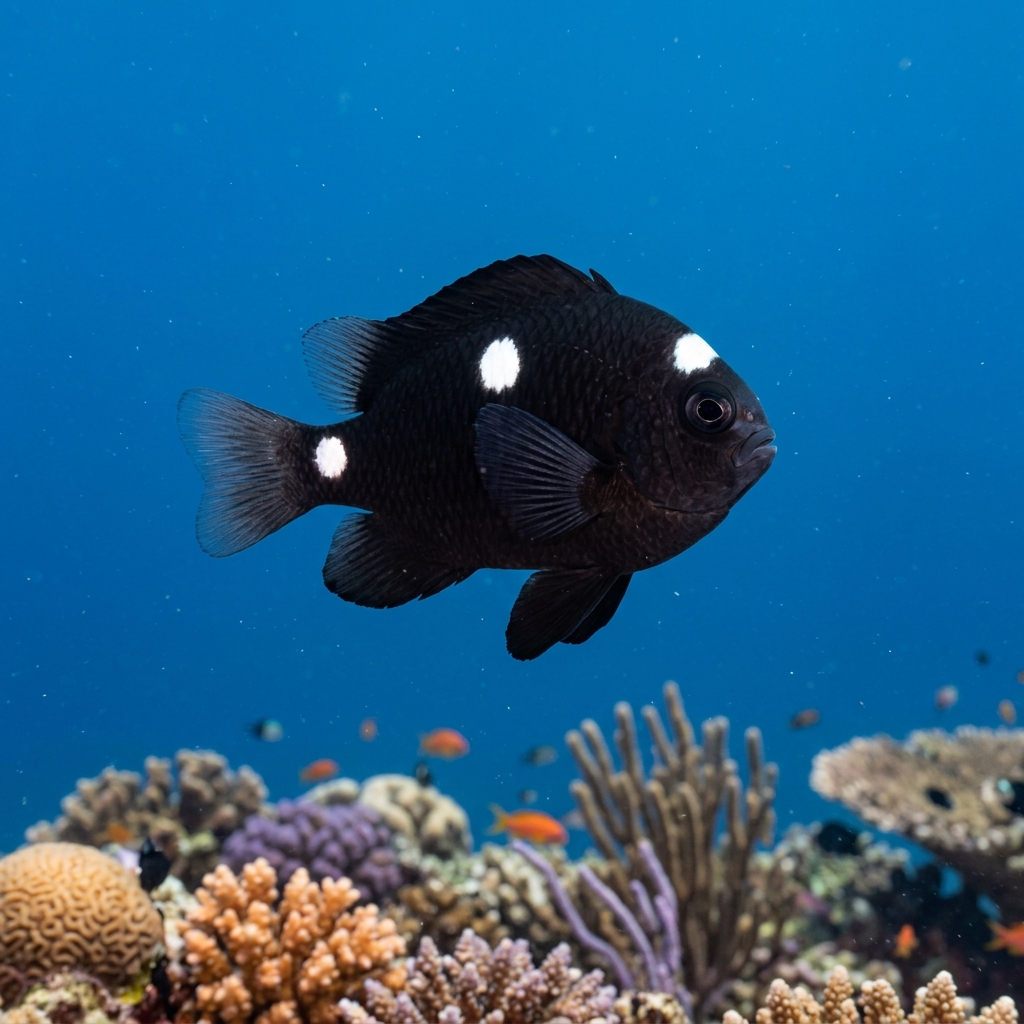
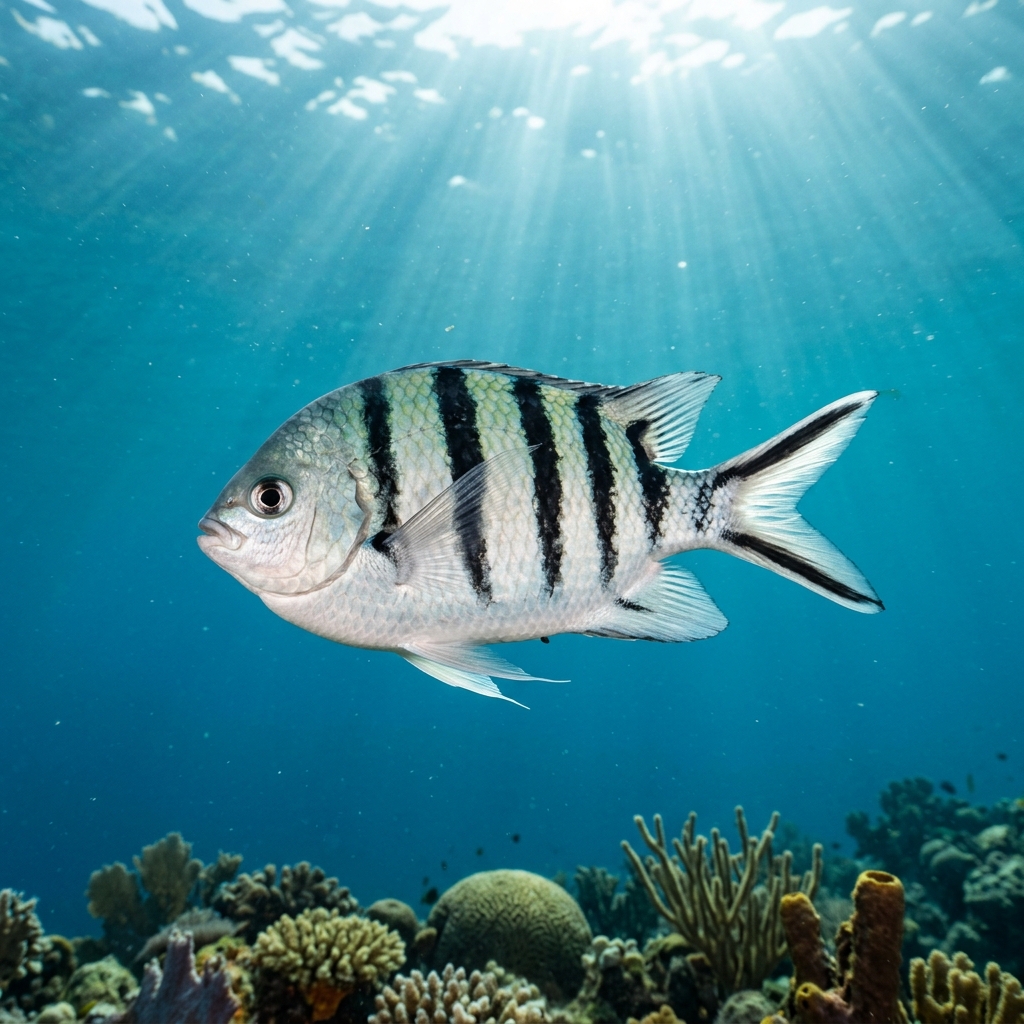
Amphiprion chrysopterus
Deep orange-brown clownfish common on reefs in Sulawesi, Palawan and Queensland at 26-29C, year-round and easy to spot in its anemone.
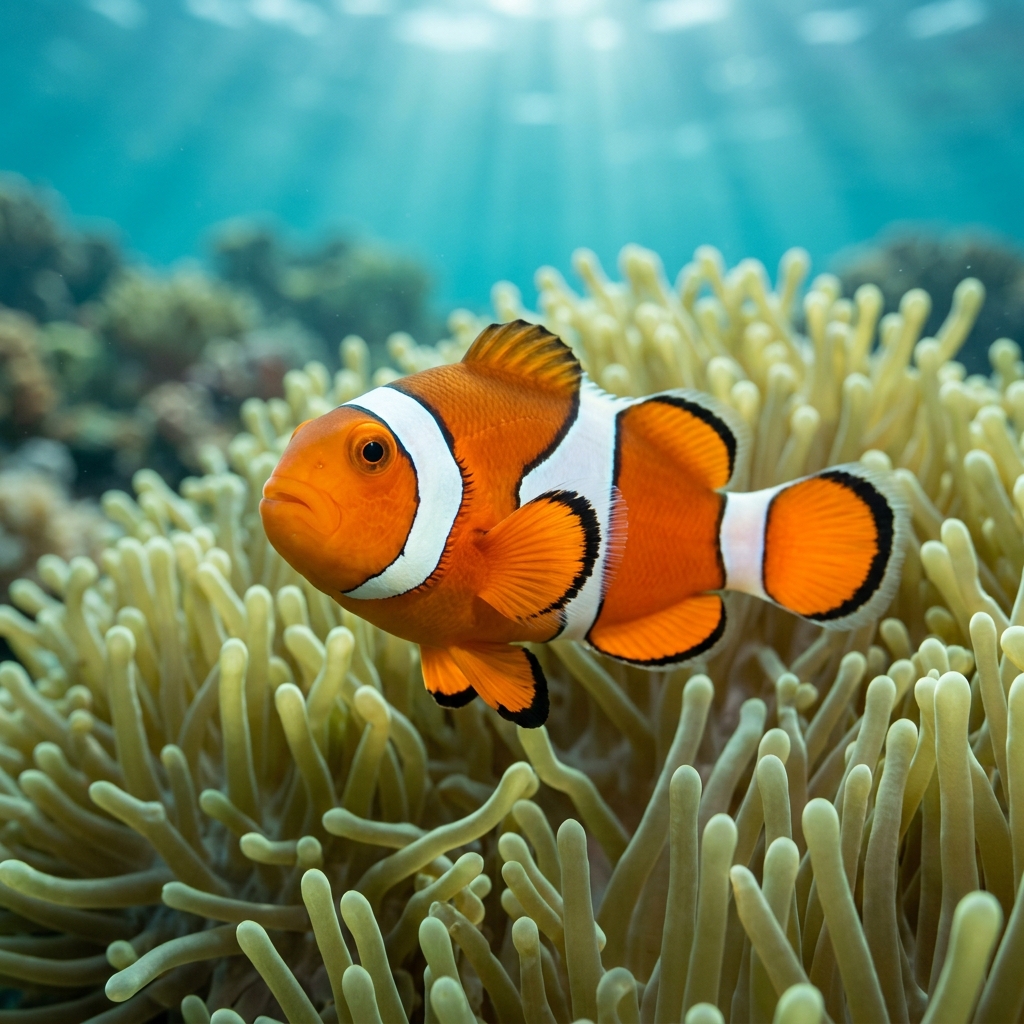
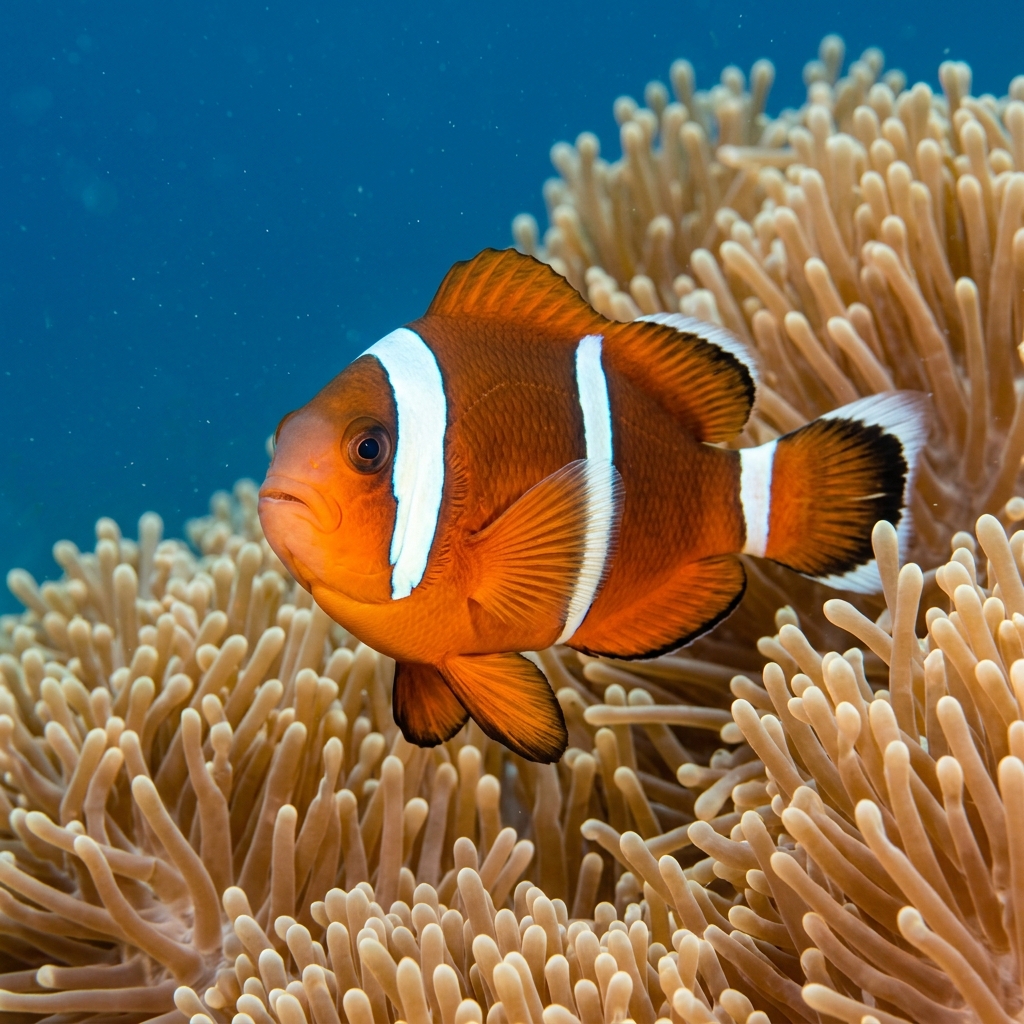
Grows to around 11 cm with a deep orange to almost blackish-brown body and a single broad white or pale bluish bar just behind the head, with no white bars on the tail or midbody. The fins, especially the outer edge of the tail, carry a bright orange-yellow wash that gives the fish its name. Body shape is the classic clownfish oval, deep-bodied and blunt-faced, and it rarely strays more than a fin-kick or two from its host anemone.
Expect to find it hovering close over its host anemone, darting in and out of the tentacles and rarely venturing more than a body-length away. It will often approach and nip at a diver's mask or fingers if you get close to its anemone, a bluff-charge defence rather than any real threat, and it tends to be most active and visible during the day on shallow to mid-depth reef flats and slopes.
Like all clownfish it lives in a mutualism with its anemone, gaining protection from the stinging tentacles thanks to a mucus coating while chasing off small fish that would otherwise nibble the anemone, and colonies typically hold a size-based hierarchy with one dominant female, a breeding male, and several smaller non-breeding juveniles.
Comfortable in warm water from roughly 26 to 29C year-round, so there is no strong seasonal window and it can be found on host anemones on any dive throughout the year across its range.
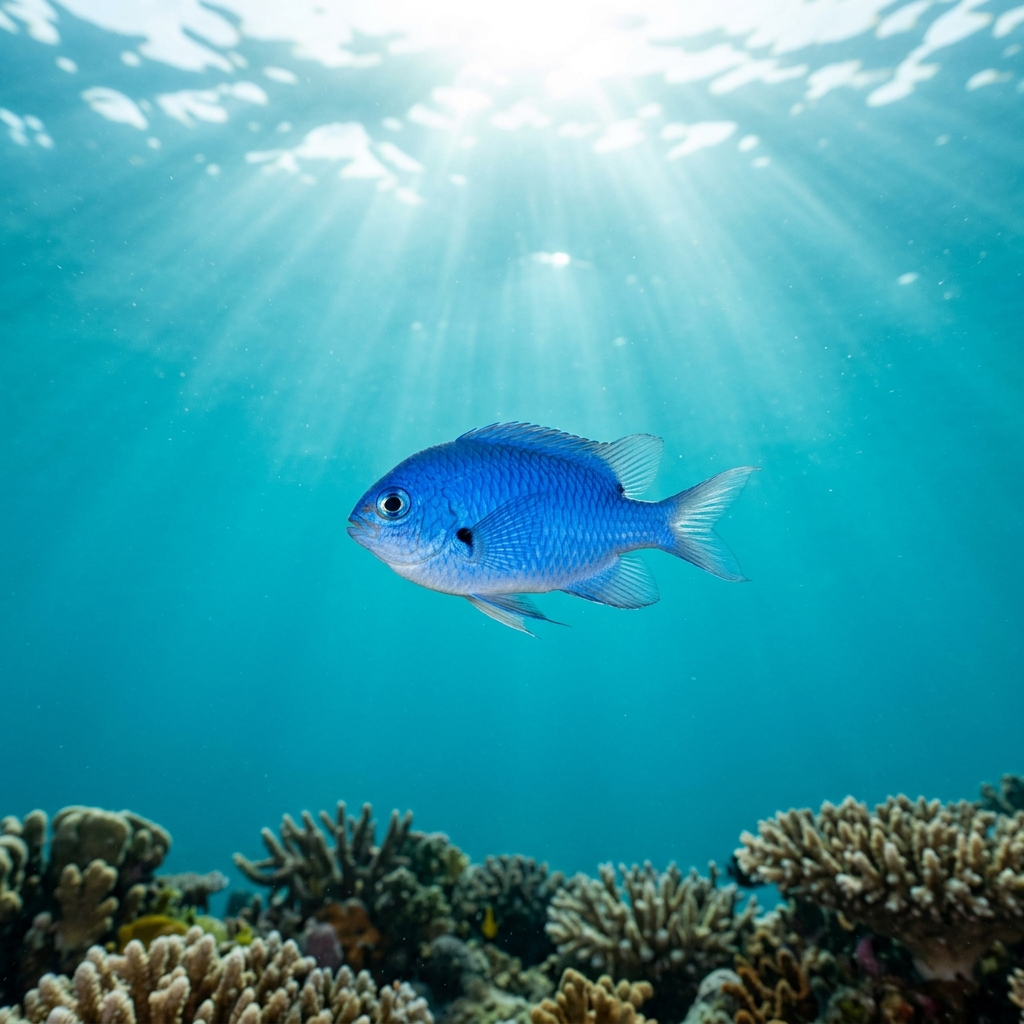
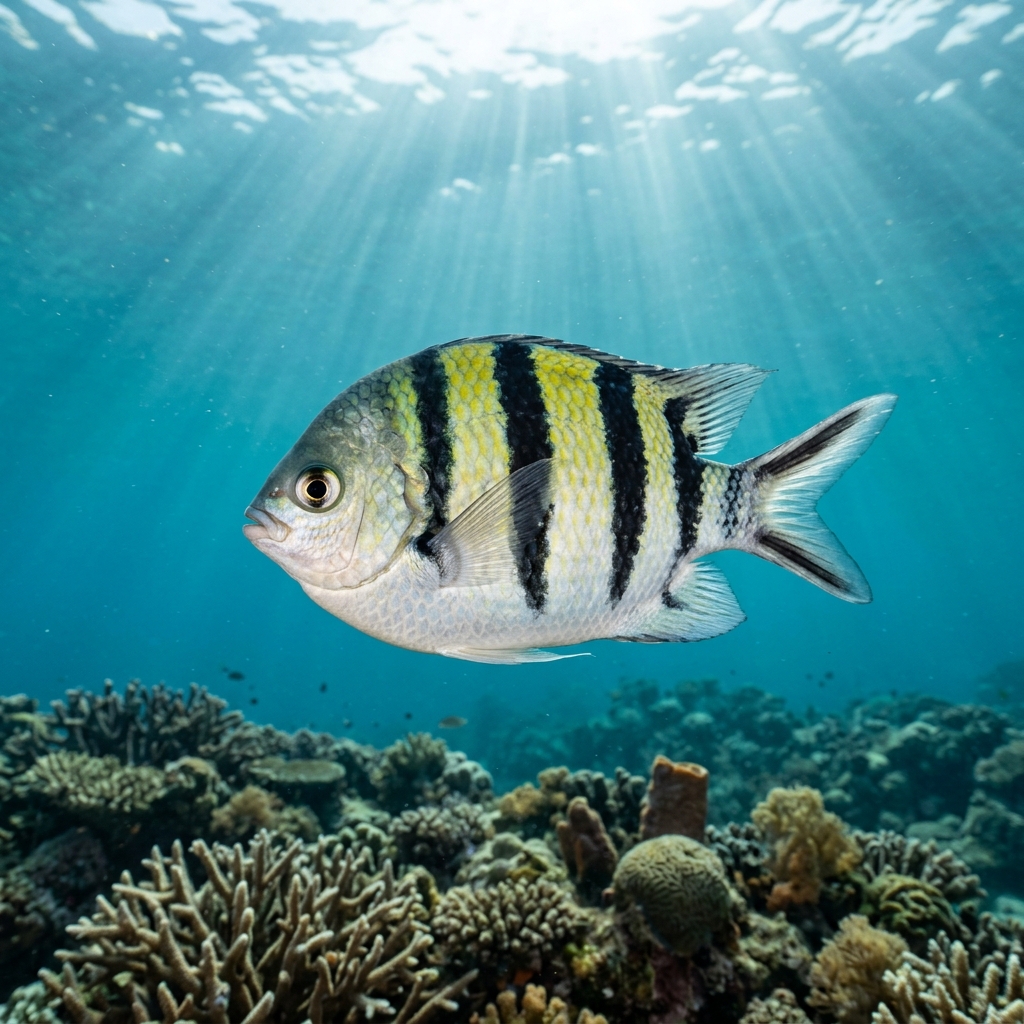
Reef neighbours a diver could mistake it for. Use the identification notes above to tell them apart.
Most reliably logged across the Philippines, particularly Luzon, Palawan, Mindanao and the Visayas, and throughout Indonesia with Sulawesi and Nusa Tenggara standing out. Strong populations also turn up on Queensland's reefs in Australia, and it is a regular find in Fiji, Palau, Micronesia, Malaysia's Sabah and French Polynesia.
Mapping where Orangefin Clownfish is logged…
Best chances are in the Philippines (Luzon, Palawan, Mindanao, the Visayas) and Indonesia (Sulawesi, Nusa Tenggara), with good numbers also on Queensland's reefs, Fiji, Palau and Micronesia.
There is no strong season for this fish. It sits in water between about 26 and 29C year-round, so any month works as long as you find its host anemone on the reef.
Look for a deep orange-brown body with one pale bar behind the head and no other white bars, plus orange-tinged fins, especially the tail edge. Size tops out around 11 cm and it stays glued to its anemone.
They reach around 11 cm, with females growing noticeably larger and bulkier than the males sharing their anemone.
No. They may bluff-charge or nip at a mask or fingers if you hover too close to their anemone, but this is territorial display, not a real threat to divers.
Site and sighting data is aggregated from diver logs, iNaturalist and GBIF. For taxonomy and conservation status:
Dascyllus
3,697 sites