Choerodon anchorago
Chunky reef wrasse with a canine-toothed grin, most often found uncommon on dives across Sabah, Palawan and Raja Ampat year-round in 27-29C water.
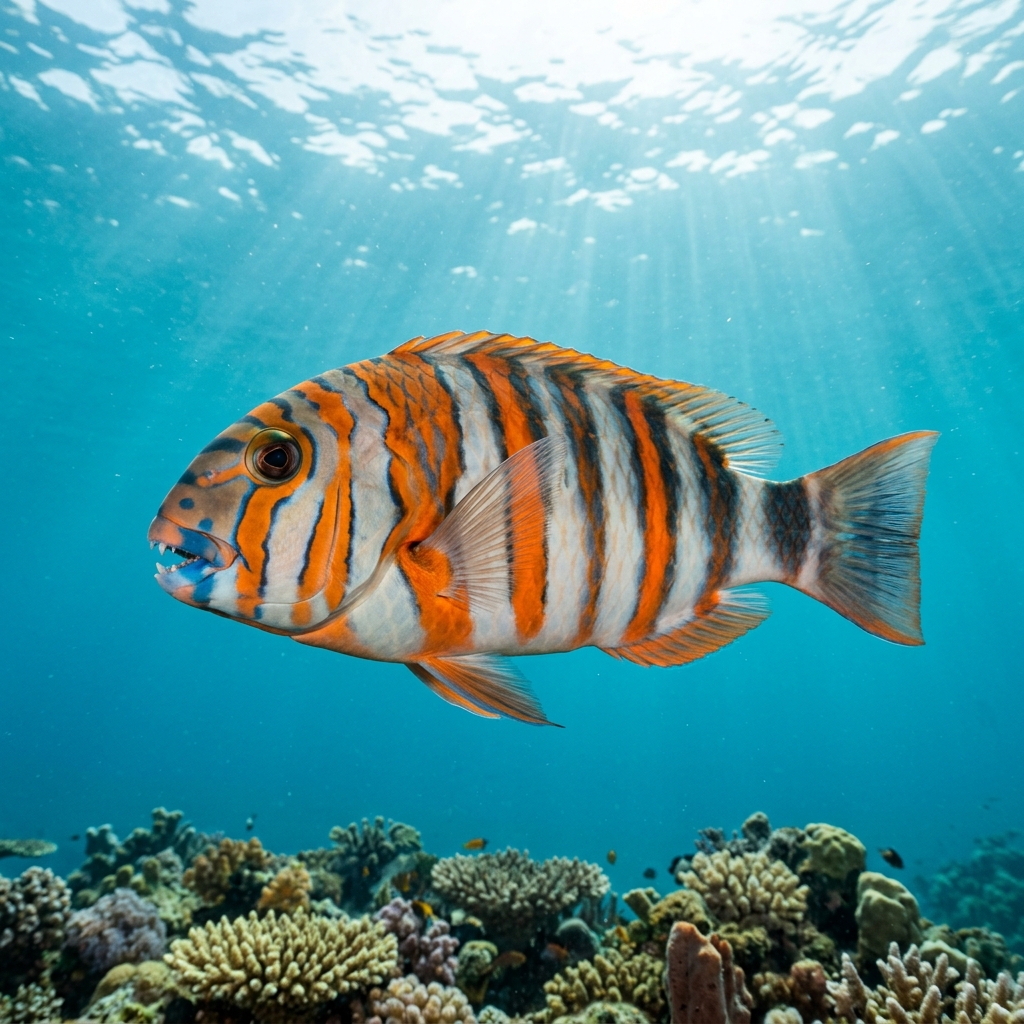
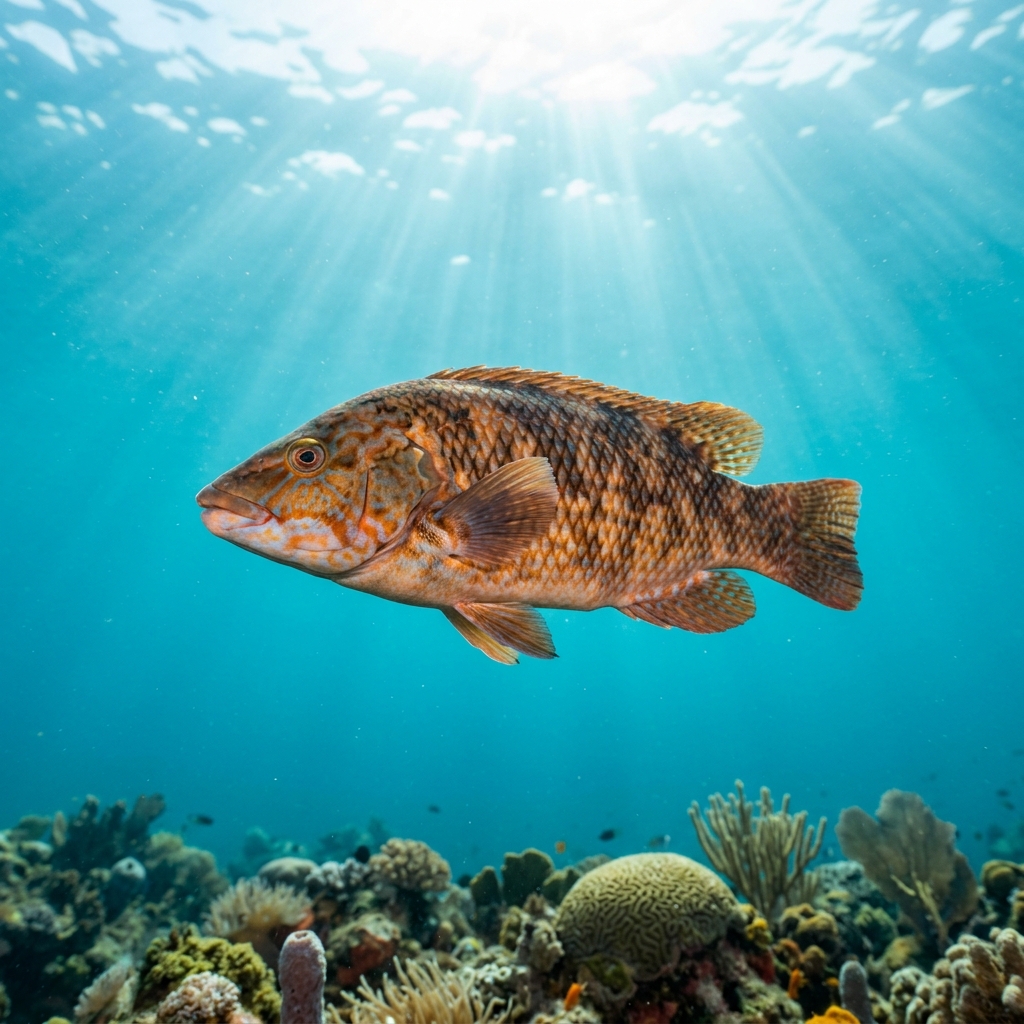
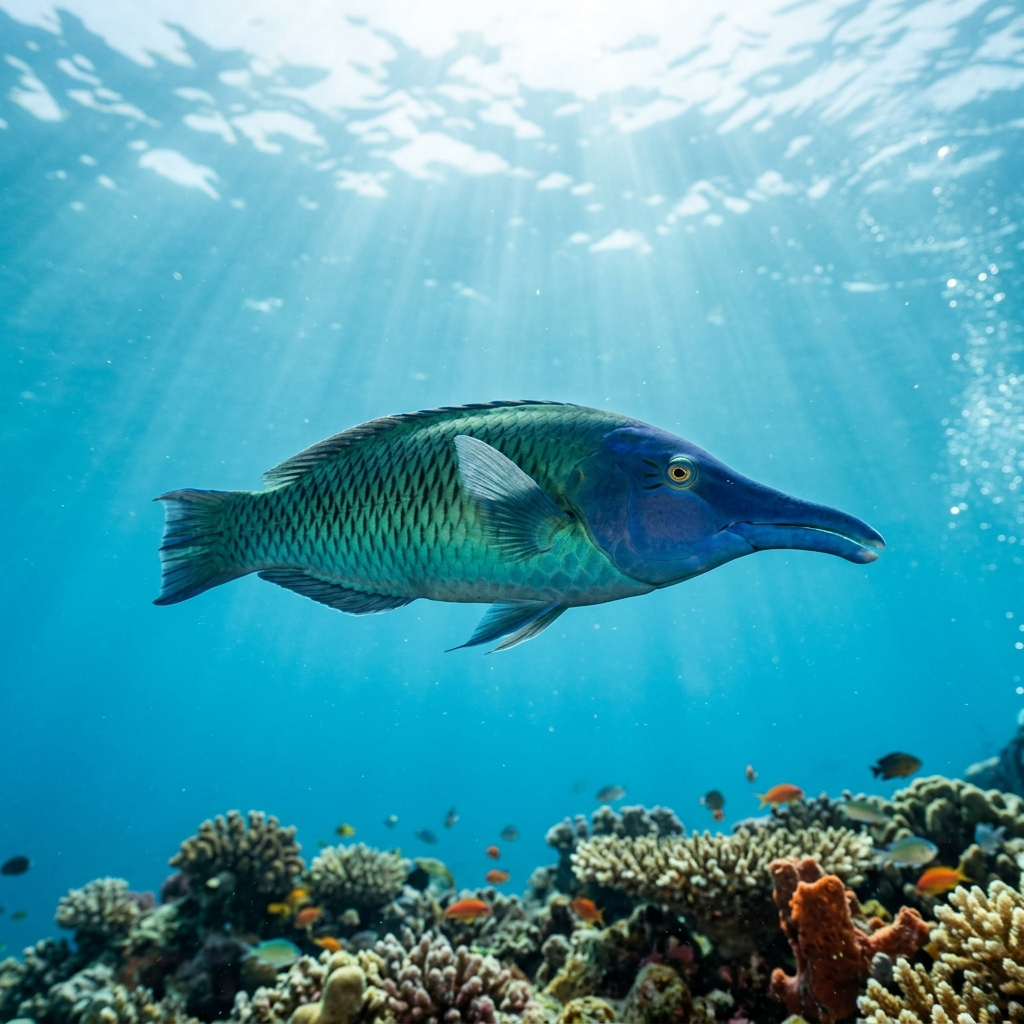
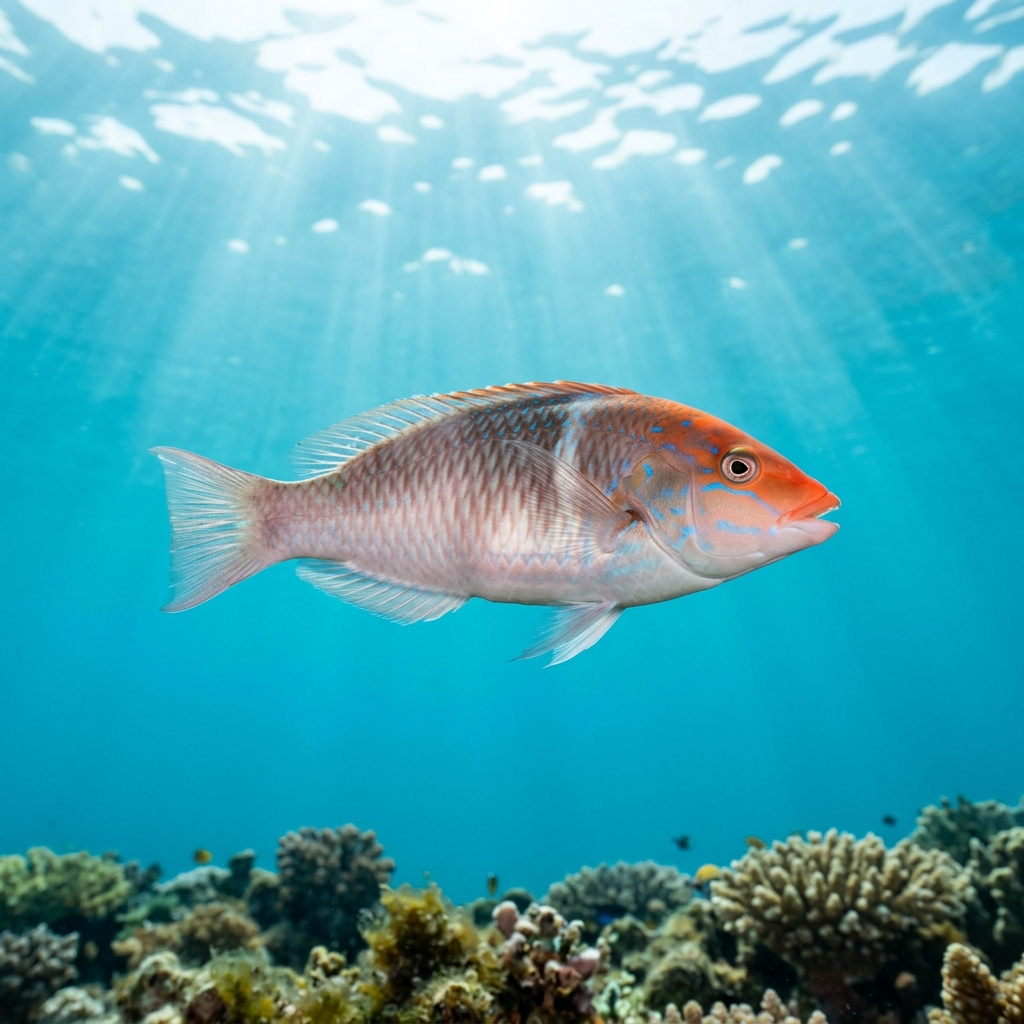
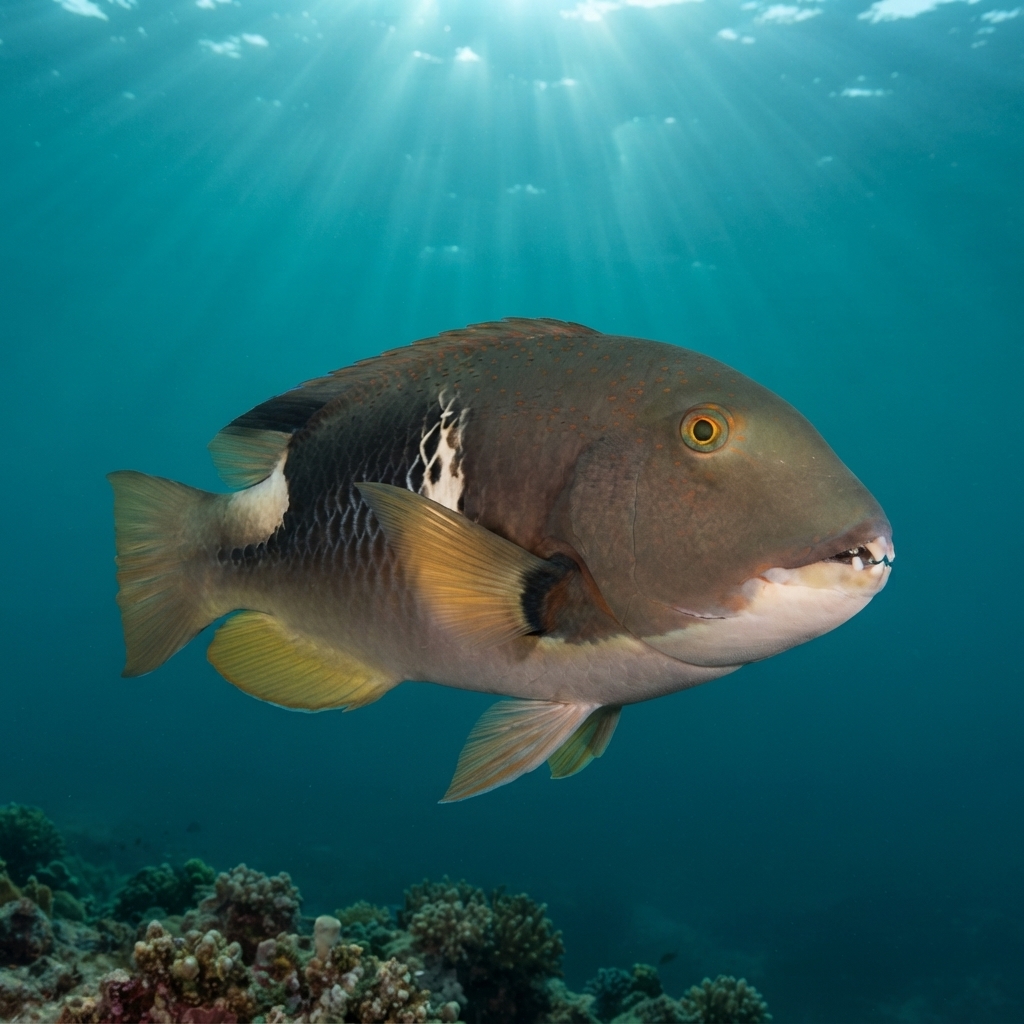
A thickset wrasse to about 35 cm with a blunt head, heavy lips and a pair of prominent canine teeth visible when it works at the reef. Body colour ranges from greenish to blue-grey, covered in small orange to salmon-coloured spots that give it its name, with a pale, crescent-shaped bar often visible behind the head. It swims with slow, deliberate pushes of its pectoral fins rather than a full-body wrasse-flick, which helps separate it from faster, slimmer wrasses on the same reef.
Look for it working over sand patches and rubble edges near reef structure, using its strong teeth to crunch into hard-shelled prey it has picked off the bottom. It tends to keep a working distance from divers rather than fleeing outright, carrying on with its business if you hold back and watch rather than chase. Most logs describe it as an uncommon sighting even on reefs where it turns up, so a calm, patient pass over sandy reef margins is more productive than searching open water.
Those blunt canine teeth are built for cracking open hard-shelled invertebrates like molluscs and crustaceans, a feeding style shared with other tuskfish that makes them useful reef predators of armoured prey most fish cannot tackle.
Sightings are spread across the year with no clear seasonal peak in the data, which fits a fish that sits comfortably in warm 26.7 to 29.3C reef water year-round. Plan around good visibility and calm conditions at your chosen site rather than a particular month.
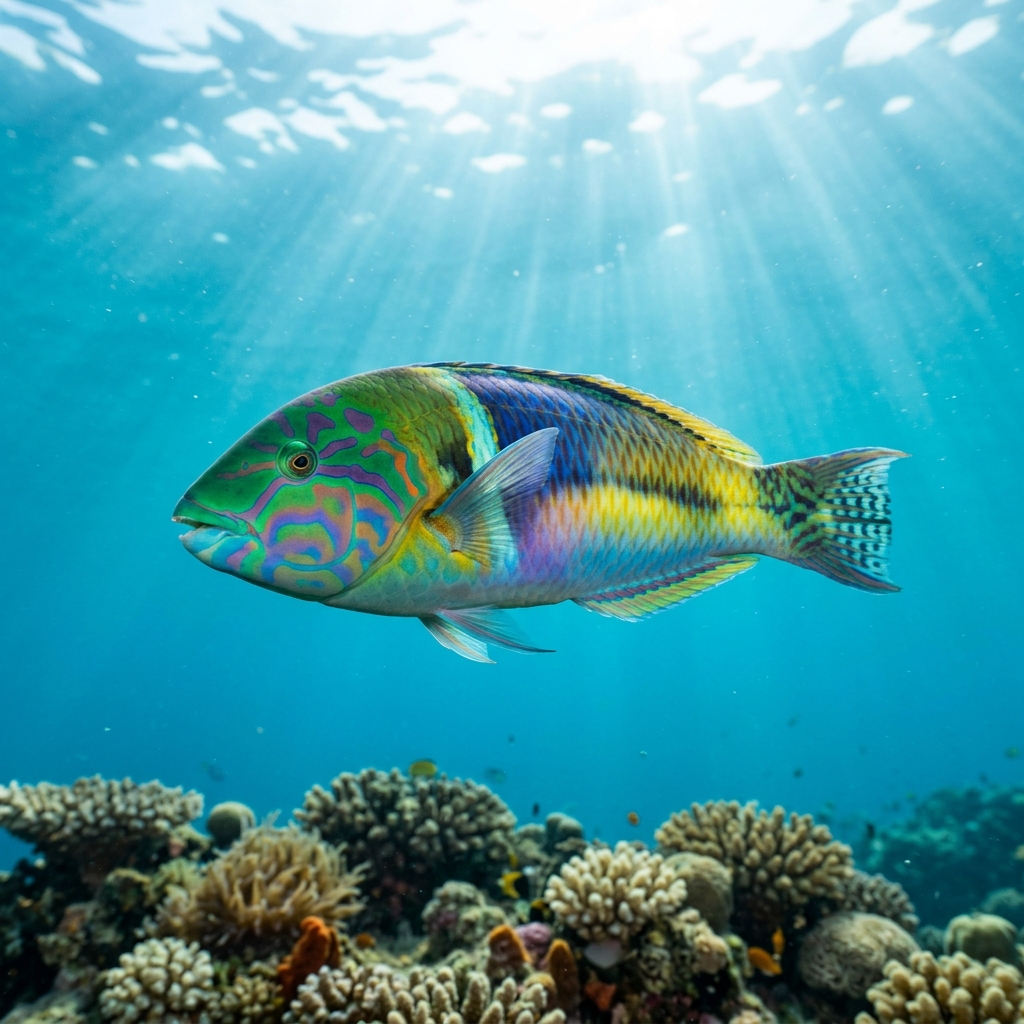
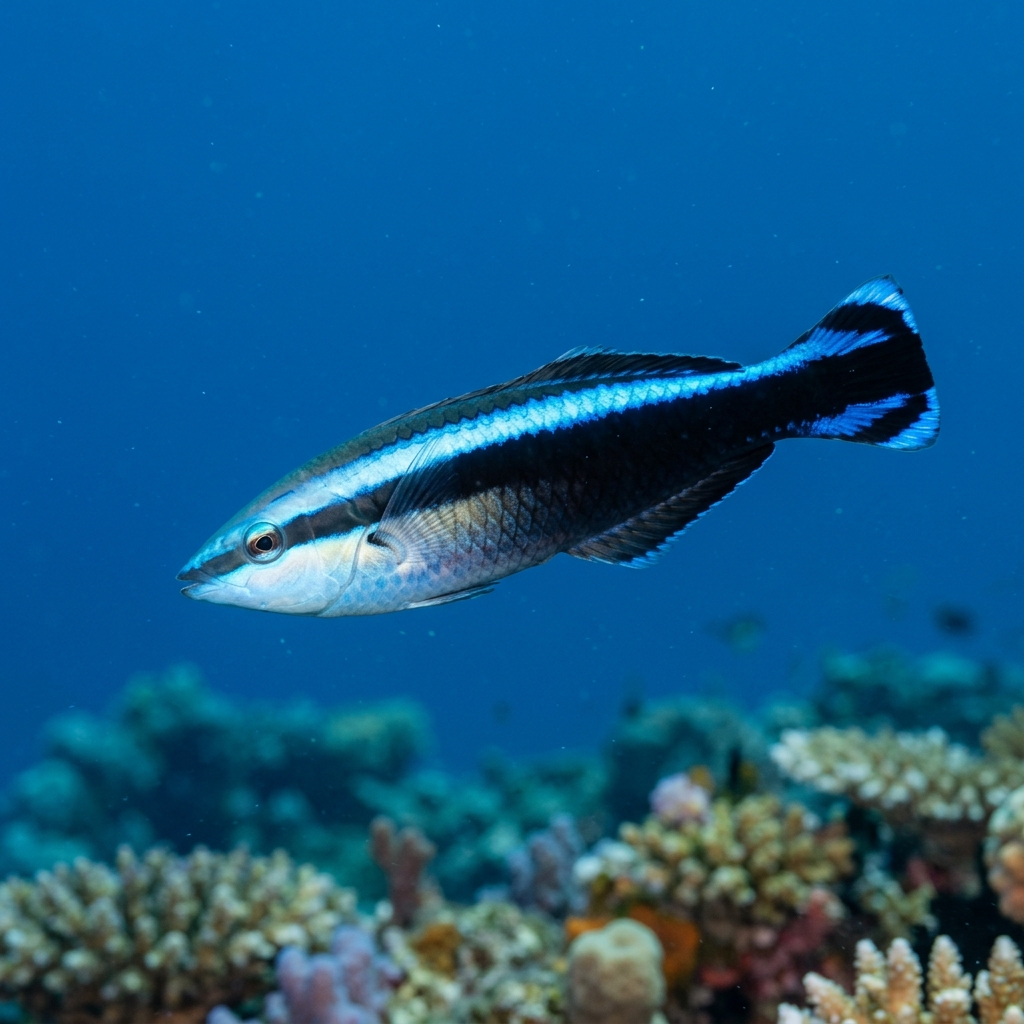
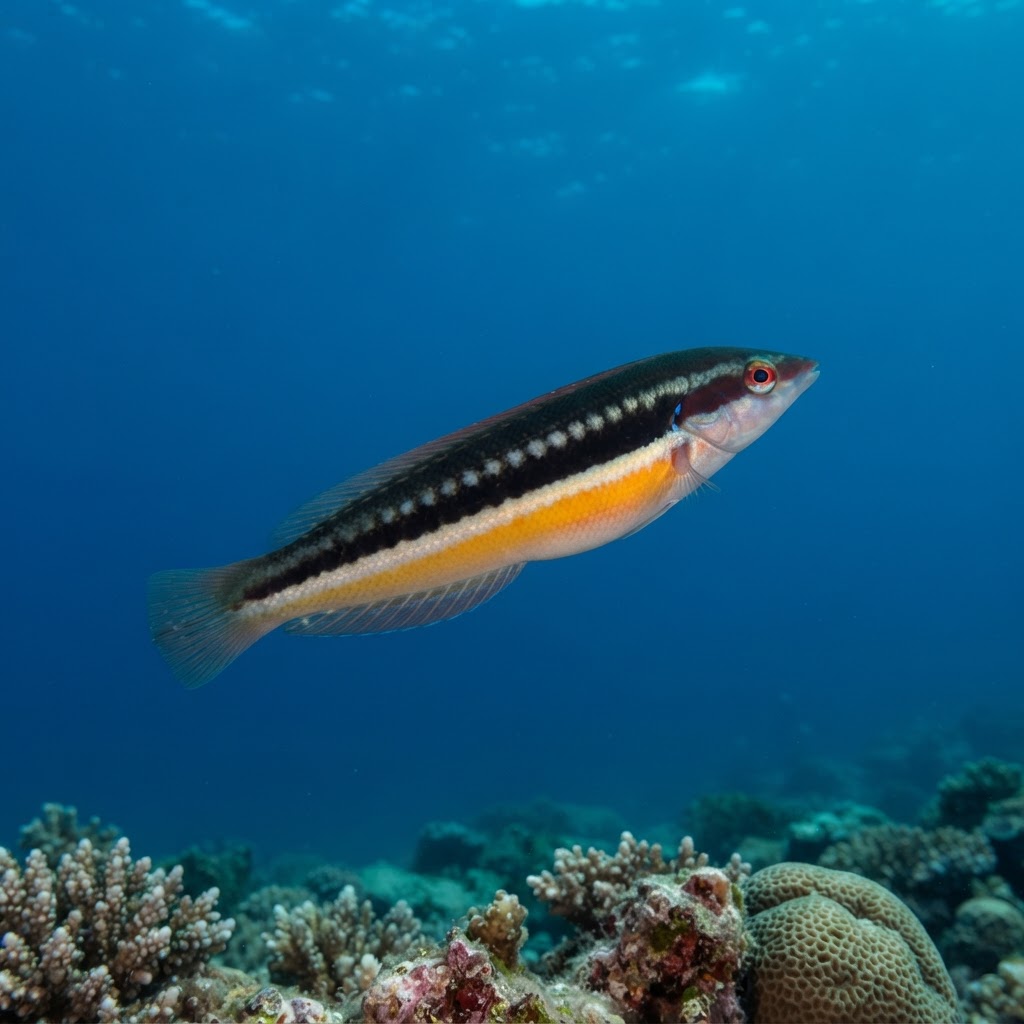
Reef neighbours a diver could mistake it for. Use the identification notes above to tell them apart.
This is a reliable find across the Coral Triangle, with the strongest logs from Sabah in Malaysia, Palawan in the Philippines, and Raja Ampat, Nusa Tenggara, Java and Sulawesi in Indonesia. Palau's Koror and Malakal area and the Visayas also produce steady sightings, with a smaller scatter of records from Australia and Papua New Guinea.
Mapping where Orange-dotted Tuskfish is logged…
Best chances are in the Coral Triangle, particularly Sabah in Malaysia, Palawan in the Philippines, and Raja Ampat, Nusa Tenggara and Java in Indonesia. Palau's Koror and Malakal area and the Philippine Visayas also produce regular sightings.
There is no strong seasonal pattern in sightings, and warm 26.7 to 29.3C reef water keeps it around all year. Any time you can get good conditions at a site in its range should work.
Look for a stocky wrasse around 35 cm with a blunt, heavy-lipped face, visible canine teeth, and a greenish to blue-grey body scattered with small orange spots. It moves with slow pectoral-fin pushes rather than darting like smaller wrasses.
They typically reach around 35 cm in length, making them a mid-sized, solidly built presence on the reef rather than a small darting wrasse.
They are carnivores that use strong canine teeth to crack open hard-shelled prey such as molluscs and crustaceans picked from sand and rubble near the reef.
Site and sighting data is aggregated from diver logs, iNaturalist and GBIF. For taxonomy and conservation status:
Bird Wrasses
3,632 sites