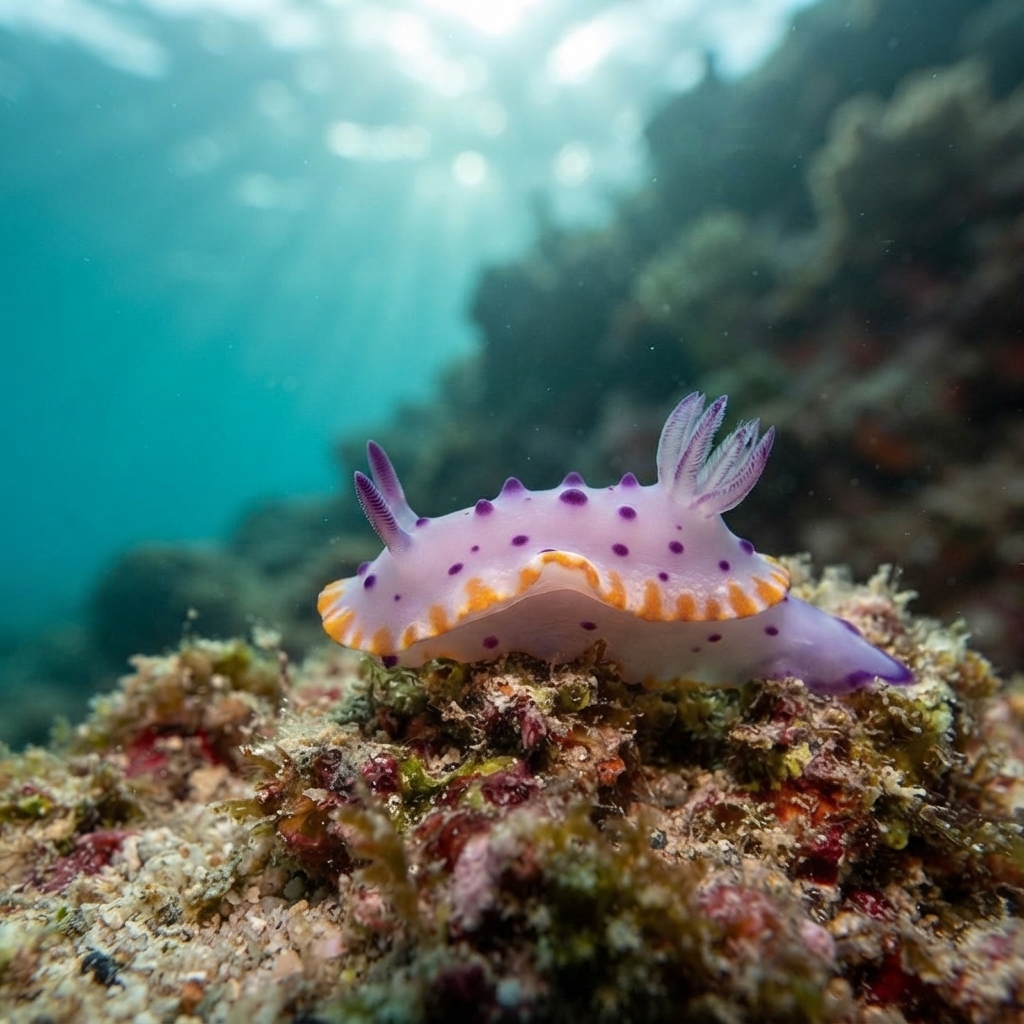
Mexichromis macropus
Uncommon 2cm nudibranch found on Western Australia and Victoria reefs in 14.7-22C water, year-round sighting.
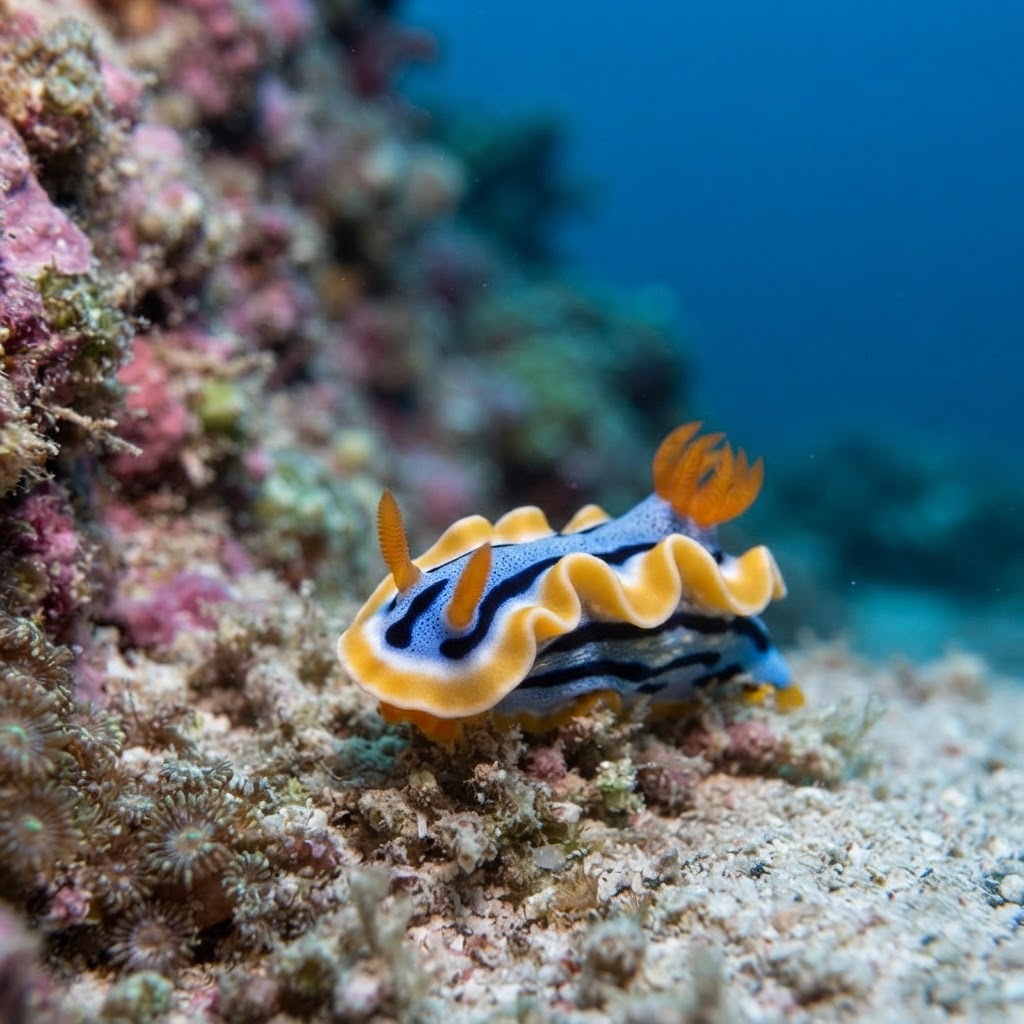
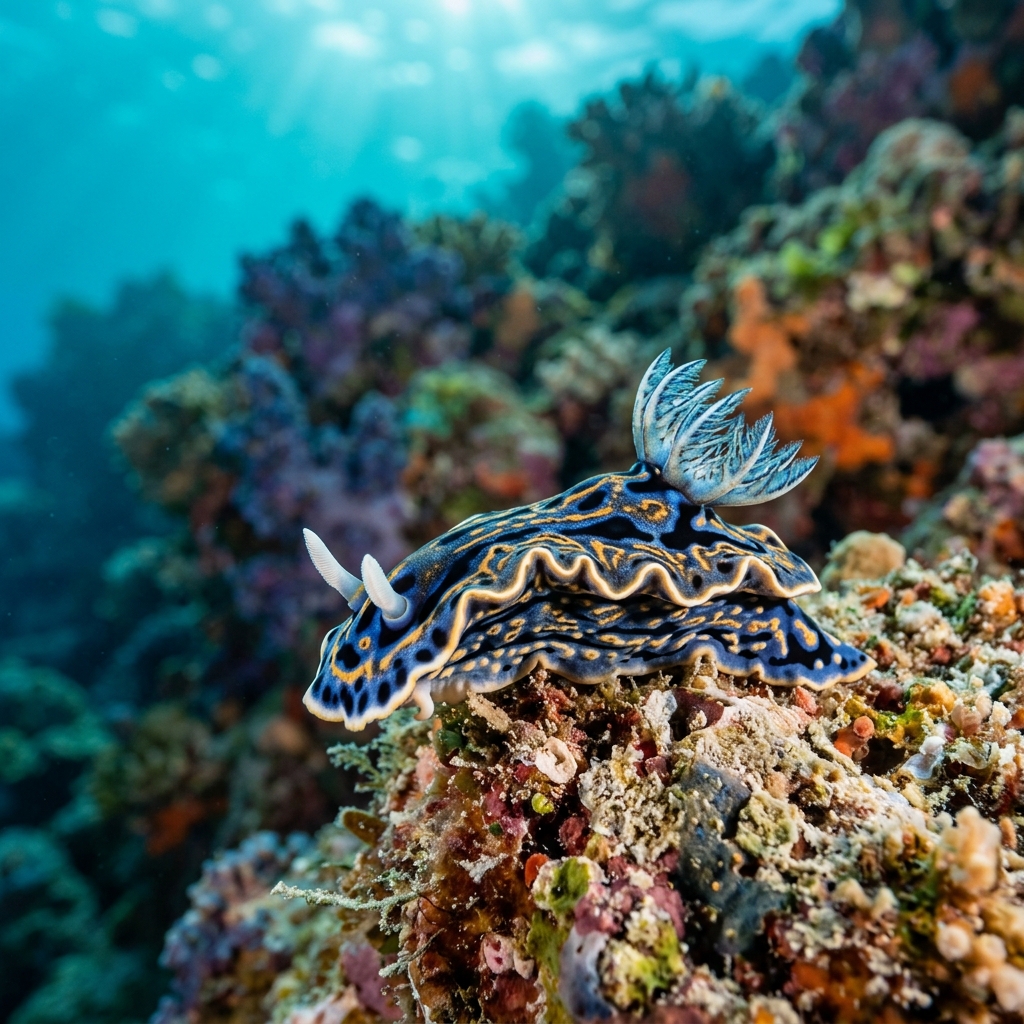
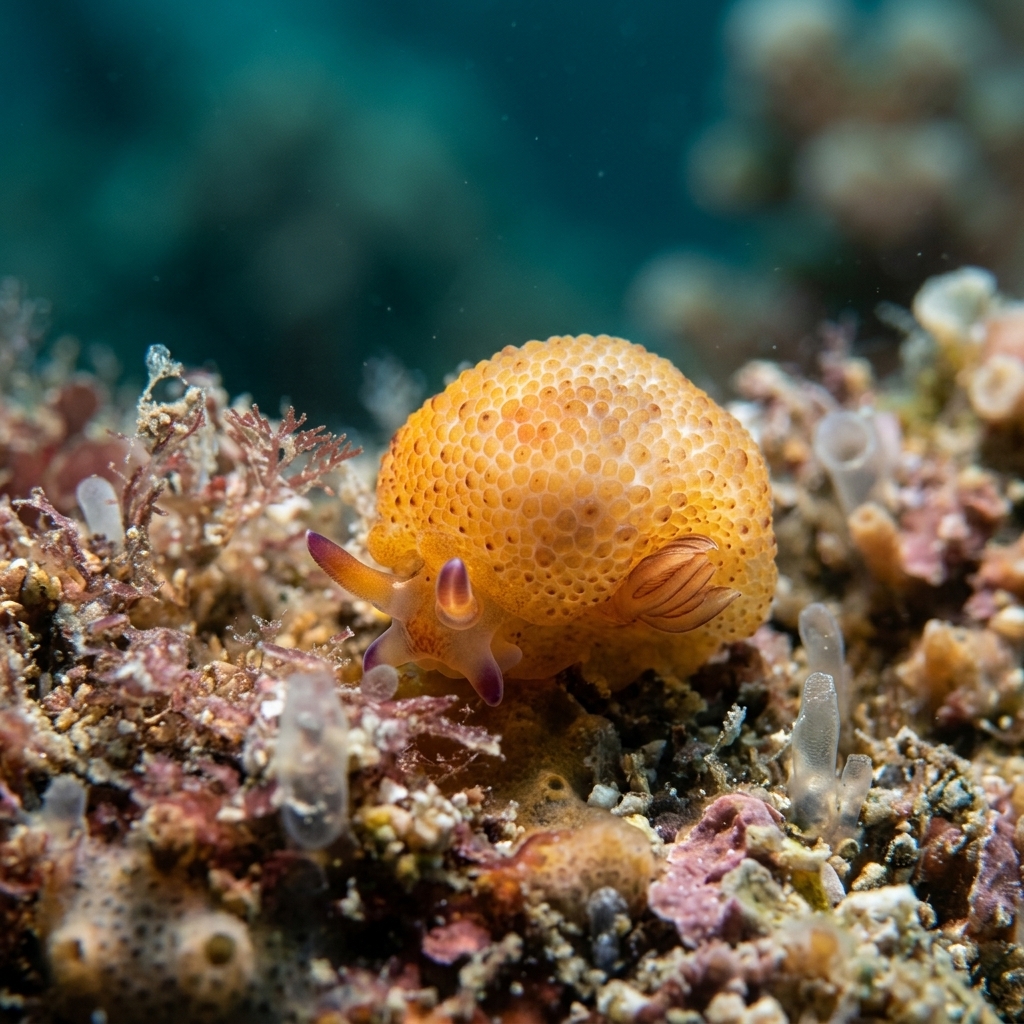
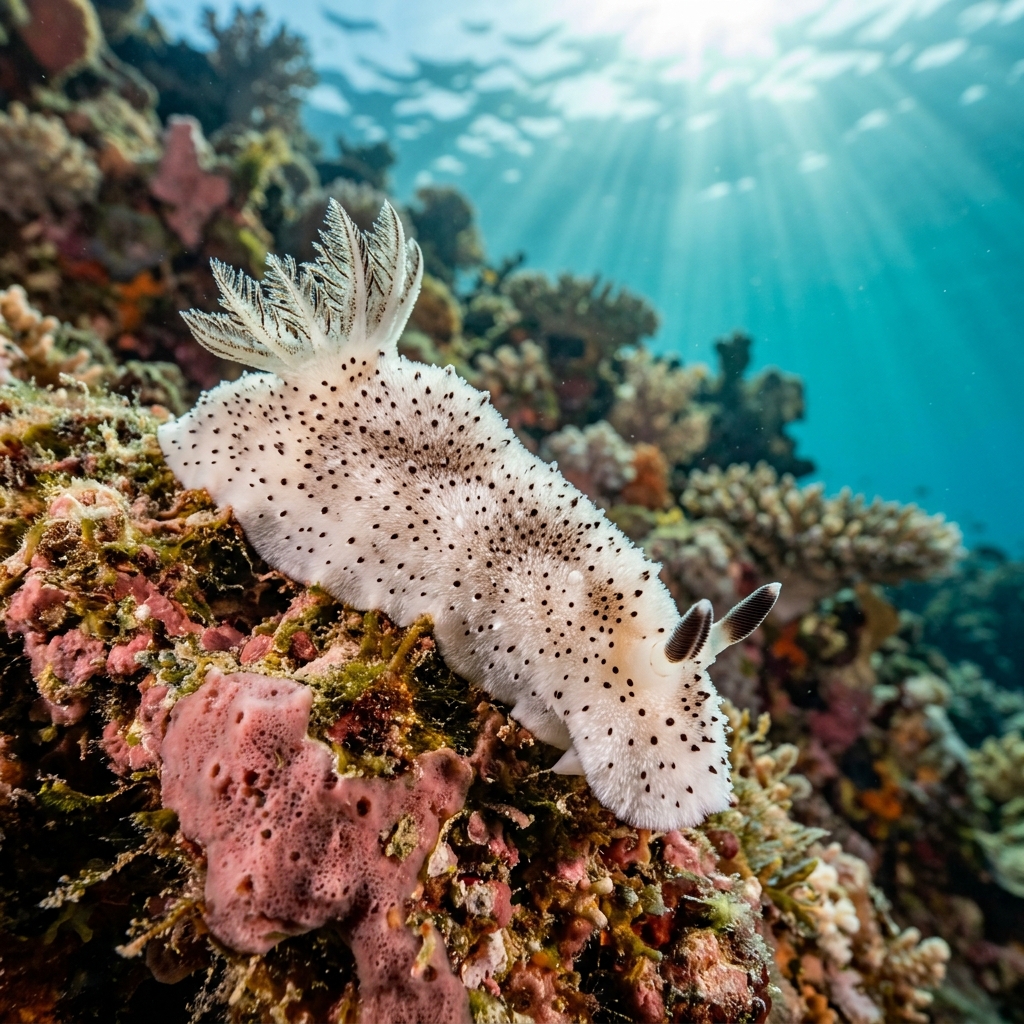
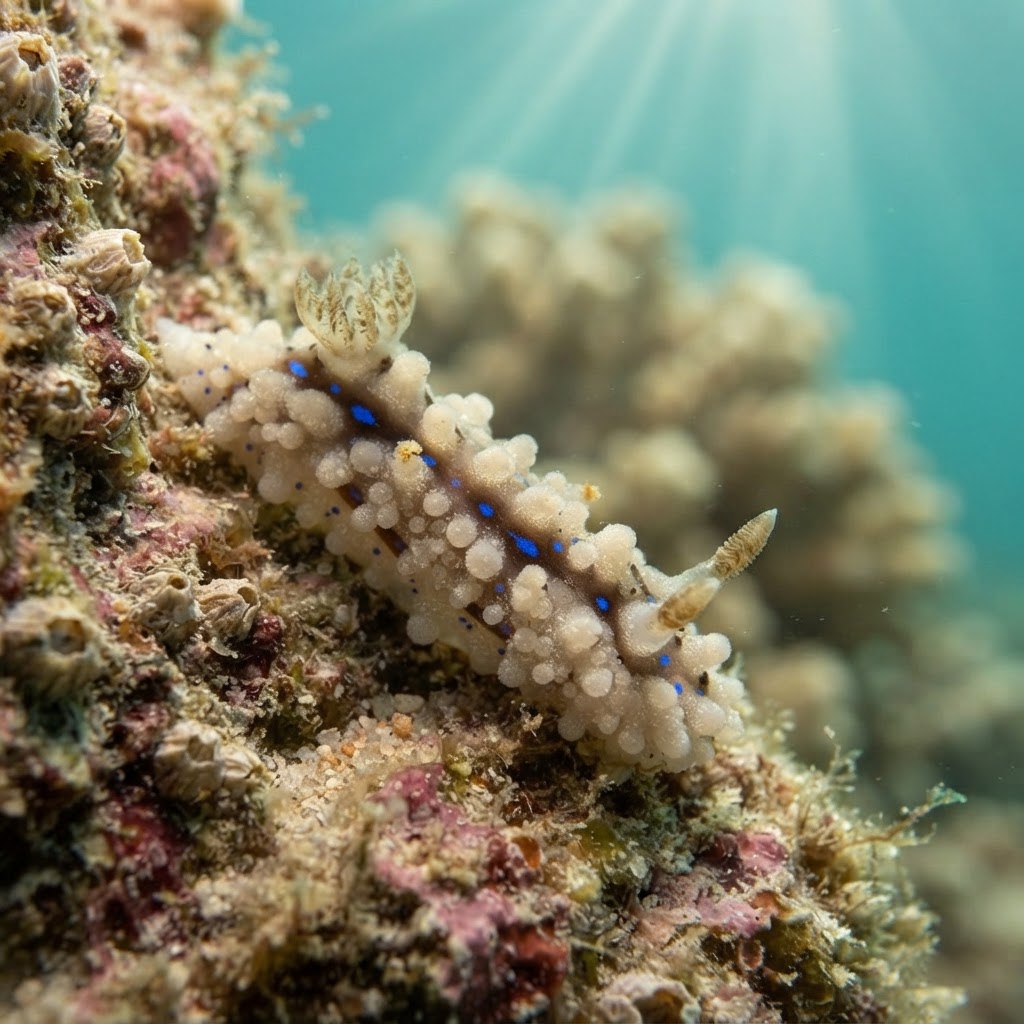
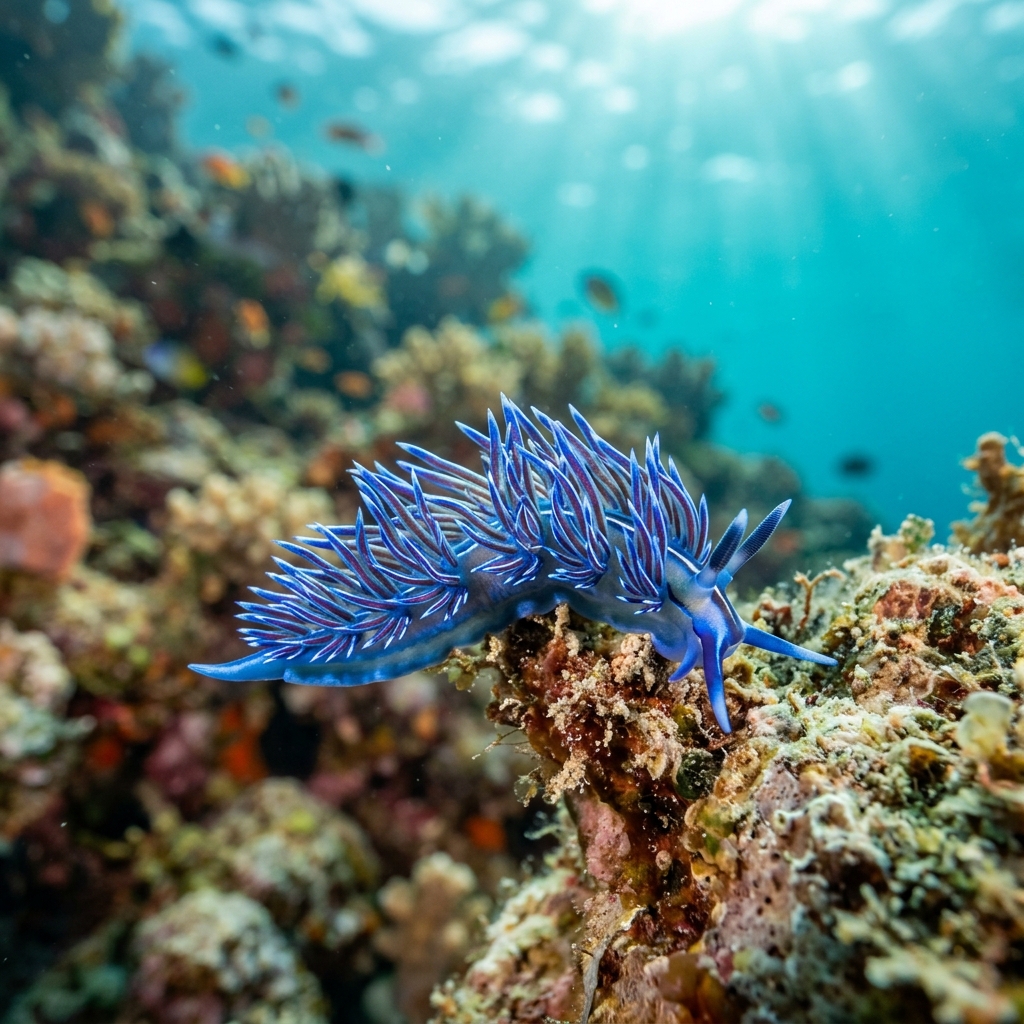
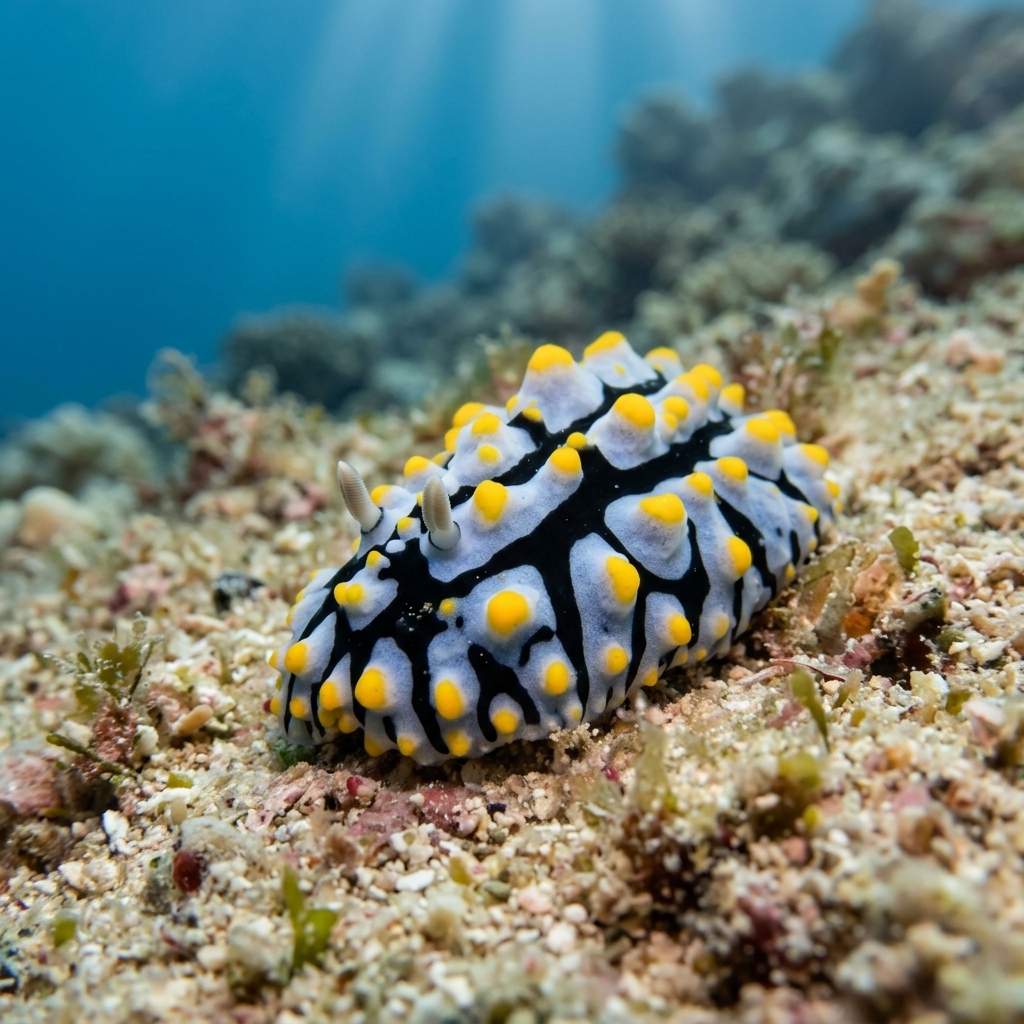
A small nudibranch, rarely more than 2 cm, with a bluish-grey to purplish body covered in raised ridges tipped bright orange-yellow. The mantle edge and the tips of the gill cluster and rhinophores (the paired sensory horns on the head) carry the strongest orange, which is what most divers spot first against the muted body colour. It sits low and slow on rock or rubble, so look for the orange highlights rather than trying to make out the whole animal.
Divers mostly find this one crawling slowly across rock, rubble or sponge-covered reef, usually during the day rather than on night dives. It's a small, unhurried animal that doesn't react to divers beyond retracting slightly if touched, so a slow, close look with a torch or magnifier is the way to actually see the detail on the ridges. Most sightings are logged as uncommon, so it takes a bit of patient scanning of the substrate rather than an obvious cruise-by encounter.
Like other chromodorid nudibranchs, it likely feeds on sponges and stores their chemical defences in its own tissue, which is part of why its colours sit out in the open rather than hiding.
No clear seasonal pattern shows up in the sightings, so treat it as a year-round find on the temperate reefs it favours. Its recorded range of 14.7 to 22 C spans the typical annual swing for southern Australian waters, which fits with divers logging it across the calendar rather than in one tight window.
Reef neighbours a diver could mistake it for. Use the identification notes above to tell them apart.
Every logged sighting so far comes from Australia, with Western Australia the strongest region by a wide margin and a smaller but reliable spread of sightings in Victoria. Within Western Australia it turns up across a range of temperate reef sites rather than one single hotspot, so it's worth scanning rubble and rocky reef on most southern Australian dives rather than seeking out one named site.
Mapping where Orange-barred Mexichromis is logged…
Almost all logged sightings are from Australia, concentrated in Western Australia with a smaller cluster in Victoria. It favours temperate rocky reef and rubble rather than tropical coral reef.
There's no strong seasonal pattern in the sightings, so it's considered a year-round find on the reefs where it occurs. Its observed temperature range of 14.7 to 22C covers most of the annual range in southern Australian waters.
Look for a small, roughly 2 cm nudibranch with a bluish-grey to purple body and ridges tipped in bright orange, especially around the gills and rhinophores. It moves slowly over rock and rubble and is easy to miss unless you're scanning closely.
They're small, typically around 2 cm long, so they're easy to swim past unless you're looking closely at rock and rubble surfaces.
No, they pose no danger to divers. They have no means of stinging or biting and simply crawl slowly across the reef.
Site and sighting data is aggregated from diver logs, iNaturalist and GBIF. For taxonomy and conservation status:
Light-spotted Aegires
3,168 sites