Octopus laqueus
Spot the Friendly Octopus in warm tropical waters between 26-29 °C. Learn how to identify Octopus laqueus and tell it apart from similar species.
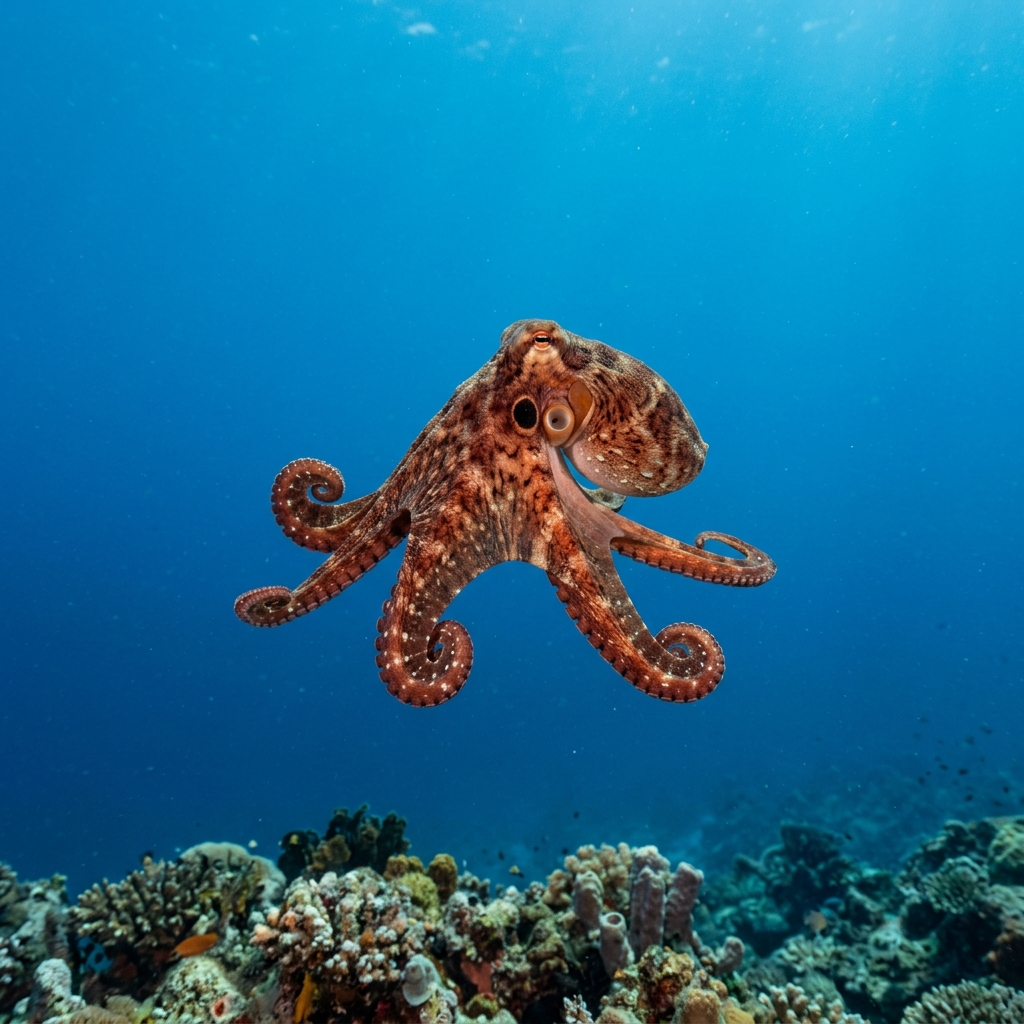
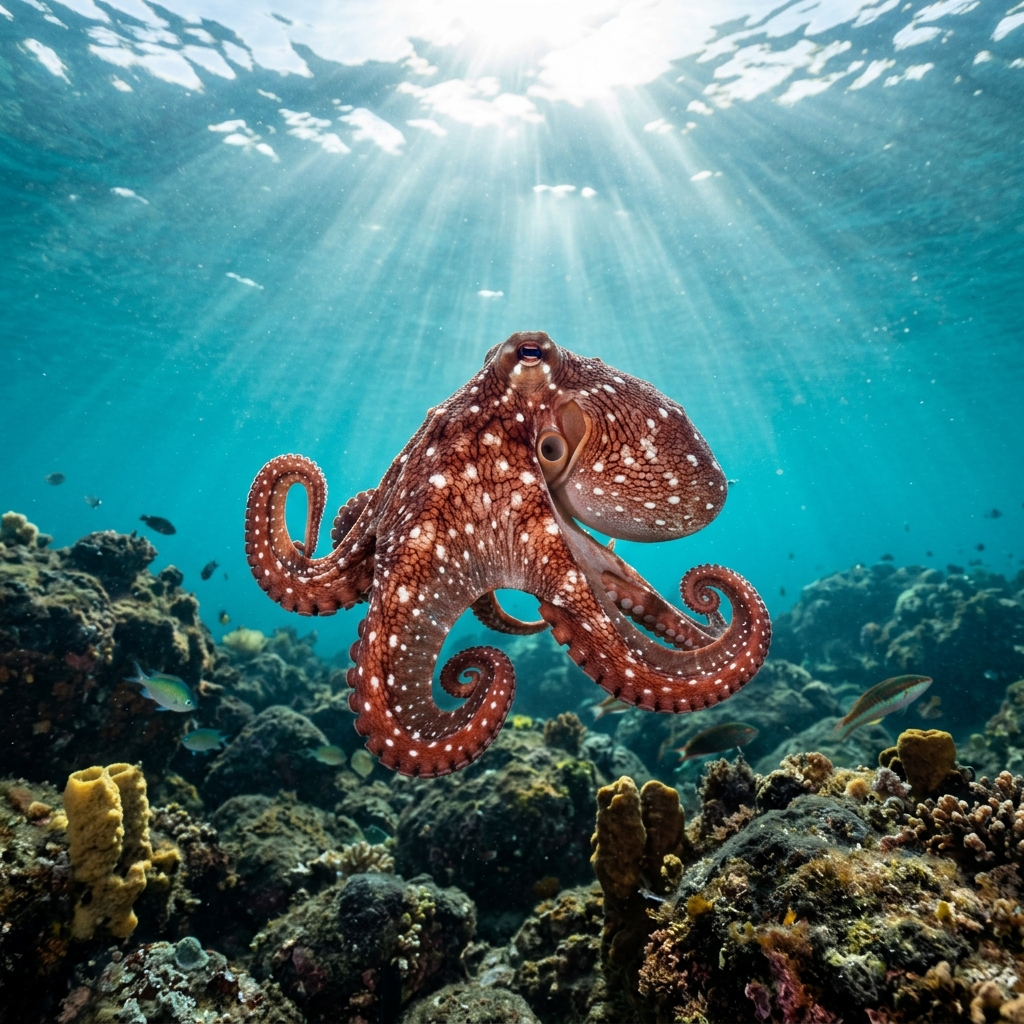
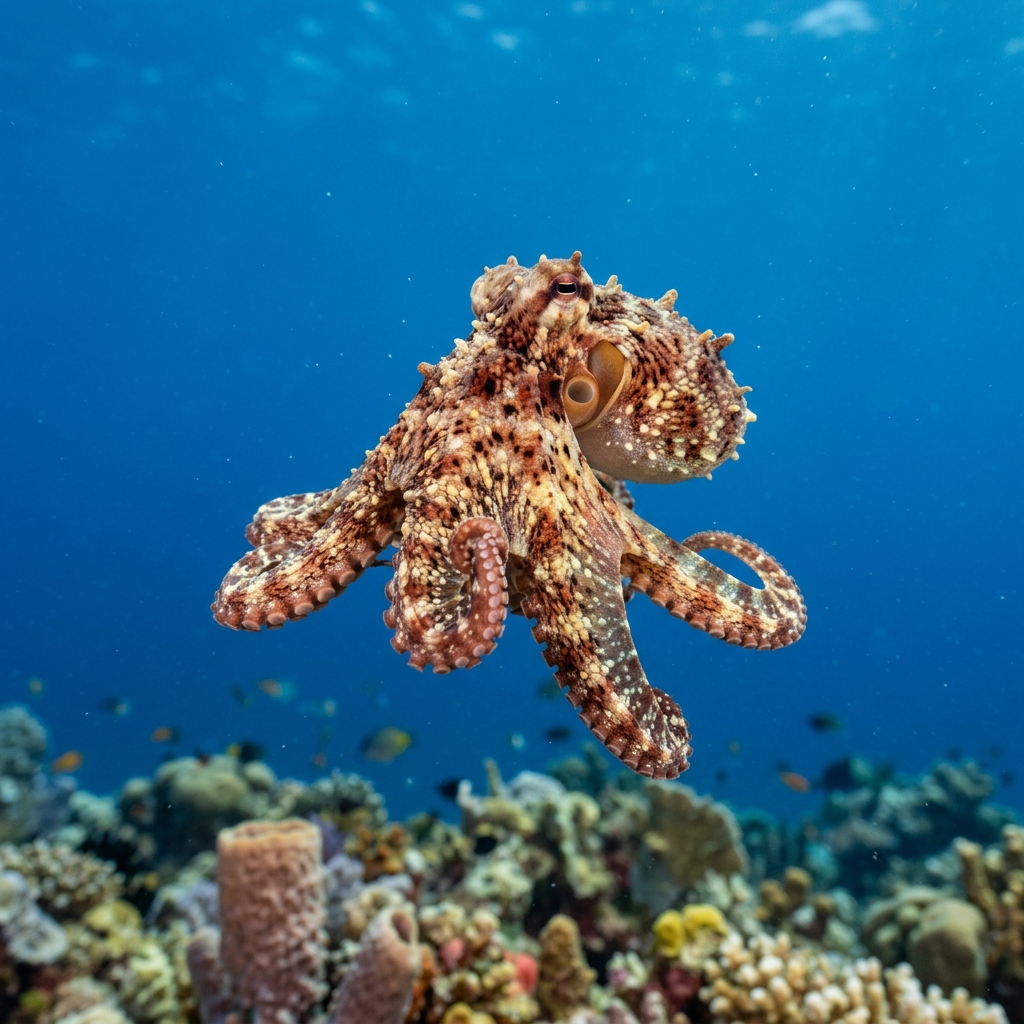
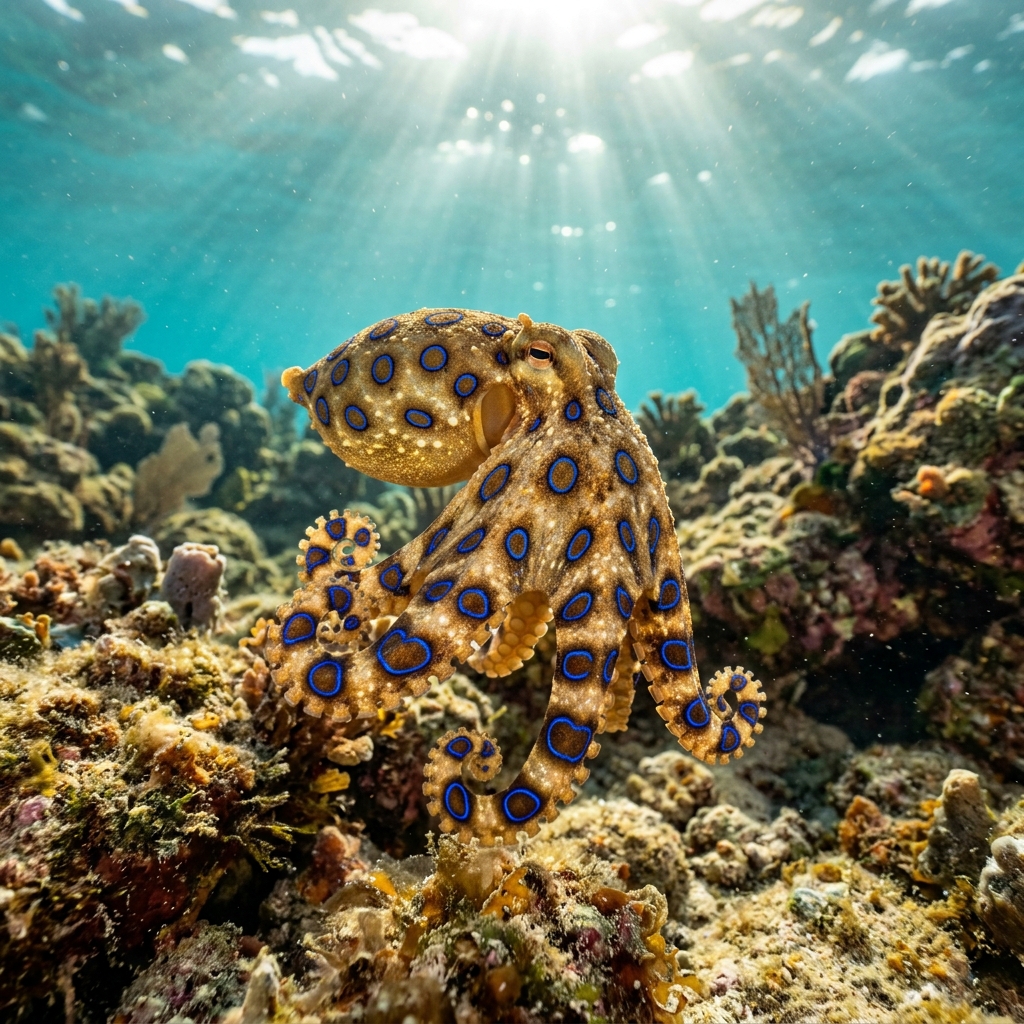
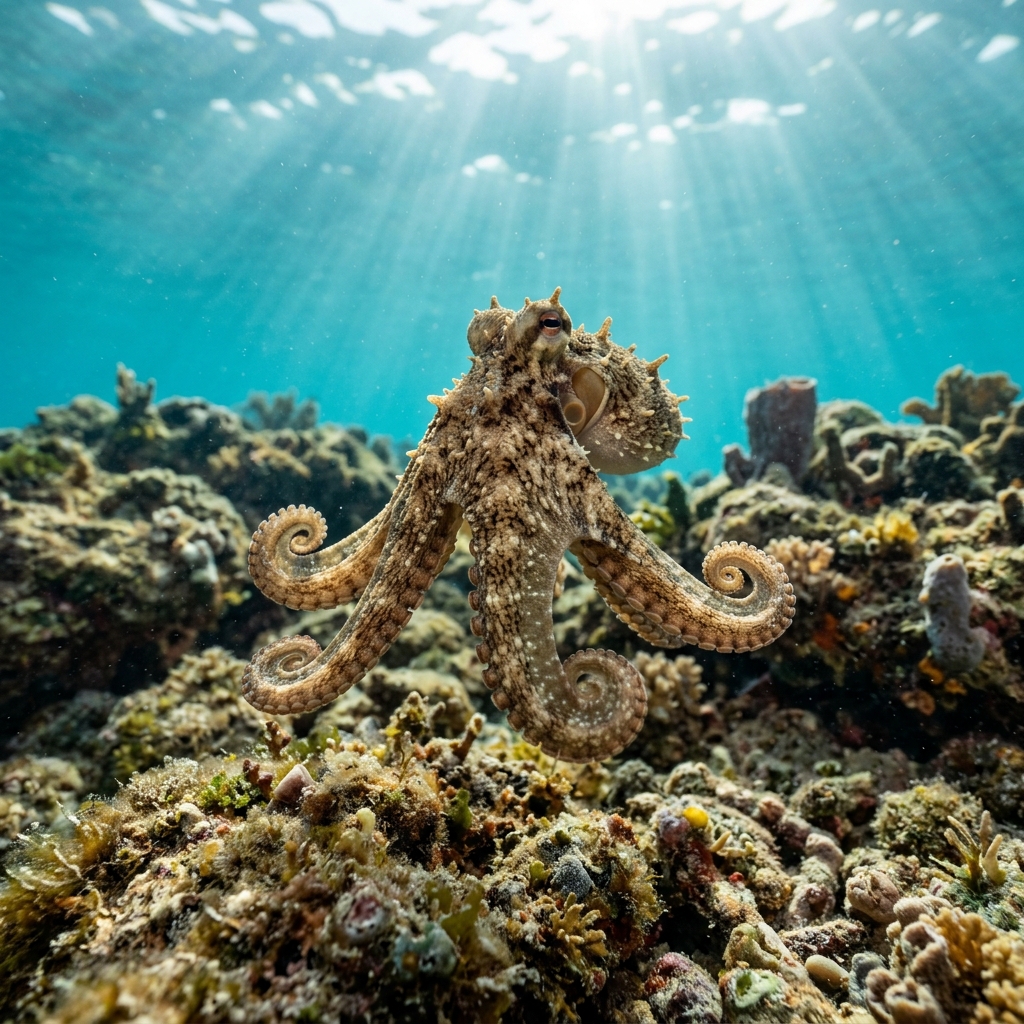
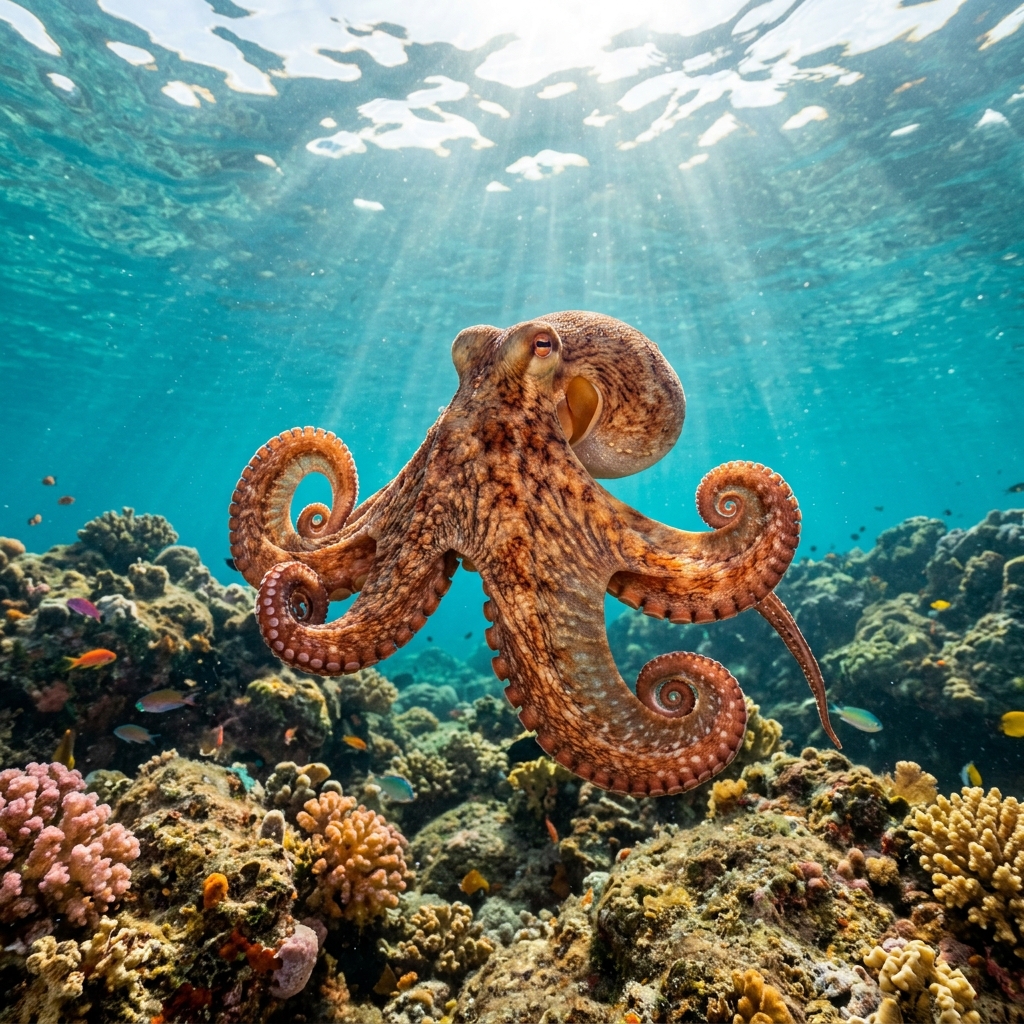
A small to medium octopus typical of warm Indo-Pacific reef environments, Octopus laqueus displays the highly variable mottled brown, tan, and rust colouration common across its family, often textured with raised skin papillae (small fleshy bumps that help it blend into rubble and coral. The key field mark divers key on is the pattern of pale and dark patches that shift rapidly when the animal is disturbed. No reliable size data exists for this species in the field, so relative body size alone is not a useful separating feature.
Like most reef octopuses, the Friendly Octopus is primarily a nocturnal hunter, though individuals are sometimes encountered during the day tucked into crevices or under rubble. When spotted, it typically flattens itself and cycles through camouflage patterns before retreating; some individuals will hold their ground and watch a diver curiously. Approaching slowly and at eye level, without chasing, gives the best chance of an extended encounter.
The common name 'Friendly Octopus' likely reflects anecdotal accounts of individuals showing relatively low flight responses to divers, though this is individual behaviour rather than a species-wide trait. All octopuses are highly intelligent and their reactions vary enormously from one animal to the next.
No seasonal pattern has been detected from available sighting data, so this species should be treated as a year-round resident in suitable tropical habitats. Its narrow warm-water niche of 26 to 29 °C means it stays within consistently tropical conditions rather than following a temperature-driven seasonal cycle.
Reef neighbours a diver could mistake it for. Use the identification notes above to tell them apart.
Sighting records for this species are too sparse to identify confirmed hotspot locations or countries at this time. Its observed water-temperature range of 26 to 29 °C places it firmly in tropical Indo-Pacific reef zones, so warm-water dive destinations in that broad region are the most logical places to search. As more divers log observations, clearer strongholds will emerge.
Mapping where Friendly Octopus is logged…
Confirmed dive-site records are currently very limited for this species. Its observed temperature range of 26 to 29 °C points to tropical Indo-Pacific reef environments as the most likely habitat. Logging your own sightings on platforms like iNaturalist helps build a clearer picture of its range.
There is not yet enough sighting data to identify a peak season, so it is treated as a year-round resident in warm tropical waters. Its tight temperature preference of 26 to 29 °C means it inhabits consistently warm reef zones rather than following a pronounced seasonal pattern.
Octopus laqueus is a mottled brown and tan octopus with textured, papillate skin typical of rubble and reef-flat habitats. Because colouration changes instantly with mood and background, look for the overall body shape and size relative to surrounding octopus species. Formal distinguishing characters from very similar species require close examination and are not reliably assessed in the field.
No, Friendly Octopus pose no significant danger to divers. Like all octopuses they can bite if handled, but they are not venomous in a way harmful to humans and their first response is almost always to flee or hide rather than to confront a diver.
Octopus laqueus is a relatively poorly studied species and much of its life history remains undocumented in the scientific literature. What is known fits the broader octopus pattern: a short lifespan, solitary habits, camouflage as the primary defence, and a diet of small crustaceans and molluscs hunted on the reef. Diver observations logged with photos contribute meaningfully to filling in these gaps.
Site and sighting data is aggregated from diver logs, iNaturalist and GBIF. For taxonomy and conservation status:
Brazilian Reef Octopus
1,142 sites