Achelous sebae
Spot this patterned swimming crab on night dives around Sint Eustatius and Mexico's Yucatan Peninsula in warm 24-30C reef water.
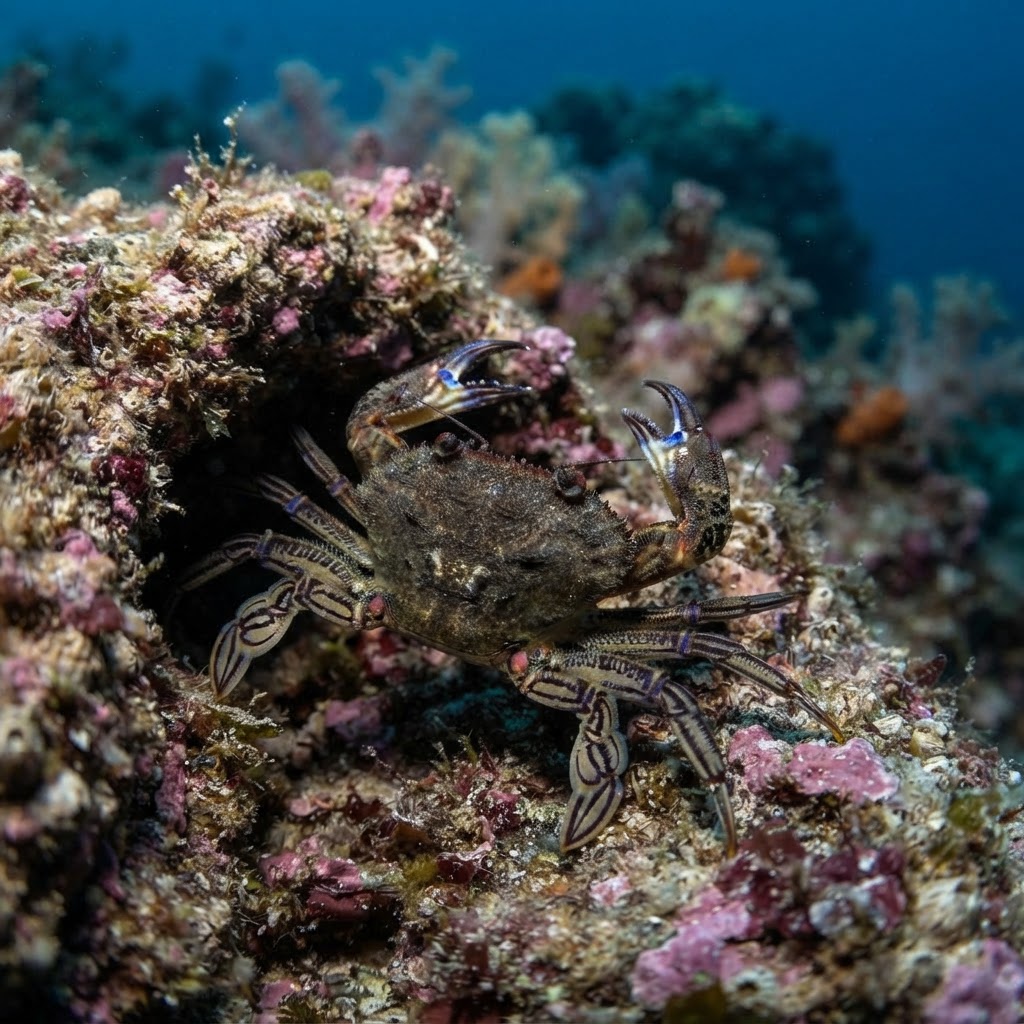
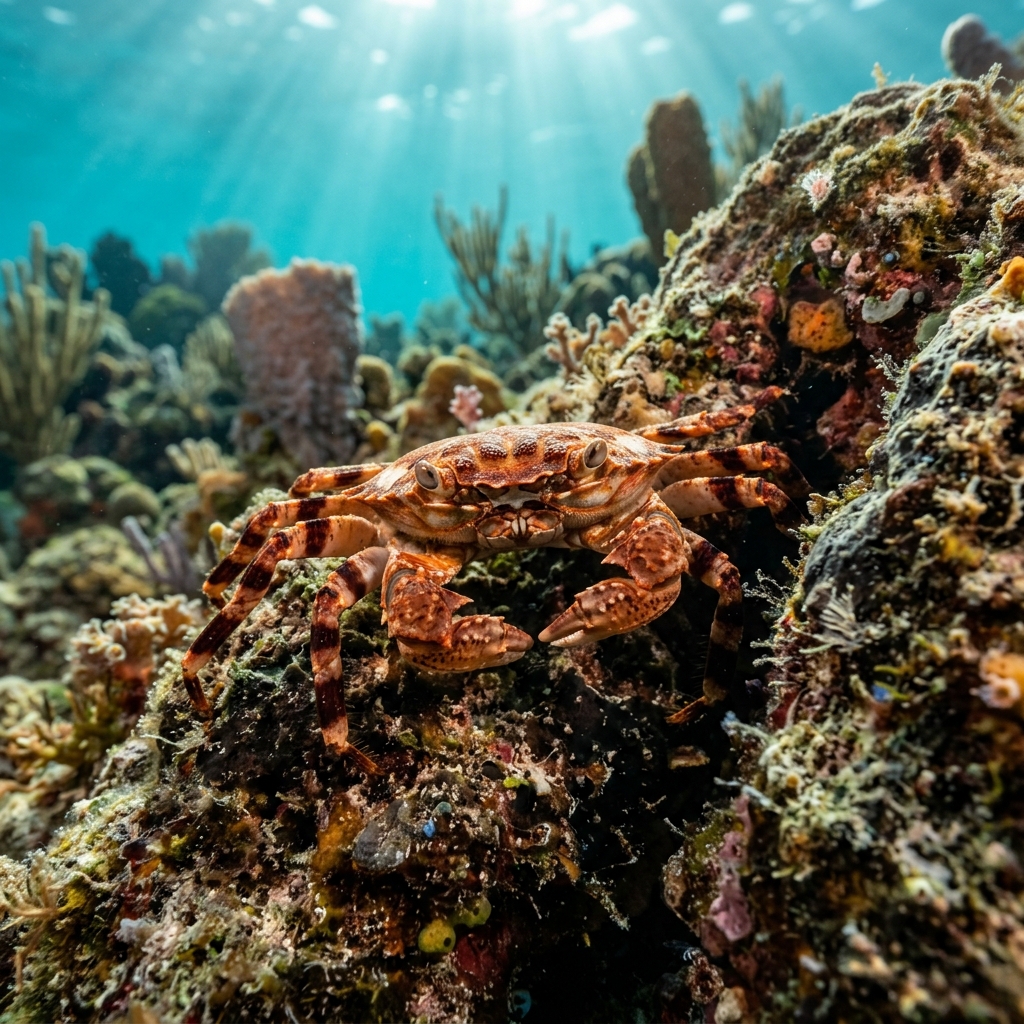
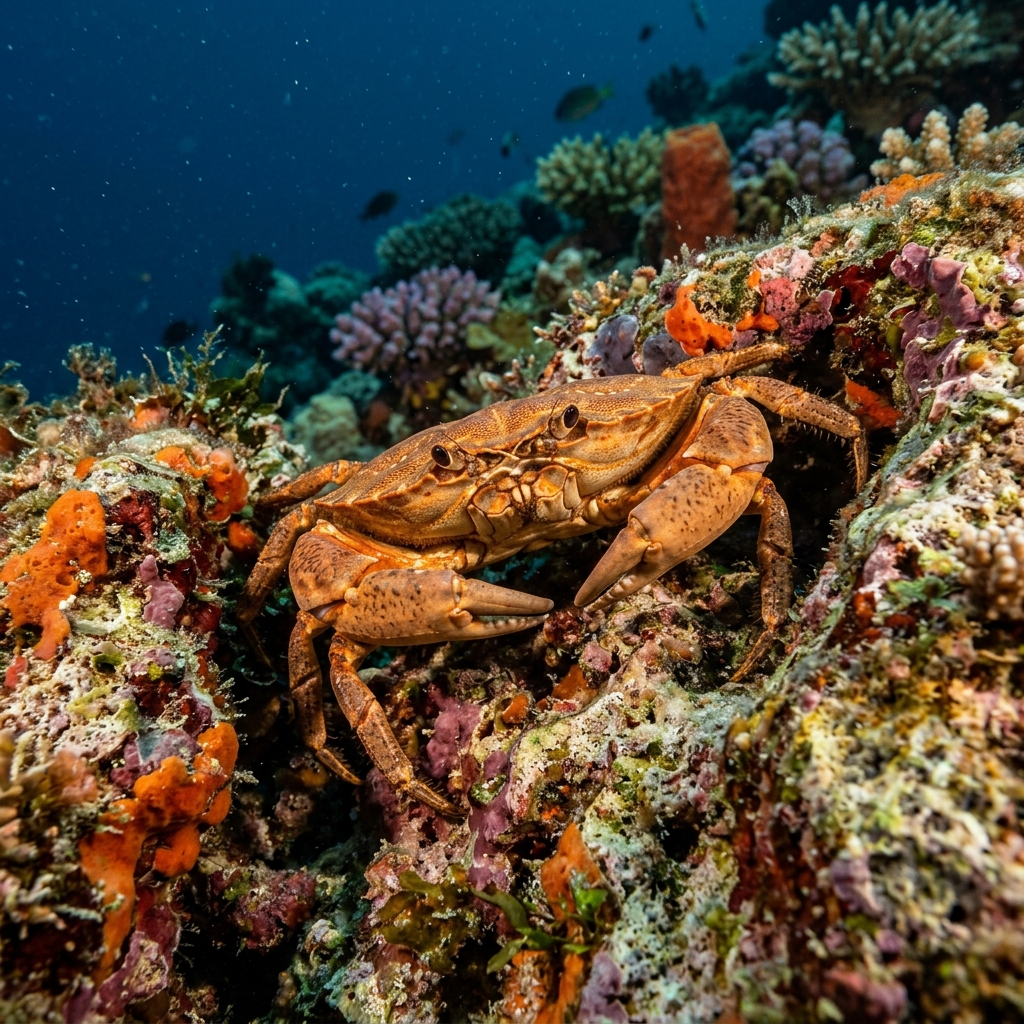
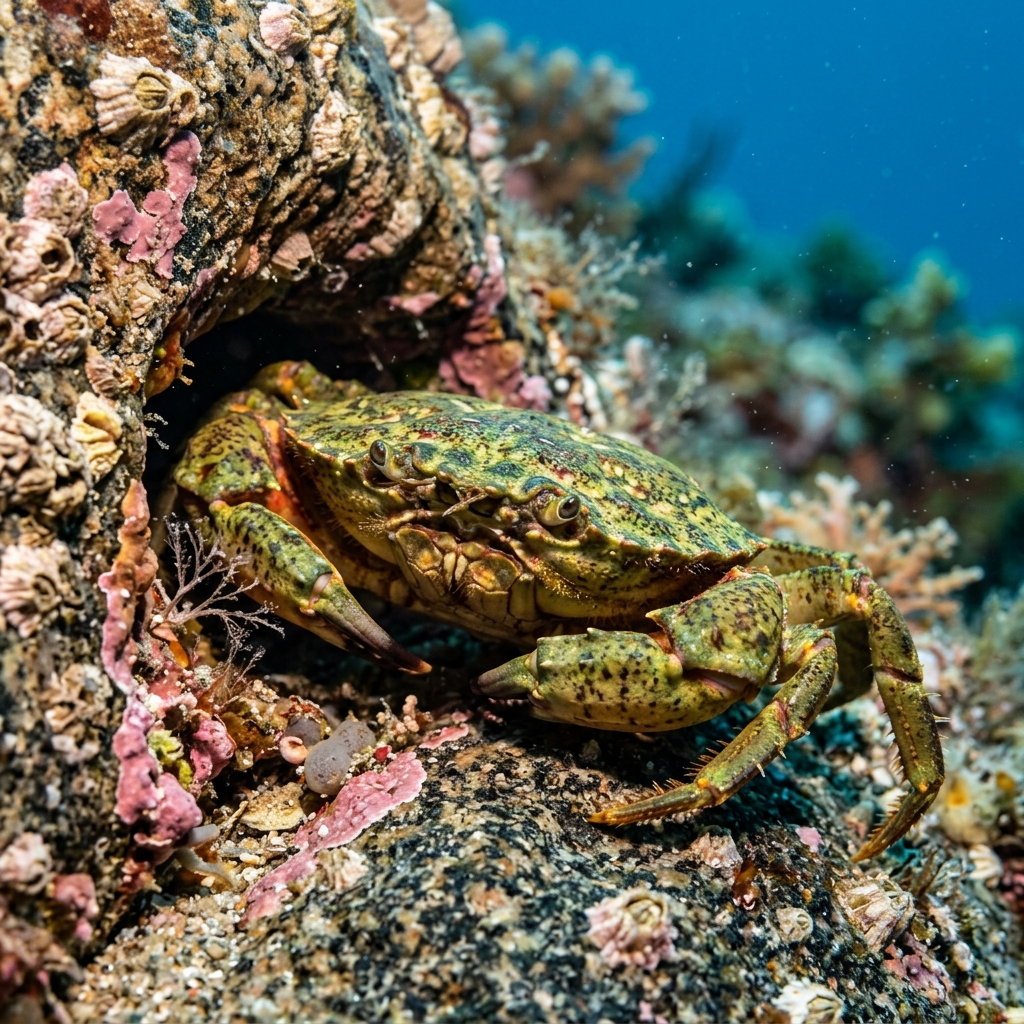
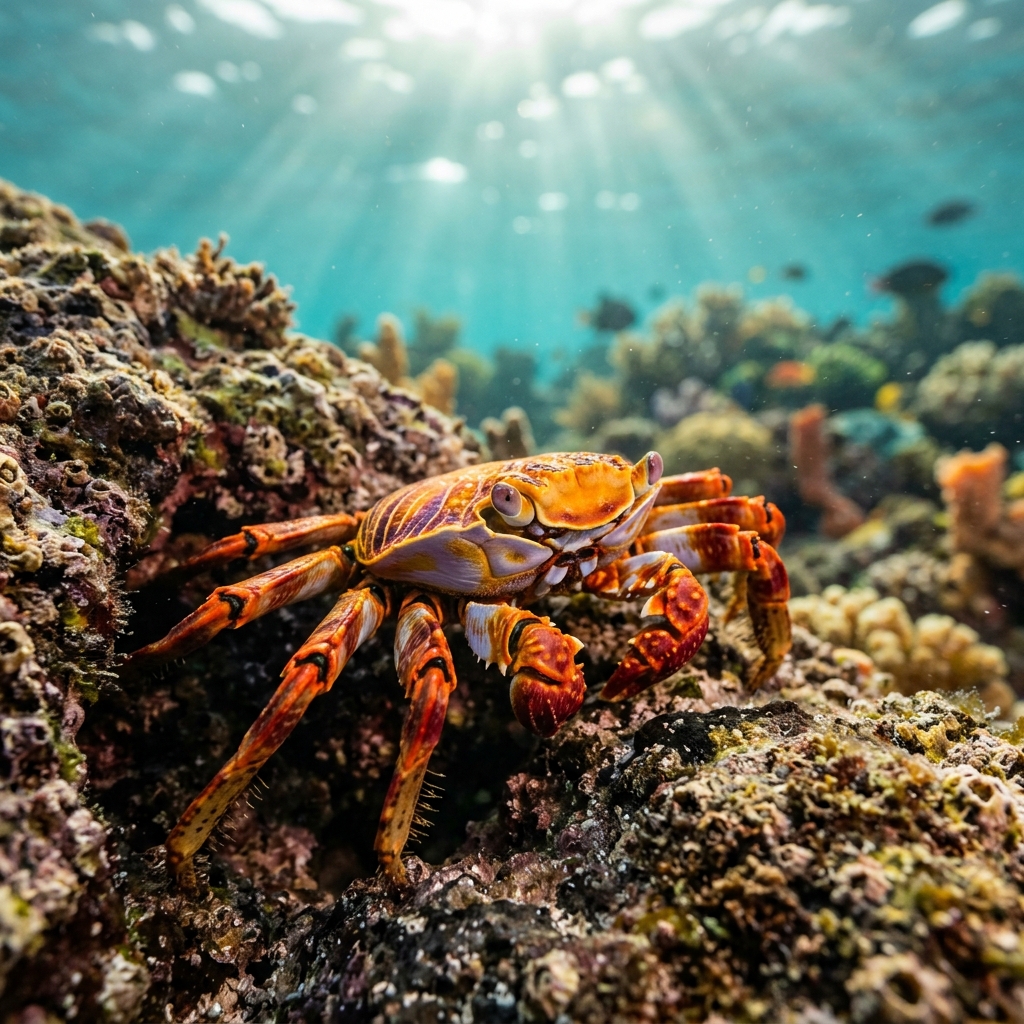
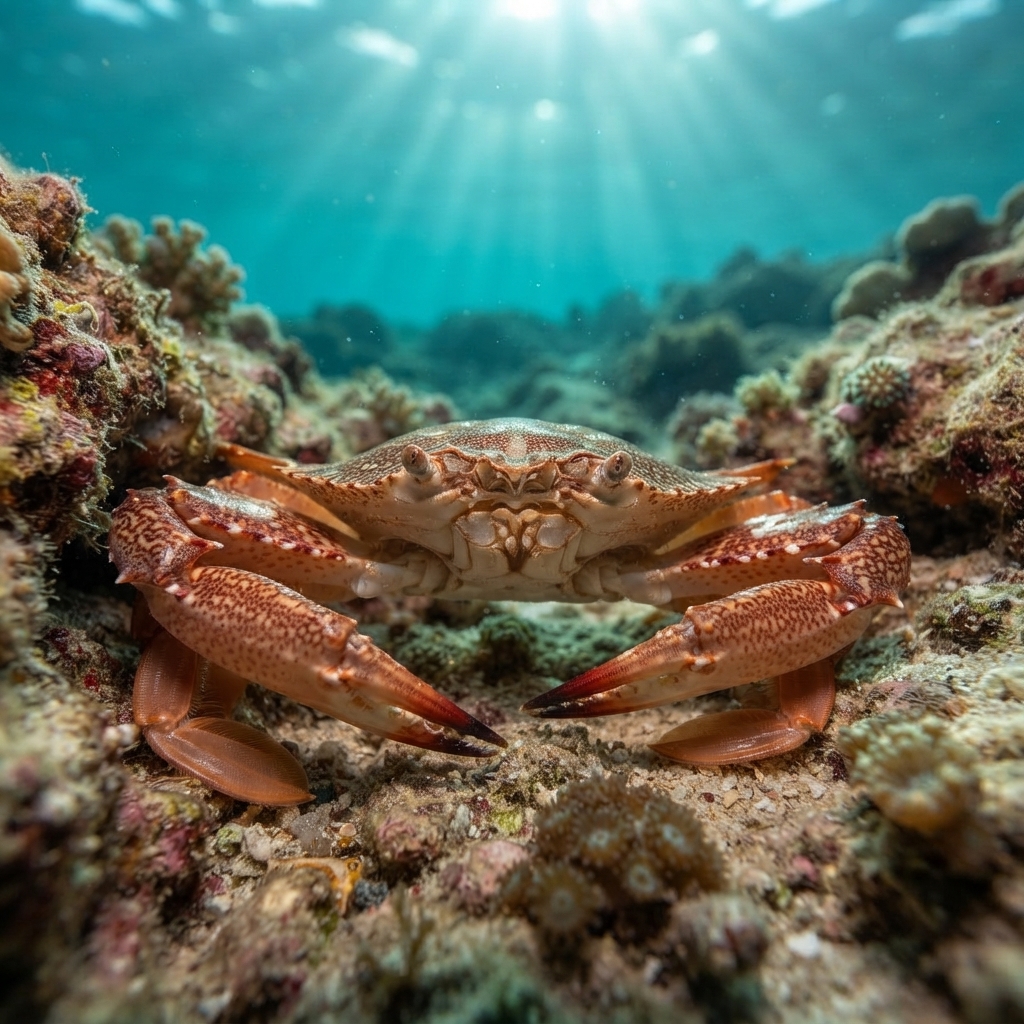
Look for a broad, mottled brown-and-cream shell with faint eye-like (ocellate) spots that give this crab its name, spanning a body wide enough to fill your palm. Its rearmost pair of legs are flattened into paddles, a giveaway that it can swim rather than just scuttle when disturbed. The shell is fan-shaped with pointed lateral spines on either side, typical of swimming crabs in the Portunidae family.
Divers usually find this crab tucked against sand or rubble patches near reef structure, often on night dives when it's more active and easier to pick out with a torch. It tends to hold still or bury slightly when a light passes over it rather than bolt, though it will paddle off quickly using its flattened rear legs if pressed. Expect single individuals rather than groups, and don't expect it in large numbers even at its better sites, it's logged as uncommon almost everywhere it turns up.
Those paddle-shaped rear legs aren't just for show, they let swimming crabs like this one lift off the substrate and scull through open water in short bursts, a trick most reef crabs can't manage.
There's no detectable seasonal pattern in the sightings, and its comfort range of roughly 24.5 to 30.5C matches Caribbean and Gulf reef temperatures year-round, so any month works.
Reef neighbours a diver could mistake it for. Use the identification notes above to tell them apart.
This one is most reliably logged around Sint Eustatius, which accounts for the bulk of recorded sightings, followed by Mexico's Yucatan Peninsula. Smaller numbers turn up off Florida in the United States, so divers in the wider Caribbean and Gulf of Mexico stand the best chance.
Mapping where Ocellate Swimming Crab is logged…
Sint Eustatius is the strongest location by far, with additional sightings around Mexico's Yucatan Peninsula and Florida. Outside these areas it's rarely logged.
There's no clear seasonal pattern, and it's found in water from about 24.5 to 30.5C, so it can turn up on any dive throughout the year.
Check for a mottled brown-and-cream fan-shaped shell with faint eye-like spots and flattened, paddle-like rear legs. It usually sits low against sand or rubble near reef structure rather than out in the open.
No, they pose no danger to divers. Like most swimming crabs they'll retreat or paddle away if approached rather than confront a diver.
Its rearmost pair of legs is flattened into broad paddles, letting it scull through the water in short bursts instead of only walking along the bottom like most reef crabs.
Site and sighting data is aggregated from diver logs, iNaturalist and GBIF. For taxonomy and conservation status:
European Green Crab
2,469 sites