Canthidermis sufflamen
Spot oceanic triggerfish across the Yucatán Peninsula and Roatán reef walls, most commonly Dec, Jun. ID tips, top sites, and what to expect underwater.
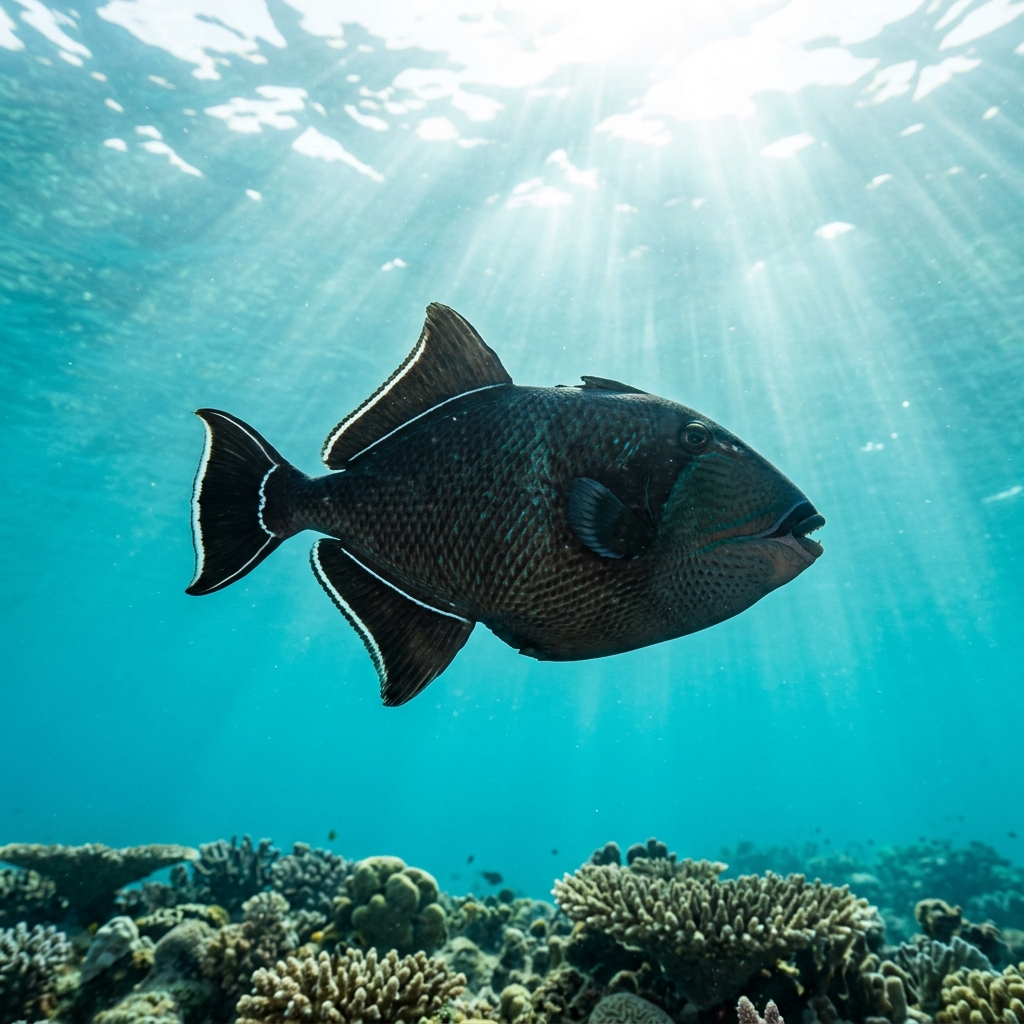
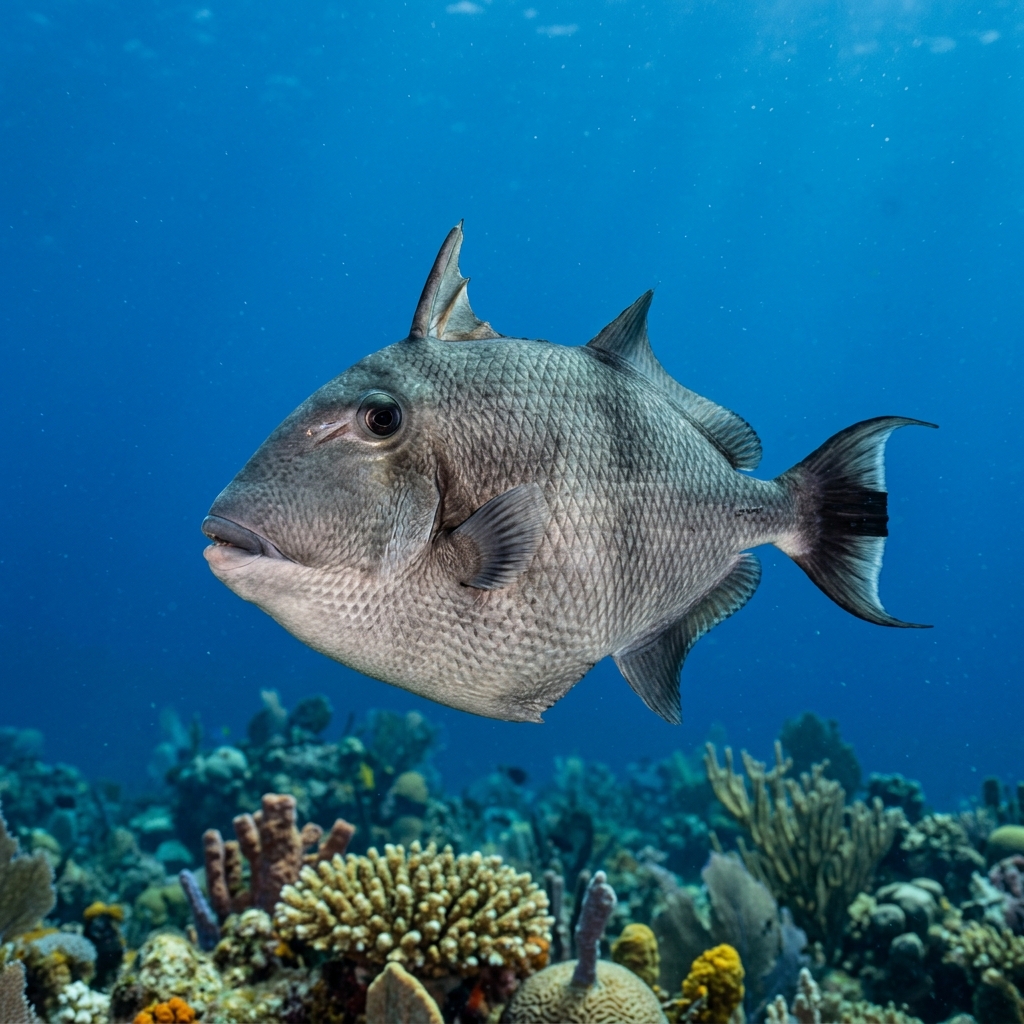
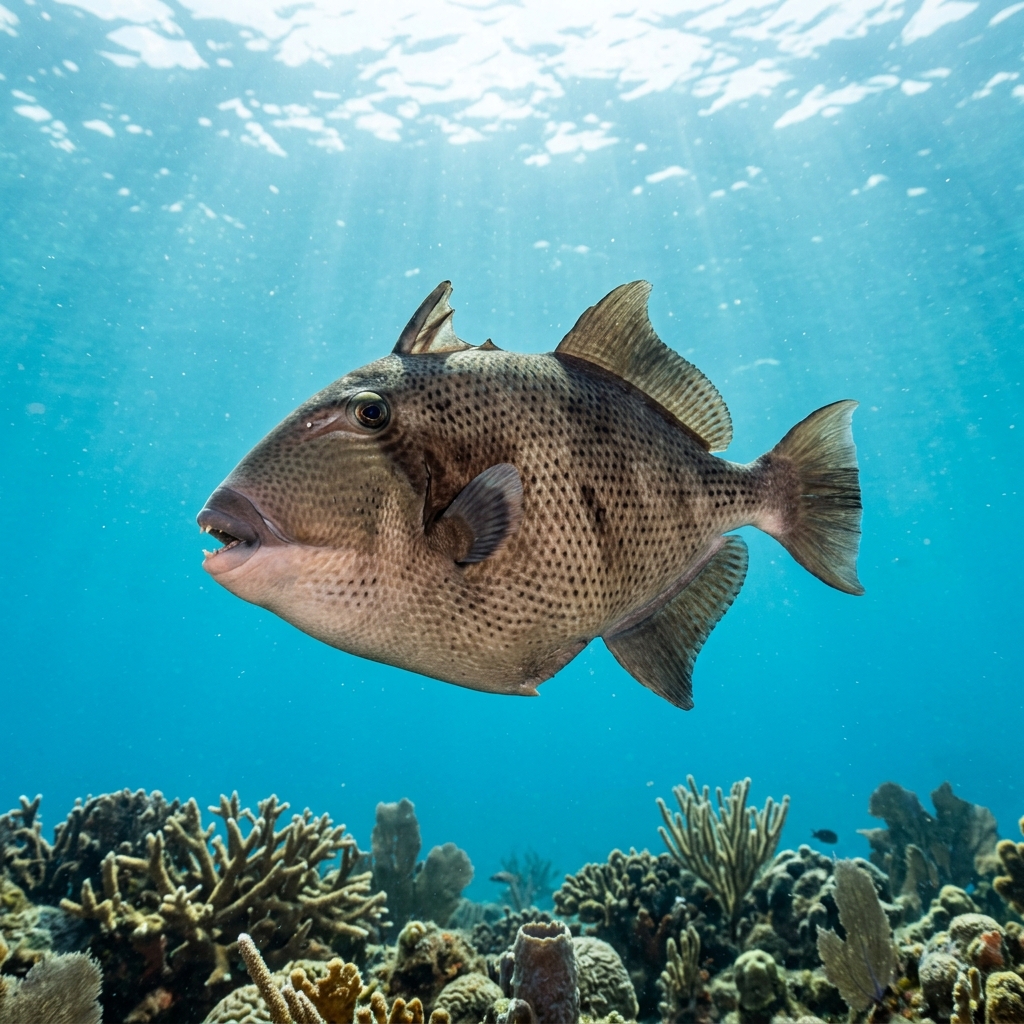
At around 45 cm, this is a large, robust triggerfish with a uniformly dark grey-brown to charcoal body and a noticeably pale or whitish belly, a clean two-tone contrast that stands out in open water. The body is deep and laterally compressed (flattened side-to-side), with the oval outline typical of the family and a small, strong-jawed mouth. Look for a single pale or whitish spot at the base of the pectoral fin; that spot is the most reliable field mark separating it from similar dark triggerfish. Juveniles tend to appear more spotted or mottled than the plain adults.
Often encountered alone or in very small groups cruising along the reef edge or upper wall, typically in mid-water rather than tight against the coral. It tends to be wary and will keep a comfortable distance from divers, often circling or drifting away rather than holding position, patience and slow movement are more rewarding than pursuit. Like other triggerfish, it uses its strong teeth to tackle hard-bodied prey including urchins, crabs, and molluscs.
Oceanic triggerfish are known to aggregate around floating debris and open-water objects, a behaviour called flotsam association, where juveniles shelter and adults hunt. If you encounter one far from the reef in blue water, check the surrounding water column for a floating line, log, or patch of sargassum nearby.
In Northern Hemisphere destinations, sightings concentrate between December and June, so the winter-to-early-summer window gives you the best odds at Yucatán and Caribbean sites. Water temperatures in its observed range run from about 23 °C to 29 °C, keeping it present on tropical and warm-temperate reefs across that peak season.
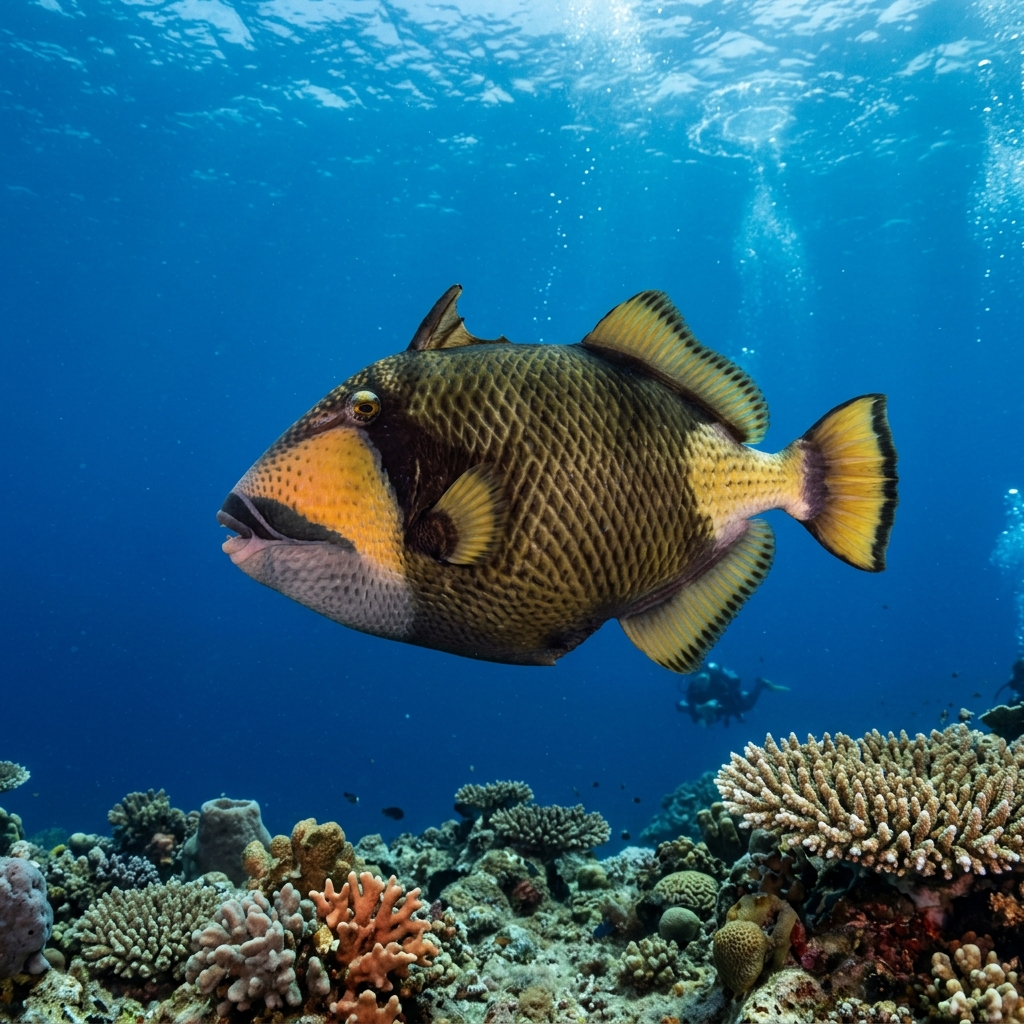
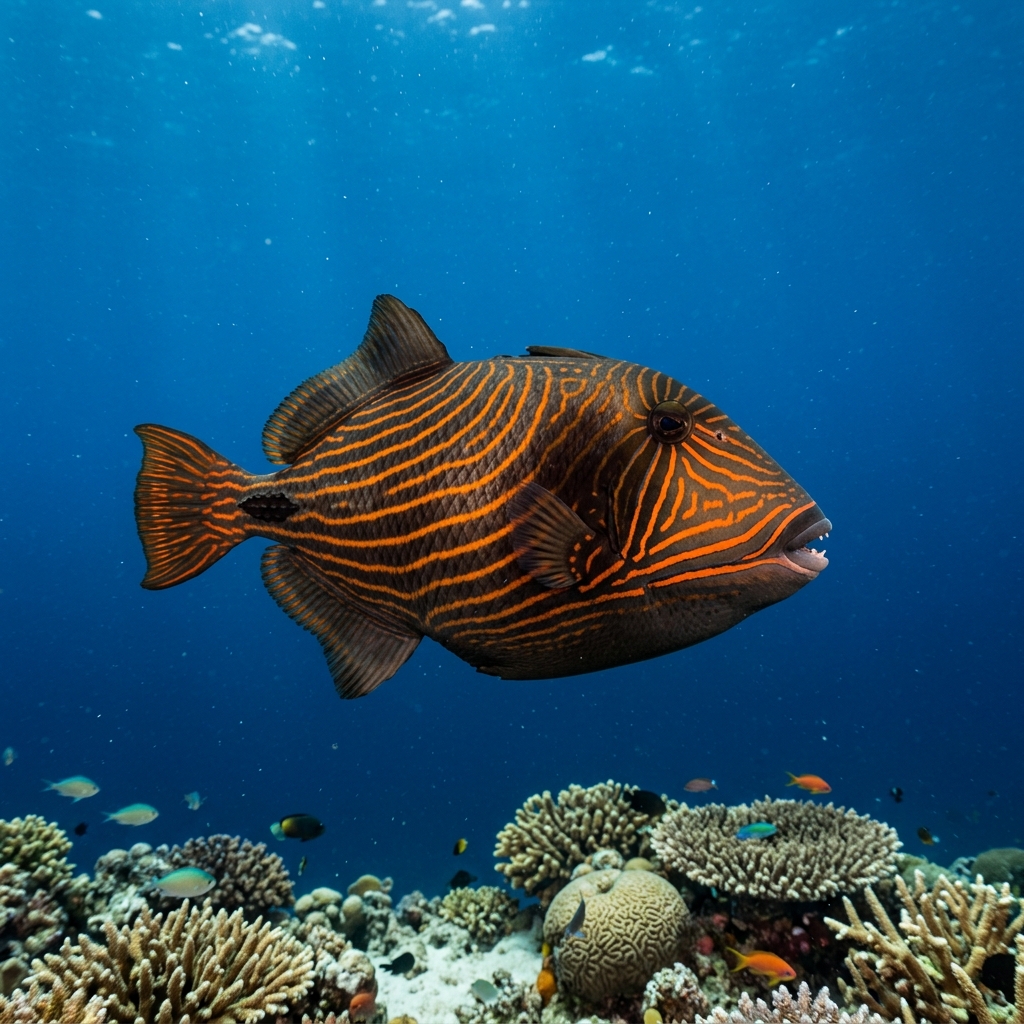
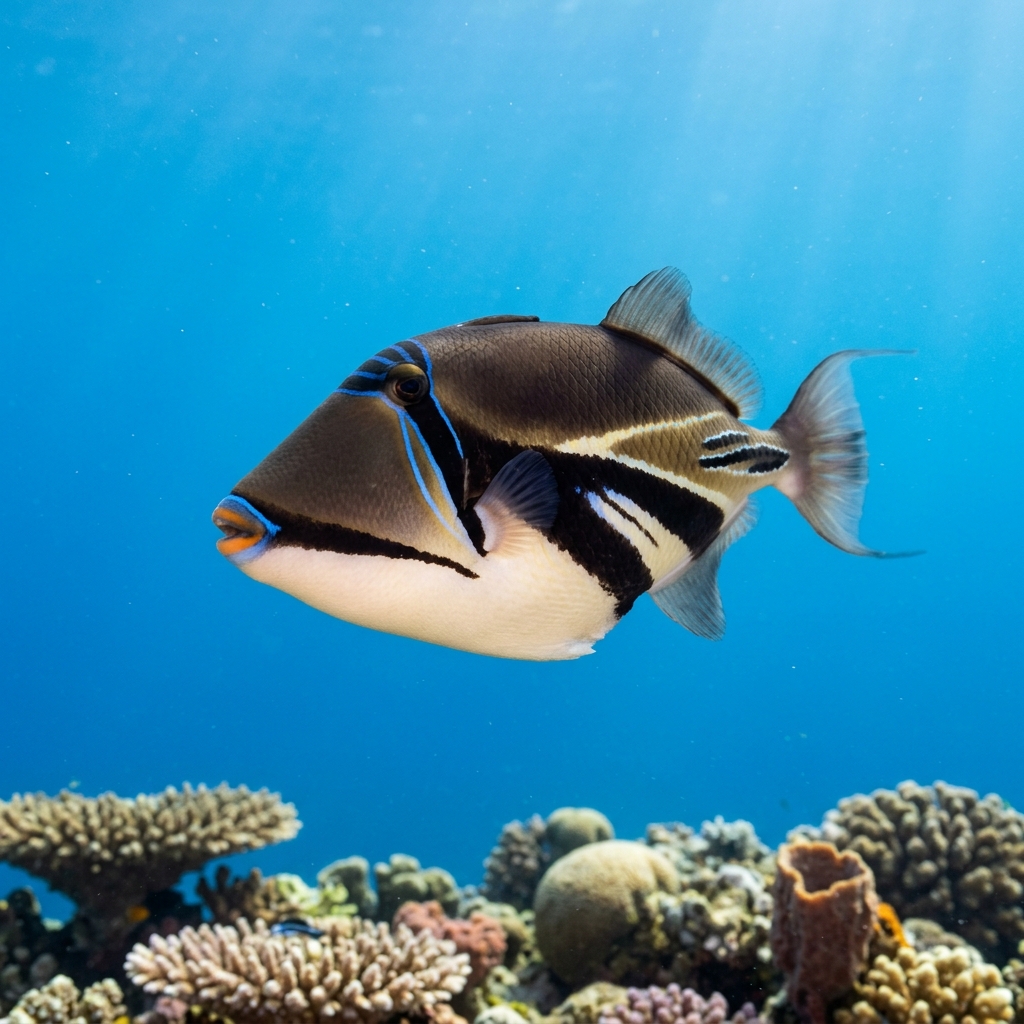
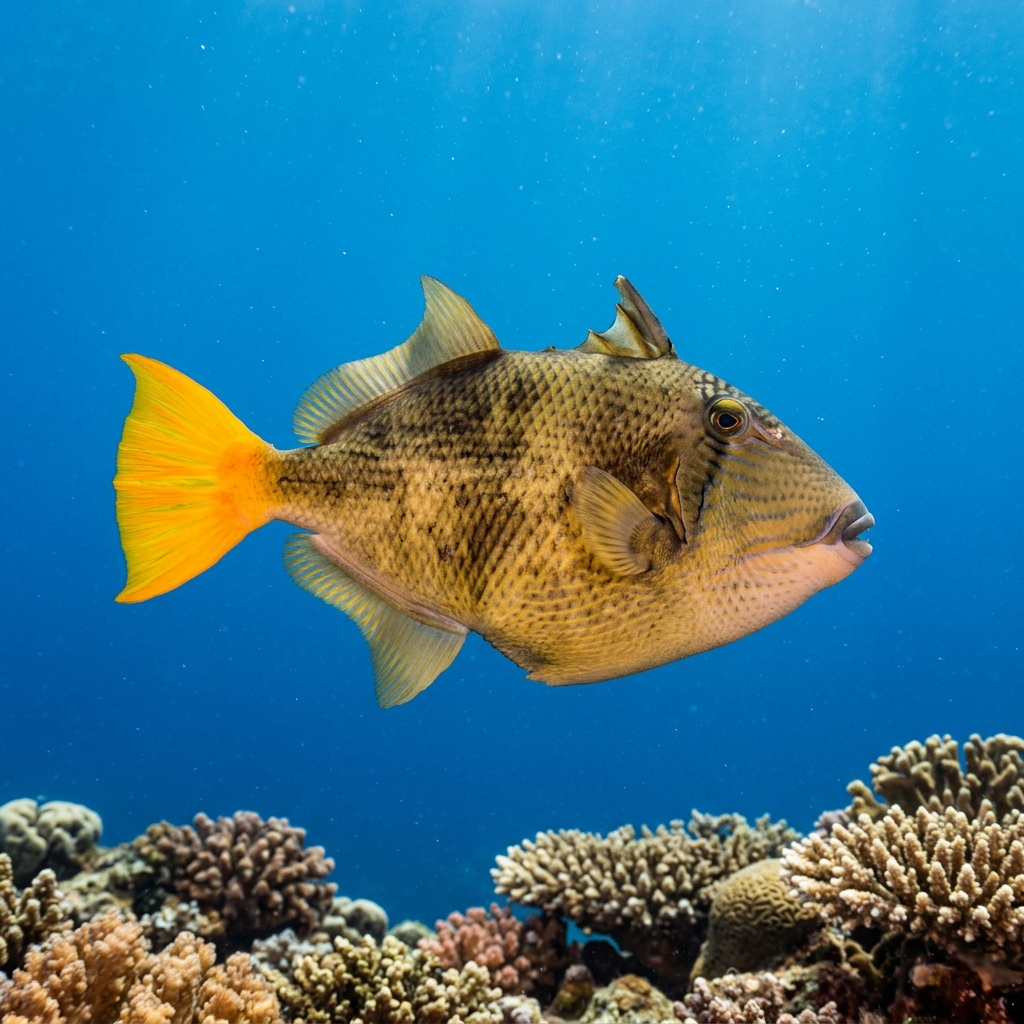
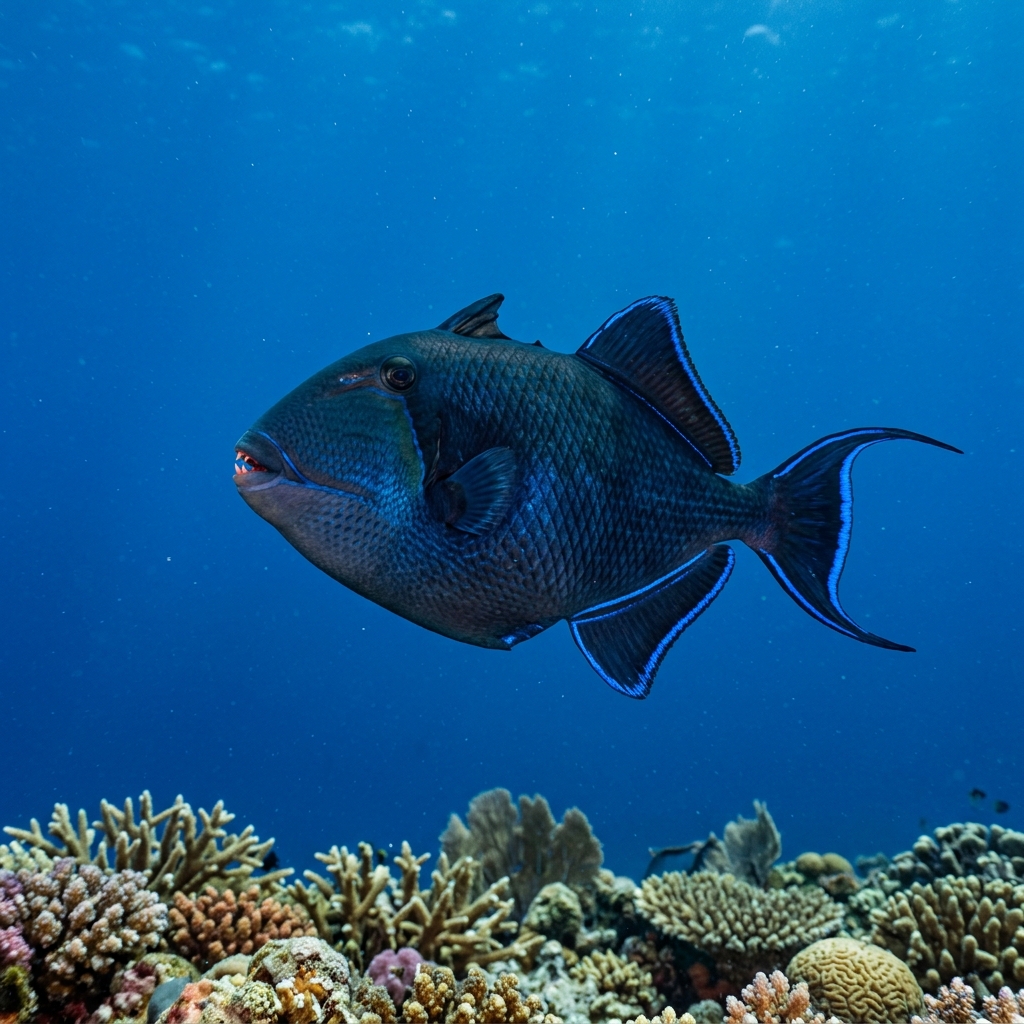
Reef neighbours a diver could mistake it for. Use the identification notes above to tell them apart.
Most consistently logged across the western Atlantic, with the strongest concentration of sites on the Yucatán Peninsula in Mexico and in Florida and the southeastern United States. Roatán in Honduras and Grand Cayman in the Cayman Islands are also reliable, and sightings extend to the Northeast Coast of Brazil, the Bahamas, and Belize. The Canary Islands, particularly El Hierro, represent a notable eastern Atlantic outpost.
Mapping where Oceanic Triggerfish is logged…
The Yucatán Peninsula in Mexico leads by a clear margin, followed by Florida, Roatán in Honduras, Grand Cayman, and the Bahamas. Strong populations are also logged in Belize, Brazil's northeast coast, and El Hierro in the Canary Islands, making this primarily a western Atlantic species with a notable eastern Atlantic presence.
December through June is the peak window in Northern Hemisphere sites such as the Yucatán, the Cayman Islands, and Roatán. Sightings are recorded outside those months too, but frequency is highest in that cooler-to-warm seasonal window.
Look for a large, deep-bodied triggerfish with a uniformly dark grey-brown body and a contrasting pale belly. The clearest field mark is a small pale spot at the base of the pectoral fin. At around 45 cm it is bigger than most reef triggerfish you will encounter, and its plain colouration distinguishes it from spotted or striped relatives.
They typically reach around 45 cm in length, making them one of the larger triggerfish divers encounter in the Atlantic and Caribbean. That size, combined with the deep, oval body shape, gives them a noticeably bulky profile in the water.
No. Unlike titan or clown triggerfish, the oceanic triggerfish poses no recognised threat to divers. It is typically wary and will move away rather than confront you. No special precautions are needed beyond the standard advice to avoid harassing or cornering any wild animal.
Site and sighting data is aggregated from diver logs, iNaturalist and GBIF. For taxonomy and conservation status:
Lagoon Triggerfish
2,435 sites