Nelusetta ayraud
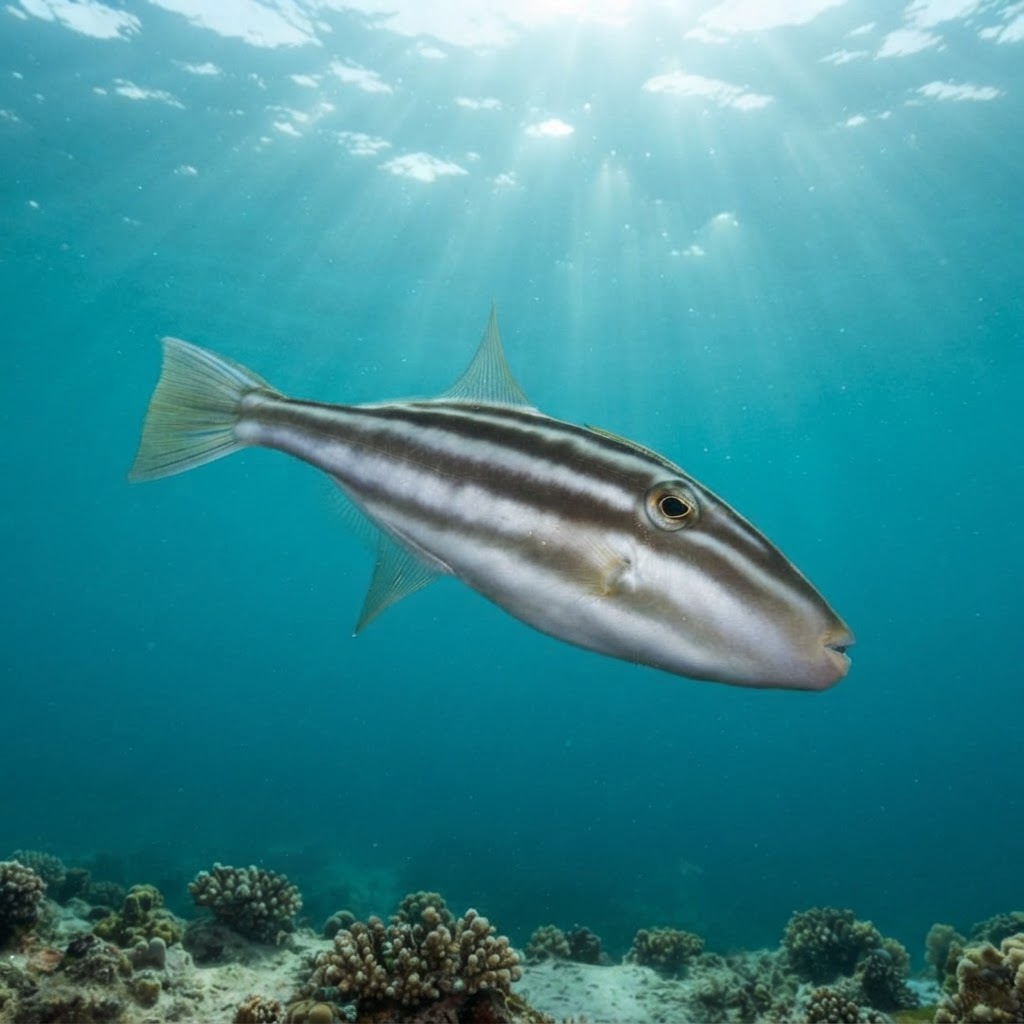
Silvery, blunt-nosed filefish logged across New South Wales in 15-21C water, usually solo over open reef and sand.
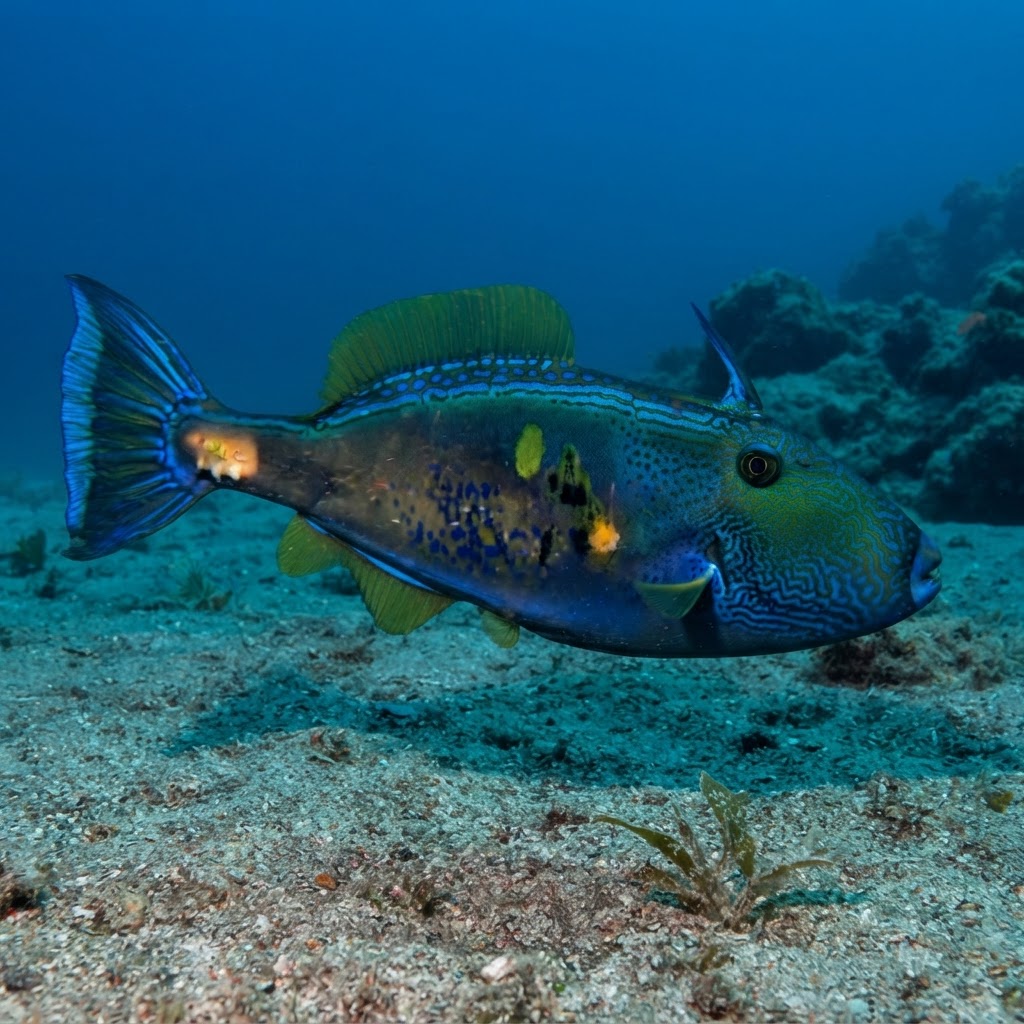
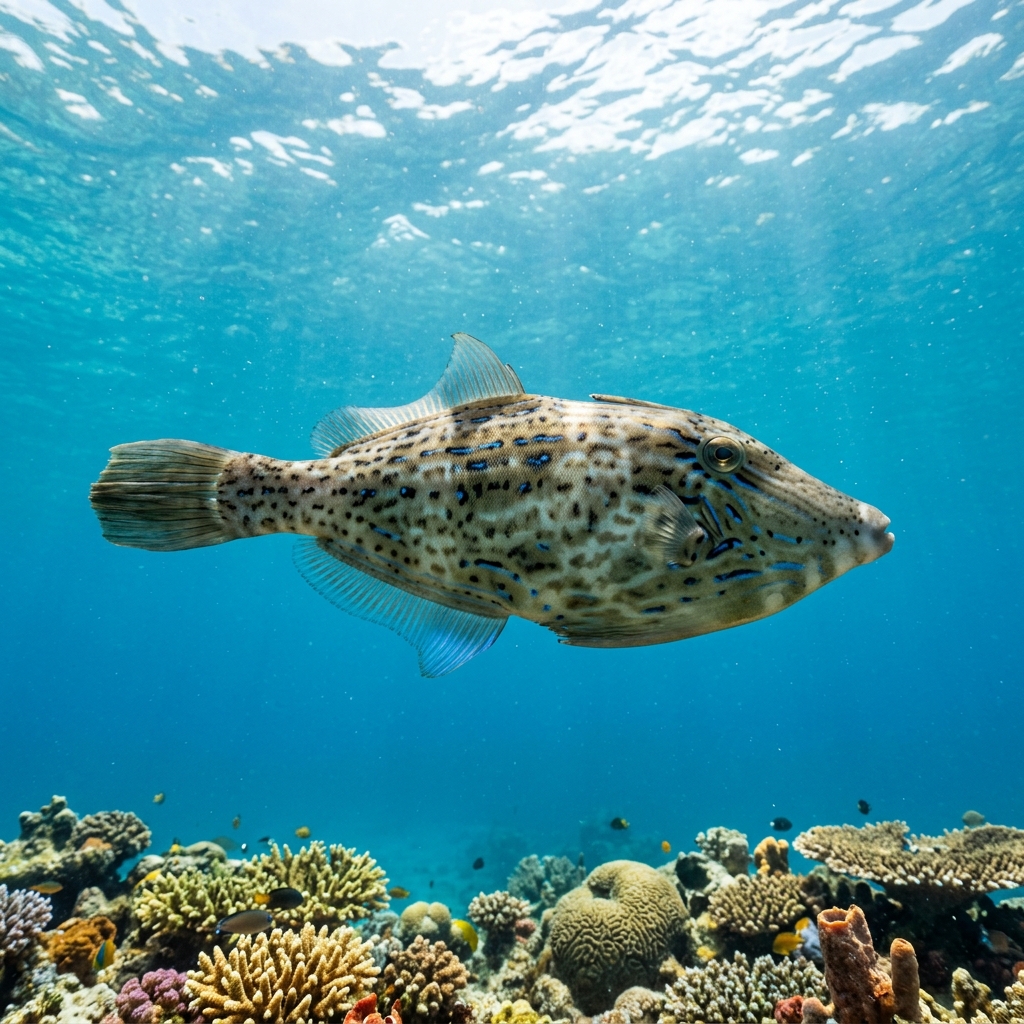
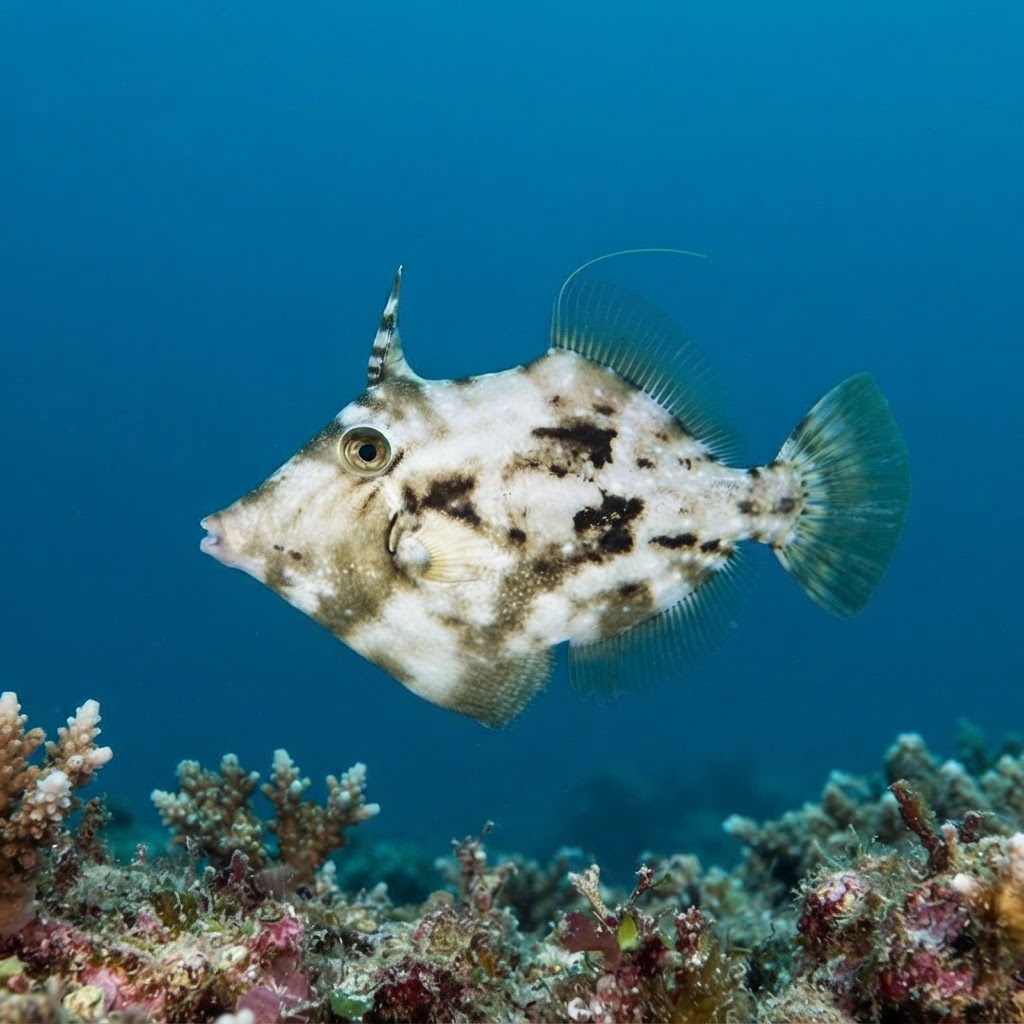
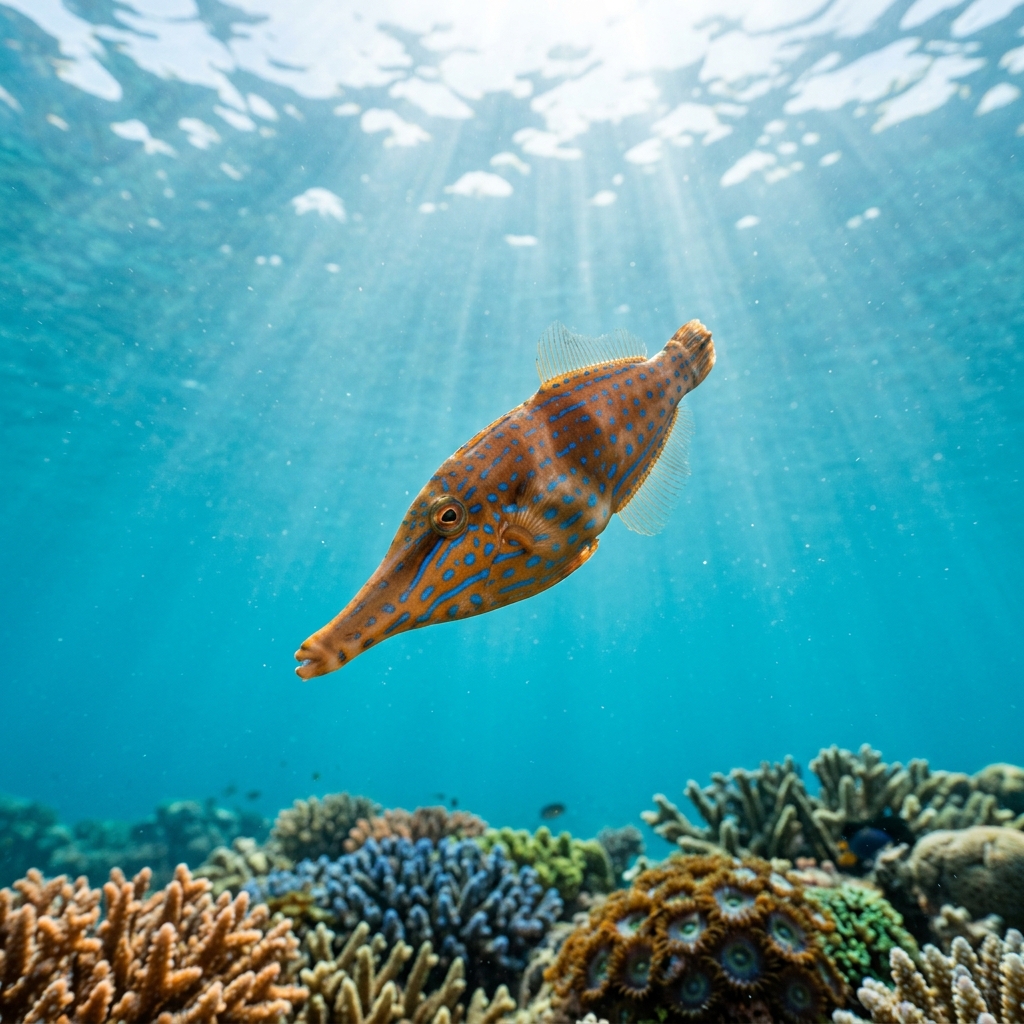
Grows to around 70 cm and has an elongated, laterally flattened body with a small mouth set on a blunt, sloping snout. Colouring runs pale silvery-grey to olive, often with faint mottling, and the skin has the rough, sandpaper-like texture typical of filefish. Look for the single slender dorsal spine just behind the eyes, which it can lock upright, and a small second dorsal and anal fin set well back near the tail.
Divers typically encounter it cruising alone over open reef, rubble or sand rather than tucked into cover, moving with the slow, deliberate finning style common to filefish. It tends to keep a comfortable distance from divers and will drift off unhurried rather than bolt, so a slow approach gives the best chance of a closer look before it moves on.
Like other filefish, it can raise and lock its first dorsal spine upright, a defence trick that lets it wedge itself into crevices where predators struggle to pull it out.
Sightings are spread across the year with no clear seasonal peak in the data, and the observed water temperature range of 15.3 to 21.2C spans much of the New South Wales dive calendar, so plan around good conditions rather than a specific month.
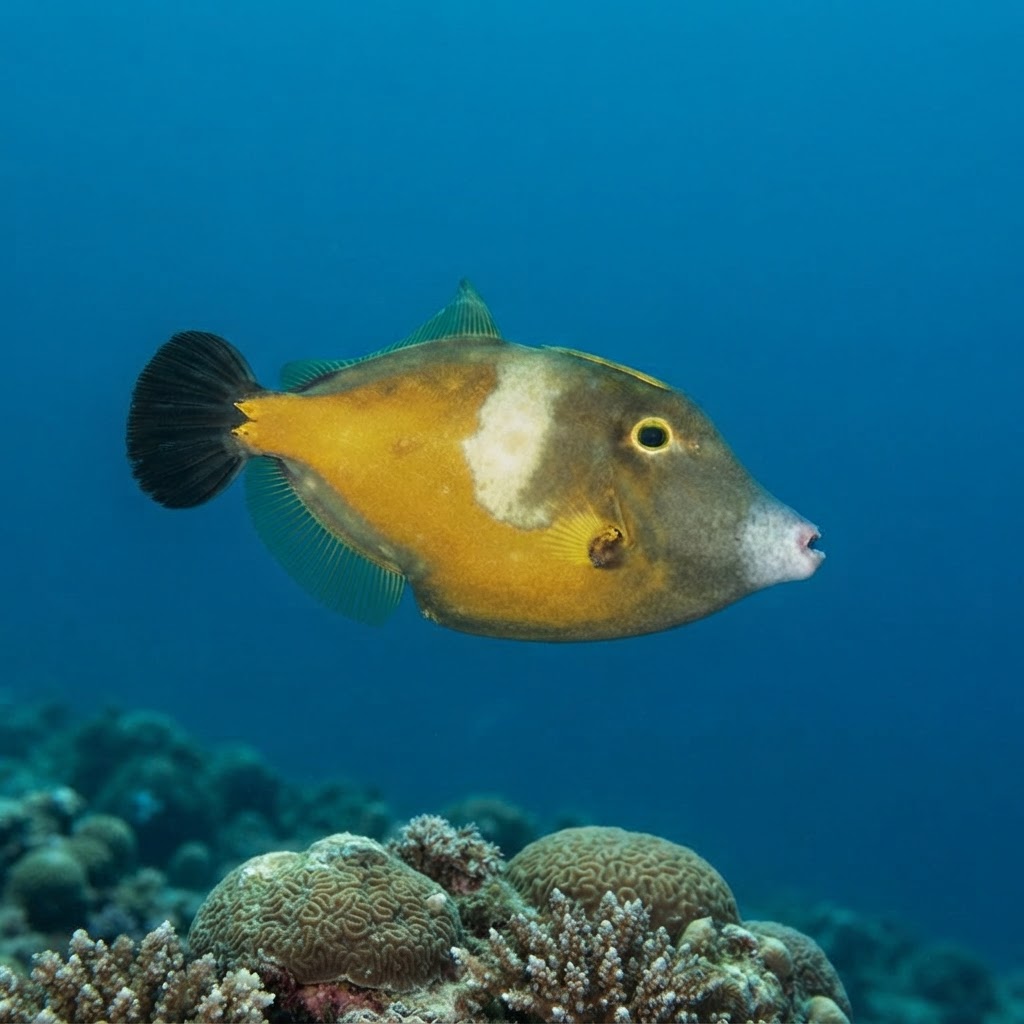
Reef neighbours a diver could mistake it for. Use the identification notes above to tell them apart.
Every logged sighting in this dataset comes from Australia, concentrated in New South Wales, making it the region to target if you want a real shot at this fish. Sites there report it mostly as uncommon or rare, with only one location logging it as a common find, so it rewards divers who spend time working temperate rock reefs and sand-adjacent structure.
Mapping where Ocean Leatherjacket is logged…
New South Wales, Australia is the standout region in current sighting data, with the species turning up at a range of sites there, mostly as an uncommon or rare find.
There's no strong seasonal pattern in the data, so sightings occur year-round within the observed 15.3 to 21.2C temperature range typical of New South Wales dive sites.
Look for a silvery-grey, elongated body up to 70 cm, a blunt sloping snout, small mouth and a single upright dorsal spine behind the eyes. It usually swims alone over open reef or sand rather than hiding in cover.
They typically reach around 70 cm in length, making them one of the larger filefish divers encounter on temperate Australian reefs.
No, they pose no danger to divers. They keep their distance and will simply swim off if approached.
They can lock an upright dorsal spine in place, a trick shared with other filefish that lets them jam themselves into rock crevices so predators cannot easily pull them free.
Site and sighting data is aggregated from diver logs, iNaturalist and GBIF. For taxonomy and conservation status:
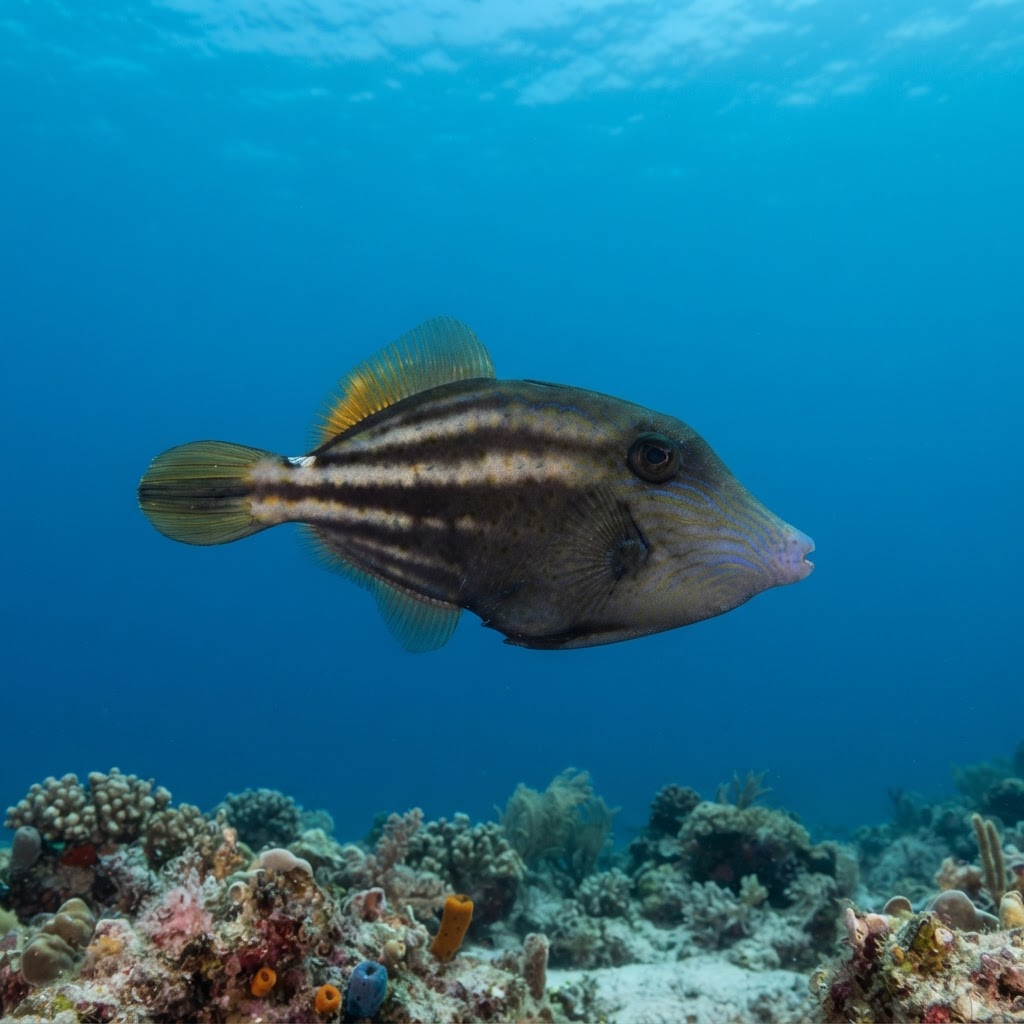
Orangespotted Filefish
836 sites