Pomacentrus adelus
Small blue-grey damselfish common on reefs around Nouméa, New Caledonia, in warm 26-29°C water year-round.
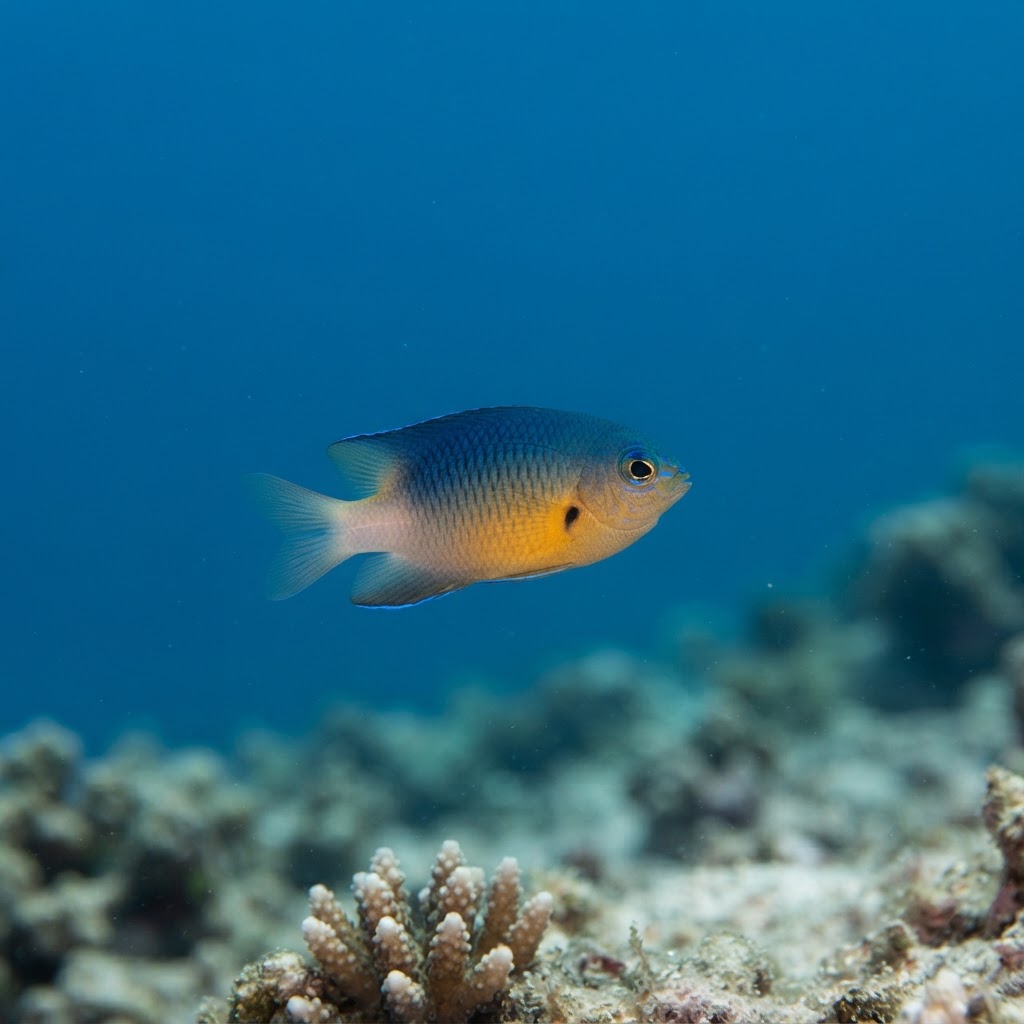
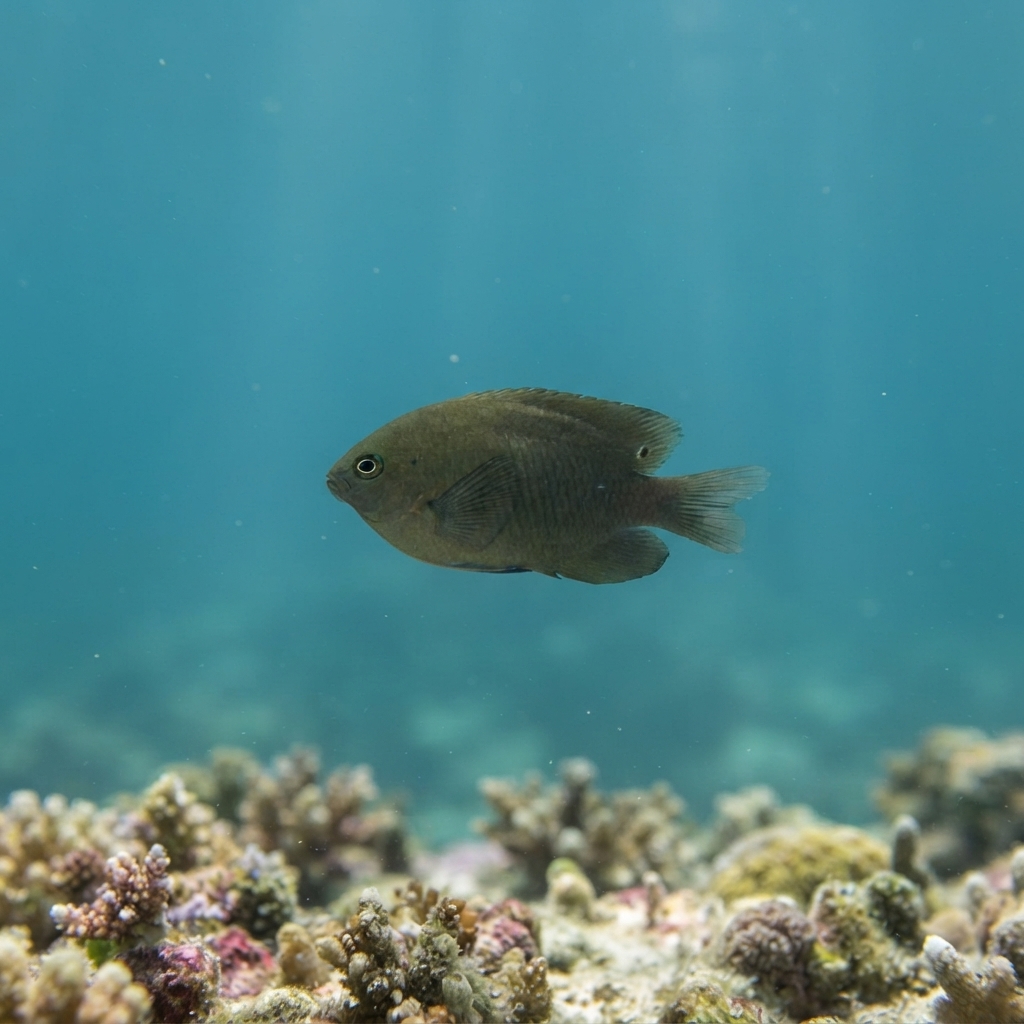
A small, deep-bodied damselfish topping out around 5 cm, with a compact oval shape typical of the genus. Body colour runs blue-grey to olive with a faint darker smudge near the upper gill area, and the fins carry a subtle blue edge that shows best when a torch or strobe hits it. There's no bold pattern to key on here, it reads as a plain, fast-moving grey-blue shape darting over rubble and low reef structure.
Expect to see it hovering low over rubble and reef structure in the shallows, rarely straying far from a bolt-hole it can dart into. It's not territorial in any way that troubles divers, generally ignoring you unless you get close, at which point it slips behind coral or into a crevice. Most sightings come from casual daytime reef dives rather than any particular time slot.
Like most small Pomacentrus damselfish, it likely feeds on algae and tiny planktonic prey picked from the water column just above the reef, a habit that keeps it hovering in one spot rather than roaming.
No clear seasonal pattern shows up in the sightings, and with a comfortable temperature niche of 25.9 to 29.3°C, it's a year-round fixture on the reefs where it occurs.
Reef neighbours a diver could mistake it for. Use the identification notes above to tell them apart.
Most reliably logged around Nouméa in New Caledonia, which accounts for the bulk of recorded sightings, with additional records from the Visayas in the Philippines and Sulawesi in Indonesia. If you're diving shallow reef flats or rubble patches in any of these regions, keep an eye on the 2-8 m band where it's most often spotted.
Mapping where Obscure Damselfish is logged…
The strongest sightings come from around Nouméa in New Caledonia, with further records from the Visayas in the Philippines and Sulawesi in Indonesia. It favours shallow reef and rubble areas between about 2 and 8 metres.
There's no detected season in the sightings data, and its warm-water niche of roughly 26 to 29°C is present year-round on the reefs it inhabits, so any time of year is workable.
Look for a small, oval-bodied damselfish around 5 cm long in blue-grey to olive tones, with a faint darker patch near the upper gill and a subtle blue fin edge. It has no bold stripes or bars, so it's often picked out more by its hovering behaviour over rubble than by strong markings.
They stay small, topping out around 5 cm, which is typical for reef damselfish in the Pomacentrus genus.
No, they pose no danger to divers. They're small, non-aggressive reef fish that simply retreat into cover if approached too closely.
Site and sighting data is aggregated from diver logs, iNaturalist and GBIF. For taxonomy and conservation status:
Dascyllus
3,697 sites