Ilia nucleus
An uncommon find in Murcia's cool waters (14-20C), the nut crab rewards divers who check the sand and rubble closely.
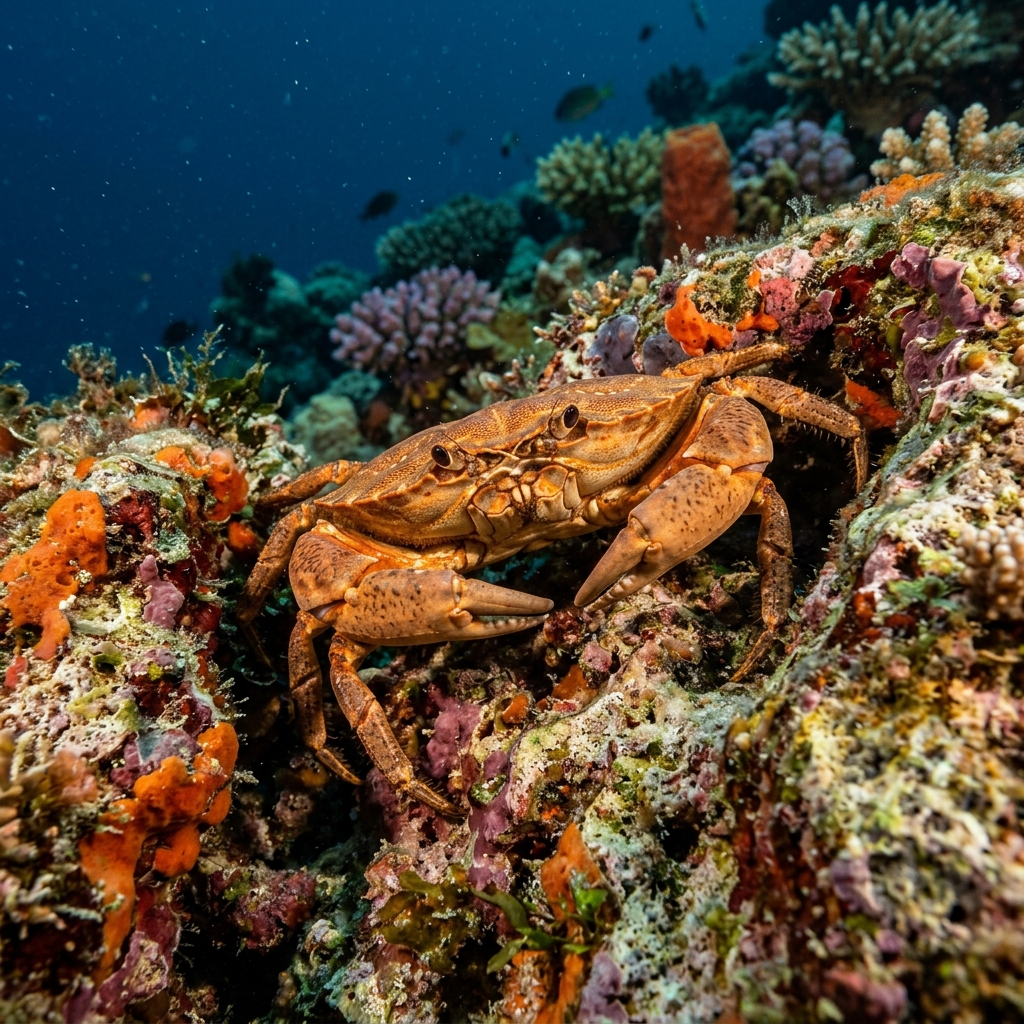
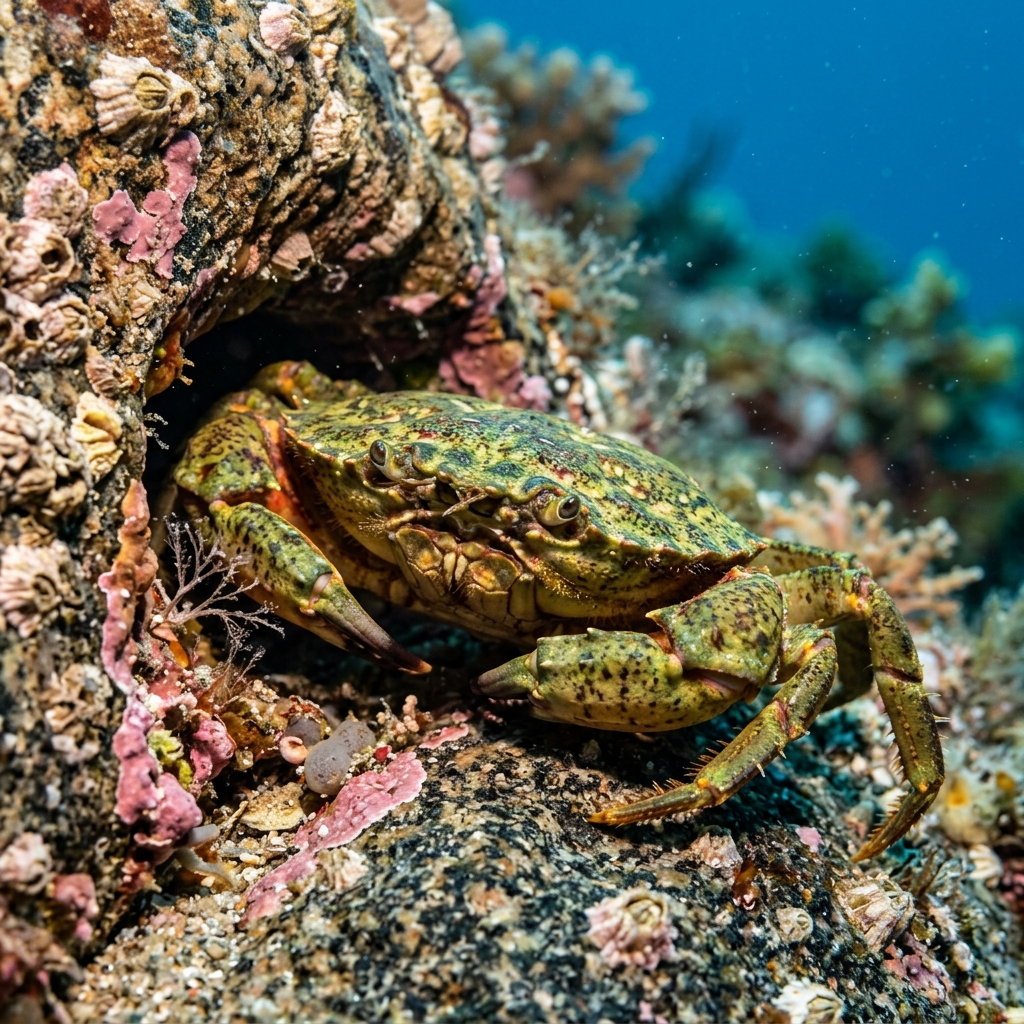
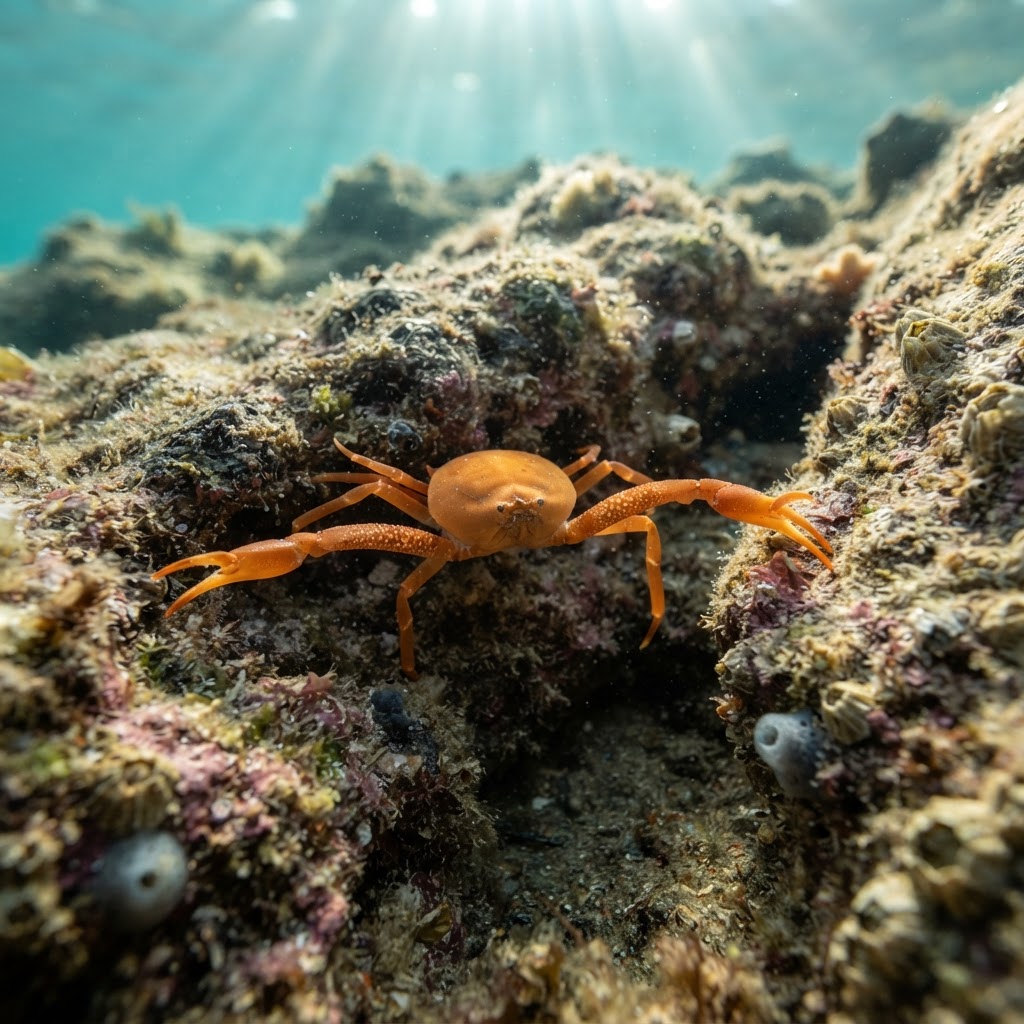
Small, rounded crab with a smooth, glossy, dome-shaped shell that looks almost polished, unlike the spiny or hairy carapaces of many reef crabs. Colour runs pale cream to sandy tan, often with faint mottling that blends into sediment. Legs are short and tucked close to the body, giving it a compact, egg-like silhouette rather than a sprawling crab shape. Its low profile and habit of sitting still on sand or rubble make it easy to swim straight past.
Divers typically find it sitting motionless on sand, mud, or rubble patches rather than clinging to reef structure, often half settled into the substrate. It relies on its plain colouring and stillness to avoid notice rather than fleeing, so a slow, careful eye over open bottom areas near reef edges gives the best chance of a sighting. It is not associated with any particular time of day in diver reports.
Its smooth, rounded shell is a real departure from the spiny or camouflaged look of most small Mediterranean crabs, which is exactly why it gets overlooked on plain sand and rubble.
Sightings show no clear seasonal pattern, and with a comfortable range of roughly 14 to 20C, this is a year-round proposition in the Mediterranean rather than a species tied to a particular month.
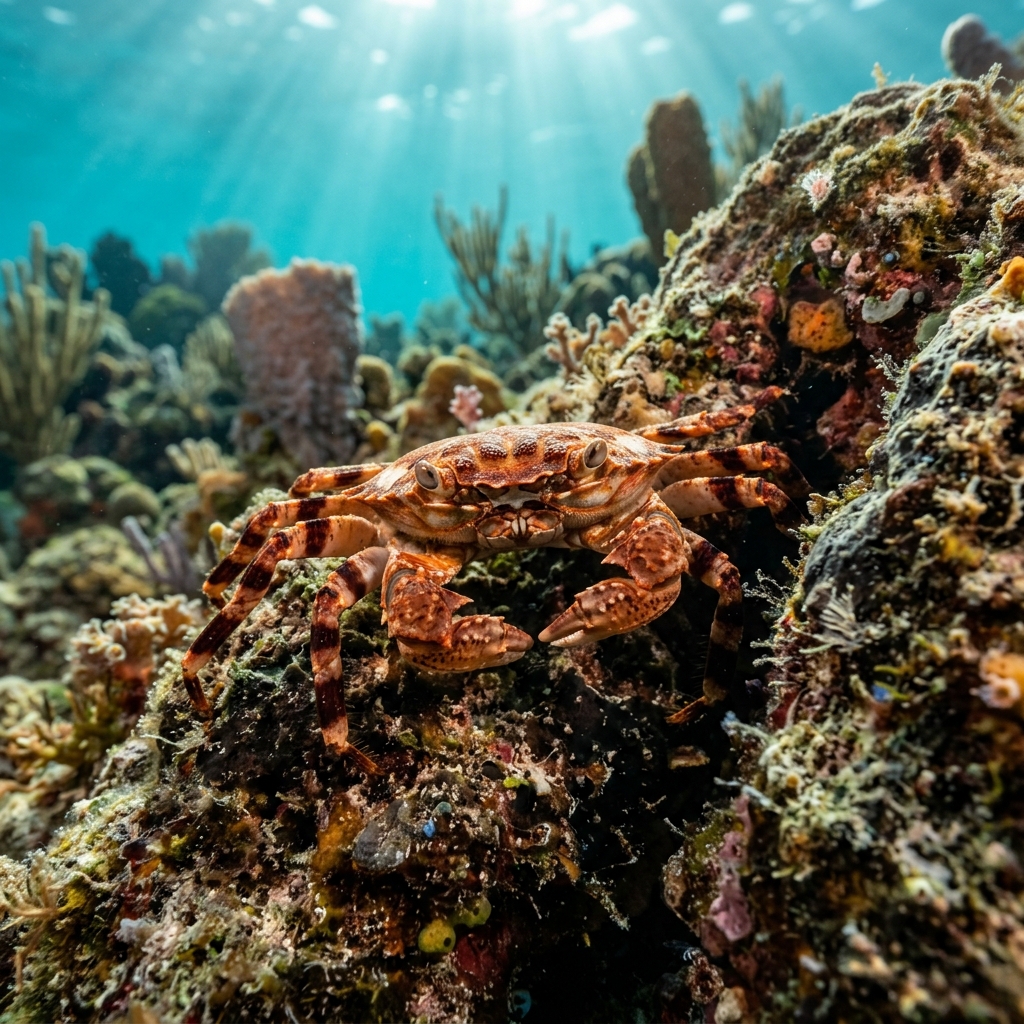
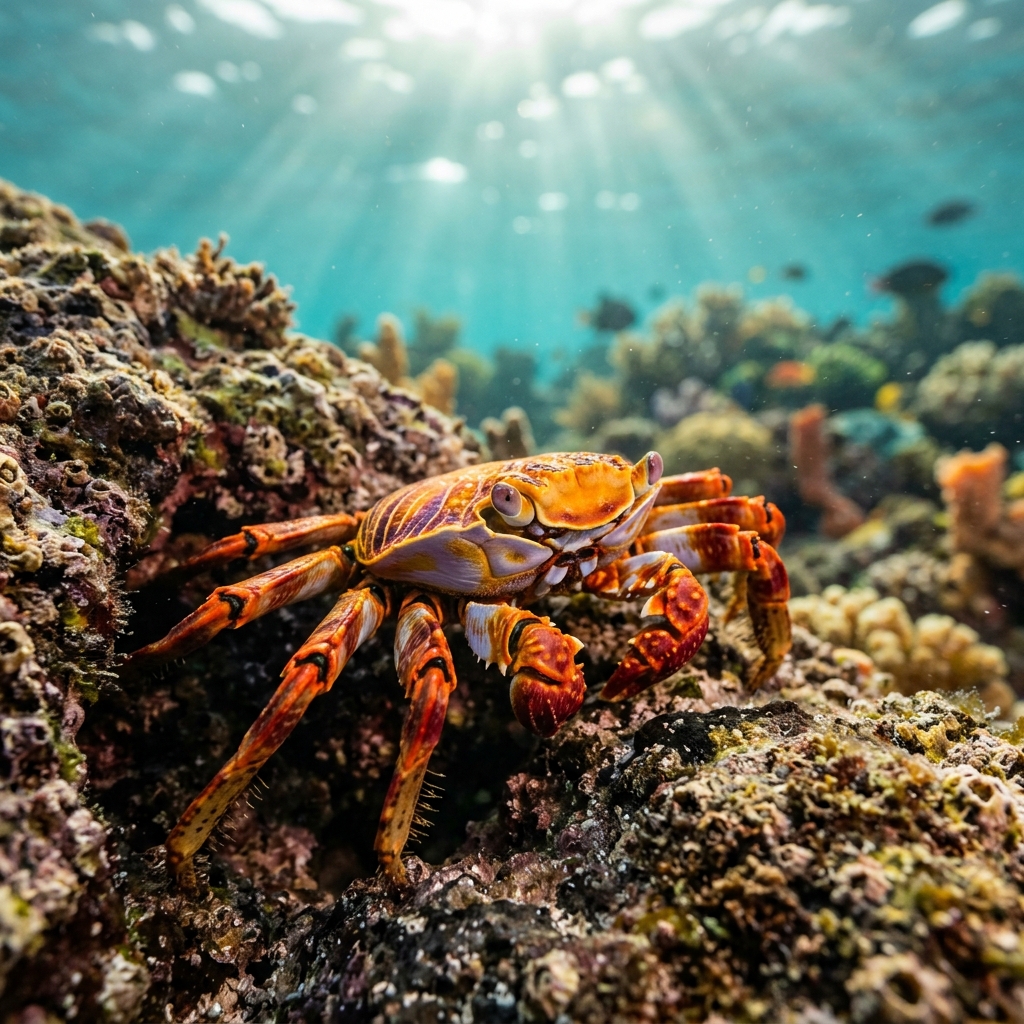
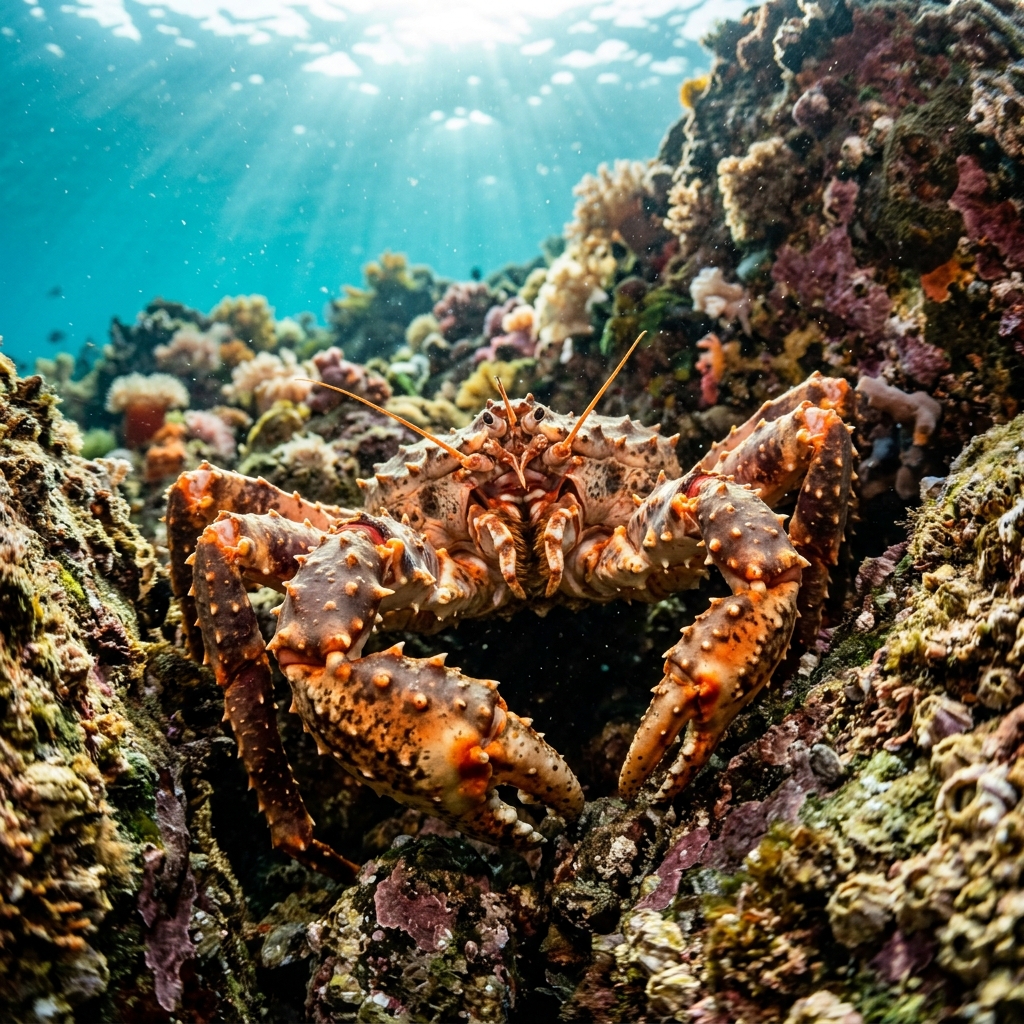
Reef neighbours a diver could mistake it for. Use the identification notes above to tell them apart.
Spain is by far the strongest area for this species, with sightings concentrated around Murcia. A single site in Corsica, France, also has confirmed records, so divers in the western Mediterranean have the best odds overall.
Mapping where Nut Crab is logged…
Murcia in Spain has by far the most logged sightings, making it the most reliable region to look. A site in Corsica, France, also has confirmed records for divers exploring the western Mediterranean.
There is no detected seasonal pattern, so sightings are logged year-round. It sits comfortably in water from about 14 to 20C, which covers much of the diving season in the Mediterranean.
Look for a small, smooth, rounded shell in pale cream or sandy tones sitting still on sand or rubble. Unlike spiny or hairy reef crabs, its shell has an almost polished, egg-like look with short legs tucked close to the body.
Exact size data is not confirmed, but it is a small crab, generally sitting in the range of other compact sand-dwelling crabs in the same family rather than growing to a noticeably large size.
No, this species poses no danger to divers. It is a small, non-aggressive crab that relies on stillness and camouflage rather than any defensive threat.
Site and sighting data is aggregated from diver logs, iNaturalist and GBIF. For taxonomy and conservation status:
European Green Crab
2,469 sites