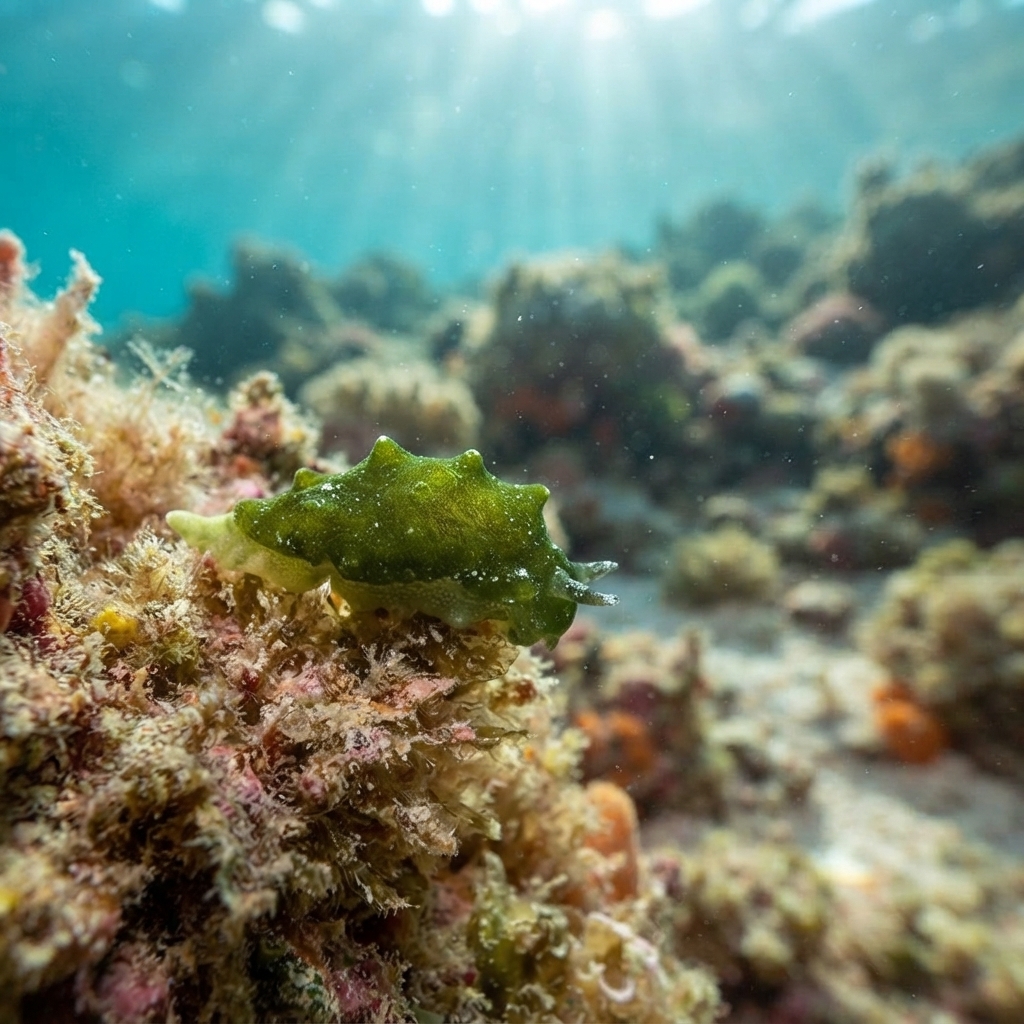
Bosellia mimetica
Uncommon sacoglossan logged shallow off the French Riviera and Guadeloupe, comfortable from 16 to 29 C year-round.
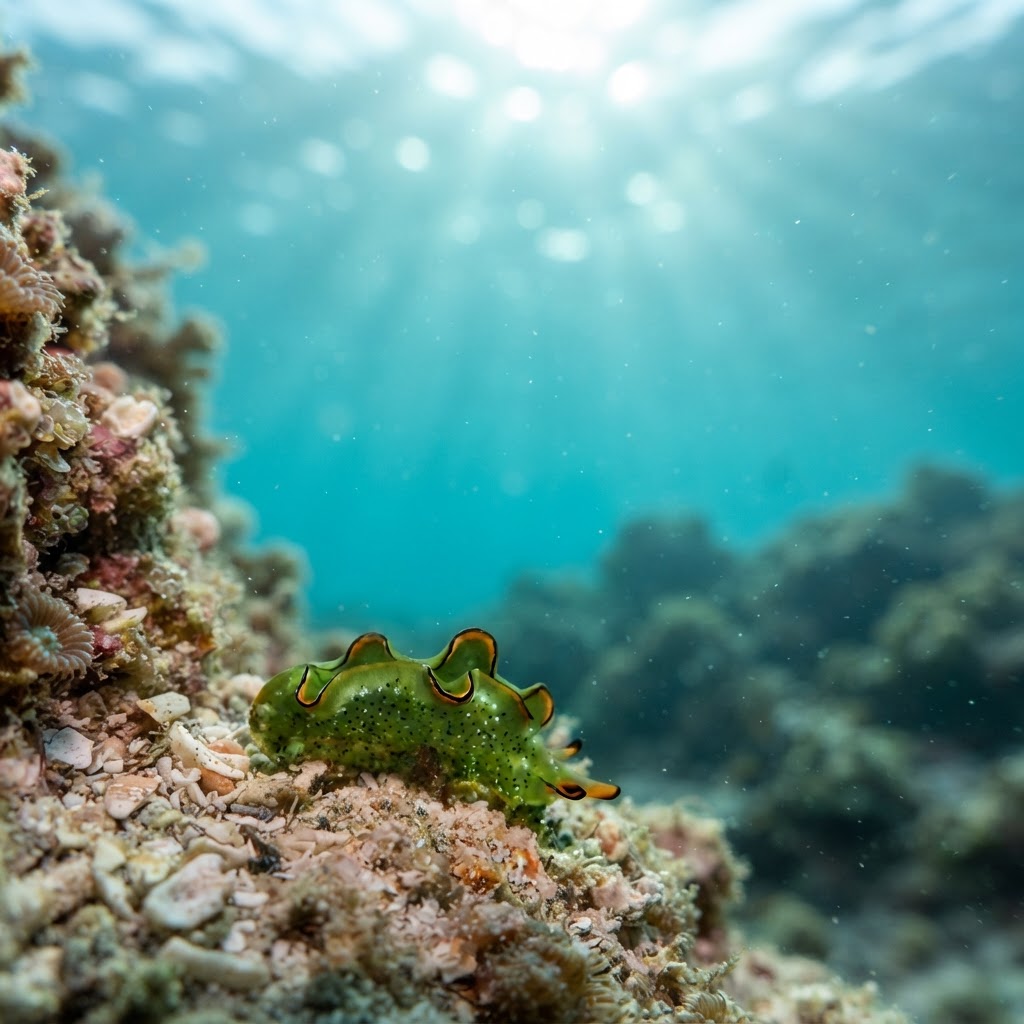
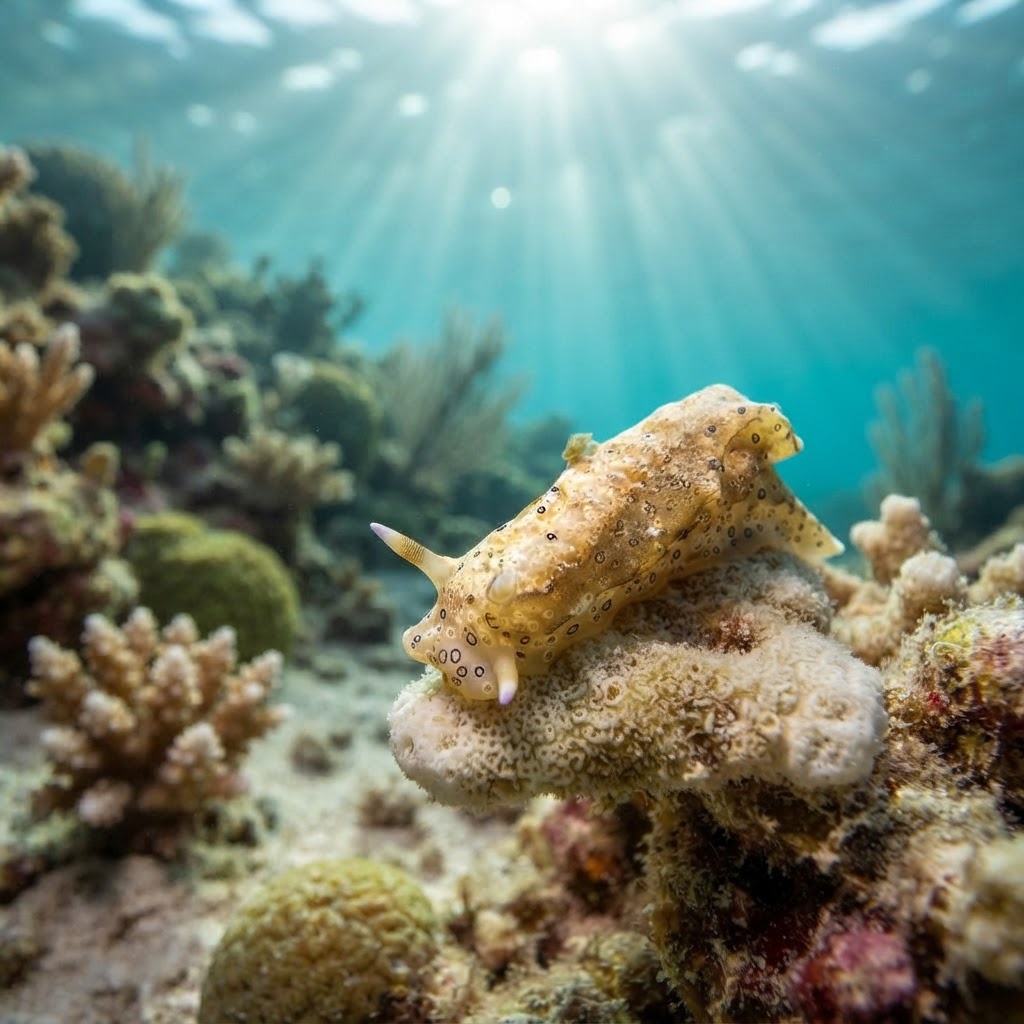
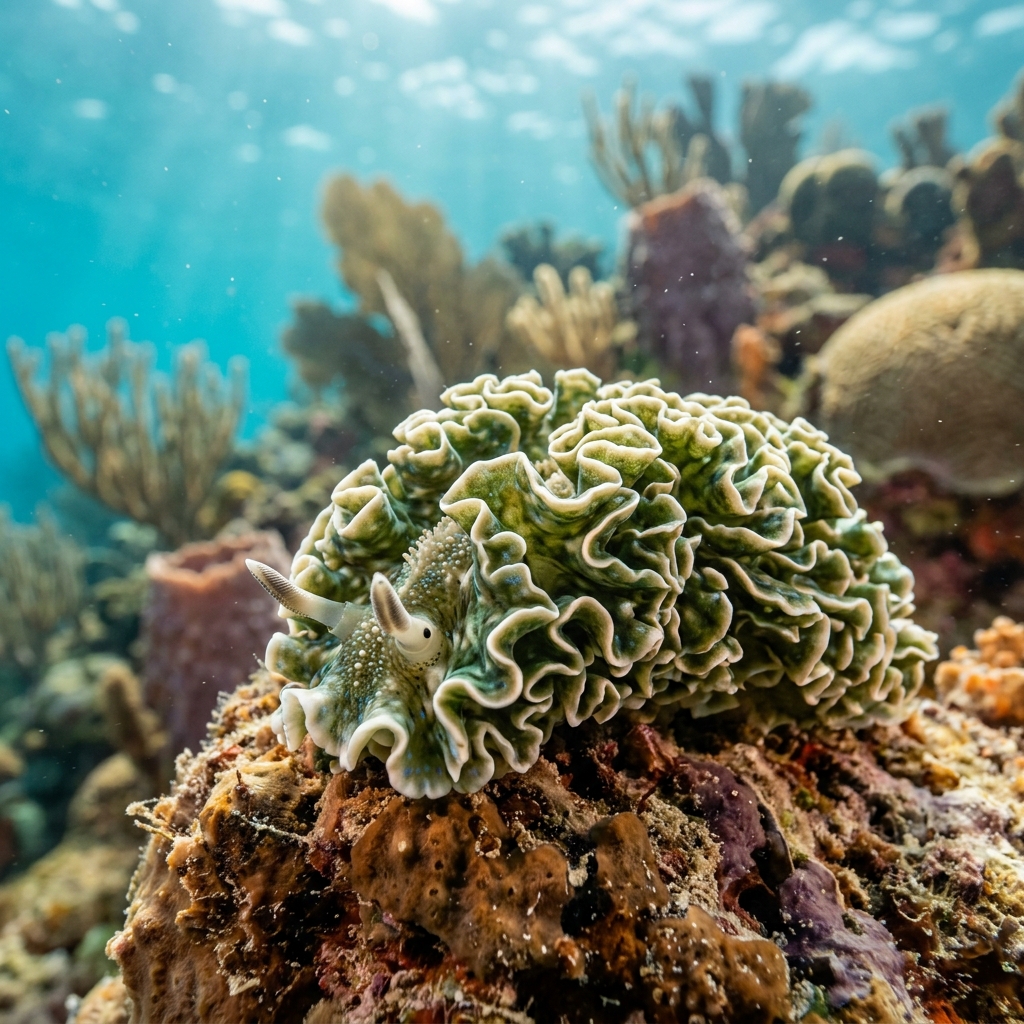
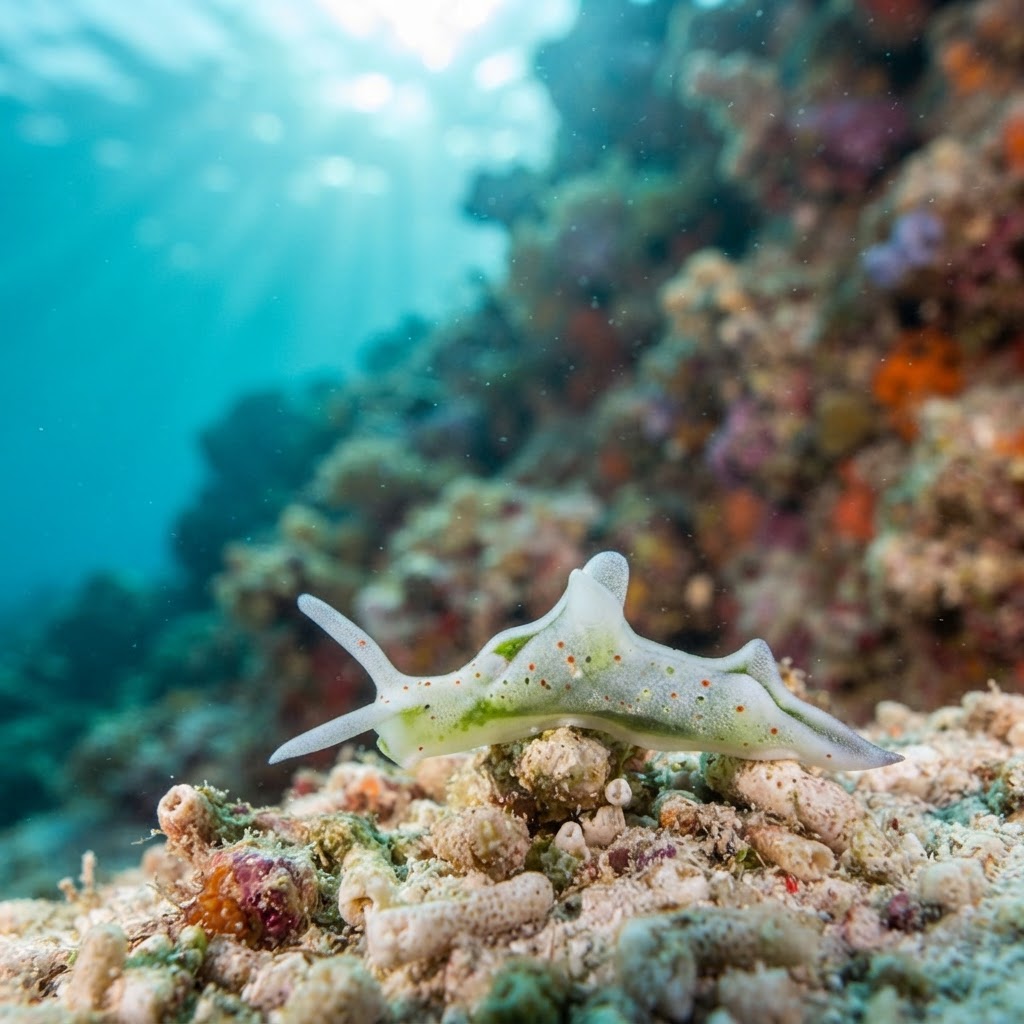
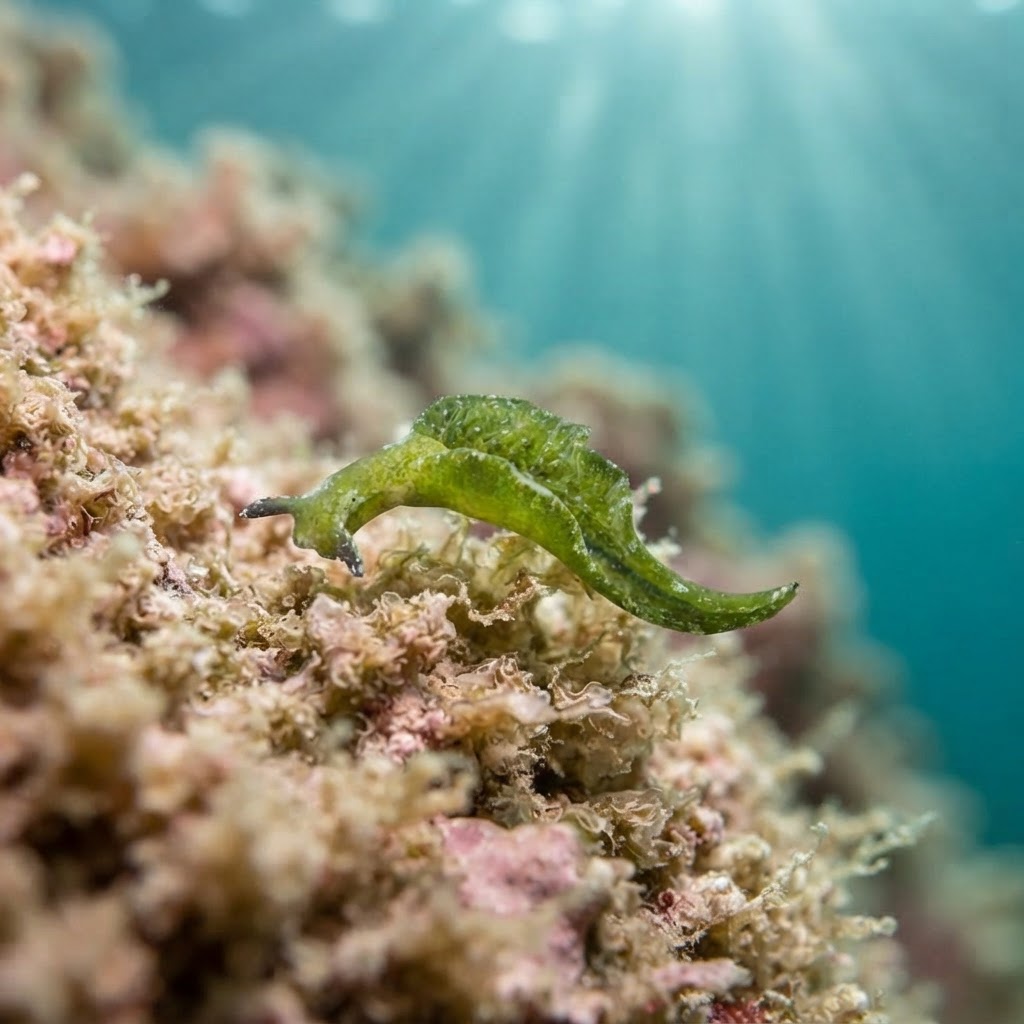
A small, flattened sea slug with a leaf-shaped body that blends into the algae it feeds on, usually shades of green or brown with a mottled, almost translucent look along the edges. It lacks the frilly external gills of true nudibranchs, sitting low and still against algal turf rather than standing out in the open. Most sightings are in shallow water at only a couple of metres, so look at the base of rocky walls and algae mats rather than out on open reef.
Found grazing slowly on algae in shallow, sheltered spots, rarely more than a couple of metres down, where it stays close to the substrate and barely moves when approached. It relies on camouflage rather than flight, so divers who slow down and scan algal turf closely tend to spot it while faster swimmers miss it entirely. Best looked for during the day when light lets the mottled body pattern stand out against the algae.
Like other sacoglossans, it feeds on algae and can retain functioning chloroplasts from its food inside its own tissue, effectively running on a bit of borrowed photosynthesis alongside grazing.
Sightings show no clear seasonal pattern, and the species tolerates a wide range from 15.7 to 28.7 C, so it turns up year-round wherever its algae habitat grows. Shallow snorkel and check-dive depths mean it is as findable in winter as in summer.
Reef neighbours a diver could mistake it for. Use the identification notes above to tell them apart.
Most reliably logged along the French Riviera and Provence coast, with a second strong cluster on Grande-Terre in Guadeloupe and a smaller showing in Occitanie. France accounts for the bulk of sightings, making the Mediterranean coast the strongest bet, with Caribbean divers picking it up around Guadeloupe.
Mapping where Nudibranch is logged…
It is most reliably found along the French Riviera and Provence coast, with another solid cluster on Grande-Terre in Guadeloupe. Smaller numbers also turn up in Occitanie, France.
There is no strong seasonal pattern in the sightings, and it tolerates temperatures from about 16 to 29 C, so it is findable year-round in shallow water wherever suitable algae grows.
Look for a small, flattened, leaf-shaped slug in mottled green or brown tones sitting low on algae in very shallow water. It lacks obvious external gill plumes, relying on camouflage rather than bright colour to stay hidden.
Exact size data is not available, but like most sacoglossan sea slugs it is small, generally only a few centimetres long, and easy to overlook against algae.
It belongs to a group of sea slugs that can hold onto chloroplasts from the algae they eat and keep them working inside their own tissue for a time, giving them a form of borrowed photosynthesis alongside normal grazing.
No, it poses no threat to divers. It is a small, slow-moving algae grazer with no sting or bite of concern.
Site and sighting data is aggregated from diver logs, iNaturalist and GBIF. For taxonomy and conservation status:
Elysia Timida
573 sites