Pugettia producta
Spot the Northern Kelp Crab in Pacific Coast kelp forests year-round. Here's how to recognise it and where divers log it most along the US and Canadian coasts.
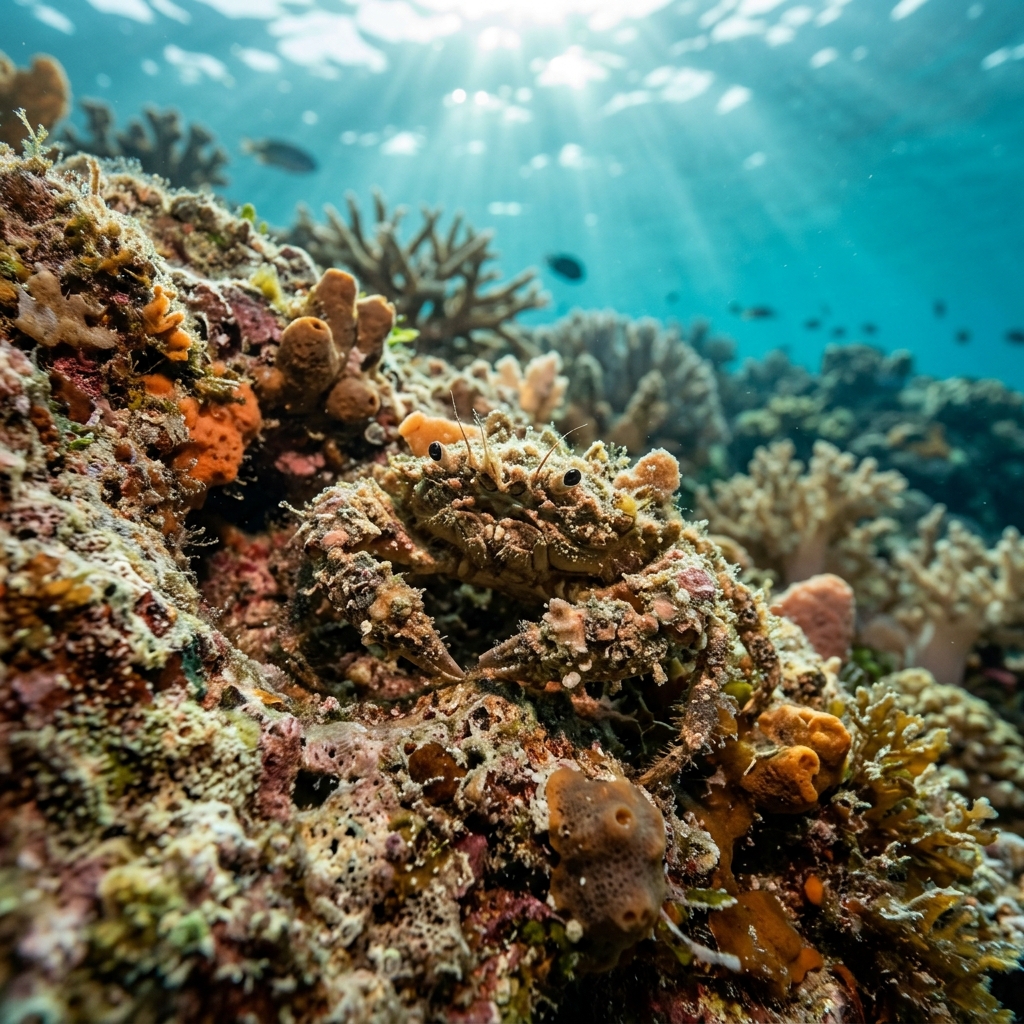
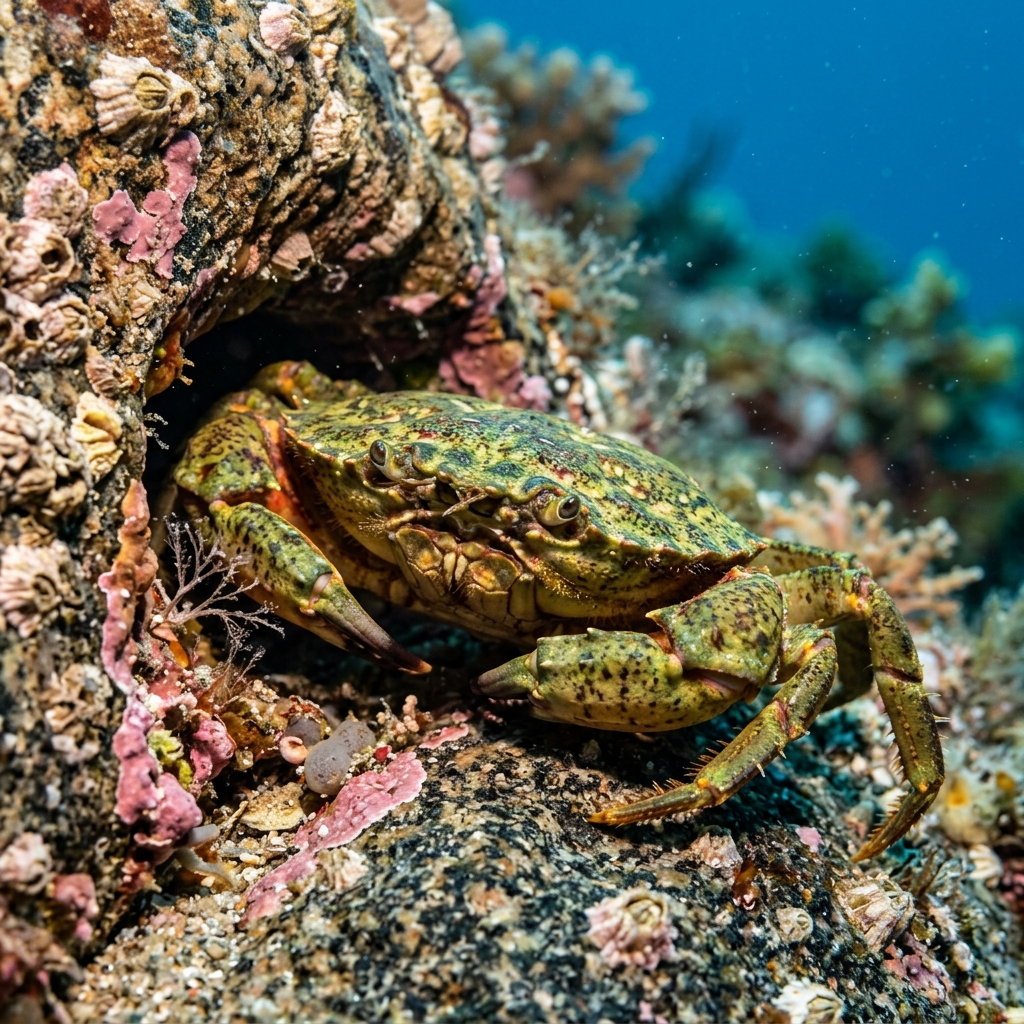
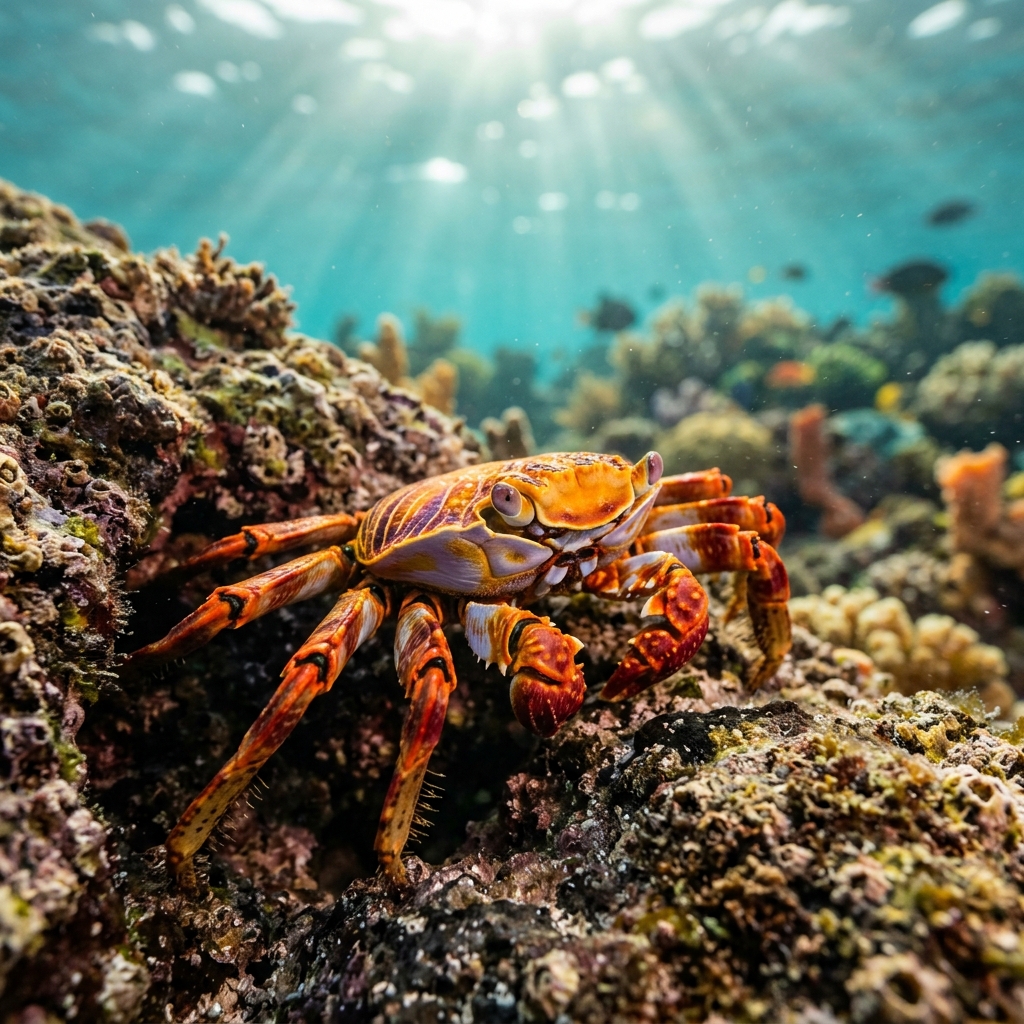
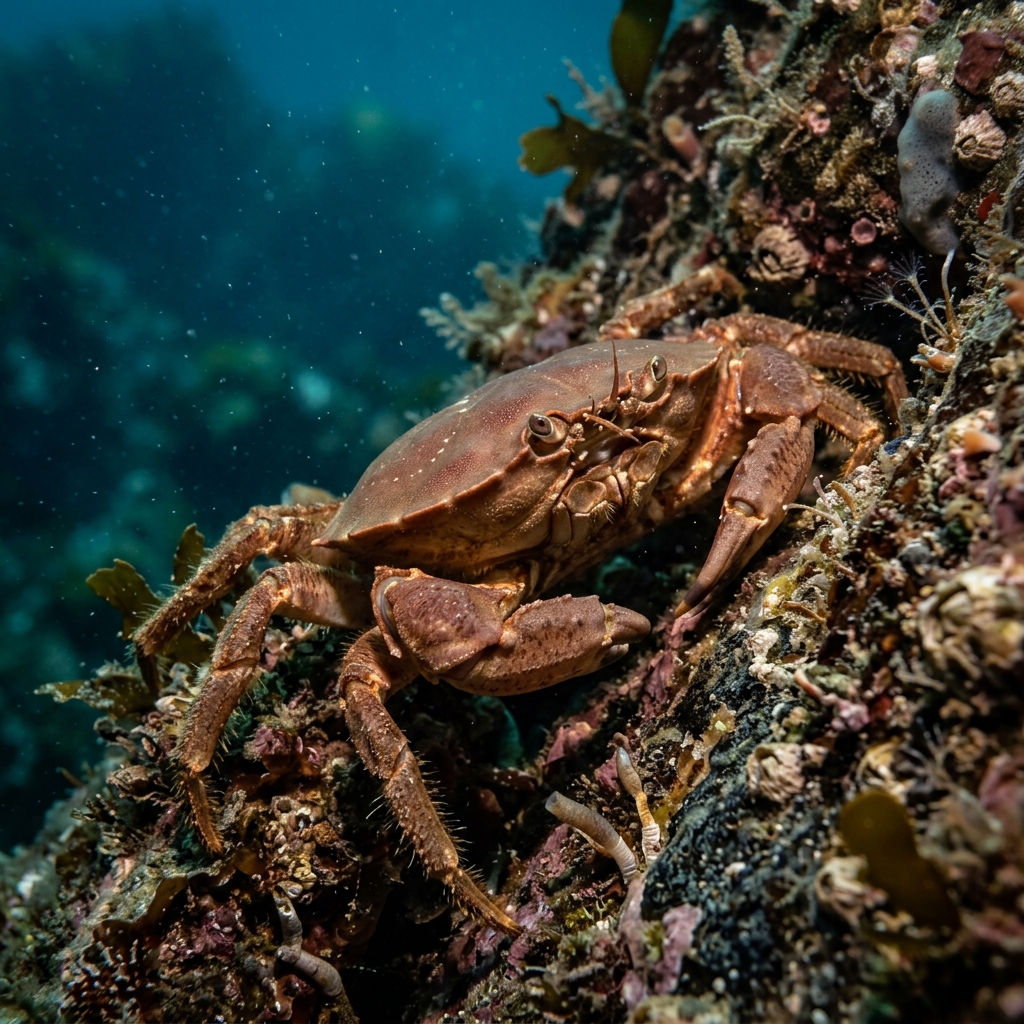
A compact, roughly 6 cm crab with a smooth, shield-shaped carapace (the hard upper shell) that ranges from olive-brown to deep red-brown, blending almost perfectly into kelp holdfasts and fronds. The legs are slender and spiny, and the claws are noticeably elongated relative to the body size. Look for the slightly pointed, triangular front edge of the shell, which separates it from rounder intertidal crabs you might otherwise mistake it for. At depth the reddish tones can appear darker, so focus on body shape and the kelp habitat it clings to.
When you spot one it is almost always motionless among kelp blades or clinging to a holdfast, relying on its colouring to stay invisible rather than making a run for it. If you move slowly and avoid touching the kelp around it, the crab will typically stay put and give you a relaxed, close look. Direct contact or sudden movement will send it shuffling deeper into the canopy, so the best approach is to hover still and let your eyes adjust to picking out that distinctive shell shape.
Northern kelp crabs are closely tied to kelp as both habitat and food source, grazing directly on kelp tissue and helping cycle nutrients through the canopy ecosystem. This dependence means their presence is a useful indicator of kelp-forest health at a given site.
Sightings are recorded year-round with no concentrated season, which makes sense given its cold-water niche of roughly 12 to 16 °C, temperatures that persist along the Pacific Coast in all months. You can plan a trip any time of year without missing a seasonal window.
Reef neighbours a diver could mistake it for. Use the identification notes above to tell them apart.
The northern kelp crab is logged most across the Pacific Coast of the United States, which accounts for the overwhelming majority of recorded sightings, and along the British Columbia coast of Canada, where it is also well documented. A small number of records exist on Mexico's Pacific Coast, making this essentially a North American Pacific-coast specialist. Rocky reef and kelp-forest dive sites from Alaska to Baja are the places to look.
Mapping where Northern Kelp Crab is logged…
The vast majority of logged sightings come from the Pacific Coast of the United States and the British Columbia coast of Canada. Rocky reef and kelp-forest sites throughout this range, from Alaska south through Washington, Oregon, and California, are your best bet. A handful of records also exist on Mexico's Pacific Coast.
Year-round. Sighting records show no concentrated season, and the species' preferred water temperature of roughly 12 to 16 °C is stable along the Pacific Coast throughout the year. There is no need to plan around a specific season.
Key features are the smooth, shield-shaped carapace with a slightly pointed front edge, olive-brown to deep red-brown colouring, and noticeably long, spiny legs. It sits almost motionless on kelp fronds or holdfasts, which is usually the first thing that catches the eye. Its compact size, around 6 cm across, helps separate it from larger reef crabs sharing the same habitat.
Adults typically reach around 6 cm across the carapace. That is roughly the diameter of a golf ball, which makes them easy to overlook when they are tucked into kelp. Juveniles are considerably smaller and can look almost translucent green against young kelp.
No. They are not considered dangerous to divers in any way. If cornered they might raise their claws as a warning, but they much prefer to stay still and rely on camouflage. Simply avoid grabbing or cornering them and there is nothing to be concerned about.
They feed primarily on kelp itself, grazing on the tissue of the fronds they inhabit. This tight link between the crab and its food source means you will almost always find them in or very close to kelp canopy, rarely far out on open rock.
Site and sighting data is aggregated from diver logs, iNaturalist and GBIF. For taxonomy and conservation status:
European Green Crab
2,469 sites