Gobiesox maeandricus
Palm-sized and rock-hugging, this clingfish is a reliable find in British Columbia's cold intertidal and shallow reefs year-round.
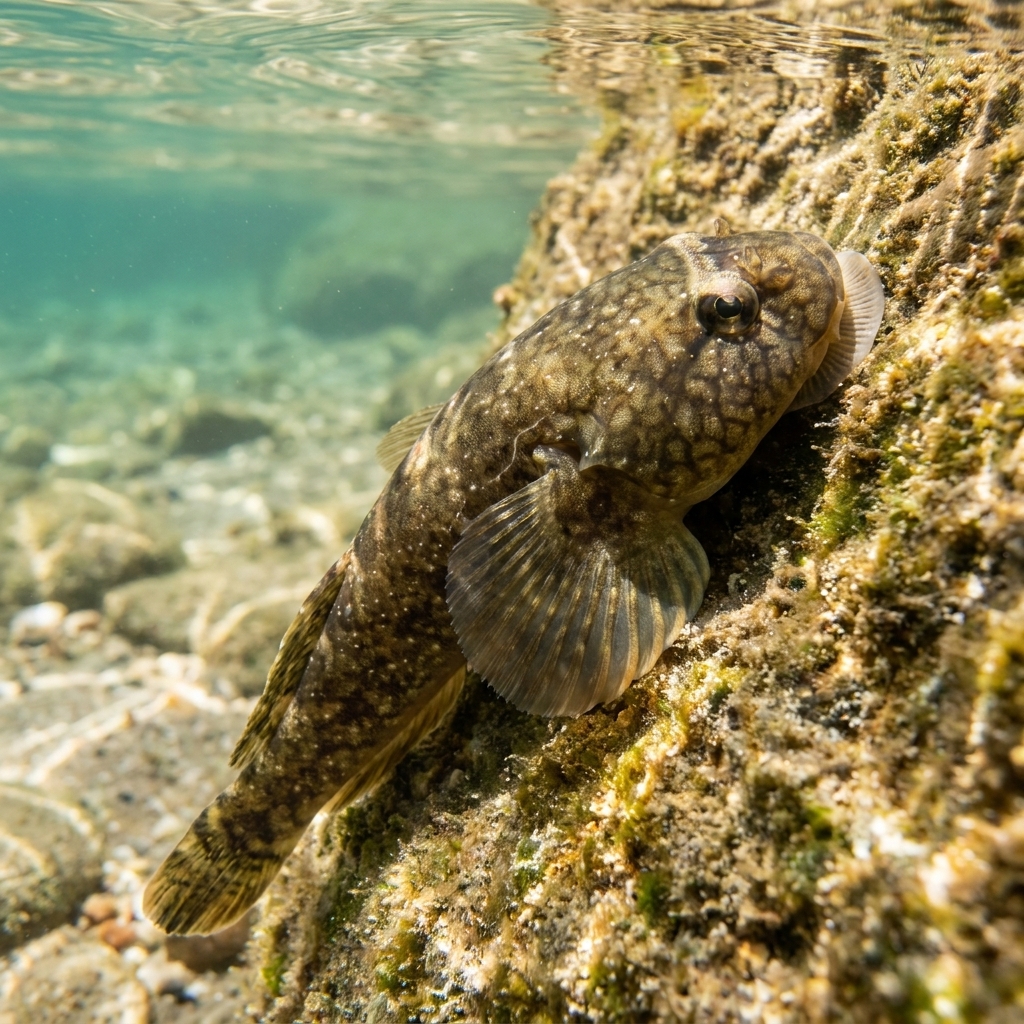
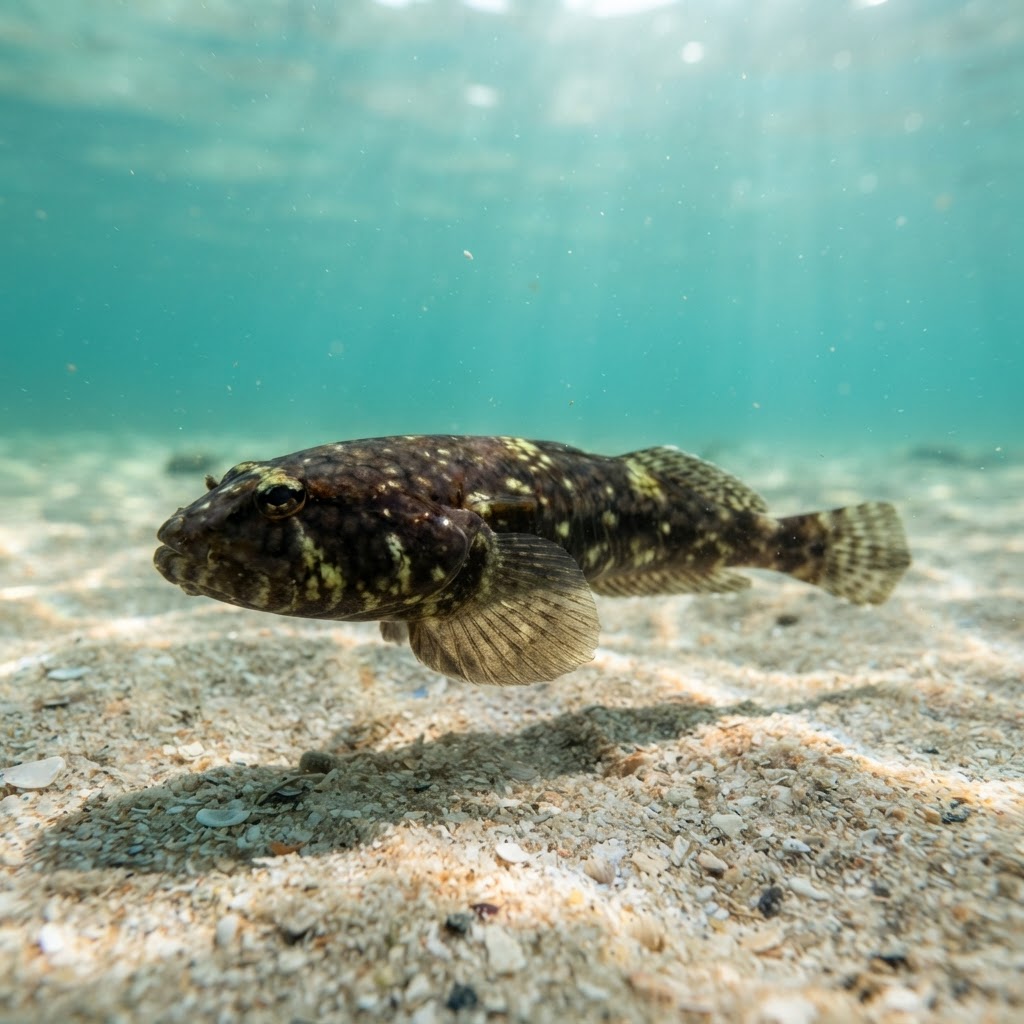
A small, flattened fish rarely over 11 cm, with a broad head that tapers to a slim tail and skin mottled in browns, greens or reddish tones that match the rock it is sitting on. The giveaway is the sucker disc on its underside, formed from fused pelvic and pectoral fins, which you will notice if it is clamped to a boulder rather than swimming freely. It has no scales, giving the skin a smooth, almost slippery look, and it tends to sit dead still rather than dart away.
Look under loose rocks and in shallow crevices rather than out in open water, since this fish spends most of its time clamped motionless to a rock surface using its sucker disc. It tolerates a close look from a diver or snorkeller far better than most small fish, since its main defence is grip rather than flight, but it will hold on tighter or shuffle deeper into a crevice if disturbed. Most logs describe it as uncommon to rare at any given site, so patient rock-turning (done gently and returned to place) is usually what turns up a sighting.
That sucker disc is strong enough to let it hold fast against wave surge in the intertidal zone, and it is also thought to help the fish grip and manipulate hard-shelled prey like limpets while feeding.
Sightings show no strong seasonal pattern, and with a water-temperature niche of roughly 9 to 17 C it is present in its shallow rocky habitat year-round. Treat it as a fish you can look for on any dive in season for the region rather than one tied to a particular month.
Reef neighbours a diver could mistake it for. Use the identification notes above to tell them apart.
This is a cold-water species most commonly logged in British Columbia, Canada, with a strong secondary presence in the Pacific Northwest of the United States and a smaller scatter of sightings down into California. Divers and snorkellers find it tucked under rocks in shallow water rather than out on open reef, so intertidal and shallow subtidal sites in these regions give the best odds.
Mapping where Northern Clingfish is logged…
British Columbia, Canada is the strongest region for sightings, followed by the Pacific Northwest and California in the United States. Look in shallow, rocky sites rather than deeper reef.
There is no clear seasonal pattern in sightings, and the species sits comfortably in water from about 9 to 17 C, so it can turn up on a shallow rocky dive at any time of year in its range.
Look for a small, flattened, mottled brown or greenish fish clamped motionless to a rock rather than swimming in open water. The clearest confirmation is the sucker-like disc on its underside if you can see it lift or reposition.
They stay small, typically reaching around 11 cm as adults, which keeps them easy to overlook against a rocky, weedy background.
Its pelvic and pectoral fins are fused into a suction disc strong enough to keep it anchored to rock through heavy wave surge, and likely helps it pry loose prey like limpets.
Site and sighting data is aggregated from diver logs, iNaturalist and GBIF. For taxonomy and conservation status:
Soldierfish
3,612 sites