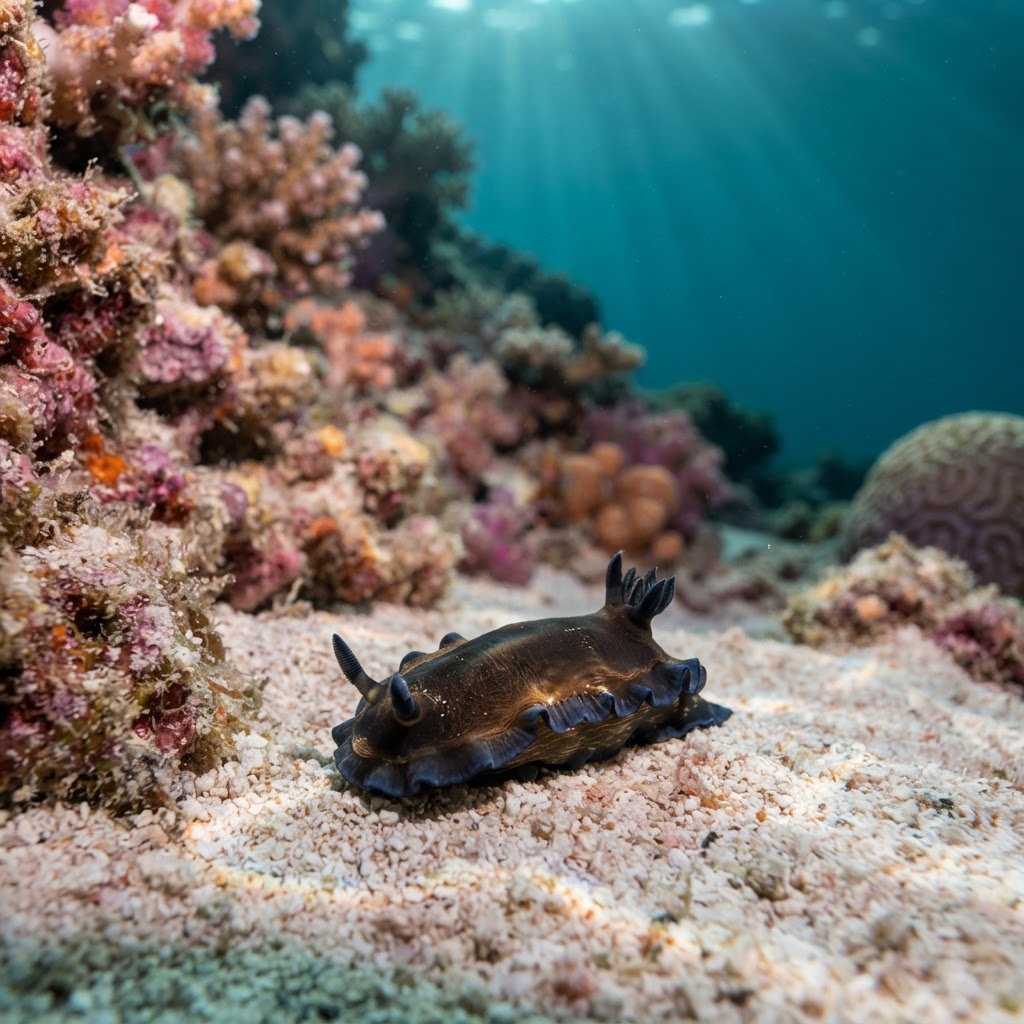
Dendrodoris krebsii
Uncommon on Florida and Guadeloupe reefs, this 2cm dorid hides in plain sight on warm Caribbean and Atlantic reefs year-round.
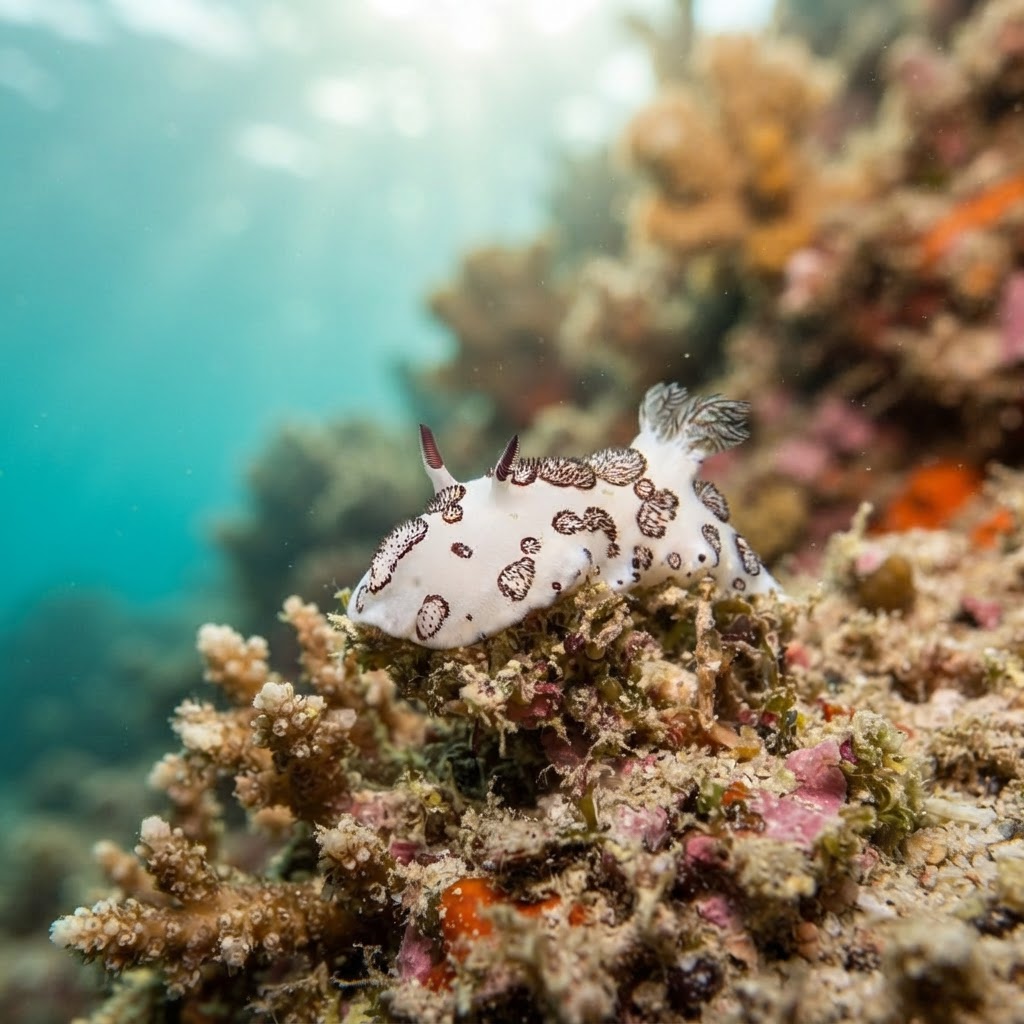
A small, velvety-bodied dorid nudibranch that rarely exceeds 2 cm, usually dark brown to black with a smooth, slightly bumpy mantle edge. It has no obvious bright spots or contrasting lines, which makes it blend easily into shaded reef nooks and algae mats. Look for the low, rounded profile and the small rhinophores (sensory tentacles) at the front, which is often the first thing that gives it away against a plain rocky or rubble background.
Divers typically find it tucked into crevices, under ledges, or moving slowly across rubble and low-profile reef during the day, often in the same uncommon-to-common range at a given site rather than in large numbers. It shows no reaction to divers beyond its usual unhurried crawl, since it has no eyes capable of spotting you and no real need to flee. Most sightings come from close, deliberate reef scanning rather than open-water encounters, since its dark, matte body does not stand out at a distance.
Like other dorid nudibranchs, it likely feeds on sponges, extracting compounds from its prey that can end up stored in its own tissue as a chemical defence against predators.
No clear seasonal pattern shows up in the sighting data, and it sits comfortably in water from about 24 to 30C, so it turns up year-round on the reefs where it lives. Plan around good visibility and calm conditions rather than a particular month.
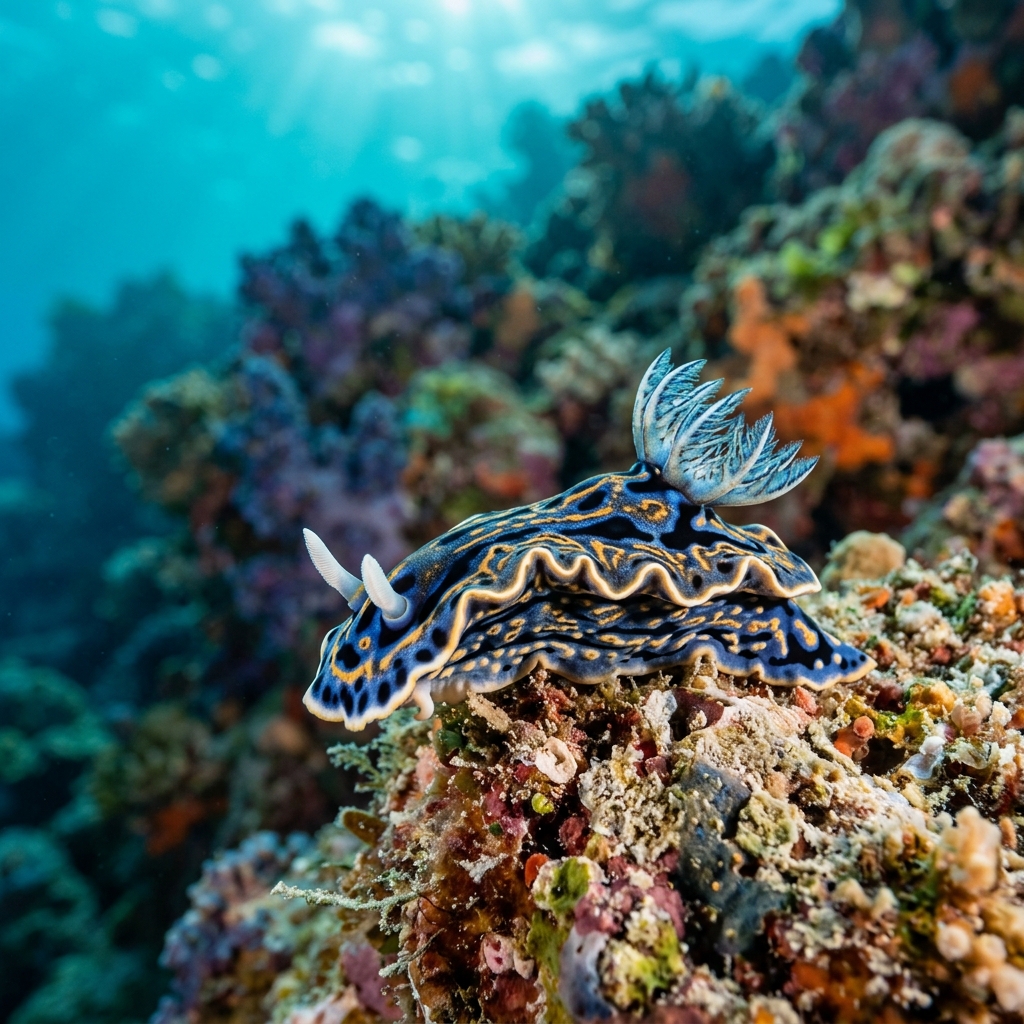
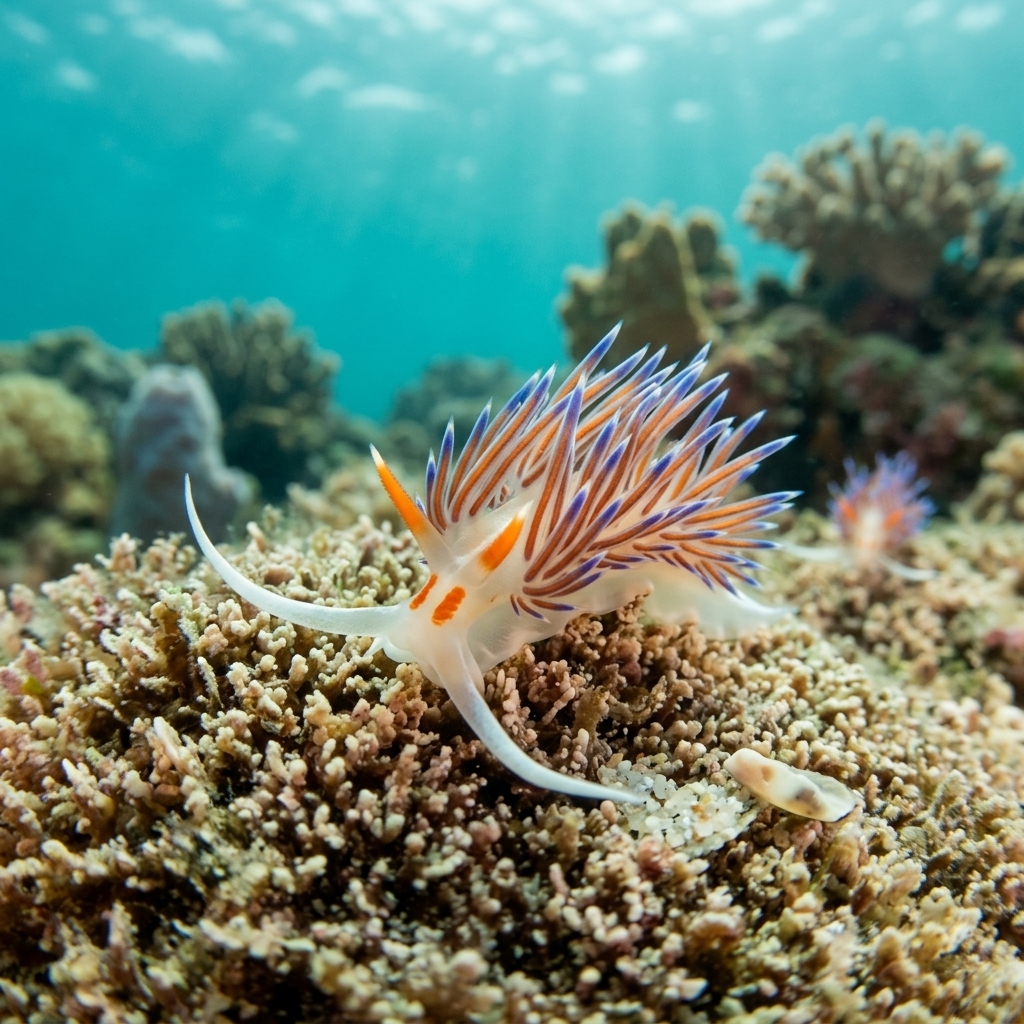
Reef neighbours a diver could mistake it for. Use the identification notes above to tell them apart.
Most commonly logged on reefs in the United States, particularly Florida, and in Guadeloupe, especially around Grande-Terre and Îles des Saintes. Bonaire's Leeward Coast holds a smaller but steady population, with additional sightings in the Dominican Republic's Bayahibe area and at Glover's Reef in Belize.
Mapping where Nero Porostome is logged…
It is most reliably seen on reefs in Florida, United States, and around Grande-Terre and Îles des Saintes in Guadeloupe. Bonaire's Leeward Coast and Bayahibe in the Dominican Republic also produce regular sightings.
There is no strong season in the sighting data, and it tolerates a wide warm-water range of roughly 24 to 30C, so it can be found on tropical reefs at any time of year.
Look for a small, dark, velvety-bodied nudibranch under 2 cm, with a smooth rounded mantle and no bold colour markings. It is usually found tucked into crevices or crawling slowly over rubble and low reef structure.
They stay small, typically around 2 cm in length, which is part of why they are easy to overlook on a reef.
As a dorid nudibranch, it likely feeds on sponges and can incorporate compounds from that diet into its own body tissue as a chemical defence against predators.
Site and sighting data is aggregated from diver logs, iNaturalist and GBIF. For taxonomy and conservation status:
Nudibranch
3,168 sites