Nembrotha mullineri
A slug logged uncommonly in the Visayas and Sabah, in warm 26-32C reef water year-round. Here's how to spot it and where.
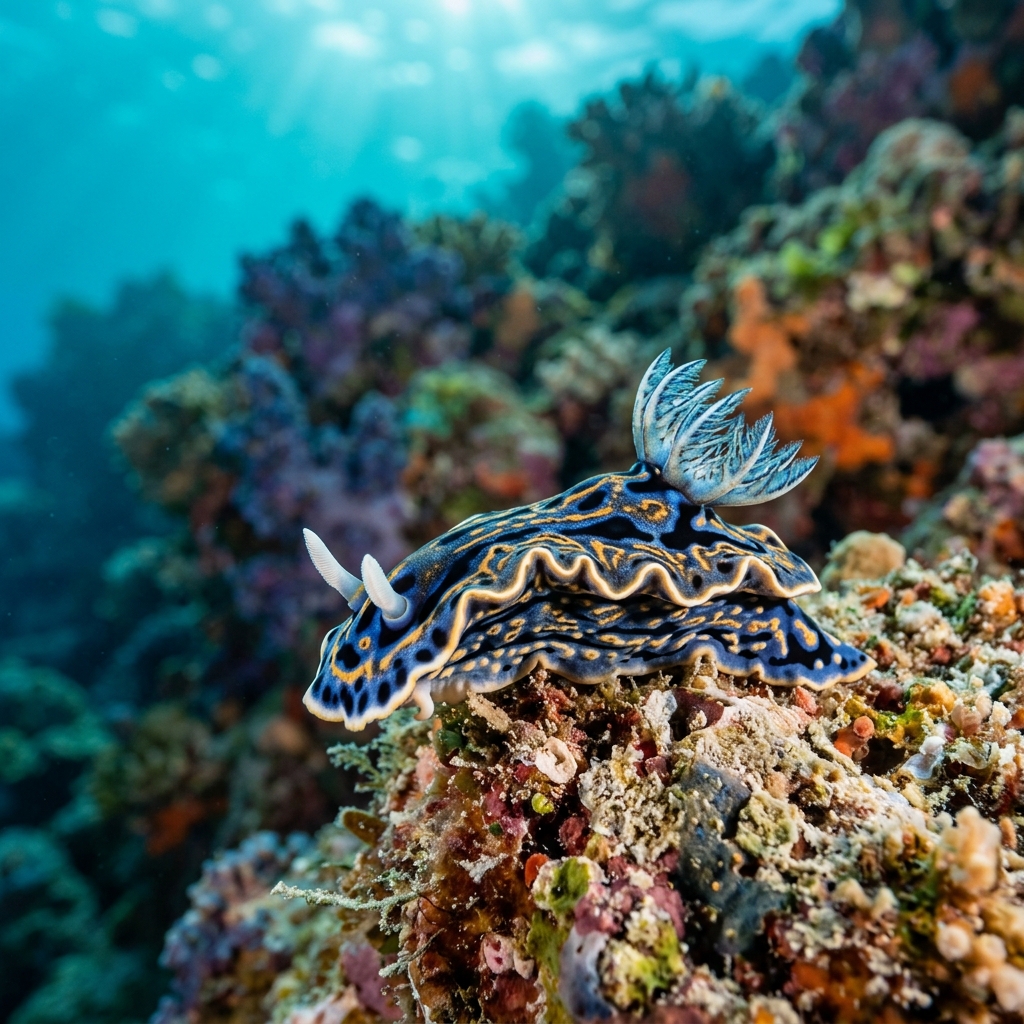
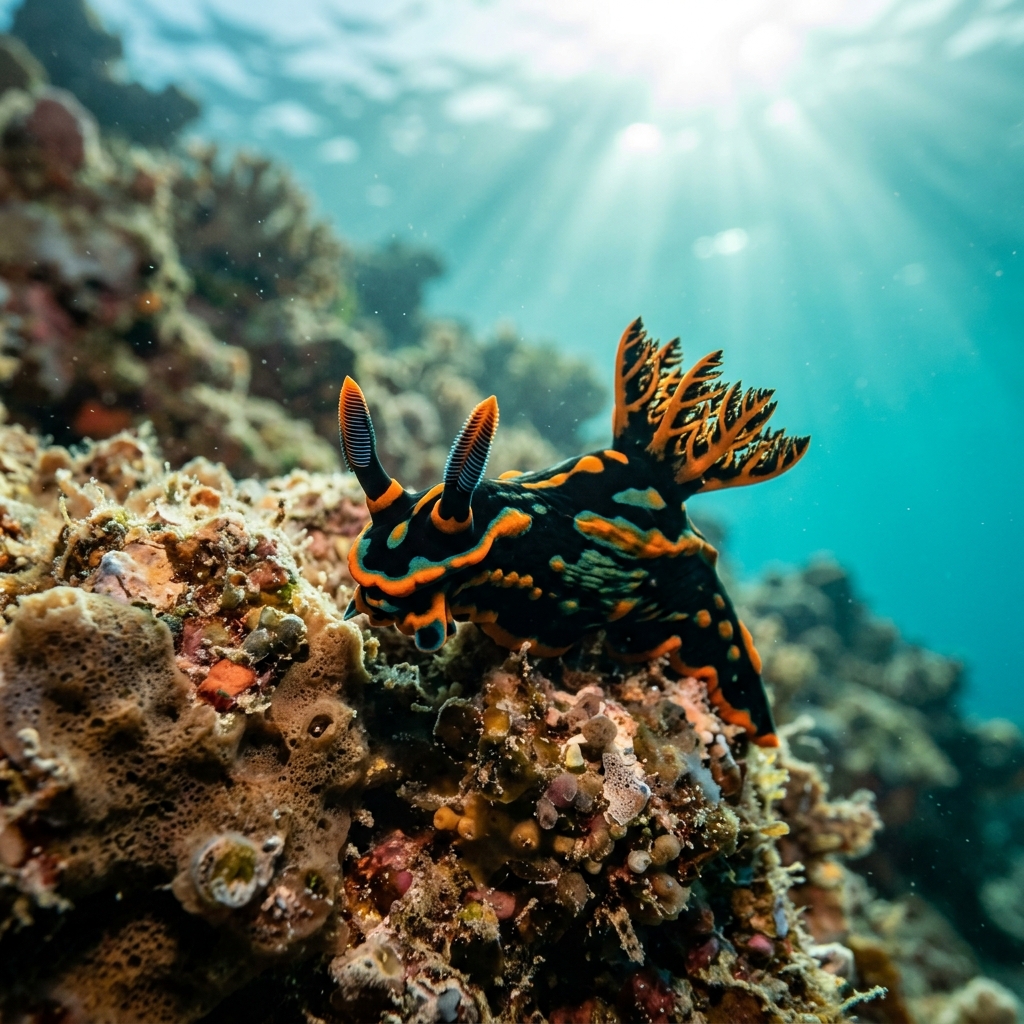
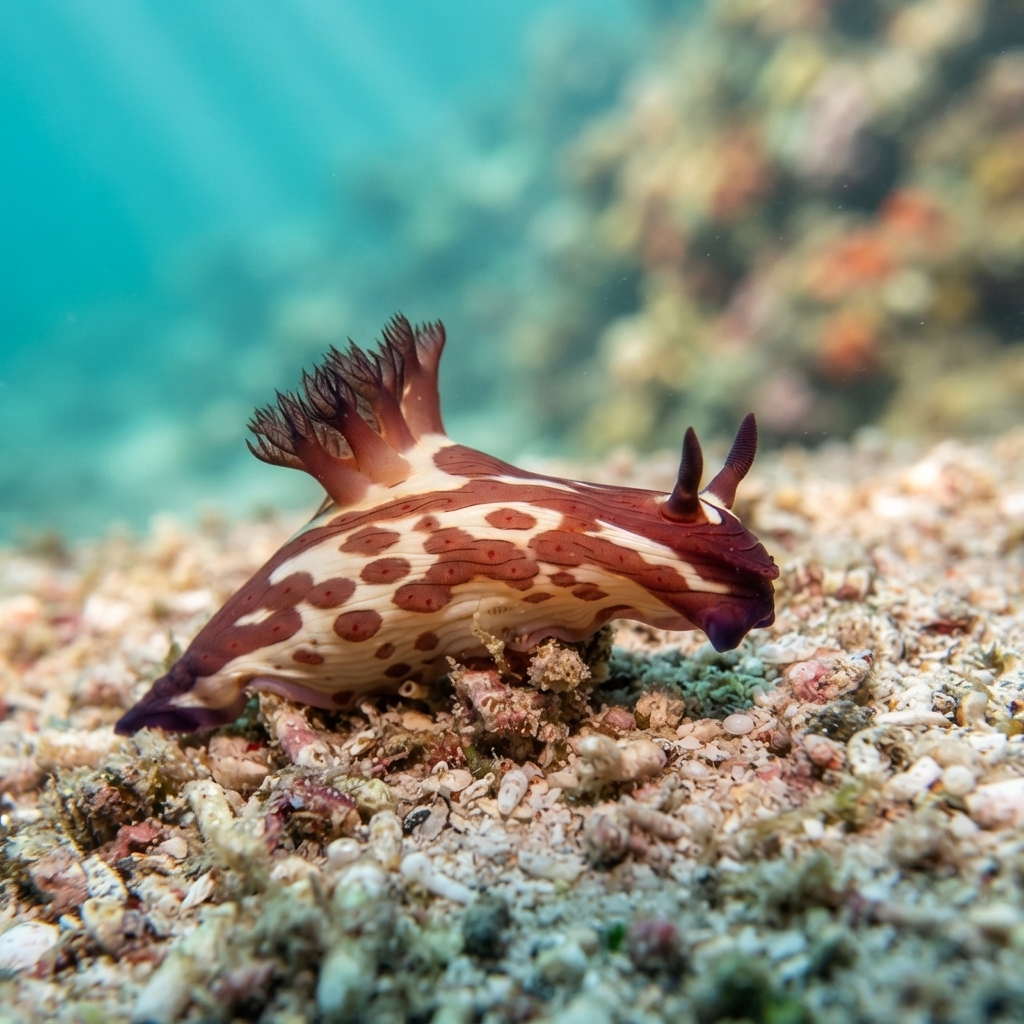
A slug-bodied nudibranch with a dark green to blackish body carrying pale speckling, and orange or yellow tips on its rhinophores (the paired sensory horns on its head) and gill cluster near the rear. It moves slowly across hard coral and sponge surfaces, usually a few centimetres long, which is typical for the genus. The contrast between the dark body and the bright orange tips is the main thing to key on underwater.
Divers find it parked on coral rubble, sponge, or algae-covered rock, grazing slowly and paying no attention to torches or cameras. It is logged as uncommon even at the sites where it does turn up, so sightings tend to come from divers doing a deliberate slow, close-focus search rather than a casual swim-by. Look during daylight dives along the same patches of reef where other nudibranchs are being spotted, since it shares habitat with them.
Like other Nembrotha species, it almost certainly feeds on tunicates (sea squirts), and its bright warning colours likely advertise chemical defences it picks up from that diet, making it unpalatable to predators.
No clear seasonal pattern shows up in the sightings, and the observed water temperature range of 25.6 to 31.6C covers typical year-round conditions on these reefs, so it is reasonable to look for it any month.
Reef neighbours a diver could mistake it for. Use the identification notes above to tell them apart.
Most reliably logged in the Philippines, especially across the Visayas and Luzon, with a smaller but consistent presence in Sabah, Malaysia. Sites in these two countries currently account for every logged sighting, so plan a Philippines-focused muck or reef dive if this species is the target.
Mapping where Nembrotha Mullineri is logged…
It is most reliably logged in the Philippines, particularly the Visayas and Luzon regions, with additional sightings in Sabah, Malaysia. These two countries account for every recorded sighting so far.
There is no detected season in the sighting data, and it has been recorded across a warm 25.6 to 31.6C range, so it is a year-round find rather than a seasonal one.
Look for a dark green to blackish body with pale speckling and orange-tipped rhinophores and gills near the rear. It is small and slow-moving, usually found on rubble or sponge-covered reef.
No. It poses no threat to divers and can be observed and photographed safely without disturbing it.
Like its close relatives, it most likely grazes on tunicates (sea squirts), a diet thought to supply the chemical compounds behind its bold warning colours.
Site and sighting data is aggregated from diver logs, iNaturalist and GBIF. For taxonomy and conservation status:
Blue Dragon
3,163 sites