Abudefduf natalensis
Bar-striped reef fish found year-round on KwaZulu-Natal reefs in 23 to 24 C water, from Ponta do Ouro to Inhambane.
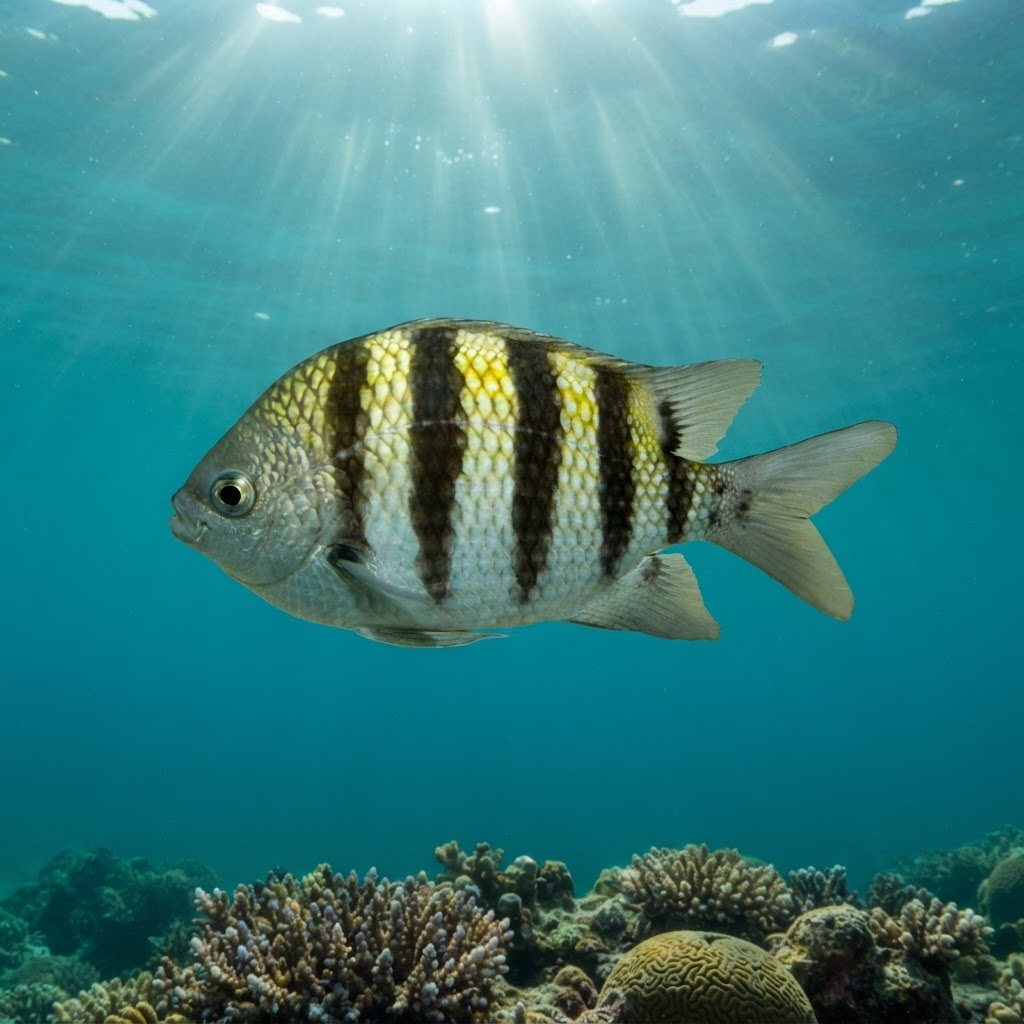
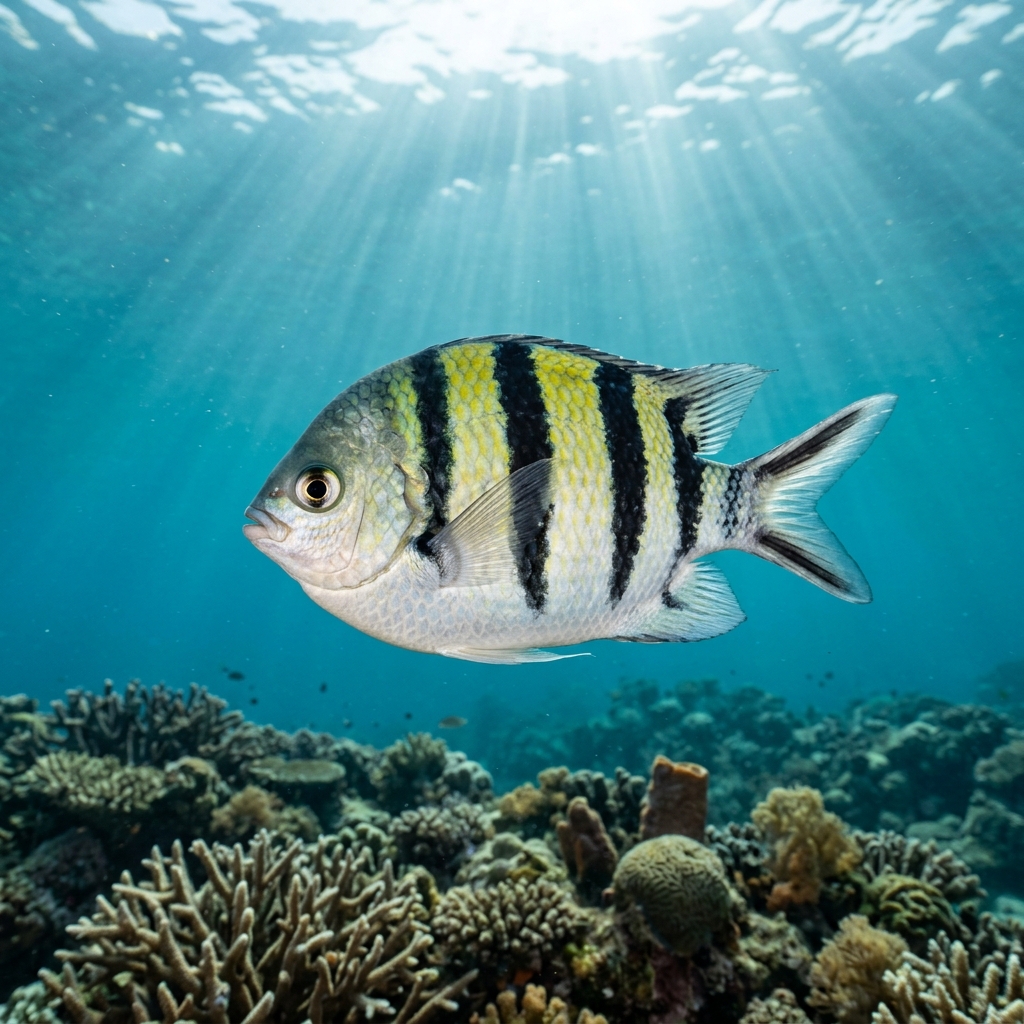
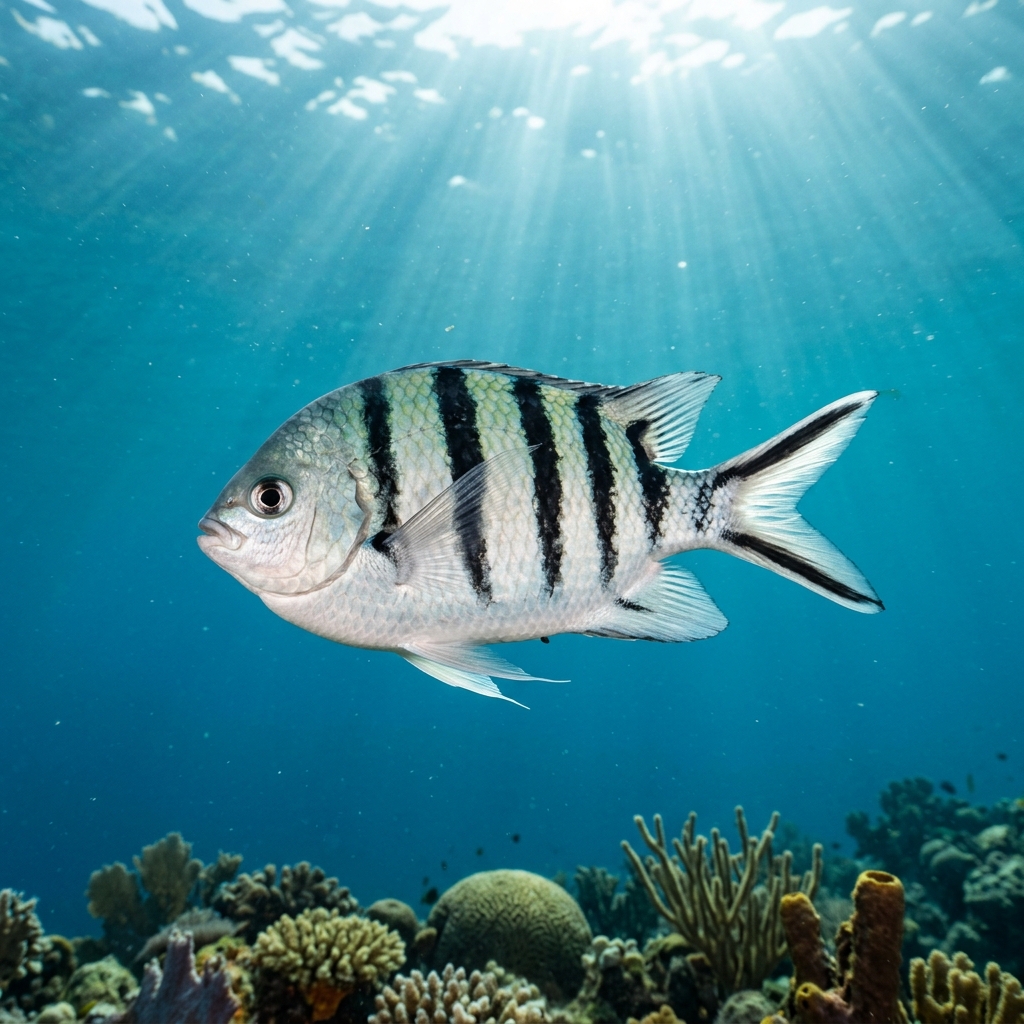
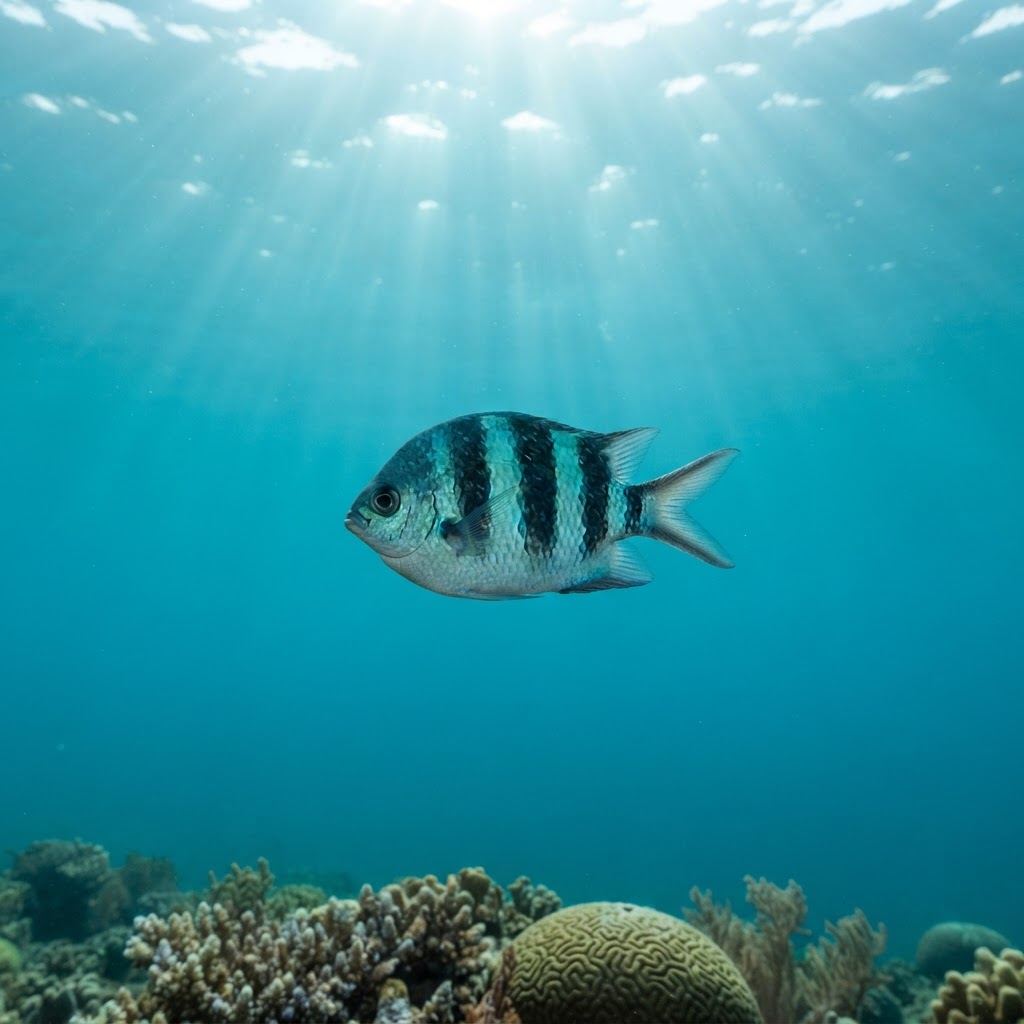
Small, deep-bodied damselfish around 12 cm, pale silvery-grey to yellowish body crossed by five or six dark vertical bars. The bars run from the back down the flanks, giving it the sergeant's-stripe look shared across the Abudefduf genus. Body shape is oval and compressed, with a small mouth and forked tail, typical of a reef damselfish that stays close to structure.
Expect to find it holding position over rocky and coral reef structure rather than roaming open water, usually in small, loose groups with other damselfish. It tends to stay close to shelter and is not particularly bold around divers, drifting back toward the reef if approached rather than holding ground. Sightings skew toward daytime reef dives, consistent with its habit of feeding on plankton and algae in the water column just above cover.
It belongs to the same genus as the far more widespread Sergeant Major, but its range is a regional specialist restricted to the southeast African coast, making a KwaZulu-Natal or southern Mozambique dive one of the few reliable places to log it.
No clear seasonal pattern shows up in sightings, and the observed water temperature range of 23.4 to 24.4 C sits comfortably within this coastline's normal spread, so it is worth looking for on any dive through the year.
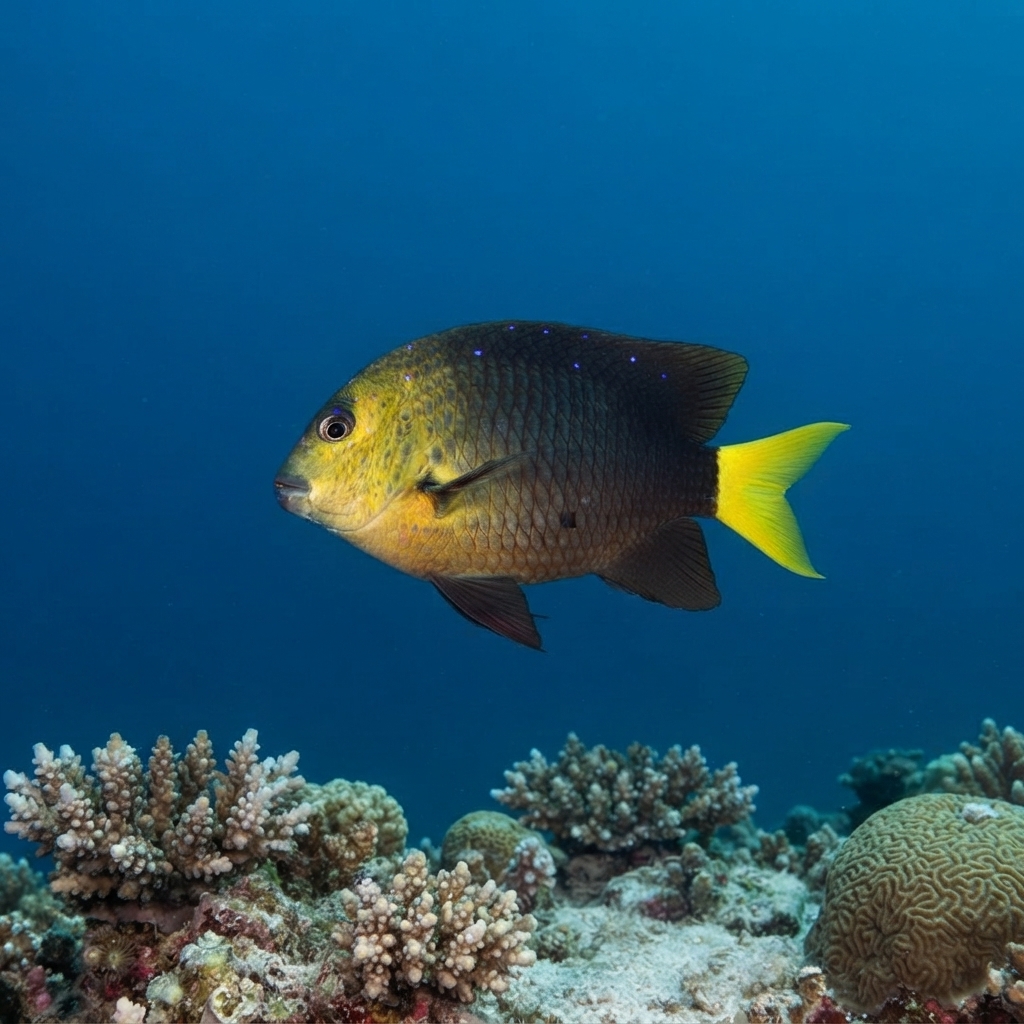
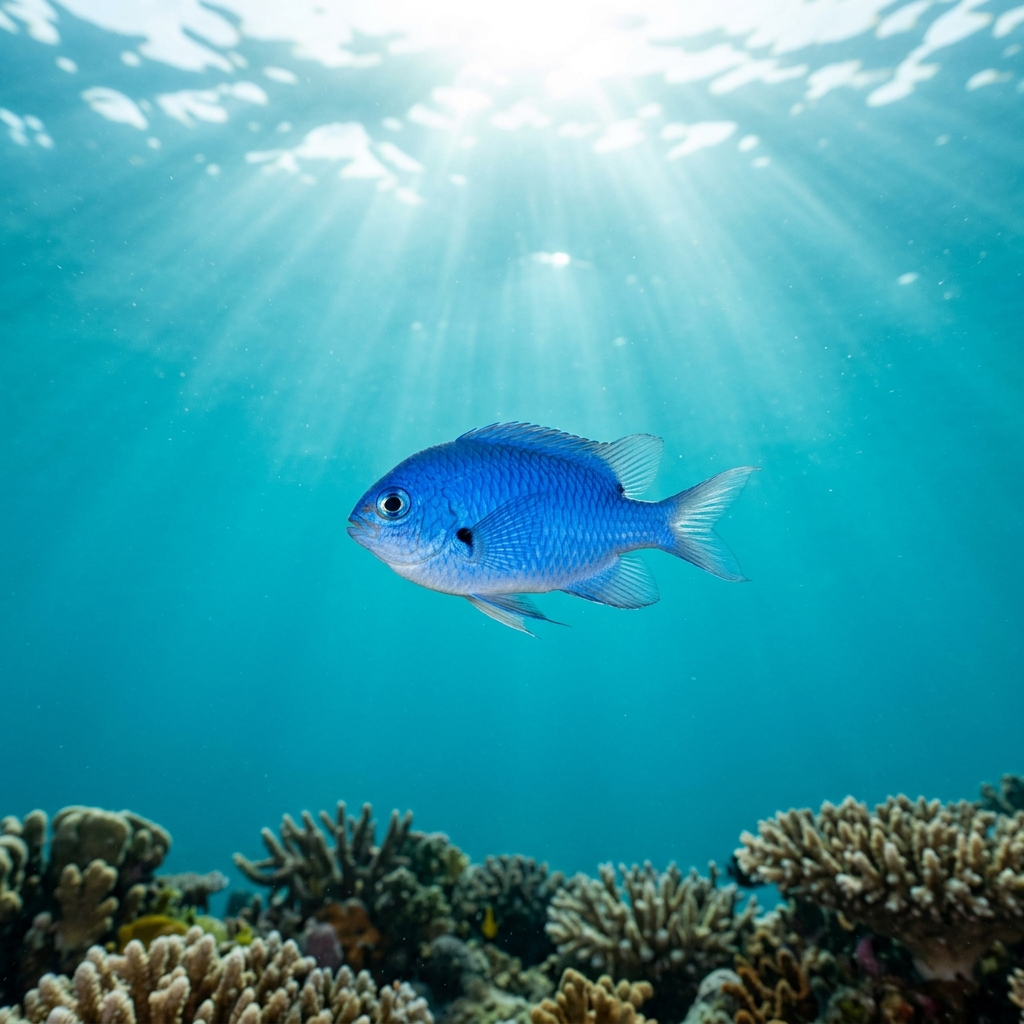
Reef neighbours a diver could mistake it for. Use the identification notes above to tell them apart.
Most reliably logged along South Africa's KwaZulu-Natal coast, which accounts for the bulk of recorded sightings, with further records from Mozambique around Ponta do Ouro and Inhambane. Within its range it turns up as an uncommon to rare find rather than a guaranteed sighting, so treat it as a nice bonus on a reef dive rather than a target species.
Mapping where Natal Sergeant is logged…
KwaZulu-Natal in South Africa is the strongest area for sightings, with additional records from Ponta do Ouro and Inhambane in Mozambique. Outside this stretch of southeast African coast it is rarely logged.
There is no strong seasonal pattern in sightings, so it can be seen year-round on KwaZulu-Natal and southern Mozambique reefs where water sits around 23 to 24 C.
Look for a small, deep-bodied fish around 12 cm with five or six dark vertical bars crossing a pale silvery to yellowish body and a forked tail. It usually sits close to reef structure rather than out in open water.
They typically reach around 12 cm, making them one of the smaller reef fish you will encounter on a dive, easy to overlook against busier reef backgrounds.
No, they pose no threat to divers and simply retreat toward reef cover if approached too closely.
Site and sighting data is aggregated from diver logs, iNaturalist and GBIF. For taxonomy and conservation status:
Dascyllus
3,697 sites