Arothron manilensis
Look for its yellow stripes on Philippine reefs like Visayas, where this puffer turns up year-round in warm 25-29C water.
Safety warning
Its skin and internal organs carry tetrodotoxin, a potent nerve toxin, so the real risk is to anyone tempted to touch or handle it rather than to divers simply observing it. Keep hands off, don't corner or provoke it into puffing up as a photo trick, and there's no meaningful danger on a normal dive.
Handle with care
Toxic if eatenGeneral first-aid guidance, not a substitute for professional medical care. In an emergency, call your local emergency number.
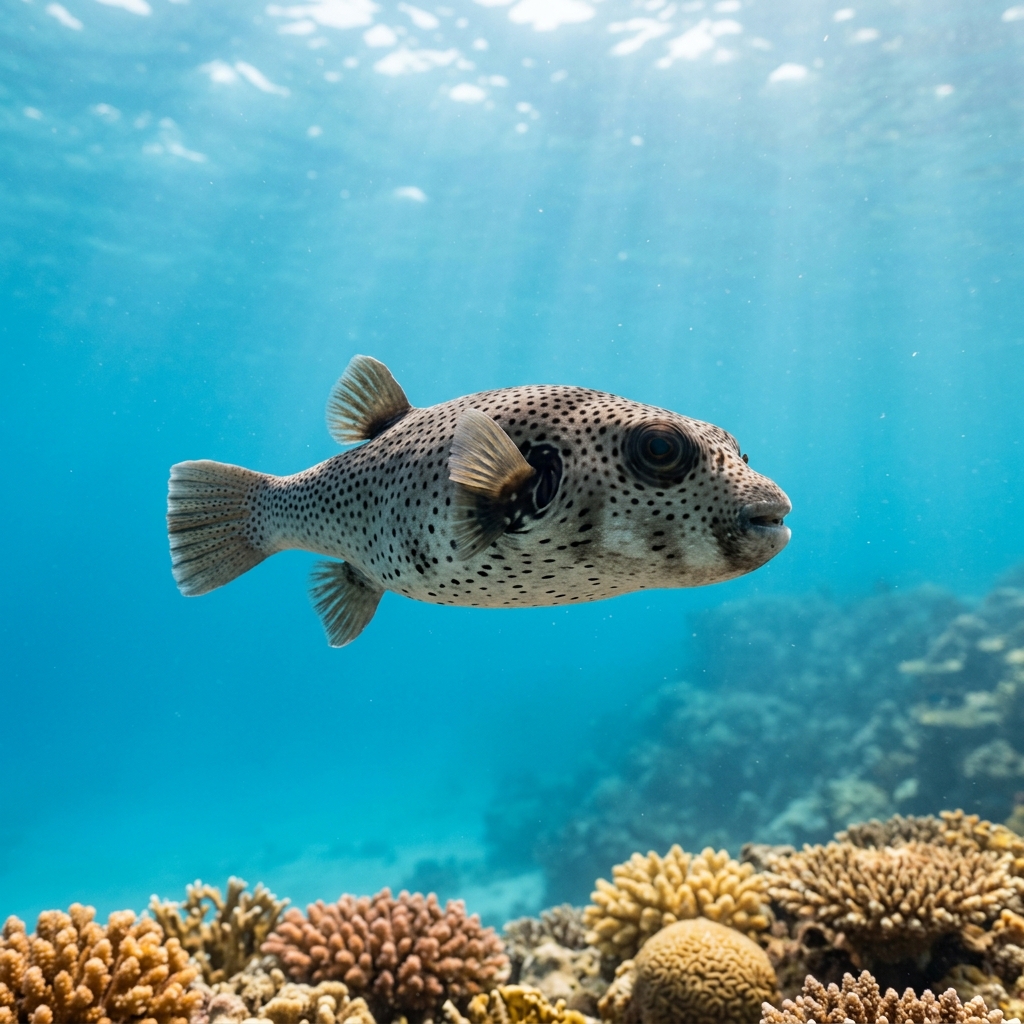
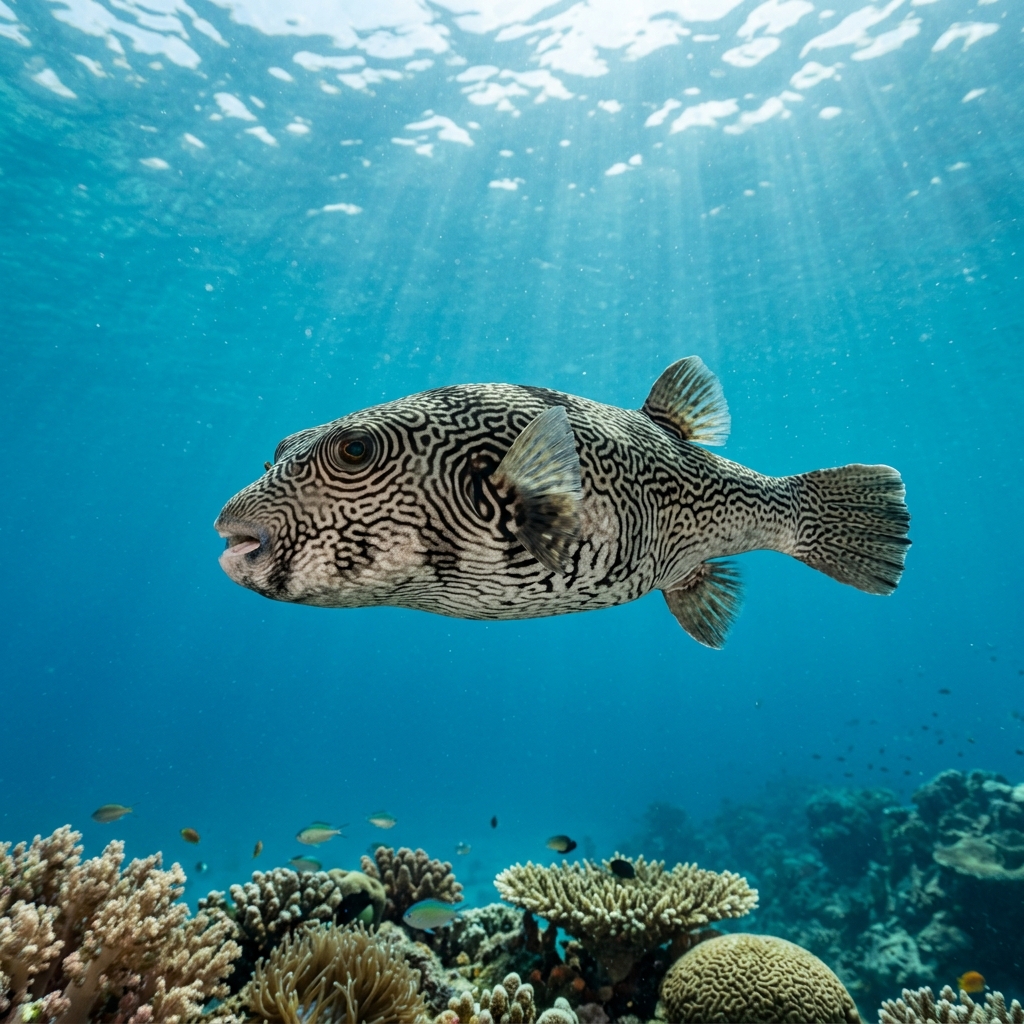
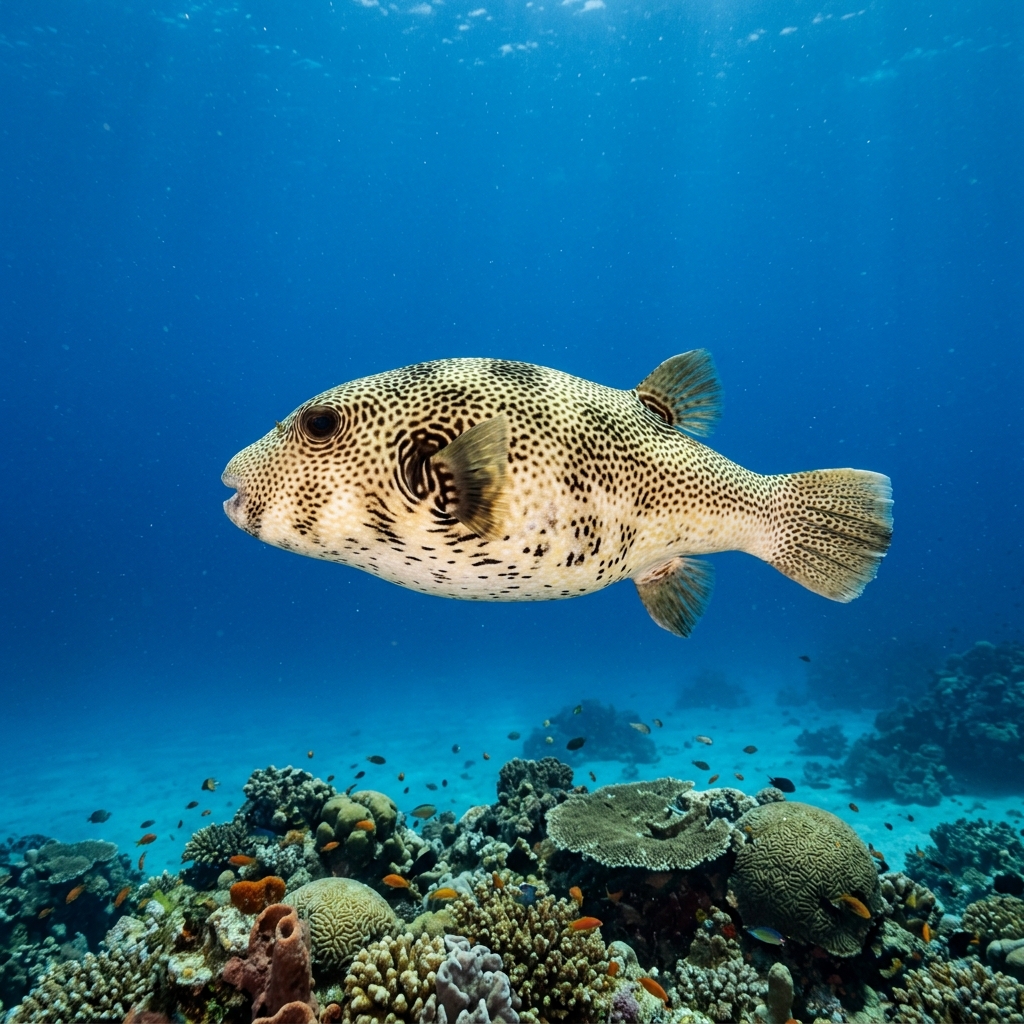
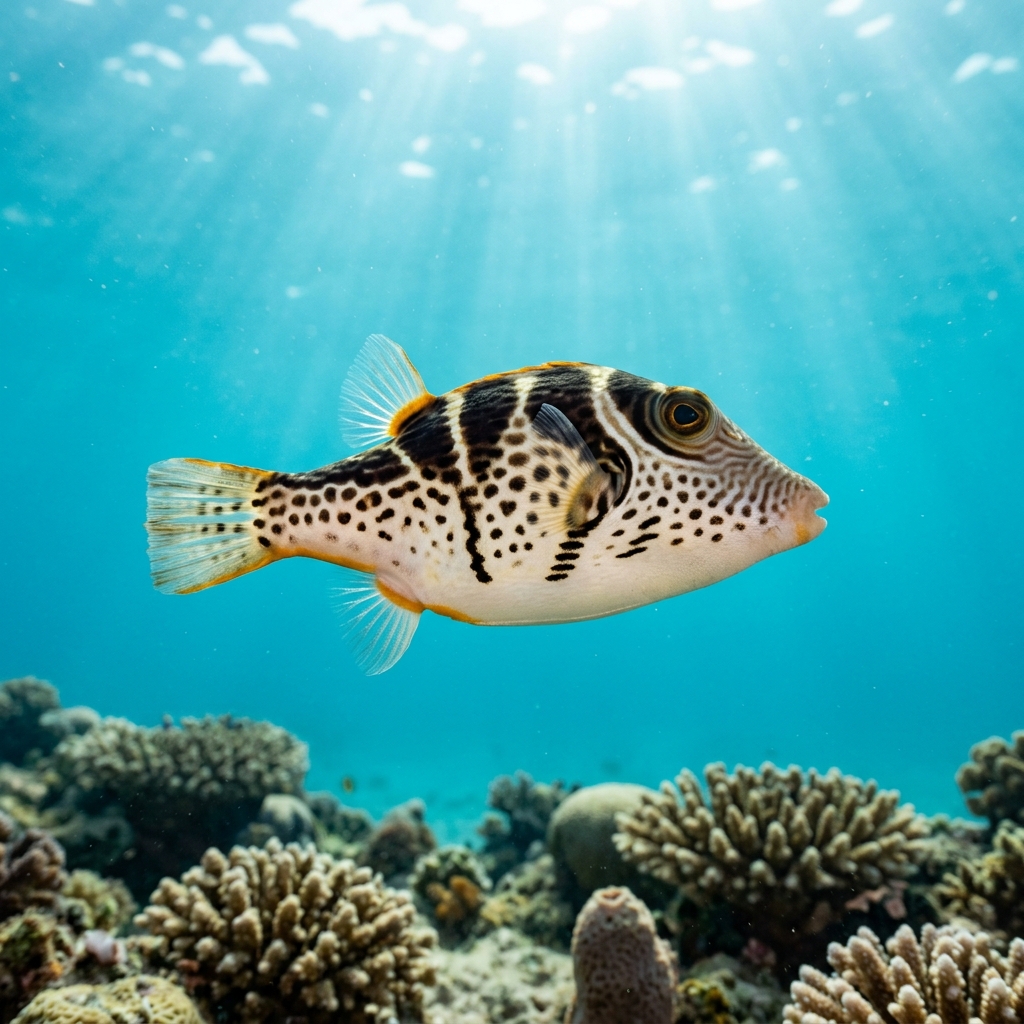
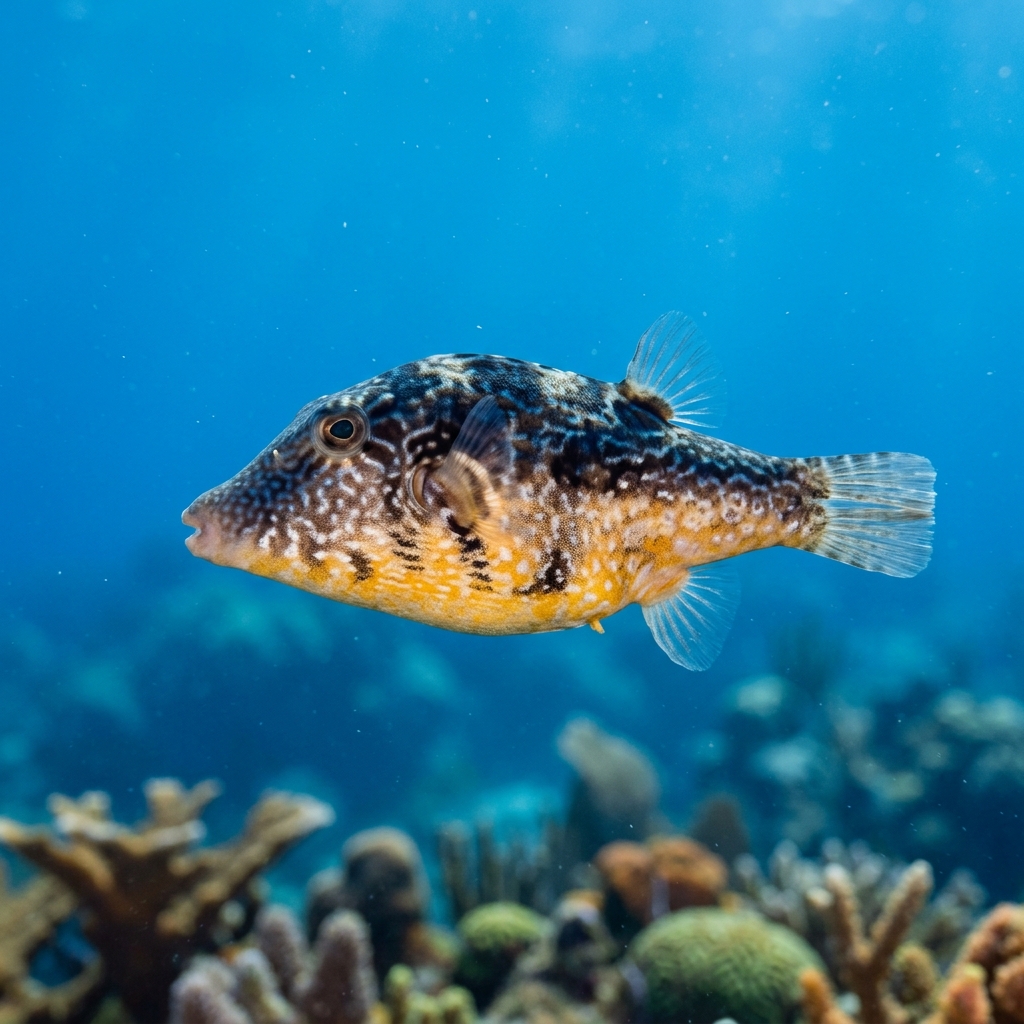
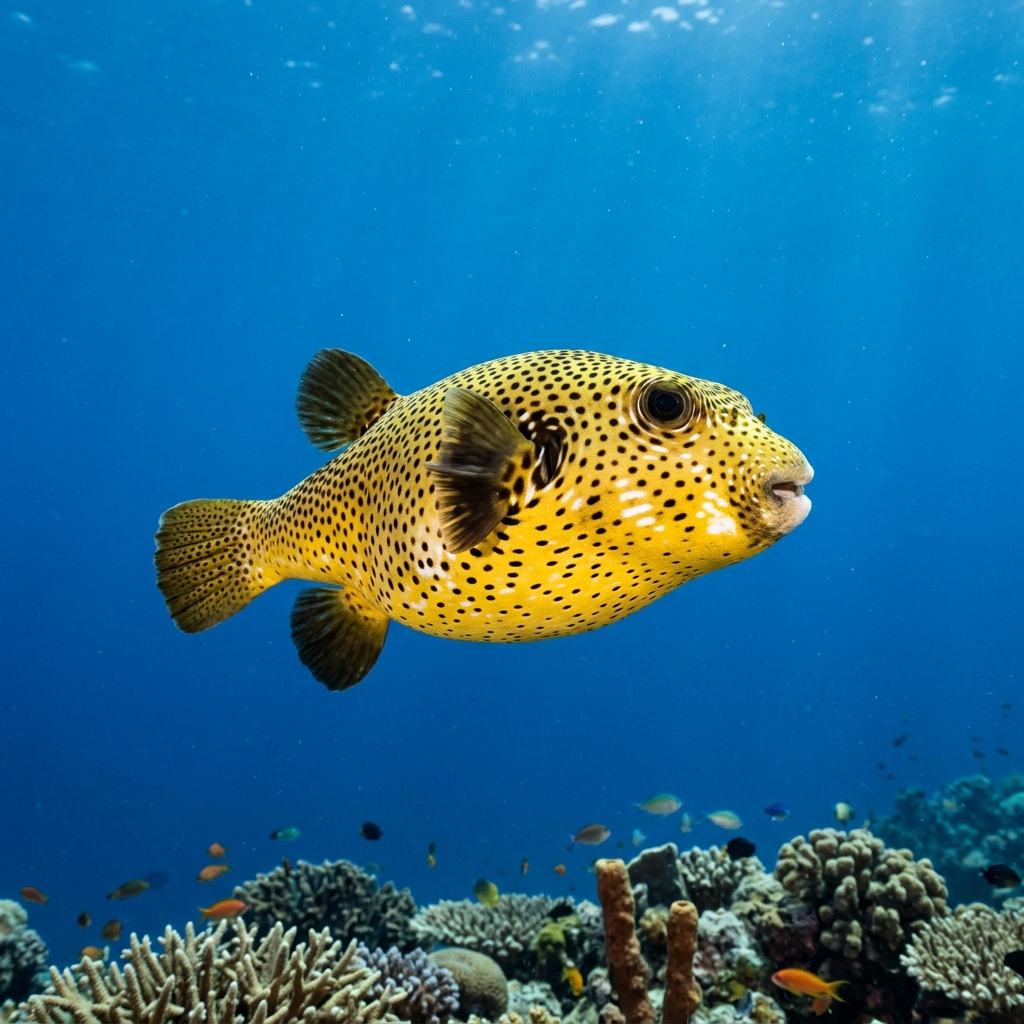
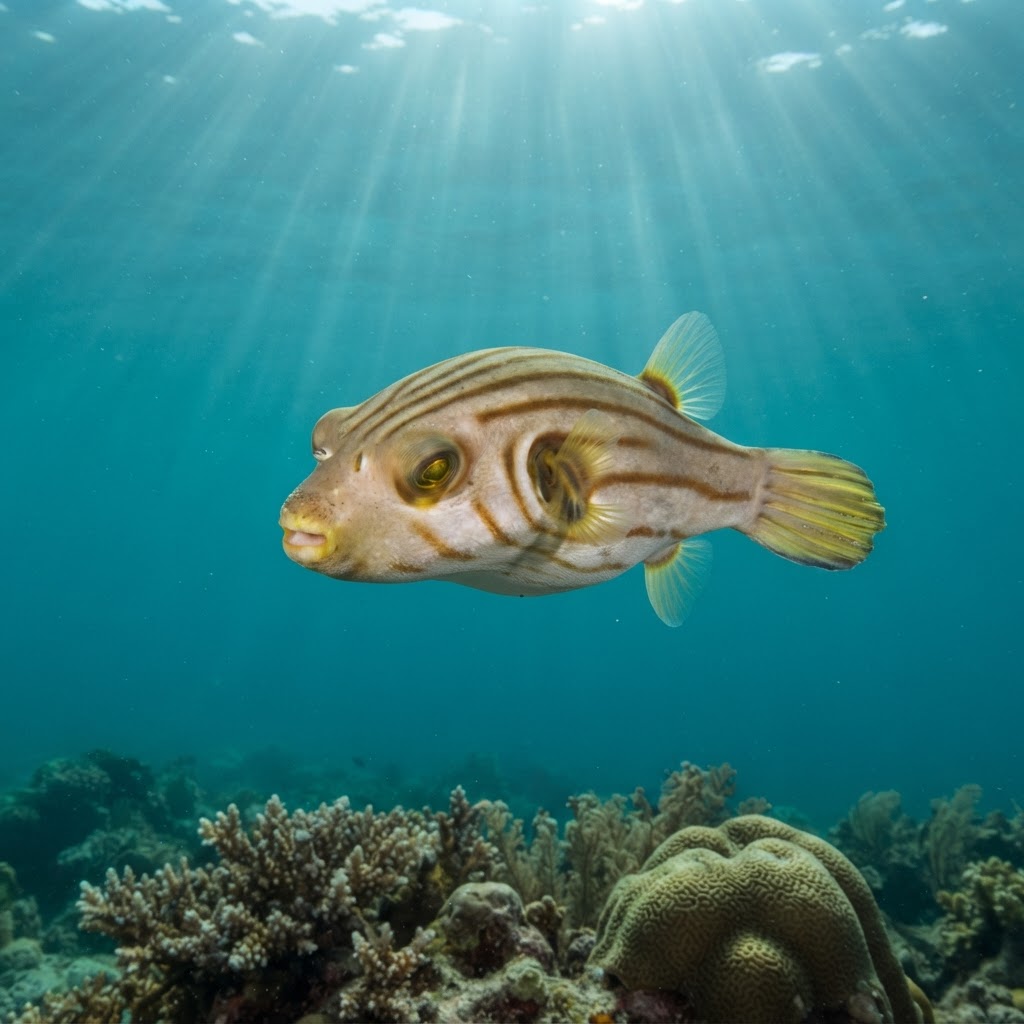
Elongated, torpedo-shaped body covered in fine dark stripes running horizontally along a yellowish-brown to olive body, with a paler, unmarked belly. Grows to around 21 cm, noticeably slimmer and more streamlined than most Arothron pufferfish. The stripe pattern breaks up near the tail and face, and the eye sits high with a small, downturned mouth built for picking at hard prey.
Usually seen cruising slowly and alone over reef flats, rubble patches, and sheltered lagoon edges rather than tucked into caves like some of its relatives. It's not shy underwater and will often let divers get reasonably close before moving off with an unhurried wag of its tail fin. Most sightings are on daytime dives at moderate depth, picking over the substrate for food rather than reacting to divers nearby.
Like other Arothron puffers, it can pump water into its stomach to balloon up several times its normal size when threatened, a last-resort defence rather than a display it puts on for divers.
No clear seasonal pattern shows up in the sightings, and it sits comfortably in 25 to 29.3C water, so it's a year-round find on the reefs where it lives.
Reef neighbours a diver could mistake it for. Use the identification notes above to tell them apart.
Most reliably logged in the Philippines, especially the Visayas, Luzon, and Palawan, where it turns up across a huge spread of reef sites. Beyond the Philippines it has a strong presence in Sabah, Malaysia, and is a fairly regular find in Nusa Tenggara and Bali in Indonesia, plus reefs in Australia's Northern Territory, Guam, Timor-Leste, and New Caledonia.
Mapping where Narrow-lined Puffer is logged…
The Philippines is the strongest bet, particularly the Visayas, Luzon, and Palawan regions, where it shows up across a wide range of reef sites. Sabah in Malaysia and parts of Indonesia such as Nusa Tenggara and Bali also produce regular sightings.
There's no strong seasonal signal in the sightings, and it tolerates a broad warm-water range of 25 to 29.3C, so it's seen on reefs throughout the year rather than during a specific season.
Not to divers who simply watch and photograph it. Its tissues contain tetrodotoxin, a toxin dangerous if handled or ingested, so the golden rule is to look and not touch.
Check for fine dark horizontal stripes running along a slim, yellowish-olive body with a pale belly, growing to about 21 cm. Its body shape is more elongated than most other Arothron pufferfish, which tend to look rounder.
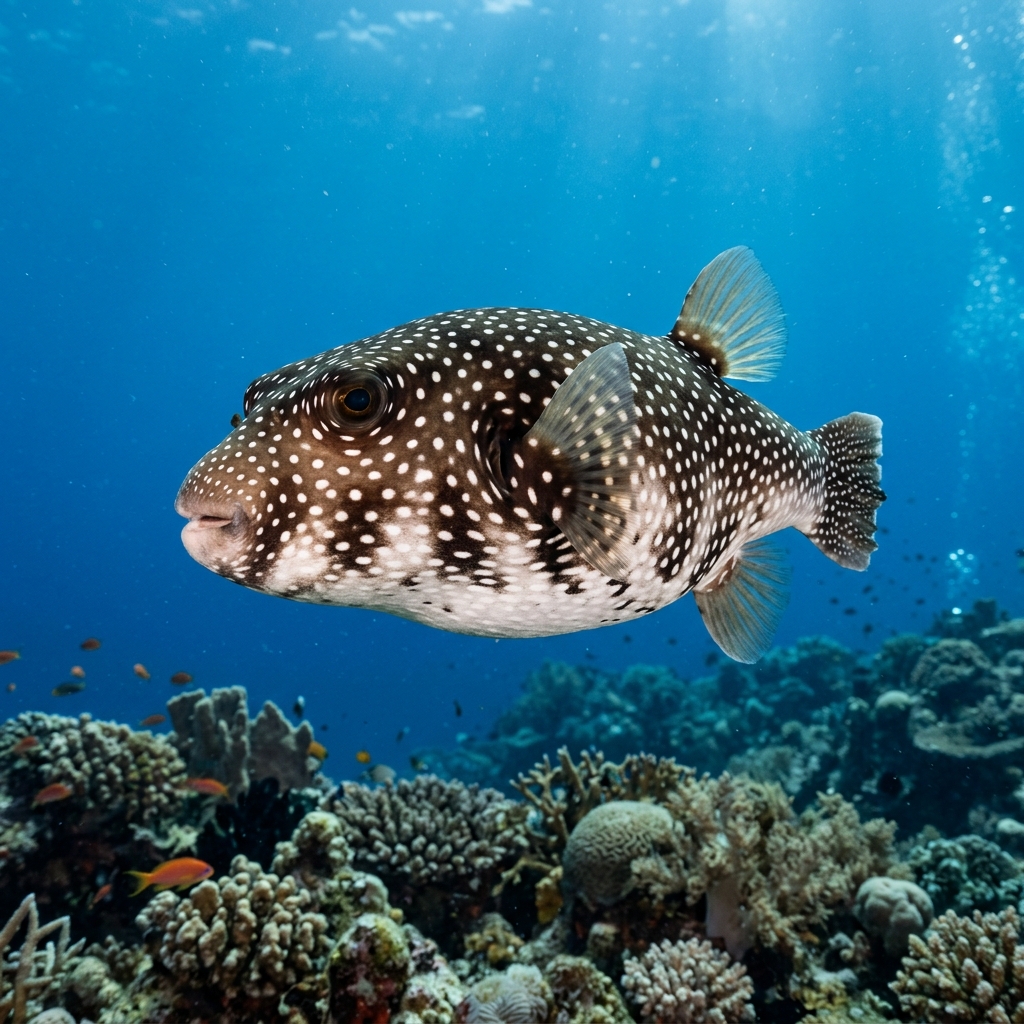
They reach around 21 cm in length, making them a modestly sized member of the pufferfish family compared to bulkier relatives like the White-spotted Puffer.
Narrow-lined Puffers can gulp water into an elastic stomach to swell up several times their normal size when threatened, making them harder for predators to swallow. It's a defensive last resort, not a behaviour they perform casually around divers.
Site and sighting data is aggregated from diver logs, iNaturalist and GBIF. For taxonomy and conservation status:
Valentini Pufferfish
2,830 sites