Valenciennea muralis
Uncommon but findable in Koror & Malakal, Palau, this pale sand goby hovers over rubble in 25-29 C water year-round.
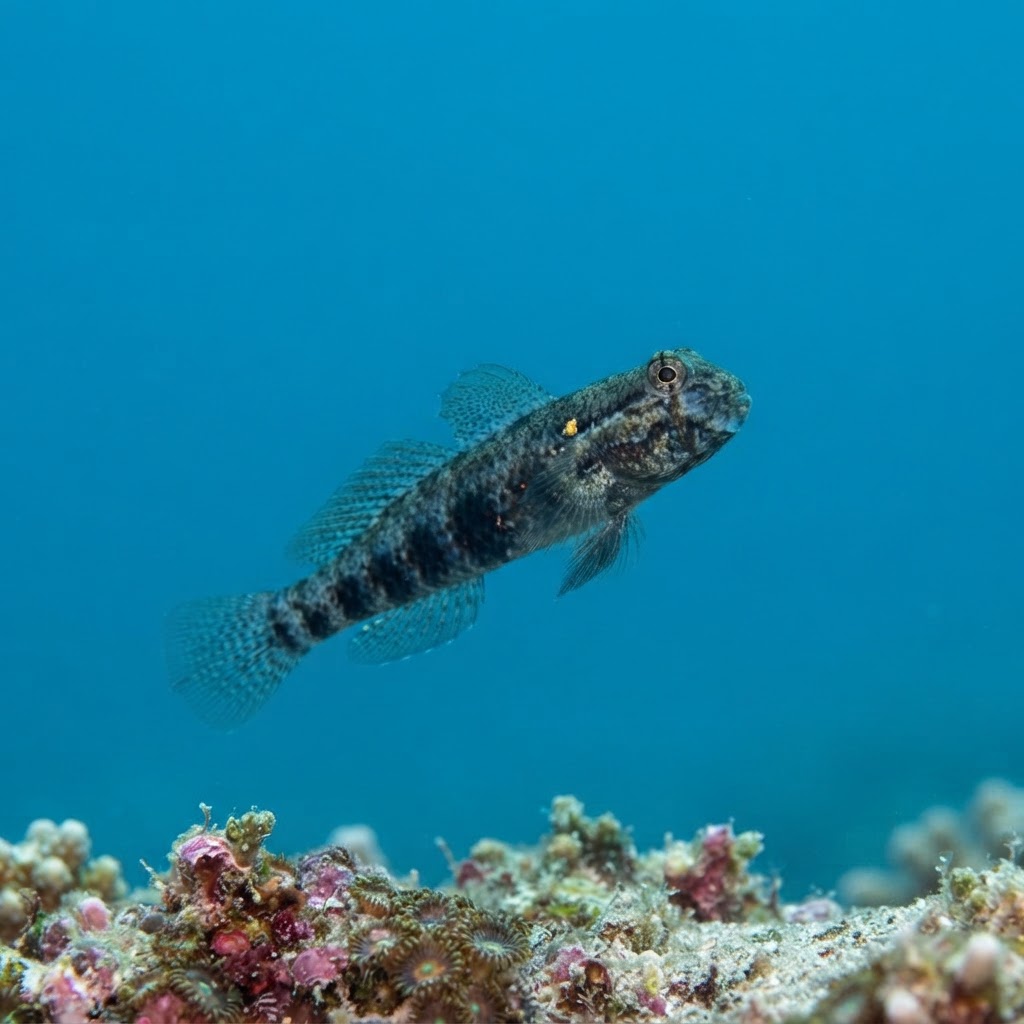
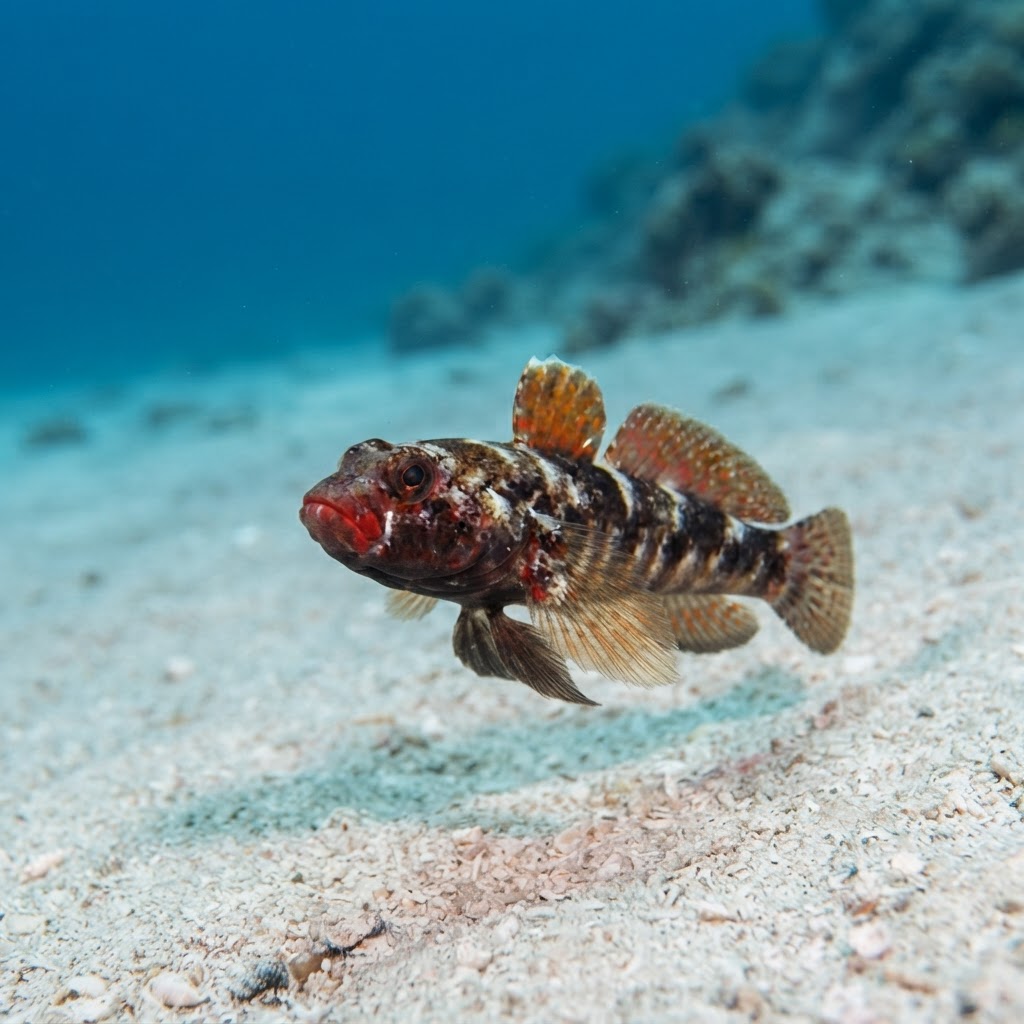
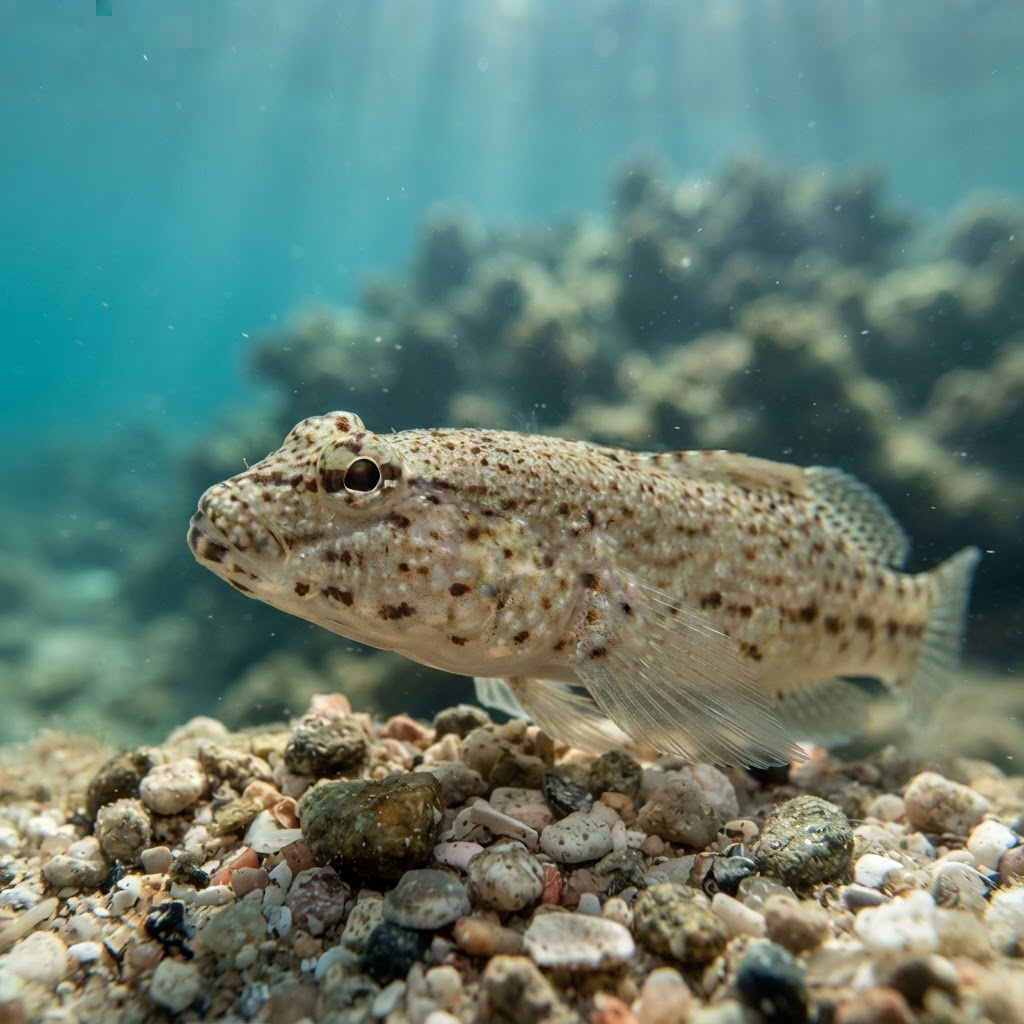
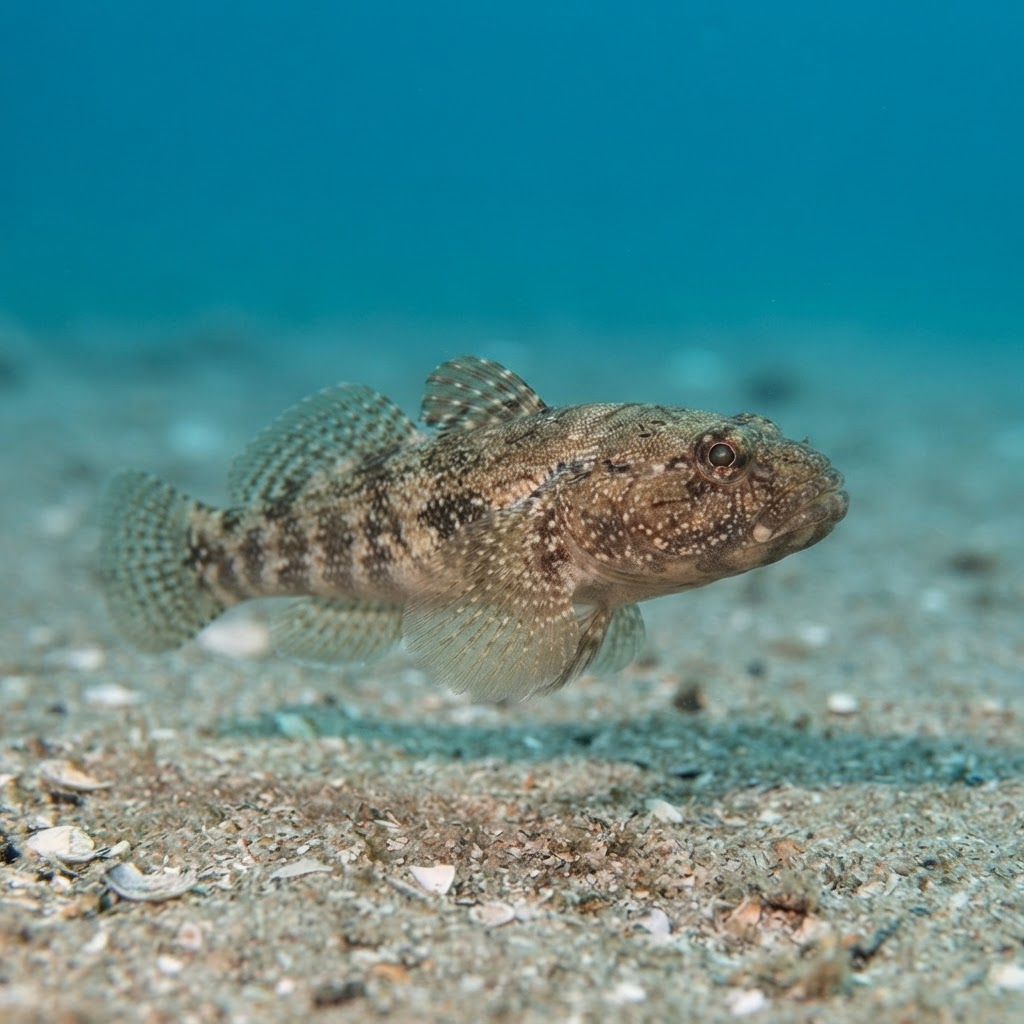
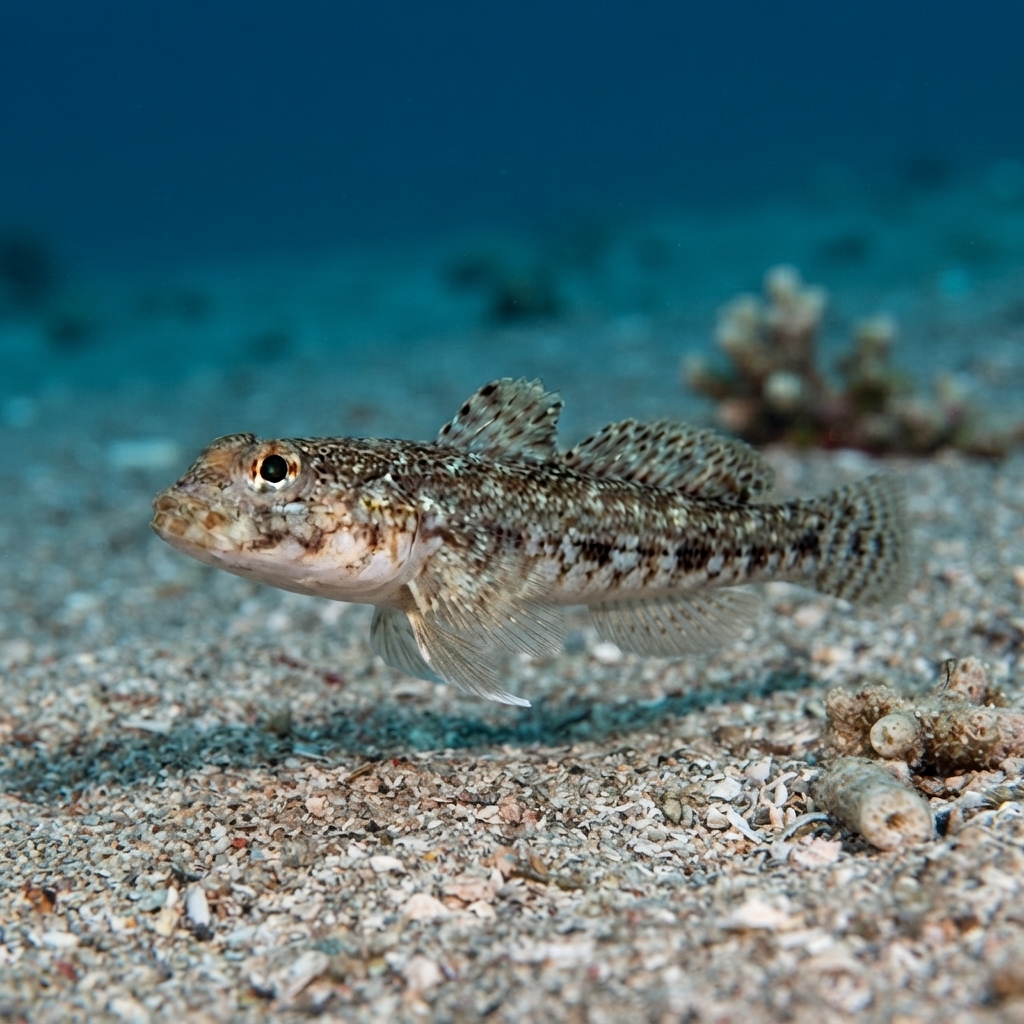
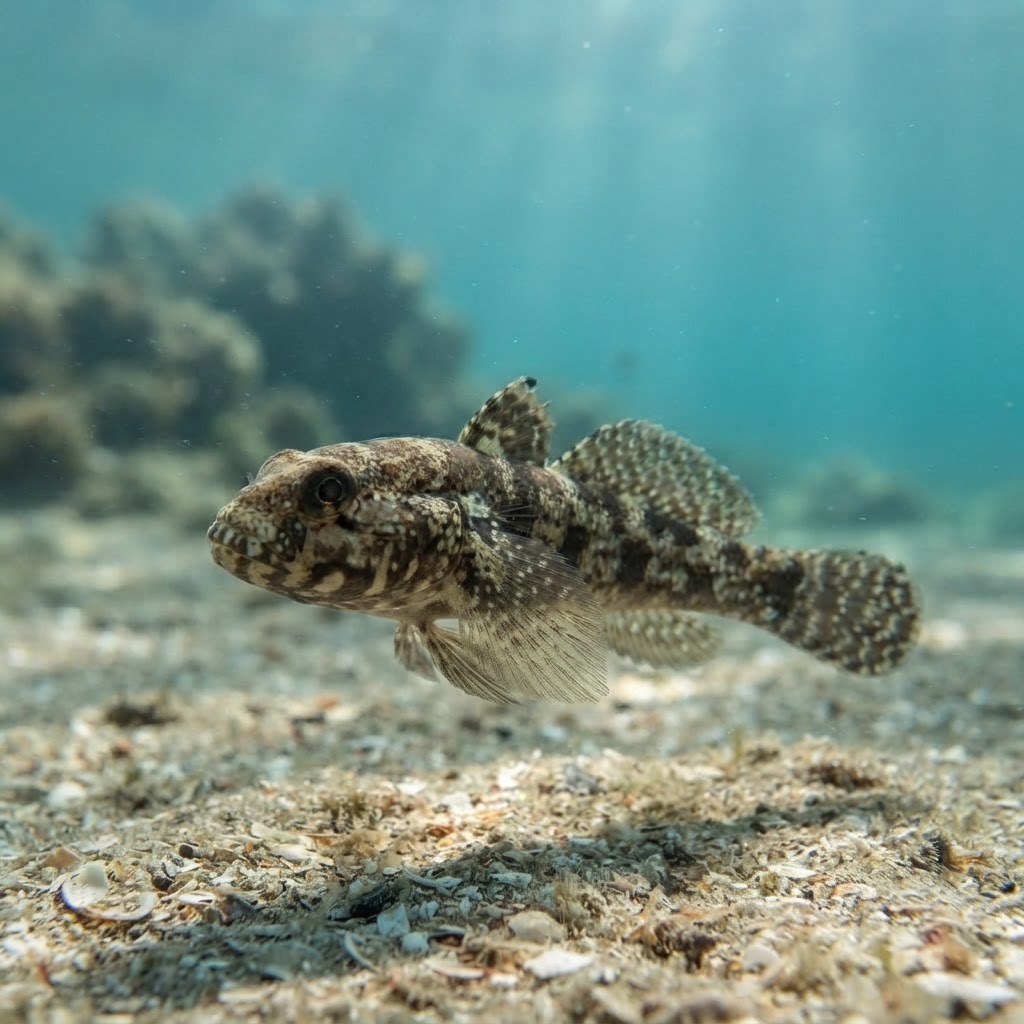
A slim, pale grey-white goby around 11 cm, with a scatter of dark brown to reddish blotches concentrated on the head and forward body that fade toward a plainer tail. It perches on its pelvic fins just above sand or rubble rather than swimming freely, usually with a burrow entrance close by. Look for the slightly puffy, blunt-nosed profile typical of sand gobies, not a sleek reef swimmer's shape.
Look for it hovering just above sand or rubble patches on the reef flat or slope, often paired up and sifting mouthfuls of sediment for food before spitting the sand back out. It stays close to a burrow it shares with a shrimp partner and will dart in at the first sign of a diver getting too close, so a slow approach from a distance gets you the longest look.
Like other Valenciennea gobies it lives in a burrow dug and maintained cooperatively with a partner, sifting sand through its gills to strain out edible particles, a behaviour worth watching for a full minute if you find one undisturbed.
No clear season shows up in the sightings, and water in its recorded range sits between 25.4 and 29.3 C year-round, so any month is reasonable for a sighting where it occurs.
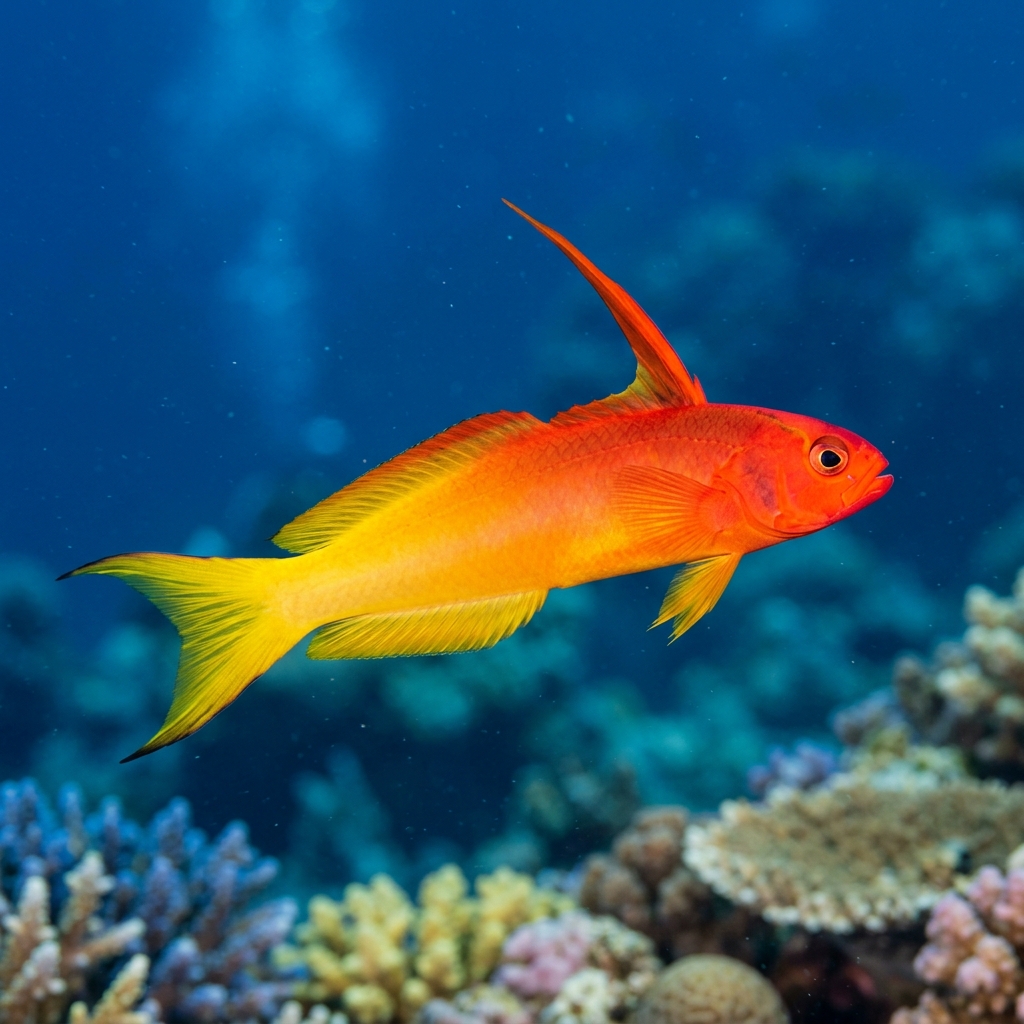
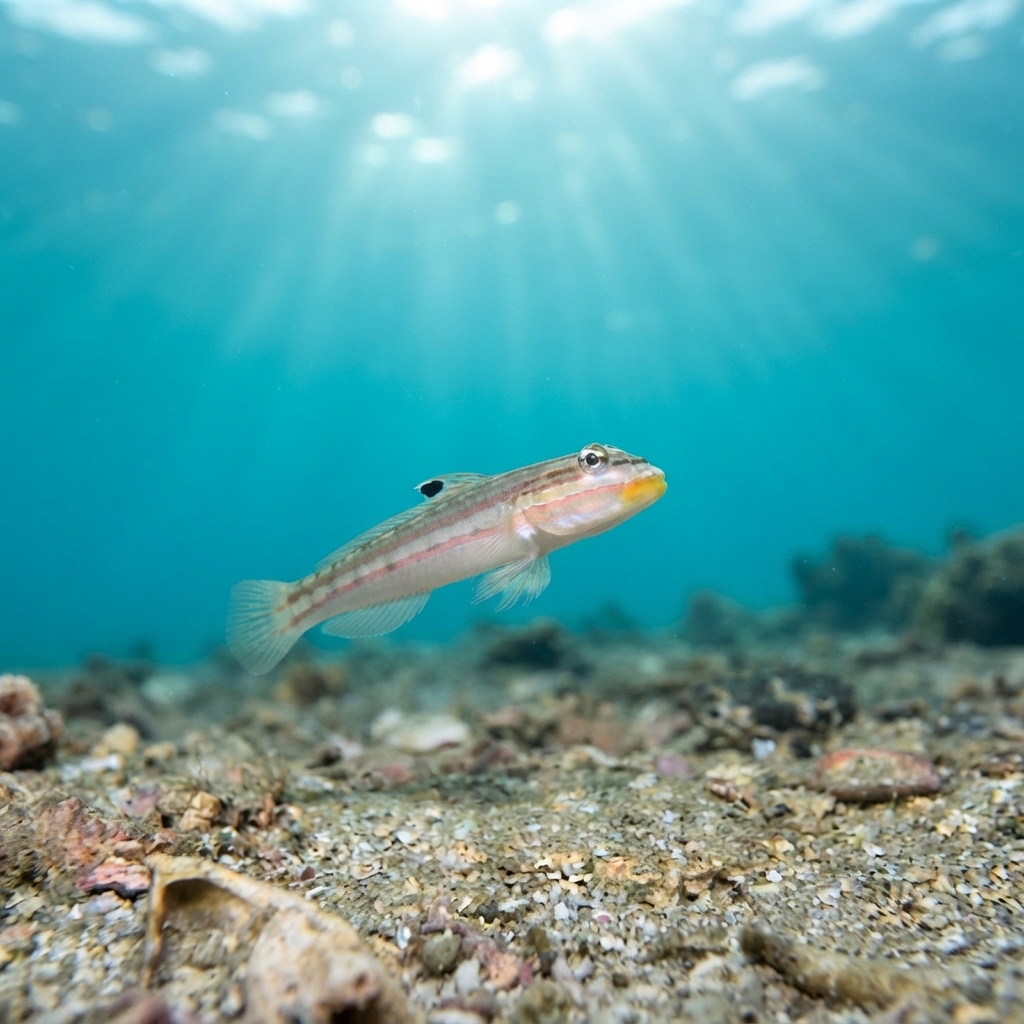
Reef neighbours a diver could mistake it for. Use the identification notes above to tell them apart.
Most reliably logged in Koror & Malakal in Palau, which accounts for the bulk of sightings, followed by Koh Tao and Koh Pha Ngan in Thailand. Smaller but steady numbers turn up in Queensland, Australia and Sai Kung, Hong Kong, with a few records from Koh Lipe and Pattaya.
Mapping where Mural Goby is logged…
Palau's Koror & Malakal area is the strongest spot for it, with additional sightings around Koh Tao and Koh Pha Ngan in Thailand, Queensland in Australia, and Sai Kung in Hong Kong.
There's no strong seasonal pattern in the sightings, and it turns up in water from about 25 to 29 C, so it's a reasonable year-round find on the reefs where it occurs.
Look for a pale, slender goby about 11 cm long with dark blotches clustered around the head, perched on sand or rubble near a burrow rather than swimming in open water.
They typically reach around 11 cm, a small, easy-to-overlook fish best spotted by watching sandy patches near reef structure rather than scanning open water.
It digs and shares a burrow with a partner and sifts sand through its gills to feed, spitting out the leftover grains, a habit you can watch if you keep still nearby.
Site and sighting data is aggregated from diver logs, iNaturalist and GBIF. For taxonomy and conservation status:
Slender Goby
806 sites