Argyrosomus japonicus
Large silver predator seen at reef sites across New South Wales and Queensland, in water from 16.7 to 27.8C year-round.
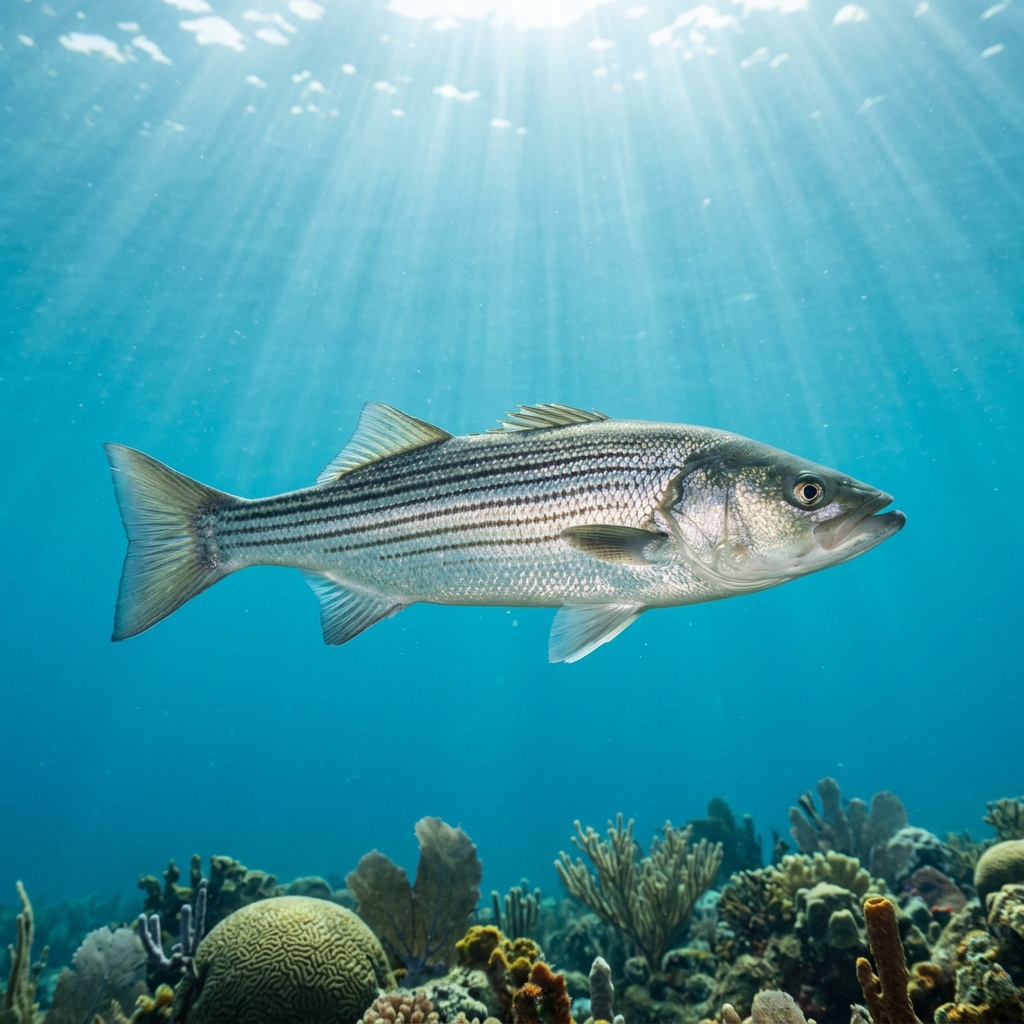
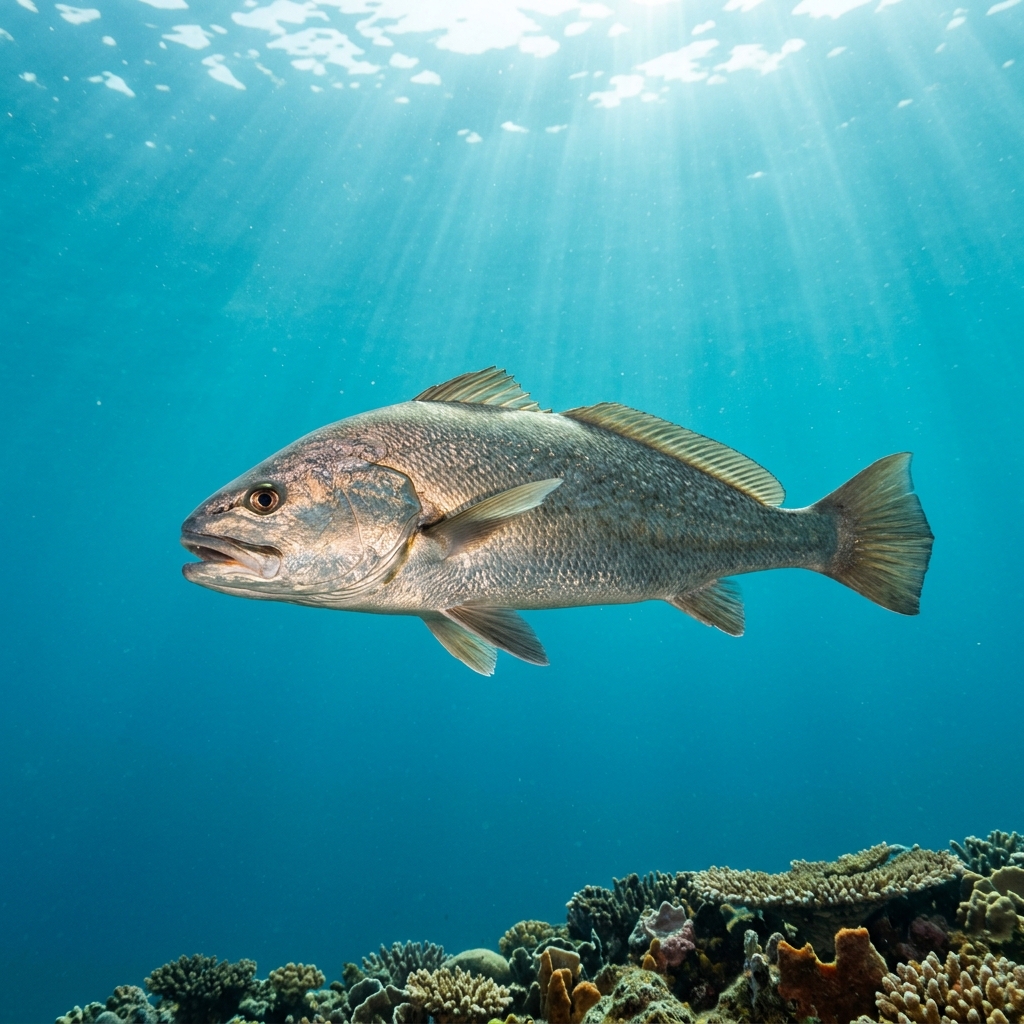
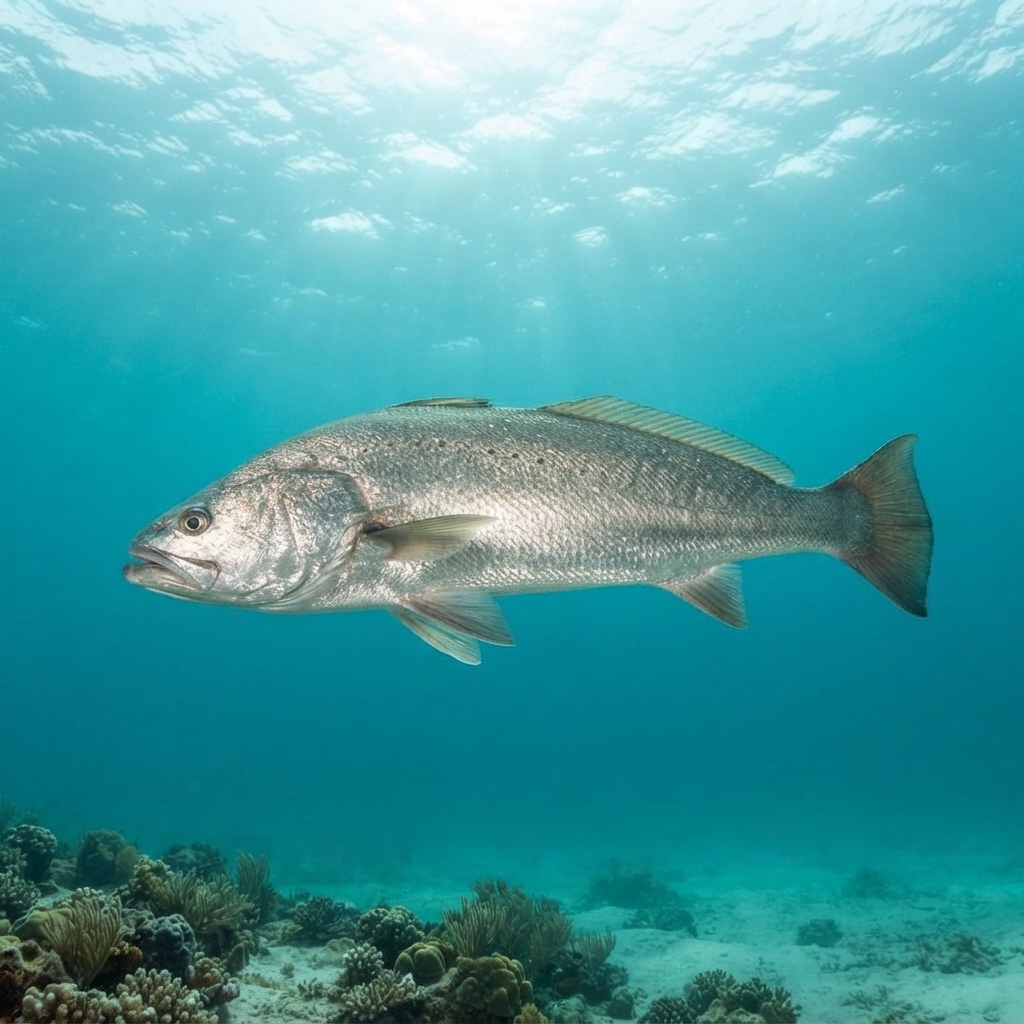
Look for a large, deep-bodied fish with a silvery to bronze flank that can run well over a metre long, cruising low over reef and rocky structure. A dark lateral line runs the length of the body, and the tail is broad with a slightly squared edge. The mouth sits low and the head is blunt, giving it a solid, torpedo-like profile rather than a slim baitfish shape.
Divers usually find it holding near reef structure or cruising slowly along rocky ledges rather than schooling in the open. It's an uncommon sighting even at the sites where it's known, so encounters tend to be a solitary, unhurried pass rather than a guaranteed feature of the dive. Low light around dawn, dusk or murkier water seems to suit it, consistent with its reputation as a fish that favours structure and shadow over open water.
Mulloway produce a drumming sound using muscles against their swim bladder, a trait shared across the drum and croaker family that gives the group its name.
Sightings don't show a clear seasonal pattern, so treat it as a year-round possibility. It's logged across a wide temperature range from 16.7 to 27.8C, meaning it tolerates both cooler winter reef water and warmer summer conditions in these regions.
Reef neighbours a diver could mistake it for. Use the identification notes above to tell them apart.
Australia is the only place this species turns up in diver logs, with New South Wales the most reliable region and Queensland a secondary spot. Sites tend to be temperate rocky reefs and headlands rather than tropical coral systems.
Mapping where Mulloway is logged…
Australia is the standout country, with New South Wales the most consistently logged region and Queensland also producing sightings. Look for them around temperate rocky reef and headland dive sites rather than tropical coral reefs.
There's no strong seasonal pattern in the data, so they can turn up any month. They've been logged in water from 16.7 to 27.8C, so both cooler and warmer months are worth trying.
Look for a large silvery to bronze fish with a dark lateral line, a blunt head and a broad, slightly squared tail, often seen holding close to reef structure. Size alone is a strong clue, as adults can exceed a metre in length.
They typically reach around 127cm, making them one of the larger fish you're likely to encounter on temperate Australian reefs.
Like other members of the drum and croaker family, they can produce a drumming or grunting sound by vibrating muscles against their swim bladder, which is thought to play a role in communication.
No, they're not considered dangerous to divers and tend to hold near structure or move off calmly rather than react aggressively to a diver's presence.
Site and sighting data is aggregated from diver logs, iNaturalist and GBIF. For taxonomy and conservation status:
Meagre
1,159 sites