Oreochromis mossambicus
Freshwater diving with Mozambique Tilapia: logged from Hawaii to Bayahibe, comfortable in 23-29C water, sightings year-round.
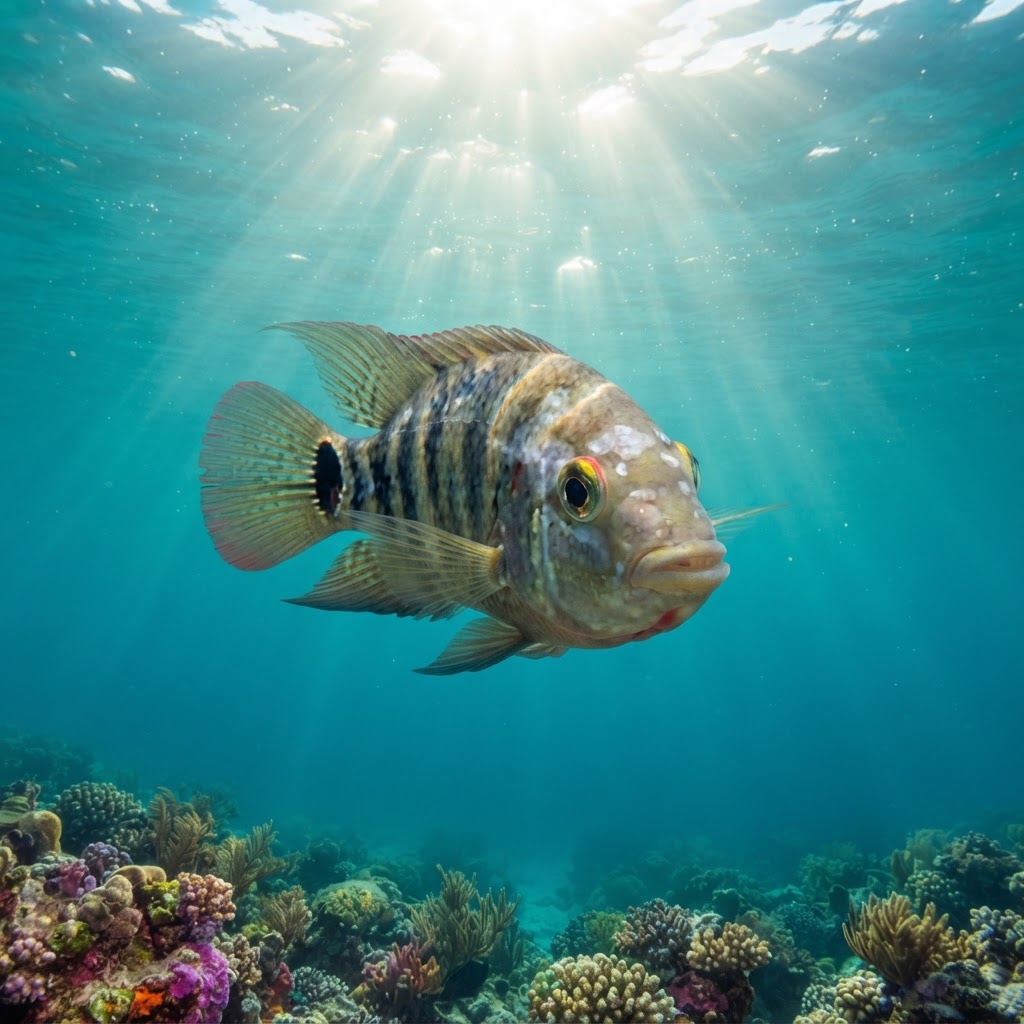
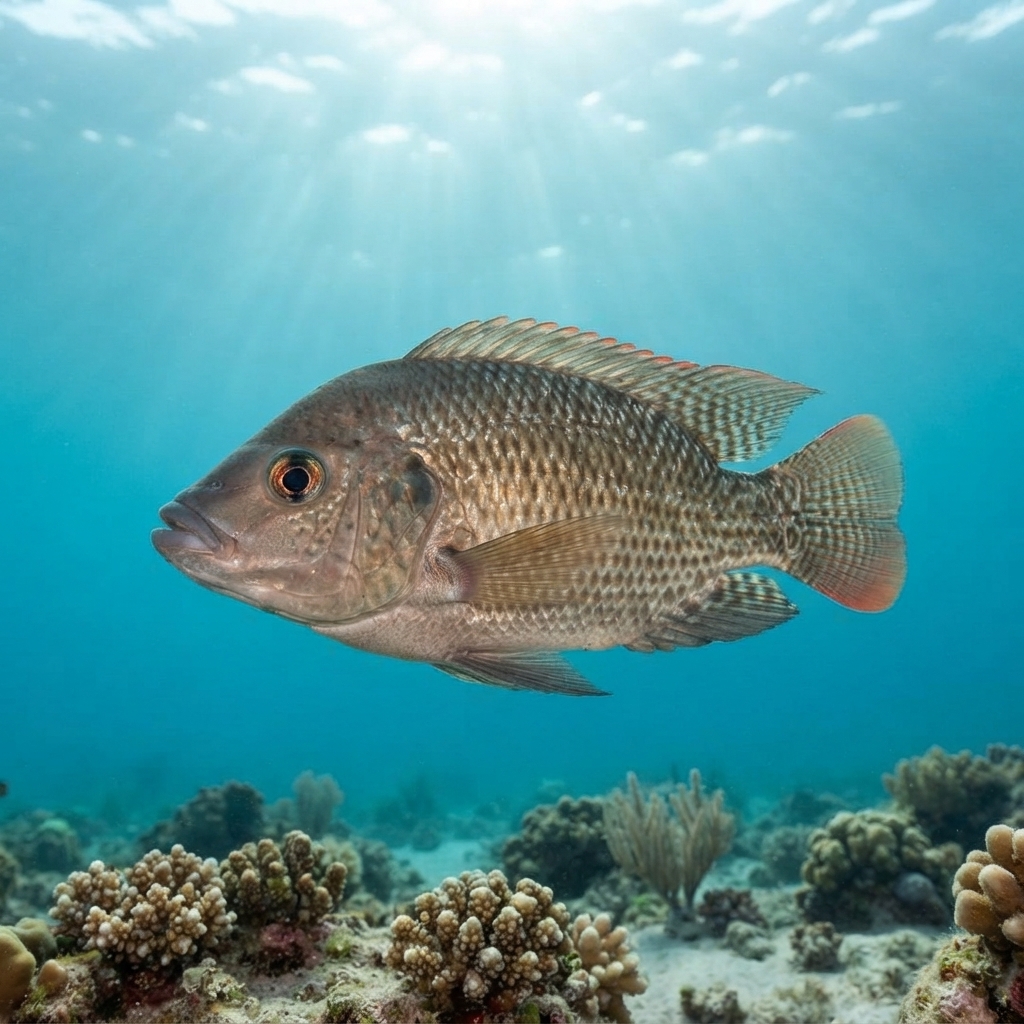
A deep-bodied, laterally flattened fish around 27 cm long, usually olive-grey to brownish with a faint sheen and darker vertical banding that can fade in and out depending on mood and light. Look for the single long dorsal fin running most of the back and a blunt, slightly downturned mouth built for picking at algae and sediment. Breeding males darken noticeably, often turning almost black with a reddish tinge to the fin edges, which is the easiest sex cue underwater.
Usually seen cruising slowly over silty or rocky bottoms in lakes, canals and brackish lagoons, picking at algae and detritus rather than reacting much to divers. Territorial males will hold a patch of substrate and can be seen fanning or guarding a shallow pit nest, sometimes with a female mouthing eggs or fry nearby. Most logs describe it as calm and approachable, more curious than skittish around slow-moving divers.
Females are mouthbrooders, carrying fertilised eggs and then free-swimming fry inside their mouth for protection, so a tilapia that looks like it is chewing on nothing may actually be sheltering a batch of young.
Sightings show no clear seasonal pattern, and with a comfortable range of roughly 23 to 29C it turns up in freshwater and brackish sites year-round rather than on a set schedule.
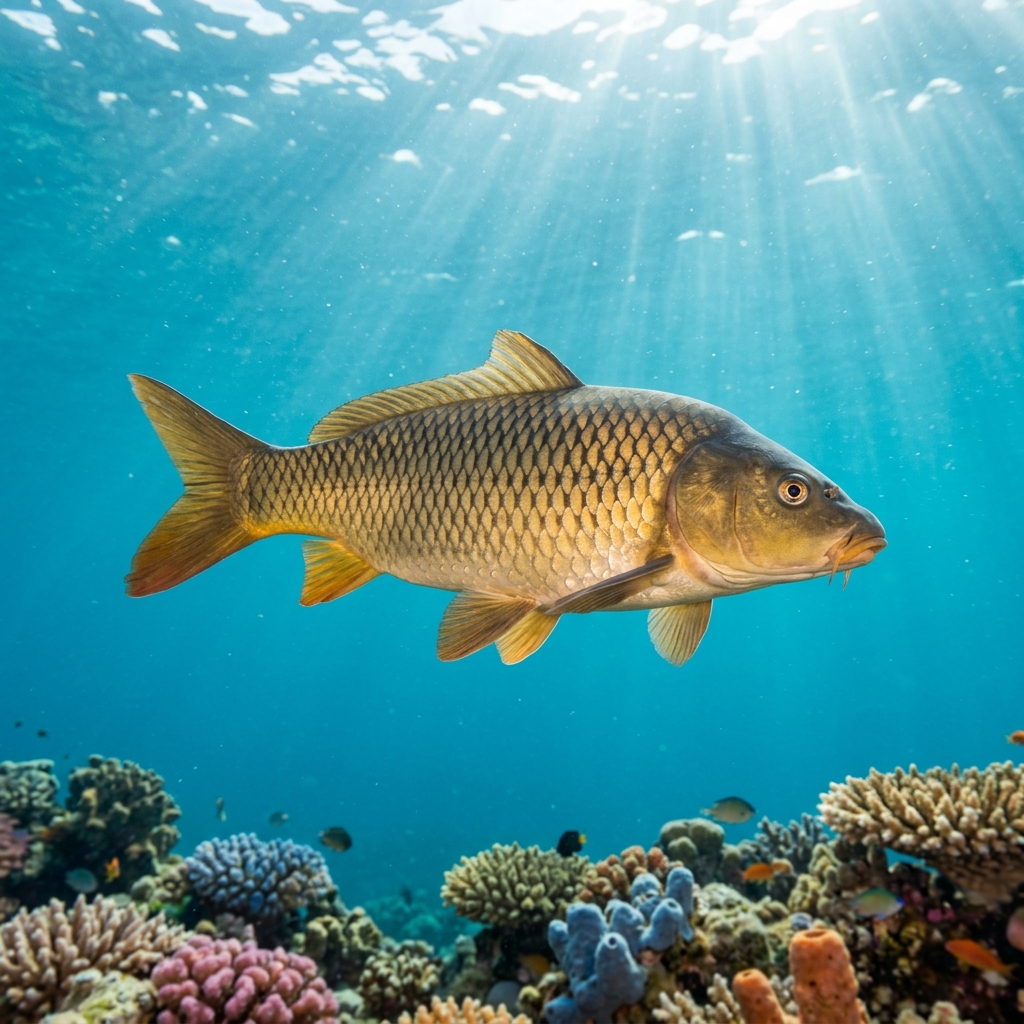
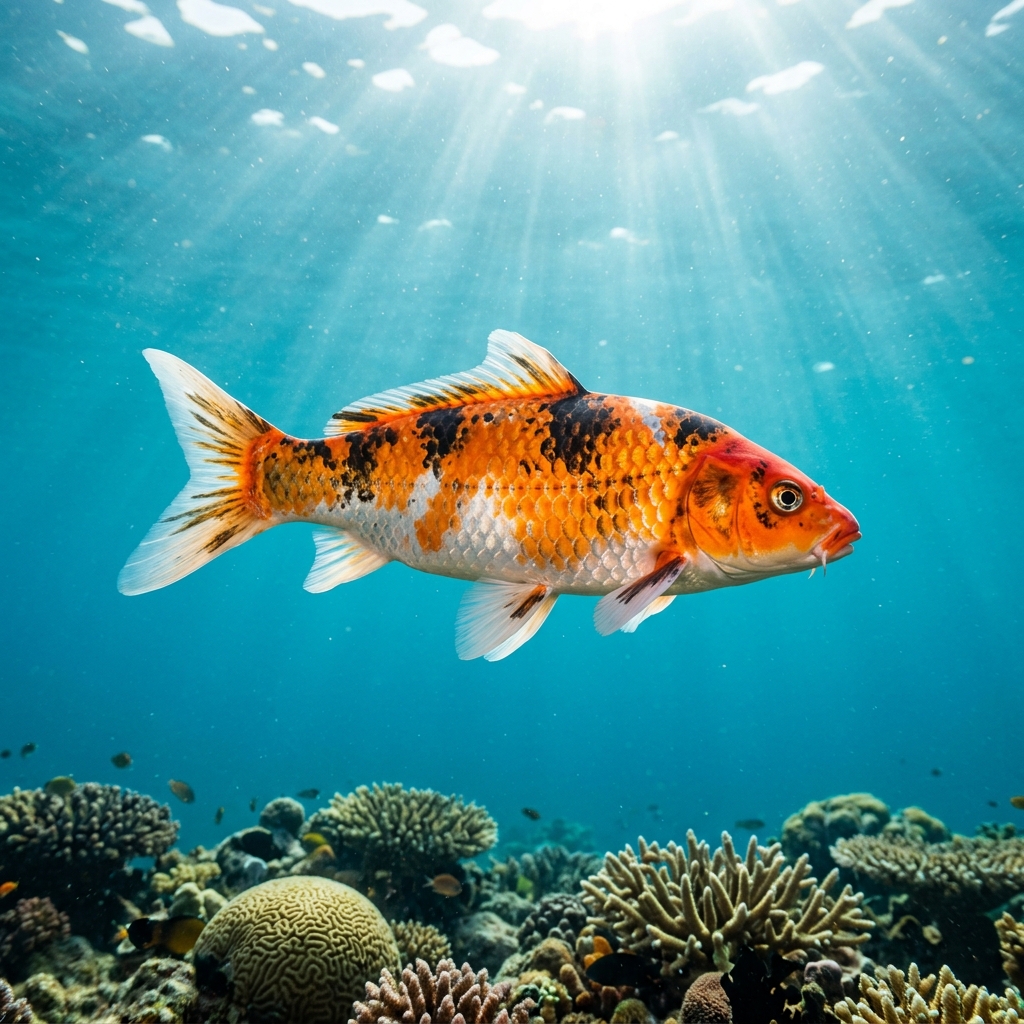
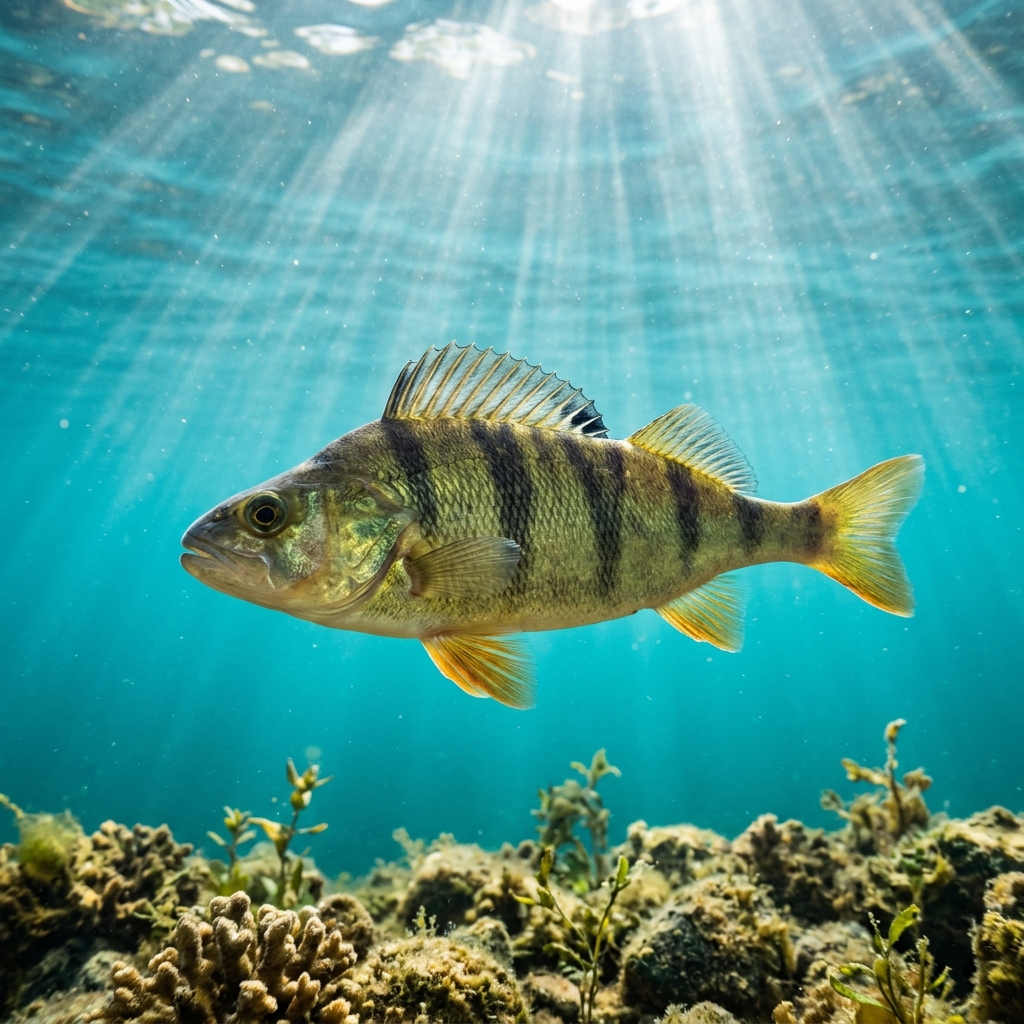
Reef neighbours a diver could mistake it for. Use the identification notes above to tell them apart.
Most consistently logged in Hawaii in the United States, with a strong secondary population around Punta Cana and Bayahibe in the Dominican Republic. Smaller numbers turn up in South Africa's Western Cape, plus occasional records from Grenada Island and Queensland, Australia.
Mapping where Mozambique Tilapia is logged…
The most reliable sightings come from Hawaii in the United States and from Punta Cana and Bayahibe in the Dominican Republic, with smaller pockets in South Africa's Western Cape and occasional records in Grenada and Queensland, Australia.
There is no strong season in the data. It stays within a 23 to 29C comfort range and is logged across the year, so timing your trip around other target species is fine.
Look for a deep, flattened olive-grey body around 27 cm, a long single dorsal fin, and a blunt algae-grazing mouth. Breeding males turn noticeably darker, sometimes almost black, with reddish tinges on the fin margins.
Typical adults seen by divers run around 27 cm in length, with a deep, laterally compressed body shape.
Females are mouthbrooders, holding fertilised eggs and hatched fry inside their mouth for protection, so a fish that appears to be chewing may actually be guarding a mouthful of young.
Site and sighting data is aggregated from diver logs, iNaturalist and GBIF. For taxonomy and conservation status:
Sun Perch
2,182 sites