Pleurosicya mossambica
A near-transparent 2cm goby hiding on sponges and corals in Bali, Indonesia, in warm 24-29C water year-round.
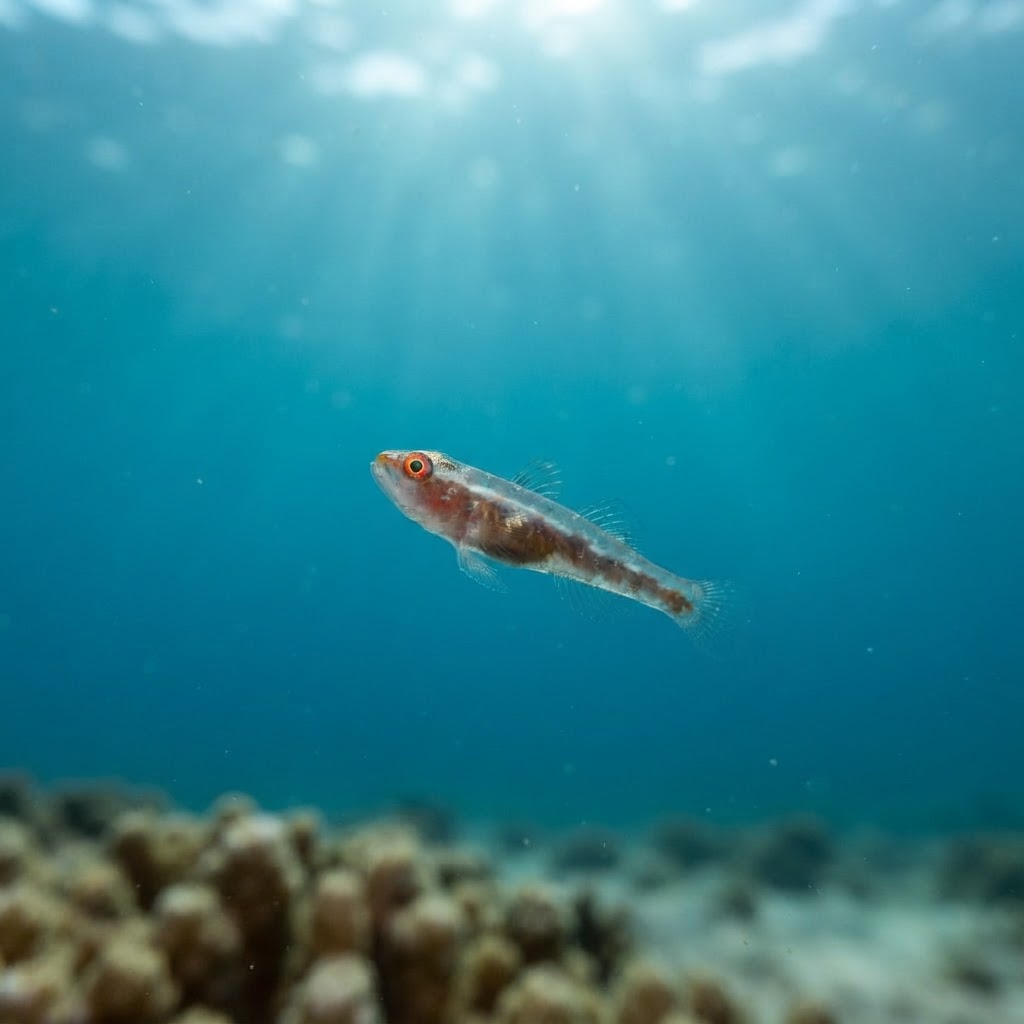
A near-transparent, almost glassy body just 2cm long, often with a faint yellowish or pinkish tinge depending on its host. Look for a slim, tapered goby shape sitting motionless on the surface of a sponge, soft coral, or coral head rather than swimming in open water. There are no bold stripes or spots to key on, it's the see-through body and stillness that give it away.
Spends most of its time sitting motionless on a sponge or coral host, relying on its transparent body to disappear against the surface it's perched on. It doesn't dart off when divers approach, so slow, close-focus looks with a torch or macro lens are usually the way to actually notice one. Most sightings happen while divers are working a coral head or sponge patch specifically hunting for small stuff, rather than spotting it in passing.
Its near-invisible, glass-like body is a form of camouflage against the sponges and corals it lives on, making it one of those species you're more likely to find by scanning slowly than by swimming past.
Water temperatures at its logged site sit between 24.3 and 29.3C, comfortable year-round on tropical reefs, and there isn't enough data yet to show a distinct season. Treat it as a possible sighting on any dive in the right habitat, any month.
Reef neighbours a diver could mistake it for. Use the identification notes above to tell them apart.
Currently most reliably logged in Bali, Indonesia, where it turns up as an uncommon find on sponges and coral heads. Given its wide Indo-Pacific range and habit of hiding on common reef hosts, it likely goes unnoticed at many more sites than divers have logged so far.
Mapping where Mozambique Ghostgoby is logged…
Logged diving in Bali, Indonesia, sitting on sponges and coral heads. Its broader Indo-Pacific range suggests it turns up elsewhere too, but Bali is the best-documented spot so far.
There's no clear season in the data, and it's found in water from about 24 to 29C, which covers most of the year on tropical reefs. Any month diving Bali's reefs gives you a shot at finding one.
Look for a tiny, 2cm goby with a near-transparent, glassy body perched motionless on a sponge or coral surface. It lacks bold markings, so its see-through look and stillness are the main clues, not colour patterns.
They stay tiny, topping out around 2cm long, which makes them a real macro-hunting target rather than something you'll spot from a distance.
Its body is almost see-through, letting it blend into the sponges and corals it perches on instead of relying on colour or pattern for camouflage.
No, they pose no danger to divers. They're too small and passive to interact with beyond being an ID challenge for macro photographers.
Site and sighting data is aggregated from diver logs, iNaturalist and GBIF. For taxonomy and conservation status:
Slender Goby
806 sites