Ascarosepion mestus
Reaper Cuttlefish are a rare find along Australia's south-east coast. Learn where to look, how to recognise them, and what temperatures to expect.
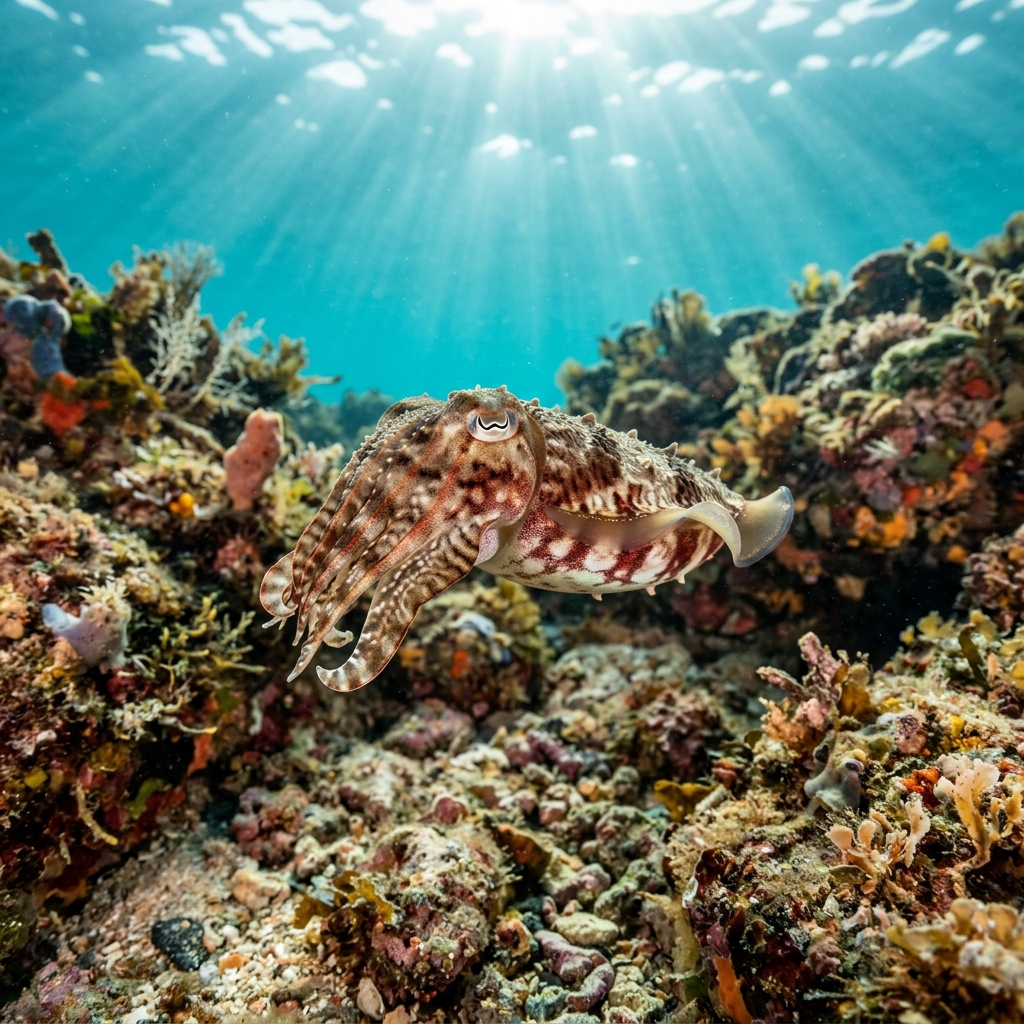
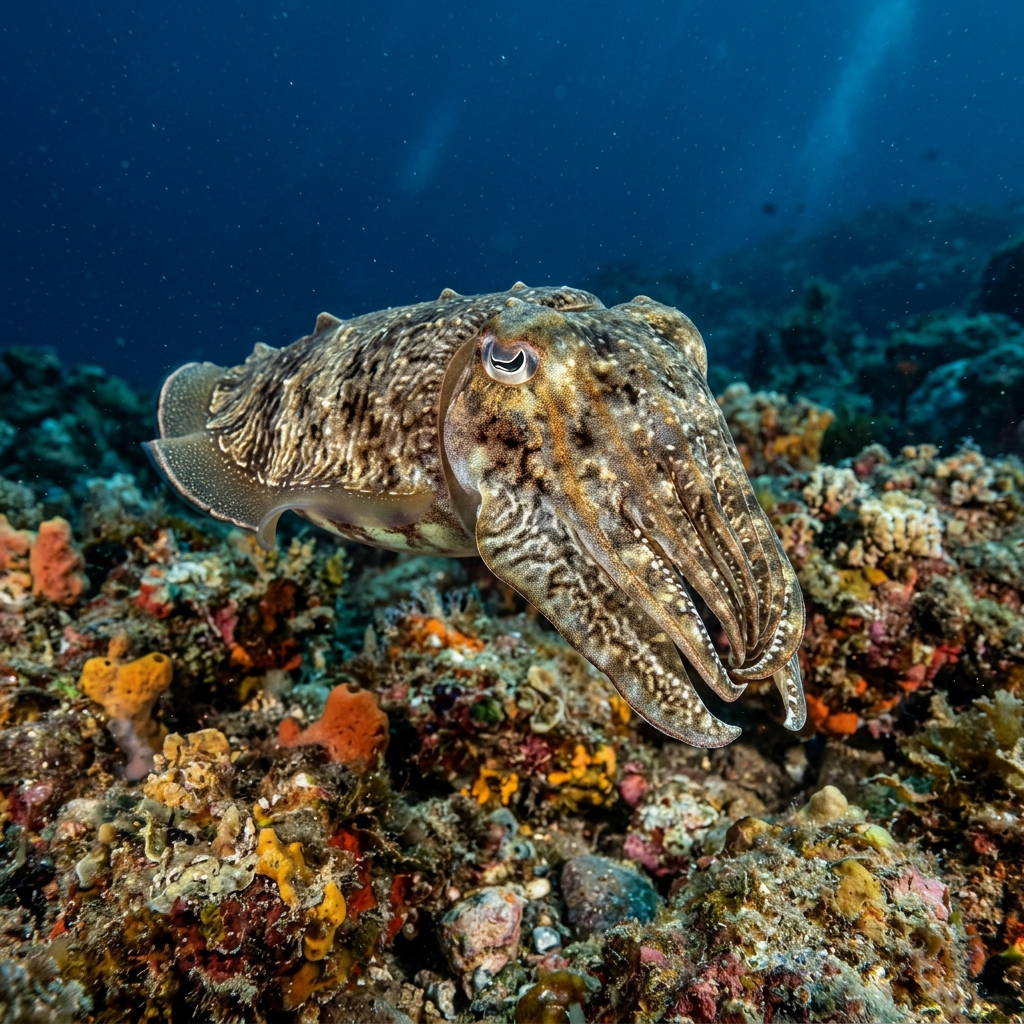
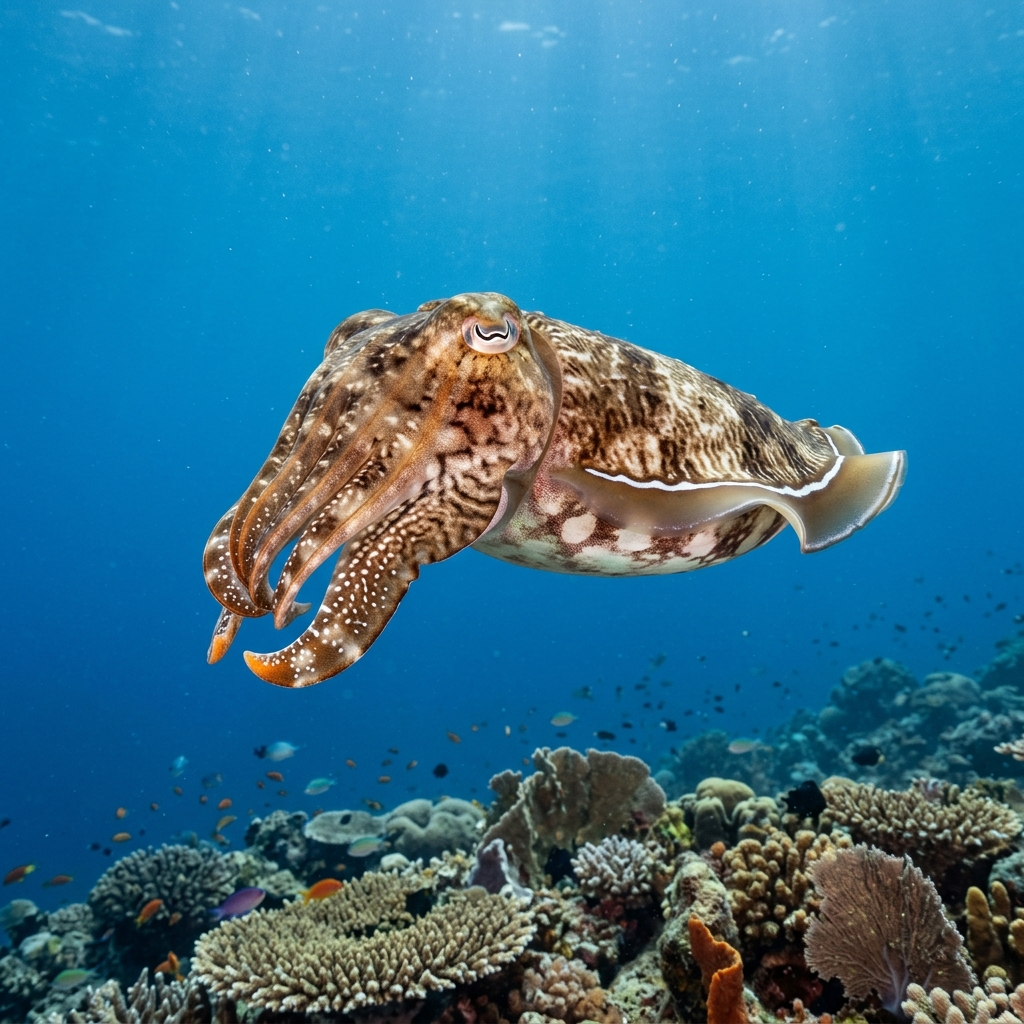
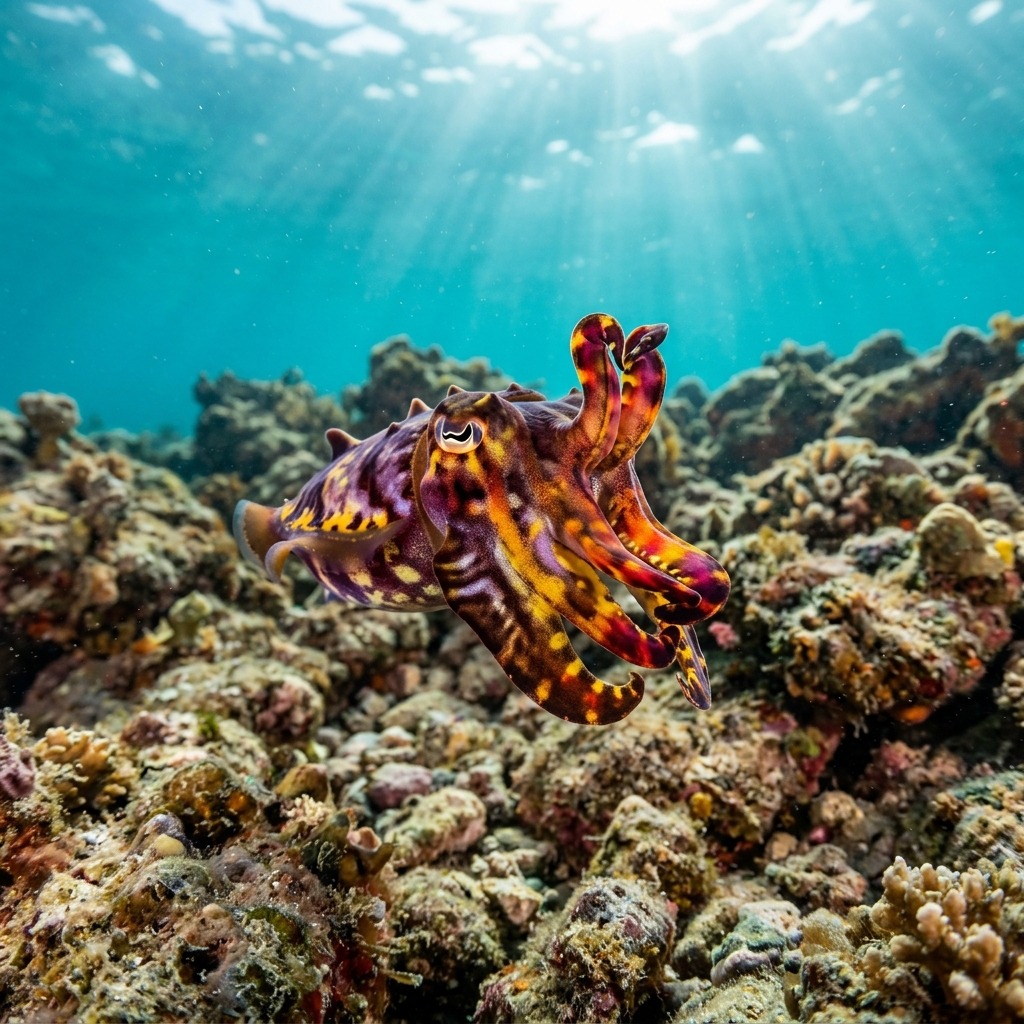
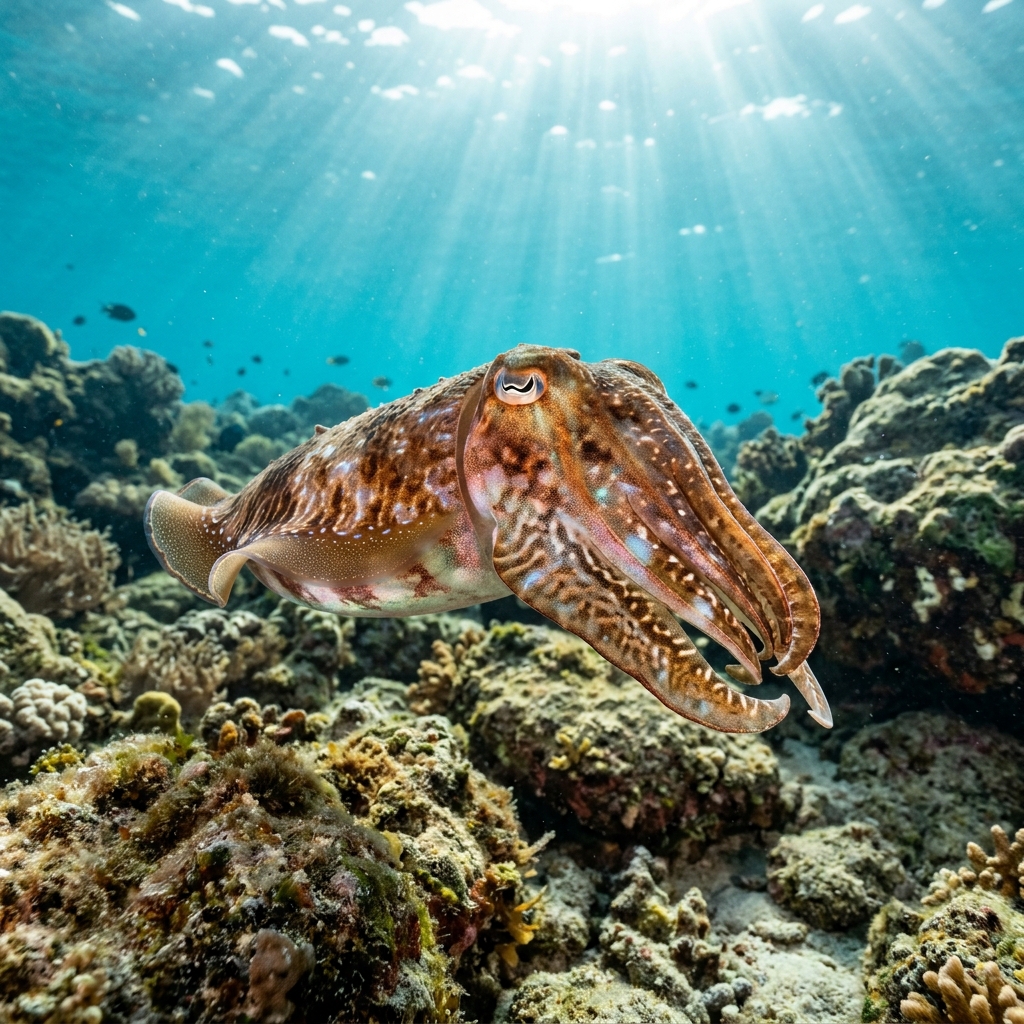
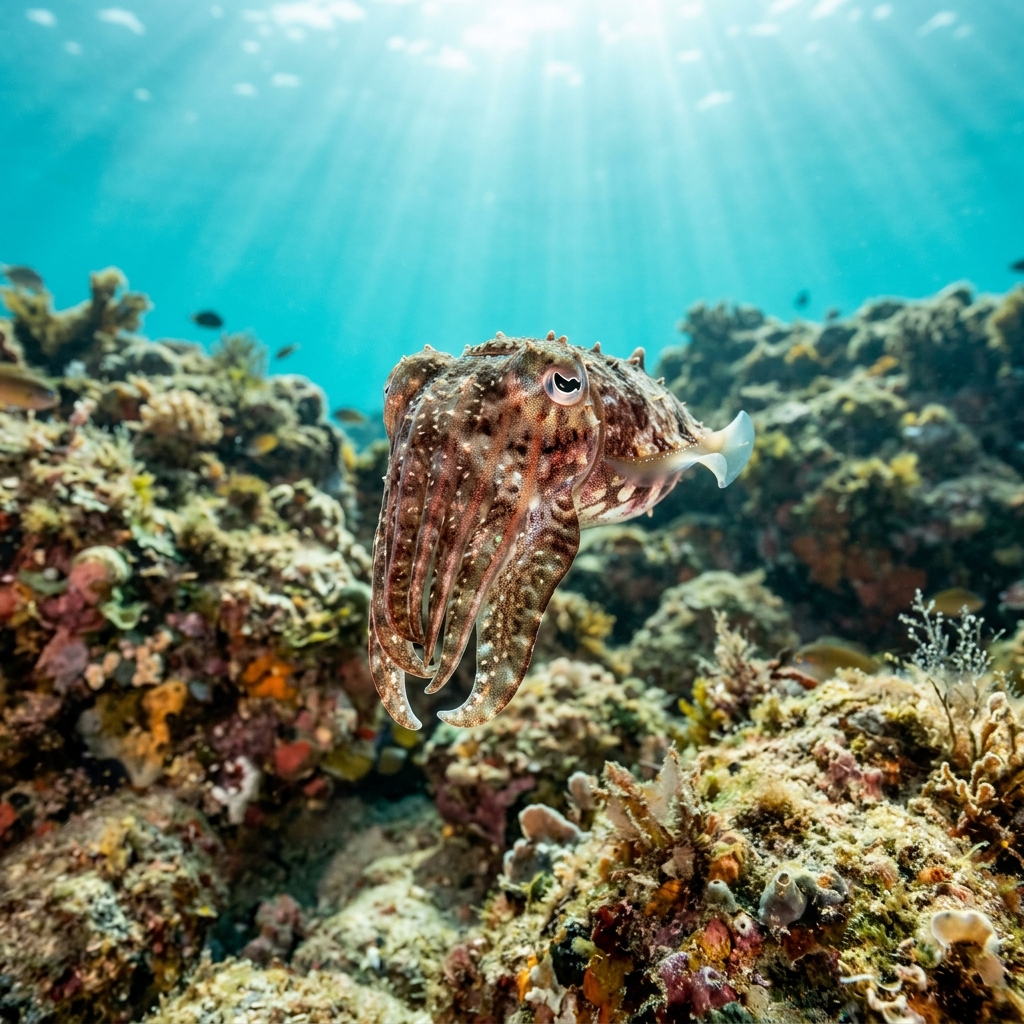
A small to medium cuttlefish with the typical laterally flattened body and undulating fin running the full length of the mantle. Colouration is highly variable, like all cuttlefish it can shift rapidly through browns, creams, and darker mottled patterns, but the mantle outline and fin profile are the most reliable underwater clues. Seen in cool, temperate waters between roughly 18 and 23 °C, which already narrows the field considerably compared to tropical relatives.
Divers most often come across reaper cuttlefish resting on or hovering just above sandy or rocky reef substrates, typically in the shallow to mid-water column. Like other cuttlefish they tend to hold their ground briefly, rippling their fins and cycling through colour changes before retreating if approached too closely. Encounters are usually solitary.
Cuttlefish use a porous internal shell called a cuttlebone to control buoyancy with remarkable precision, allowing them to hover motionless mid-water, a useful trick for ambushing small crustaceans and fish.
There is not yet enough monthly sighting data to point to a peak season, so treat it as a year-round possibility. Its observed water-temperature range of roughly 18 to 23 °C fits the cooler months of New South Wales and Victoria particularly well.
Reef neighbours a diver could mistake it for. Use the identification notes above to tell them apart.
Almost all logged sightings come from Australia, with New South Wales accounting for the great majority of records. Victoria and Tasmania also have scattered sightings, making the temperate south-east coast the place to search. Queensland produces only the occasional record.
Mapping where Reaper Cuttlefish is logged…
Reaper Cuttlefish are found almost exclusively along the temperate south-east coast of Australia. New South Wales has the strongest concentration of logged sightings, with additional records from Victoria, Tasmania, and occasionally Queensland.
There is not enough seasonal data to pinpoint a best month. Sightings span the year, and the species appears comfortable in water temperatures of around 18 to 23 °C, which in New South Wales and Victoria corresponds to the cooler months of autumn through spring.
Look for the classic cuttlefish body plan: a flattened oval mantle, a continuous fin along each side, and large W-shaped pupils. In the cool, temperate waters of south-east Australia, the limited number of cuttlefish species already narrows your options. The Mourning Cuttlefish is the closest look-alike in the same region.
Reliable size data for this species is not yet well documented. If you spot one, noting the mantle length relative to your hand or dive torch can help contribute useful records.
Yes, they are considered rare across the vast majority of sites where divers have logged them. Uncommon sightings occur at a handful of New South Wales sites, and only one site records them as common. Patience and local knowledge significantly improve your odds.
No. Like all cuttlefish they can bite if handled, and cuttlefish venom in their saliva is used to subdue prey, but they pose no meaningful threat to divers who observe without touching. Give them space and they will often stay put long enough for a good look.
Site and sighting data is aggregated from diver logs, iNaturalist and GBIF. For taxonomy and conservation status:
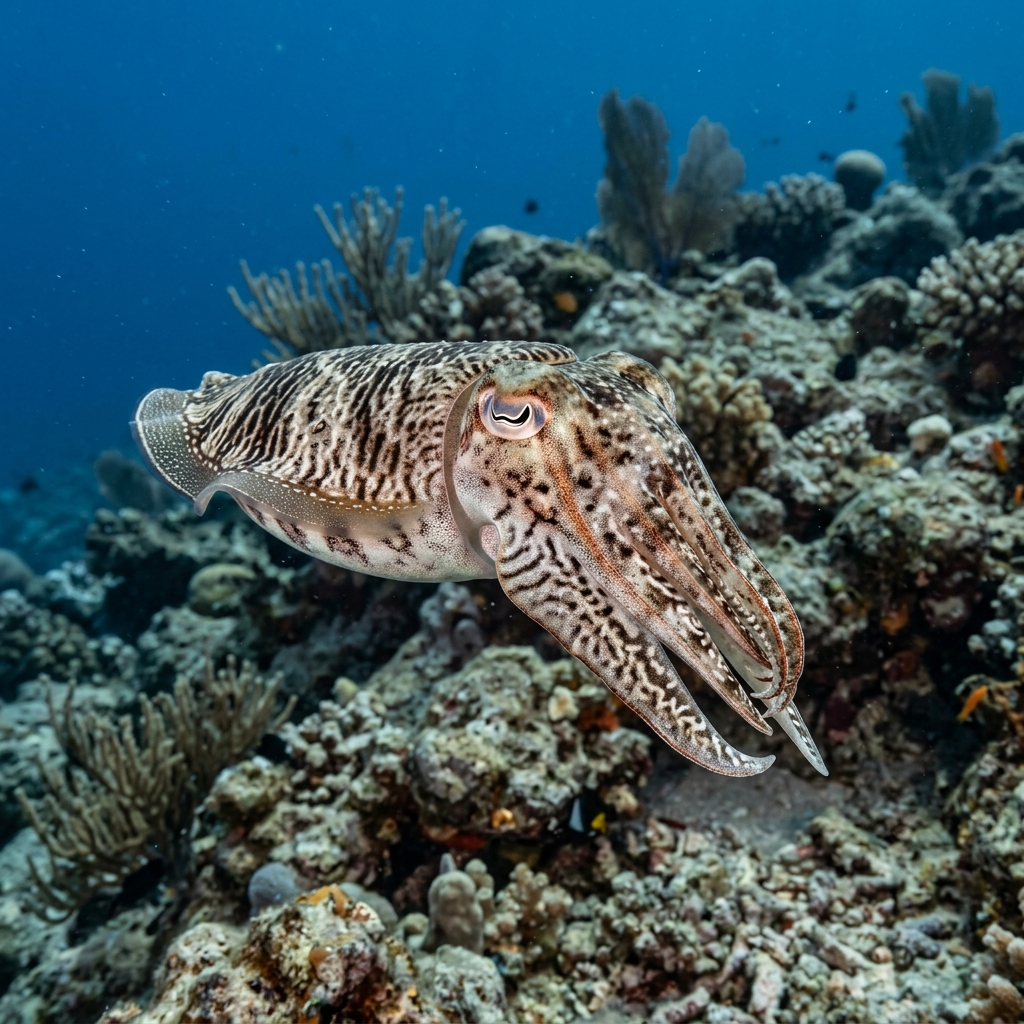
Pharaoh Cuttlefish
925 sites