Calcinus morgani
Small blue-legged hermit crab logged around Tahiti, Moorea and Xiaoliuqiu in 22-28C reef water, mostly on night dives.
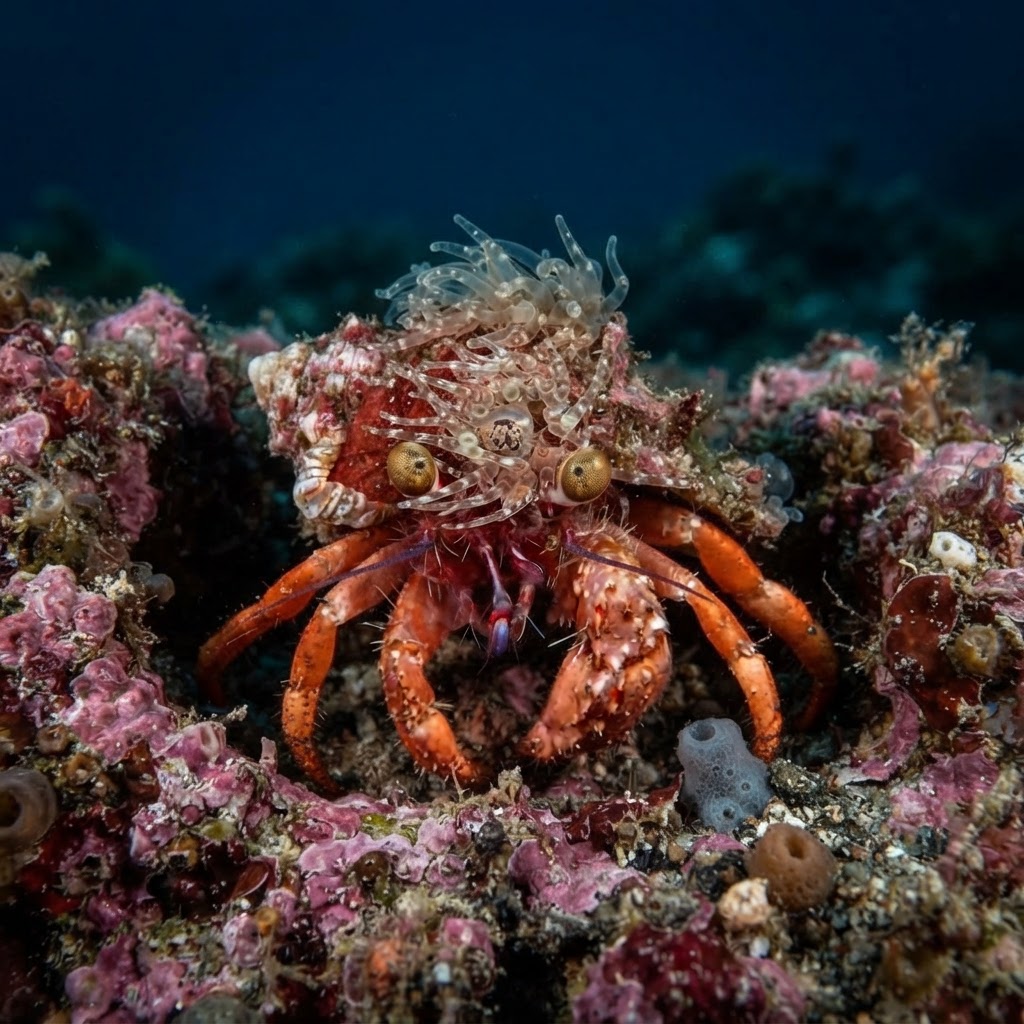
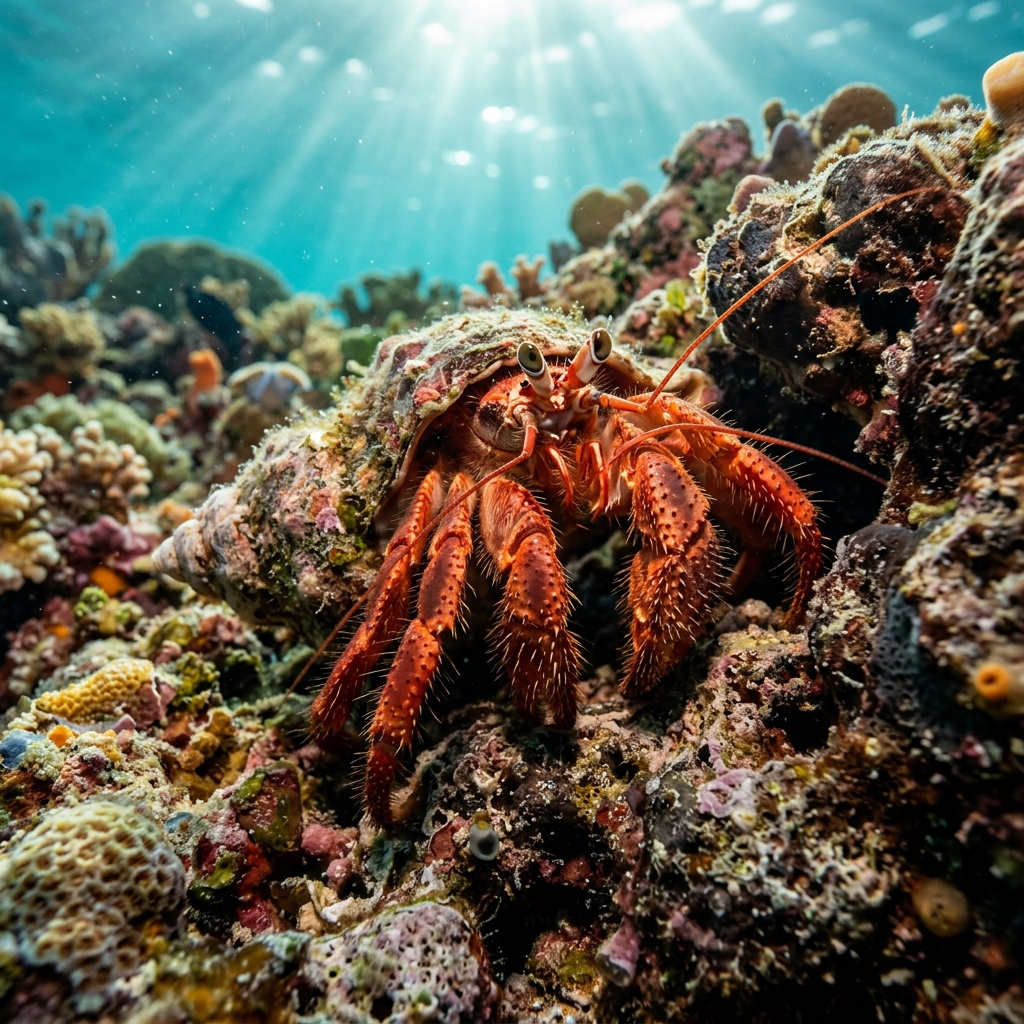
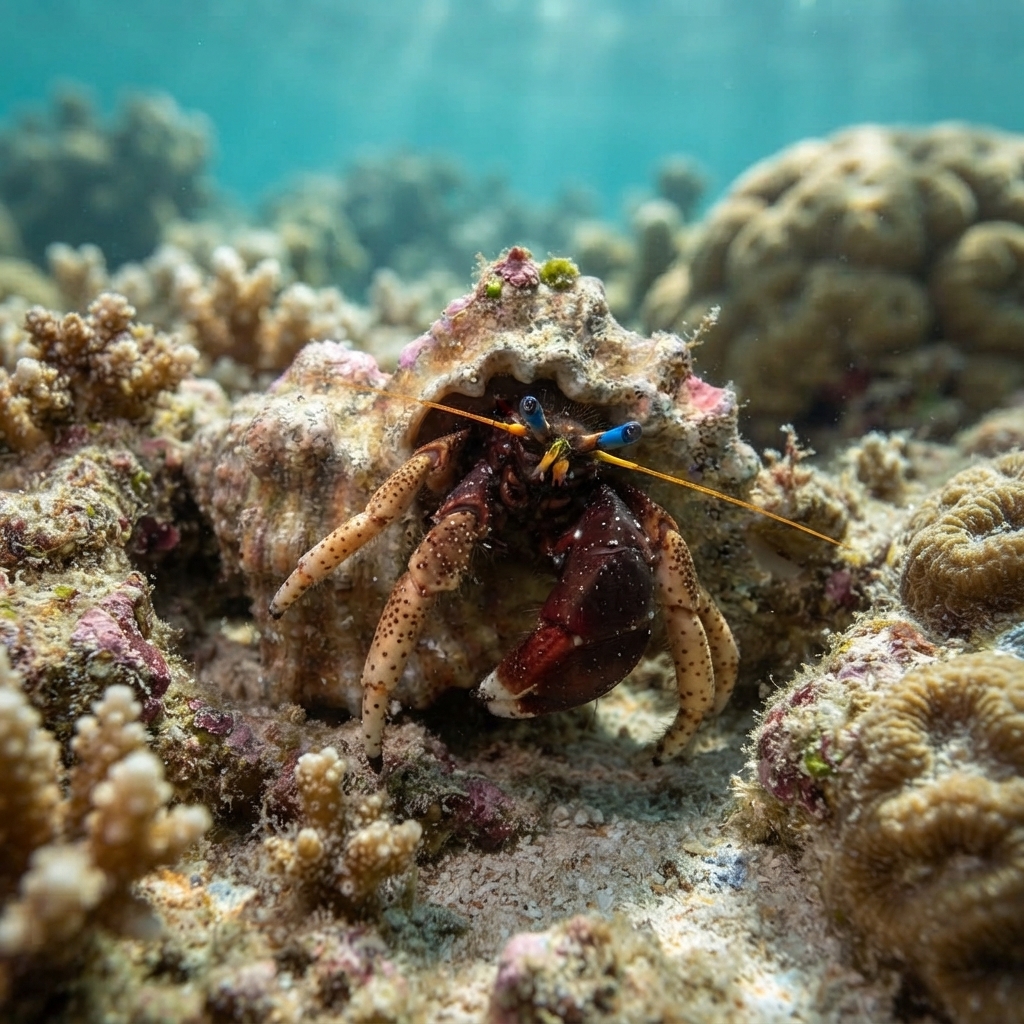
Small hermit crab recognised by its bright blue walking legs and orange-tipped pincers, tucked into a borrowed snail shell just a couple of centimetres across. Look closely at reef crevices and rubble patches rather than open sand, since it stays close to shelter and retreats fast into its shell when a torch beam or diver's hand passes over it.
Divers mostly find it wedged into cracks and rubble on the reef, poking its eyestalks and antennae out to feel for passing food before ducking back in in one quick motion. It is not a species that comes out to investigate divers; most sightings come from slow macro-focused dives or night dives where a torch beam catches the blue legs among the rubble.
Like other hermit crabs, it does not grow its own armour: as it grows it has to abandon its current shell and hunt down a bigger empty one, leaving it briefly exposed and vulnerable until it finds a fit.
No clear seasonal pattern shows up in the data, so treat it as a year-round find. It sits comfortably in 21.8 to 28.2C water, a range tropical and subtropical reefs hold for most of the year across its range.
Reef neighbours a diver could mistake it for. Use the identification notes above to tell them apart.
Most reliably logged around the Society Islands in French Polynesia, which accounts for the bulk of recorded sightings, with further records from Queensland and New South Wales in Australia, KwaZulu-Natal in South Africa, and Xiaoliuqiu and Longdong in Taiwan. Single logs also come from Guam and the Maldives' Central Atolls, suggesting a wide but thin Indo-Pacific spread rather than one reliable hotspot.
Mapping where Morgan's Hermit Crab is logged…
The strongest records come from the Society Islands in French Polynesia, with further sightings in Queensland and New South Wales, Australia, KwaZulu-Natal, South Africa, and Xiaoliuqiu, Taiwan. It also turns up in Guam and the Maldives' Central Atolls, so it is a wide but scattered Indo-Pacific find.
There is no strong seasonal pattern in sightings, so it is considered a year-round species. It favours reef water between about 22 and 28C, a range most of its dive sites hold across the year.
Check for bright blue legs and orange-tipped claws poking out of a small borrowed shell, usually just a couple of centimetres long. It sits in reef crevices and rubble rather than open sand, and pulls back into its shell quickly if disturbed.
It is a small hermit crab, staying only a few centimetres across including its borrowed shell, which makes it a macro-photography subject rather than something spotted from a distance.
No. It poses no threat to divers and will simply retreat into its shell if approached too closely.
It has a soft, unprotected rear body and no shell of its own, so it occupies an empty snail shell for protection. As it grows it has to leave that shell behind and find a larger one, a vulnerable moment divers rarely get to see.
Site and sighting data is aggregated from diver logs, iNaturalist and GBIF. For taxonomy and conservation status:
European Green Crab
2,469 sites