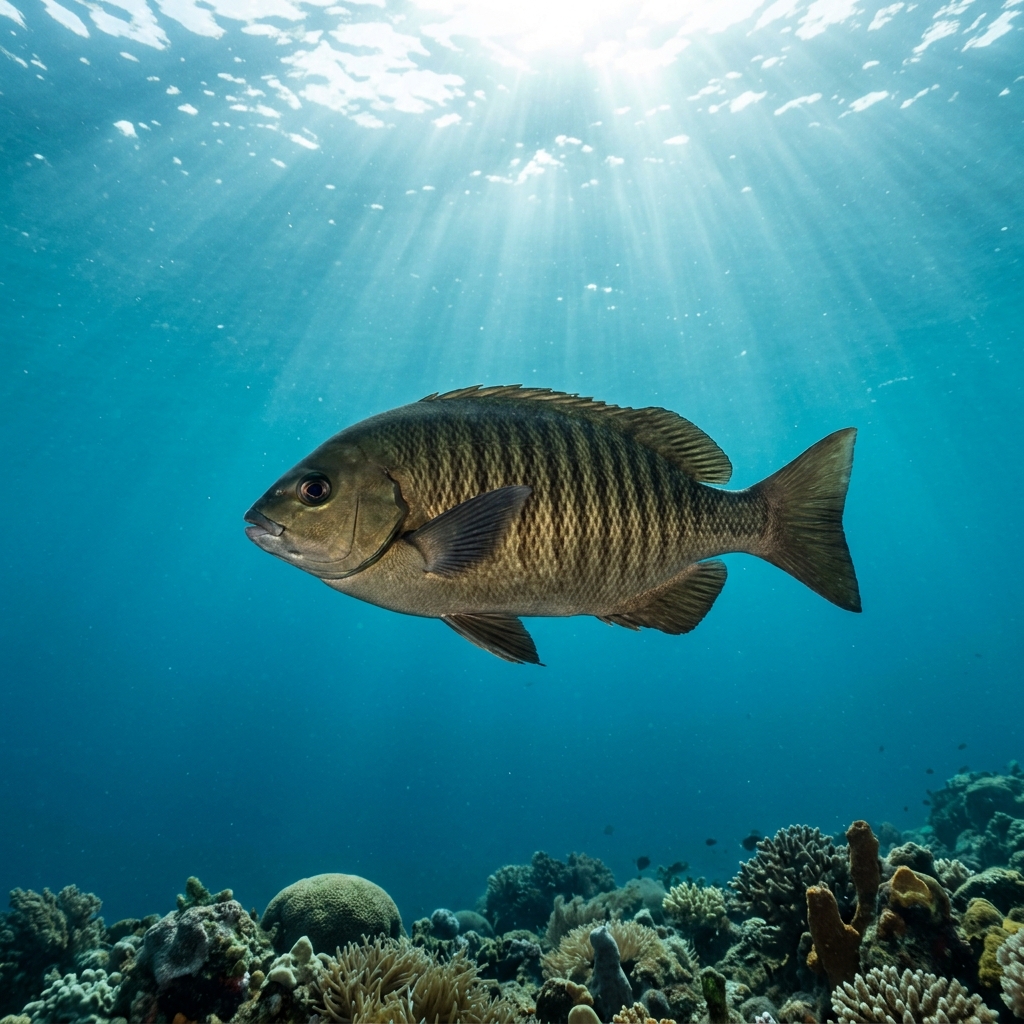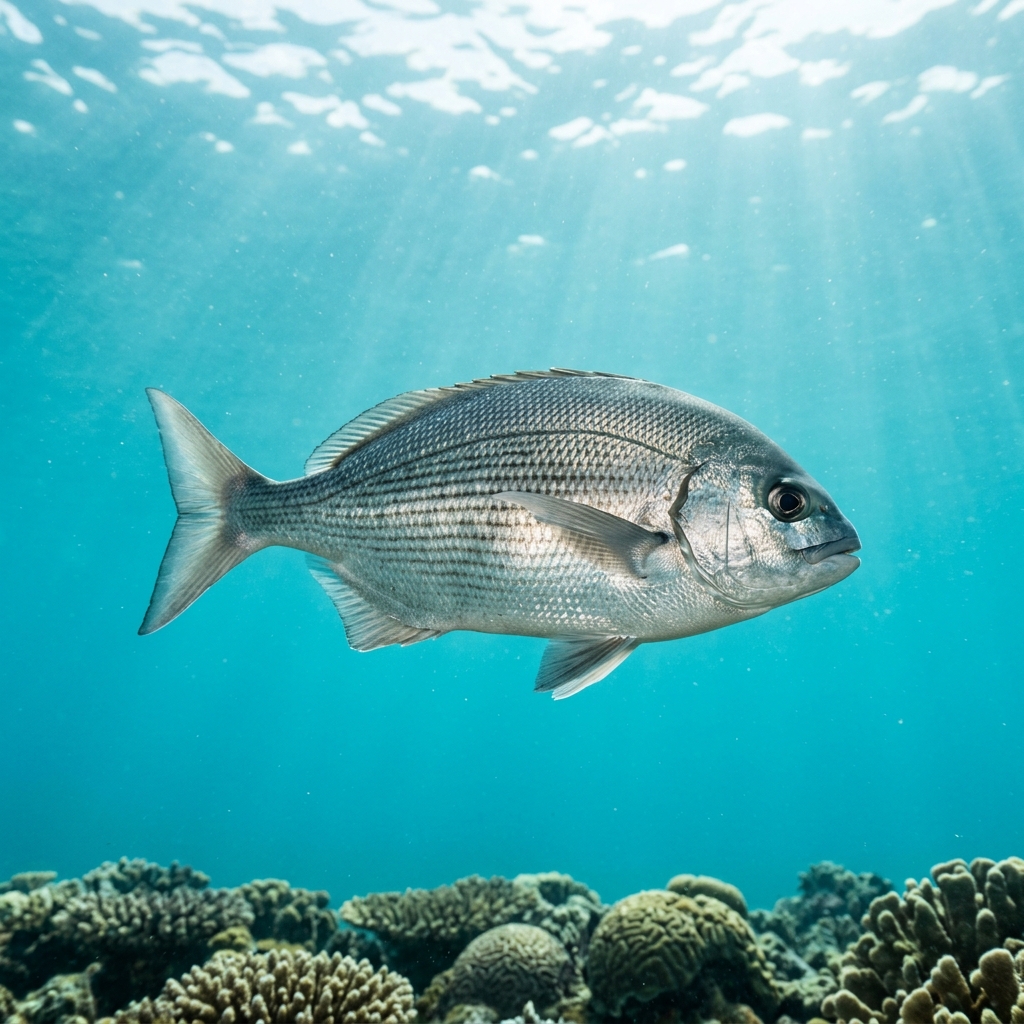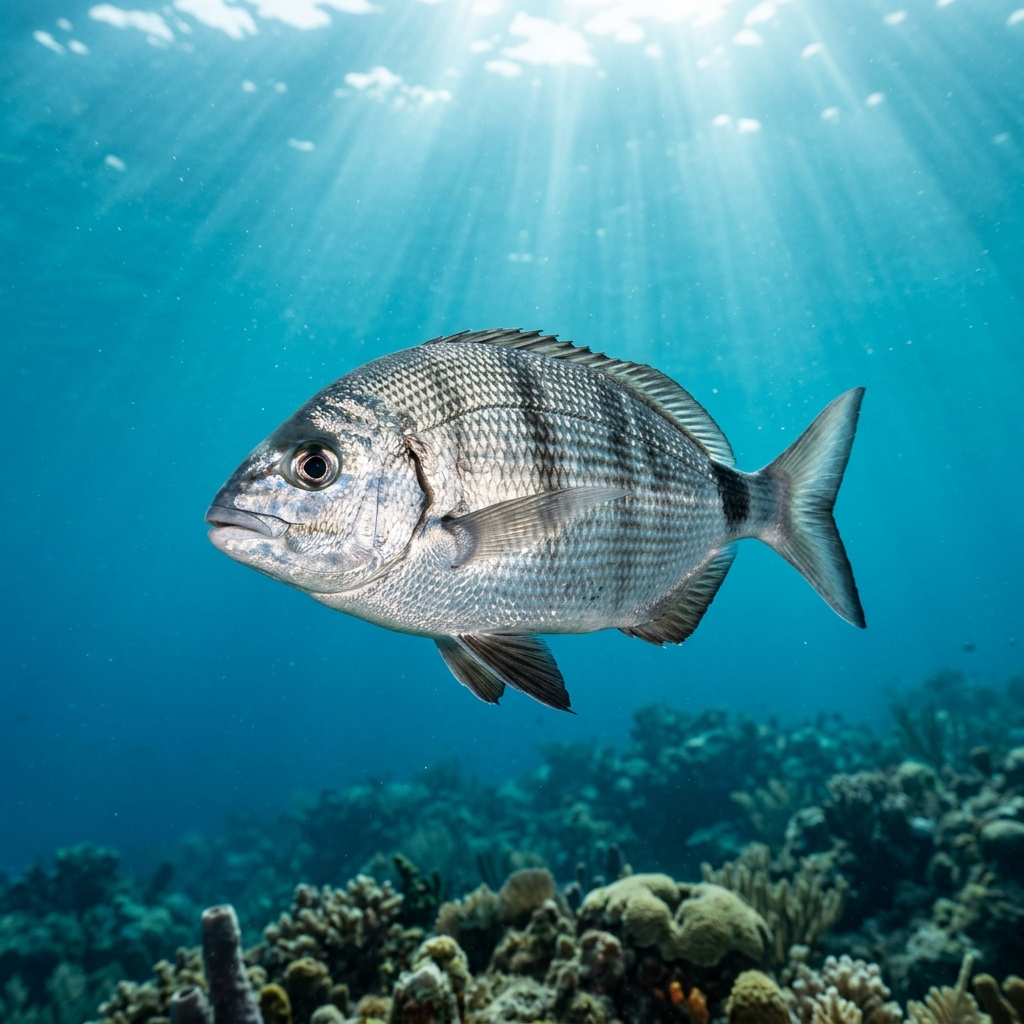
Tilodon sexfasciatus
Spot the banded Moonlighter in cool southern Australian waters. Best sightings in Western Australia and Victoria, November to April.
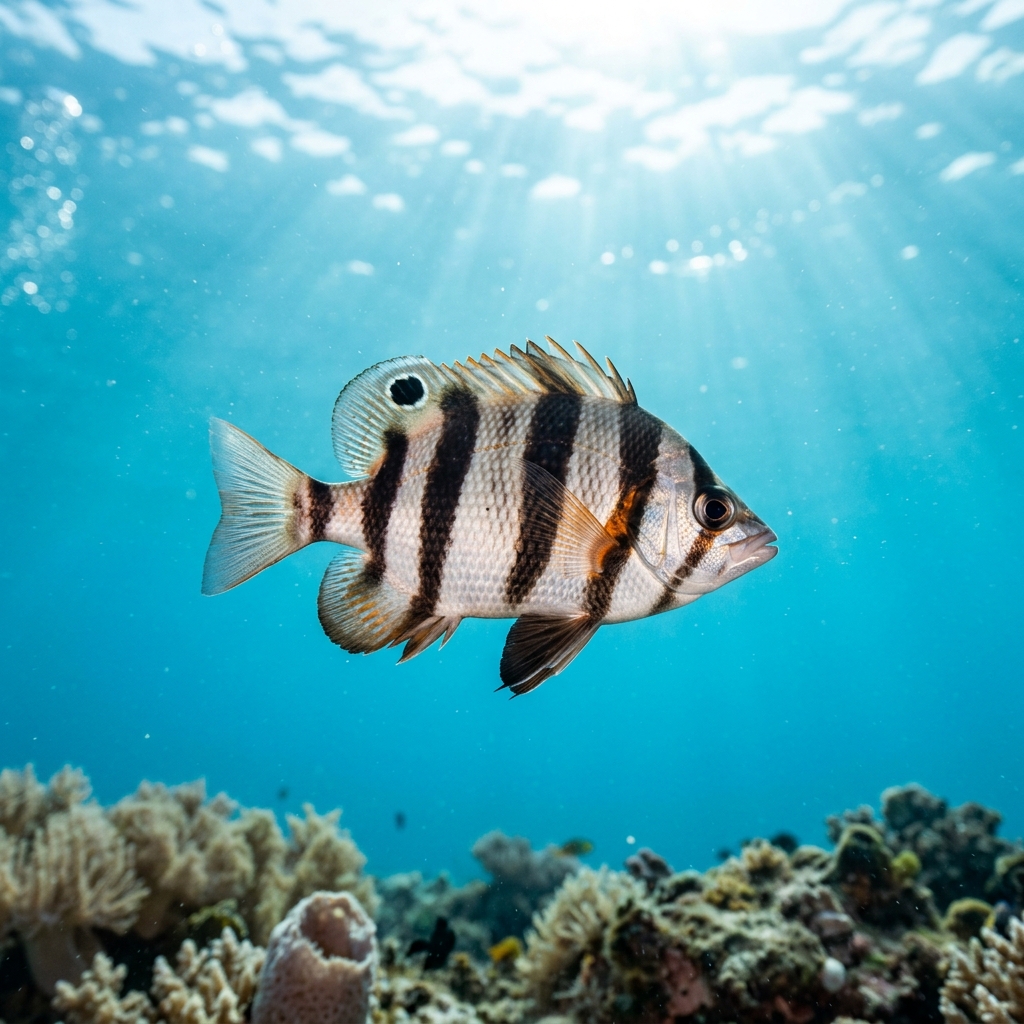
Six bold, dark vertical bars on a pale silvery-white body make this fish one of the easier reef fish to pick out in southern Australian waters. It reaches around 28 cm, giving it a solid, disc-shaped profile similar to a drummer or luderick. The bars run from the dorsal fin down to the belly and remain distinct even in low-visibility conditions. Juveniles carry more vivid contrast in their banding, fading slightly in larger adults.
Moonlighters are typically seen cruising close to the reef structure, often near rocky outcrops and kelp-covered walls in cooler, shallower water. They are carnivorous and tend to forage deliberately rather than school tightly, though loose groups are sometimes encountered. They are generally unfazed by divers who approach steadily and without rapid movement.
The name refers to its pale, almost luminous flanks and dark banding, which can give it a striking appearance under a torch or video light on late-afternoon dives.
Sightings concentrate between November and April, aligning with the austral spring and summer warming of southern Australian reefs.
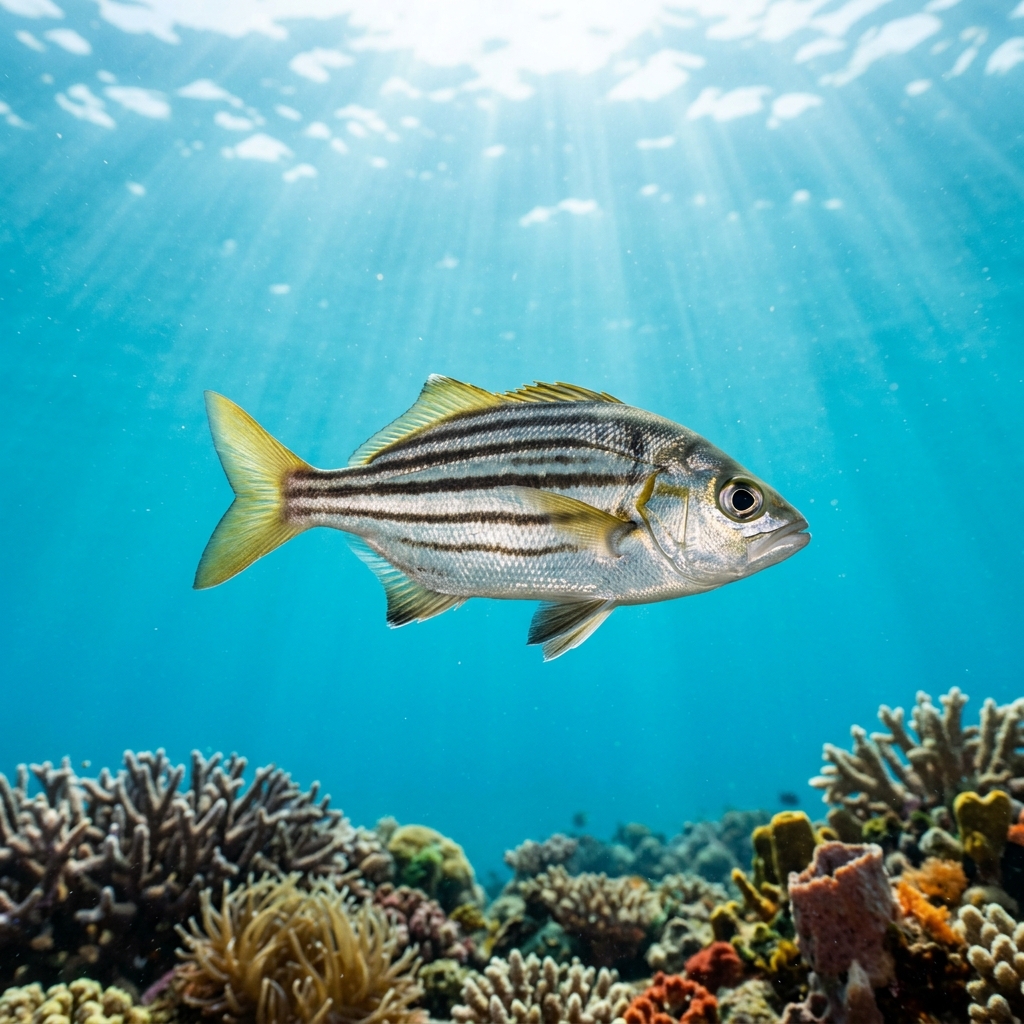
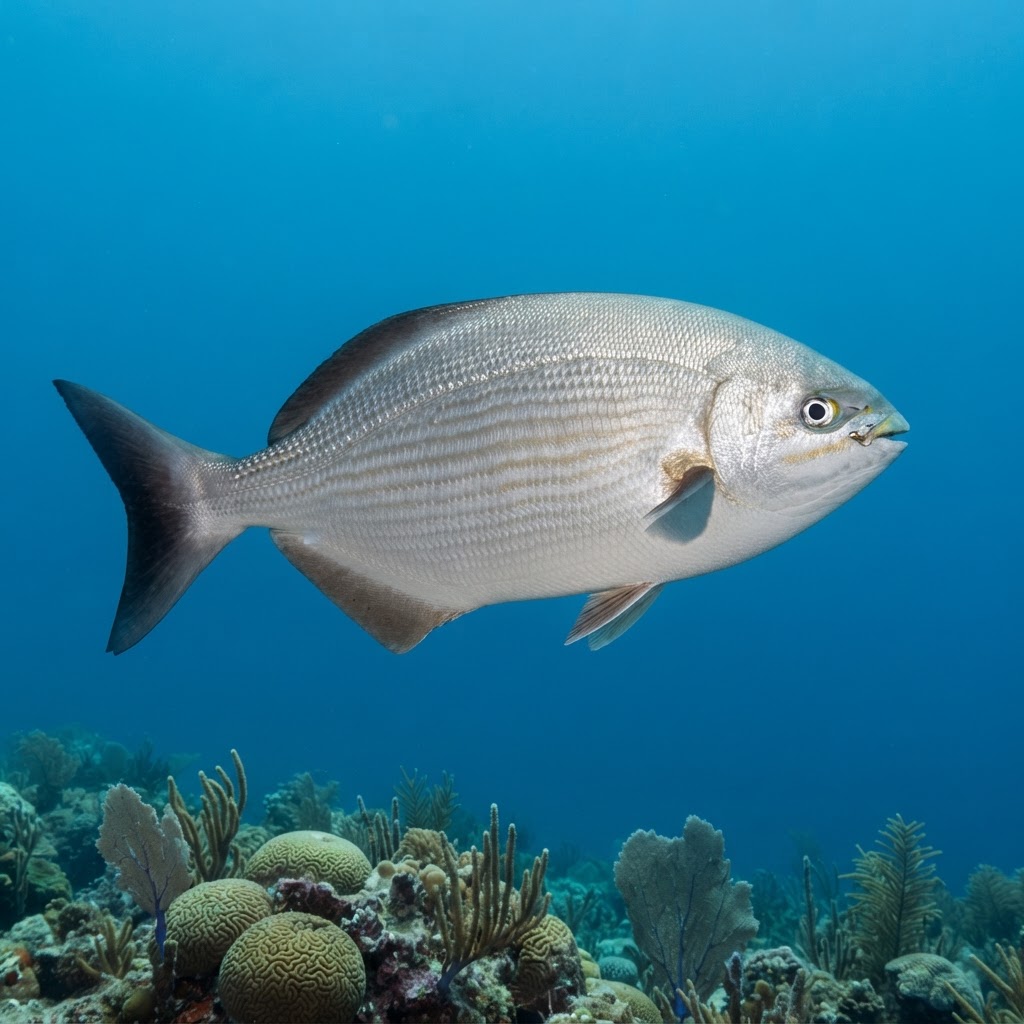
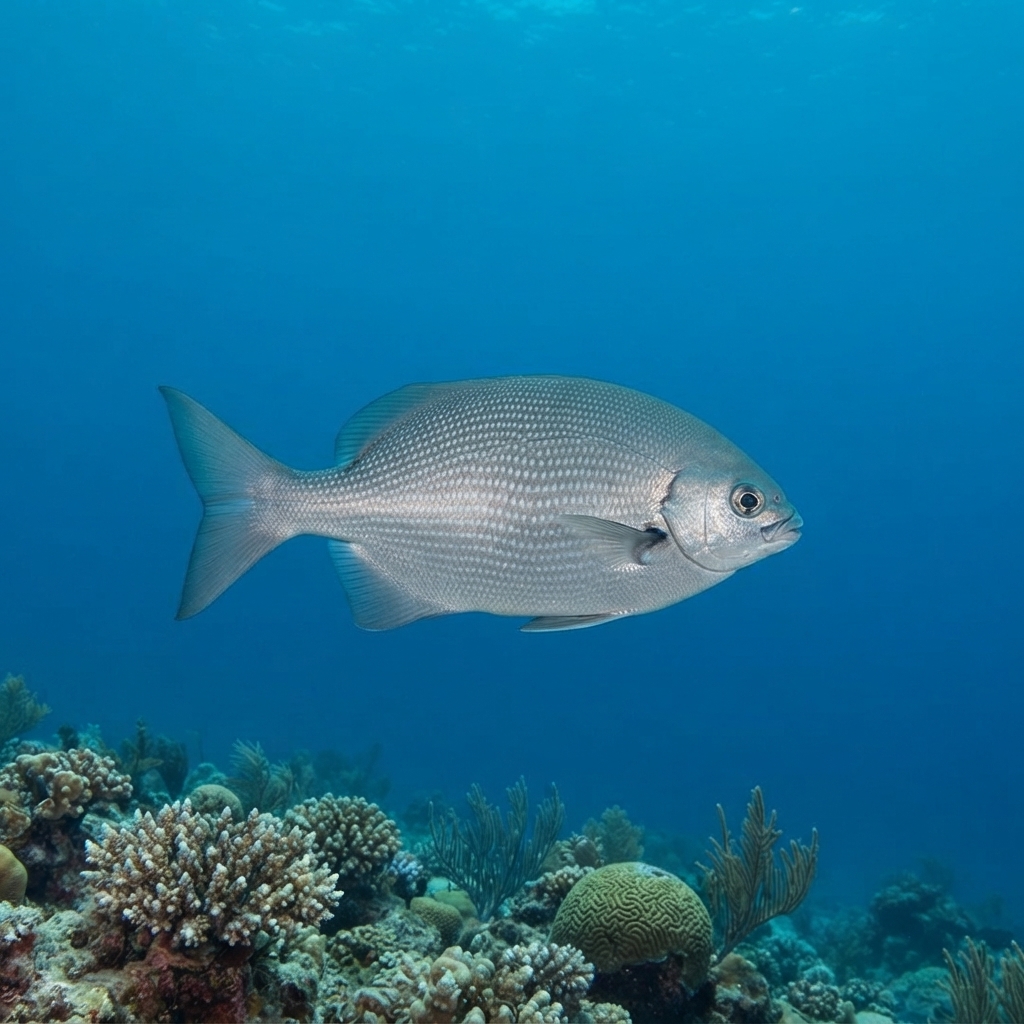
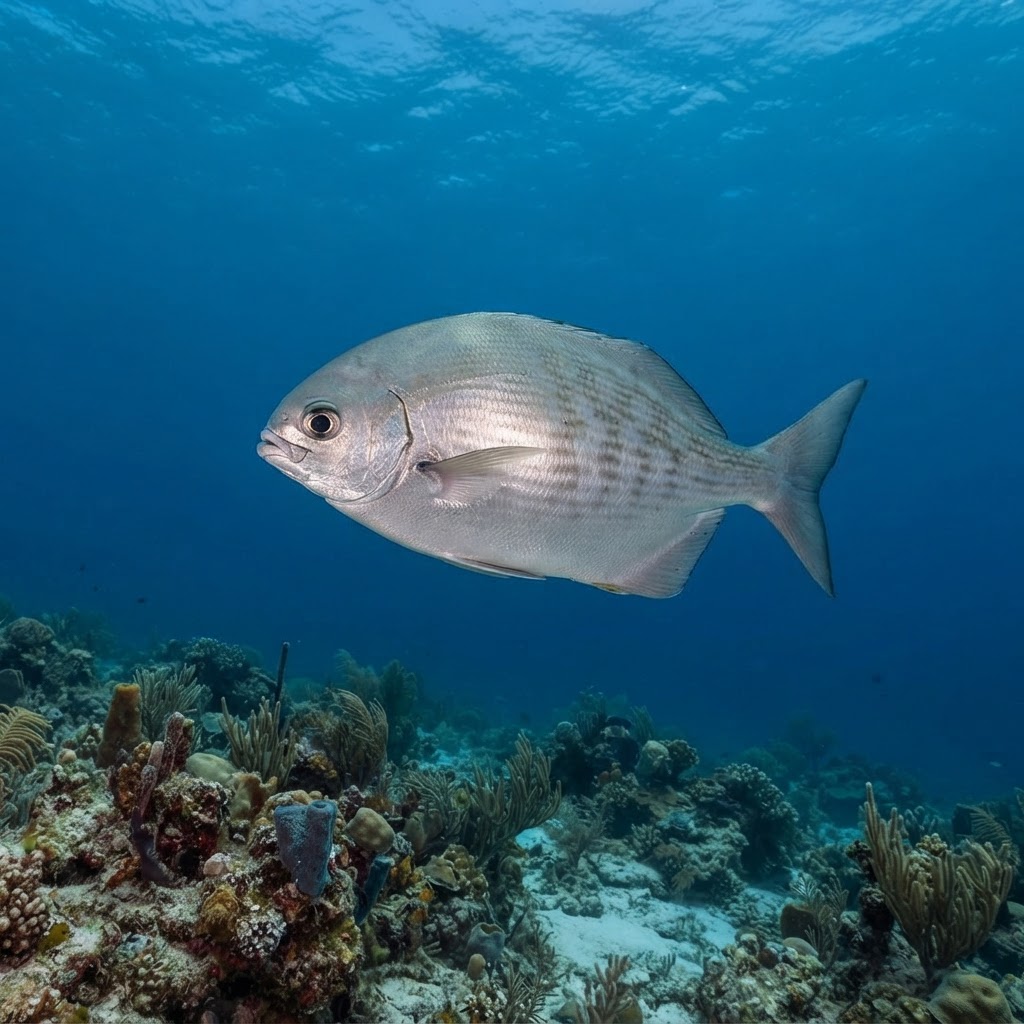
Reef neighbours a diver could mistake it for. Use the identification notes above to tell them apart.
Almost exclusively an Australian species, it is most reliably logged along the reefs of Western Australia and Victoria, with a solid presence in South Australian waters too. Queensland sites account for a smaller share of records. This is a temperate-water specialist, so the southern coastline is where you focus your search.
Mapping where Moonlighter is logged…
Moonlighters are found almost entirely in Australia, with the strongest representation across Western Australia, Victoria, and South Australia. Rocky and kelp-covered reefs along the southern coastline are the go-to habitat. Queensland sites record it less frequently.
Sightings peak between November and April in the Southern Hemisphere, corresponding to the austral spring and summer. Water temperatures in the 16 to 20 °C range across southern Australian reefs suit this species well.
Look for six clear, dark vertical bars on a pale silver body roughly the size of your forearm. The disc-shaped body and bold banding are the key features. Juveniles show sharper contrast than adults.
Moonlighters typically reach around 28 cm in length. That gives them a solid, oval-bodied presence on the reef without being a large fish.
At most sites where it is recorded, Moonlighter is considered uncommon, and it is rare at a good number of locations. Common sightings are possible but not the norm. Patience and knowing the right season and region improves your chances considerably.
Site and sighting data is aggregated from diver logs, iNaturalist and GBIF. For taxonomy and conservation status:
Blue Sea Chub
554 sites