Pomacentrus simsiang
A small blue-and-yellow damsel logged year-round in Palau's Koror & Malakal, staying active in 27 to 29 C reef water.
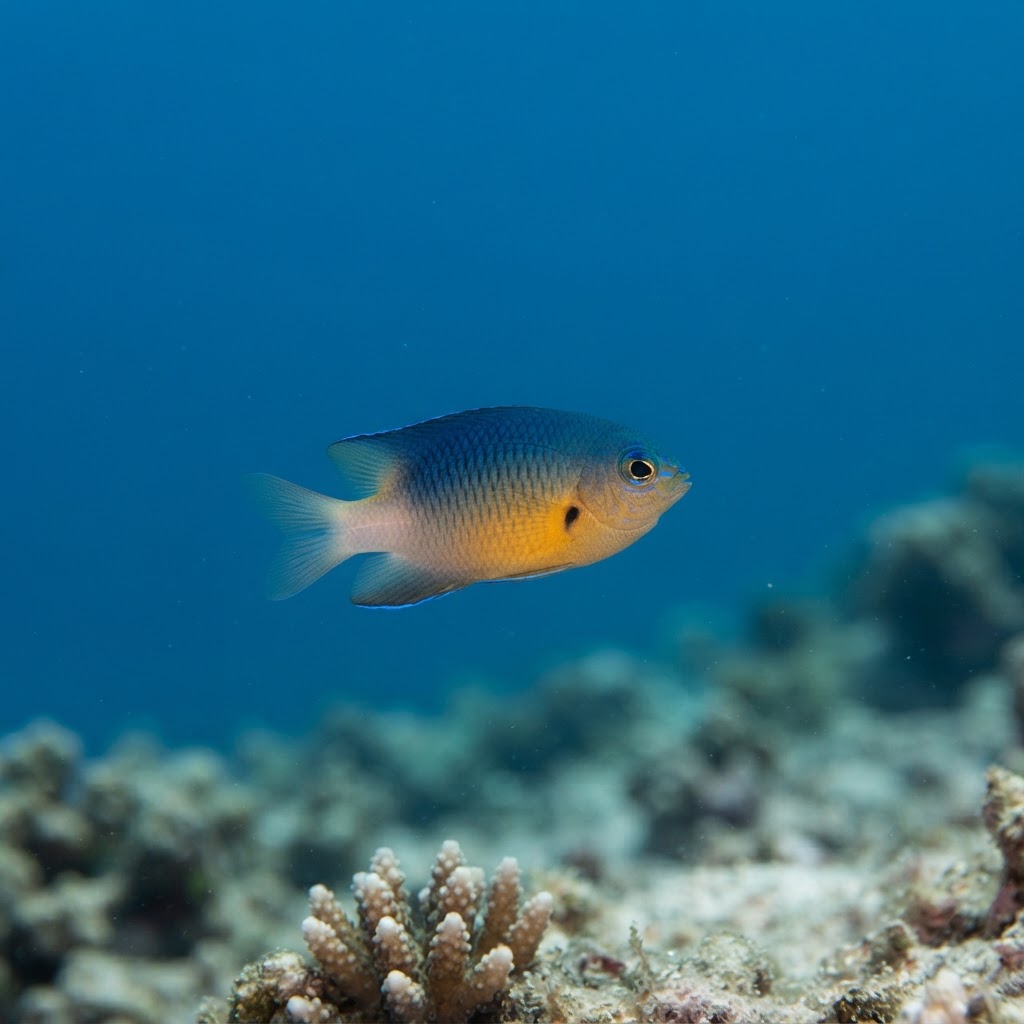
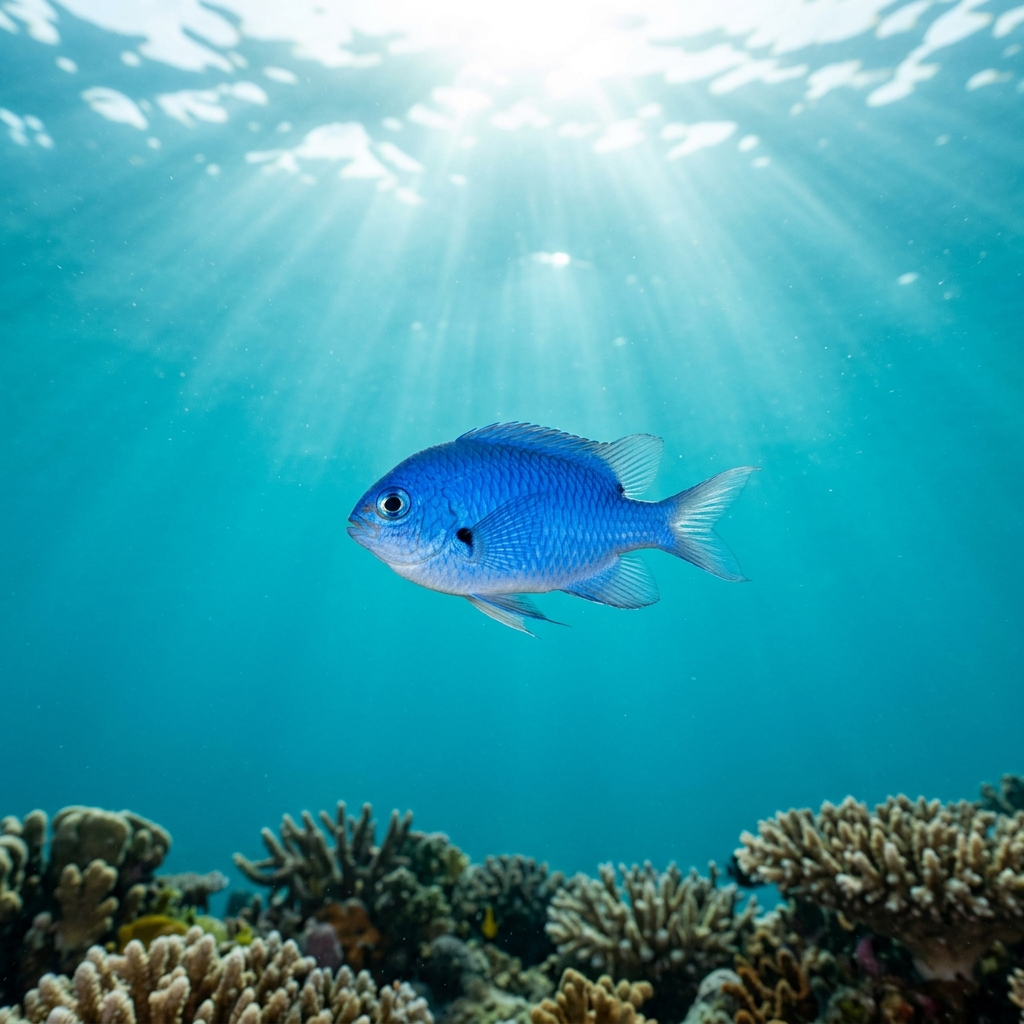
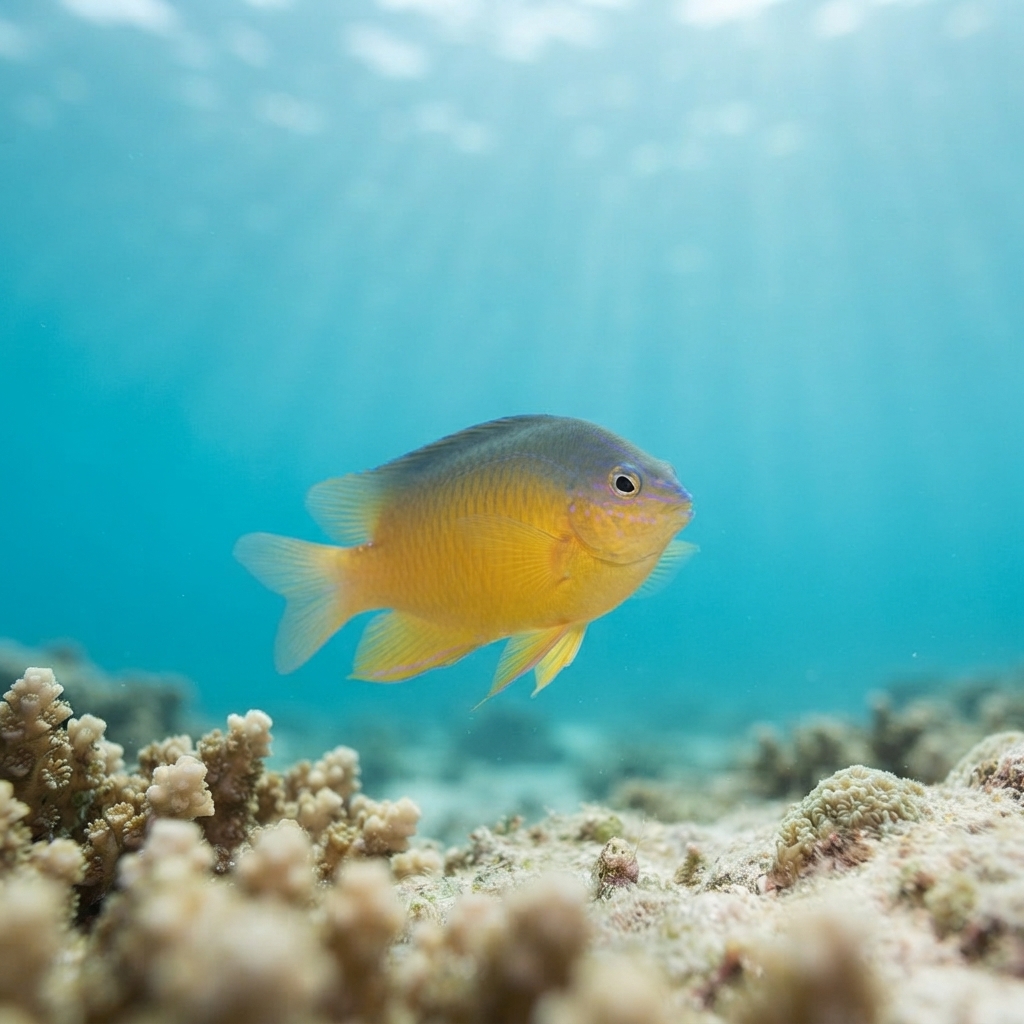
A pocket-sized damsel, topping out around 5 cm, with a deep blue to blue-grey body that catches light on the reef flats and slopes it favours. Look for a paler or yellowish wash toward the tail and a compact, oval body shape typical of the genus. It sits low over coral rubble and hard coral heads rather than out in open water, which helps separate it from more free-swimming reef fish of similar size.
Expect to find it hovering close to coral heads and rubble patches, darting for cover rather than bolting far when a diver approaches. Sighting frequency ranges from uncommon to very common depending on the site, so on a good reef in Palau you may spot several in a single dive, while elsewhere it takes a more careful look. Like most small damselfish it tends to stay within a body length or two of a favoured bit of structure, using it as an instant bolt-hole.
As with other Pomacentrus damsels, individuals often hold small territories around a patch of coral or rubble and will chase off other small fish that drift too close, a useful clue for telling them apart from schooling species that show no such territorial behaviour.
No clear season shows up in the sighting data, and with a comfortable range of 26.9 to 29.3 C it is a year-round presence on the tropical reefs it inhabits. Plan around good visibility and calm conditions at your chosen site rather than a particular month.
Reef neighbours a diver could mistake it for. Use the identification notes above to tell them apart.
Palau is by far the strongest bet, especially around Koror & Malakal and the Rock Islands, where it turns up on a large share of logged dives. Koh Tao in Thailand is another reliable spot, and it also shows up across the Visayas in the Philippines, with occasional sightings in Sulawesi and Raja Ampat in Indonesia.
Mapping where Moluccan Damselfish is logged…
Palau is the standout location, particularly Koror & Malakal and the Rock Islands, where it is logged more often than anywhere else. It is also a regular sighting at Koh Tao in Thailand and across the Visayas in the Philippines, with scattered records in Sulawesi and Raja Ampat, Indonesia.
There is no strong seasonal pattern in the sighting data, and it sits comfortably in water between 26.9 and 29.3 C, so it is present on its home reefs throughout the year. Choose your trip based on general dive conditions rather than a specific season.
Look for a small, oval-bodied damsel around 5 cm long with a blue to blue-grey body and a lighter, sometimes yellowish tail. It stays close to coral heads and rubble on the reef rather than swimming in open water.
They are a small reef fish, typically reaching around 5 cm in length, which puts them among the smaller damselfish divers encounter on tropical reefs.
No, they pose no danger to divers. They are small, reef-associated fish that retreat into coral or rubble rather than confront anything as large as a diver.
Site and sighting data is aggregated from diver logs, iNaturalist and GBIF. For taxonomy and conservation status:
Dascyllus
3,697 sites