Miamira alleni
A rare nudibranch find, most reliably logged on reefs around Luzon, Philippines, in warm 25-31C water year-round.
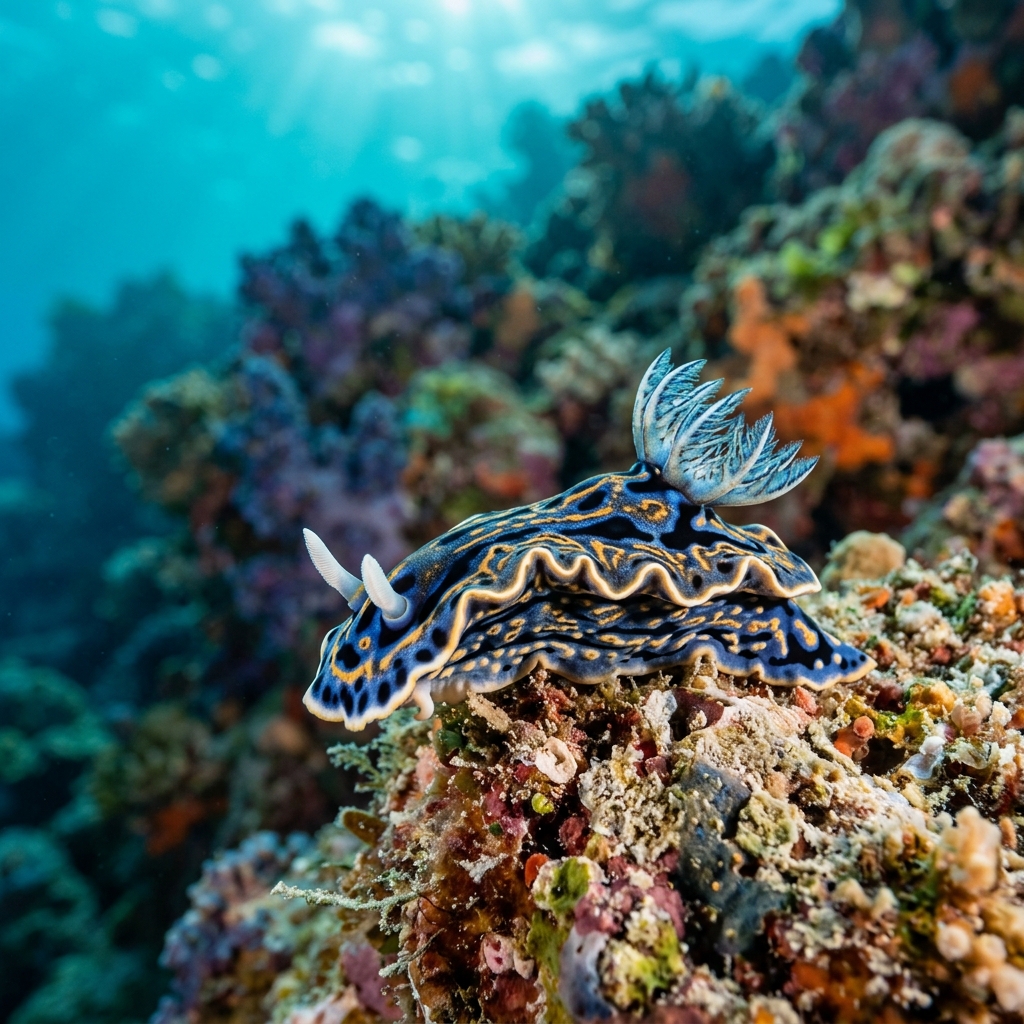
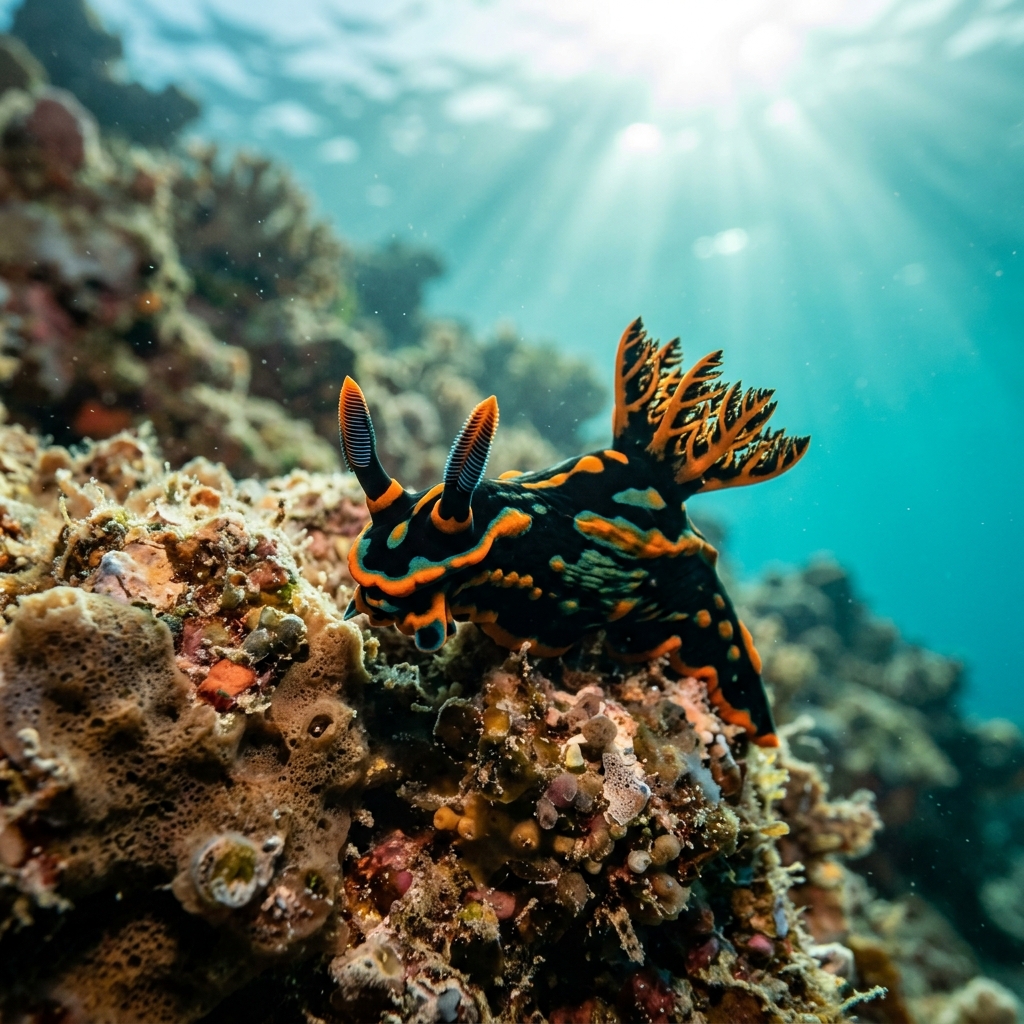
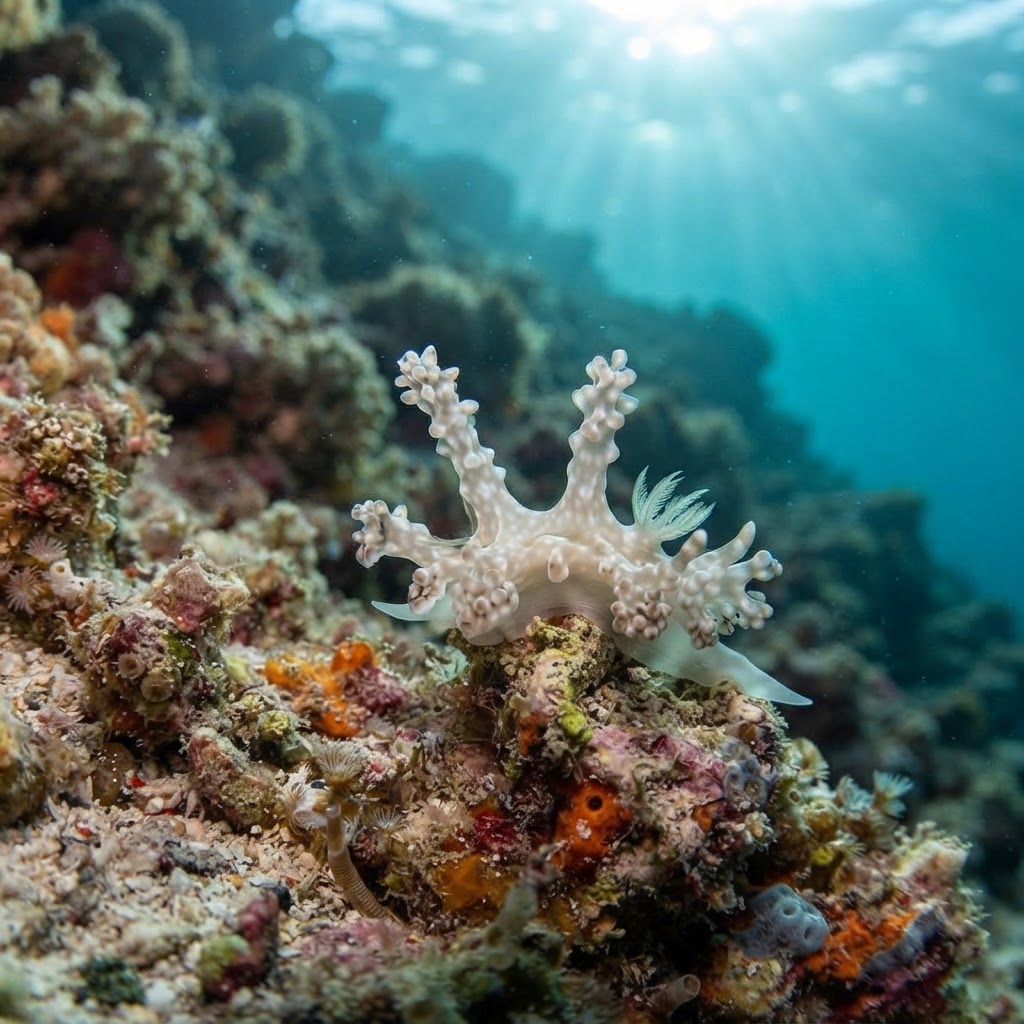
Recognisable by a warty, tuberculate mantle rather than the smooth backs seen on many chromodorid nudibranchs, giving it a rougher, textured profile underwater. Colouration runs toward mottled tones that break up its outline against sponge and algae-covered substrate. Look closely at the mantle edge and rhinophores (the paired sensory stalks on the head) for the fine detail that separates it from smoother-bodied look-alikes, since exact size in the water is not well documented for this species.
Like other chromodorid nudibranchs, expect to find it moving slowly across the reef surface, grazing on sponges rather than swimming or fleeing when approached. Divers log it as an uncommon find even at the sites where it does turn up, so spotting one usually means a slow, careful look over encrusted rock and rubble rather than an open-water search. It shows no reaction to divers beyond its usual unhurried crawl.
Like its chromodorid relatives, it likely feeds on sponges and stores chemical compounds from that diet in its own tissue as a defence against predators, which is part of why nudibranchs like this one can afford to be so slow and conspicuous.
Sightings don't show a detectable seasonal pattern, and with observed water temperatures sitting between 25.2 and 31.2C, it's likely present on Luzon's reefs throughout the year rather than tied to a particular month.
Reef neighbours a diver could mistake it for. Use the identification notes above to tell them apart.
Every logged sighting of this species comes from the Philippines, with Luzon standing out as the region where divers most consistently find it. If you are searching specifically for this nudibranch, Luzon's reefs are currently the only well-documented spot to focus a muck or reef dive around.
Mapping where Miamira Alleni is logged…
All confirmed sightings are from the Philippines, with Luzon the standout region for divers looking to find this species.
There's no clear seasonal pattern in the sighting data, and it's found in water from 25.2 to 31.2C, so it's a reasonable year-round target on Luzon's reefs.
Look for a nudibranch with a distinctly warty, tuberculate mantle rather than a smooth back, set against mottled colouring that blends with reef substrate. Check the rhinophores and mantle edge closely since it can be confused with smoother chromodorid species.
Exact size data isn't well documented for this species, but like most chromodorid nudibranchs it's likely a small, reef-dwelling animal best spotted with a slow, close look at the substrate.
No, it poses no danger to divers. It's a slow-moving, harmless nudibranch that relies on chemical defences rather than any threat to humans.
Site and sighting data is aggregated from diver logs, iNaturalist and GBIF. For taxonomy and conservation status:
Blue Dragon
3,163 sites