Mexichromis mariei
Spot Marie's Mexichromis in Western Australia and Bali in 27-29°C water. Here's how to ID it and where divers actually log it.
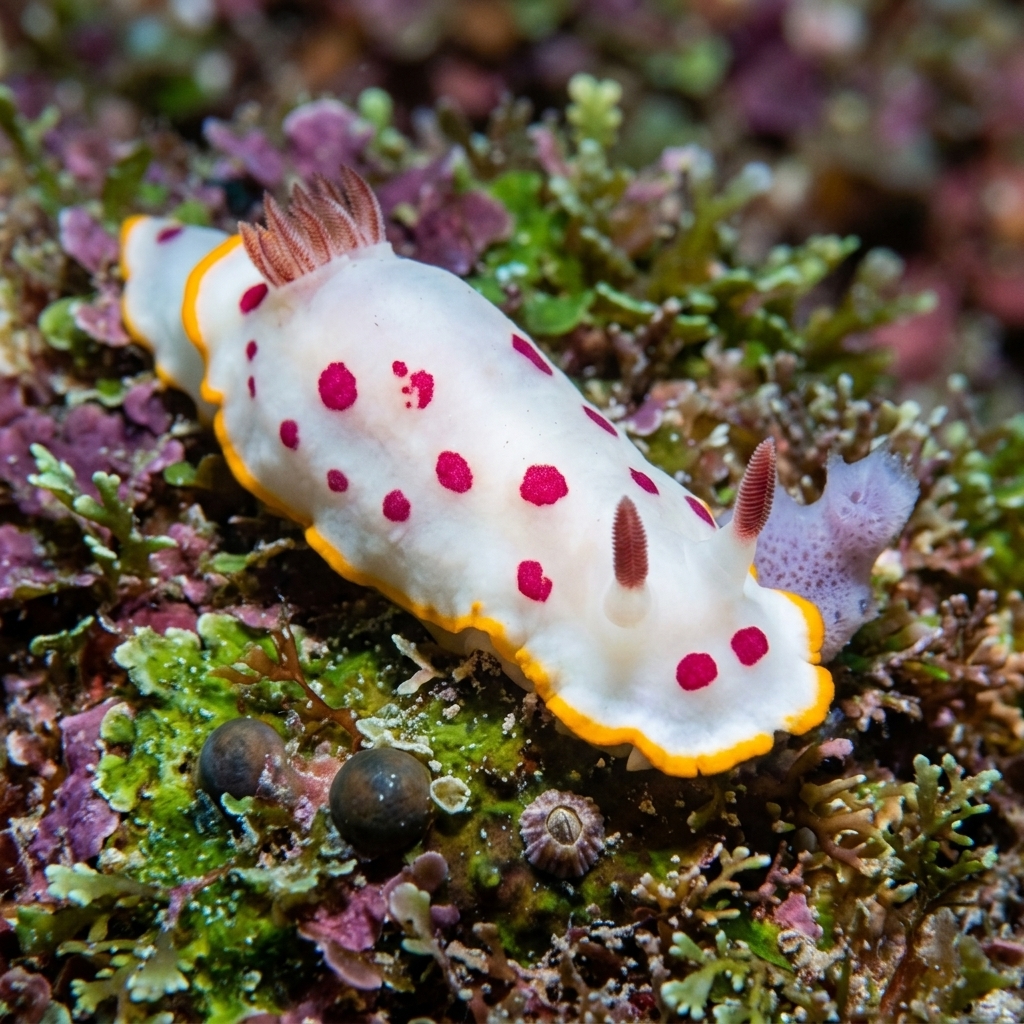
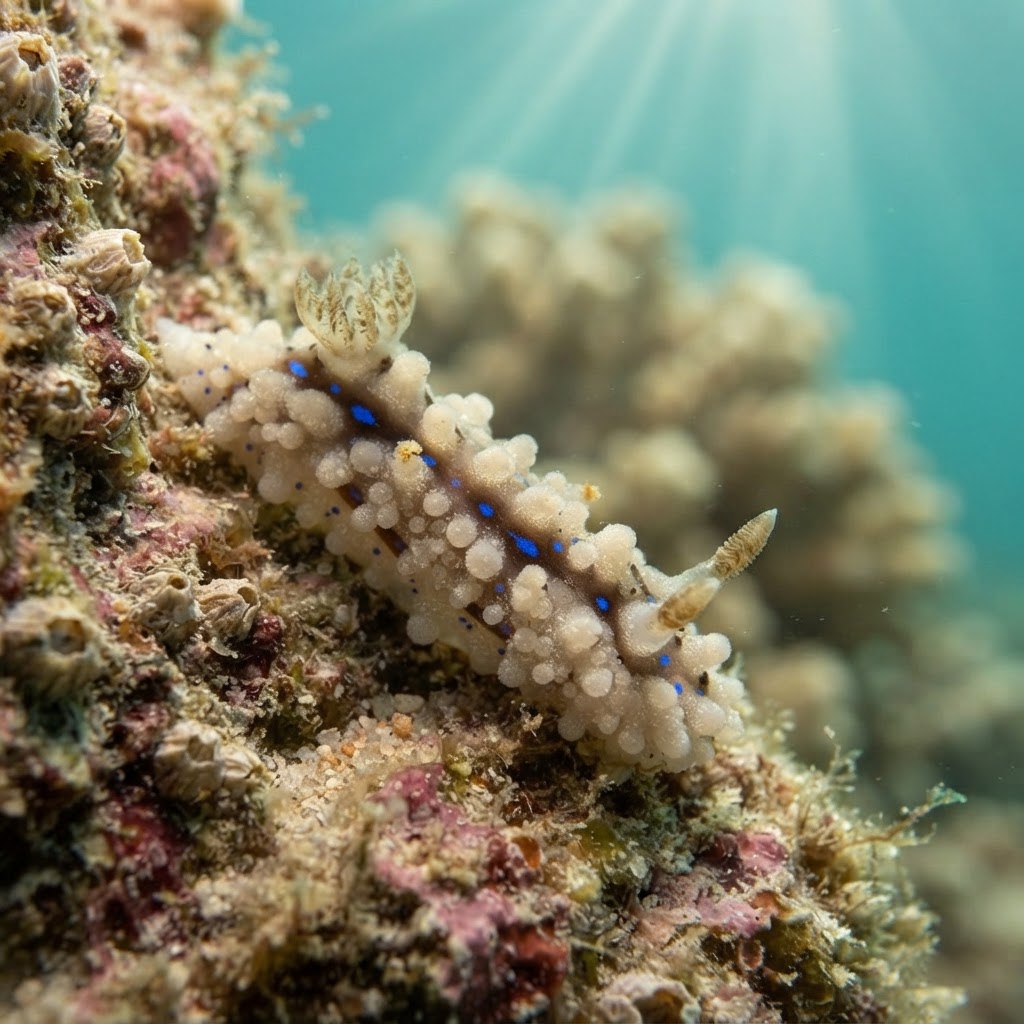
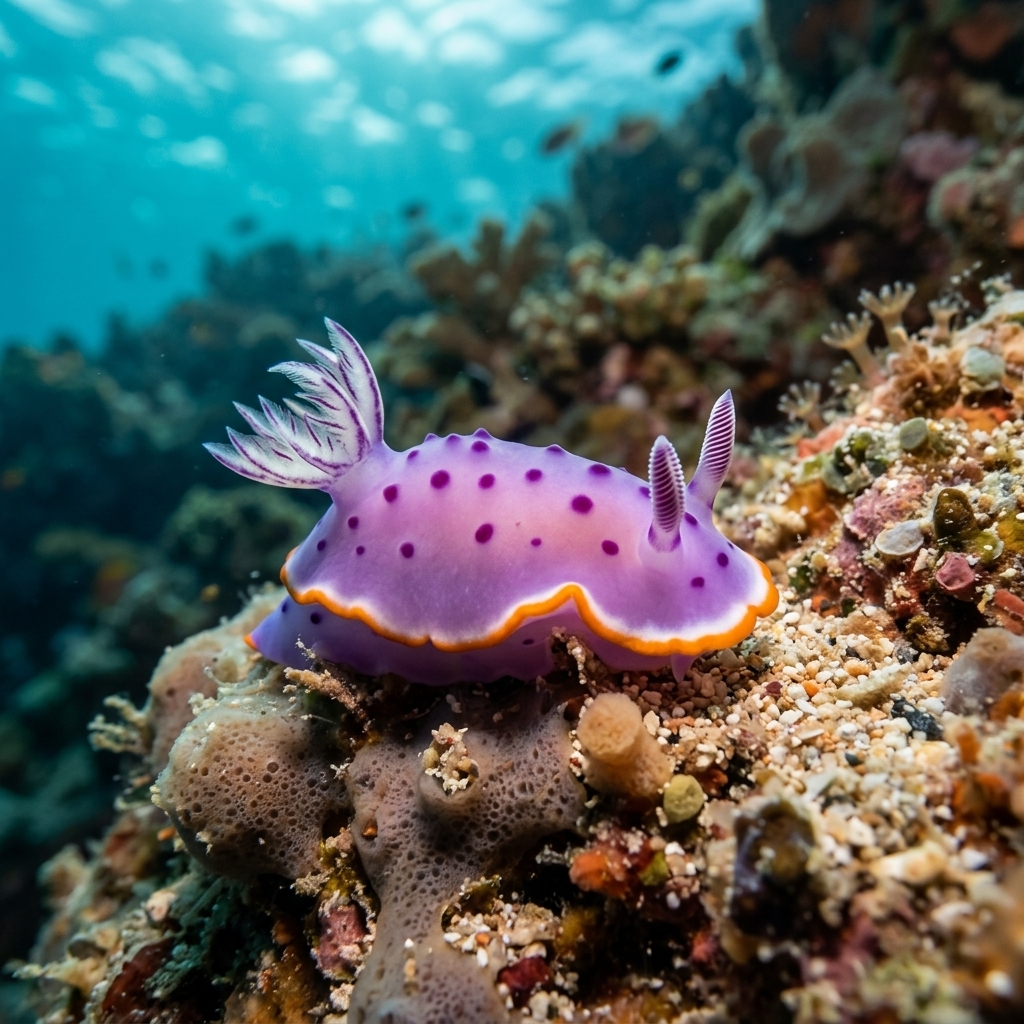
Marie's Mexichromis is a small chromodoridid nudibranch (soft-bodied, shell-less mollusc) with the characteristic oval, flattened body shape of the family. Look for a pale or white body edged with a contrasting mantle border and the clustered, retractable gill plume at the rear and rhinophores (scent organs) at the front, both typically tipped in a contrasting colour. At the sizes typical of the family it is easy to overlook against encrusting sponge, which is usually where you will find it. The combination of body ground colour, mantle-edge banding, and rhinophore colour is the key to separating it from similar species.
Like most chromodoridids, Marie's Mexichromis is a slow-moving benthic (bottom-dwelling) crawler, typically found inching across reef substrate, sponge, or encrusting growth. It tends to ignore divers entirely, making close-focus photography straightforward as long as you control your buoyancy and avoid disturbing the reef around it. Most sightings are during the day, which is when nudibranch-focused divers actively search low-lying reef areas.
Chromodoridid nudibranchs are simultaneous hermaphrodites, meaning each individual has both male and female reproductive organs and can mate with any other adult of the species it encounters, which is a handy adaptation when you move slowly and live at low densities.
There is not enough monthly sighting data to identify a peak season, so treat it as potentially year-round. Its observed water-temperature range of 27 to 29°C points to warm tropical and subtropical reef conditions.
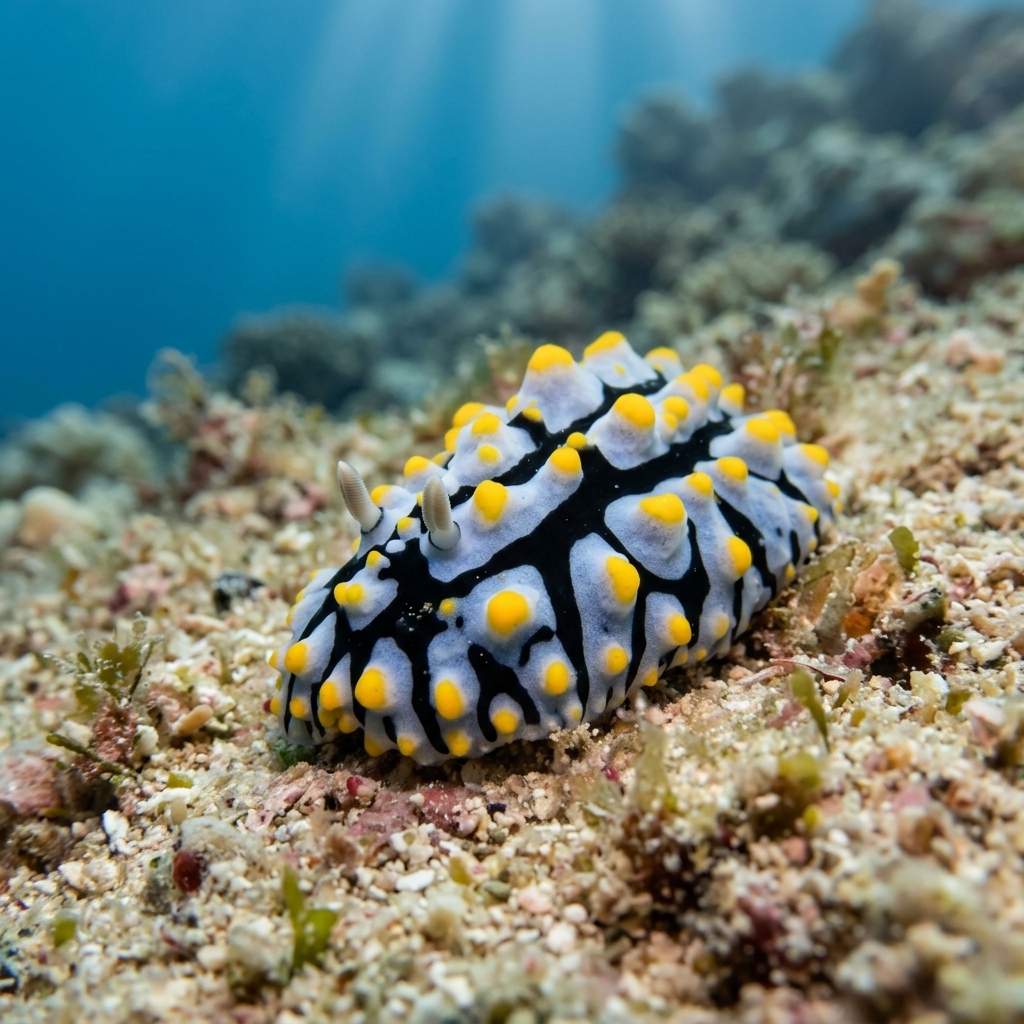
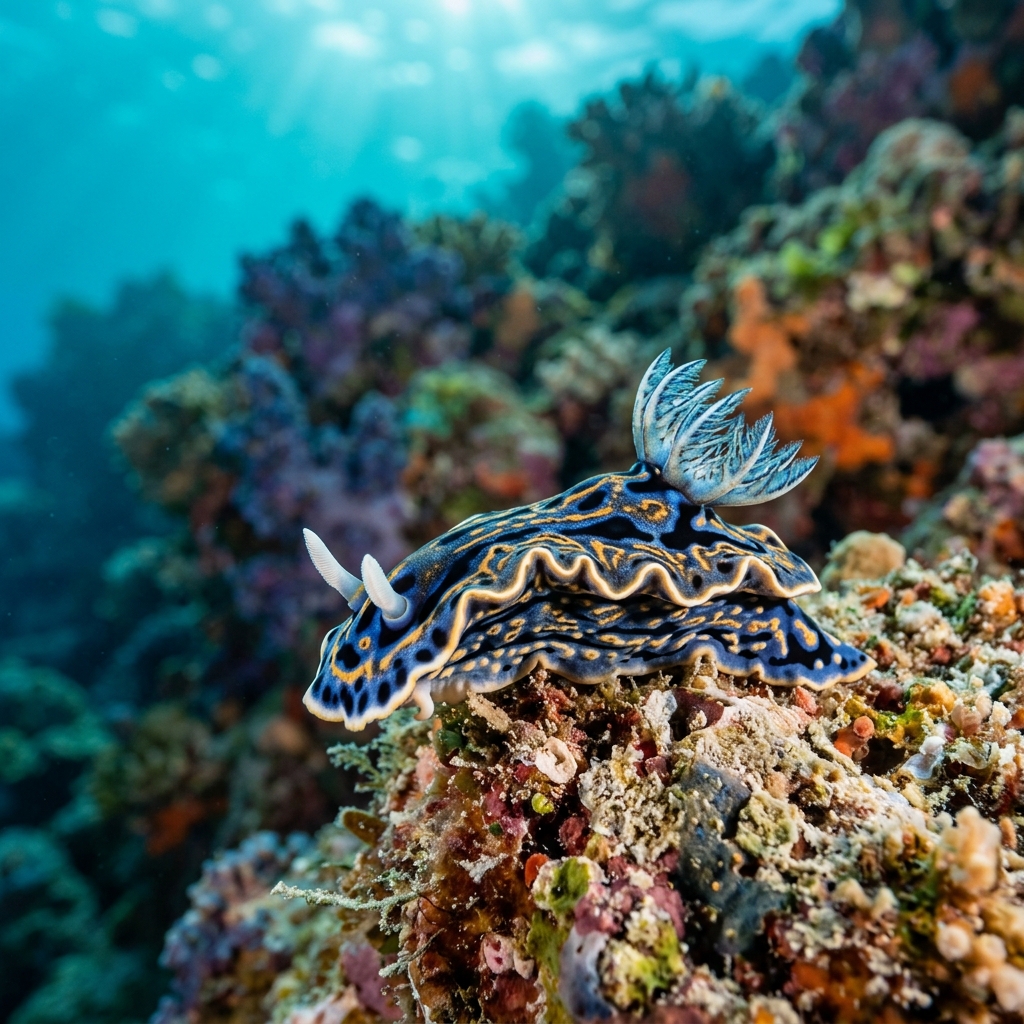
Reef neighbours a diver could mistake it for. Use the identification notes above to tell them apart.
Most sightings come from Western Australia, which accounts for the clear majority of logged sites. A smaller but meaningful cluster of records comes from Indonesia, particularly around Bali and Lombok. If you are targeting this species, Western Australia is your best bet.
Mapping where Marie's Mexichromis is logged…
Divers log it most often in Western Australia, with additional records from Bali, Lombok, and the Maluku and Papua regions of Indonesia. It is a rare find wherever it turns up, so dedicated nudibranch dives on shallow reef and rubble are the way to go.
There is no confirmed seasonal peak in the data. It has been observed in water temperatures of 27 to 29°C, so the warmer months at its Australian sites may be worth targeting, but year-round diving is reasonable in Indonesian waters.
Focus on the mantle-edge colouration and the colour of the gill plume and rhinophores, as these are the features that separate Mexichromis species from one another. The body is small, flat, and oval. Take a photo if you can; the details are easier to confirm back on the boat than in the moment.
Specific size data for this species is not well documented. Most chromodoridid nudibranchs in this family range from around 10 to 40 mm in length, so expect a small, easily overlooked animal on the reef.
Not at all. Like all nudibranchs, it poses no threat to divers whatsoever. The only caution is to avoid touching it, both to protect the animal and because some nudibranchs sequester chemical compounds from their prey that can irritate skin.
Chromodoridid nudibranchs feed almost exclusively on sponges. They are highly selective, often targeting specific sponge species, and can incorporate the sponge's defensive compounds into their own skin as a chemical deterrent against predators.
Site and sighting data is aggregated from diver logs, iNaturalist and GBIF. For taxonomy and conservation status:
Blue Dragon
3,163 sites