Abudefduf declivifrons
A dusky, dark-barred damselfish common along Mexico's Pacific Coast, thriving in 24-29C water year-round.
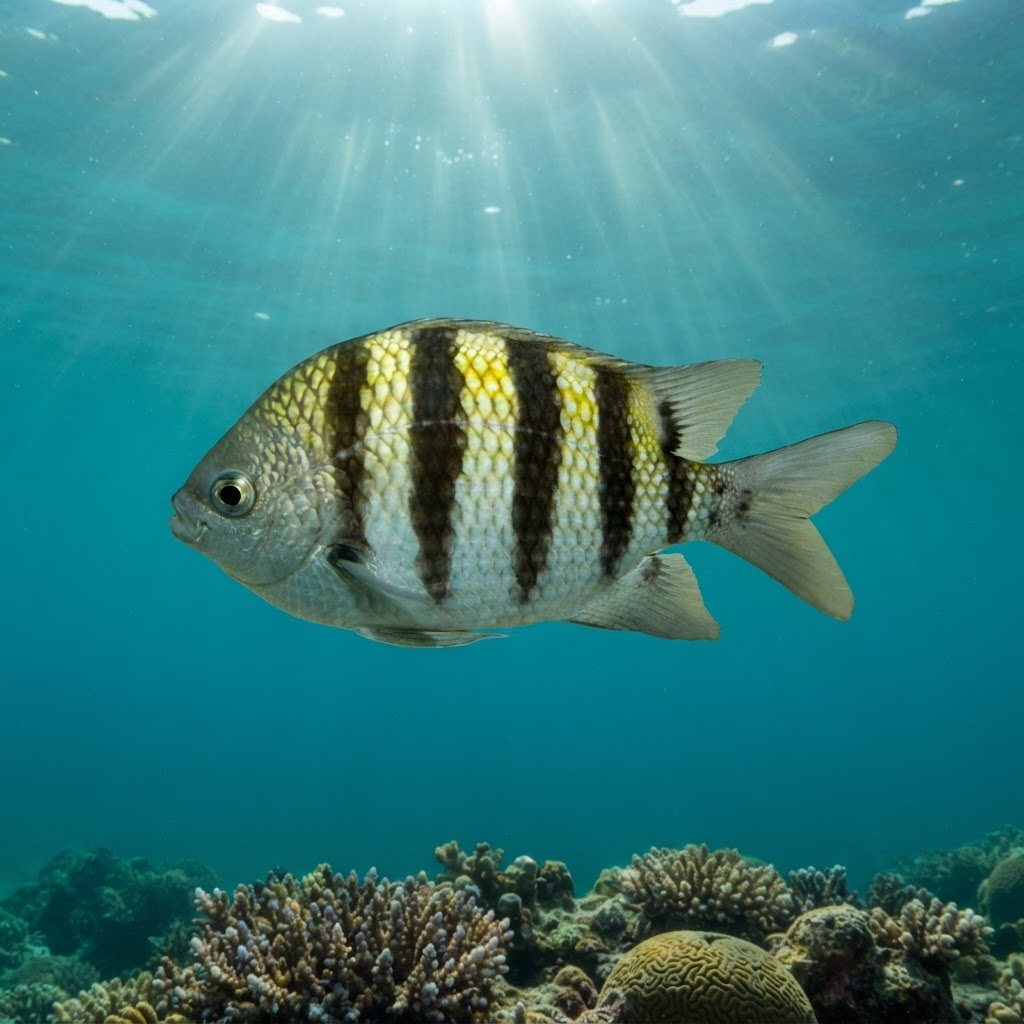
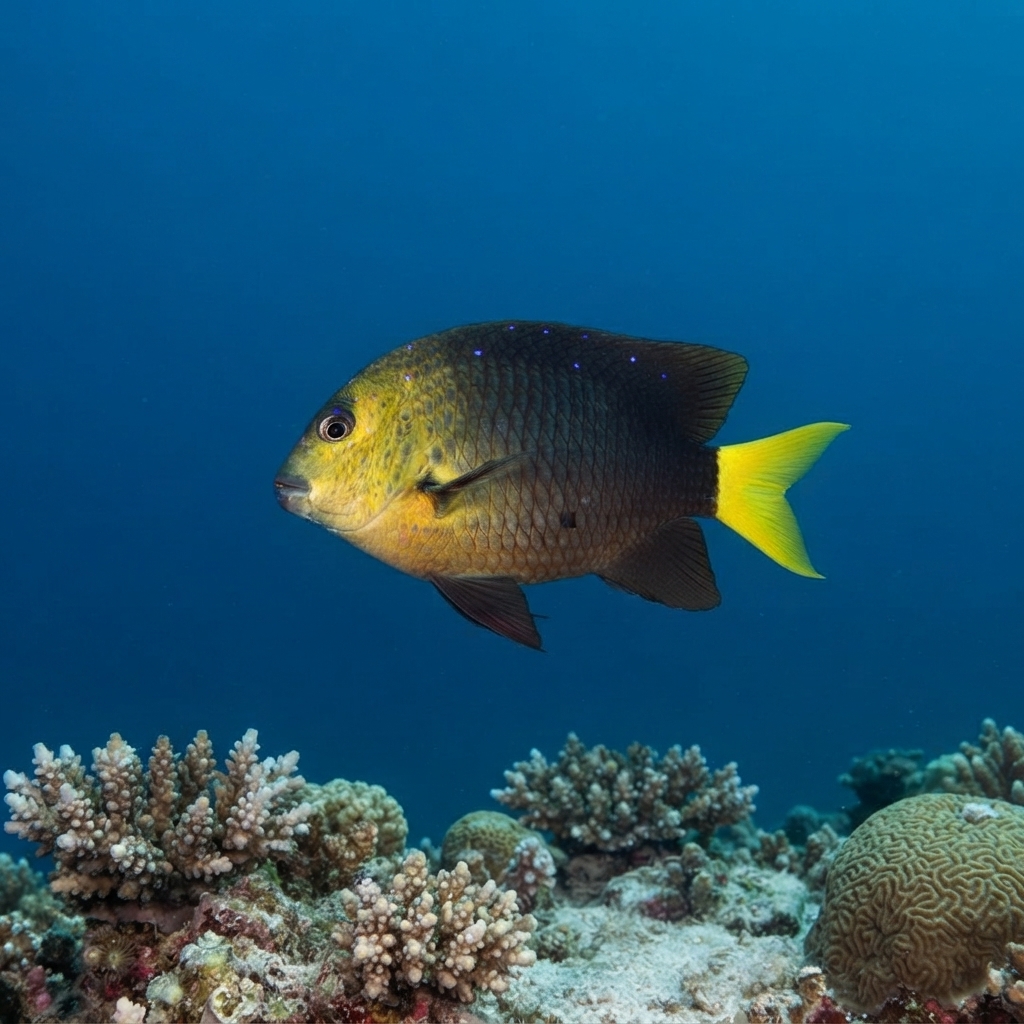
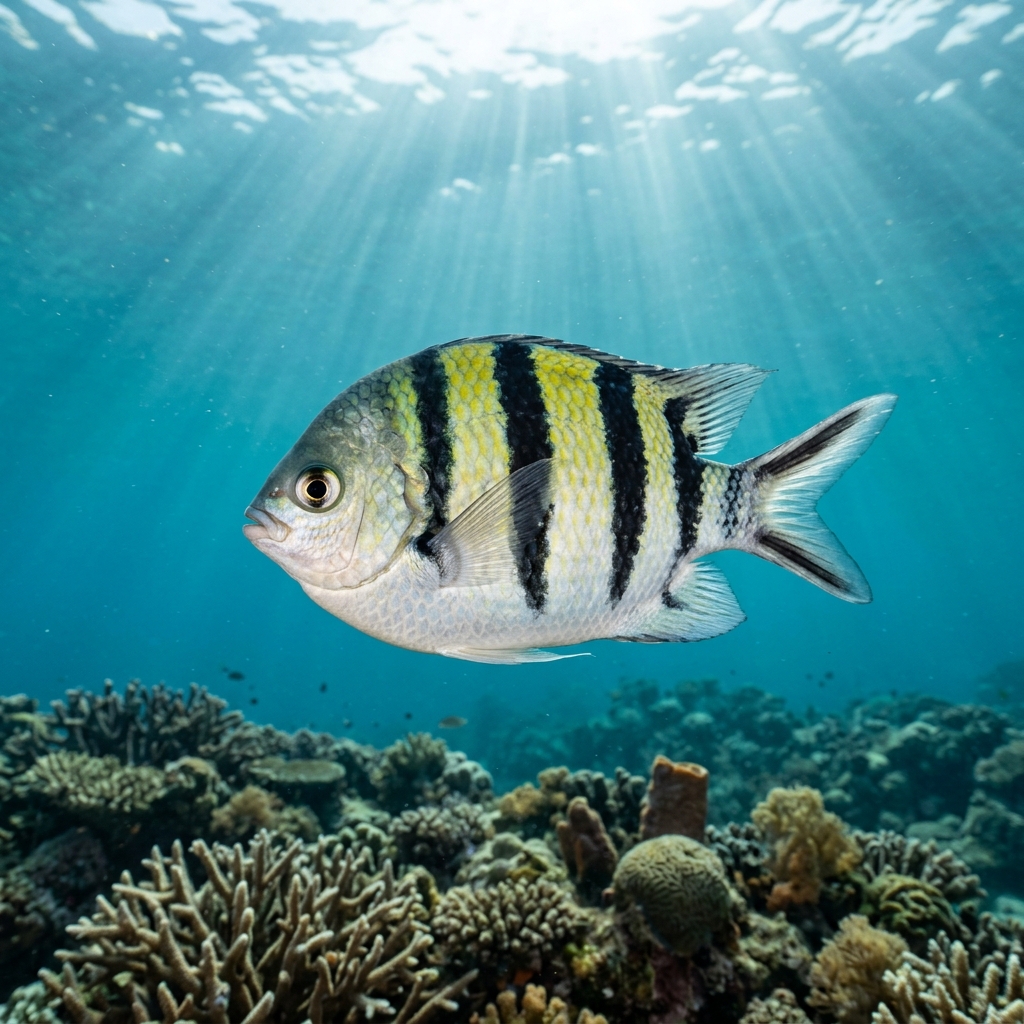
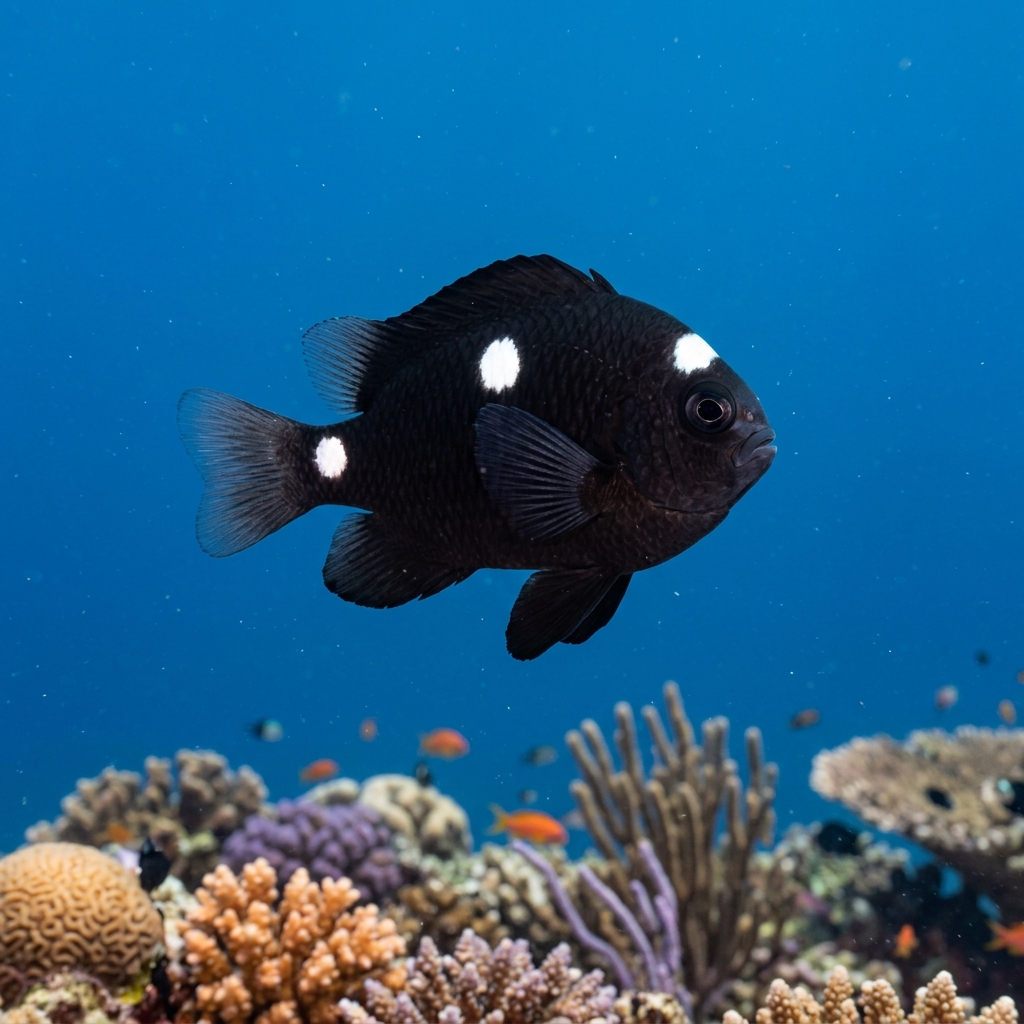
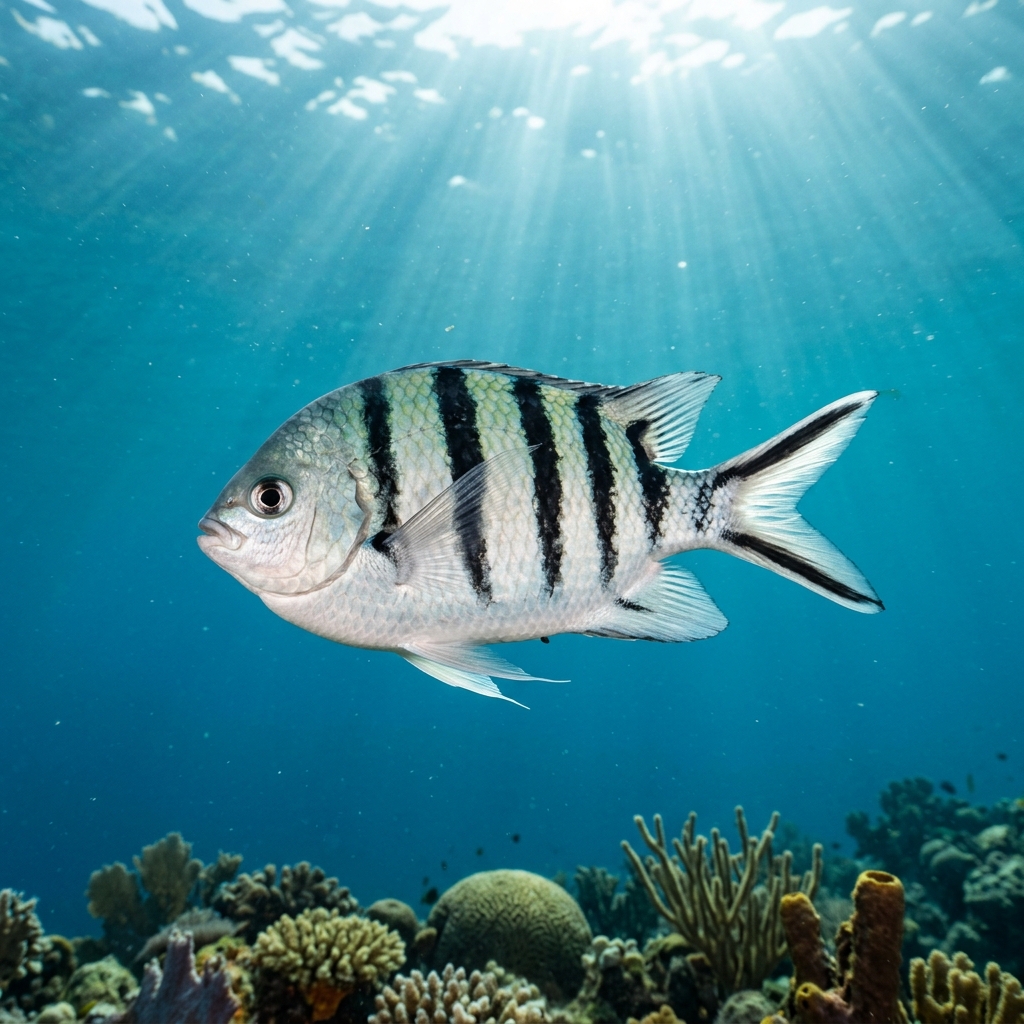
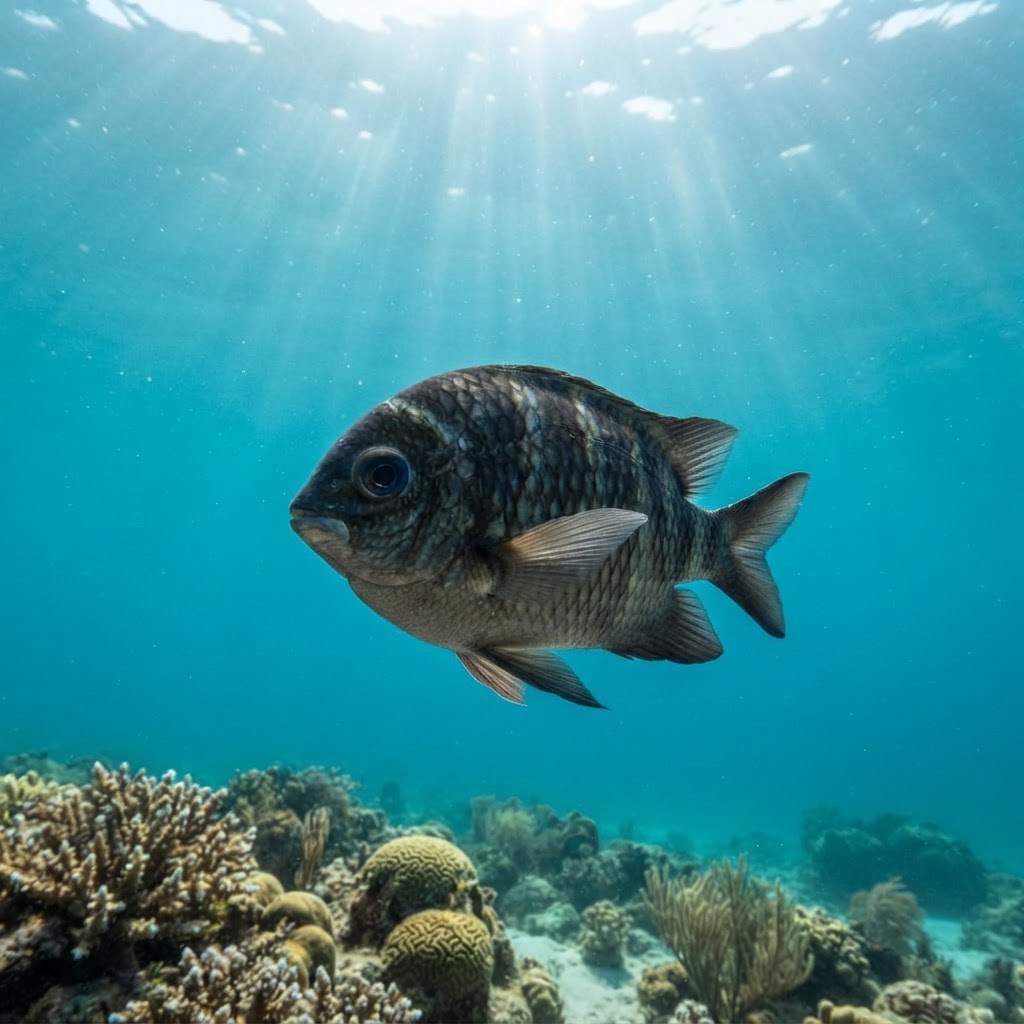
A stocky, deep-bodied damselfish around 13 cm, noticeably darker and moodier-looking than its bright-yellow sergeant cousins, often reading as charcoal grey to near-black underwater with faint, smudgy vertical bars that fade in and out depending on mood and light. The body shape is classic damselfish: oval, laterally flattened, with a small mouth and a forked tail edged in dark colour. Look for the overall dusky wash rather than crisp stripes, that muted tone is the giveaway against sharper-barred relatives.
Usually seen hovering just off rocky bottom or reef structure in small, loose groups, picking at algae and drifting plankton rather than darting for cover. It tends to hold its ground around divers, more curious or indifferent than shy, and is most often spotted at moderate depth over broken rock and boulder terrain typical of the Mexican Pacific coast.
Like other Abudefduf damselfish, it likely tends and guards a patch of eggs laid on bare rock, with one parent hovering close and chasing off intruders far larger than itself.
No clear seasonal pattern shows up in the sighting data, and with a comfort range of roughly 24 to 29C it seems to hold station on Pacific Mexico's reefs all year. Plan around good visibility and conditions rather than chasing a particular month.
Reef neighbours a diver could mistake it for. Use the identification notes above to tell them apart.
This is a Mexican Pacific speciality, logged far more than anywhere else along the Pacific Coast of mainland Mexico and also turning up reliably around Baja California. Divers should expect it on rocky reefs and volcanic structure rather than classic coral, with sightings concentrated in these two Mexican regions.
Mapping where Mexican Night Sergeant is logged…
It is most reliably seen along the Pacific Coast of mainland Mexico, with a strong secondary population around Baja California. Nearly all confirmed sightings come from these two Mexican regions.
There is no strong seasonal signal in the data, and it tolerates a wide temperature band of about 24 to 29C, so it appears to be present on Pacific Mexico's reefs throughout the year.
Look for a stocky, oval damselfish about 13 cm long with a dusky grey to near-black body and faint, fading vertical bars, quite different from the crisp yellow-and-black pattern of a typical sergeant major.
They typically reach around 13 cm in length, putting them in the same modest size range as most reef-dwelling damselfish.
No, they pose no danger to divers. They may hover close and hold their ground rather than flee, but this is curiosity or territorial posturing, not aggression toward people.
Site and sighting data is aggregated from diver logs, iNaturalist and GBIF. For taxonomy and conservation status:
Dascyllus
3,697 sites