Lysmata seticaudata
Tiny translucent cleaner shrimp tucked into crevices in Kvarner and Valencia, year-round in 15.6 to 21.6C water.
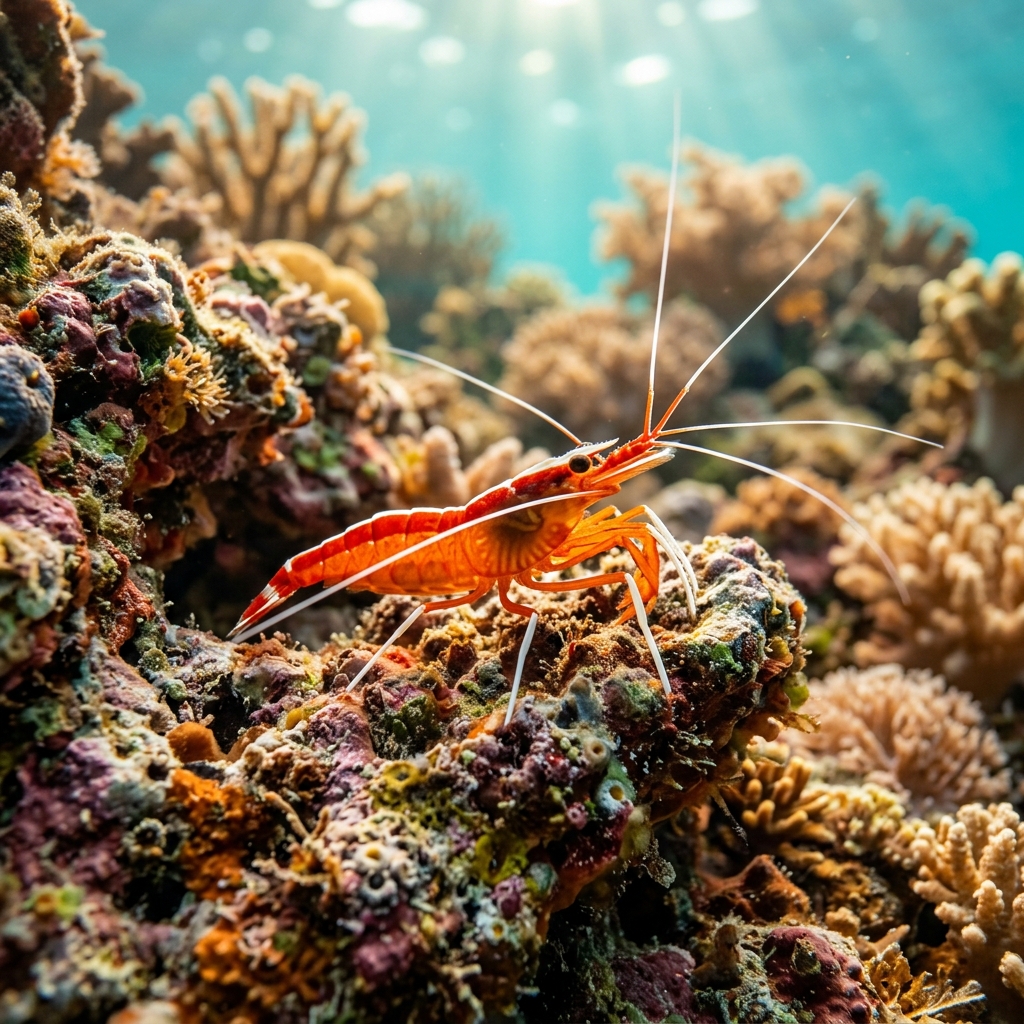
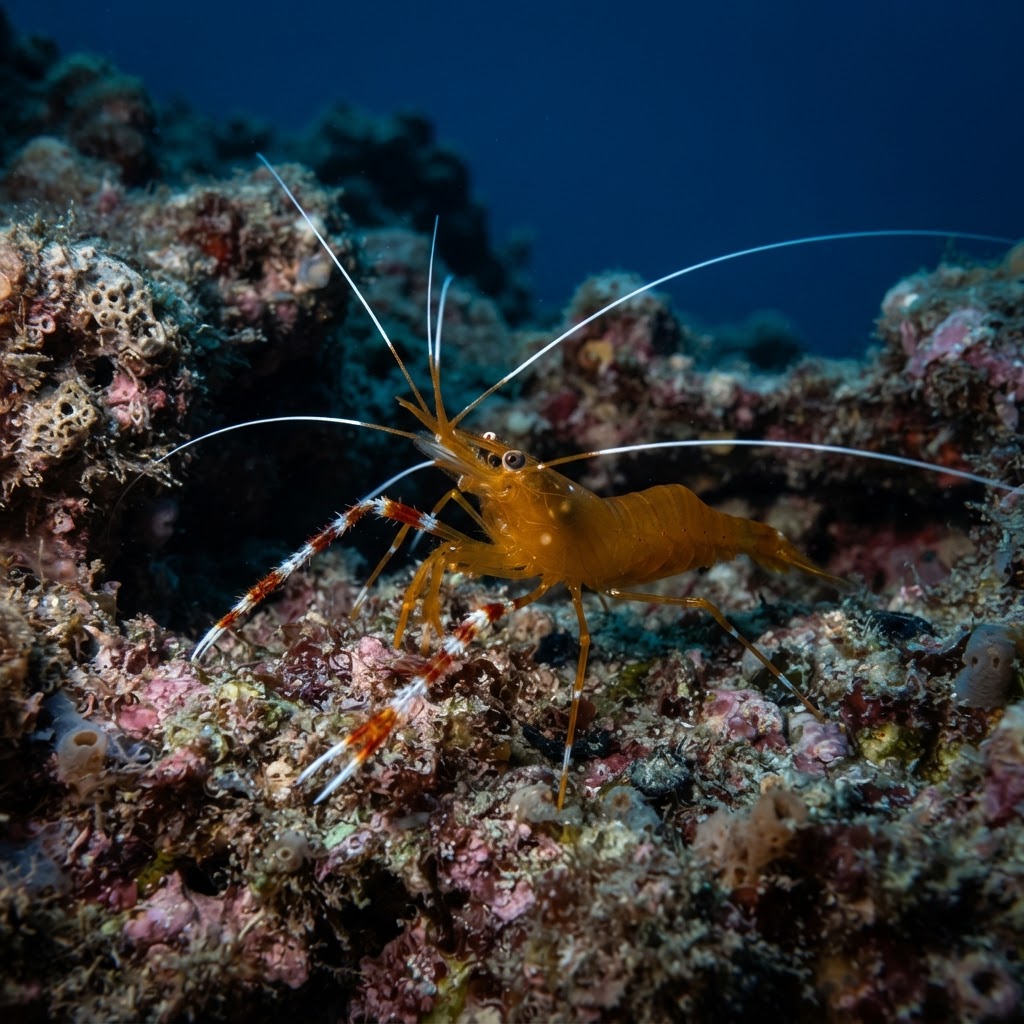
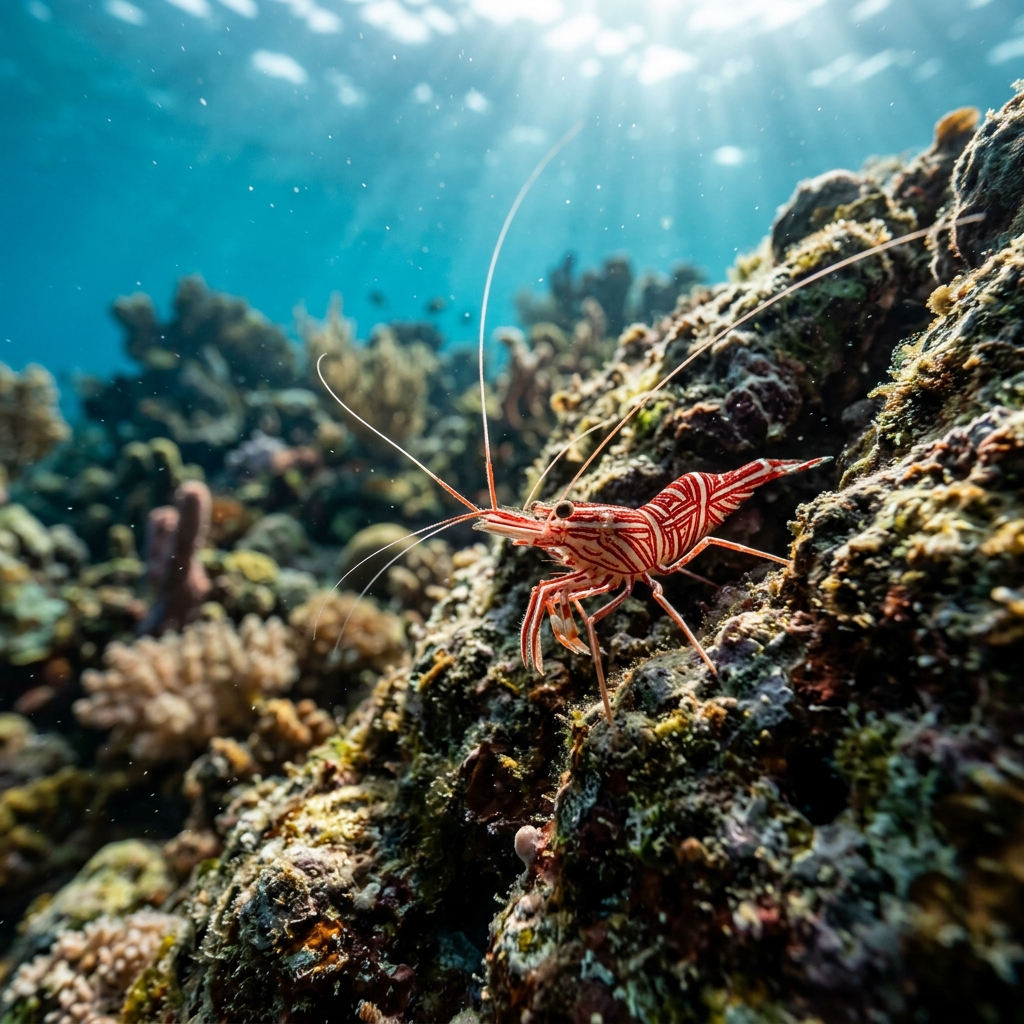
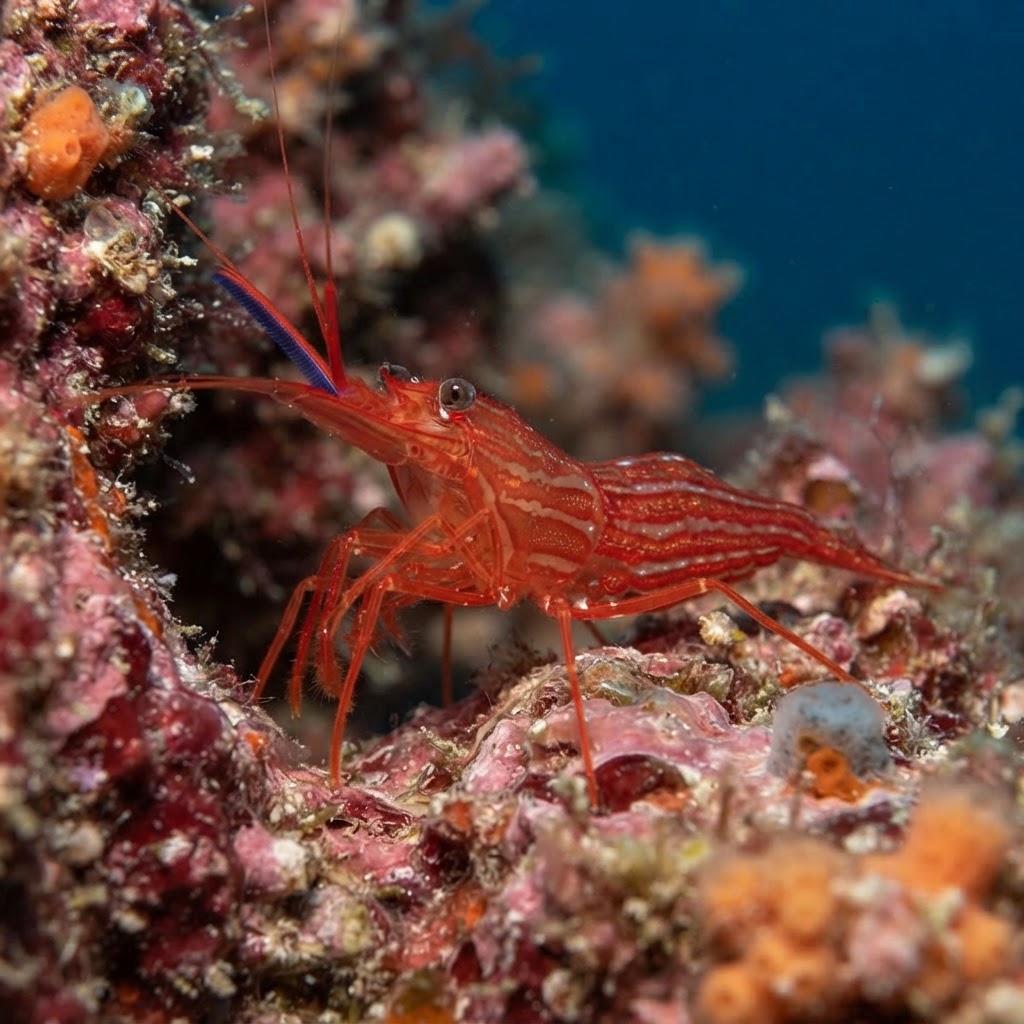
Small at around 4 cm, with a translucent to pale reddish body marked by fine white and red longitudinal stripes running along the length. Long white antennae are usually the first thing you spot, waving out from a crevice or overhang before the rest of the animal comes into focus. The body sits low and slender, tucked tight against rock rather than out in the open.
Found tucked into rocky crevices, under ledges, and among boulders rather than out on open reef, usually solitary or in loose pairs. Divers typically spot it by torchlight or by noticing the pale antennae first, since the body stays pressed into shadow. It does not flee readily when approached slowly, making it a good subject for a patient macro shot once you have located the crevice.
Like other Lysmata shrimp, individuals are simultaneous hermaphrodites, meaning any two adults that meet can mate and both go on to produce eggs, a handy trick for a species that lives scattered and solitary in rock crevices.
No clear seasonal pattern shows up in sighting data, and it sits comfortably within a 15.6 to 21.6C range, so it is worth looking for on any Mediterranean or nearby Atlantic dive across the year.
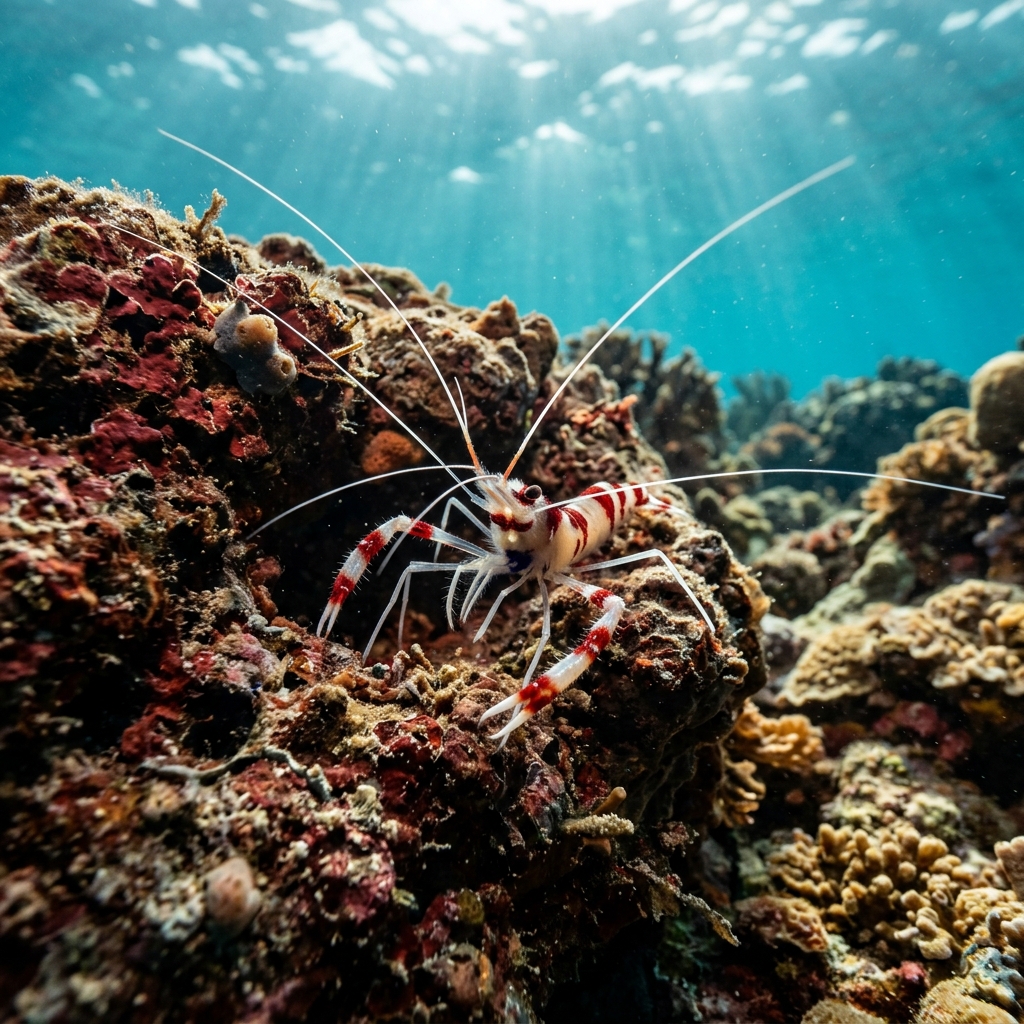
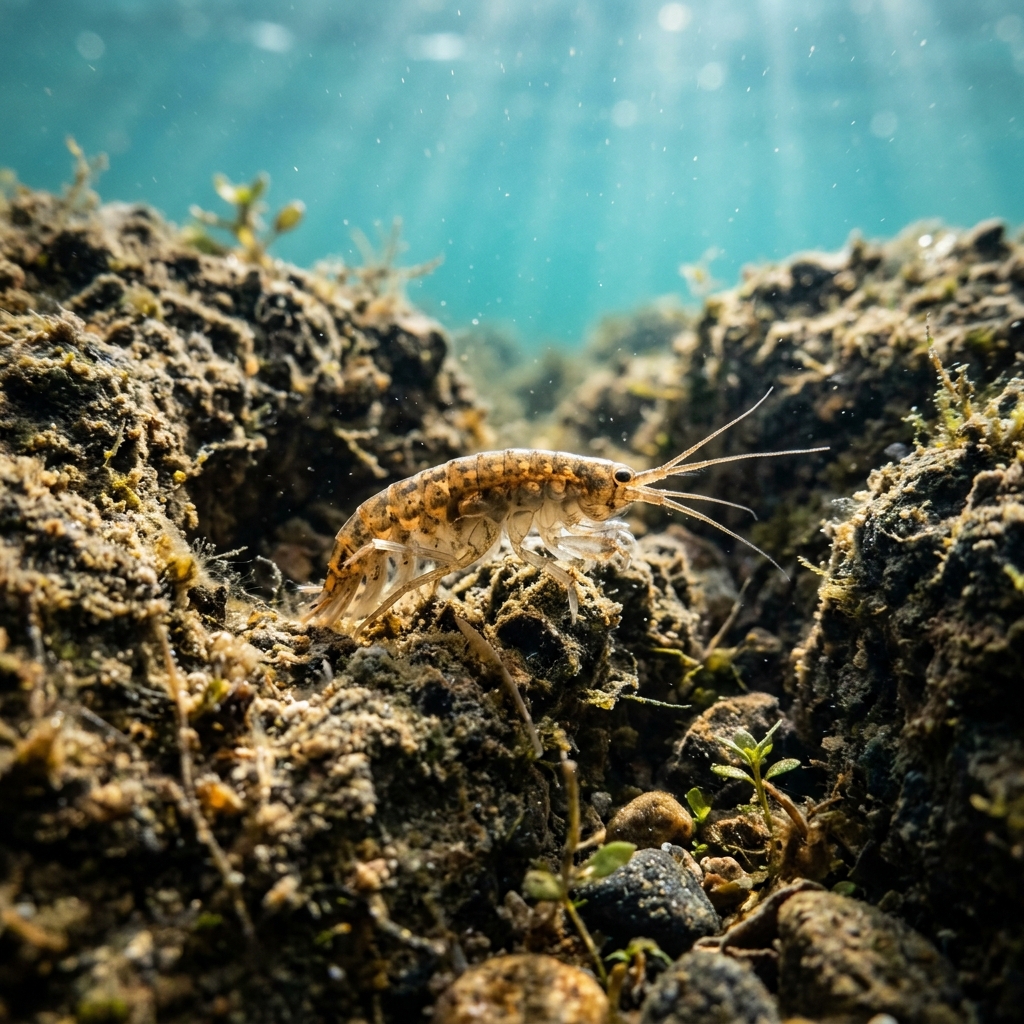
Reef neighbours a diver could mistake it for. Use the identification notes above to tell them apart.
Most commonly logged in Croatia, especially around Kvarner and Istria, and a reliable find across Spain, notably Valencia and Catalonia. Italy (Sardinia and Tuscany), Portugal's Algarve, and sites in France and the Azores also turn it up regularly, though usually at uncommon to rare densities rather than in numbers.
Mapping where Mediterranean Cleaner Shrimp is logged…
Croatia is the strongest bet, particularly Kvarner and Istria, followed by Spain's Valencia and Catalonia coasts. Italy, Portugal's Algarve, France, and the Azores also have regular sightings, usually one or two shrimp tucked into a crevice per dive.
There is no strong seasonal pattern in sightings, and the species tolerates a fairly wide 15.6 to 21.6C range, so it turns up year-round rather than on a tight seasonal window.
Look for a small, roughly 4 cm translucent shrimp with fine red and white stripes, wedged into a rocky crevice with long white antennae poking out. It rarely sits in open view, so the antennae are often the first clue.
They stay small, reaching around 4 cm in length, which keeps them easy to overlook unless you are scanning crevices closely with a torch.
Individuals are simultaneous hermaphrodites, so any two adults can mate and both produce eggs afterwards, an unusual reproductive strategy that suits a species living scattered and solitary in crevices.
No. They are small, harmless crustaceans that stay tucked in rock crevices and pose no risk to divers.
Site and sighting data is aggregated from diver logs, iNaturalist and GBIF. For taxonomy and conservation status:
Rockpool Prawn
2,179 sites