Siderastrea siderea
Spot Massive Starlet Coral on Caribbean reefs year-round. Most commonly logged in the Cayman Islands, Mexico, and Florida. ID tips and top dive sites inside.
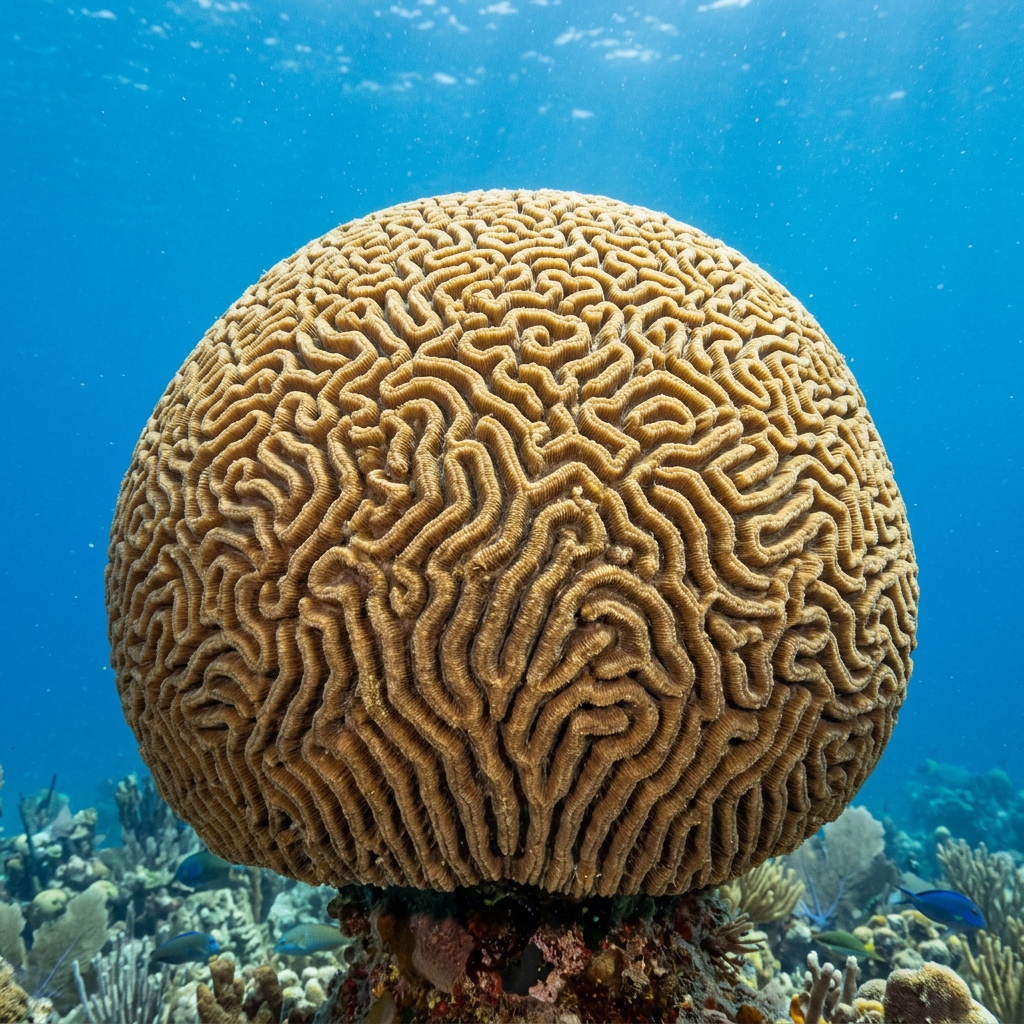
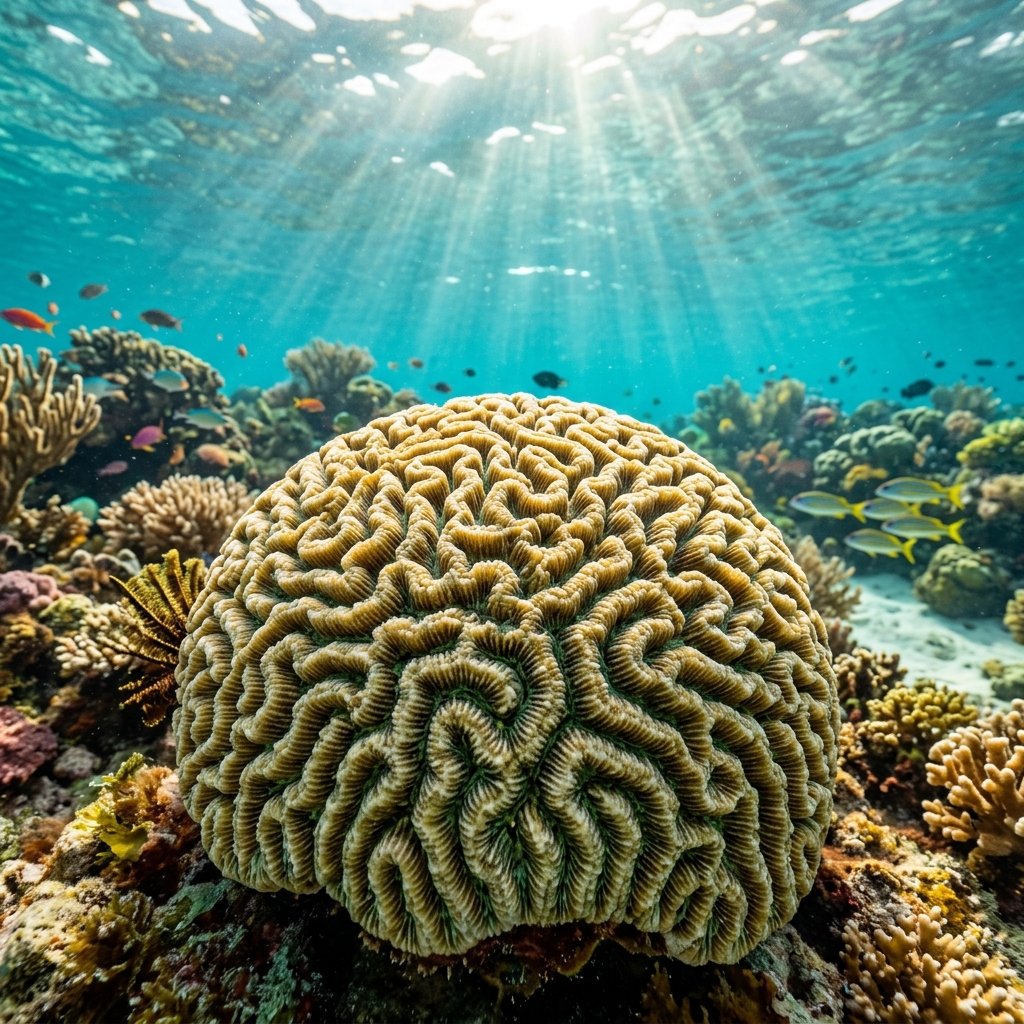
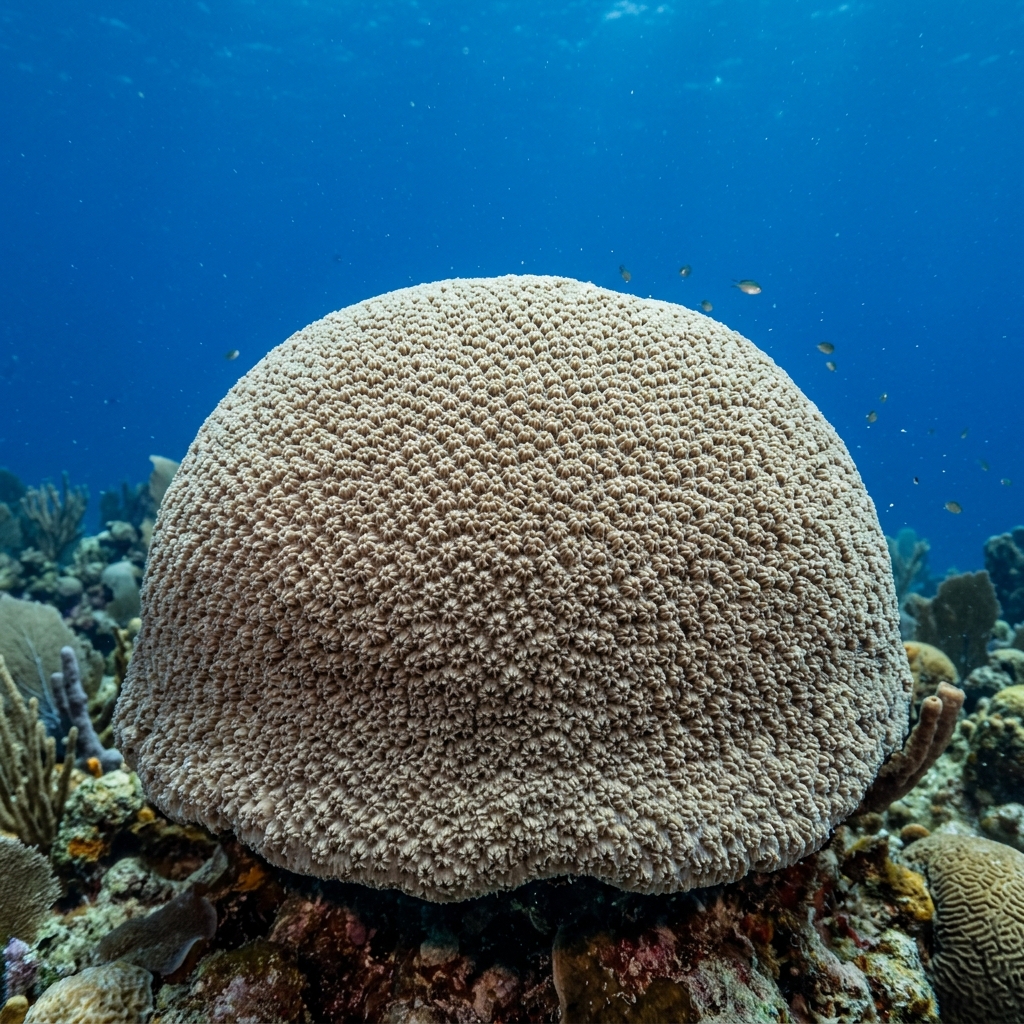
Look for a smooth, rounded or dome-shaped colony ranging from a fist-sized lump to a boulder over a metre across, coloured in muted shades of brown, grey, or olive. The surface is covered in a tight mosaic of small, star-shaped corallites (the individual polyp cups), each roughly 3 to 5 mm across, giving the colony a distinctly uniform, textured appearance. Unlike brain corals, there are no meandering valleys or ridges, just evenly spaced, neatly packed stars across a gently curved surface.
A stationary part of the reef structure, it neither moves nor reacts to divers in any meaningful way. During the day the polyps are retracted and the colony simply sits as part of the reef framework. On night dives you may notice the tiny polyps extended and feeding, so this is worth looking for if you want to see the animal in action.
As a reef-building coral, massive starlet coral contributes directly to the physical structure of Caribbean reefs, and older colonies can represent decades or even centuries of slow, steady growth.
Present year-round with no concentrated season, which reflects its comfort across warm tropical water temperatures. Reliable on Caribbean reefs at any time of year.
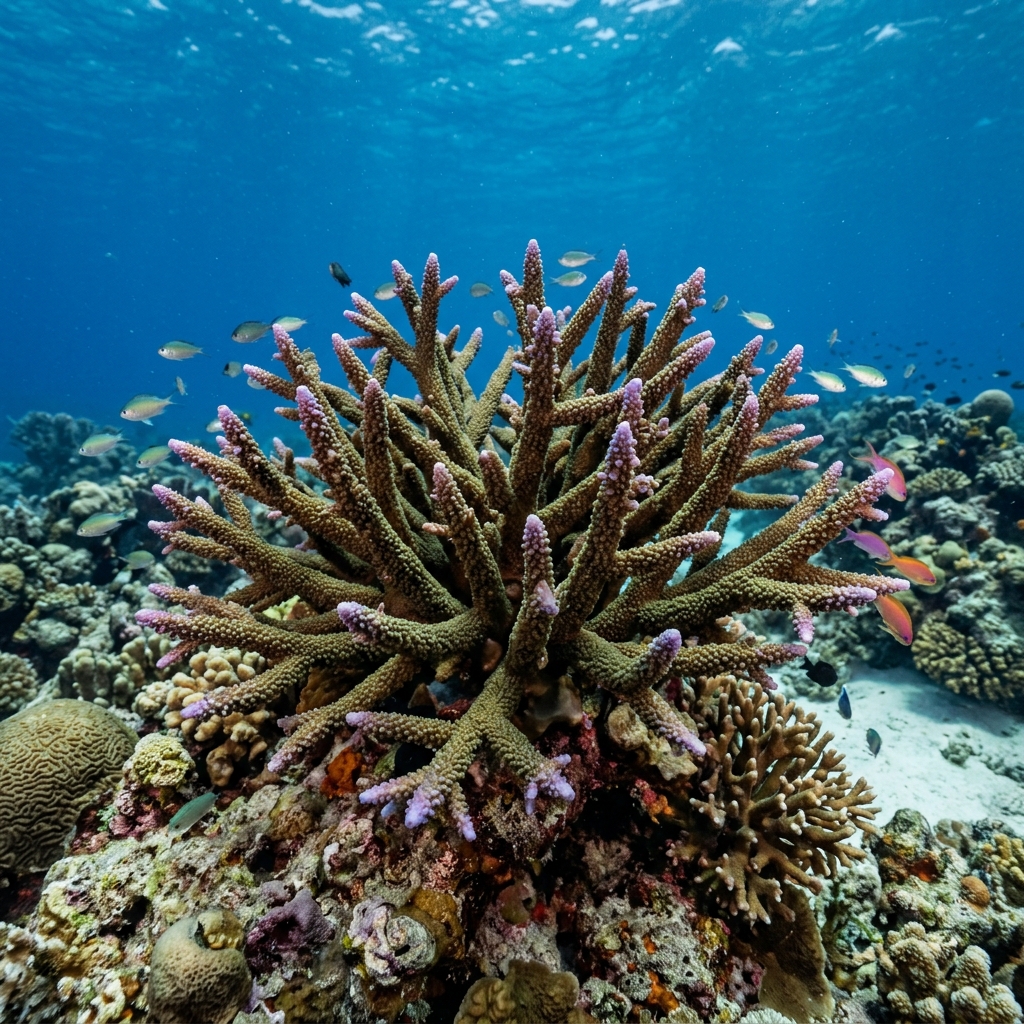
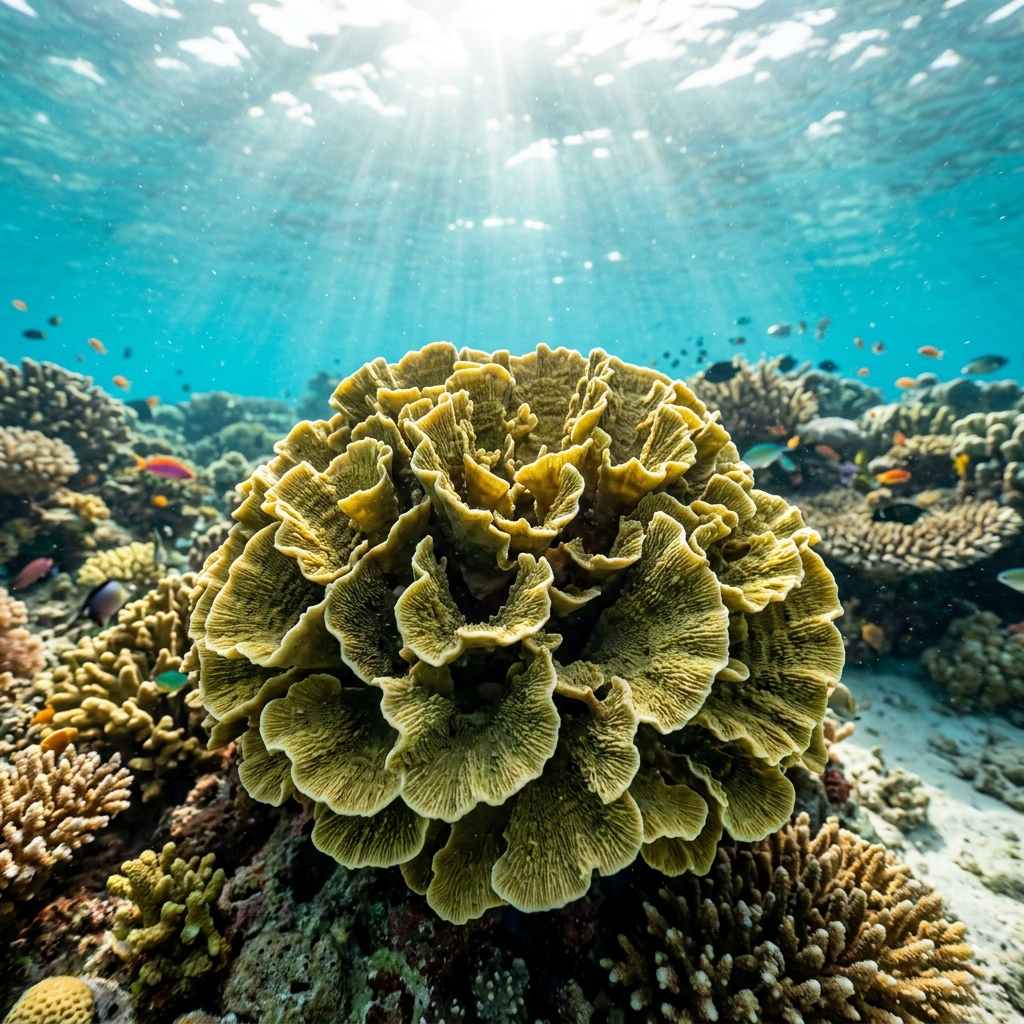
Reef neighbours a diver could mistake it for. Use the identification notes above to tell them apart.
Most commonly logged across the Caribbean, with the strongest sighting records in the Cayman Islands, Mexico, and Colombia, particularly in the Yucatán Peninsula, Grand Cayman, and the Caribbean Coast of Colombia. Florida and the Southeast United States also show strong presence, along with excellent numbers in Bonaire, Curaçao, and Roatán, Honduras.
Mapping where Massive Starlet Coral is logged…
It is most commonly logged across the Caribbean, with strong sighting records in the Cayman Islands, Mexico's Yucatán Peninsula, Colombia's Caribbean Coast, Florida, Bonaire, Curaçao, and Roatán in Honduras. It also appears along the northeast coast of Brazil.
There is no single best season. Massive starlet coral is present year-round on Caribbean and Atlantic tropical reefs, reflecting its preference for consistently warm water. Any dive, any month, in the top regions could turn one up.
Look for a smooth, dome-shaped colony covered in an even mosaic of small, star-shaped polyp cups with no ridges or valleys. The brown to grey-olive colouring and uniform, tightly packed surface pattern are the key features to key on.
Yes. It is currently listed as Critically Endangered. Like many Caribbean reef-building corals it is threatened by warming seas, bleaching events, and water quality decline. Divers can help by maintaining good buoyancy and never touching the reef.
Yes. Like most hard corals, massive starlet coral feeds at night, extending its tiny polyps to catch zooplankton from the water column. On a night dive you may spot the colony looking slightly fuzzy or furred as the polyps emerge, quite different from the smooth, retracted surface you see by day.
The Massive Starlet Coral is listed as critically endangered by the IUCN. Observe from a distance, avoid touching or feeding it, and report sightings to local marine research organisations.
Massive starlet coral is listed as Critically Endangered. Divers should take care never to touch, kneel on, or anchor near coral colonies, and should report any bleaching or unusual damage to local reef-monitoring programmes.
Site and sighting data is aggregated from diver logs, iNaturalist and GBIF. For taxonomy and conservation status:
Plate Coral
2,991 sites