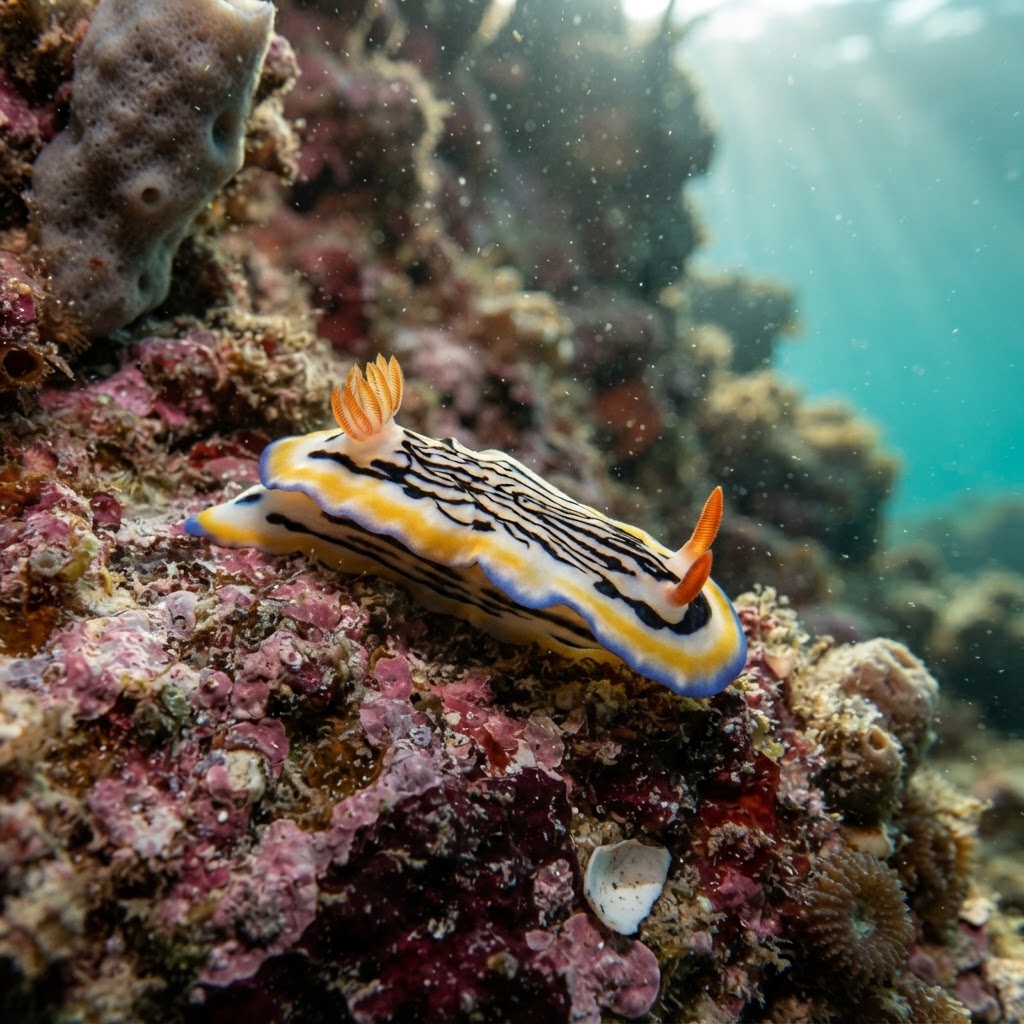
Hypselodoris maritima
An uncommon nudibranch logged on reefs from Queensland to Hong Kong's Sai Kung, in water from 22 to nearly 30 C year-round.
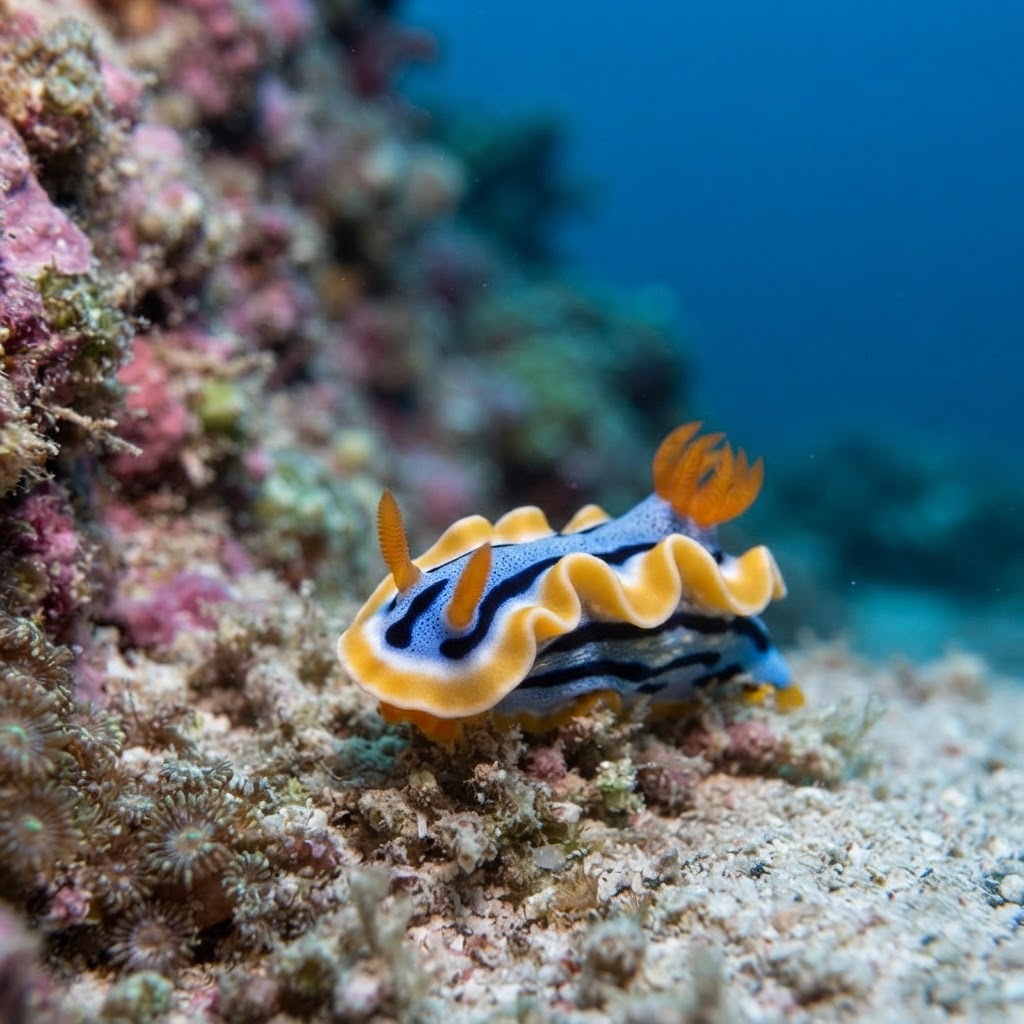
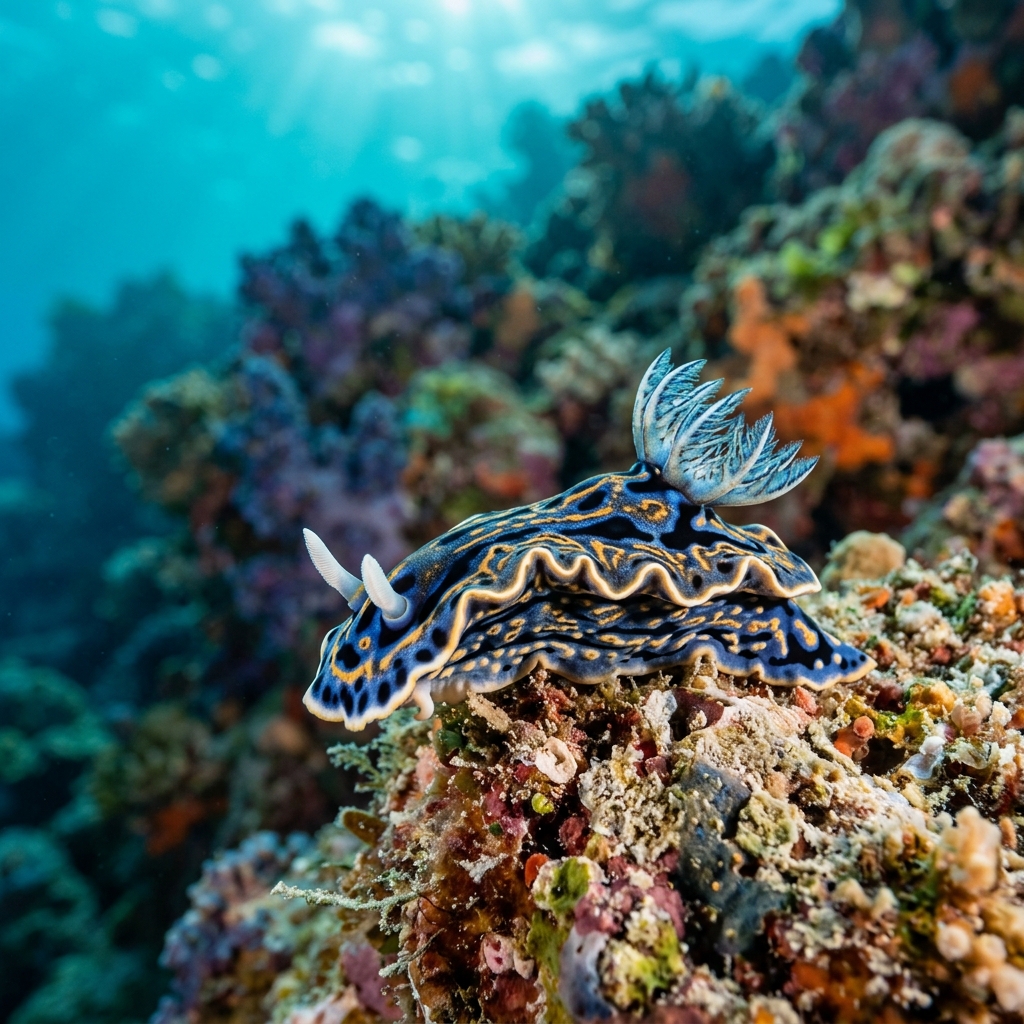
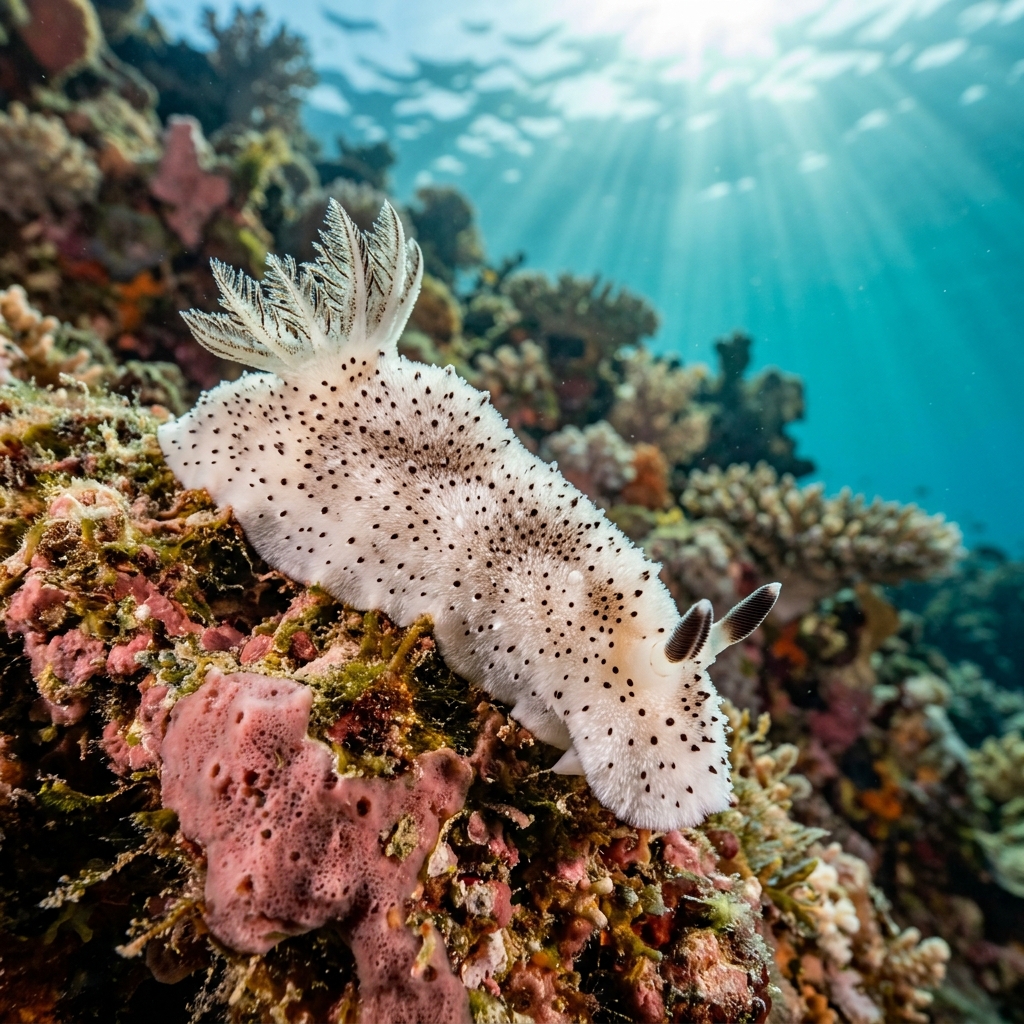
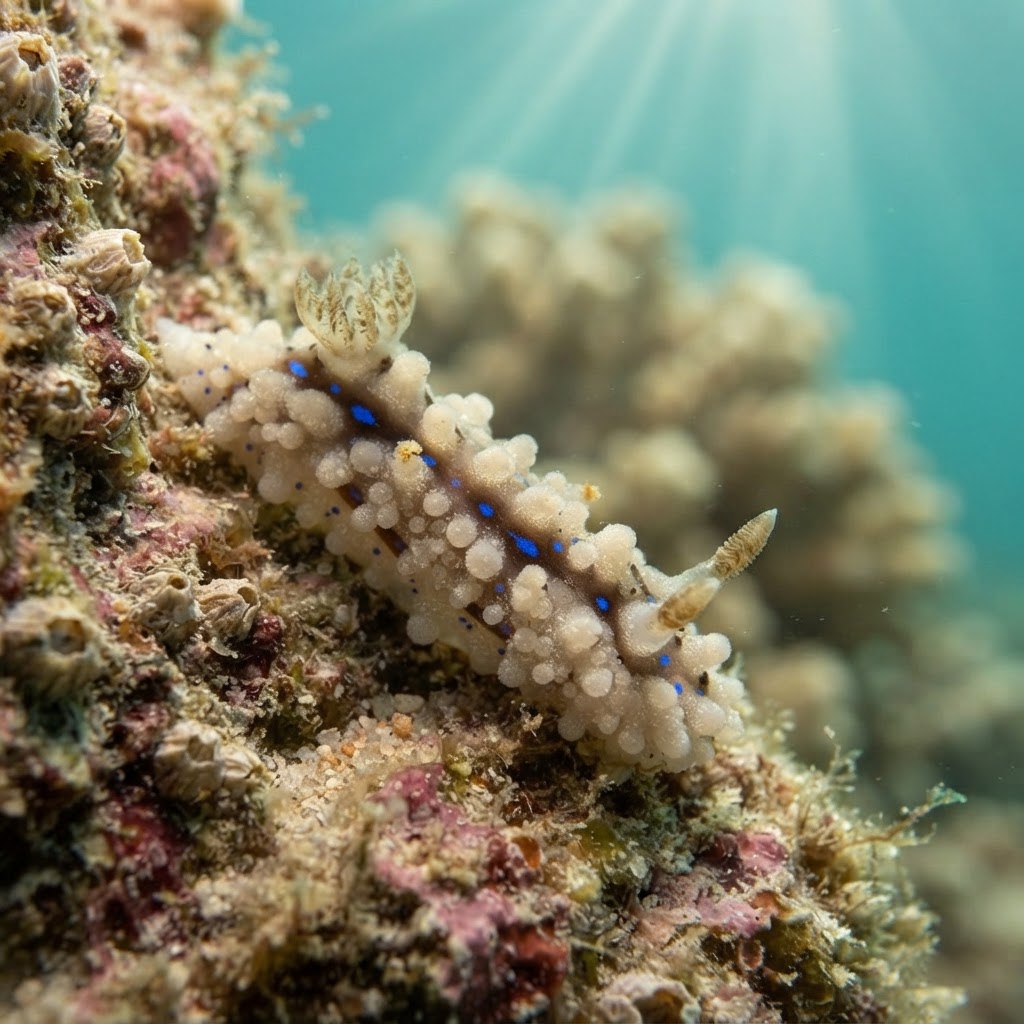
A small sea slug (nudibranch) with a soft, unshelled body that sits low on the reef, moving slowly across sponge-covered rock and rubble. Like other Hypselodoris species, expect a smooth, elongated mantle with a distinct edge colour band and a pair of feathery gills near the tail that it can retract if disturbed. Its rhinophores (the small sensory horns on the head) are usually the easiest feature to spot first, held upright as it grazes.
Divers typically find it parked on sponge or algae-covered substrate, moving at the unhurried pace typical of nudibranchs as it grazes. It shows no reaction to divers beyond retracting its gills if bumped or crowded, so a slow approach and a steady light are all that is needed for a good look. Most sightings come from reef and rubble patches rather than open water, on the kind of macro-focused dive where you are already moving slowly and scanning the bottom.
Like other chromodorid nudibranchs, it likely feeds on sponges and can incorporate their chemical defences into its own tissue, which is thought to be part of why these slugs display bold colour patterns rather than hiding.
No clear seasonal pattern shows up in the sighting data, and it turns up in water from roughly 22 to nearly 30 C, so it is best treated as a year-round find rather than a seasonal target. Plan your dive around the region's general conditions rather than a specific month.
Reef neighbours a diver could mistake it for. Use the identification notes above to tell them apart.
Most consistently logged on reefs in Queensland, Australia, with additional sightings around Sai Kung in Hong Kong and in the Visayas region of the Philippines. Australia currently accounts for the bulk of recorded sites, making Queensland the strongest bet if you are specifically hunting for this species.
Mapping where Maritime Hypselodoris is logged…
It is most reliably logged on reefs in Queensland, Australia, with further sightings around Sai Kung in Hong Kong and the Visayas region of the Philippines.
There is no strong seasonal signal in the sighting data, and it has been recorded in water from about 22 to almost 30 C, so it can turn up on any dive year-round.
Look for a small, slow-moving sea slug on sponge-covered reef or rubble, with an elongated mantle, a coloured edge band, upright rhinophores on the head, and feathery gills near the tail.
No, it poses no danger to divers and can be observed and photographed up close without any risk.
Exact size data is not confirmed for this species, but like most Hypselodoris nudibranchs it is a small reef-dwelling slug typically only a few centimetres long.
Site and sighting data is aggregated from diver logs, iNaturalist and GBIF. For taxonomy and conservation status:
Light-spotted Aegires
3,168 sites