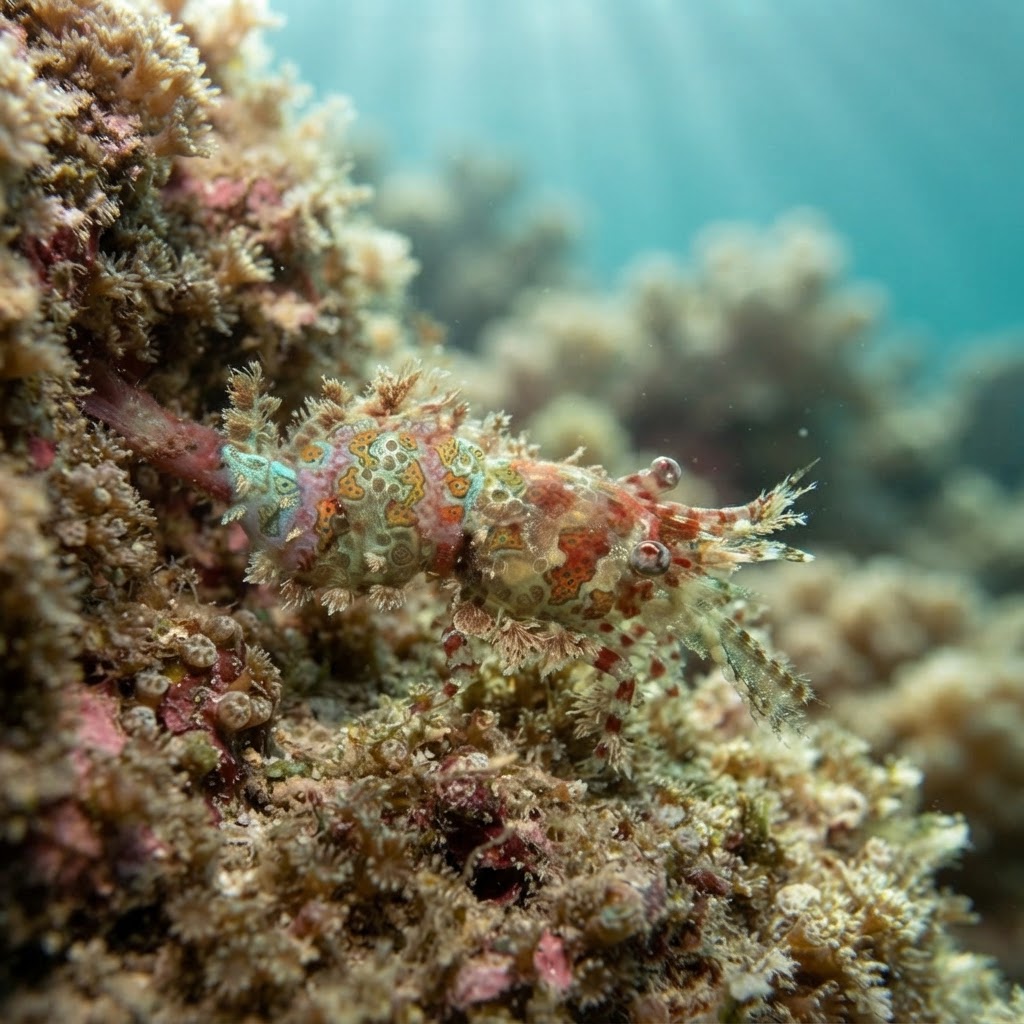
Saron marmoratus
Spot Marbled Shrimp on night dives in Sabah, Flic-en-Flac and Turkey's Turquoise Coast, in water from 23 to 30°C, year-round.
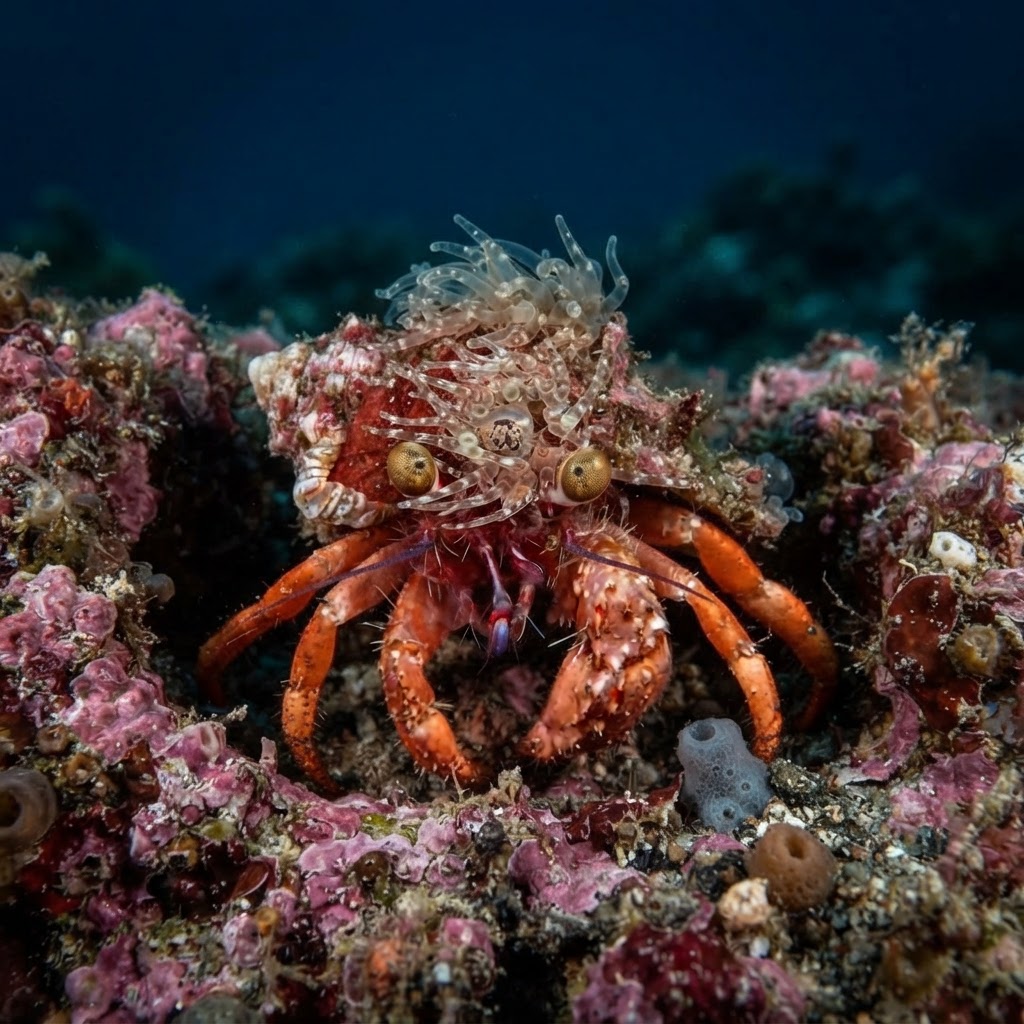
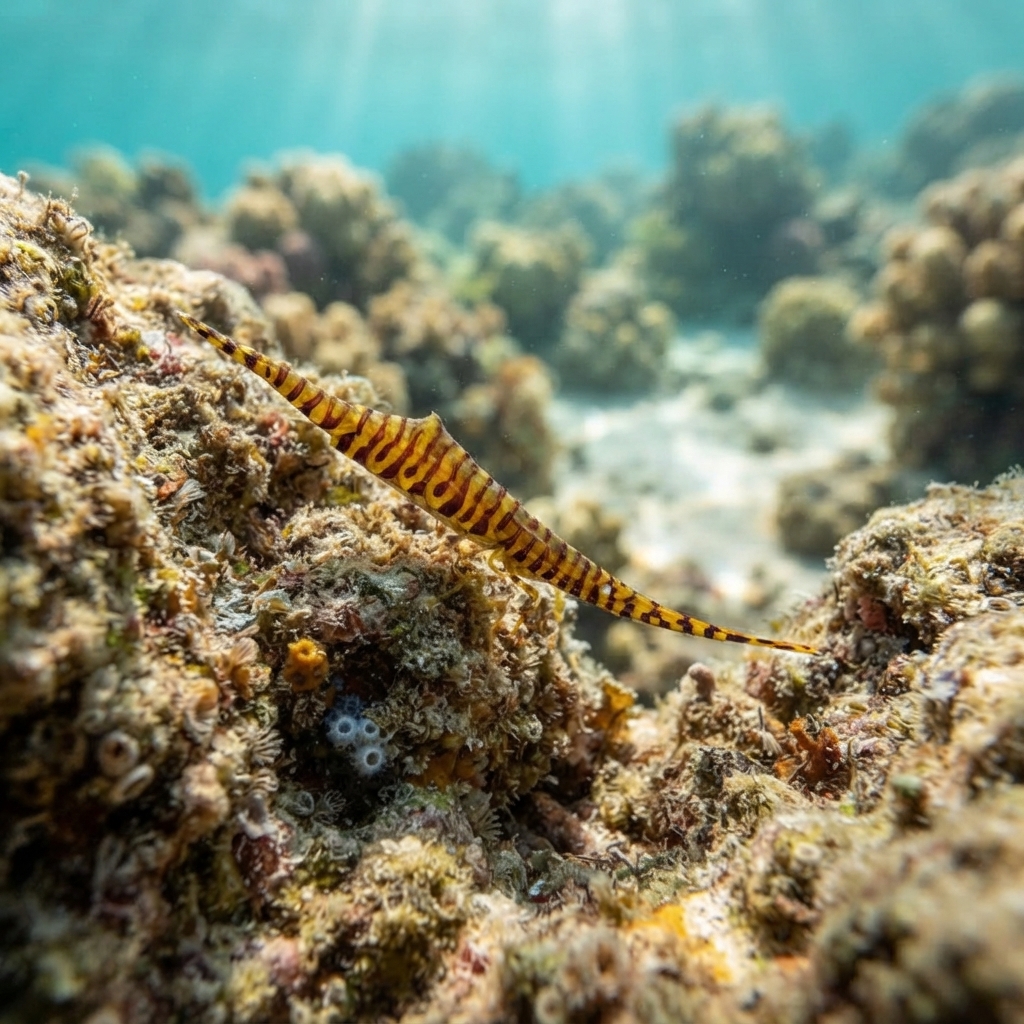
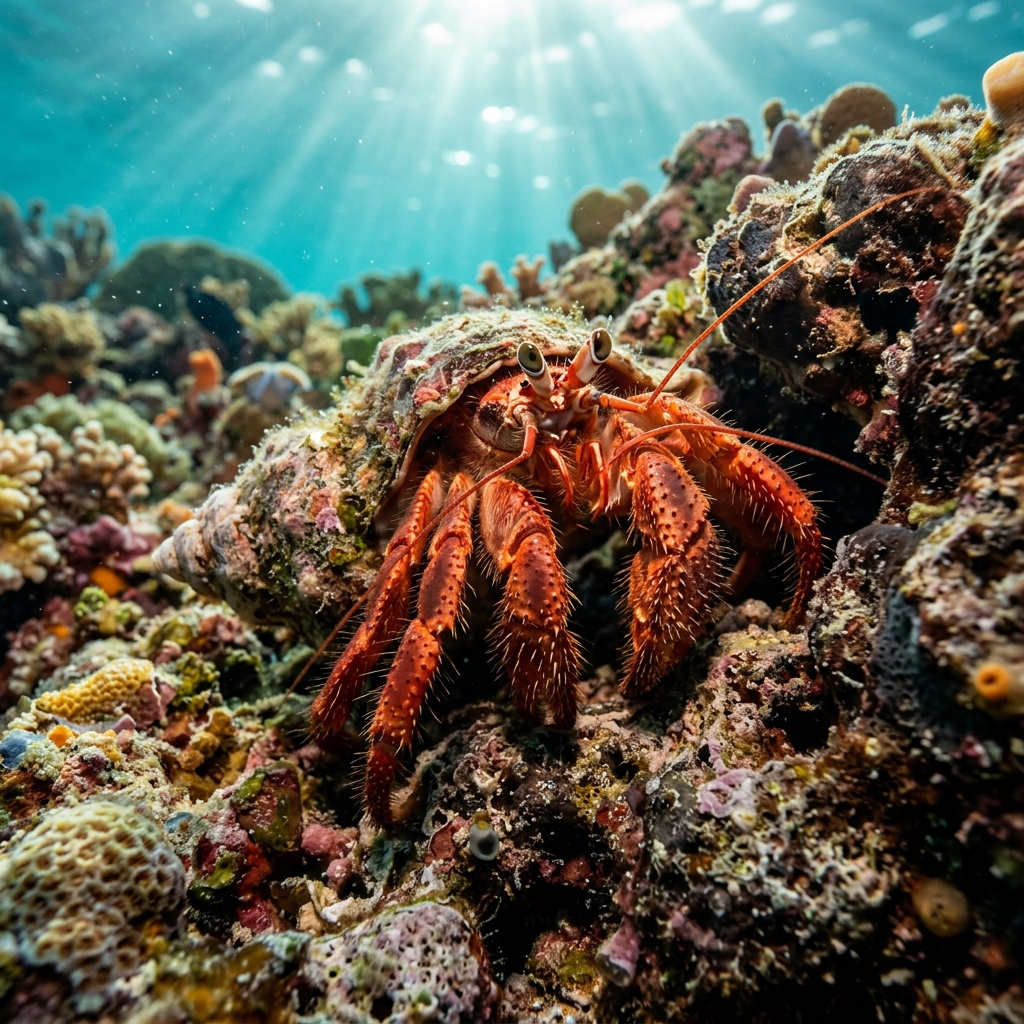
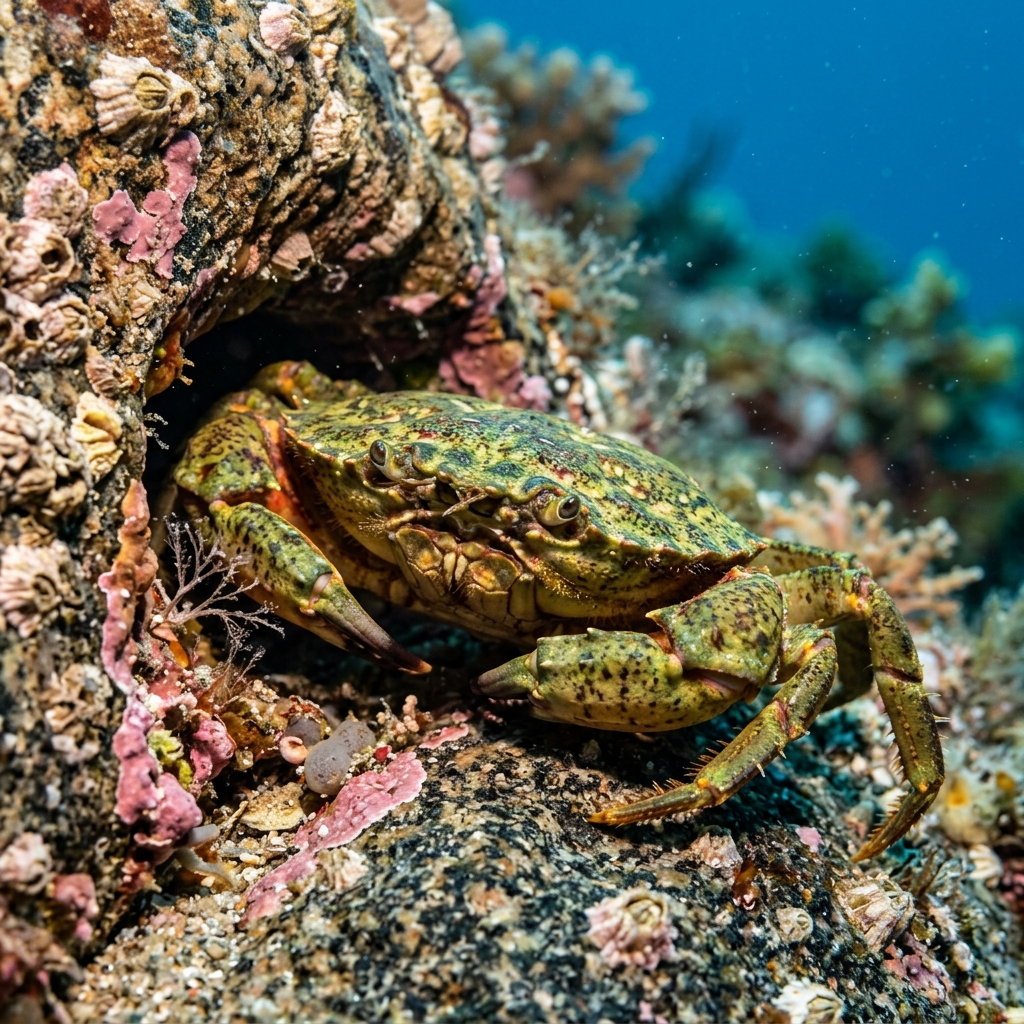
Barely a thumb's width at around 1 cm, this shrimp shows a mottled, marbled pattern of browns, reds and cream that breaks up its outline against rubble and coral rock. Look for the long, spiny antennae sweeping ahead of it and the humped, spiky texture along its back, which gives it a rough, encrusted look rather than a smooth shrimp profile. It tends to freeze or tuck into a crevice rather than swim off, so a steady torch beam on a night dive is usually how divers first pick it out.
Divers usually find it out at night, picking its way over rubble, rock and coral rubble in shallow water, often no deeper than a few metres. It reacts to a torch or a close approach by holding still or backing into a crevice rather than darting away, which makes it a patient subject once spotted. By day it is far harder to find, tucked away in cracks and under ledges where its marbled pattern blends into the background.
The marbled, spiny body is a camouflage strategy rather than decoration: against broken coral rubble and algae-covered rock, the pattern reads as texture rather than shrimp, which is likely why it is logged as uncommon rather than rare despite being tiny and easy to overlook.
No clear seasonal pattern shows up in the sightings, and its comfort range of roughly 23 to 30°C covers tropical and warm subtropical reefs year-round, so any month is fair game where it is found. Night dives generally give better odds than day dives, since this is when it tends to be out and active on the reef surface.
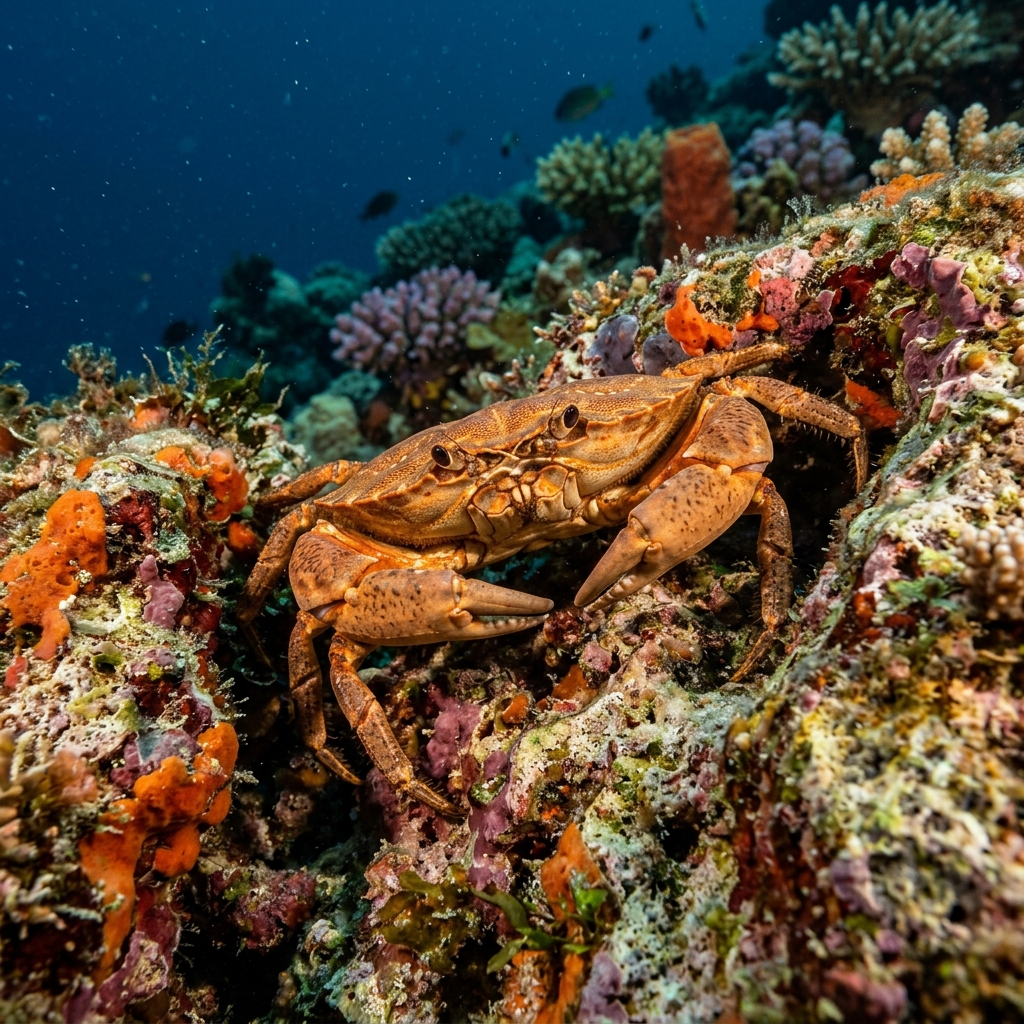
Reef neighbours a diver could mistake it for. Use the identification notes above to tell them apart.
Most reliably logged around Sabah in Malaysia, with strong numbers also reported from Flic-en-Flac in Mauritius and the Turquoise Coast in Turkey. Indonesian sightings cluster in Maluku and Bali, and it also turns up in Hawaii, Mafia Island in Tanzania, the Dodecanese in Greece and the Cook Islands.
Mapping where Marbled Shrimp is logged…
Sabah in Malaysia turns up the most sightings, with Flic-en-Flac in Mauritius and Turkey's Turquoise Coast also reliable spots. It has also been logged in Maluku and Bali in Indonesia, Hawaii, Mafia Island in Tanzania and the Dodecanese in Greece.
There is no strong seasonal pattern in the sightings, and its 23 to 30°C temperature range keeps it present on tropical reefs year-round. Night dives are the better bet regardless of month, since that is when it tends to be active and out in the open.
It is tiny, around 1 cm, with a mottled brown, red and cream marbled pattern and a spiky, textured back that helps it blend into rubble. Long, sweeping antennae and a tendency to freeze rather than flee are the other giveaways.
They stay small, typically around 1 cm long, which along with their camouflage is part of why they are easy to swim right past on a reef.
No. They pose no threat to divers and are harmless to handle, though it is best left alone and observed rather than picked up so it is not stressed.
Site and sighting data is aggregated from diver logs, iNaturalist and GBIF. For taxonomy and conservation status:
Sally Lightfoot Crab
2,422 sites