Poecilia orri
A 4cm freshwater fish common in the Yucatán Peninsula's cenotes and mangrove channels, spotted year-round in 25-31C water.
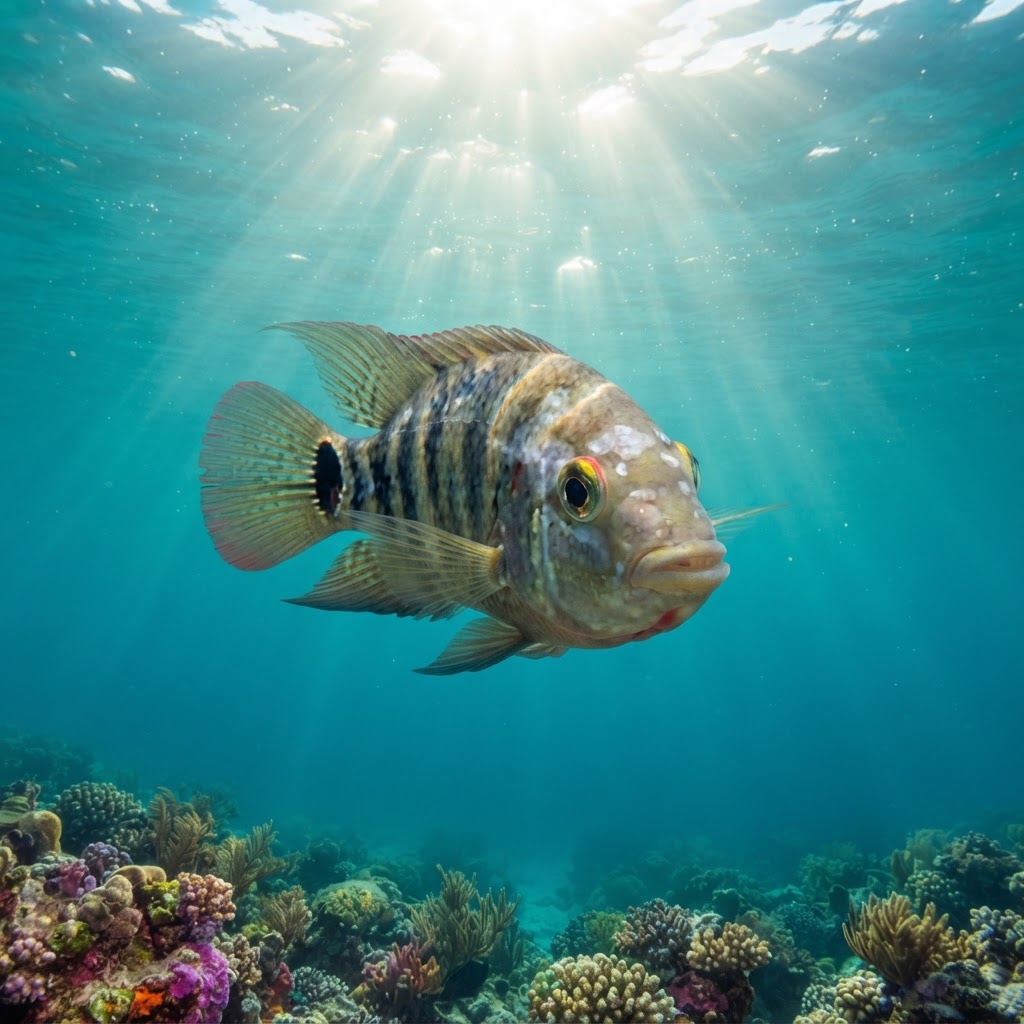
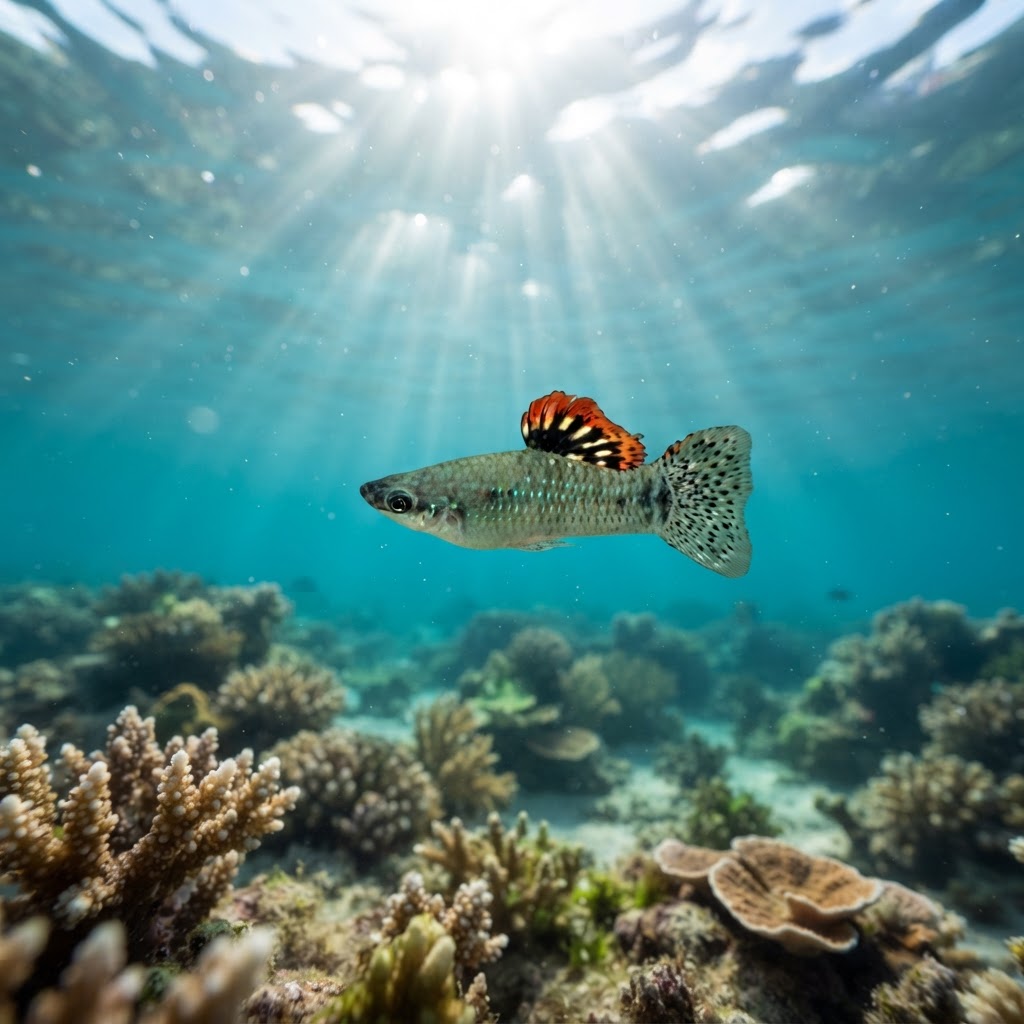
A small, slender fish topping out around 4 cm, with a pale silvery-olive body and a slightly flattened head typical of livebearers. Look for a faint dark line running along the flank and a rounded tail fin, often seen hovering in loose groups near submerged roots or in shallow, still water. Males tend to be smaller and slimmer than females, with a modified fin used in mating rather than a true visible ID marker underwater.
Expect to find small groups hanging in calm, shallow water near roots, submerged branches or along the edges of cenote entrances, picking at algae and tiny organisms rather than actively hunting. It shows little concern for divers and snorkellers, generally holding its position or drifting off a short distance rather than bolting. Most sightings happen in bright, still conditions where the fish are easy to pick out against a pale sandy or rocky bottom.
Like other livebearers in the Poecilia genus, females give birth to fully formed free-swimming young rather than laying eggs, so it is not unusual to see noticeably smaller juveniles shoaling alongside adults.
No clear seasonal pattern shows up in the data, and with a comfortable range of 25 to 31C year-round in these warm freshwater systems, it is a fish you can reasonably expect on any visit.
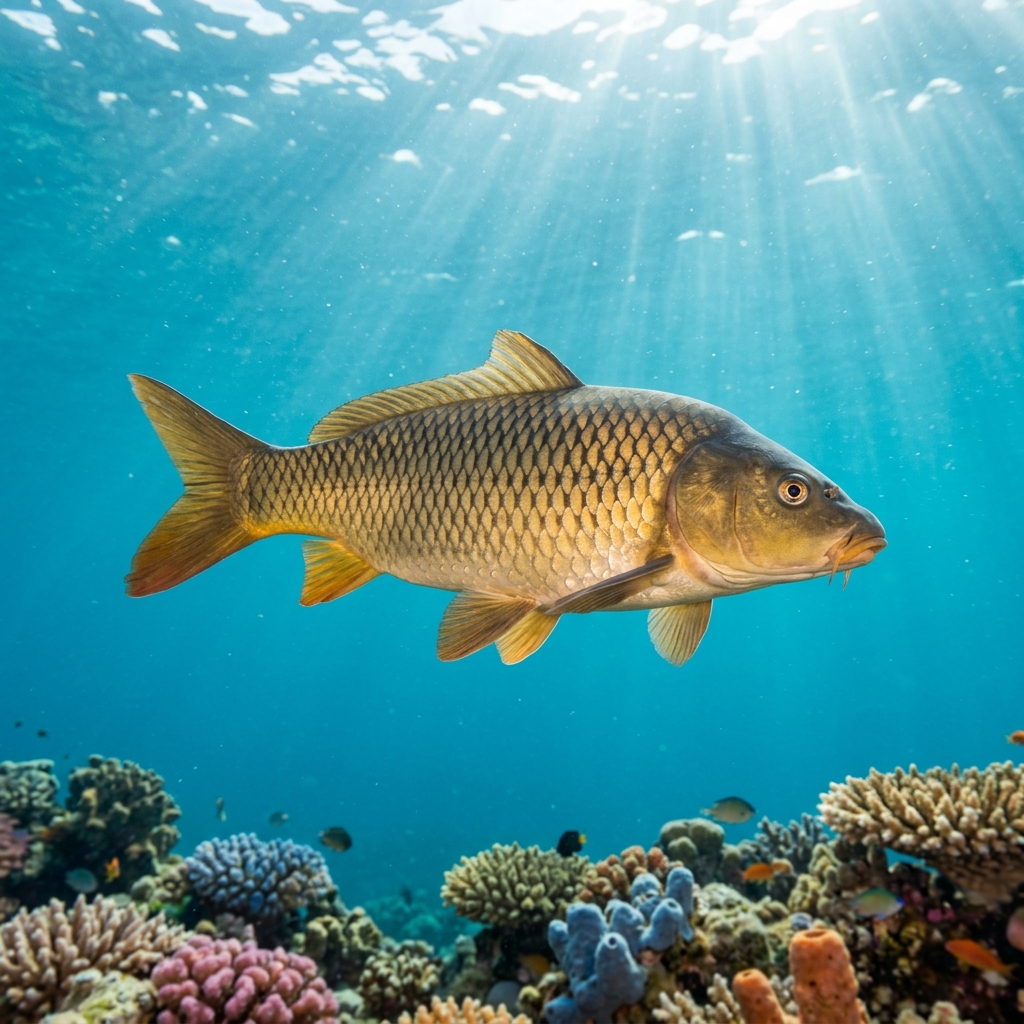
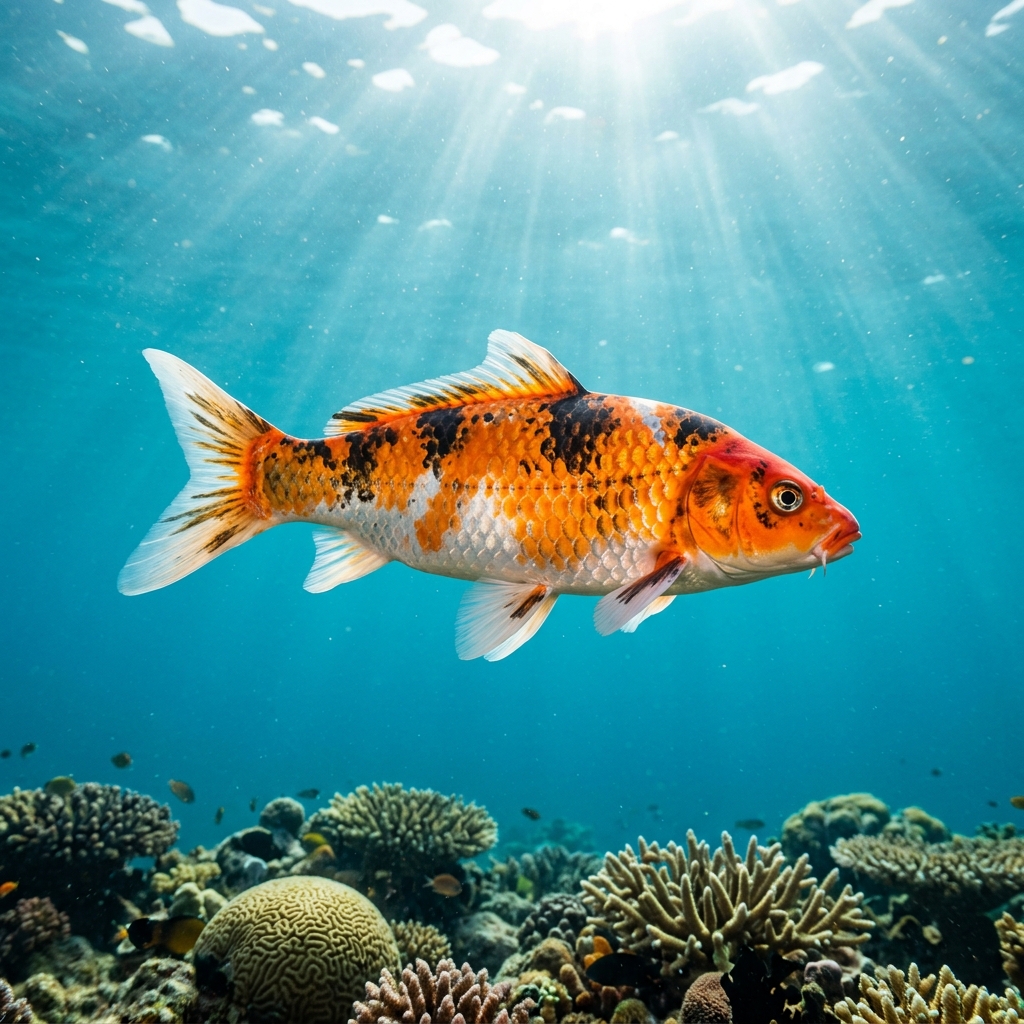
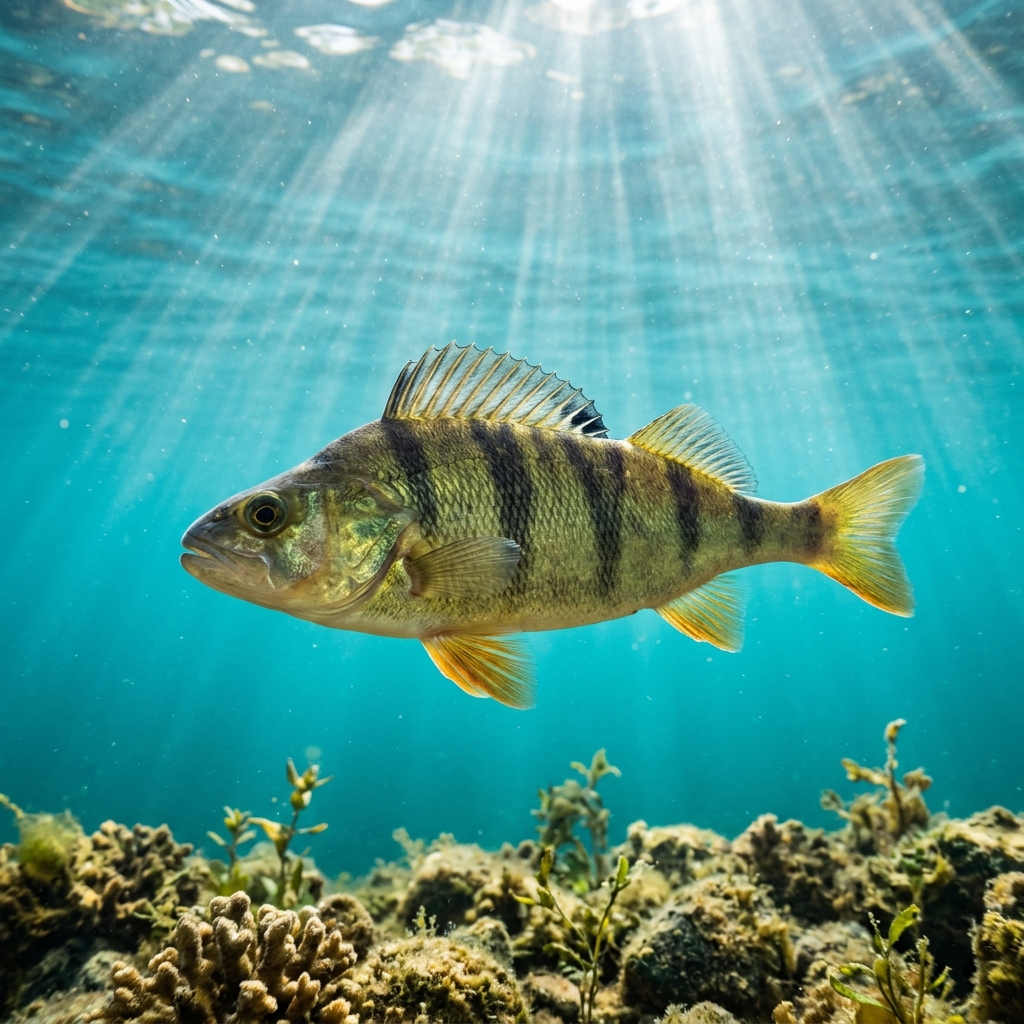
Reef neighbours a diver could mistake it for. Use the identification notes above to tell them apart.
This one is a Yucatán Peninsula specialty, logged almost exclusively across freshwater sites in Mexico. Cenotes, mangrove-lined channels and the brackish creeks threading through the region's coastal forest are where divers and snorkellers reliably run into it.
Mapping where Mangrove Molly is logged…
It is most reliably found in the Yucatán Peninsula in Mexico, particularly in cenotes and mangrove-fringed freshwater channels. Nearly all logged sightings come from this one region.
There is no strong seasonal pattern in the sightings data, and the water it lives in stays warm year-round, so it can be seen on any visit to the Yucatán's cenotes.
It is a small fish, typically reaching around 4 cm in length, so it is easy to overlook against roots or a sandy bottom if you are not looking closely.
Look for a small, slender, silvery-olive fish with a faint dark stripe along its side, usually seen in loose groups hovering near submerged roots or still, shallow water.
No, it poses no danger to divers or snorkellers and generally ignores people entirely, holding its position or drifting away calmly.
No, they are livebearers, meaning females give birth to free-swimming young rather than laying eggs, which is why smaller juveniles are often seen shoaling with adults.
Site and sighting data is aggregated from diver logs, iNaturalist and GBIF. For taxonomy and conservation status:
Sun Perch
2,182 sites