Neotrygon malaccensis
Sandy-bottom maskray logged across Khao Lak, Phuket and Koh Phi Phi in warm Thai waters year-round, usually solo and easy to miss.
Safety warning
The tail spine delivers a painful venomous wound if stepped on or grabbed, so watch where you place hands and fins on sandy bottoms where it rests. It is not aggressive and will only sting defensively, so give it space and let it move off on its own rather than trying to touch or corner it.
If you're stung
Venomous tail barbGeneral first-aid guidance, not a substitute for professional medical care. In an emergency, call your local emergency number.
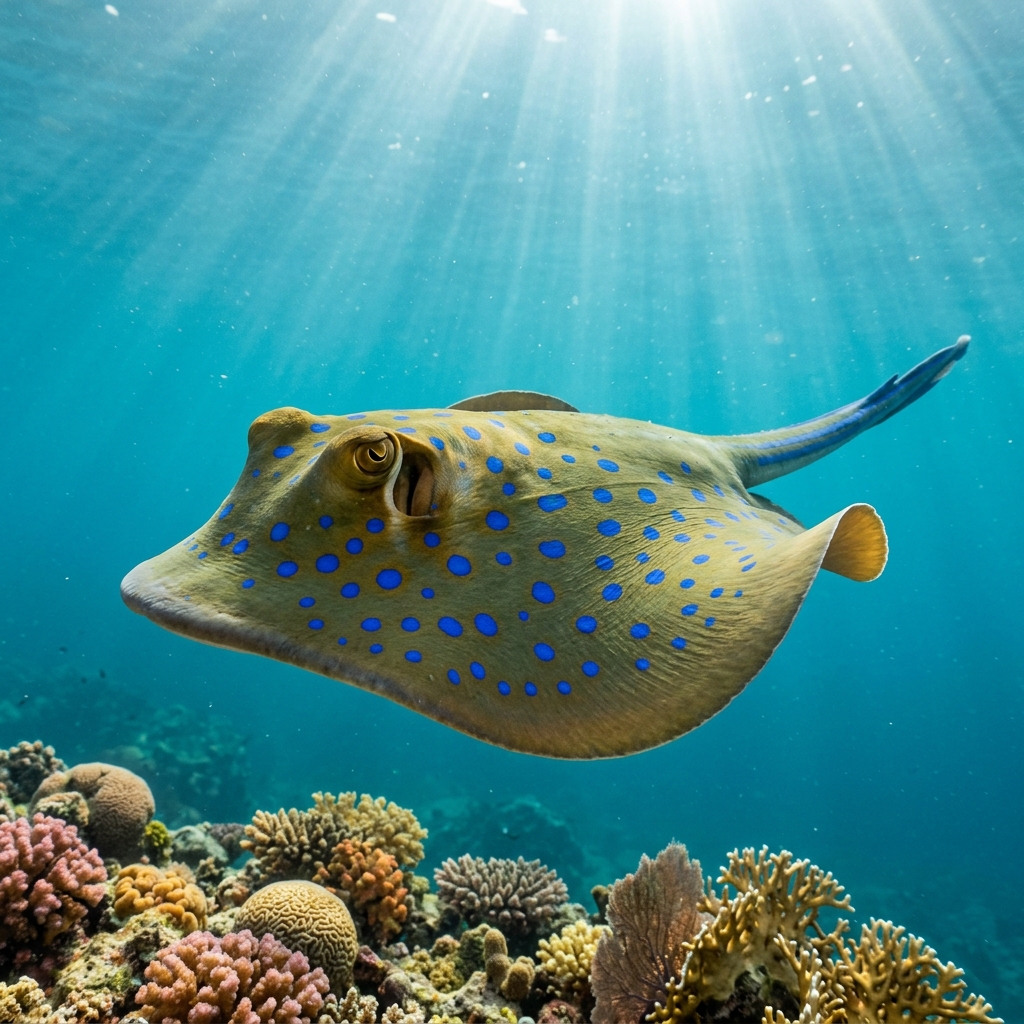
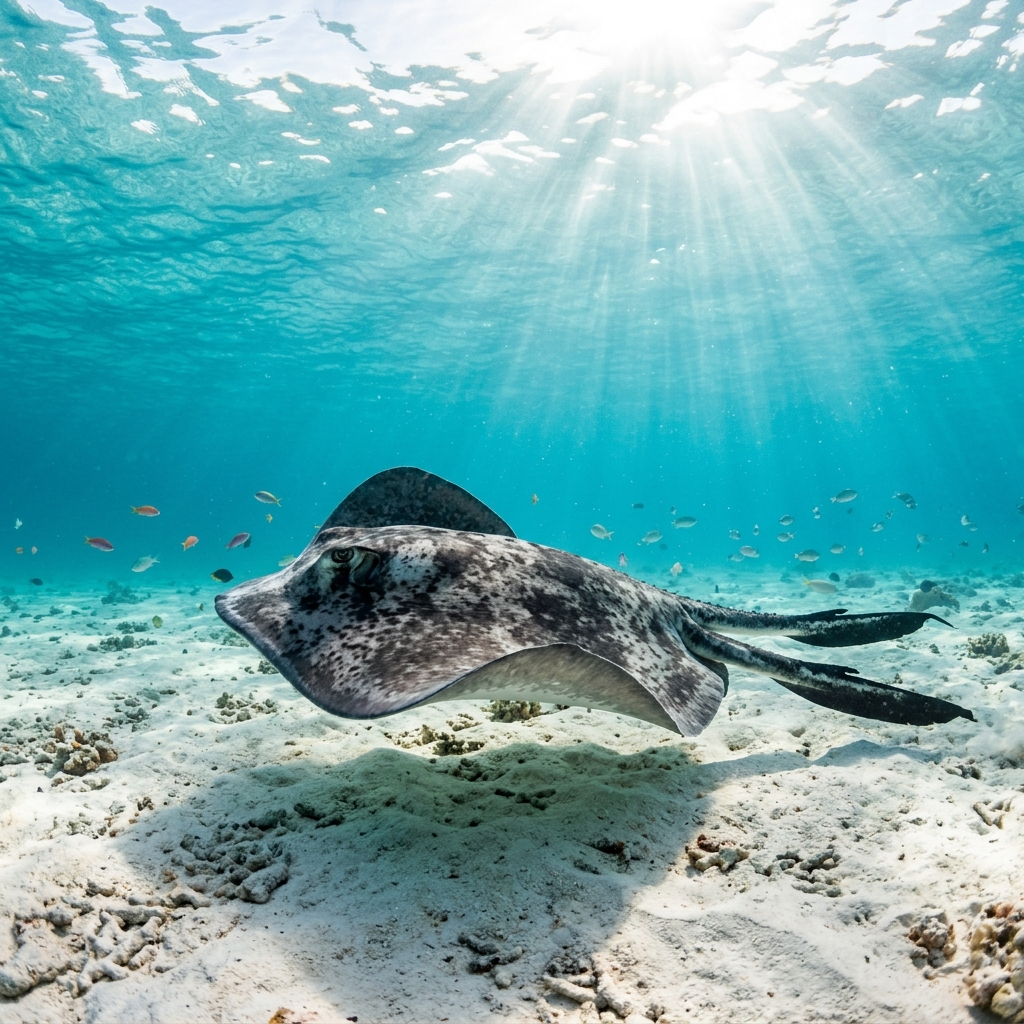
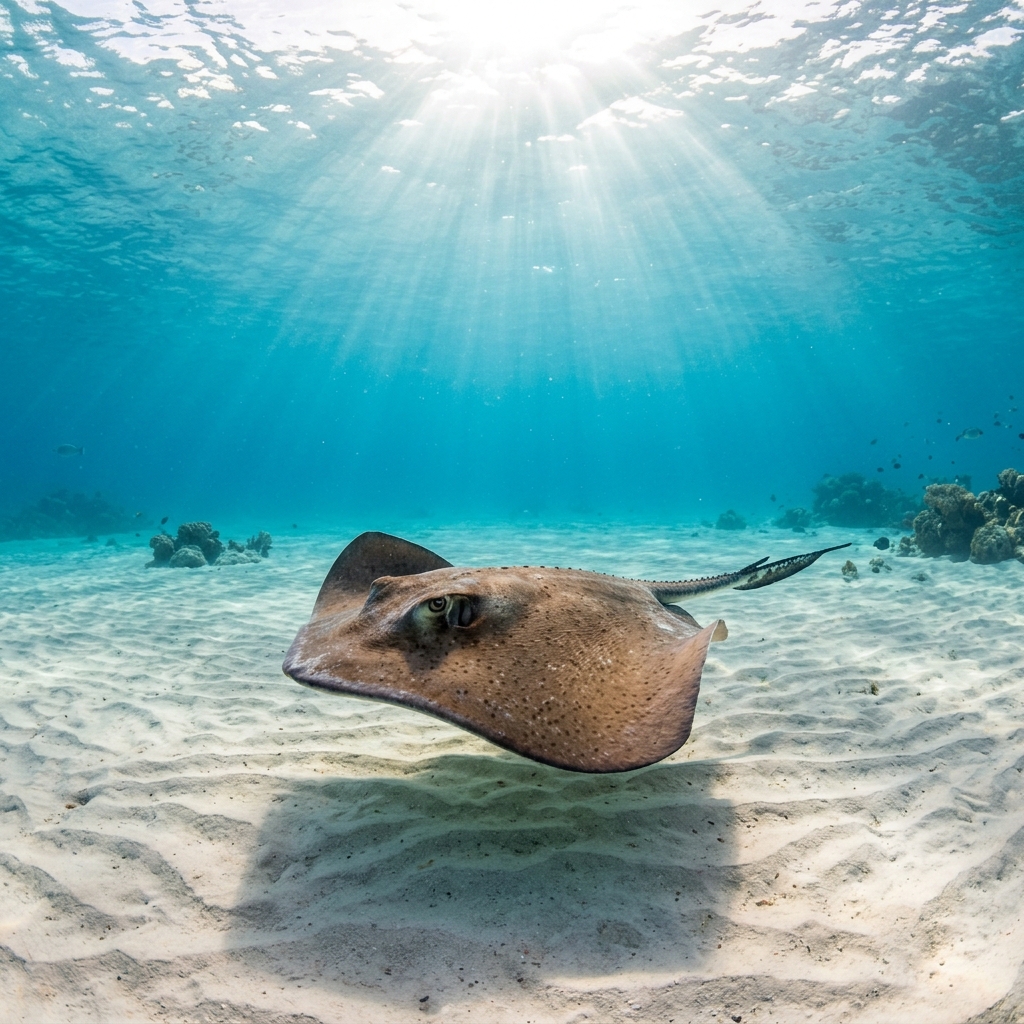
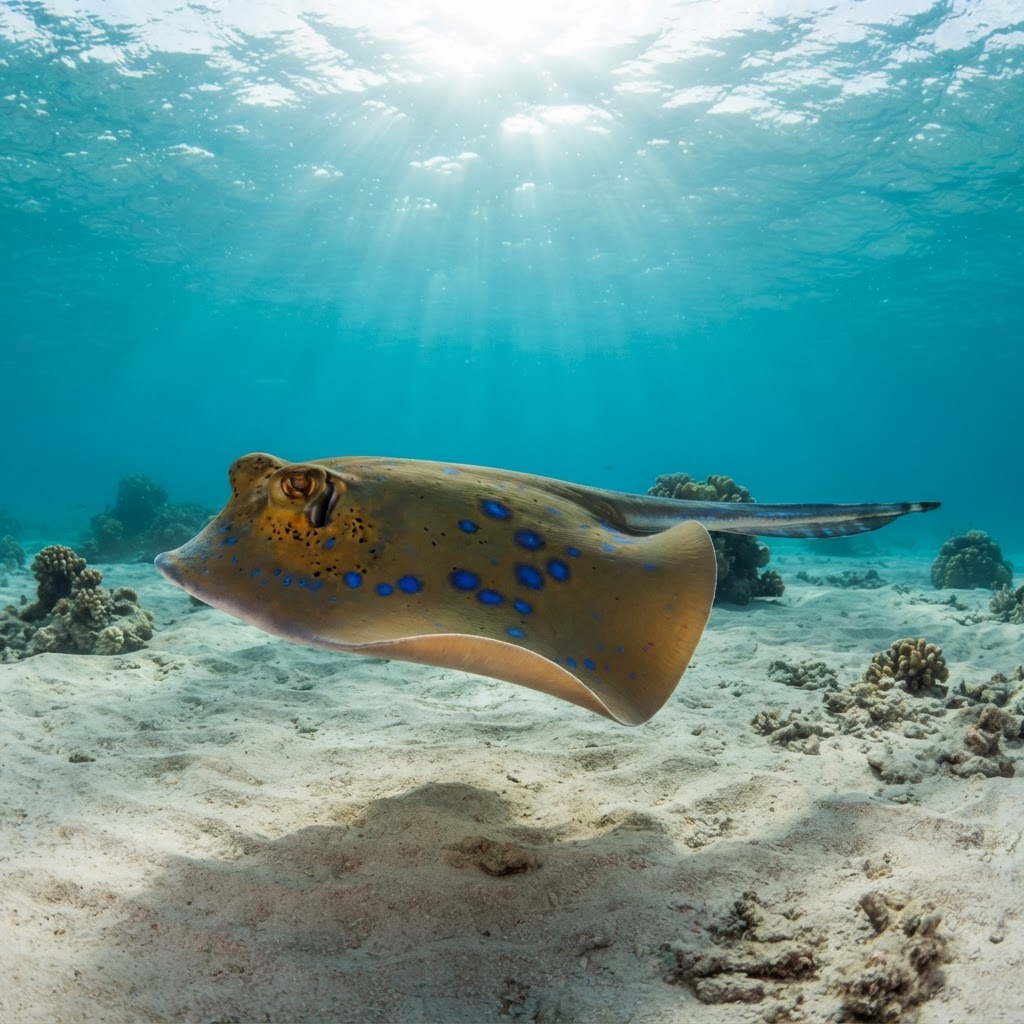
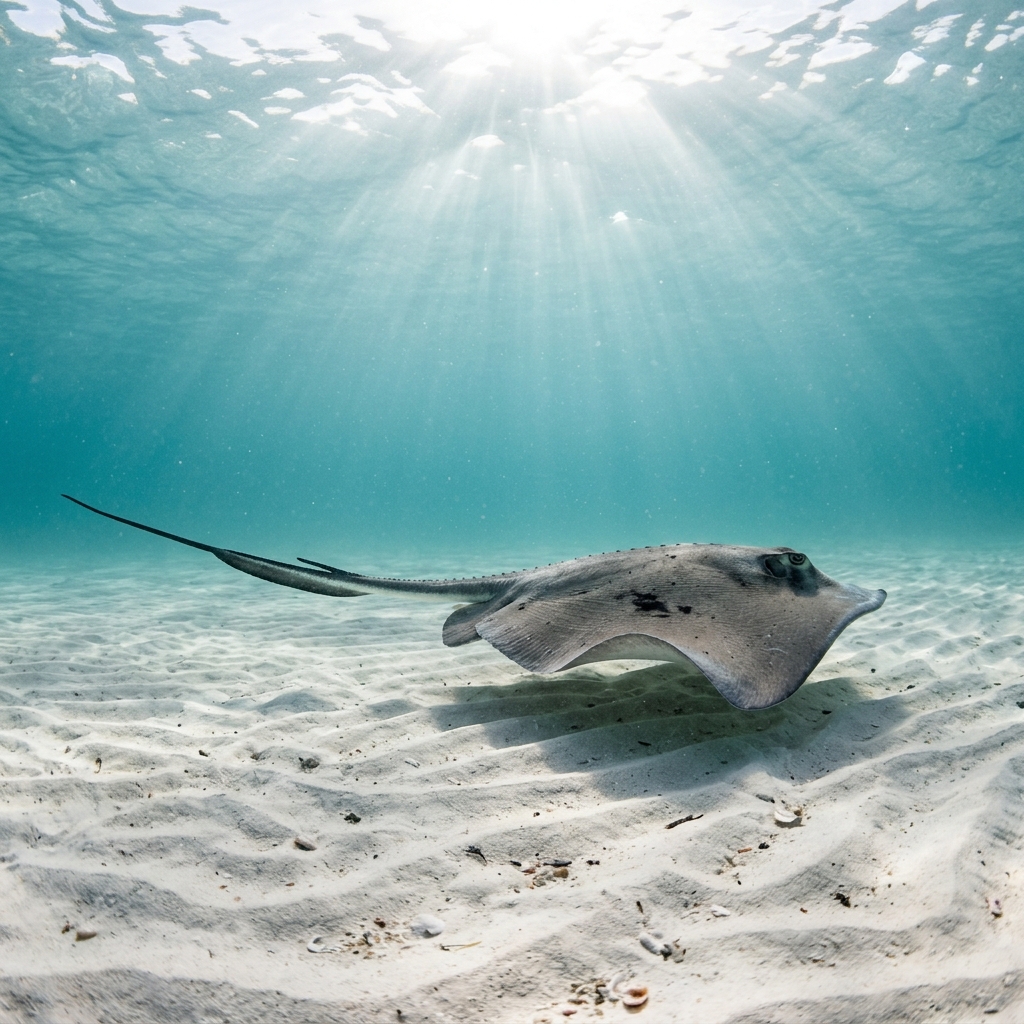
Flattened diamond-shaped disc in mottled brown with scattered pale blue spots across the back, a trait shared with several maskray relatives. It lies flat on sand or rubble patches, often half-buried, with only the eyes and long whip-like tail visible. The tail carries one or more venomous spines near the base, held close to the body when undisturbed.
Divers typically find it resting motionless on sand, rubble or mixed sandy-reef bottoms, often partly covered and easy to swim past without noticing. It tends to hold still as divers approach rather than bolt immediately, then flushes off with a quick burst across the sand if pressed too closely. Most sightings come from patches adjacent to reef structure rather than open sand flats.
Like other maskrays, it likely forages by disturbing sand with its disc to expose buried invertebrates, a feeding style that helps explain why it's so often found half-buried rather than swimming in open water.
Sightings run year-round with no detected seasonal peak, matching the consistently warm 26.2 to 32.2 C water it favours across Thailand's dive regions. Any month should work if you're checking sandy bottoms and reef margins at the usual Thai sites.
Reef neighbours a diver could mistake it for. Use the identification notes above to tell them apart.
This maskray is most reliably logged in Thailand, with strong numbers around Khao Lak, Phuket and Koh Phi Phi, plus a smaller but consistent presence in Krabi. Sightings run uncommon at most sites, with a handful of locations where it turns up on close to every dive, so scanning sandy patches near reef edges in these regions is your best bet.
Mapping where Malacca Strait Bluespotted Maskray is logged…
Thailand is the reliable place for this species, with the strongest logs from Khao Lak, Phuket and Koh Phi Phi, and a smaller but steady presence in Krabi. Check sandy patches near reef structure at these sites rather than open water.
There's no detected seasonal pattern, and it's found year-round in Thailand's consistently warm 26.2 to 32.2 C water. Any month diving the usual Thai regions gives a fair chance.
It carries a venomous tail spine that can cause a painful wound if stepped on or handled, but it is not aggressive toward divers. Keep an eye on where you place hands and fins on sandy bottoms and it will simply move off if approached.
Look for a brown diamond-shaped disc scattered with pale blue spots, usually lying flat and half-buried on sand or rubble near reef edges. The long whip-like tail with a venomous spine near the base is a key giveaway.
Like other maskrays, it likely digs into sand to flush out buried prey rather than hunting in open water, which is why divers so often spot it half-covered and motionless rather than actively swimming.
Site and sighting data is aggregated from diver logs, iNaturalist and GBIF. For taxonomy and conservation status:
Whiptail Stingray
1,747 sites