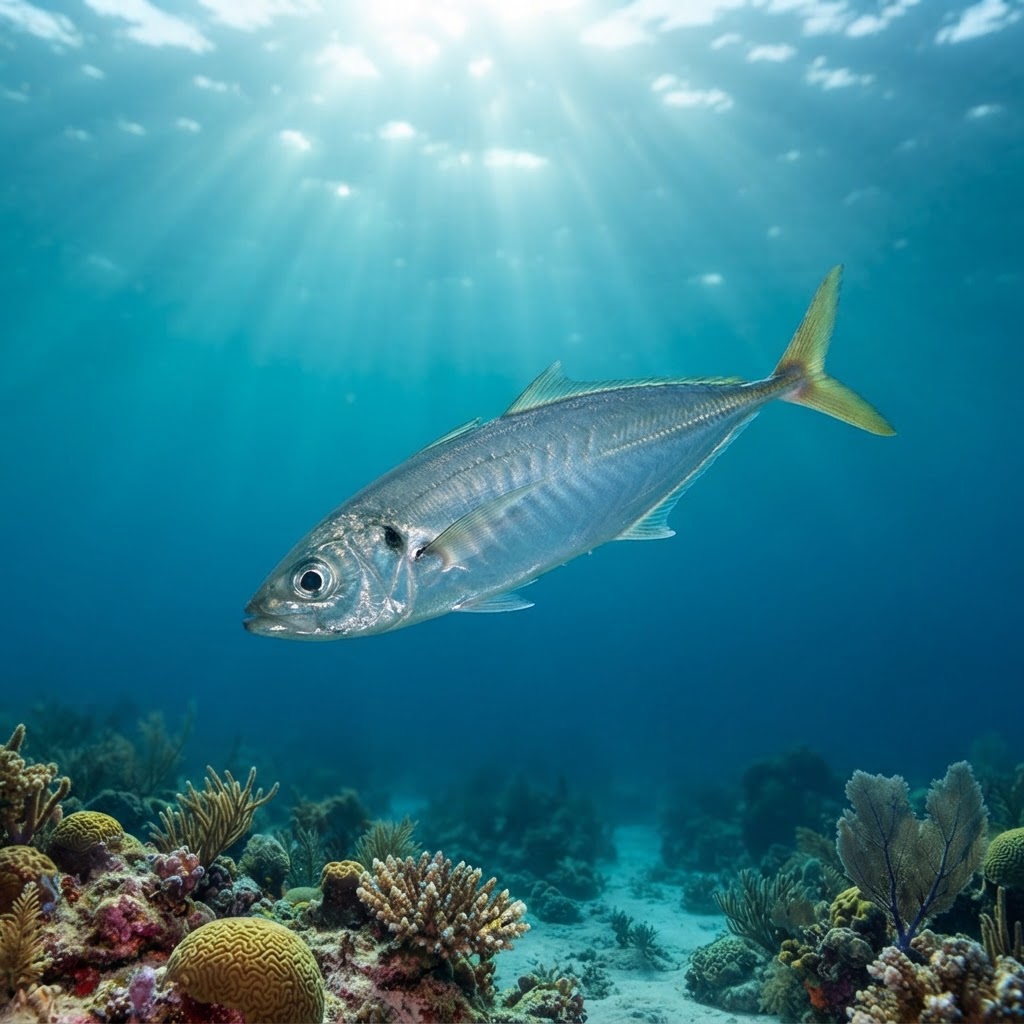
Decapterus macarellus
Slim silver schooling fish common off Hawaii, moving in tight tornado-like shoals over reef and open water year-round.
Slender, torpedo-shaped body around 32 cm long with a metallic blue-green back fading to silver flanks. Look for a small dark spot near the upper edge of the gill cover and a distinct ridge of small scales (a scute-lined lateral line) running along the rear half of the body. Usually seen in dense, fast-moving schools rather than as lone fish, which is often the biggest clue to its identity underwater.
Travels in tight, swirling schools that hang in midwater over reef slopes or open sandy areas, often moving as a single shifting mass. Generally indifferent to divers, holding formation and drifting past rather than scattering, though a school can suddenly bank and vanish into the blue. Most sightings are along the reef edge rather than deep in coral structure.
Schooling in dense numbers is a defence strategy: predators struggle to single out one fish from a shifting wall of silver bodies, which is why divers usually see this species in the dozens or hundreds rather than alone.
Sightings show no clear seasonal pattern, and the species tolerates a wide range from 13 to nearly 28 C, so it's reasonable to expect it on any dive in its range year-round.
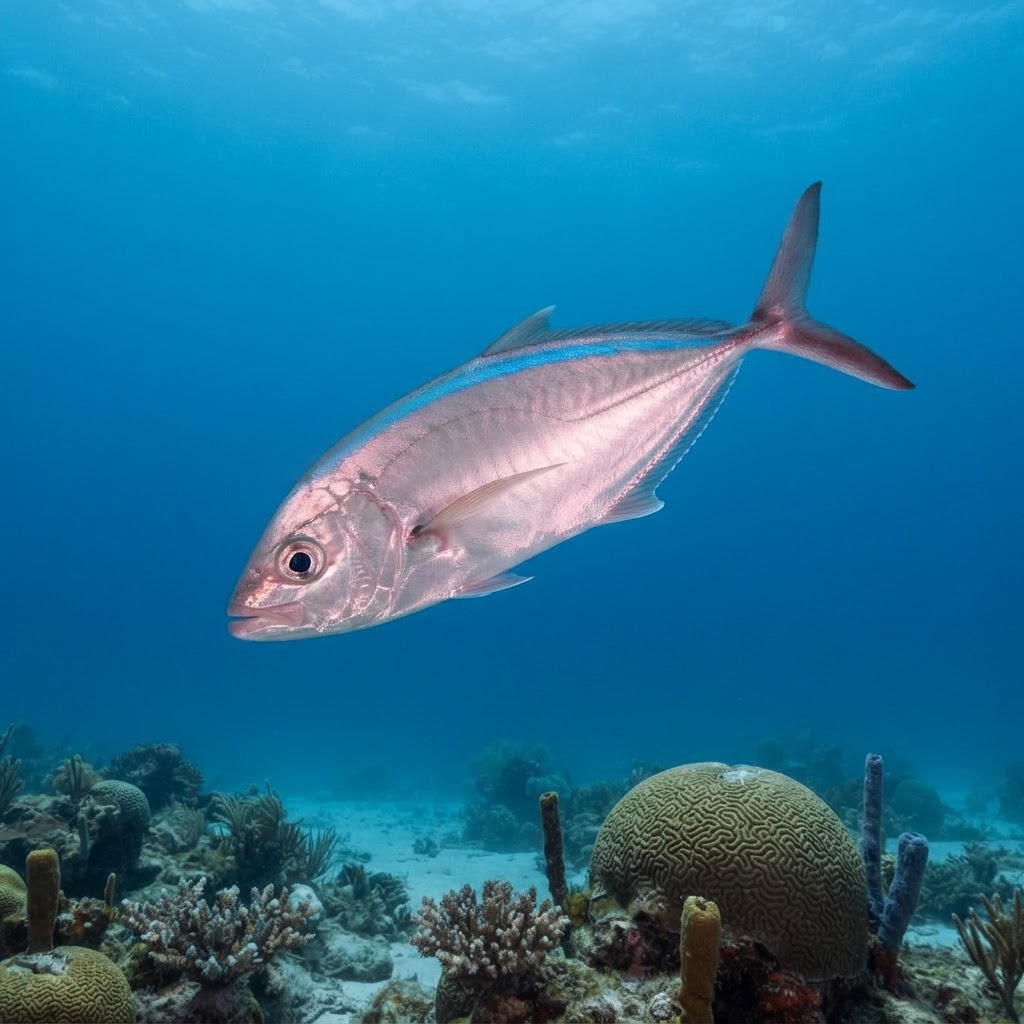
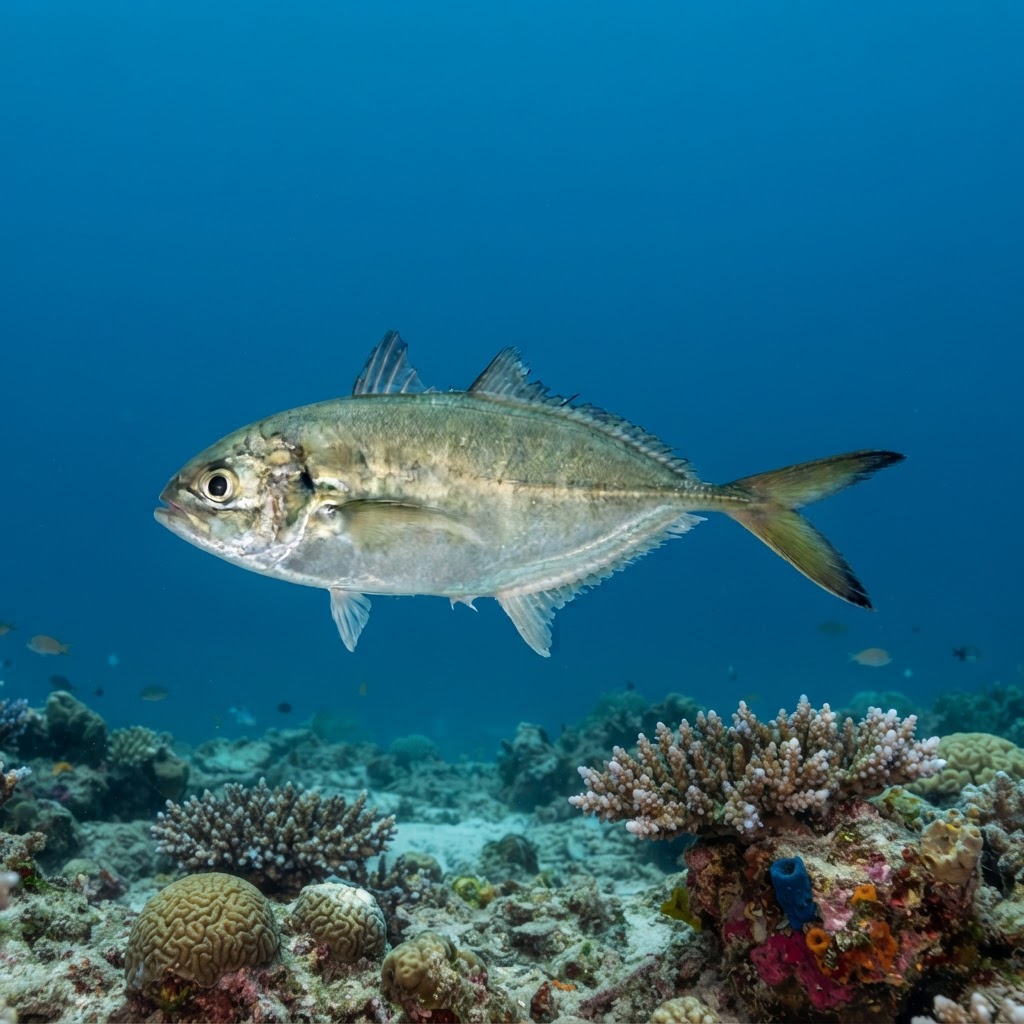
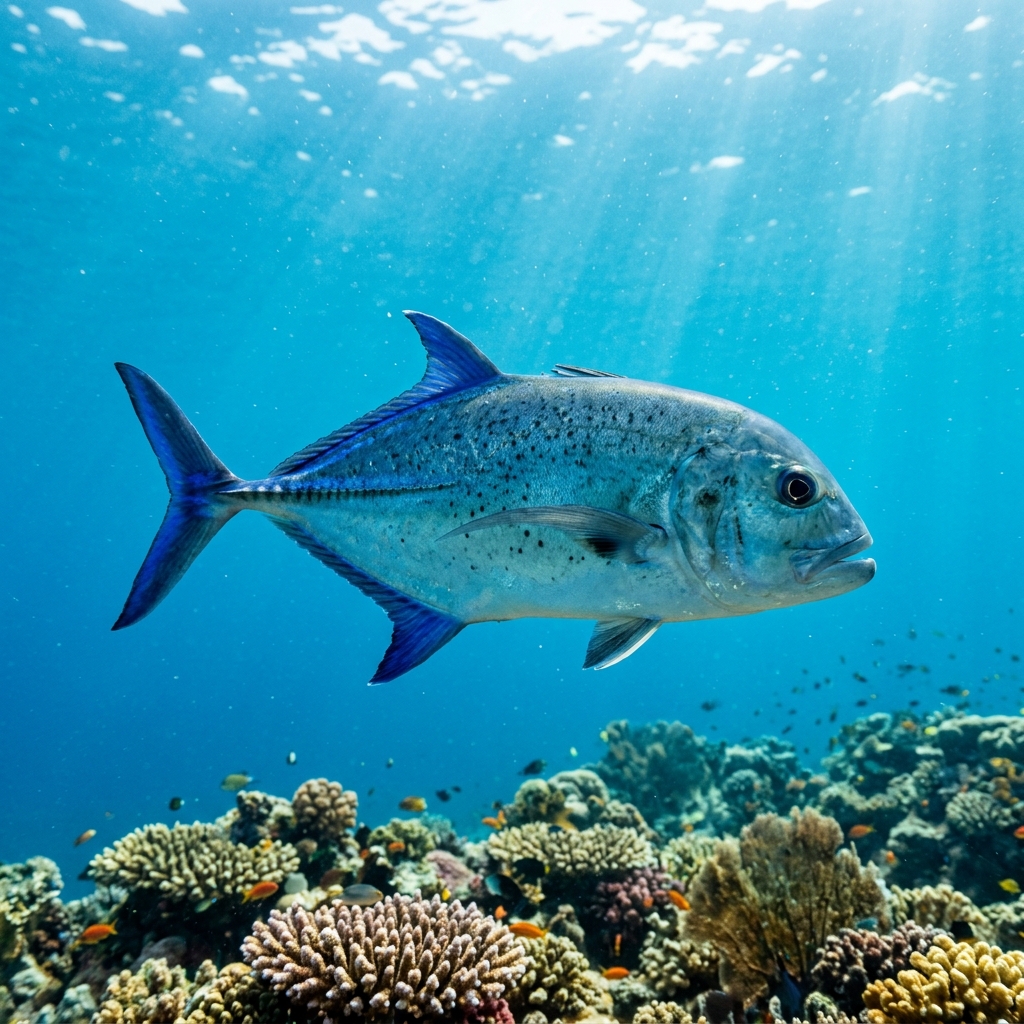
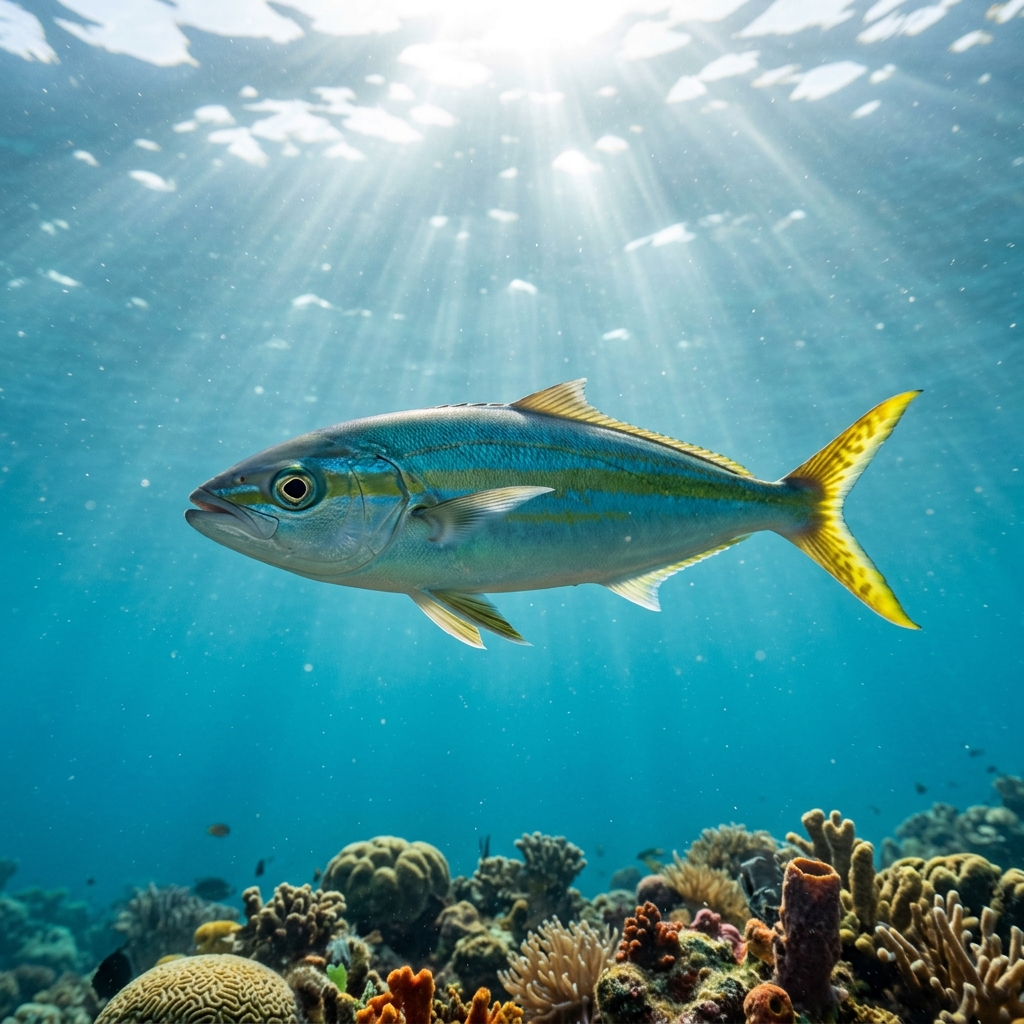
Reef neighbours a diver could mistake it for. Use the identification notes above to tell them apart.
Most reliably logged in Hawaii, where it turns up at a spread of sites across the islands, with an occasional sighting as far as the Galápagos Islands in Ecuador. Divers in Hawaiian waters have the best odds of running into a school, though even there it's typically an uncommon rather than guaranteed find.
Mapping where Mackerel Scad is logged…
Hawaii is the standout location, with sightings logged across multiple sites there. There's also at least one record from the Galápagos Islands in Ecuador, though Hawaii offers far better odds.
There's no strong seasonal pattern in sightings, and the species handles a broad temperature range, so it can show up on any dive throughout the year.
Look for a slim, silvery, blue-backed fish around 32 cm long moving in a tight school. A small dark spot near the gill cover and a scaly ridge along the rear lateral line help confirm the ID against similar jacks.
They typically reach about 32 cm in length, a slender build built for fast, sustained swimming in schools rather than bulk.
Their dense schooling is a survival tactic, making it hard for predators to target a single fish in the shifting silver mass, which is why sightings are almost always in large numbers rather than solo.
Site and sighting data is aggregated from diver logs, iNaturalist and GBIF. For taxonomy and conservation status:
Bigeye Trevally
2,591 sites