Lybia spp.
Look for tiny pom-pom crabs waving anemone pom-poms across rubble slopes in Sulawesi and Luzon, mostly after dark.
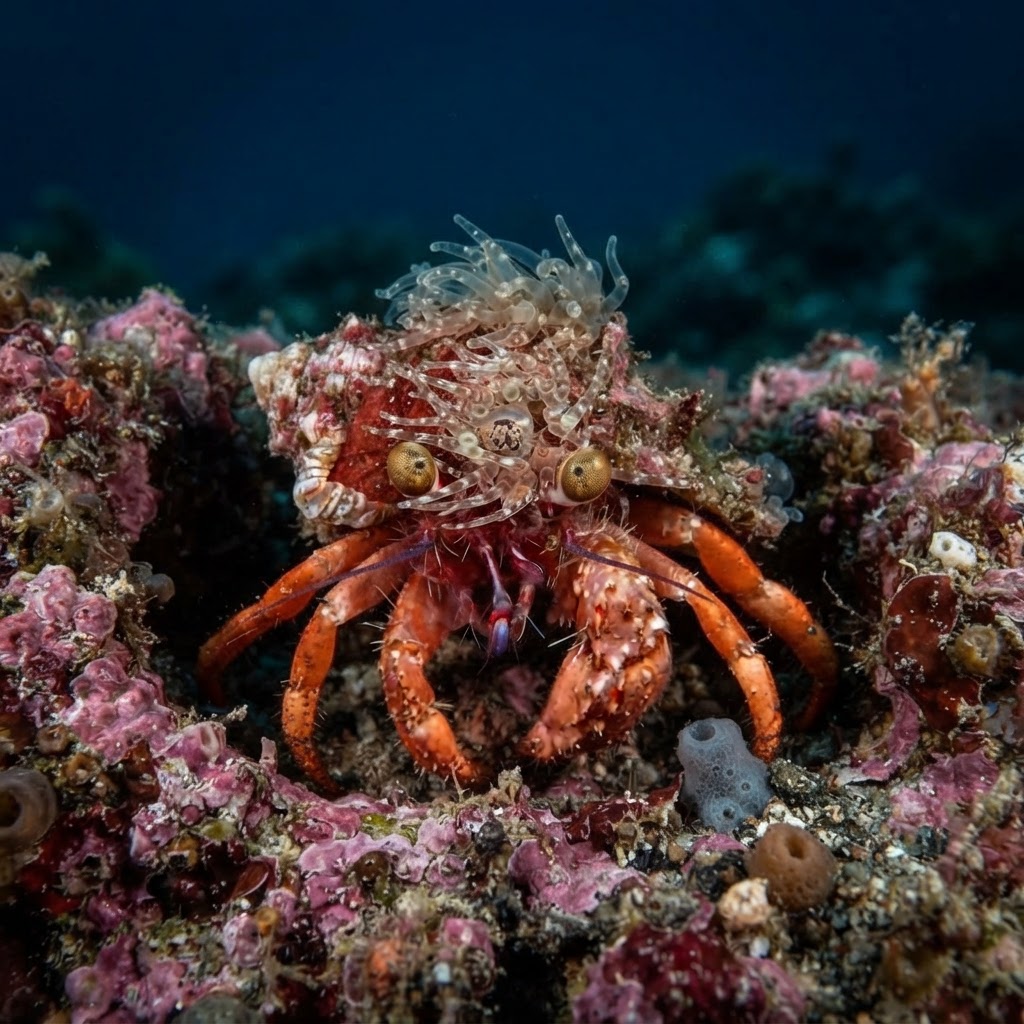
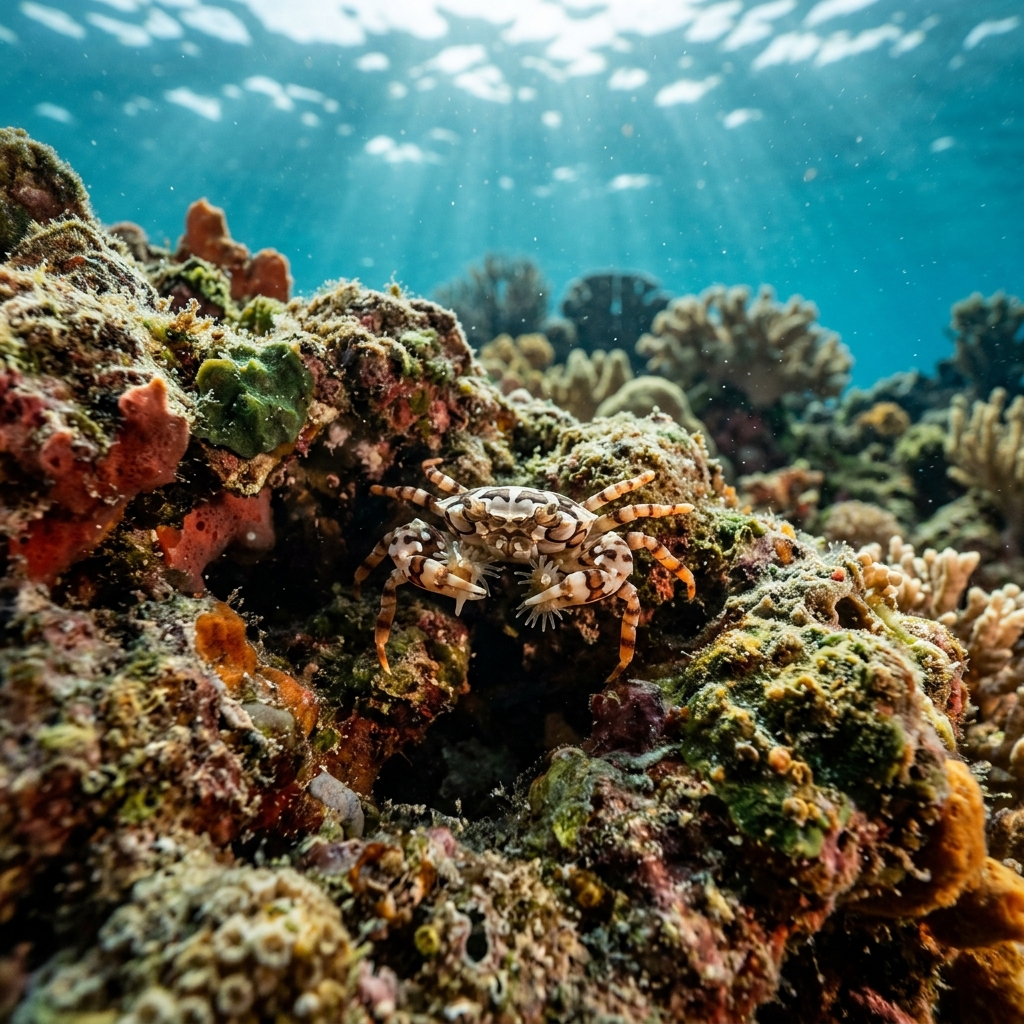
A tiny, pale mottled crab, usually only a centimetre or two across the shell, that carries a small stinging anemone gripped in each claw like a pair of pom-poms. The claws themselves are often hidden behind the anemones, so what you actually spot first is two fuzzy pink or brown tufts waving above the rubble. Body colour blends into coral rubble and sand, so the anemones are almost always the giveaway rather than the crab's own patterning.
Found picking slowly across rubble patches, coral rubble slopes and shaded low-profile reef, almost always at night or tucked into shadow during the day. The anemones aren't for feeding; they're brandished at anything that gets too close, giving this crab its nickname the boxing crab. When a diver approaches it typically freezes or wedges itself into a crevice rather than bolting, so a slow, patient scan with a torch is the best way to actually find one.
If it loses or has to split one of its anemones, it can tear the remaining one in half and let each piece regrow into a full anemone, so it never has to go looking for a replacement pair.
No clear seasonal pattern shows up in sighting data, and the 25 to 29 C range it's found in covers tropical reefs year-round, so there's no particular month to target. Night dives and dusk dives over rubble consistently produce better odds than daytime reef swims.
Reef neighbours a diver could mistake it for. Use the identification notes above to tell them apart.
Most reliably logged across the Philippines and Indonesia, with strong numbers from Sulawesi, Luzon, Palawan, Mindanao and the Visayas. Beyond that core range it turns up in Malaysia's Sabah region, Japan's Okinawa and Ryukyu Islands, French Polynesia, Micronesia, Australia and Fiji, though sightings anywhere are patchy.
Mapping where Pom-pom Crab is logged…
Sulawesi and Luzon in the Philippines and Indonesia are the most consistent spots, alongside Palawan, Mindanao and the Visayas. It also shows up in Sabah, Okinawa, French Polynesia and Micronesia, though always in low numbers.
There's no detected season, and warm tropical water year-round keeps it active on rubble slopes at any time of year. Night dives give the best chance of a sighting regardless of month.
Look for a small mottled crab holding a fuzzy stinging anemone in each claw rather than the crab's own colouring. The anemone pom-poms are usually the first and only thing you notice against rubble.
They stay tiny, generally only a centimetre or two across the carapace, which is part of why they're so easy to miss on a rubble slope.
It's known as the boxing crab because it holds a stinging anemone in each claw and waves them at threats instead of pinching, and if it loses one it can split the survivor in half to grow a matching pair again.
Site and sighting data is aggregated from diver logs, iNaturalist and GBIF. For taxonomy and conservation status:
European Green Crab
2,469 sites