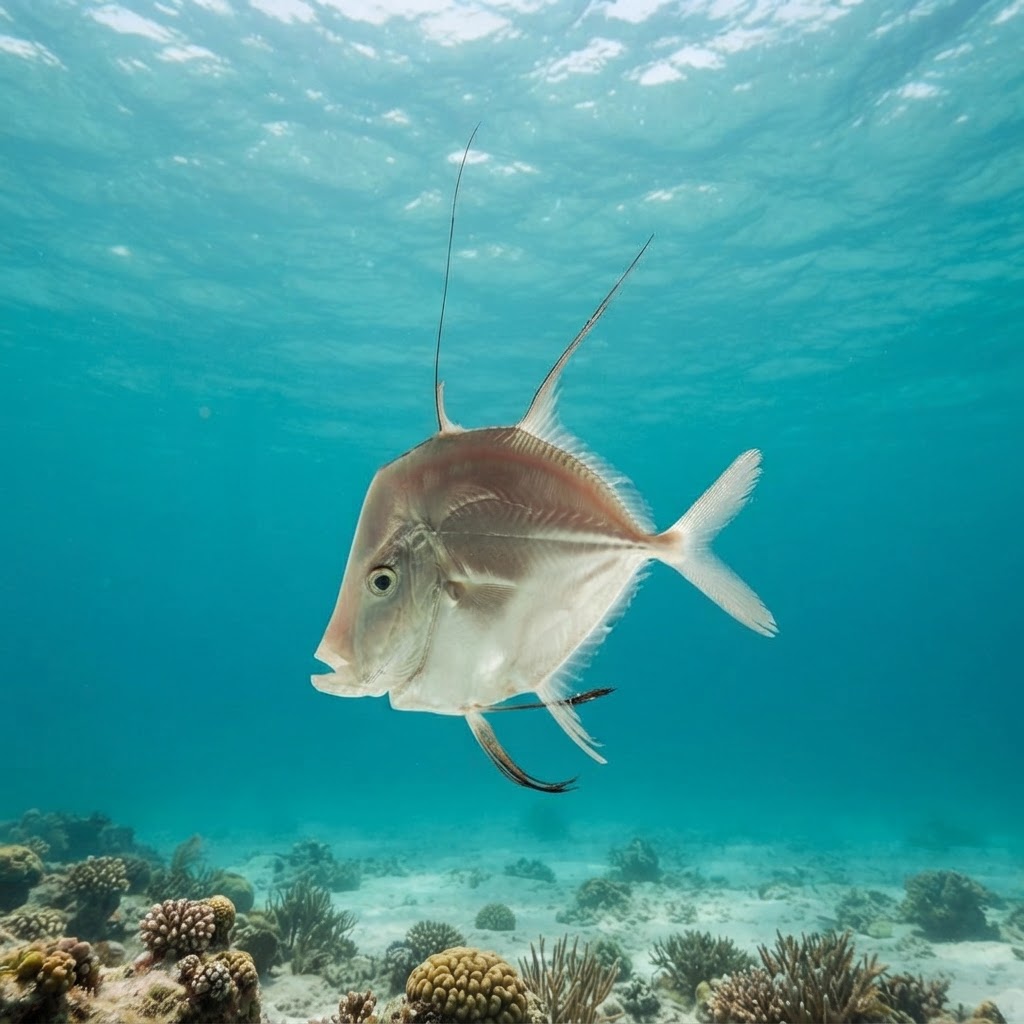
Selene vomer
Silver, blade-thin and almost see-through in profile, lookdown are a reliable uncommon find on Florida dive sites year-round.
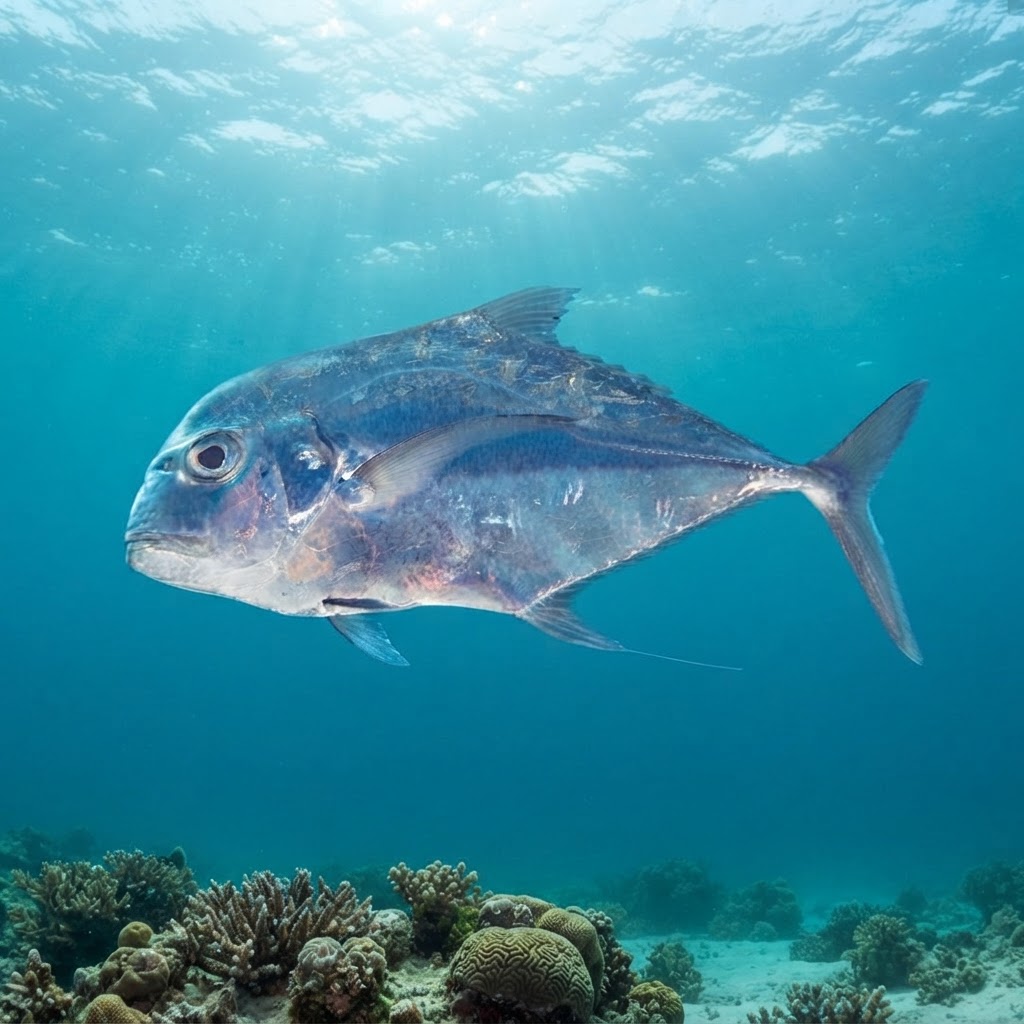
Compressed into a near-vertical silver disc, a lookdown is unmistakable in profile: the body is far taller than it is thick, with a steeply sloped forehead that drops almost straight down to the mouth, giving the face its name. Scales flash mirror-silver with faint yellow tints on the fins, and long trailing filaments extend from the front of the dorsal and anal fins on larger adults. At around 34 cm it is a mid-size jack, usually seen alone or in small loose groups rather than tight schools.
Divers typically find lookdown hovering just off the bottom near reef edges, wrecks or sandy patches, often angling that flat body sideways to present the smallest possible profile. They tend to hold steady rather than dart off when a diver approaches, making them an easy, unhurried subject for a closer look or a photo. Look for them singly or in small loose groups rather than the dense schools some other jacks form.
That extreme side-to-side flattening is a real defence: seen head-on a lookdown all but disappears, presenting almost no visible outline to predators or to divers scanning open water.
Sightings show no detectable season, and with a wide observed temperature range of roughly 12 to 28C, lookdown turn up on Florida dives across the calendar rather than in one narrow window.
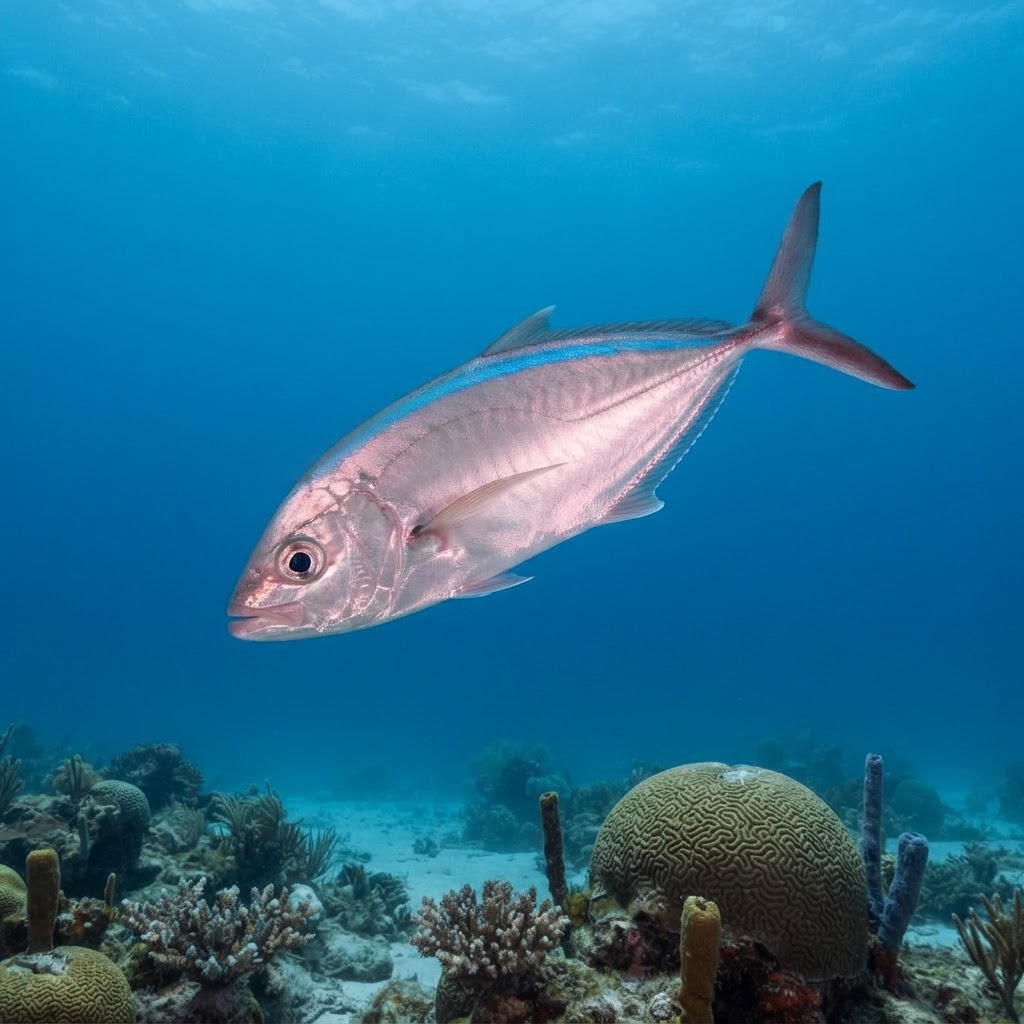
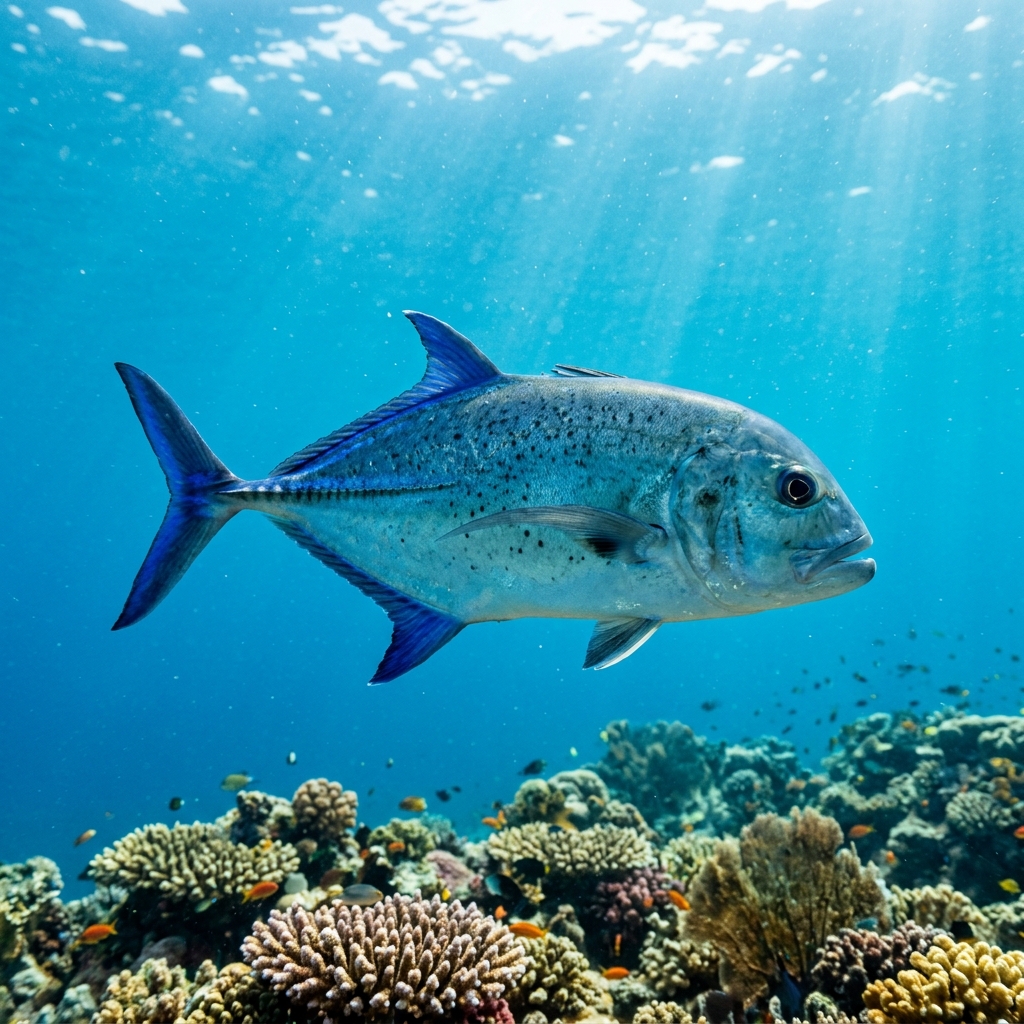
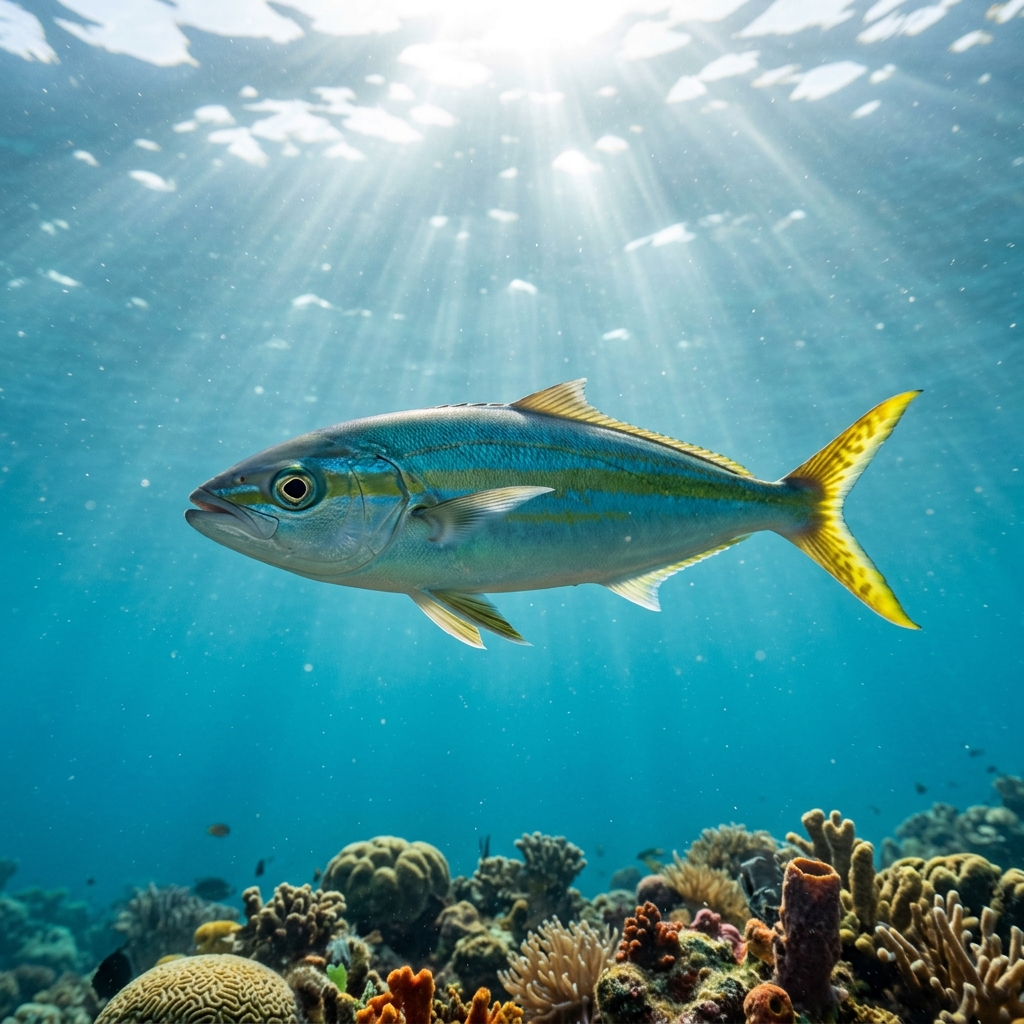
Reef neighbours a diver could mistake it for. Use the identification notes above to tell them apart.
Nearly every logged sighting comes from the United States, with Florida the dominant hotspot for this species and a single record from Texas rounding out the picture. Within Florida, divers turn it up as an uncommon find across a wide spread of sites rather than concentrated in one or two locations, so it is worth watching for on almost any Florida reef or wreck dive.
Mapping where Lookdown is logged…
Florida is by far the most reliable place to find them, logged as an uncommon sighting across a wide range of dive sites there. A single Texas record shows they range further along the Gulf coast, but Florida is the practical answer for divers.
There is no clear season in the sighting data, and their comfortable temperature range spans roughly 12 to 28C, so they show up on Florida dives throughout the year rather than in one specific month.
Look for a thin, disc-like silver body with a steep, almost vertical forehead sloping down to the mouth. Trailing filaments on the dorsal and anal fins and a habit of turning sideways to flash a mirror-like profile are the giveaways.
They typically reach around 34 cm, making them a modest mid-size member of the jack family rather than a large predator like their trevally relatives.
Their body is flattened so extremely from side to side that, viewed head-on, they present almost no visible profile, an effective way to vanish from predators in open water.
Site and sighting data is aggregated from diver logs, iNaturalist and GBIF. For taxonomy and conservation status:
Bigeye Trevally
2,591 sites