Hipposcarus longiceps
Uncommon but reliable on reefs from Queensland to the Tuamotu Islands, this sleek parrotfish suits water between 25 and 29C year-round.
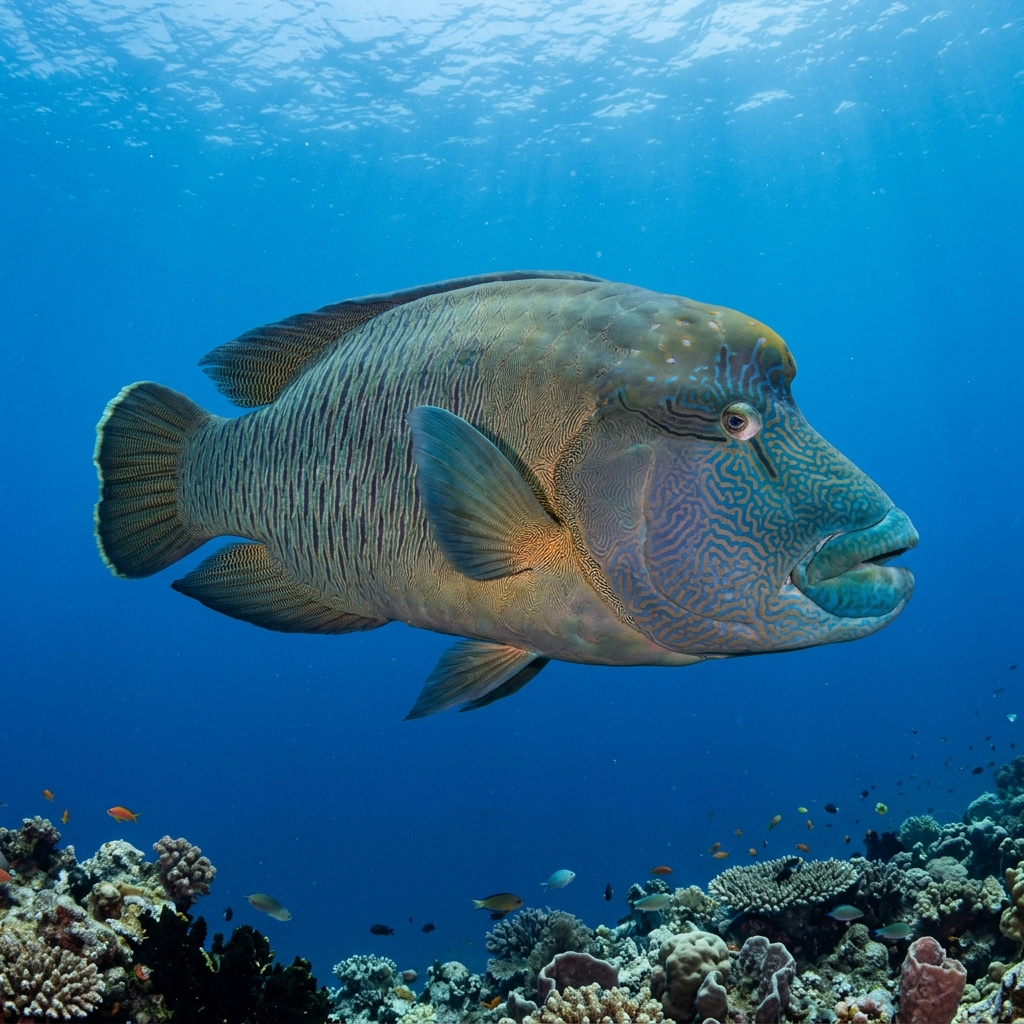
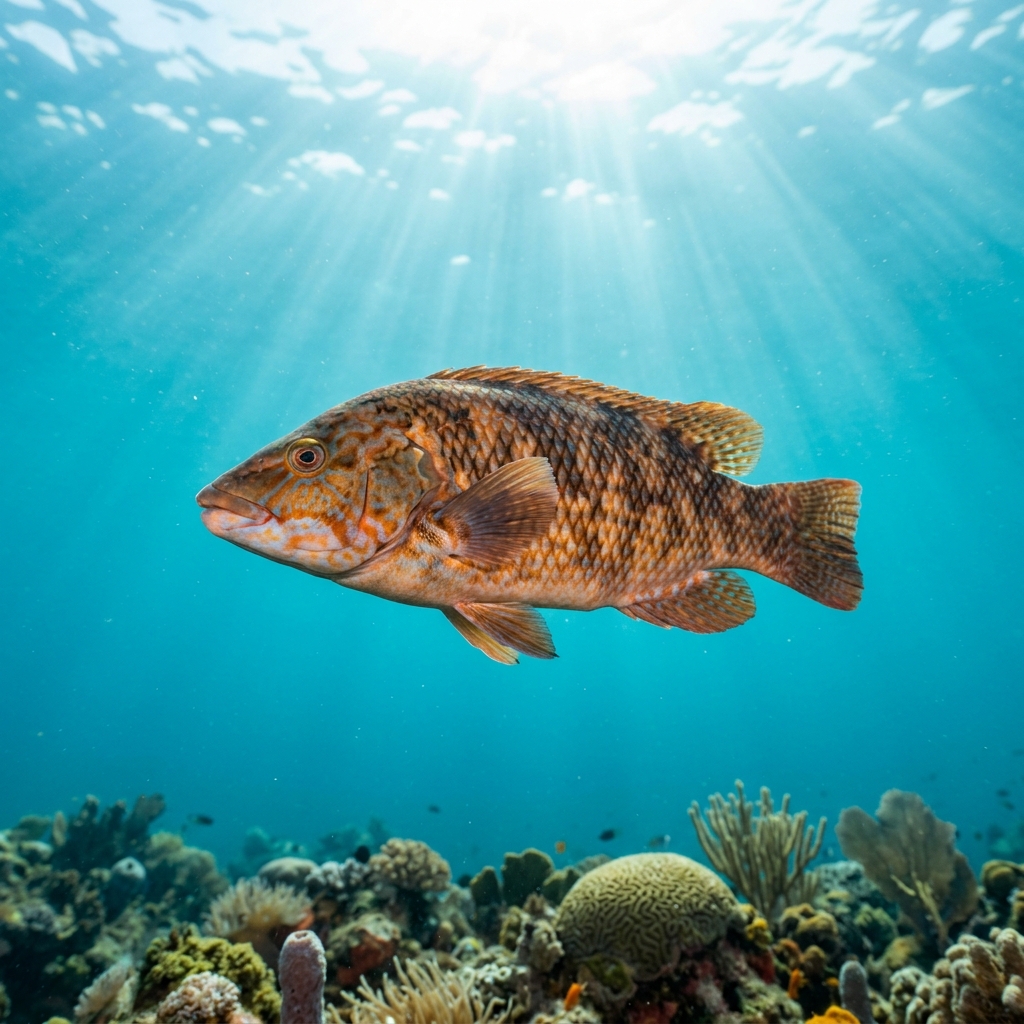
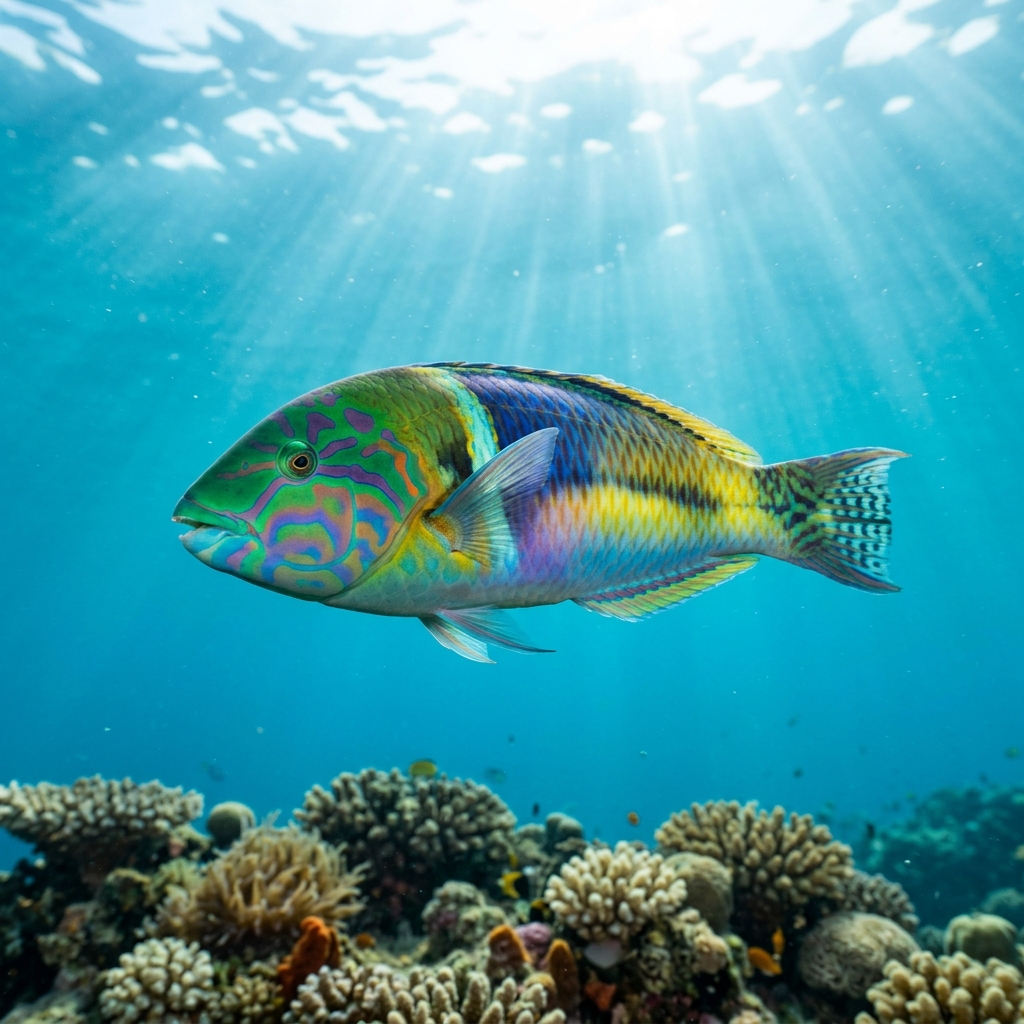
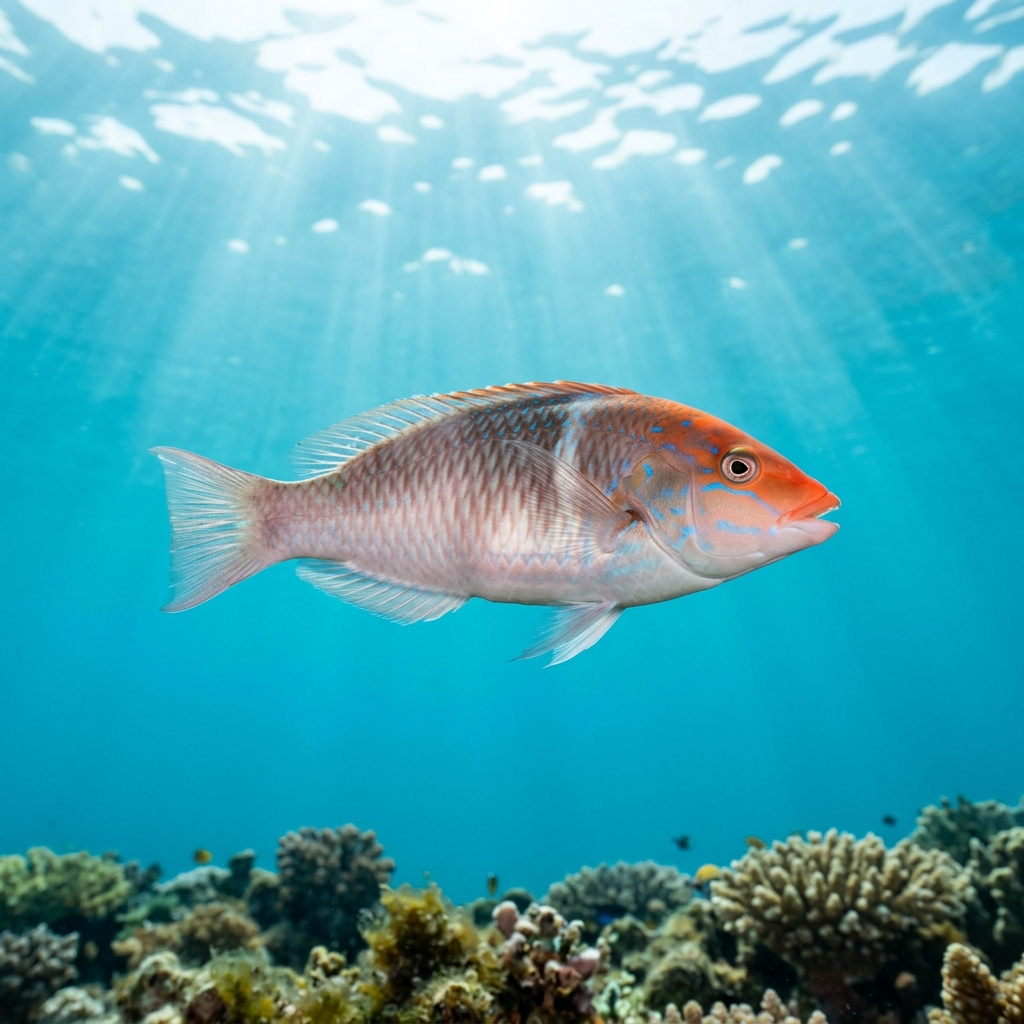
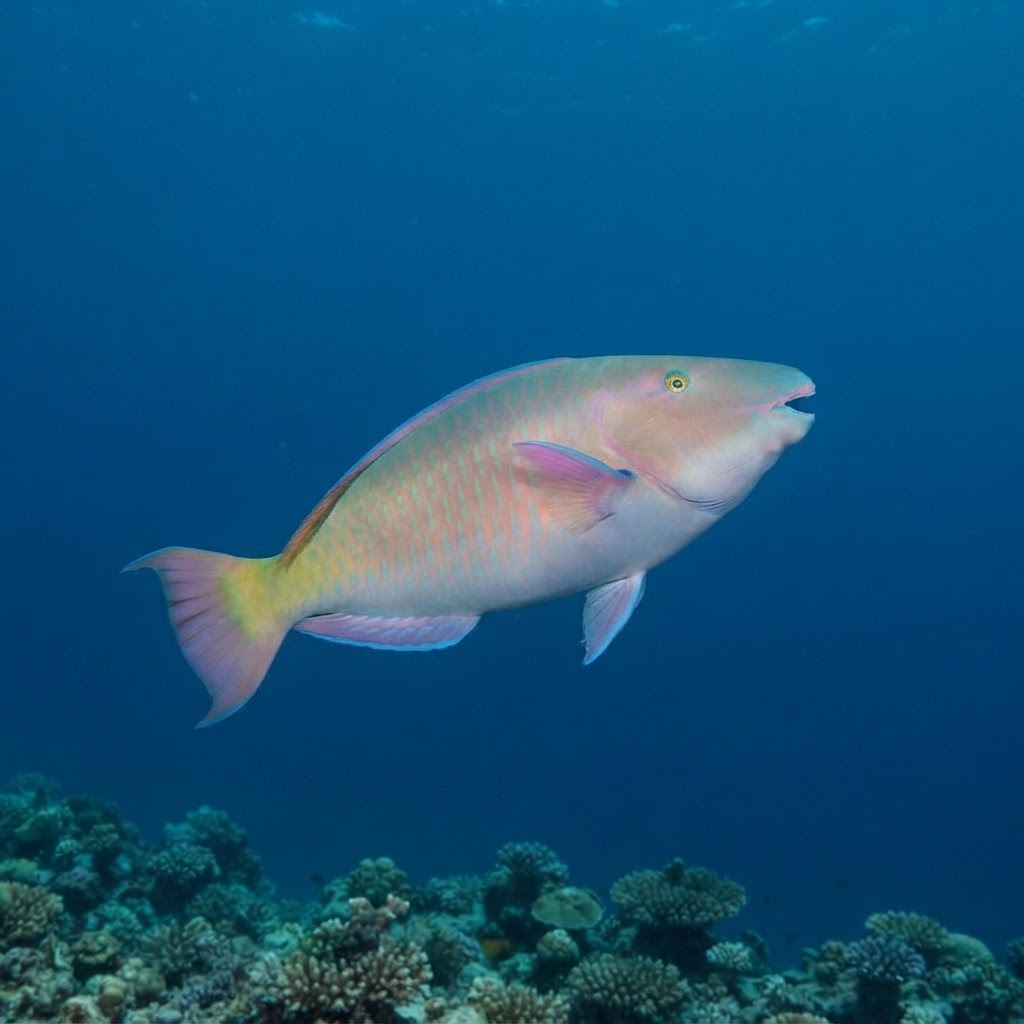
Look for an elongated, almost torpedo-shaped head that tapers into a pointed snout, unlike the blunter face of most parrotfish. Adults run a muted blue-green to olive with pinkish highlights around the face and fins, growing to over 40 cm in the water. The fused, beak-like teeth plates are visible up close and are the giveaway for the whole parrotfish group, but the long, pointed profile is what separates this species from its stockier reef mates.
Usually seen grazing alone or in small loose groups along reef flats and slopes, scraping algae off dead coral and rock with that beak-like mouth. It tends to keep a cautious distance from divers, drifting off rather than bolting, and is more often spotted cruising mid-water over the reef than tucked into crevices. Reported as uncommon at the sites where it does turn up, so a sighting is a nice bonus rather than a given.
Like other parrotfish, its fused teeth let it scrape algae and fine coral material off the reef surface, and the ground-up material it excretes contributes to the sand that builds up on tropical reef flats.
No clear seasonal pattern shows up in the sighting data, and the species sits comfortably in water from about 25 to 29C, so it is a year-round presence on the reefs where it occurs rather than a seasonal visitor.
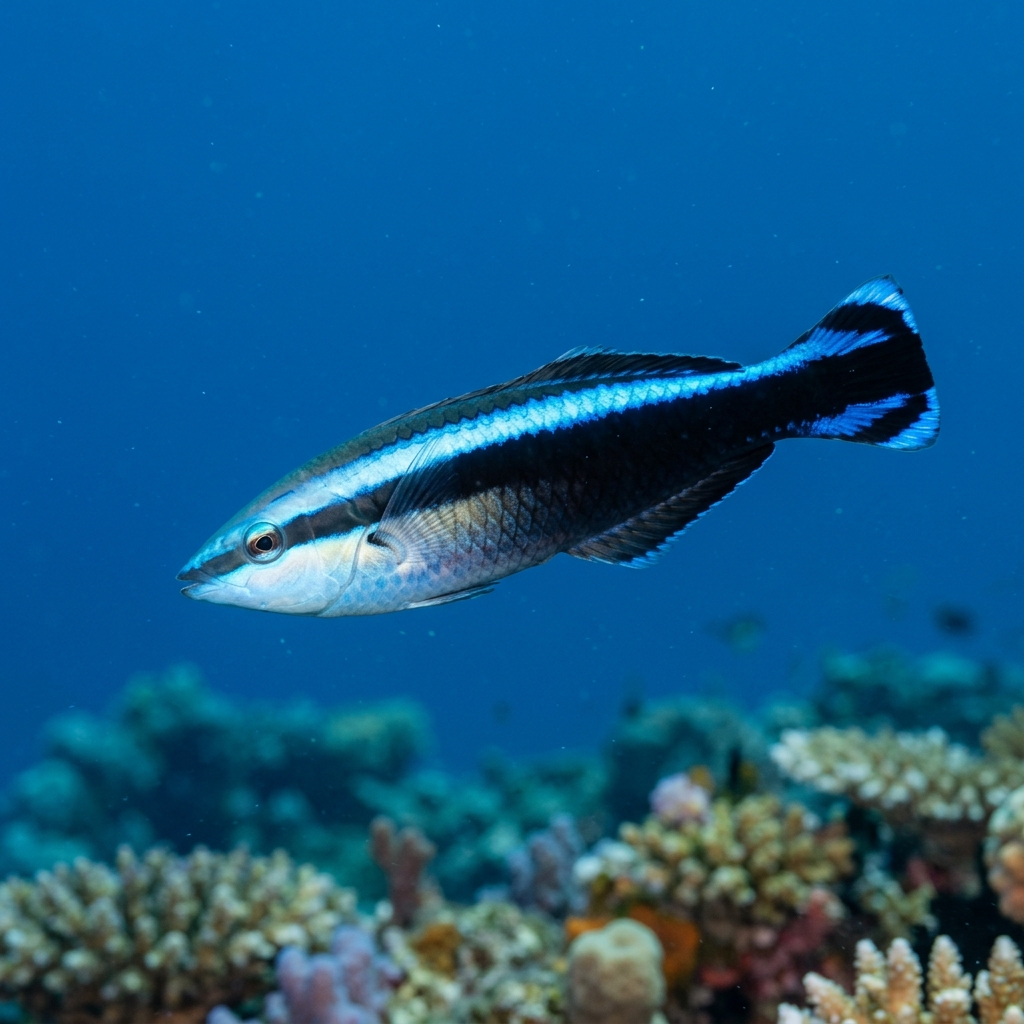
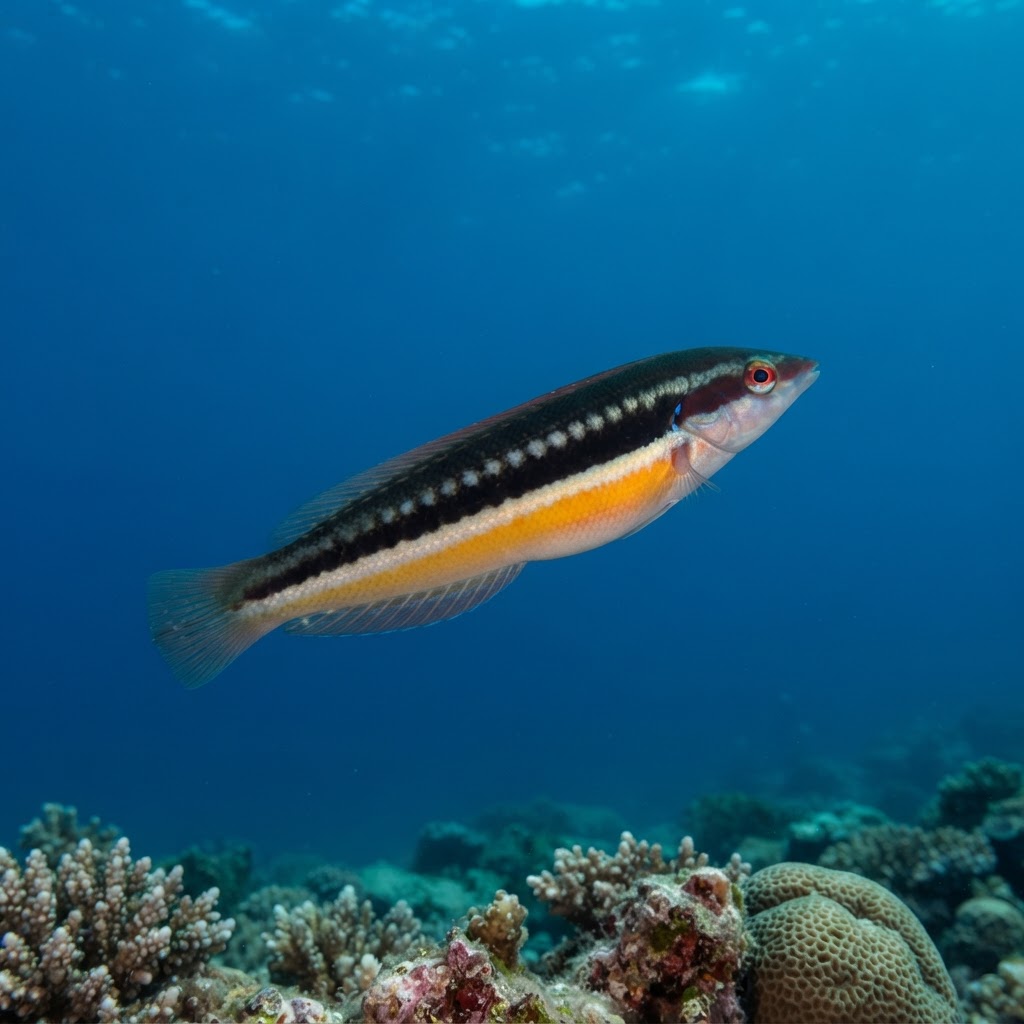
Reef neighbours a diver could mistake it for. Use the identification notes above to tell them apart.
Most reliably logged on reefs in Queensland, Australia, and across the Tuamotu Islands in French Polynesia, with a solid presence around the Rock Islands of Palau. Smaller but consistent numbers turn up in Western Australia, Raja Ampat in Indonesia, Nouméa in New Caledonia, and Fiji's Yasawa Islands, so it is a species worth watching for on reef dives across the wider Indo-Pacific rather than any single hotspot.
Mapping where Longnose Parrotfish is logged…
Queensland in Australia and the Tuamotu Islands in French Polynesia are the most reliable spots, with good numbers also around Palau's Rock Islands. It also shows up in Western Australia, Raja Ampat, New Caledonia, and Fiji's Yasawa Islands.
There is no strong season in the sighting data. It stays in warm water between roughly 25 and 29C year-round, so any time of year on the right reef gives a fair chance.
Watch for a long, pointed snout that gives the head an elongated profile compared with other parrotfish, paired with a blue-green to olive body and pinkish facial tones. It typically grazes alone or in small loose groups over reef flats.
They reach around 42 cm in length, making them a mid-sized reef fish that is easy to spot cruising over open reef sections once you know the silhouette to look for.
No. They are not considered dangerous to divers and typically move away calmly rather than showing any defensive behaviour.
Their fused, beak-like teeth let them scrape algae from dead coral and rock, and the fine material they process contributes to the sand found on tropical reef flats.
Site and sighting data is aggregated from diver logs, iNaturalist and GBIF. For taxonomy and conservation status:
Cleaver Wrasse
2,700 sites